[Most Recent Entries] [Calendar View]
Friday, August 4th, 2017
- WD Blue 3D NAND SATA & SanDisk Ultra 3D SSDs Launched: 3D TLC NAND, SATA, Marvell
- Toshiba Announces TR200 Retail SATA SSDs With 3D NAND
- The Western Digital Black PCIe SSD (512GB) Review
- Western Digital Ships Client SSDs Based on 512 Gb 3D TLC NAND Chips
- ADATA Launches the SU700 SSD Range: Maxiotek MK8115, 3D TLC, Up to 960 GB
- Previewing Maxiotek's MK8115 SSD Controller: Can DRAM-less Drives Make The Cut?
- Mushkin Launches Reactor Armor 3D and Triactor 3D 2TB SATA SSDs: 3D NAND, SM2258
| Time | Event | ||||||||||||||||||||||||||||||||||||||||||||||||||||||||||||||||||||||||||||||||||||||||||||||||||||||||||||||||
| 8:00a | The G.Skill KM570 ΜΧ Mechanical Keyboard Review: Sturdy & Efficient In this review we are having a look at G.Skill’s mainstream mechanical keyboard, the KM570 series. The KM570 comes with genuine Cherry MX switches and, depending on the model, features either red or RGB backlighting, all while featuring an enticing price tag. | ||||||||||||||||||||||||||||||||||||||||||||||||||||||||||||||||||||||||||||||||||||||||||||||||||||||||||||||||
| 9:00a | SK Hynix: Customers Willing to Pay 2.5 Times More for HBM2 Memory
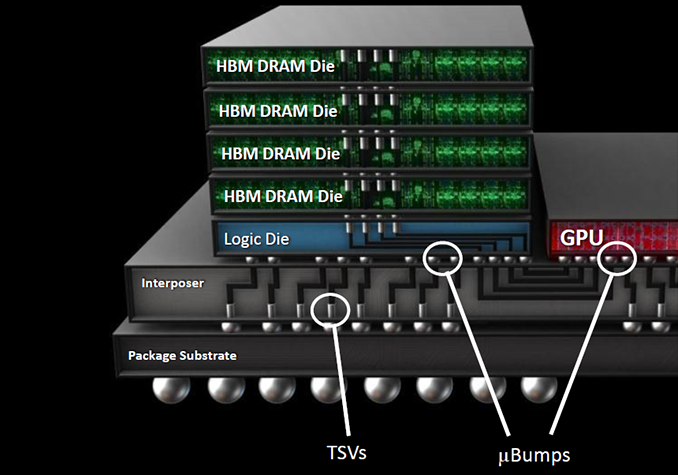
SK Hynix was the first DRAM manufacturer to start producing HBM Gen 1 memory in high volume back in 2015. However, the company is somewhat behind its rival Samsung when it comes to HBM Gen 2 memory. At present, SK Hynix is gearing up to start volume production of HBM2, and the first commercial chips are due only now, in this latter half of the year. To that end, an interesting point was made by an executive of SK Hynix during a recent conference call: the company’s customers are willing to pay up to 2.5 times more for HBM2 versus what they paid for HBM1. As a bit of background, SK Hynix formally announced their intention to produce GDDR6 in late April, and subsequently added 8 Gb chips rated for 12 and 14 Gbps data rates at 1.35 V to its databook. Meanwhile, 4Hi HBM2 chips with 4 GB capacity have existed in SK Hynix’s product catalog for some time, but recently the company reduced their data rate to 1.6 Gbps. At present, SK Hynix is working with a number of partners to bring their GDDR6 and HBM2 memory chips to the market. While SK Hynix is not disclosing the names of its partners, it's reasonable to assume that the two major GPU developers are among them, as they're the biggest customers for both memory types at this moment. Meanwhile, the company claims that both GDDR6 and HBM2 will be more expensive than GDDR5, which shouldn't come as a surprise since GDDR5 has been on the market for many years now, meaning its costs are relatively low when compared to new types of memory. This may in turn have an impact on video card pricing, though with AMD and NVIDIA already tapping HBM2 and GDDR5X respectively for current generation products, both companies are already very familiar with the costs of high-end memory technologies.
Getting back to the subject at hand then, HBM2 memory from SK Hynix will be substantially different from HBM1 DRAM not only in terms of performance, but also in terms of per-chip capacity, which makes them more difficult and expensive to produce. As a result, the manufacturer will have all the reason to charge more for such DRAM ICs. According to the aforementioned SK Hynix executive, customers are “willing to pay at least double” or even 2.5 times more for HBM2 memory compared to HBM1 DRAM. Considering that HBM2 memory is used for high-end compute cards such as NVIDIA's Tesla P100, the forthcoming Tesla V100, and AMD's various Vega products, it is not surprising that customers are willing to pay extra for memory for their high-end, high-priced products. One of the key takeaways from this, besides the expected higher prices of GDDR6 and HBM2 memory from SK Hynix, is the fact that this confirms that the company has not started mass production of HBM2 quite yet. For the time being then, this leaves Samsung as the only HBM2 manufacturer shipping in volume, which means I wouldn't be surprised if we see the company's 4-Hi HBM2 stacks show up on AMD's forthcoming HBM2-based RX Vega video cards. Related Reading: | ||||||||||||||||||||||||||||||||||||||||||||||||||||||||||||||||||||||||||||||||||||||||||||||||||||||||||||||||
| 12:00p | Lian-Li Announces Availability of the DK-05 Motorized Adjustable PC Desk
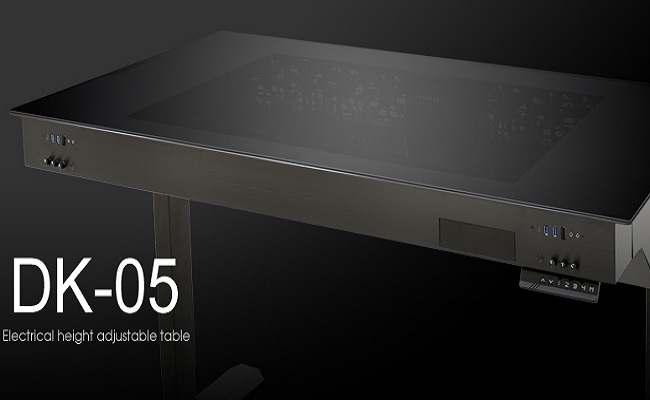
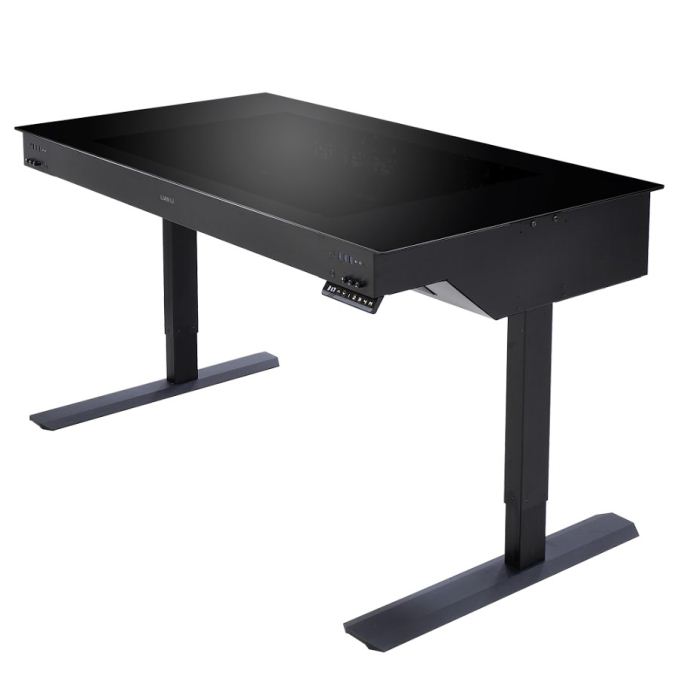
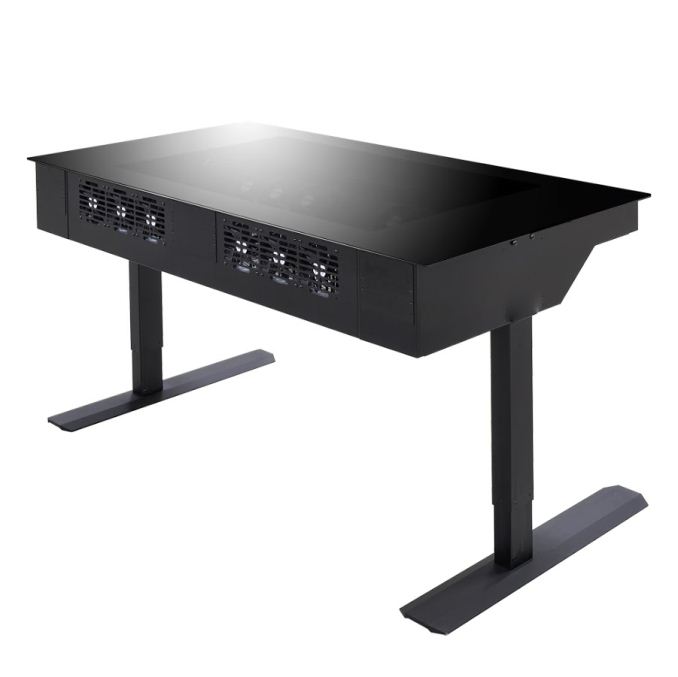
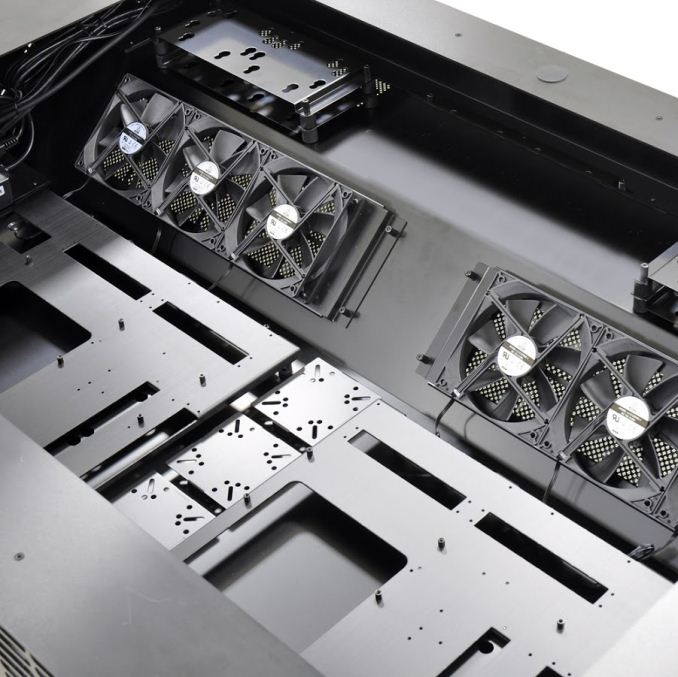
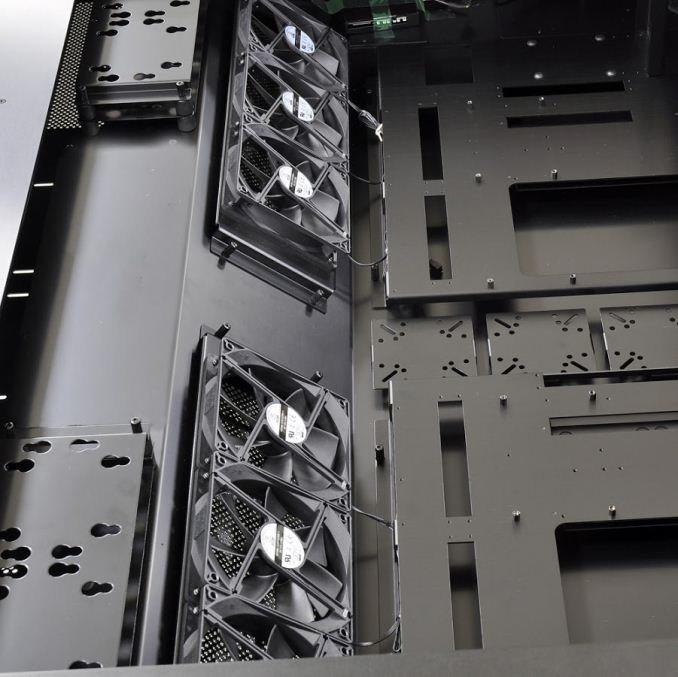
Lian-Li has been a staple in the PC industry for a number of years now, producing a number of well built and equally well designed aluminum PC cases. They have come out with chassis to hold SFF Mini-ITX up to E-ATX based systems, all the way to full-size desks. However, the company isn't just in the traditional chassis business, and a few years ago they branched out with the release of their unique DK-Q2, their first computer desk which housed full sized components underneath a layer of tempered glass. Since then they have released the DK-03, last year’s first motorized, height adjustable enclosed DK-04, and now they are taking the wraps off of the latest version of their PC desk design: the DK-05. Lian-Li DK-05The DK-05 was first shown in Lian-Li’s booth at CES earlier this year. Lian-Li says they have added more cooling and more flexibility in the latest iteration of their motorized adjustable PC desk. The jet black aluminum DK-05 is able to support two complete workstations under the tinted tempered glass surface, capable of fitting up to E-ATX sized motherboards. By comparison, the outgoing DK-04 was only able to accommodate one system. Consequently, the overall size of the DK-05 has grown a bit to 140cm(55.1”) wide x 689mm(27/1”) tall (minimum) x 780mm(30.7”) deep in order to have enough room to house two systems comfortably. These dimensions allow for plenty of workspace on top for multiple monitors, keyboards/mice, and other accessories.
Since it now has the ability to hold two systems, the number of fan locations increased from 8 in the DK-04 to 12 for the DK-05 (6x front, 6x rear – all 120mm w/ 12 fans included). This was likely necessary in order to remove the heat created by two complete PCs inside the tempered glass top. Designed for liquid cooling, the DK-05 can hold one 480mm radiator (left side rear), and 3 360mm radiators in various locations. Between the motherboard trays are mountings for pumps, reservoirs, or additional drive storage. Each side has a removable motherboard tray where owners mount their systems, including ATX power supplies up to 280mm in length, graphics cards up to 360mm in length, while the headroom for CPU coolers maxes out at 160mm high.
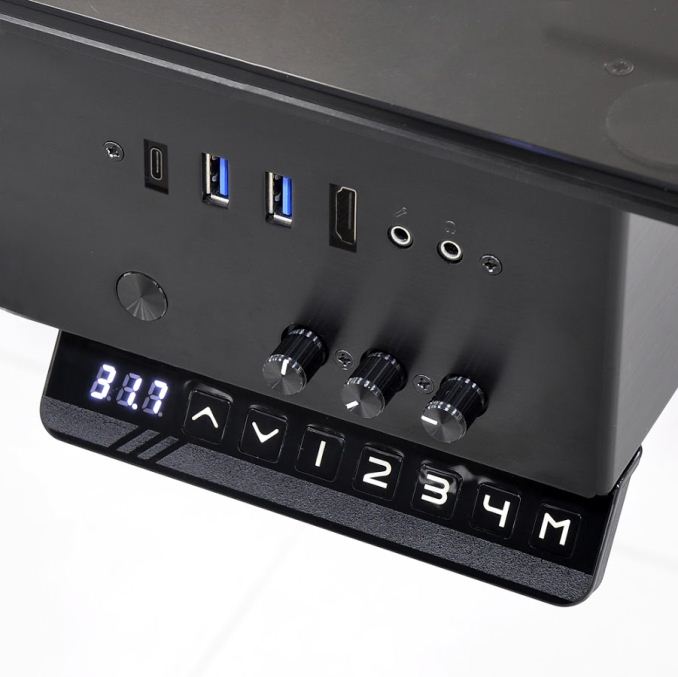
There are two independent front panels connecting to each system, with one on the left and one on the right. Both are mirror images of each other, containing 2x USB 3.0, 1x USB 3.1 Type-C, 1x HDMI, HD Audio, power button (no reset buttons?), and dials for adjusting RGB LEDs. Lian-Li considers the desk VR ready, as there is are HDMI outputs on both front panels to connect your VR headset of choice. The right side of the desk below the front panel is where users will find buttons to control desk height. A digital display shows the current height (in CM) and to the right of it are the control surfaces for adjustment. There are two up and down arrows for manual height control, as well as having four user-programmable presets. The desk has enough range to accomodate both sitting and standing configurations, with a minimum height of 68.9cm(27.1”) to maximum height of 117.5cm(46.3”).
Full specifications list below:
More images below: Gallery: Lian-Li DK-05
   The Lian-Li DK-05 is available now at an MSRP of $2099.99. Related Reading: | ||||||||||||||||||||||||||||||||||||||||||||||||||||||||||||||||||||||||||||||||||||||||||||||||||||||||||||||||
| 2:00p | Western Digital’s 3D TLC-Based SanDisk Ultra 3D SSDs Now Available
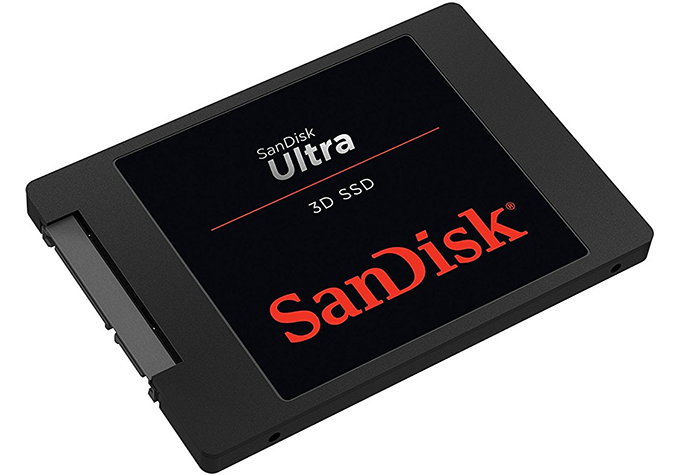
Western Digital has started to ship its SanDisk Ultra 3D drives based on 3D TLC NAND memory. The drives, which were formally introduced nearly two months ago, are identical in terms of hardware to the WD Blue 3D NAND SATA SSD, but come in different form-factors. As for pricing, Western Digital wants the SSDs to be affordable, which is why it sells the 1 TB models at below $300, in line with competiting drives from Crucial and Mushkin. As reported, the SanDisk Ultra 3D as well as the WD Blue 3D NAND SATA are based on the Marvell 88SS1074 controller and use Western Digital’s 64-layer BiCS 3D NAND TLC memory. The drives take advantage of Marvell’s third-generation NANDeXtend LDPC-based ECC technology, but come with proprietary firmware developed in-house. The new products made in 250 GB, 500 GB, 1 TB and 2 TB configurations, but in different form-factors: the WD Blue 3D NAND SATA SSDs come in 2.5"/7mm and M.2-2280 form-factors, whereas the SanDisk Ultra 3D SSDs are only available in 2.5"/7mm DFF packaging. Western Digital rates its 3D TLC NAND-based drives for 1.75 million hours MTBF, which is higher than their drives featuring planar TLC memory, but a bit lower than the MTBF number offered by some competing drives. Meanwhile, the TBW ratings of the drives range from 100 TBW for the 250 GB models to 500 TBW for the 2TB models. Being a bit cautious with reliability/endurance ratings is normal because companies typically do not want elevated expectations when they deal with a new type of memory. From performance point of view, the new SanDisk and WD-branded drives and offer up to 560 MB/s sequential read speed and up to 532 MB/s sequential write speed (when pseudo-SLC cache is used to boost write speed), which is comparable to other mainstream SATA SSDs. As for random reads and writes, we are looking at 95K IOPS and 84K IOPS, respectively, again, in line with what competing drives offer.
Since all SATA-based drives offer more or less similar performance, pricing becomes one of the main features of SSDs with this interface. As expected, Western Digital charges $99 for the entry level SanDisk Ultra 3D model with 250 GB capacity. Meanwhile, the drives with 500 GB and 1 TB memory are available for $165 and $280 from Amazon. As for the WD Blue 3D NAND SATA SSDs, the company promises on its web site that they will be available in “late summer 2017”, presumably at similar price points. Related Reading: | ||||||||||||||||||||||||||||||||||||||||||||||||||||||||||||||||||||||||||||||||||||||||||||||||||||||||||||||||

| << Previous Day |
2017/08/04 [Calendar] |
Next Day >> |