[Most Recent Entries] [Calendar View]
Wednesday, August 9th, 2017
| Time | Event | ||||||||||||||||||||||||||||||||||||||||||||||||||||||||||||||||||||||||||||||||||||
| 10:00a | EKWB Releases New Varder EVO Fan with Start-Stop Function
EKWB recently released a new lineup based on its EK-Vardar fans. The Vardar line was established in 2014 and created to be an industrial grade high-static pressure computer cooling fan. EK says the line was designed and built primarily for highest-performance computer liquid cooling systems, a fitting choice as the fan name "Vardar" is a term used for a cold northwesterly wind blowing into the valleys of Macedonia in the Balkans. The Vardar line has now grown into the new EK-Varder EVO series of fans offering users the ER EVO which an extended range of PWM operation featuring a special start-stop function. The EVO "S" line for quiet operation, and the Furious Vardar EVO for moving the most air.
EK says the electronics on the ER EVO fan has been tweaked so the fan stops spinning if the PWM signal falls below a preset duty cycle value. In other words, when the PWM duty cycle is set below 25-30%, the fan will stop spinning. Once the PWM duty cycle is increased, the fan will then spin up. Being able to stop and start the fan can bring benefits of a totally silent PC, prolong the life of the fan, and can slow the buildup of dust on the heatsink or radiator by only running when it needs to.
The new electrical design uses actively cooled motor windings and Hydro-Dynamic bearings with a 50000 hour MTBF. The frame shape is said to provide optimal performance with either pull or push configurations. The shape of the frame allows the power cables to be routed through it when putting fans together on a radiator. The Vardar EVO line comes in both 120mm and 140mm size. They all aim to be a high-static pressure, low noise profile fan with each using a 7 fan blade design. Vardar EVO fans come in single (all black or all white) and two-tone (black with gray blades). The original Vardar's maximum fan speed was designated by letter/number combination like the Fujita scale F3, F4, etc. The higher the number, the faster the fan would run. The EVO series changes that up usingnd has different names altogether. The basic EVO 120S/140S model spins up to 1150 RPM, the 120ER and 140ER models (ER designates the start/stop ability) reach 2200 RPM, while the EK-Furious Vardar reaches 2500 RPM for the 140mm, and 3000 RPM for 120mm.
EK-Vardar EVO ER fans are already available at the EK Webshop and online through EKWB's Partner Reseller Network. The EK-Furious Vardar EVO and white EK-Vardar EVO fans will be available in the next few weeks.
Related Items: | ||||||||||||||||||||||||||||||||||||||||||||||||||||||||||||||||||||||||||||||||||||
| 12:00p | Acer and ASUS Delay Their 4K 144 Hz G-Sync HDR Displays to 2018
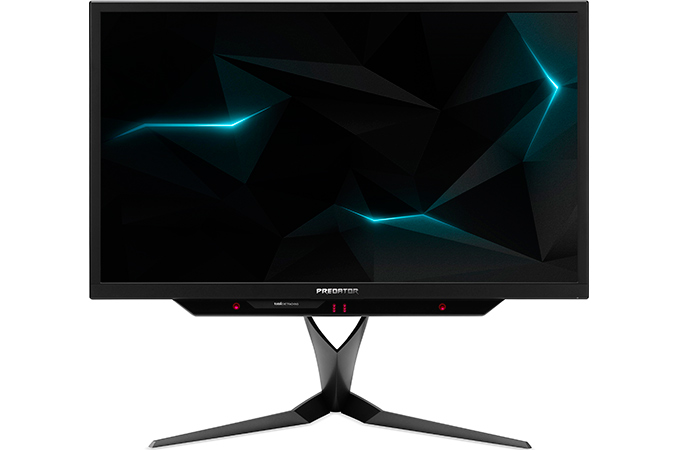
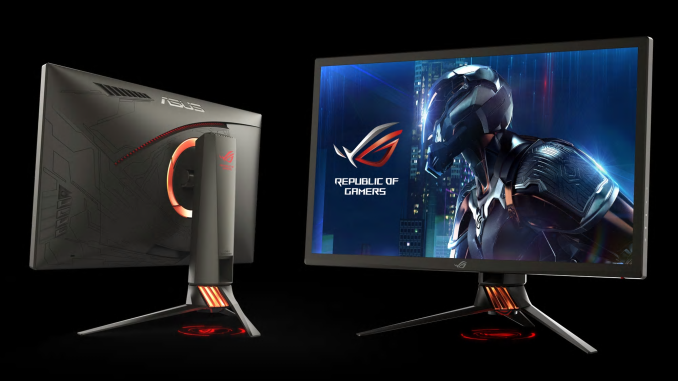
In a bit of a surprising move, Acer last week announced that its 4K HDR Predator X27 gaming display would be delayed to Q1 2018, missing the important holiday sales season. The monitor, based around an NVIDIA reference design for a G-Sync HDR display that was in turn revealed back at CES 2017, has been eagerly anticipated, and until now was expected by the end of this year. Meanwhile, ASUS's ROG Swift PG27UQ, which features virtually the same specifications, has also been delayed to 2018. The Acer Predator X27 and the ASUS ROG Swift PG27UQ are based on AU Optronics’ M270QAN02.2 AHVA panel, which offers a 3840×2160 resolution and can reach a 144 Hz refresh rate. Combined with a direct LED backlighting system with 384 zones, and monitors based on the M270QAN02.2 panel have been shaping up to be the gaming monitors to get, as they would offer a second-to-none feature set list.
So far, only Acer and ASUS have announced displays based on this panel, with both being fairly straightforward implementations of NVIDIA’s reference design. Neither Acer nor ASUS have disclosed the reason for the delay, but two specific possibilities come to mind: either the reference design needs to be further polished, or mass production of the panel was delayed by AUO. The latter was expected to start volume production of the M270QAN02.2 AHVA panel in July, but it's rare that we ever see public confirmation of panel mass production. Unfortunately for NVIDIA, this ultimately serves as a de-facto delay for their G-Sync HDR platform, as these displays are the flagship of the line. No other G-Sync HDR displays have been announced, and there are precious few panels set to be released this year that would even meet NVIDIA's needs. Otherwise, in the opposing AMD camp, while none of AMD's partners have announced similar FreeSync displays, any potential products using the AUO panel should be similarly impacted. So FreeSync users looking for a flagship-quality FreeSync 2 HDR display will find themselves waiting into 2018 as well. Related Reading: | ||||||||||||||||||||||||||||||||||||||||||||||||||||||||||||||||||||||||||||||||||||
| 3:00p | Intel Introduces "Ruler" Server SSD Form-Factor: SFF-TA-1002 Connector, PCIe Gen 5 Ready
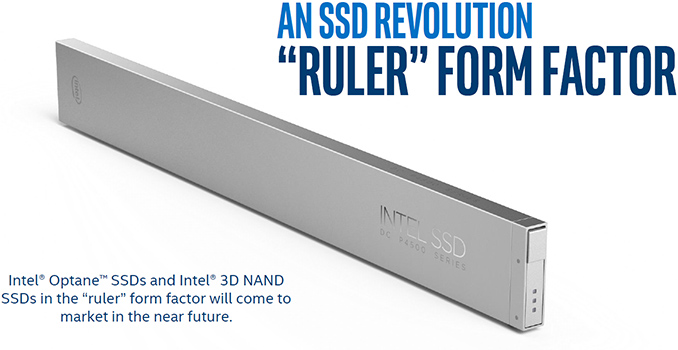
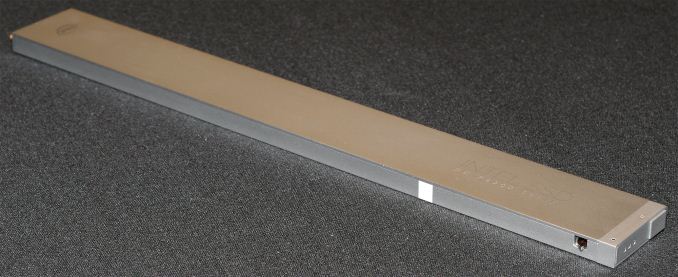
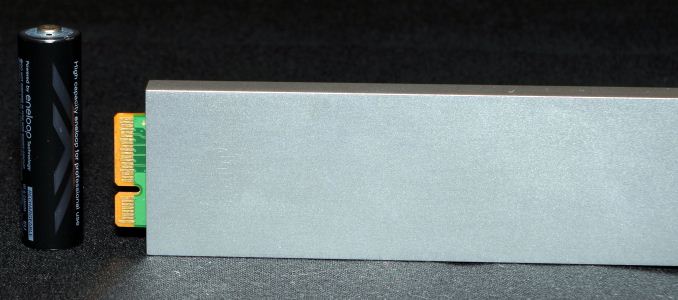
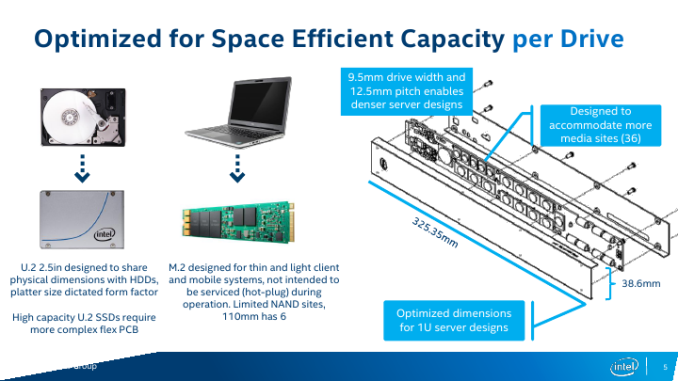
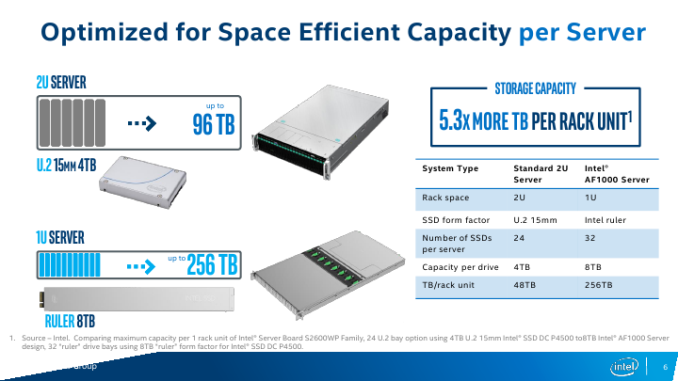
Intel on Tuesday introduced its new form-factor for server-class SSDs. The new "ruler" design is based on the in-development Enterprise & Datacenter Storage Form Factor (EDSFF), and is intended to enable server makers to install up to 1 PB of storage into 1U machines while supporting all enterprise-grade features. The first SSDs in the ruler form-factor will be available “in the near future” and the form-factor itself is here for a long run: it is expandable in terms of interface performance, power, density and even dimensions.
For many years SSDs relied on form-factors originally designed for HDDs to ensure compatibility between different types of storage devices in PCs and servers. Meanwhile, the 2.5” and the 3.5” form-factors are not always optimal for SSDs in terms of storage density, cooling, and other aspects. To better address client computers and some types of servers, Intel developed the M.2 form-factor for modular SSDs several years ago. While such drives have a lot of advantages when it comes to storage density, they were not designed to support such functionality as hot-plugging, whereas their cooling is a yet another concern. By contrast, the ruler form-factor was developed specifically for server drives and is tailored for requirements of datacenters. As Intel puts it, the ruler form-factor “delivers the most storage capacity for a server, with the lowest required cooling and power needs”.
From technical point of view, each ruler SSD is a long hot-swappable module that can accommodate tens of NAND flash or 3D XPoint chips, and thus offer capacities and performance levels that easily exceed those of M.2 modules.
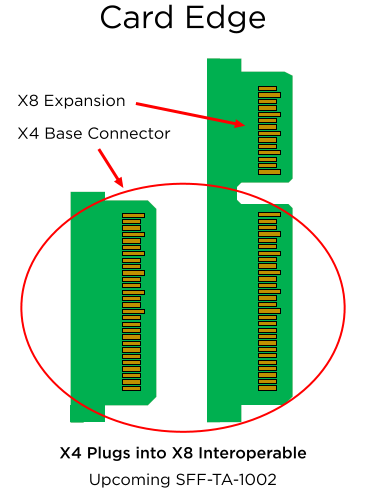
The initial ruler SSDs will use the SFF-TA-1002 "Gen-Z" connector, supporting PCIe 3.1 x4 and x8 interfaces with a maximum theoretical bandwidth of around 3.94 GB/s and 7.88 GB/s in both directions. Eventually, the modules could gain an x16 interface featuring 8 GT/s, 16 GT/s (PCIe Gen 4) or even 25 - 32 GT/s (PCIe Gen 5) data transfer rate (should the industry need SSDs with ~50 - 63 GB/s throughput). In fact, connectors are ready for PCIe Gen 5 speeds even now, but there are no hosts to support the interface.
One of the key things about the ruler form-factor is that it was designed specifically for server-grade SSDs and therefore offers a lot more than standards for client systems. For example, when compared to the consumer-grade M.2, a PCIe 3.1 x4-based EDSFF ruler SSD has extra SMBus pins for NVMe management, additional pins to charge power loss protection capacitors separately from the drive itself (thus enabling passive backplanes and lowering their costs). The standard is set to use +12 V lane to power the ruler SSDs and Intel expects the most powerful drives to consume 50 W or more.
Servers and backplanes compatible with the rulers will be incompatible with DFF SSDs and HDDs, as well as with other proprietary form-factors (so, think of flash-only machines). EDSFF itself has yet to be formalized as a standard, however the working group for the standard already counts Dell, Lenovo, HPE, and Samsung as among its promotors, and Western Digital as one of several contributors.
It is also noteworthy that Intel has been shipping ruler SSDs based on planar MLC NAND to select partners (think of the usual suspects - large makers of servers as well as owners of huge datacenters) for about eight months now. While the drives did not really use all the advantages of the proposed standard – and I'd be surprised if they were even compliant with the final standard – they helped the EDSFF working group members prepare for the future. Moreover, some of Intel's partners have even added their features to the upcoming EDSFF standard, and still other partners are looking at using the form factor for GPU and FPGA accelerator devices. So it's clear that there's already a lot of industry interest and now growing support for the ruler/EDSFF concept.
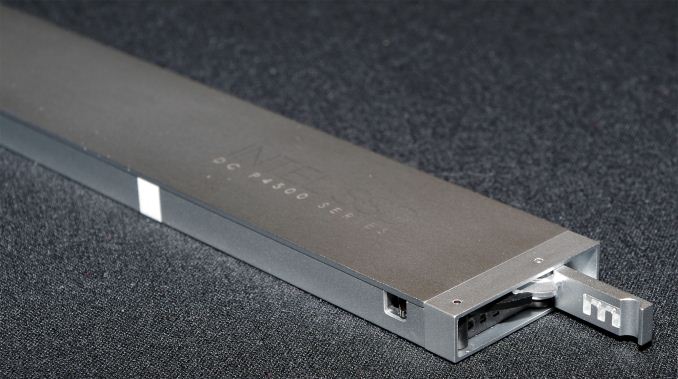
Finally, one of the first drives to be offered in the ruler form-factor will be Intel’s DC P4500-series SSDs, which feature Intel’s enterprise-grade 3D NAND memory and a proprietary controller. Intel does not disclose maximum capacities offered by the DC P4500 rulers, but expect them to be significant. Over time Intel also plans to introduce 3D XPoint-based Optane SSDs in the ruler form-factor. Related Reading: | ||||||||||||||||||||||||||||||||||||||||||||||||||||||||||||||||||||||||||||||||||||





| << Previous Day |
2017/08/09 [Calendar] |
Next Day >> |