[Most Recent Entries] [Calendar View]
Tuesday, August 29th, 2017
- High entry price of Wi-Fi systems - The tri-band EX8000 range extender / access point is being launched with a MSRP of $230, which puts it in the range of mid-range 802.11ac Wi-Fi routers.
- Consumers stuck with ISP gateways - One of the main selling points of the EX8000 is its compatibility with virtually any modern-day Wi-Fi router or gateway, including those that can't be set in bridge mode.
- Consumers with a pre-existing flagship router - Depending on the need to address Wi-Fi dead spots, Netgear is hoping that consumers see the EX8000 as a flagship range extender that costs around half of the flagship router's price.
| Time | Event | ||||||||||||||||||||||||||||||||||||||||||||||||||||||||||||||||||||||||||||||||||||||||||||||||||||||||||||||||||||||||||||||||||||||||||||||||||||||||||||||||||||||||||||||||||||||||||||||||||||||||||||||||
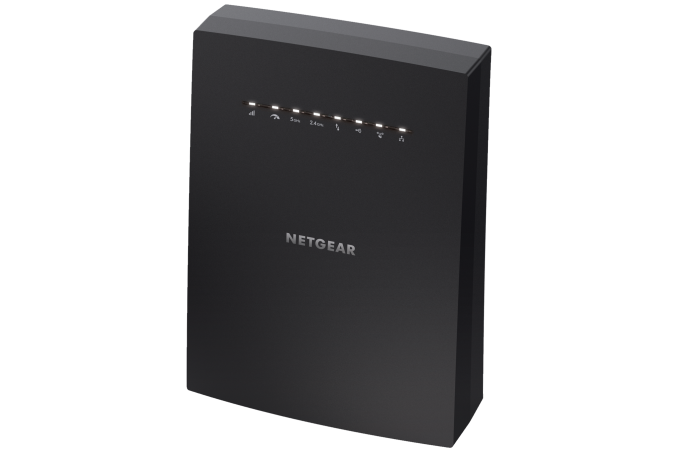
| 8:30a | Netgear Nighthawk X6S EX8000 Brings Orbi Tri-band Wi-Fi to Range Extenders
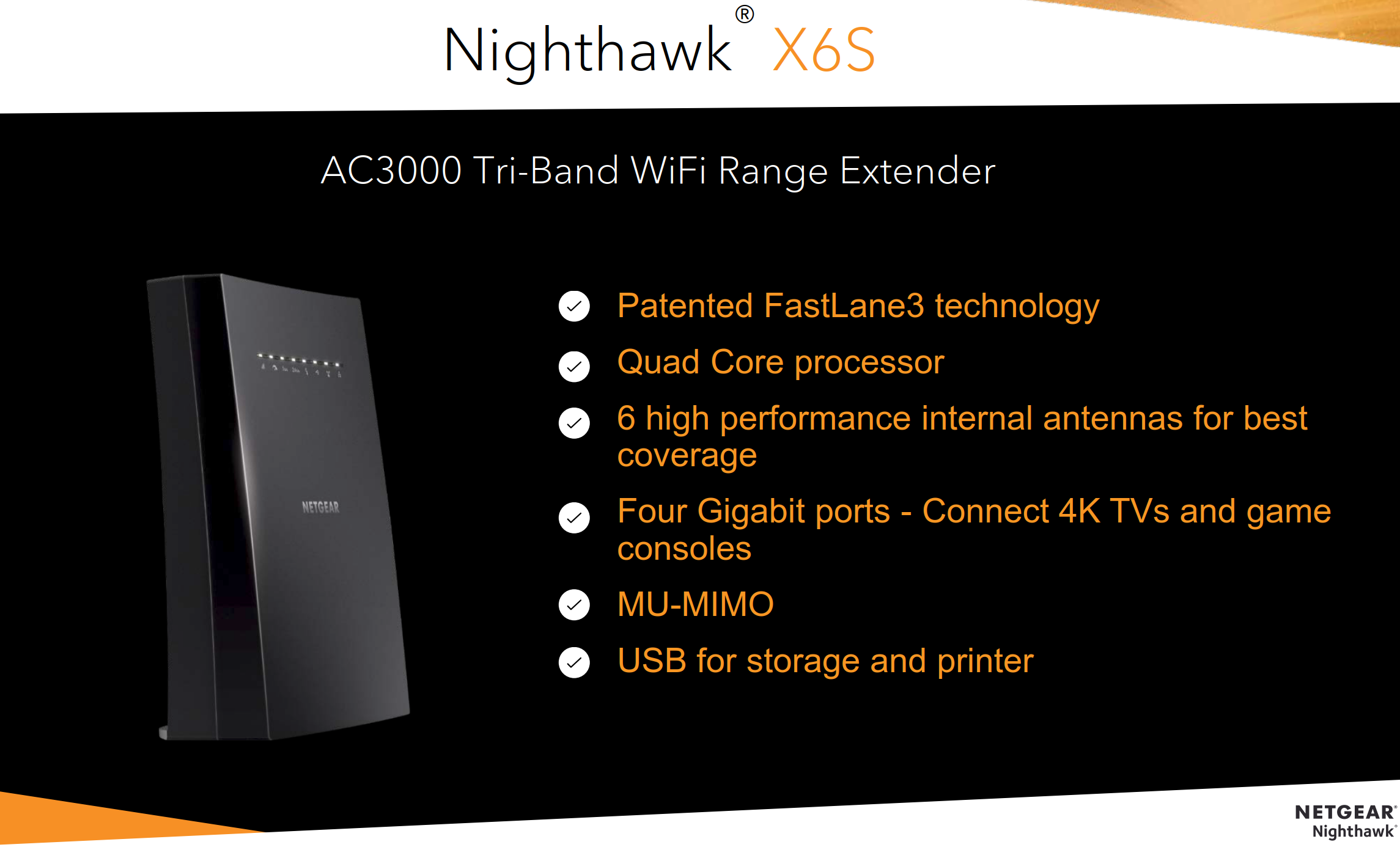
Netgear's Orbi system has proved to be one of the most popular kits in the emerging mesh / Wi-Fi system market. While Wi-Fi systems are not for everybody (for example, folks living in apartments certainly don't need one), there is a segment of the target market that has been loath to upgrade to them. Primary reasons for this might include the high entry price, not being in a position to replace the ISP-provided gateway, or, due to the consumer's pre-existing investment in a high-end flagship router. Today, Netgear is introducing the Nighthawk X6S EX8000 range extender based on the same platform as that of the high-end Orbi router. On the specifications front, the EX8000 is an AC3000-class tri-band Wi-Fi range extender, using a 4x4 dedicated backhaul link to the consumer's primary router. Like the Orbi router, the EX8000 also uses the IPQ4019 SoC in the dual-band dual-concurrent configuration - 2x2 2.4 GHz + 2x2 5 GHz, along with a 4x4 5 GHz QCA9984 PCIe radio. It has MU-MIMO support and all other features that consumers have come to expect from a high-end router. While the default configuration is that of a range extender, the product can also be configured as an access point in the case of a wired backhaul (the EX8000 has four gigabit LAN ports). Obviously, in the access point mode, we have two 5 GHz and one 2.4 GHz SSID available. In the range extender mode, the EX8000 can be configured to present the same SSID as the primary router for both bands. The 802.11k fast roaming protocol is also supported. This allows supported client devices to move from the router to the range extender without dropping the connection. The EX8000 targets the aforementioned 'yet-to-upgrade' segment using the following marketing approach: Netgear's marketing material also talks of a patented 'Fastlane3' technology, which basically refers to the use of a dedicated backhaul (fast link between the router and the range extender), the use of three simultaneous bands (2x 5 GHz, 1x 2.4 GHz) with six antennas, and the AC3000 tag for the product. Netgear is not the first vendor to release a range extender based on Qualcomm's mesh networking tri-band Wi-Fi platform. Amped Wireless launched the HELIOS-EX AC2200 tri-band Wi-Fi range extender (with its trademarked DirectLink moniker for the dedicated link feature that is also used by the Netgear EX8000) The HELIOS-EX AC2200 extender is priced at $180, but, for the lower cost, the dedicated backhaul scales back from the EX8000's 4x4 to a 2x2 link. The Netgear Nighthawk X6S appears to be the most powerful range extender currently in the market, and that may well justify the $230 price tag when it comes to the market in early September. | ||||||||||||||||||||||||||||||||||||||||||||||||||||||||||||||||||||||||||||||||||||||||||||||||||||||||||||||||||||||||||||||||||||||||||||||||||||||||||||||||||||||||||||||||||||||||||||||||||||||||||||||||
| 9:00a | The Crucial BX300 (480GB) SSD Review: Back To MLC The Crucial MX300 has done well over the past year covering a wide segment of the consumer SSD market for Micron, with entry-level pricing but mainstream performance. Micron is now introducing a second consumer SSD with 3D NAND, and bringing MLC back to the BX series. The resulting BX300 is not much cheaper than the MX300, but is well positioned to be the best-performing and most cost effective choice for a small SSD. | ||||||||||||||||||||||||||||||||||||||||||||||||||||||||||||||||||||||||||||||||||||||||||||||||||||||||||||||||||||||||||||||||||||||||||||||||||||||||||||||||||||||||||||||||||||||||||||||||||||||||||||||||
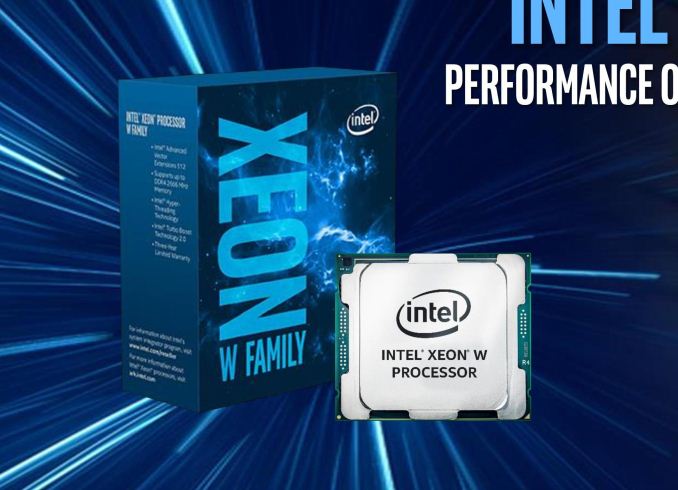
| 11:00a | Intel Launches Xeon-W CPUs for Workstations: Skylake-SP & ECC for LGA2066
On the professional side of the CPU space, Intel’s new Xeon Scalable Processor family, based on the Skylake-SP architecture, is suiting up against the new EPYC processors from AMD. Part of Intel’s Xeon-SP launch was a rebranding of their product stack: gone are E5 and E7 families, and now Platinum, Gold, Silver and Bronze make for a confusing conversion. With this announcement, Intel also gave the image that now consumer and professional platforms were separate: no longer were Xeons welcome in consumer sockets. However as it turns out, this would not quite be the case. Today Intel is taking the wraps off of their new Xeon-W family of processors, which will be their new brand for workstation-class processors. With the Xeon-W announcement today, Intel is bridging the gap between servers and consumer processors (in name at least) with a direct replacement for the old E5-1600 series, which will see Skylake-SP Xeons come to the LGA2066 socket with additional professional-level features in tow.
Historically, the E5-1600 series were identical processors to the E5-2600 series, except without the dual socket capabilities and consequently priced more appropriately for single socket workstations. Meanwhile over the last few generations, the consumer and enterprise platforms shared a socket, which made cross compatibility fairly easy. With the new Xeon-SP processors, however, the enterprise platform went up to Socket LGA3647. This new socket is a far cry from the consumer LGA2066, losing a common platform in exchange for more memory channels and other features such as Omnipath. With a complete division between consumer and enterprise, there was no way to bring features such as ECC and vPro down into more consumer friendly environments.
Today’s launch of Xeon-W fixes this, although you probably still need a new chipset. As a replacement for the E5-1600 series, the Xeon-W CPUs will feature parts from 4 cores up to 18 cores, support up to 512GB of ECC RDIMM/LRDIMM memory, support dual 512-bit FMAs throughout the stack, and peak turbo clocks of 4.5 GHz.
In essence, these are Xeon versions of the current Skylake-X (Core i9) processors with all the pro features enabled, such as the extended memory support, vPro, Intel’s AMT, and the standard enterprise Reliability, Serviceability and Availability (RAS) features. They will require a new chipset, the C422 chipset, and despite the common LGA2066 socket, it seems unlikely that this will work with the consumer X299 chipset (reaffirming the split we see with the E3-1200 v5/v6 series which require the C236 chipset and will not work with the Z170 chipset). As a result, we are likely to see most of the major motherboard manufacturers pump out at least one version of an enterprise board to cover this market.
Starting at the bottom of the new Xeon-W product stack, we find something interesting: Intel is releasing a pair of four core parts that have 8.25MB of L3 cache, rather than the 5.5MB we would expect from a 1.375MB/core Skylake-SP design. This indicates that these parts retain access to some of the L3 cache attached to the disabled cores, making them particularly well suited for software that is licensed per CPU core and consequently needs the the highest single-threaded performnace possible. There are two 6 core members of the stack, which differ solely on clock speed. This is then followed by an 8 core, a 10-core, a 14-core and an 18-core, with no 12-core or 16-core present (although if launched, these are likely to be called the W-2185 and W-2165). All the parts will support 48 PCIe 3.0 lanes from the processor, suitable for 2x GPU and 3x PCIe storage direct from the CPU without going out to the chipset (in the consumer Skylake-X product line, the two bottom SKUs only have 28 PCIe lanes, and the rest have 44). Every processor in the Xeon-W stack sits at 140W, except the quad cores at 120W. By contrast, Skylake-X goes up to 165W. It is also worth noting that the Xeon-W processors only support Turbo Boost 2.0 rather than Turbo Boost Max 3.0 and its "favored core" underpinnings. And as with past Xeon processors, Xeon-W processors are also likely to be locked.
There are several obvious comparisons that can be made between the Xeon-W family and both the consumer Skylake-X and the server Xeon-SP platforms. Intel’s goal here is to hit something in the middle: an increase in price over Skylake-X gets you more memory support, ECC, more PCIe lanes, and management features, but doesn’t go the full way to six-channels of DDR4 or multi-socket support. Not all of the Xeon-W parts have specifications and prices yet, but the 8-core processor is a good place to do comparisons.
The consumer Core i7 has fewer PCIe lanes and the most limited DRAM support, but it's the cheapest. Conversely, the Xeon Gold CPU is easily the most expensive, but it supports up to four sockets, has more L3 cache per core overall, and gets the greatest memory capacity, while incurring a slightly higher TDP in the process. The Xeon-W then sits neatly in the middle, taking advantage of high clock frequencies and pro features with a small bump in price, without forking over for multi-socket support. Of course, we can put the Xeon W-2145 up against AMD’s Threadripper 1900X and EPYC 7401P too:
For both parts that have the same core counts, Intel has the frequency advantage (and the performance advantage) and the power advantage, but AMD's chips have 60 PCIe lanes, more memory support, and are cheaper. When the 1950X doubles the cores but reduces the frequency, it still comes out cheaper than the Xeon W. Intel still has dual 512-bit FMAs/AVX-512 support, which Intel says is a big bonus in this market, and will point to its single thread performance.
While today is the formal announcement of the Xeon-W family, Intel has not announced much in the way of release details other than that the 14/18 core parts will be available in Q4. The rest are likely to come to market sooner, and we have requested details on retail availability. We’ve also had a lot of requests for workstation level testing or Xeon vs EPYC, and we’re in touch with both companies to get our hands on processors as soon as we can. To clarify, we're still waiting on information about CPU/chipset support, and if Xeon-W will be supported in X299 motherboards. We will update this piece when we get that information. | ||||||||||||||||||||||||||||||||||||||||||||||||||||||||||||||||||||||||||||||||||||||||||||||||||||||||||||||||||||||||||||||||||||||||||||||||||||||||||||||||||||||||||||||||||||||||||||||||||||||||||||||||
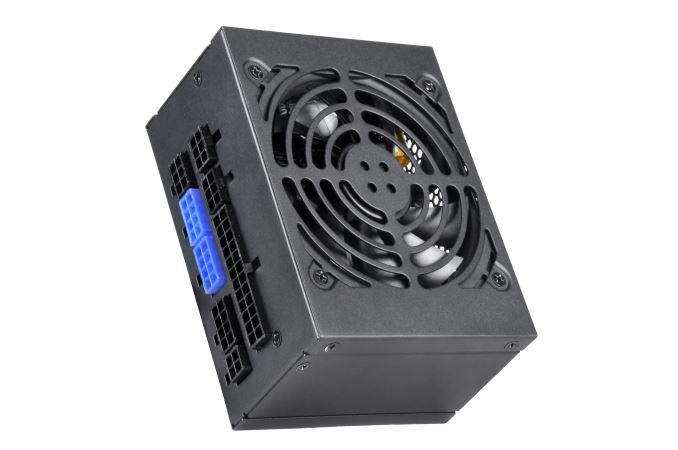
| 1:00p | Silverstone Announces Two New SFX Power Supplies: SX500-G & SX650-G
Small Form Factor (SFF) sized PCs have been around for many years and its popularity seems to be growing. Consumers have more choices today than just a few years ago. Be it cases, motherboards, graphics cards, or power supplies, there are more options out there than ever. Some of these systems require smaller than a standard ATX sized power supply. One of the more popular form factors for these systems is named SFX. The SFX dimensions are notably smaller than ATX allowing PSUs to fit in small cases while still delivering adequate power and having appropriate connectivity. Silverstone started in the high-performance SFX market in 2012 when it released the 450W ST45SF-G power supply. Fast forward a couple of years and a few other PSU releases in that time brings us to now. Today, Silverstone revealed two new SFX power supplies, the 80 Plus Gold rated SX500-G and SX650-G, offering larger fans for quiet operation, more wattage in the same space, and refined internals while still conforming to the dimensions of the SFX form factor. Both new PSU's OEMs are said to be High Power, while the older ST45SF-G and SX600-G are Enhance units.
Silverstone offers SFX PSUs from 300W in the ST30SF V2.0 up to 650W in the true SFX form factor (up to 100mm/3.9" deep) as well as 700/800W models using SFX-L form factor which extends the length to 130mm. Not resting on past accolades, Silverstone says they have improved those designs by putting more power in the same amount of space and using a larger 92mm fan to keep noise levels down. The fan curve has also flattened out quite a bit staying below 1000 RPM through 50% load. The fan starts to ramp up aggressively around the 75% mark topping out over 3500 RPM. Silverstone says the 92mm fan has a 18dbA minimum rating so it should be quiet using the less aggressive fan curve staying below that ramp up point. While users will not find a 'fan off' mode, Silverstone does say they are quieter than their less powerful predecessors. In our review, the SX600-G did struggle to deliver its maximum power inside a hot environment and had difficulties reaching its efficiency certification levels. Due to the smaller fan working hard, the noise levels were not good. Hopefully, a platform change combined with the larger fan mitigates these issues.
Ratings and details about the units are below, but both use a single 12V rail. The SX500-G is rated for 41.7A while the SX650-G is 54.2A on the 12V line. 2.5A on the +5Vsb (both PSUs). Silverstone mentions they use all Japanese capacitors and fit within a "strict" +/- 3% voltage regulation along with low ripple and noise. 3% regulation isn't shooting for the stars, but these are not meant to me Tier1A power supplies either. In the PSU arena, power per liter, or power density, has seemingly become a buzz-word as of late telling us how much power can fit inside a 1L volume. Silverstone touts the 500W model is at 630W /L while the 650W model is 819W /L. Impressive as it may be, that much power in a small space, it doesn't tell us much.
For connectivity, the SX500-G and SX650-G are said to come with more connectors to be used in a wider variety of system configurations. I am not sure how much hardware people are fitting in SFF cases where these PSUs are typically used, but it is a welcome thing to have more than one needs than to not have enough. Both units are fully modular and use their flexible flat cables which Silverstone says allows for tighter folding and better cable management. The 500W unit has two 6+2-Pin PCIe connectors (400mm/500mm in long), while the 650W has four. Both units come with a single 20/24-Pin motherboard connector (300mm), and a single 4/8-pin EPS/ATX 12V connector (400mm). There is connectivity for six SATA ports, three Molex, and one floppy connector. If using this form factor in a larger case, Silverstone does offer a longer, standard length cable set, the PP05-L, which is purchased separately. More details are found in the specifications table below.
Pricing for the SX500-G is 92.50€($99.99) and the SX600-G is 116.90€($129.50) both excl. VAT. Availability starts August 29th in the EU and sometime next week in the states. Gallery: Silverstone SX500-G and SX650-G
      Related Items: | ||||||||||||||||||||||||||||||||||||||||||||||||||||||||||||||||||||||||||||||||||||||||||||||||||||||||||||||||||||||||||||||||||||||||||||||||||||||||||||||||||||||||||||||||||||||||||||||||||||||||||||||||
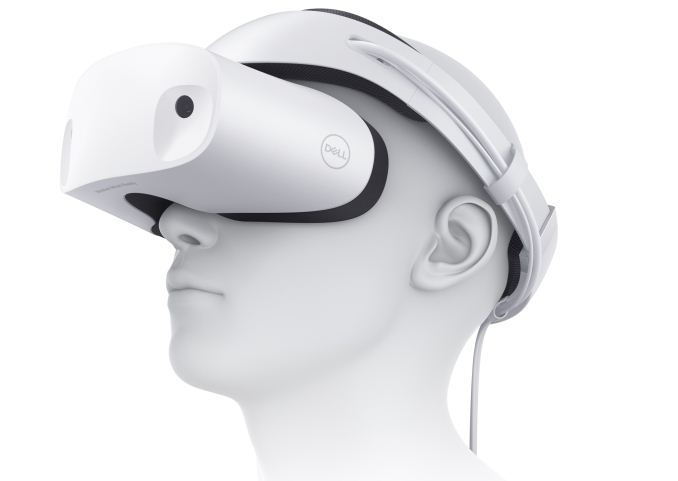
| 3:00p | Dell Enters VR Arena With "Visor" HMD
This week, Dell is announcing its own version of a virtual reality head mounted display (VR HMD) at IFA, the Dell Visor. With their first VR product, Dell is joining the ranks of other mainstream manufacturers that are adopting Microsoft’s Windows Mixed Reality platform to bring an HMD to market. The Dell Visor features two 90Hz 1440 x 1440 LCD panels (for a total resolution of 2880 x 1440) that can “flip up” to let you see the real world around you without completely removing the headset. The faceplate is well cushioned, and the headband is easily adjusted using a thumbwheel. The company claimed that it's comfortable to wear, even with glasses, but like other VR headsets, this will likely vary from person to person. Similar to Acer’s Mixed Reality HMD, the Dell Visor is a tethered headset (USB and HDMI cable) that connects to a Windows PC (with at least the baseline specifications) and features inside-out 6DoF tracking; the headset doesn’t require external cameras or lighthouses to track its position in space. Boundaries are setup by outlining the play area with the HMD, but maximum tracking space wasn’t disclosed. When asked what the main difference between the Dell Visor and its competition was, a representative explained, “Ours is white.” Indeed, the Visor features a white (almost Apple-esque) finish, with an anti-stain coating to keep it clean. The representative went on to explain that Dell’s design keeps comfort and convenience in the forefront, evidenced by the flip-up display, ergonomic headband, and gratuitous face padding. The company hopes that this will be enough to differentiate the Visor in an ever-growing field of VR HMDs.
The Dell Visor doesn’t ship with a controller of any kind, but it’s compatible with Microsoft’s new Mixed Reality Controllers, which are tracked by the headset’s external sensors. Dell is offering the headset for $349.99, and you can order the controllers with them for another $99.99. For reference, the Acer HMD plus controllers bundle is $400. The Dell Visor is expected to arrive mid-October. Derek Forrest contributed to this report | ||||||||||||||||||||||||||||||||||||||||||||||||||||||||||||||||||||||||||||||||||||||||||||||||||||||||||||||||||||||||||||||||||||||||||||||||||||||||||||||||||||||||||||||||||||||||||||||||||||||||||||||||
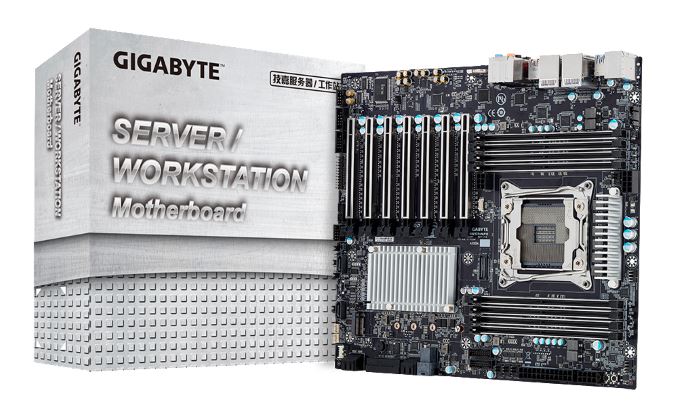
| 4:35p | GIGABYTE Server Announces MW51-HP0 Motherboard: C422 for Intel Xeon-W
With Intel’s latest release of the Xeon-W processor line, they have bridged the gap between consumer and enterprise platforms once again making cross-compatibility easier. The Xeon Skylake-W CPU addresses these issues and is more or less, a Xeon version of the current Skylake-X processors with all the pro features enabled. Traits such as extended memory support, vPro, Intel’s AMT and the standard enterprise Reliability, Availability, and Serviceability (RAS) features are turned on and ready to go. This new set of processors, despite using the same LGA2066 socket as Skyake-X, will require a new chipset C422 and will not work in X299. To that end, one of the first boards being released using this chipset was at Computex this year, where GIGABYTE Server showed off a motherboard named C422-WS. The name has changed on that board with today announcing the MW51-HP0. GIGABYTE Server's goal is to bring the Intel Skylake-SP architecture and single-socket platform for workstations to the prosumers and SOHO (Small Office, Home Office) segments that want Intel professional performance. GIGABYTE Server states that this new motherboard offers a "wealth of I/O options, including multiple PCIe lanes to support graphics, storage, and USB options, as well as direct SATA and USB ports."
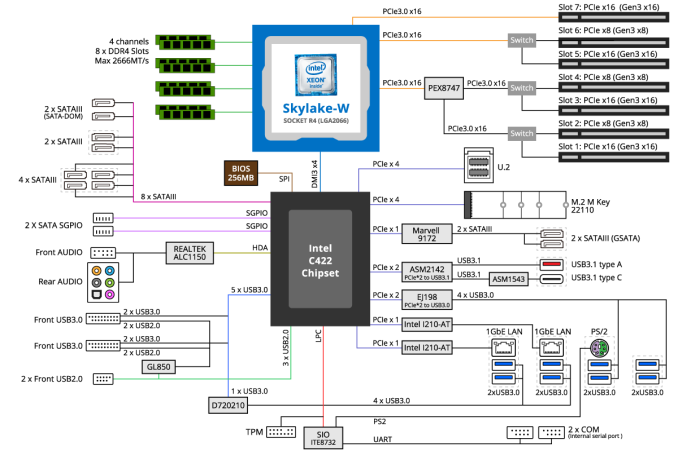
Using Xeon-W CPUs, there are a total of 48 PCIe 3.0 lanes from the CPU to divide up (Skylake-X totaled 44 lanes) or the main PCIe slots, and another 24 PCIe 3.0 lanes from the chipset for add-in functionality. This enables a lot of flexibility in using PCIe based devices. Looking at the block diagram below, the seven PCIe slots have four dedicated PCIe 3.0 x16 slots along with three x8 slots. This would normally give a total of 64 lanes, however the MW1-HP0 uses a PEX8747 PCIe switch chip to multiplex one of the x16 lanes into two main x16 slots, allowing for a total of 64 PCIe lanes. This setup groups six of the seven PCIe slots together in pairs that share bandwidth - stick a card in a PCIe x8 slot, and the slot below it also drops down to x8. As a result, the MW51-HP0 is able to hold four dual slot PCIe cards, or a total of seven single slot PCIe expansion cards.
On the Rear I/O, users will find a PS/2 port, eight USB3.0 ports, two USB3.1 ports (one Type-A and one Type-C), the two Intel I210 based Gigabit Ethernet ports, and the audio stack running off the Realtek ALC1150 CODEC.
For storage purposes, the board is equipped with a total of 10 SATA ports. Eight come directly from the chipset, with two of those being SATA-DOM capable (also 2x SATA DOM SGPIO connectors), while the other two are driven by a Marvell 9172 Controller. Onboard, there is one M.2 slot and one U.2 slot both using PCIe x4 bandwidth from the chipset for high-speed boot purposes. The MW51-HP0 supports Intel software based RAID (0/1/10/5) for the SATA ports. If a user needs RAID NVMe drives, the board does come with a VROC module for PCIe RAID management. Place the module in the VROC port to unlock PCIe RAID options.
The MW51-HP0 has eight DIMM slots on the board supporting up to 512GB of DDR4 memory using 64GB LRDIMMs (256GB using 32GB RDIMM) in a quad channel configuration. Speeds up to 2666 MT/s can be used.
Pricing nor availability was listed at the time of publication, however we do expect to see this I/O laden, single-socket high-end workstation motherboard on the market soon. A Quick Recap on Xeon-WThe Xeon-W CPUs range from the Xeon W-2123, a 4c/8t 3.6GHz SKU at 120W, up to the monster W-2195 18c/36t product at 2.3 GHz with 140W TDP.
Related Reading | ||||||||||||||||||||||||||||||||||||||||||||||||||||||||||||||||||||||||||||||||||||||||||||||||||||||||||||||||||||||||||||||||||||||||||||||||||||||||||||||||||||||||||||||||||||||||||||||||||||||||||||||||
| 10:40p | Dell Updates The XPS 13 With 8th Generation Quad-Core CPUs
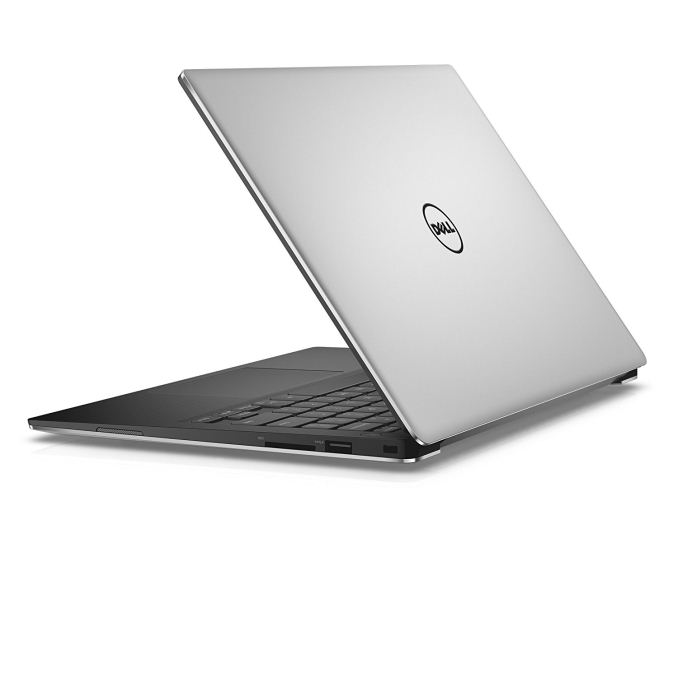
Dell has announced it is updating the XPS 13 with the just announced 8th generation Kaby Lake refresh. While we’re still waiting for 10nm chips to launch, the latest Kaby Lake ultramobile processors are more than just a speed bump, with the latest CPUs being the first in Intel’s popular 15-Watt Core lineup to offer four cores and eight threads.
Dell is claiming the latest XPS 13 is 44% faster than the outgoing XPS 9360, and that falls in-line with the speed bump Intel has been promising as well. Dell is making this comparison with BAPCo’s SYSmark 2014 SE, which does attempt to replicate real-world use cases, so this should be an impressive update. Other than the new CPU, the rest of the XPS 13 stays the same, and that’s not a problem at all. The XPS 13 continues to offer both a 1920x1080 FHD model, with Dell claiming up to 22 hours of battery life, and a QHD+ model (3200x1800) with touch, that gets less. The XPS 13 is one of the smallest 13-inch notebooks around, and really pioneered the thin bezel revolution we’ve seen other manufacturers exploit as well.
The new XPS 13 with 8th Generation Intel Core processors will be available starting with the Core i7 model on September 12th starting at $1399.99, and more configurations will be available in October, which should get closer to the starting price of the i3 model at $799.99. Source: Dell | ||||||||||||||||||||||||||||||||||||||||||||||||||||||||||||||||||||||||||||||||||||||||||||||||||||||||||||||||||||||||||||||||||||||||||||||||||||||||||||||||||||||||||||||||||||||||||||||||||||||||||||||||











| << Previous Day |
2017/08/29 [Calendar] |
Next Day >> |