[Most Recent Entries] [Calendar View]
Thursday, August 31st, 2017
- Acer Announces Nitro 5 Spin 15.6" Gaming Convertible: 8th Gen Core i7, GeForce GTX 1050
- Acer Predator 21 X Laptop with Curved Display Now Available, Only 300 to Be Made
- Acer Launches TravelMate Spin B1: Apollo Lake Convertible with Windows 10 S for $299
- Acer Adds 12-Inch Switch 3 & Switch 5 2-in-1s to Kaby Lake Laptop Lineup
- SanDisk Launches Extreme PRO SD Cards: Up to 512GB
- ADATA Demonstrates 256 GB microSDXC Card
- Sony Announces SF-G UHS-II SD Cards: Up to Nearly 300 MB/s Read/Write Performance
- ADATA Demos A2-class microSD Card with 4K/2K IOPS Minimum, Mulls Late 2017 Launch
- ADATA Launches Premier ONE UHS-II SD Cards: 3D MLC, Up to 290 MB/s, V90 Labels
- Altered industrial design to blend in with business surroundings, with the ability to mount on the wall or ceiling (no PoE support, though).
- Removal of the USB port from the system, as it doesn't make much sense for business use-cases
- Tweaked firmware with specific features for business use-cases.
| Time | Event | |||||||||||||||||||||||||||||||||||||||||||||||||||||||||||||||||||||||||||||||||||||||||||||||||||||||||||||||||
| 2:46a | IFA 2017: LG V30 Launch Event Live Blog We're here at LG to see the launch for the new LG V30 smartphone. Starts at 9am Berlin time / 3am Eastern! | |||||||||||||||||||||||||||||||||||||||||||||||||||||||||||||||||||||||||||||||||||||||||||||||||||||||||||||||||
| 3:00a | Hands on with the LG V30/V30+: 6-inch OLED 2880x1440 Display, Quad DAC, IP68, Daydream VR As part of their IFA 2017 showcase, this morning LG is unveiling their long-rumored next-generation flagship phone, the V30. Like its predecessor, the LG V20, the V30 hasn't exactly been a well-kept secret, with several leaks springing over the last month. Still, with the official announcement from LG, we're finally getting a complete look at the phone. Some of the feedback that LG received for the LG V10 and the LG V20 explained that the smartphones were considered ‘too professional’ for the mass market and younger generations. Despite LG’s heavy marketing to millennials using celebrities such as Joseph Gordon-Levitt, the dual screen combinations had an interesting feature set but often sat in the store next to their better selling competitors. To crank up the base of Generation V (what LG calls the millennial generation targeted by the V-series), the biggest and most noticable design change for the V series is that the new V30 drops the slightly esoteric dual screen design in favor of a single, larger FullVision OLED display, with super narrow bezels to make as much of the phone a display as possible.
For our hands-on, LG requested that we clarify that the devices are pre-production preview models, and some features/issues may change between now and launch. Under the hood, the V30 is powered by Qualcomm's Snapdragon 835, with LG using a heatpipe to assist in cooling. This is paired with 4 GB of LPDDR4X, and either 64GB or 128GB of UFS 2.1 storage. The 128GB model will be sold as the V30+ model, and will only be available in some countries (I was told that the V30 itself is not fully worldwide, and the V30+ will still cover most of those but not all). The battery is virtually unchanged from the V20, its 3300 mAh capacity being just 100 mAh larger than its predecessor. Some journalists suggested that this might be a design oversight, given the larger size and OLED display in this unit – LG stated that the battery life is still good for an honest day of use. On a personal note, just be wary of the brightness: LG does offer screen dimension reduction tools, which might help here. With the battery the V30 is supporting Qualcomm’s Quick Charge 3.0 technology, giving 50% charge in 30 minutes under supported chargers, and the V30 will also have wireless charging.
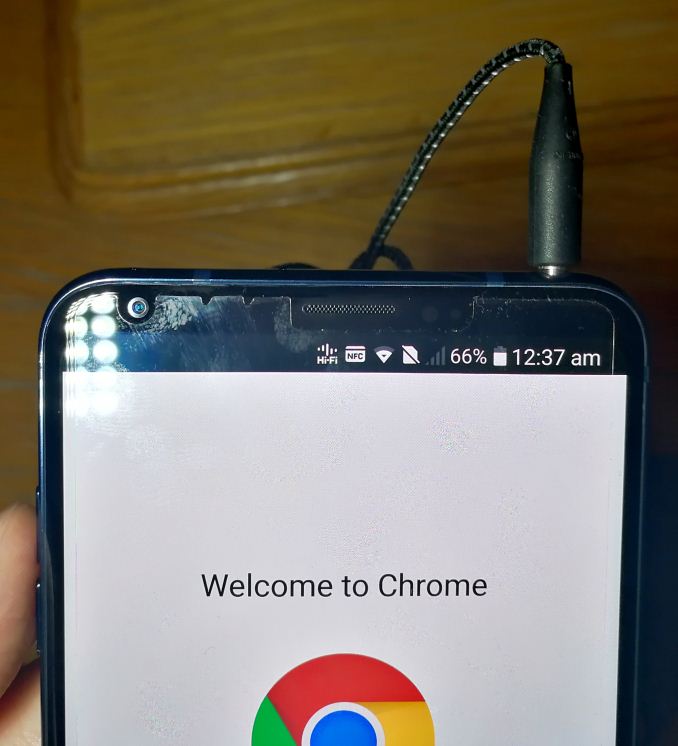
Overall, the main display is the hardest thing to miss when seeing the phone for the first time. The 6-inch diagonal QHD+ (2880x1440) resolution display is big and bright. And even though I've used phones like the Mi MIX, which does things like crazy placement, for all intents and purposes this is a very narrow bezel phone, and a large phone at that. LG uses their pOLED technology here, which they were keen to point out is still an ‘active matrix’ type of OLED, however AMOLED is the Samsung brand name. The technology means that LG is supporting HDR10 out of the box for suitable content, boasts an always-on lock screen at super low power, and can crank up the brightness that’ll tear through your battery life in a few short hours. With the 6-inch display, OLED, and a high 537 pixels per inch, LG is also supporting Daydream VR with the new V30.
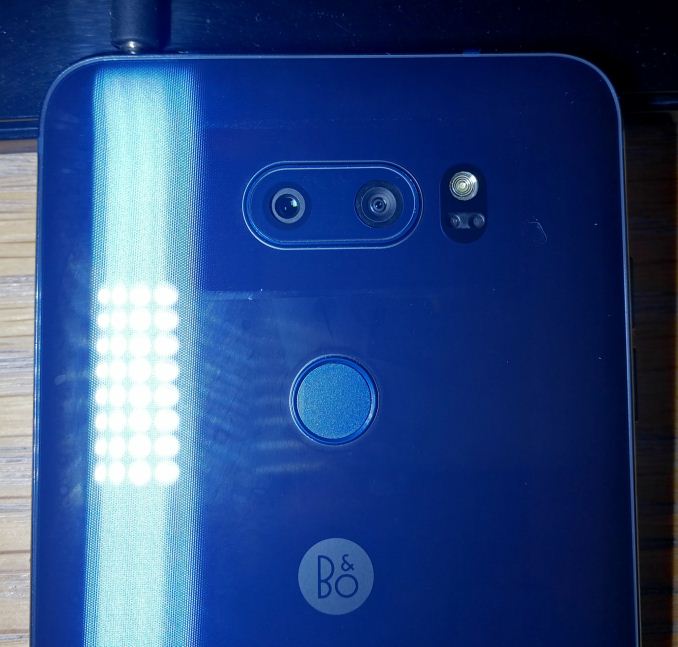
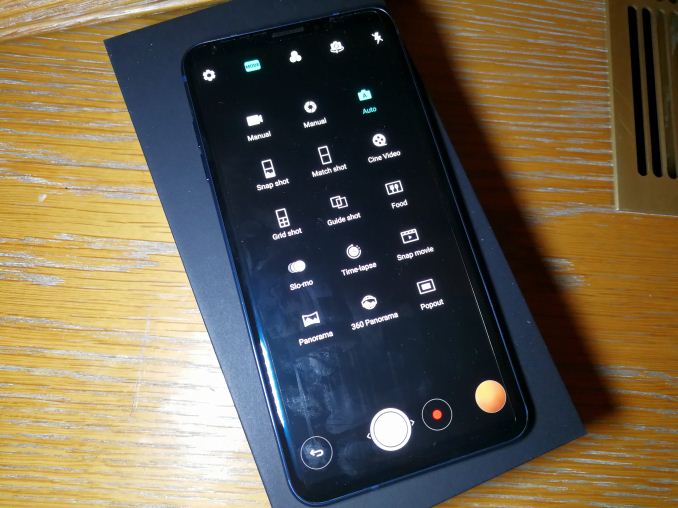
The aim for the V30 is all about visuals. A better display, a better camera, new camera features, and overall a new visual experience for users that share content either as a video creator or as an image junkie. Moving to the camera, LG is employing a dual camera system, using a 71° degree main camera with the new Sony IMX351 sensor supporting OIS, and a 120° wide angle camera for wider shots and some zoom functionality. The primary rear camera is a 16MP design with a f/1.6 aperture, noted as being the widest in the market. This is combined with a new lens strategy, whereby the 6-element lens now makes one of them glass (rather than them all being plastic), which LG states as offering 4% more light into the sensor. We were told that the first lens element is the one updated, as when they tested the full range, this made the most difference. On the back of this change, LG is stating that their dynamic range is wider than their competitors, offering 11 stops at 6 dB rather than 9.5, and competing with more expensive cinema cameras and beating the smartphone competition. This also means wide color gamut support, using logarithmic color imaging (rather than a linear scale) for a much wider dynamic range. The log color support is via a new feature for their camera, LG Cine Log.
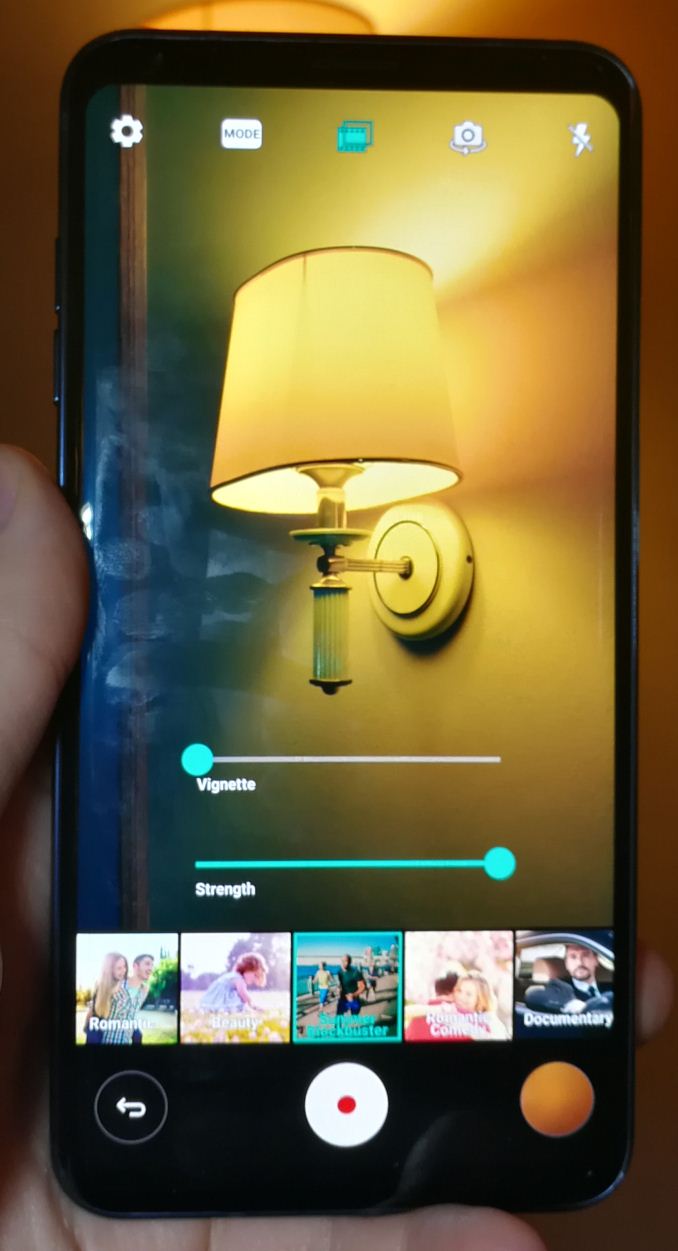
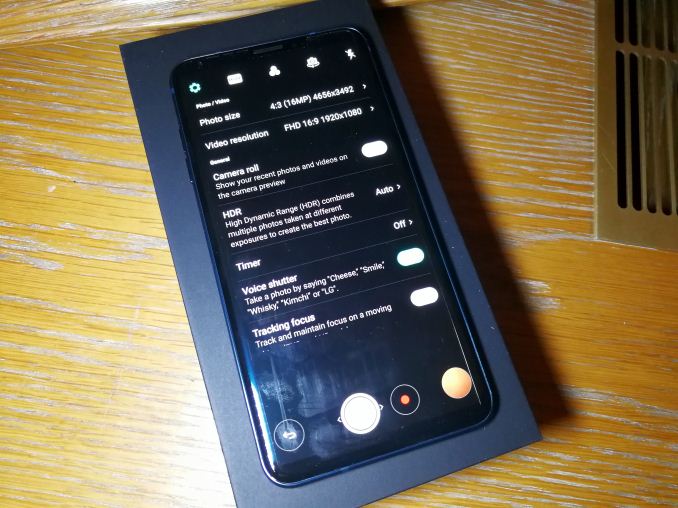
LG spent a lot of time talking to us about Cine Log. Using the manual video mode and enabling Cine Log, and recording the color information with the MPEG4 video, users can combine the data with their own custom look-up-tables using software such as DaVinci Resolve in order to adjust the color tone mapping. Inside the Cine Log portion of the app, users can already select 15 different cinematic effects that LG used experienced outside video editing professionals to help calibrate. This includes effects such as romantic, drama, mystery, thriller, documentary, noir, flashback, scenery, melodrama, classic and pop-art. On the face of it, these might appear to be extensions of popular filter apps, but LG states that their solution is more than just a simple filter, using specific color enhancement. We took a few photos of a lamp in a dimly lit room and could see a difference.
Another feature of Cine Log is point-zoom, which allows the user to zoom in to any part of an image, rather than requiring the camera to be moved to actually face the object in the dead center.
Not specifically in Cine Log is an app called Graphy, providing a series of stock photos with various ‘looks’ and feels to them. Users can recreate the professional settings of these photos for any images of their own by selecting them – the app applies all the required settings. For video recording, LG is promoting the inclusion of two high-performance microphones in the design. With the addition of the standard phone receiver, the internal DSP will combine the audio from all sources to provide a single output (although they don’t state what the target SNR of the path is). LG stated that this audio is good at 24-bits and 96 kHz, though that doesn’t state anything about the quality. I played around with the feature, and it does offer some immediate features that should be on all smartphones: additional gain jumps, low-frequency filters, and a limiter for clipping.
It’s worth noting at this point in our briefing, one of the analysts mentioned that at the beginning LG was targeting ‘Generation V’ / millennials with their new phone, but so far all the features being presented were still very hard technology tools for experts and professionals. LG responded by saying that most of these features were available as one-button behind the scene applications: many of these users know how to apply a filter, and the application of their tools that are more complicated underneath the surface can be done in the same way.
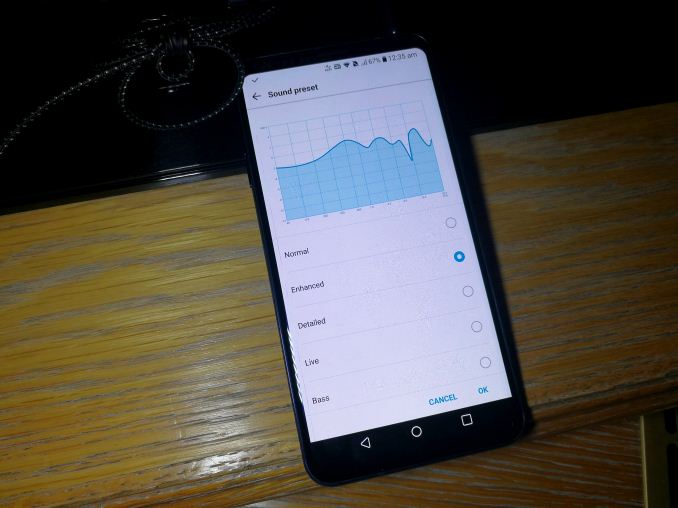
LG was keen to discuss their audio technology. In the V30 they are using a ‘Quad DAC’ implementation, supporting 24-bit lossless audio output through the headphones. They are keen to promote that the V30 is the world’s first MQA mobile player for HiFi streaming – MQA is the Master Quality Authenticated audio codec using compression and file fingerprinting suitable for high fidelity digital audio from internet streaming. The HiFi modes on the phone are only available through the 3.5mm TRRS audio jack, and offer a small selection of EQ modes for different types of music. To assist with the audio experience, LG is partnering with Bang & Olufsen Play to provide some very reasonable in ear headphones.
I tried to do some non-blind testing while I was at the show, however all my lossless audio files are at home. What I did have to hand was entirely subjective – I couldn’t blind test, and the only real difference I heard was when I adjusted the EQ settings. LG doesn’t implement a full EQ configuration tool here, although I assume a third-party app could do the business. For non-audio-visual features, LG is promoting its new voice recognition unlock. This allows the user to pick their own 3-5 syllable phrase to unlock the phone. Technically all Qualcomm Aqstic capable smartphones should be able to do this, and it allows unlock functionality in combination with face recognition, fingerprint recognition, and LG’s Knock code. The lock screen also provides a permanent display of the clock, the battery life, and any relevant notifications. The OLED panel we were told helps keep the power low with this feature, especially as the refresh rate can be super low (I imagine as low as one frame a minute, perhaps). LG is also playing the AI game, by providing Google Assistant with the device. LG has worked with Google for LG specific commands, mainly for the camera, to allow certain voice commands to start recording video in wide angle mode, in Cine Log mode, or in manual mode. The idea being that the user can prop the smartphone up somewhere and tell it to start taking a video. Unrelated to Google Assistant, but LG will allow the camera to take an image when the user says the word ‘Kimchi’. I found this mildly amusing and very Korean.
LG talked a lot in our pre-briefing about color accuracy, mainly pointing at the camera technology, although they didn’t state what color accuracy they were aiming for on the display. The software does have an additional option to enable sRGB mode for photos, but in our preview device even at minor viewing angles we saw a very noticeable blue tinge.
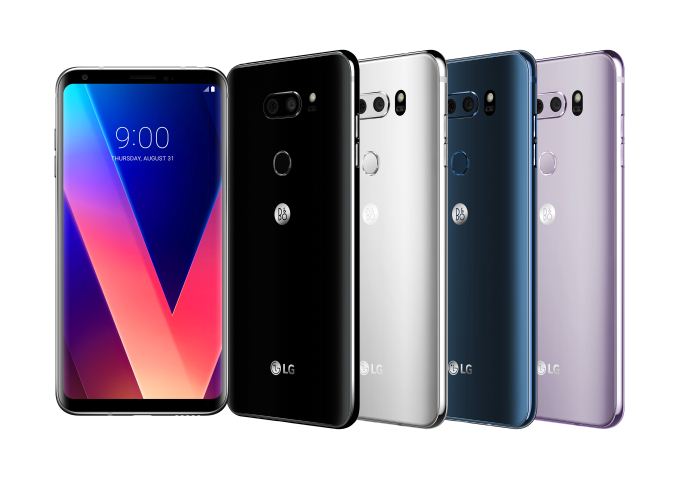
For the design, LG is using a Gorilla Glass 5 back and front cover here; with a choice of Aurora Black, Moroccan Blue, Cloud Silver and Lavender Violet colors (some regions may not have all colors). The design is tested to MIL-STD-810G standards, known as MIL spec, and carries an IP68 rating, meaning that it is waterproof in 150cm / 5 feet of water for 30 minutes. That also typically means that manual repairs are a pain without warming up all the waterproof sealant in the device, unless LG is using O-rings to do the business. I’ll wait for iFixit’s teardown.
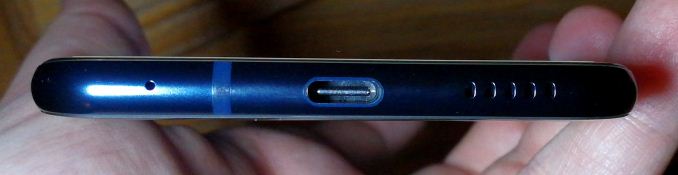
The LG V30 comes with a single USB Type-C port (no word if it is USB 2.0 or USB 3.0), and the power button is now part of the rear fingerprint sensor. Moving the power button from the side confused me for a strong minute, as the only other buttons on the device were the volume buttons on the left. The fingerprint sensor being on the rear is more suitable than one off to the side, and personally I'm not used to fingerprint buttons on the front. But in anecdotal testing the sensor recognition is a shade slower than my Mate 9, but not noticeably so unless you are concentrating hard.
LG is committed to bringing Android 8 over to the V30, and have us a tentative ‘probably within the next 6 months’ as an answer about moving on up. This hands-on was a really small timeframe to test the handset – it was put in my hand at 10pm, I went to eat dinner, and it’s now 2am while I’m still writing it up. The press event for LG tomorrow starts at 8am for doors open, 9am for the presentation, so there’s not much to say yet aside from the general feel of the device (plus, as it stands I’ll get 4 hours sleep tonight). Personally, it’s going to be interesting – I’ve never used a phone with OLED or wireless charging yet, and with my current daily driver starting to feel the effects of slowdown, I’ll take this V30 for a spin for a few months and report back. Gallery: LG V30 Hands On       | |||||||||||||||||||||||||||||||||||||||||||||||||||||||||||||||||||||||||||||||||||||||||||||||||||||||||||||||||
| 9:30a | Now Shipping: AMD Ryzen Threadripper 1900X & Ryzen Pro CPUs
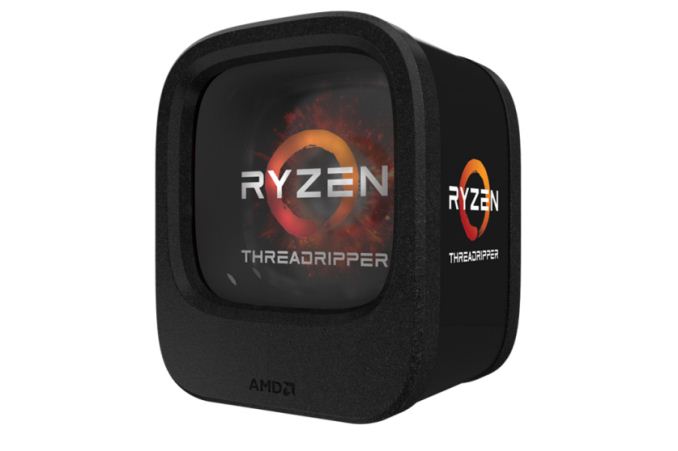
Back when AMD announced their leading-edge Ryzen Threadripper 1950X and 1920X, the company also tucked in an announcement that there would be a third, cheaper Threadripper: the 1900X. Now after about a month’s wait since the first two chips launched, the 1900X is finally hitting the streets.
Of AMD’s Threadripper product stack, the 1900X is easily the most unusual of the chips. Whereas the 1950X and 1920X were the full-fledged version and the cheaper-but-still-thread-heavy-alterativ So why is AMD releasing an 8 core version of Threadripper when one Zeppelin die can accomplish the same thing at $100 less and almost half the TDP? Because while the 1900X may be a few cores short of a full Threadripper, it retains the platform’s immense I/O and memory bandwidth capabilities. In other words, 4 DDR4 memory channels and 60 + 4 PCIe lanes, offering twice the cumulative memory bandwidth and three times as many freely available PCIe lanes as AMD’s standard Ryzen processors. In fact other than cores, the only other thing it loses out on from the 1950X is L3 cache, with 16MB rather than the 32MB of its higher core counterparts. Conversely, its 3.8GHz base clockspeed makes it the highest base clockspeed of all of AMD’s Ryzen CPUs, standard and Threadripper. It does bear mentioning that Threadripper’s multi-die layout does comes with the same potential caveats as the other SKUs, which is why the 1900X isn’t going to be equal to or better than the 1800X in all scenarios. However with a MSRP of $549, the 1900X is now the cheapest way to get a high-I/O x86 processor. So for tasks that require a more limited number of threads and a lot of I/O and memory bandwidth, the 1900X should fit comfortably in its niche. As for reviews of the new processor, unfortunately AMD did not sample the 1900X in advance. We're angling to get one in soon, so please stay tuned for that. Gallery: AMD Threadripper 1900X Slide Deck
      Meanwhile also shipping out the door from AMD today is their Ryzen PRO processors. Announced back at the end of July, these are enterprise IT -focused versions of AMD’s standard Ryzen processors, offering longer support periods along with features such as enhanced security and added manageability features. Accordingly, AMD’s partners have started showing off their latest enterprise-systems, with Dell, HP, and Lenovo all set to begin shipping Ryzen PRO-equipped systems in the following weeks.
| |||||||||||||||||||||||||||||||||||||||||||||||||||||||||||||||||||||||||||||||||||||||||||||||||||||||||||||||||
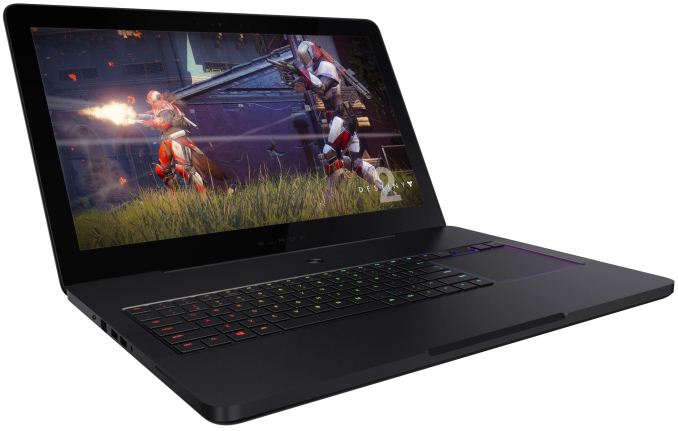
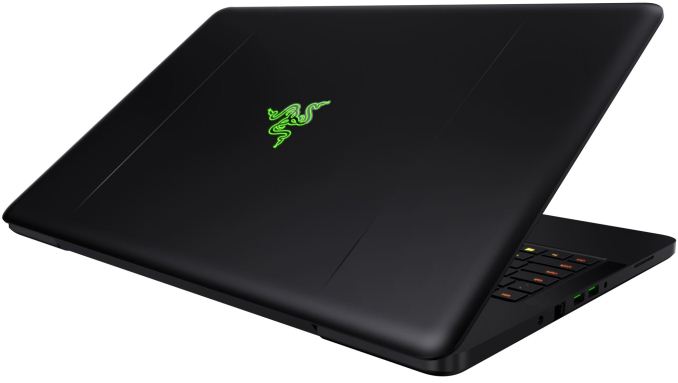
| 11:00a | Razer Reveals New Blade Pro: GTX 1060 Graphics, Full HD, Lower Price Point
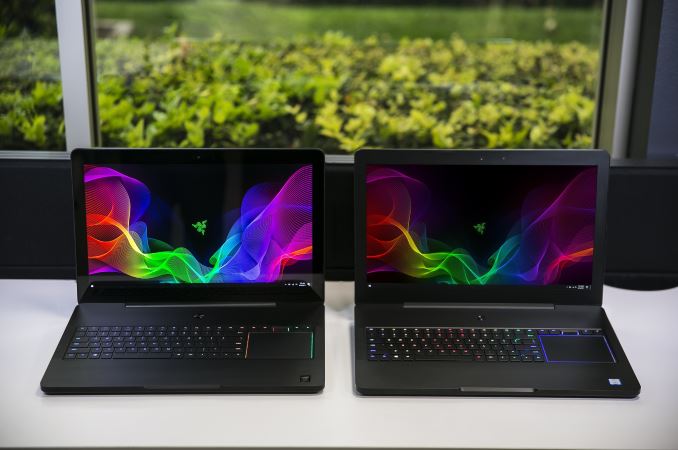
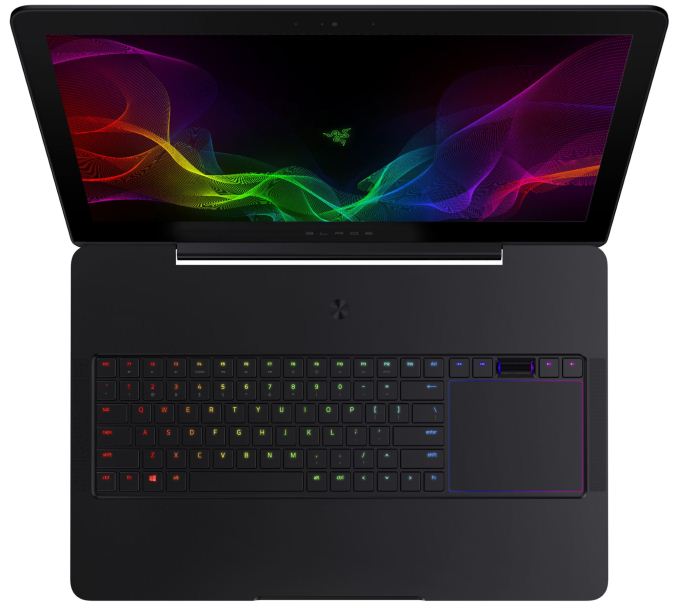
Those familiar with the desktop replacement market (DTR) likely know Razer and what it brings to the table with its Razer Blade Pro laptop. For those that are not, this powerful laptop that could shoehorns in an i7-7820HK CPU with 4c/8t offering speeds to 4.3 GHz when overclocked. It sports a 17.3” 4K UHD IGZO G-SYNC display and comes with a fully appointed GTX 1080. High-end specs in a laptop like this can certainly put a hurting on your wallet with the 4K THX Certified Blade Pro described above fetching $4000 and up. Announced at IFA and filling in the lower price point is Razer's new Blade Pro Full HD which is targeted towards gamers and creative professionals who need power desktop replacement...without spending $4000.
Just as the name implies, the 17.3", 120Hz IPS screen sports a 1920x1080 resolution. Not needing to push so many pixels, it comes with a GTX 1060 6GB GPU. While the GTX 1060 isn't a slouch, I would prefer to see a 120Hz monitor matched up with a faster GPU (GTX 1070 perhaps?) in order to enjoy the faster refresh rate in more games longer. But, the point of this product isn't top notch performance. There is more of a focus on being a budget gaming laptop/desktop replacement with the Full HD.
Available system memory also starts out at 16GB(2x8GB) 2400MHz (4K model uses 2667MHz) DDR4 expandable to 32GB (2x16GB). A unique feature to the Full HD model is having actual SODIMM slots and the ability to upgrade the ram. The 4K version has soldered in 32GB; no upgrade is possible there. Storage options also change between the two models with the Full HD's base offering a 256GB M.2 PCIe SSD (expandable to 2TB M.2 PCIe). They also do not offer RAID options. Instead of storage drives all compromised of M.2 PCIe drives, the Full HD favors a slower, cheaper, but higher capacity 2TB mechanical drive (expandable to 4TB HDD). See more details in the specifications table.
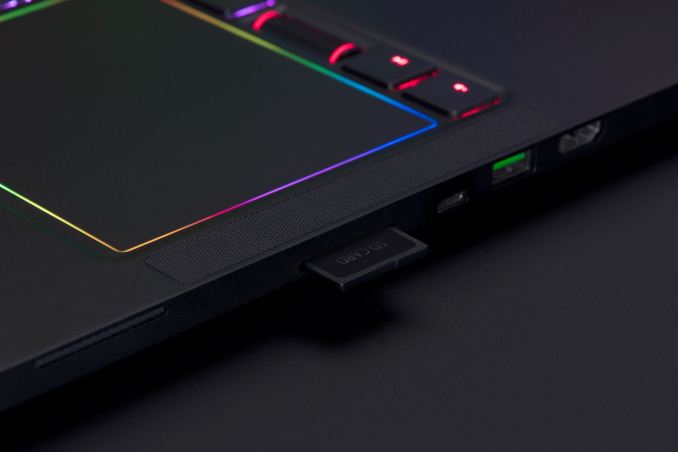
Some other differences between these two come in the form of weight reduction from 7.8 to 6.8 lbs as well as the Full HD model using a 70 Wh battery with the same 165W AC Adapter from the Blade 14, instead of the 99 Wh battery and 230W AC Adapter combo in the more expensive Blade Pro. Another cost saving change was the Full HD model losing the mechanical keyboard and going with a membrane based keyboard, which is the same one found in the Blade 14. Dimensions of both laptops remain the same since its the same chassis with different underpinnings (and design cues). Connectivity is also the same with three USB 3.0 ports, a Thunderbolt 3 port for high-bandwidth/advanced connectivity, HDMI 2.0 (VR Ready), SDXC card reader, and the Killer DoubleShot Pro network technology employing a Killer E2400 Gbe, as well as the Killer Wireless-AC 1535 (802.11 a/b/g/n/ac, 2x2:2 with Bluetooth 4.1). Like the Blade 14, the FHD Blade Pro also supports the Razer Core for eGFX, if necessary.
See both the 4K and Full HD model specification comparison in the table below.
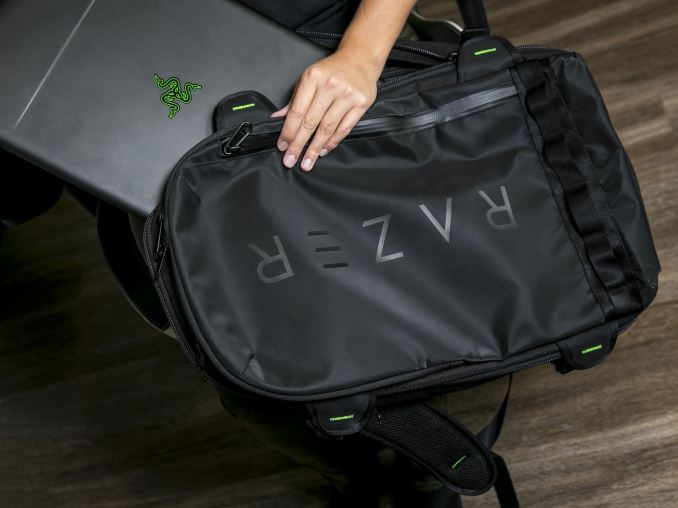
Base price on the Full HD machine with the 256GB M.2 PCIe SSD is $2299.99. The cost will go up when increasing capacity on the SSD and/or HDD. Availability of the Razer Blade Pro Full HD will be Worldwide in Q4 2017. Razer Rogue Backpack 17.3"At IFA, Razer also announced a companion product to their 17" laptops introducing the Razer Rogue Backpack 17.3". From the looks of it, not much has changed outside of the size and ability to carry larger laptops. Its smaller siblings offered a tear and water-resistant exterior, a TPU padded scratch proof interior protecting the laptop, and a dedicated compartment for the laptop itself. The backpack is a frameless design with heavily padded shoulder straps and back panel. Razer says the Rogue backpack is engineered to evenly distribute the weight of heavier loads over the back while the chest strap is said to prevent fatigue.
Gallery: Razer Rogue 17.3" Backpack
     Pricing and availability were for the 17.3" backpack were not released at the time of publication. The smaller 15.6" is $99.99 through the Razer website so I would expect the larger model to cost a bit more. Related Items: | |||||||||||||||||||||||||||||||||||||||||||||||||||||||||||||||||||||||||||||||||||||||||||||||||||||||||||||||||
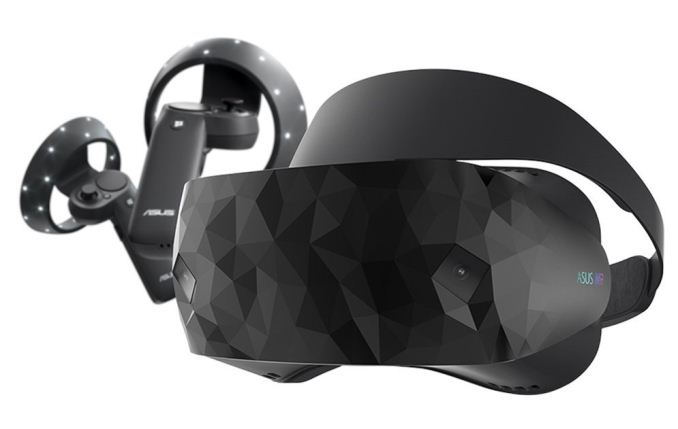
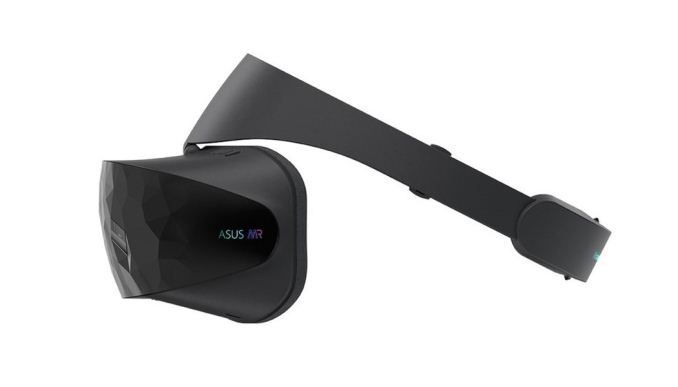
| 1:00p | ASUS Details HC102 Mixed Reality Headset for Windows
ASUS has revealed new details about its upcoming Windows Mixed Reality headset, including specifications and price--essentially everything except for timing. Microsoft is gearing up for the Windows 10 Fall Creators Update, which will introduce the company’s virtual reality platform: Windows Mixed Reality. Leading up to IFA in Berlin, Microsoft invited journalists to test out the Windows MR motion controllers, which may have kick-started a chain reaction of announcements from Windows MR hardware partners. On Monday, Dell revealed its aptly named Visor HMD. Tuesday, Acer spoke briefly of its Windows Mixed Reality HMD, though it didn’t reveal anything we didn’t already know about the bright blue headset. And now today, ASUS played its mixed reality hand.
Unlike Dell, ASUS didn’t give its HMD a fancy name. It's simply the ASUS Windows Mixed Reality Headset. It offers dual 1440 x 1440 pixel displays (for a total of 2880 x 1440) that operate at up to 90Hz. The HMD also includes the typical sensors you would expect, such as a gyroscope, accelerometer, and magnetometer. Microsoft’s Windows MR platform offers inside-out tracking (6DoF) systems that don’t require external cameras, and each Windows MR HMD features two front-facing cameras that provide spatial tracking for the unit. The ASUS headset also includes a proximity sensor. We’re not yet sure if that’s standard equipment for Windows MR headsets or a unique feature of the ASUS HMD.
ASUS said it focused on designing a headset that would offer good hygiene. Room-scale VR games get you up and moving, and it’s not uncommon to break a sweat while playing an active game. ASUS said that the face cushion on its Windows MR headset is made of a fast-drying material with an anti-bacterial coating on the surface. The Windows MR platform is billed as a productivity platform as much as it is an entertainment platform. Microsoft sees a future where you’ll do your work within VR and then play games in VR with the same hardware. ASUS made sure that its headset is comfortable to wear for long periods of time. It features a “balanced crown” design, which takes the pressure off of your cheeks and nose and distributes the weight between your forehead and the back of your head. Also, the headset weighs less than 400g, so it should put minimal stress on your neck. ASUS didn’t say when it would release the ASUS Windows Mixed Reality Headset, though it said the hardware would sell with Microsoft’s motion controllers for €449. The company didn’t reveal the US price. Dell’s Visor headset is scheduled for an October release, and we imagine that ASUS would shoot for a similar launch window. Kevin Carbotte contributed to this report | |||||||||||||||||||||||||||||||||||||||||||||||||||||||||||||||||||||||||||||||||||||||||||||||||||||||||||||||||
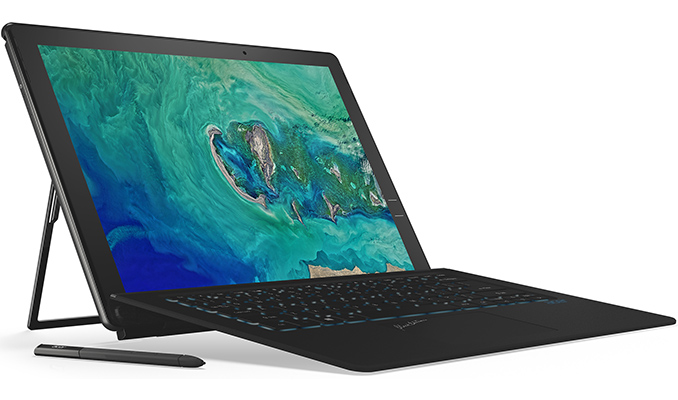
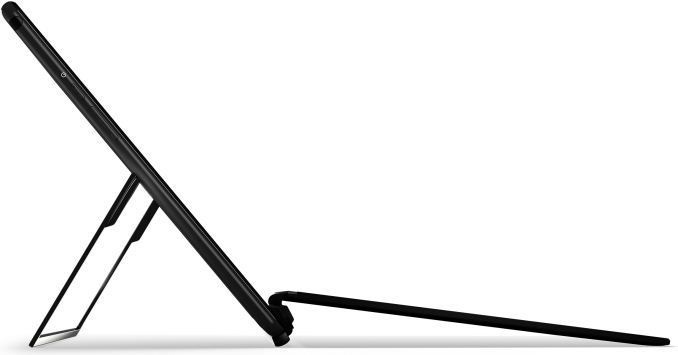
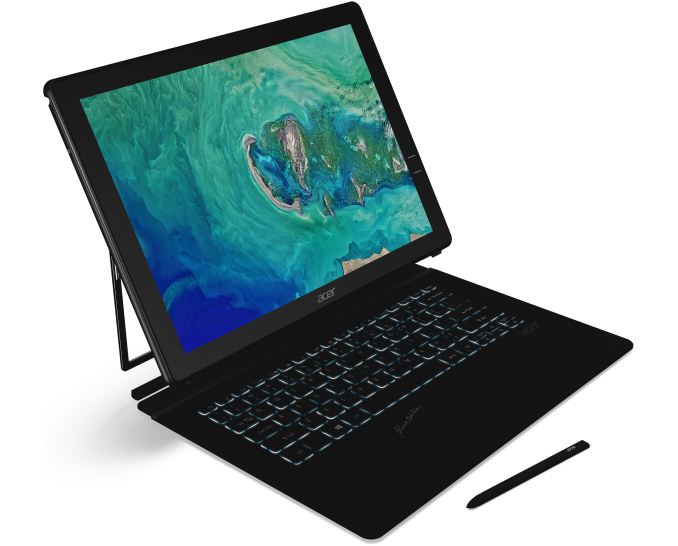
| 2:00p | Acer Announces Switch 7 Black Edition 2-in-1: Core i7, GeForce MX150, TB3, Fanless
This week at IFA Acer has introduced their first 2-in-1 convertible laptop with a discrete GPU. Based on Intel’s 8th generation Core i-series CPU, the Switch 7 Black Edition system has a 13.5” display and uses a special passive cooling system that cools down the system’s CPU and GPU without using any fans. The notebook will not be very affordable, but it will also be rather unique. In a bid to satisfy demands of users seeking for higher performance graphics, notebook makers this year decided to adopt discrete GPUs for low-power and relatively affordable laptops. To some degree, this happened because the performance of Intel’s iGPUs hasn't shifted much as of late and, PC makers need to demonstrate performance improvements compared to previous-generation computers. A good news for the end-user is that there will be many more laptops powered by Intel’s 8th generation Core processors with entry-level discrete GPUs than there were last year from different manufacturers. Acer’s new convertible will be one of them.
The Acer Switch 7 Black Edition will be based on Intel’s Core i7 8000-series CPU (presumably featuring four cores) accompanied by NVIDIA’s GeForce MX150 discrete graphics chip (GP108, 384 stream processors, 24 texture units, 8 ROPs) with 2 GB of GDDR5 memory. The CPU and the GPU will be cooled using Acer’s dual LiquidLoop fanless cooling system that does not use any fans and is therefore utterly quiet. The machine will use solid-state storage and it is logical to expect the Switch 7 Black Edition to feature all modern I/O capabilities, including 802.11ac Wi-Fi, Bluetooth, Thunderbolt 3, USB, a MicroSD card reader and so on. The Switch 7 Black Edition will come with a 13.5” IPS touch-enabled display with a 2256×1504 resolution and equipped with a stylus powered by Wacom’s EMR technology. The tablet itself will weight 1.15 kilograms (2.5 lbs) and given dimensions of the tablet, it is logical to assume that the system is to be equipped with a decent battery. Interestingly, the Switch 7 Black Edition will also have an optical under-glass fingerprint sensor design with POA (power on authentication). As for the materials, the 2-in-1 will be made of aluminum.
Acer plans to start selling the Switch 7 Black Edition in the North America and Europe this December. In the U.S., the machine will start at $1699, whereas in EMEA its MSRP will start at €1999. As usually, configurations will vary by region and country. Gallery: Acer Switch 7 Black Edition
      Related Reading: | |||||||||||||||||||||||||||||||||||||||||||||||||||||||||||||||||||||||||||||||||||||||||||||||||||||||||||||||||
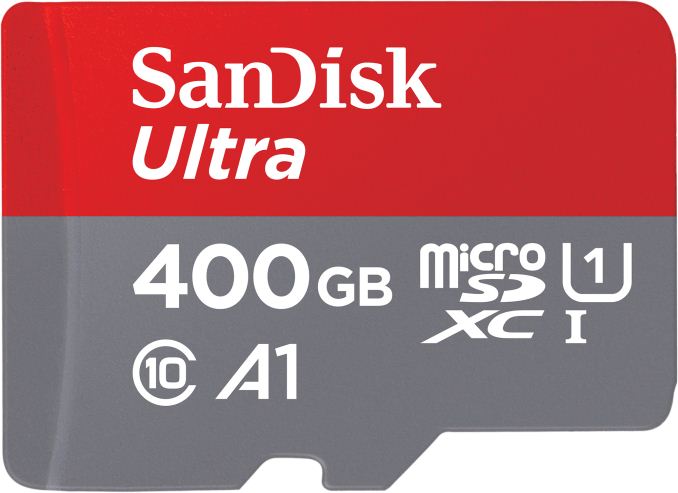
| 3:00p | Western Digital Launches SanDisk Ultra microSD Card with 400 GB Capacity
Today Western Digital is taking the wraps off of the industry’s first microSDXC card with a 400 GB capacity. The card is aimed at Google Android-based smartphones or tablets and can run applications that require A1 performance class spec. Meanwhile, given the current shortage state of the NAND market combined with its class-leading density, the price of the card is not going to be low, with pricing running closer to that of a higher-end SSD. The Western Digital is not disclosing which NAND flash chips are used by the SanDisk Ultra microSDXC 400 GB card, but given the capacity of the device, it is highly likely that we are dealing with modern, high capacity 3D NAND. When it comes to performance, the microSDXC card uses the UHS-I bus and features transfer speeds of up to 100 MB/s. In addition, the card is compliant with the SD Association A1 Application Performance specification and therefore supports sustained sequential performance of 10 MB/s and at least 1500 random read and 500 random write IOPS. In addition, the card is designed to sustain extreme conditions and can operate in the range between -13ºF to 185ºF (-25ºC to 85ºC).
To simplify usage of the card, Western Digital offers an updated version of the SanDisk Memory Zone app that helps to organize data on Android-based devices and easily back it up to the card.
The 400 GB SanDisk Ultra microSDXC UHS-I card will be available shortly from SanDisk.com and other retailers in the U.S. for $249.99, which is a rather high price for a memory card. A good news is that the product is covered by a 10-year warranty.
Related Reading: | |||||||||||||||||||||||||||||||||||||||||||||||||||||||||||||||||||||||||||||||||||||||||||||||||||||||||||||||||
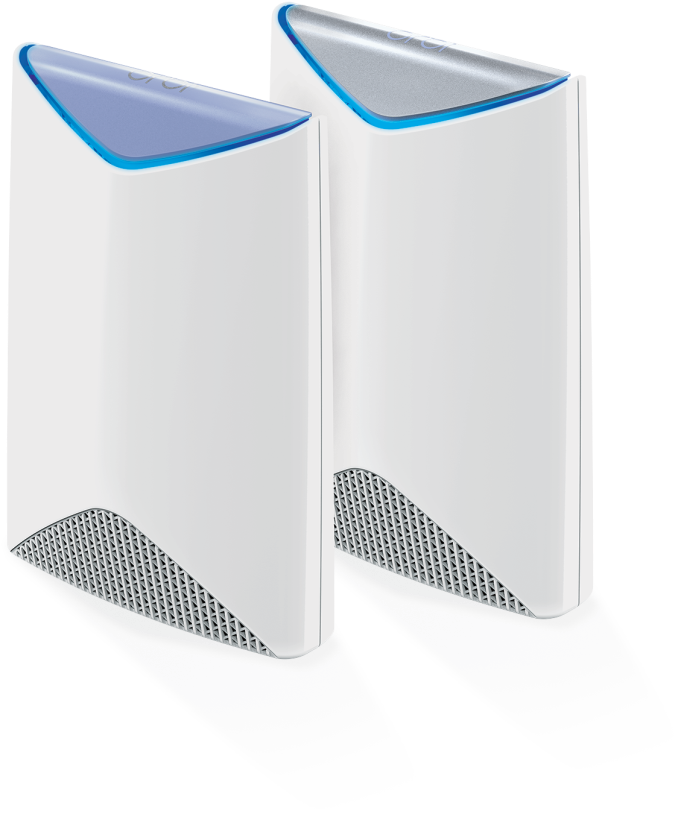
| 6:00p | Netgear Launches Orbi Pro Wi-Fi System Kit for SMBs
Netgear's Orbi Wi-Fi system has emerged as one of the leading mesh / Wi-Fi systems in the market in terms of performance. The platform, with its FastLane 3 marketing moniker, was recently introduced into the range extender market also (with the Nighthawk X6S EX8000). Today, Netgear is bringing tri-band Wi-Fi to the SMB market in the form of the Orbi Pro. The Orbi Pro (SRK60) is essentially the same as the high-end Orbi (RBK50) for the consumer market - That implies an AC3000-class router, with a 4x4 dedicated backhaul link, and one 2x2 5 GHz and one 2x2 2.4 GHz radios at each node. The target market is small businesses that don't have dedicated IT staff. The setup process, like that for the consumer version, has been made simple enough for DIY installs (unlike most other business-targeted solutions). Managementis through an app, though, a web server is also available as part of the traditional router management model. In order to better serve the target market, the Orbi Pro makes the following changes compared to the high-end Orbi for consumers: The primary difference in the firmware compared to the RBK50 is the presentation of three different SSIDs out of the box - one for administration, one for employees, and another for guests. The LAN ports (3 on the router, and 4 on the satellite) are part of the administration network. The networks are isolated from each other, with the guest network carrying typical options such as restricted time allotment for clients, a captive portal for allowing access etc. Netgear intends the system to be used for scenarios with up to 40 simultaneous devices. The SRK60 will become available next month and have a MSRP of $500. | |||||||||||||||||||||||||||||||||||||||||||||||||||||||||||||||||||||||||||||||||||||||||||||||||||||||||||||||||









| << Previous Day |
2017/08/31 [Calendar] |
Next Day >> |