[Most Recent Entries] [Calendar View]
Wednesday, September 6th, 2017
- AMD Releases Bristol Ridge to Retail: AM4 Gets APUs
- AMD 7th Gen Bristol Ridge and AM4 Analysis: Up to A12-9800, B350/A320 Chipset, OEMs first, PIBs Later
- Logitech Launches G203 Prodigy Gaming Mouse with A New 6000 DPI Sensor
- Logitech Announces The Ambidextrous G900 Chaos Spectrum Gaming Mouse
- Corsair Launches Glaive RGB Mouse: 16,000 DPI, Interchangeable Grips, LEDs
- Razer Announces The Lancehead Gaming Mice
- Razer Updates The DeathAdder Elite Gaming Mouse
- Logitech Formally Exits OEM Mouse Market
- Logitech G303 Daedalus Apex Capsule Review
- The Logitech MX Anywhere 2 Mouse: Portable Performance
| Time | Event | |||||||||||||||||||||||||||||||||||||||||||||||||||||||||||||||||||||||||||||||||||||||||||||||||||||||||||||||||||||||||||||||||||||||||||||||||||||||
| 8:00a | The Chuwi LapBook 12.3 Review: Premium Feel, Budget Price Every once in a while, we get surprised. It seems to be a rare thing in this industry these days, but it does still happen from time to time. The Chuwi Lapbook 14.1 was one such surprise when we reviewed it earlier this year. Chuwi hasn’t been around for a long time, but in one fell swoop, they forever changed the expectations on a budget laptop. Reasonable components, coupled with a good IPS display, instantly changed the expectations on any budget offering from the big PC makers. So far, they’ve not really responded, and the LapBook 14.1 is easily the top pick for anyone wanting a 14-inch laptop for not a lot of money. So, imagine the shock when this still relatively unknown PC maker surprised us again. Earlier this year, they announced the LapBook 12.3, which is now available. It takes the same basic internals from the LapBook 14.1, couples it to the same display found in the Surface Pro, and packs it all into an all-aluminum chassis. The budget bar has been raised again. | |||||||||||||||||||||||||||||||||||||||||||||||||||||||||||||||||||||||||||||||||||||||||||||||||||||||||||||||||||||||||||||||||||||||||||||||||||||||
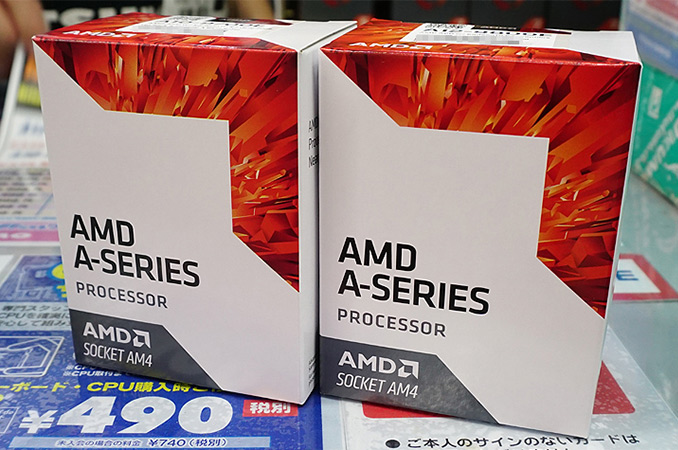
| 10:00a | AMD's 35W "Bristol Ridge" A-Series APUs Now Available at Retail
We have some good news for low-power AMD builders this morning: AMD has (finally) begun to sell the 35W versions of their "Bristol Ridge" desktop APUs. Overall the company has released 3 35W retail Bristol Ridge SKUs, the A12-9800E, A10-9700E, and A6-9500E, with these chips fleshing out the low-power segment of AMD's AM4 platform through the end of the year. AMD originally released its Bristol Ridge A9000-series APUs to OEMs in mid-2016, targeting desktops and laptops. The SoCs integrate one or two Excavator v2 modules (two or four x86 cores in AMD’s nomenclature), a Radeon R5/R7 iGPU featuring AMD’s GCN 1.2 (3rd generation) architecture and up to 512 stream processors, a dual-channel DDR4 memory controller and so on. Earlier this year AMD finally decided to release a rather broad lineup of its 7th-generation A9000-series APUs on the retail market, enabling end-users to build their own inexpensive AM4 systems, essentially popularizing the AM4 ecosystem compatible with the company’s latest Ryzen processors in general.
The originally planned retail lineup for Bristol Ridge included 11 SKUs with a mix of 35 W and 65 W TDPs, but until now, only select 65 W SKUs were available. In the meantime, the interest towards inexpensive Mini-ITX systems is high these days. AMD spent a little over a month after the formal introduction of the family to bring the 35 W A12-9800E and A10-9700E APUs to store shelves. In the last days of August, the new chips hit store shelves across the world: they can be purchased in the U.S., Europe and in Japan, a clear indicator that they are indeed available broadly. The AMD A10-9700E costs $85 – $91 in the U.S., whereas the more advanced AMD A12-9800E is available for $105 – $113, depending on the retailer. Meanwhile, the A6-9500E, the most basic 35 W Bristol Ridge APU, can be purchased for around $55 – $58. In Europe and Japan, prices are traditionally higher, see the table below for details. Overall, the 35 W APUs from AMD do not look very affordable, but it is typical for chipmakers to charge extra for energy-efficient parts.
From AMD’s standpoint, the main purpose of Bristol Ridge CPUs and APUs is to fill the gap in the AM4 lineup before the company releases Raven Ridge APUs and cheap CPUs based on the Ryzen microarchitecture later on. Related Reading: Sources: Amazon, Amazon UK, Caseking, Newegg, AKIBA PC Hotline, Hikaku.com. Image Source: AKIBA PC Hotline. | |||||||||||||||||||||||||||||||||||||||||||||||||||||||||||||||||||||||||||||||||||||||||||||||||||||||||||||||||||||||||||||||||||||||||||||||||||||||
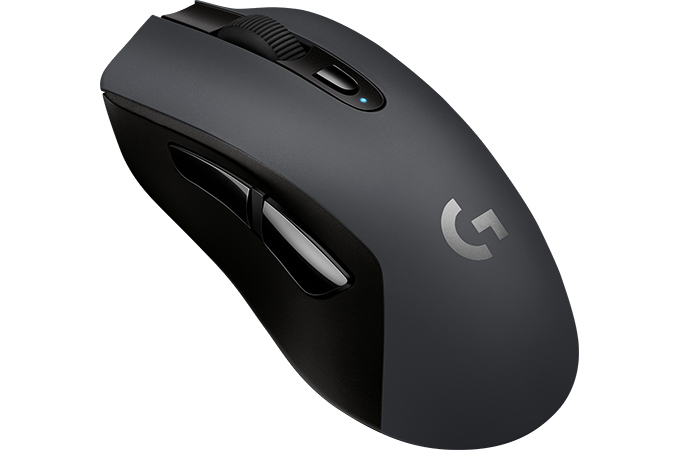
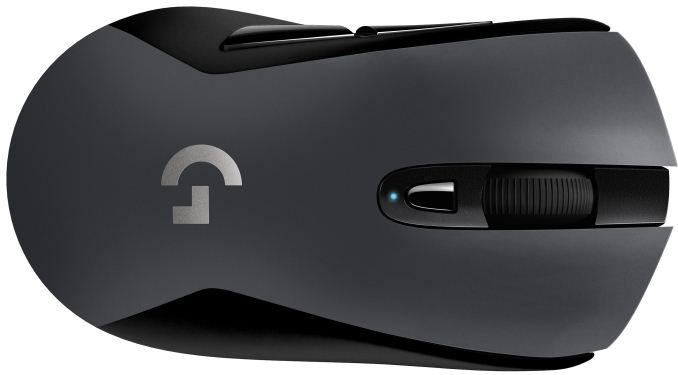
| 12:00p | Logitech Launches G603 ‘Lightspeed’: 12,000 DPI Hero Sensor, 1 ms Polling, 500 Hrs Battery
Logitech has introduced its new gaming mouse that weds high mousing precision, a long battery life, and low input lag with a relatively affordable price. The new G603 Lightspeed wireless mouse uses the company’s latest proprietary sensor with enhanced power efficiency, as well as its new interconnection technology. The market of gaming peripherals is expanding. New suppliers enter the scene every year with rather promising products. and established players use more and more sophisticated technologies for their halo products to differentiate themselves from others. Because of this, the complexity of gaming mice has increased rather substantially over the last 10 years, and this evidently affected their costs and prices. Flagship gaming products from established players like Logitech and Razer have long crossed the psychological $100 barrier and now halo products retail for $150. Meanwhile, the vast majority of gamers hardly need and can barely afford gear from the high end of the product stack. As a result, numerous companies focus on mainstream price points, they try to make mice that cost $60 to $80 more attractive for the buyer and grab sales away from the market leaders. A good example of such an approach is Corsair’s Glaive RGB, that features a 16,000 DPI sensor, interchangeable grips, programmability and RGB lighting at a price of $70. Obviously, Logitech has to respond to products like this one and the G603 Lightspeed seems to be a very strong contender for the sweet spot of the gaming mice market.
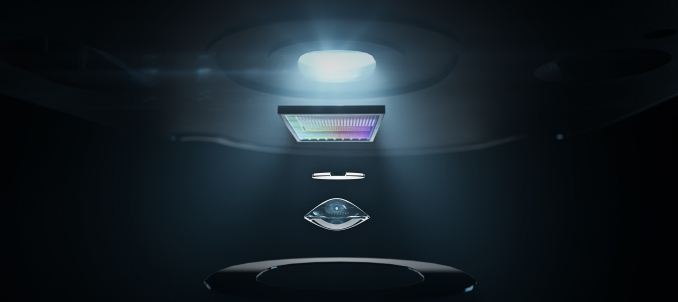
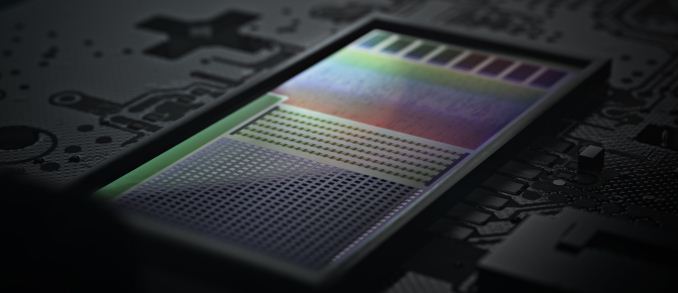
The Logitech G603 Lightspeed is based on the company’s new HERO (high efficiency rated optical) sensor with 12,000 DPI sensitivity, up to 400 inches per second speed and up to 40G acceleration. According to Logitech, the HERO sensor consumes less energy than other high-end optical sensors, which is why it can last for 500 hours non-stop gaming with maximum performance on two AA batteries.
One of the key selling features of the Logitech G603 is its Lightspeed wireless interconnection technology that promises to cut the input lag by optimizing internal architecture of keyboards/mice, decreasing polling rate of wireless receivers to 1 ms, increasing signal strength, applying a proprietary frequency hopping mechanism that uses the strongest interference-free channel and optimizing software. In a bid to preserve energy, Logitech’s software allows to reduce polling rate of wireless transmitter and receiver to 8 ms when working with non-gaming applications.
Since the Logitech G603 Lightspeed is a gaming mouse, all of its six buttons are programmable using the company’s LGS software. Just like some other contemporary mice and keyboards from Logitech, the G603 Lightspeed can work with two host systems while connecting to them using Bluetooth or Lightspeed. The Logitech G603 Lightspeed mouse will be available this month directly from the company and from its partners. As noted, since the G603 Lightspeed is designed to compete for mainstream gamers, its prices is not going to be too high — the MSRP is $69.99 in the U.S., but it will differ in other countries. Related Reading: | |||||||||||||||||||||||||||||||||||||||||||||||||||||||||||||||||||||||||||||||||||||||||||||||||||||||||||||||||||||||||||||||||||||||||||||||||||||||
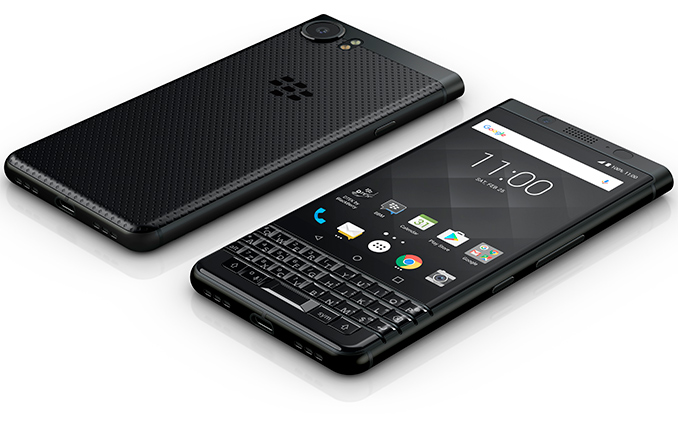
| 2:00p | BlackBerry Launches KEYone Black Edition: All-Black, 4 GB of RAM, 64 GB NAND
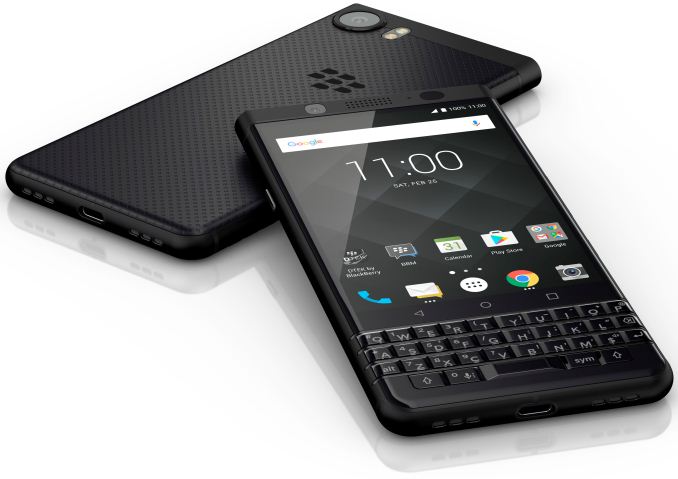
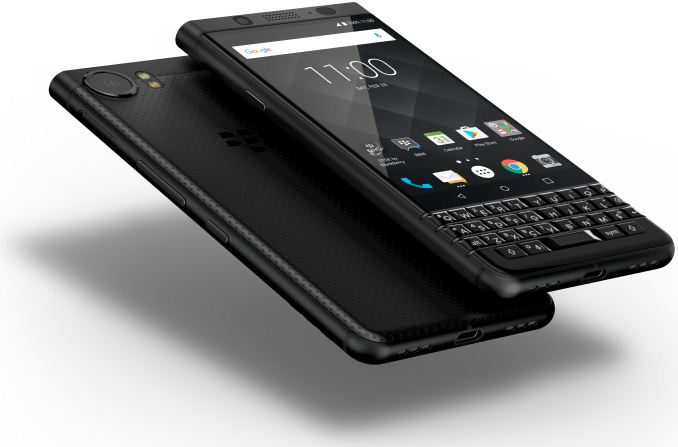
TCL's BlackBerry Mobile imprint has introduced a revamped BlackBerry KEYone smartphone at IFA trade show last week. The new KEYone Black Edition comes in all-black chassis and has more DRAM and storage space than the original KEYone model introduced at MWC earlier this year. The product will be available in multiple countries, but the U.S. is currently not listed among them. Traditionally, Research in Motion and then BlackBerry Limited developed most of their smartphones with business customers in mind and this prompted them to use strict designs and colors. Since black fits business environments well and looks good with almost any other color, most of BlackBerry handsets were black, sometimes with grey metallic inlays. Such methodology is fully understandable, yet when Nokia released its E-series smartphones in the mid-2000s, it took a bold approach and started to offer them in multiple colors. Eventually, BlackBerry Mobile took a page from Nokia’s book and introduced its Passport silver edition for those who prefer metallic, but only after it released an all-black Passport. With the KEYone, BlackBerry Mobile took a different tactic and launched the phone in metallic-with-black finish first, which looks very high-tech, but may not appeal to everyone from BlackBerry’s traditional customer base. The KEYone Black Edition makes the new BlackBerry completely black.
The KeyONE BE continues to use the frame made of anodized aluminum, but the color of the frame is now black, not metallic. BlackBerry Mobile does not disclose details about its anodization process and how durable the frame is. It is possible that BlackBerry has been experimenting with black anodized aluminum for a while, which is why it did not release an all-black version earlier this year as it wanted to ensure that the quality and robustness of its materials. From computing, imaging and other standpoints, the BlackBerry KEYone Black Edition is exactly the same as the regular one: Qualcomm Snapdragon 625 SoC, a 4.5” LCD display with Gorilla Glass 4, Qualcomm’s X9 LTE modem, a 3500 mAh battery, a 12 MP camera and so on.
Now, time to talk pricing and availability. The BlackBerry KEYone Black Edition will be available starting from September in the U.K., Germany, France, Canada, United Arab Emirates (UAE), the Kingdom of Saudi Arabia and Japan starting at €649/£549/$799 CAD/2,299 AED/ ¥79,800. BlackBerry Mobile also plans to make the product available in other markets in Europe, Asia and Latin America later this year. For some reason, the KEYone BE is not going to be available in the U.S., at least officially.
Related Reading: | |||||||||||||||||||||||||||||||||||||||||||||||||||||||||||||||||||||||||||||||||||||||||||||||||||||||||||||||||||||||||||||||||||||||||||||||||||||||
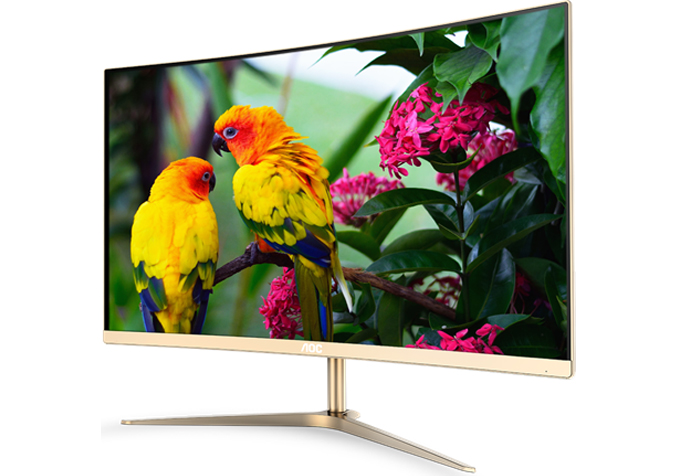
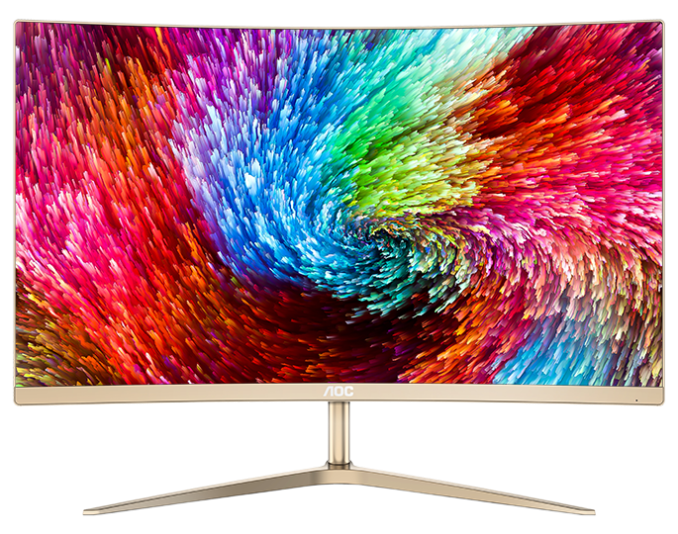
| 3:00p | AOC’s Entry-Level C2789FH8 27” Display Weds Gold, Bling, and Curvature
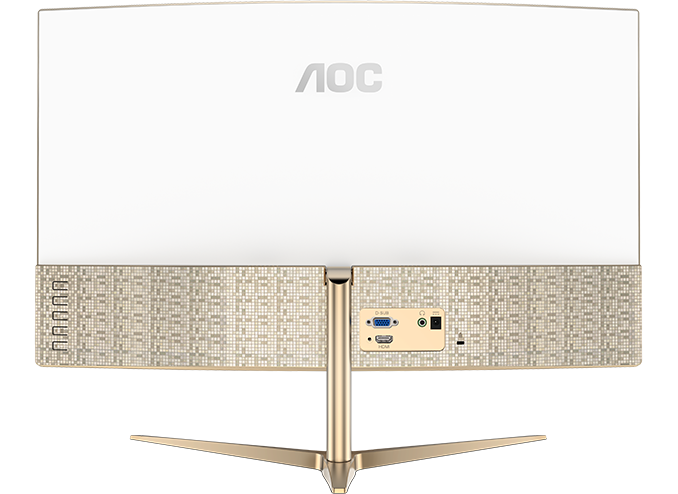
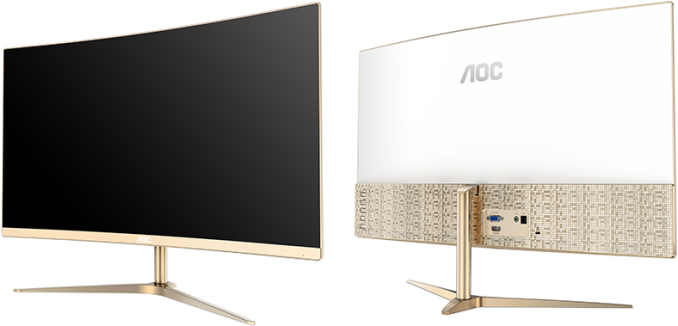
AOC has introduced its new curved display specifically aimed at the entry-level market. The new C2789FH8 monitor is one the industry’s first curved LCDs that comes in yellow gold chassis with gold-and-white mosaic on the back. From performance point of view, the display seems rather basic for 2017, but among its advantages are extended color gamut, AMD’s FreeSync adaptive refresh rate technology, and a very affordable price. The AOC C2789FH8 is based on a VA panel with FHD (1920×1080) resolution and 1800R curvature. The panel has a 250 nits brightness, a 3000:1 contrast ratio, a 4 ms GtG response time, as well as a 60 Hz maximum refresh. When it comes to color gamut, AOC says that the display covers 90% of the NTSC color space, which means that its capabilities exceed those required to display 100% of the sRGB color space. For some reason, AOC does not disclose anything about the sRGB support, but it is logical to expect a mass-market monitor to support the primary color space used by Microsoft’s Windows. Two other important features of the display are support of AMD’s FreeSync technology (the range is unknown, but typically it is between 30 and 60 Hz on basic models) and very thin bezels. AOC suggests that its thin bezels will enable owners to build dual or triple display configurations for gaming or productivity. In fact, AOC considers gaming as one of the important selling points of the C2789FH8. Apart from FreeSync, the manufacturer equipped the monitor with two proprietary features: Game Modes that optimize brightness, contrast and other things for different game genres (FPS, RTS, Racing) and Shadow Control that adjusts brightness in dark scenes. Besides, the manufacturer mentioned that the monitor also features the AOC’s Clear Vision video engine to upscale SD content to HD quality.
As for connectivity, the C2789FH8 has an HDMI and a VGA D-Sub input as well as features a 3.5-mm audio jack for headphones. D-Sub does not support HDCP or FreeSync, so it is not going to be used by gamers. A key reason why AOC decided to install a D-Sub port into a new monitor is probably because it wanted to address the market of older PCs that are still in use as well as very cheap new PCs with its inexpensive curved LCD.
Over the past nine months AOC has released several displays aimed at people who value style above everything else. First, the company launched its Q2781PS monitor with rose gold stand and Swarovski crystals in February. Then, it released the PDS-series LCDs co-developed with Porsche Design. The C2789FH8 is a yet another stylish display that comes in yellow gold chassis and inherits some pros and cons from the aforementioned models, but also introduces some new features. On the bright side of things, the screen itself is rather thin (its thickness is 7 mm) and it has very narrow bezels. To make it even more attractive for a potential buyer, it is curved and supports various features aimed at gamers (FreeSync, game modes, etc.). On the other hand, the resolution and brightness of the new SKU are lower than these of typical 27” monitors, something we have seen this with the AOC PDS-series already. Moreover, the unorthodox yellow-gold die-cast metal stand of the C2789FH8 does not allow any kind of adjustments (e.g., height, tilt, etc.), a tradeoff between style and price.
While the AOC C2789FH8 has a very flashy look, its price is not too high. AOC’s MSRP for the product is $249.99, but it is already available from Amazon for $199.99. The manufacturer says that the “golden” curved display will also be available from Newegg shortly. Considering the price point, the AOC C2789FH8 is indeed a nice candidate for gaming multi-display configurations: for less than $600 one can get an circa-80” curved display system with a 5760×1080 resolution.
Gallery: AOC C2789FH8
      Related Reading: | |||||||||||||||||||||||||||||||||||||||||||||||||||||||||||||||||||||||||||||||||||||||||||||||||||||||||||||||||||||||||||||||||||||||||||||||||||||||
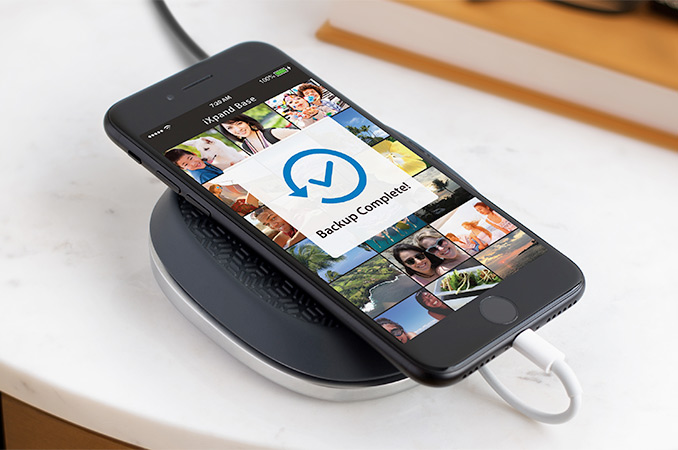
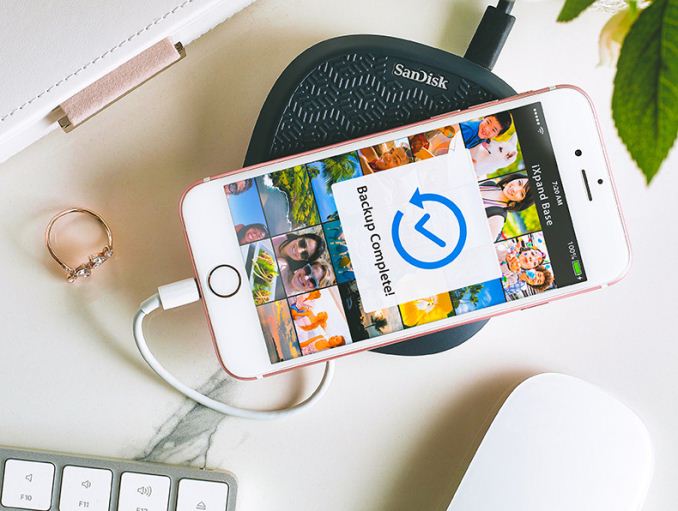
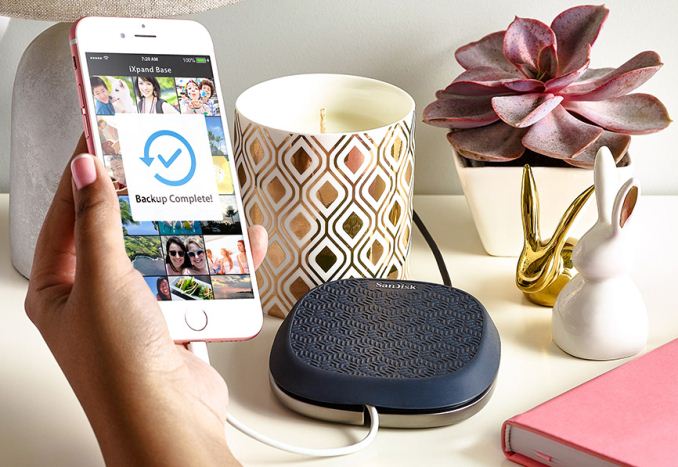
| 4:00p | Western Digital Launches SanDisk iXpand SD Card Reader for iPhone with Backup Capability
Western Digital has introduced its new SanDisk iXpand Base storage solution for Apple iOS-based devices. Just like the SanDisk iXpand flash drive launched several years ago, the new device can backup photos, videos and contacts from iPhones, iPads and other devices to free some space and/or make a redundant copy. Internally, the iXpand base uses SD cards, essentially making it a card reader for Apple’s devices. As the name implies, the SanDisk iXpand Base is a base for iPhone, iPad or iPod Touch that holds an SD card and has a power adapter to charge iOS devices. To back up photos, videos and contacts, users have to connect the product to their mobile device using a Lightning cable (not bundled) and a special application will activate automatically. The software transfers content (including content from apps and located in the iCloud) to the card, which may then be removed and read on other devices. Moreover, the SanDisk iXpand Base itself can be connected to a computer using a Micro-USB to USB Type-A cable and used like an SD card reader.
SanDisk will offer multiple versions of the iXpand Base with pre-installed SD cards ranging from 32GB to 256GB. The company does not disclose which SD cards it uses and whether the Xpand Base supports aftermarket memory cards. If it does (most likely), then the device is upgradeable too and once an owner runs out of space, they can simply swap the card with a new one Apple’s iPhones are often criticized for not having a memory card slot, which requires owners to clean up their photos from time to time and/or delete rarely used apps to free some space. To a large degree, the SanDisk iXpand Base solves this problem as it acts like an external card reader for Apple’s smartphones, which automatically backs up their photos and videos when used for charging (as opposed to the iXpand drive, which has to be connected separately). Afterwards, the content may be deleted from the phone to free up some space.
The SanDisk iXpand Base will be available shortly in the U.S. from such stores as Amazon, BestBuy.com, B&H Photo Video.com and other major retailers. The most affordable model with a 32 GB SD card will cost $49.99, whereas the one with a 256 GB card will carry a $199.99 price tag.
Gallery: SanDisk iXpand Base
      Related Reading: | |||||||||||||||||||||||||||||||||||||||||||||||||||||||||||||||||||||||||||||||||||||||||||||||||||||||||||||||||||||||||||||||||||||||||||||||||||||||




| << Previous Day |
2017/09/06 [Calendar] |
Next Day >> |