[Most Recent Entries] [Calendar View]
Wednesday, May 2nd, 2018
- Intel to Use Additional Assembly & Test Factory to Improve Supply of Coffee Lake CPUs
- Intel Outs Z390 & X399 PCHs for Cannon Lake & Coffee Lake CPUs
- Intel’s Core i5+, Core i7+ CPUs with Bundled Optane Memory Hit Retail
- Intel 8th Generation and 9th Generation Processor Lists Leaked: Coffee Lake Refresh?
| Time | Event | |||||||||||||||||||||||||||||||||||||||||||||||||||||||||||||||||||||||||
| 8:00a | Mini-Jellyfish: ADATA Launches XPG Spectrix D80 DDR4 RGB Memory
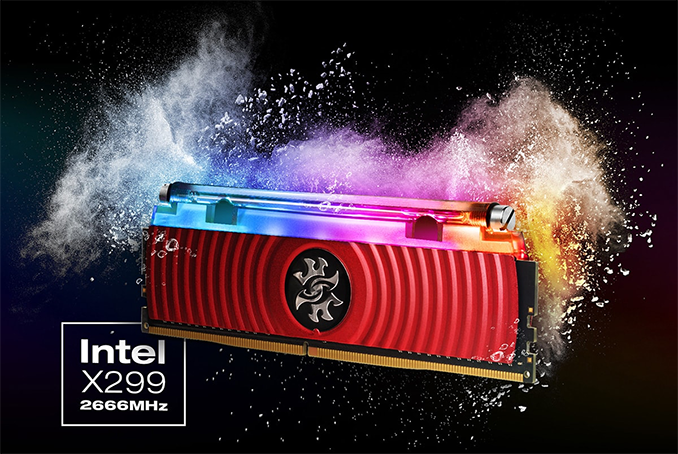
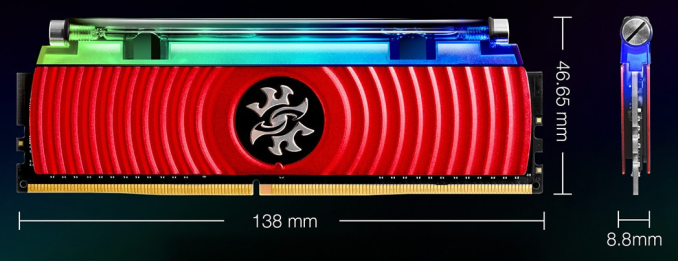
ADATA has started shipments of its new memory modules that feature hybrid air and liquid-based cooling systems along with RGB lighting. The new XPG Spectrix D80 DDR4 RGB modules use ADATA’s Jellyfish concept the company revealed earlier this year at CES, but in a less aggressive way than presented originally. ADATA’s concept submerged the memory chips in a non-conductive liquid, but the XPG Spectrix D80 liquid-cools only a part of the PCB. ADATA plans to offer XPG Spectrix D80 DDR4 RGB DIMMs rated for DDR4-2666 to DDR4-3600 initially, targeting both AMD Ryzen and Intel Core platforms. The value-add of these modules is the cooling system, which according to ADATA, along with 'an advanced PCB', promise to enable a rather high overclocking potential.
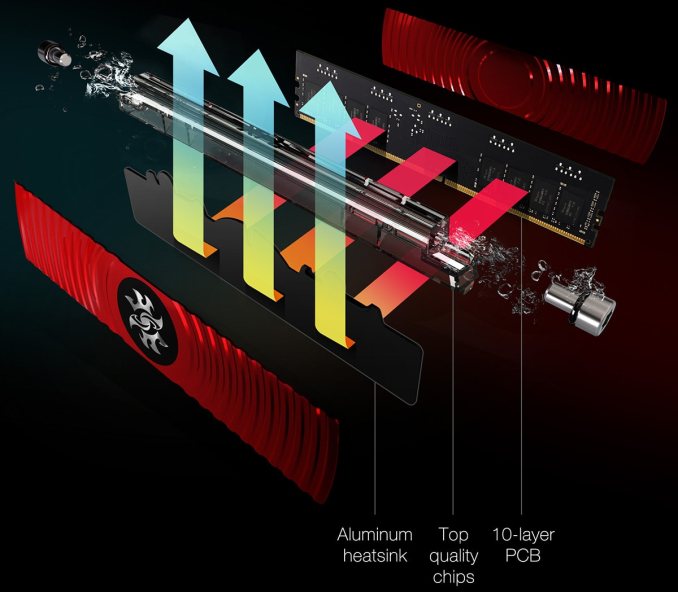
Just like other high-end memory modules, ADATA’s XPG Spectrix D80 DIMMs rely on hand-picked memory chips as well as 10-layer PCBs featuring thermally conductive materials. Based on an image published by the manufacturer, the modules currently use DRAMs from SK Hynix. It is highly likely that ADATA takes a page from Corsair Dominator’s book and uses a special copper layer to transfer heat from DRAM ICs to the top of the PCB, but at this point the manufacturer does not confirm this officially. The key feature of the XPG Spectrix D80 modules is their cooling system that features aluminum heat spreaders attached to the memory chips as well as a top bar with a non-conductive liquid attached to the top of the PCB. The liquid in the top bar behaves the same way as heat (vapor) chambers and heat pipes: it changes state to gas (or at least changes its viscosity) when heated and turns back to liquid when cooled down. This phase change absorbs a lot of thermal energy and takes the heat away from its source: in this case the PCB conducting heat from memory chips.
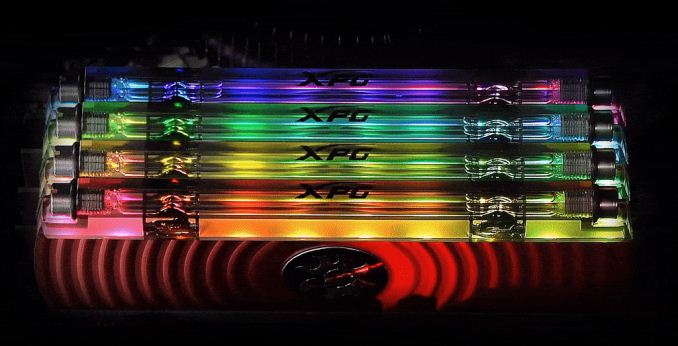
As an added bonus, when combined with RGB LEDs, the liquid in the top bars distorts the lighting effect, creating a more unique presentation - something that might please enthusiasts and modders. Speaking of the RGB lighting, it is necessary to note that the new modules ship with ADATA’s app that can synchronize their lighting with that of motherboards from ASUS, ASRock, GIGABYTE, and MSI. Meanwhile, since ADATA’s Jellyfish seems to be a work in progress, it is possible that eventually we will see different implementations of this concept.
Moving on to actual specifications of the products. As noted, the initial XPG Spectrix D80 DDR4 RGB memory modules will use 8 Gb DRAM ICs from SK Hynix rated for DDR4-2666 to DDR4-3600 at 1.20-1.35 Volts, but subsequently higher-performing SKUs could use other memory chips from different vendors. ADATA plans to offer XPG Spectrix D80 memory in dual-channel and quad-channel kits based on 8 GB or 16 GB modules, targeting various grades of enthusiast class systems. All the new DIMMs will support Intel’s XMP 2.0 SPD profiles.
ADATA’s initial XPG Spectrix D80 DDR4 RGB products will be available in the coming weeks. A 16 GB dual-channel DDR4-2666 kit will cost $199.99, whereas a more advanced 32 GB quad-channel DDR4-3000 kit will retail for $419.99.
Related Reading | |||||||||||||||||||||||||||||||||||||||||||||||||||||||||||||||||||||||||
| 10:00a | LG Announces The G7 ThinQ LG has been one of the major players in the mobile smartphone market ever since the early days. Today’s launch follows an unusual longer waiting time for the Korean company as it opted to skip on the usual MWC timeframe for the spring product launches, preferring to reveal the new flagship 2 months later. Over the past week LG has teased various characteristics of the G7 – in particular we knew in detail the specifications of the screen. Today we see the full device unveiled and are able to paint a full picture of LG’s new mainstream flagship device. | |||||||||||||||||||||||||||||||||||||||||||||||||||||||||||||||||||||||||
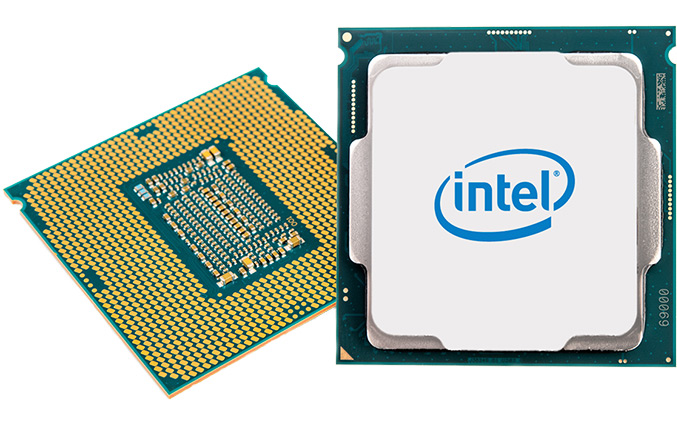
| 2:00p | Intel Taps Additional Facility to Assemble & Test Boxed Coffee Lake CPUs
Intel last week announced plans to start using an additional assembly and test facility to produce boxed versions of its six-core Core i5/i7 (Coffee Lake) processors. The addition of the new site in China will enable Intel to increase supply of its latest CPUs. Meanwhile, it is noteworthy that Intel has long solved problems with insufficient supply of its latest products (that plagued them early in the lifecycle) and right now the chips are usually sold below RCP (recommended customer price). So far, Intel has been using its facilities in Malaysia and Vietnam to assembly and test its boxed six-core Coffee Lake processors that are sold primarily in retail. Last week the company said that starting from May 28, 2018, its customers would start to receive Core i7-8700K, Core i7-8700, Core i5-8600K, Core i5-8500, and Core i5-8400 CPUs assembled and tested in Chengdu, China. The company already uses this site to do the same operations to tray/OEM Coffee Lake processors. Meanwhile, since Intel’s assembly and test facilities are a part of the chipmaker's Copy Exactly! (CE!) program — all procedures and process technologies they use across various production sites across the world are identical. Therefore, performance, quality, reliability and other characteristics of CPUs produced, tested and assembled in different locations are said to be equivalent. Adding another assembly and test site over half a year after the announcement of the products makes sense since Intel’s partners are rolling out new (and more affordable) motherboards for Coffee Lake CPUs and it is logical to expect demand for these processors to rise. In addition, recently the company expanded the lineup of its 8th Generation Core i5/i7 offerings for retail with models that come with Optane caching SSDs, making its products a bit more attractive. As a result, in order to avoid any potential bottlenecks in the supply chain Intel is adding a new facility to the list of factories that process the said CPUs. It is noteworthy that by now Intel has resolved all the undersupply issues that plagued its higher-end Coffee Lake processors back in October. At present, the chips are readily available from leading retailers and in most cases are sold below their RCPs.
*Boxed version | |||||||||||||||||||||||||||||||||||||||||||||||||||||||||||||||||||||||||
| 4:00p | Sony’s Open-Ear Xperia Ear Duo Available for Pre-Order, Set to Ship in Late May
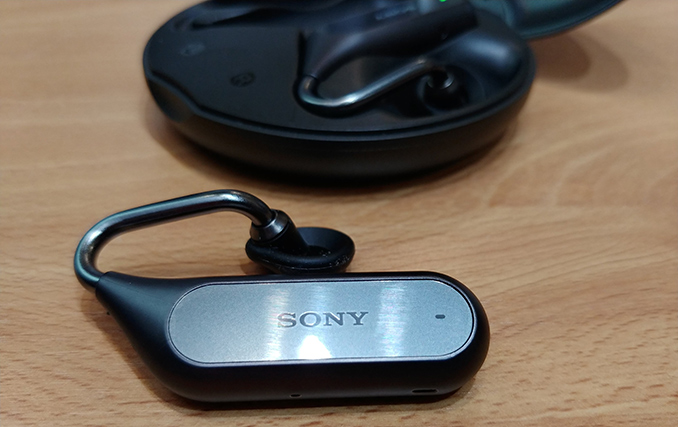
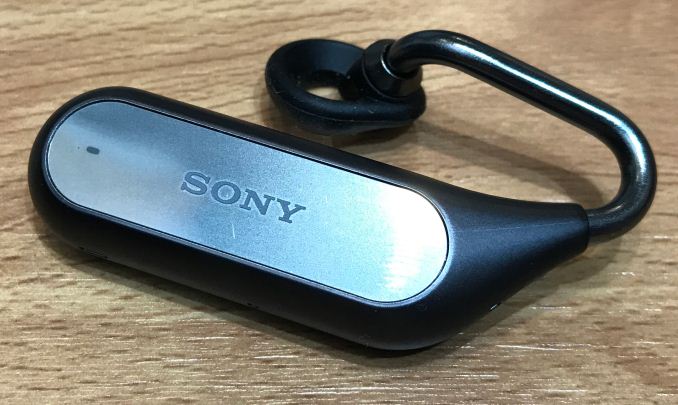
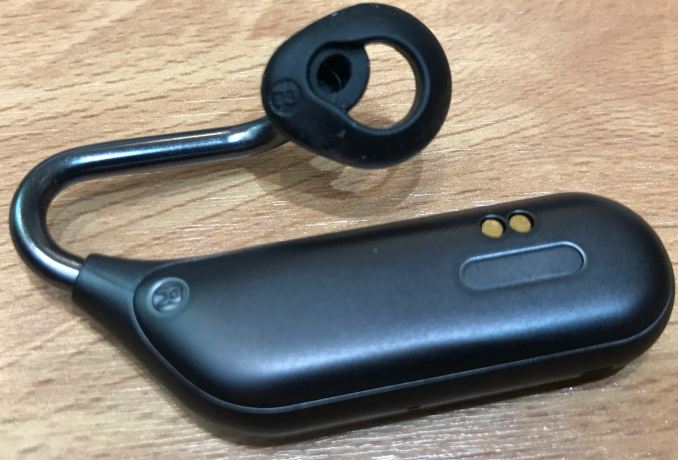
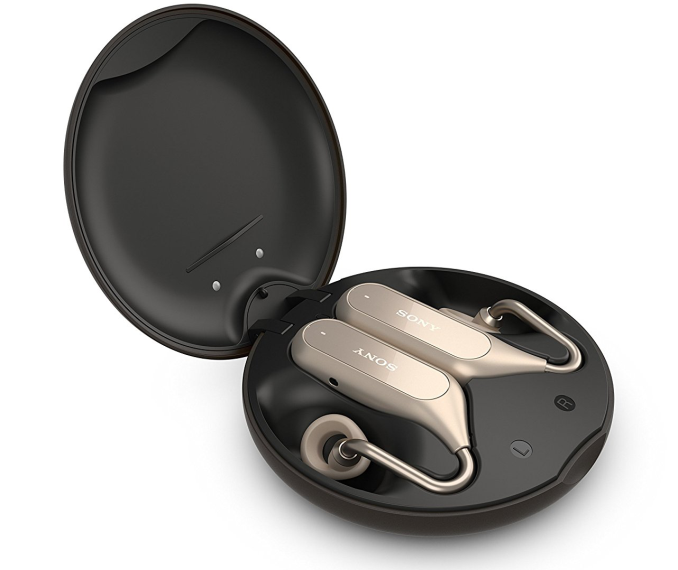
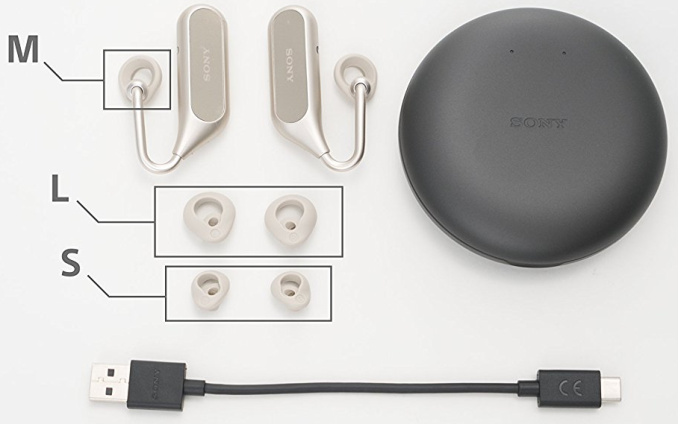
Sony this week began to take pre-orders on its open-ear Xperia Ear Duo headset. The non-obstructive device has been in development for years and is designed to allow a user to listen to music and smartphone notifications while still hearing environmental sounds and holding conversations. Given rather high manufacturing costs of the product, it is considerably more expensive than the rivals. Furthermore, the headset's Host App is only compatible with smartphones, but not iPads and select PCs. The key element of Sony’s Xperia Ear Duo earpieces is a very small driver that transmits audio directly to the ear canal without going into it and hence without blocking it from environmental sounds. The right earpiece of the Xperia Ear Duo connects to smartphone (or another source) using Bluetooth 4.2 LE (A2DP, AVRCP, HFP profiles are required; AAC and SBC codecs are supported), then it transmits audio to the left one using NFMI method. Sony says that NFMI ensures strong connection between two earpieces and it works better than if both used Bluetooth. Sony ships three sizes of rubber earbuds to firmly hold the earpieces where they should be, making the headset useful for people with different ears. Speaking of holding the earpieces, it is necessary to note that both weigh 0.4 oz (11.3 grams), so they are not hard to hold in place.
The Xperia Ear Duo headset is based on Sony’s custom Spritzer chip that integrates a sensor hub and supports Sony’s Clear Phase audio processing technology to adjust volume based on surroundings and eliminate sound dispersion when needed. Each earpiece has two microphones for hands free calling and to eliminate background noises during conversations. In addition, the headset is outfitted with touch and gyro/accelerometer sensors: the former enable to answer calls by touching either of the earpieces, whereas the latter enable to control calls and music playback by head gestures. Finally, the headset features proximity, compass, and barometer, though Sony does not disclose how it uses them (the proximity sensor is most probably used to start/stop charging when placed into charging case and to turn the devices on when they are in the ear).
Sony’s new headset is made of aluminum and soft rubber to ensure its low weight and preserve against stain. The earpieces also feature IPX2-graded protection against vertical drops of water even if device is tilted by up to 15° from its normal position (i.e., do not wash them or wear them in the shower, but rain should not necessarily damage them). Each earpiece is outfitted with a 56 mAh battery that enables it to work for four hours. Sony ships its Xperia Ear Duo in a special charging case that has a 740 mAh battery and thus can charge earpieces several times during long trips or during the day (up to one hour of music playback after a seven-minute charge is promised). The charging case supports a USB Type-C connection and is thus compatible with modern computers and chargers.
As noted, the Sony Xperia Ear Duo host app is compatible only with smartphones running iOS 10/Android 5.0 or newer. Technically, they are compatible with Android-based tablets too, but not Apple’s iPad. The good news about being compatible with major smartphone operating systems means that the headset understands things like notifications and voice assistants. In fact, Sony even has its own Daily Assist app (for Google Android handsets) that recognizes time, location, activities, and promises to offer relevant information during the day (e.g., location-based reminders). Meanwhile, the lack of compatibility with certain PCs means that travelers who keep their music collections on their computers will need to carry additional headphones with them.
Retailers like Amazon and b8eta are taking pre-orders on Sony’s Xperia Ear Duo already and will start shipping them starting May 25 or May 31, depending on location. The headset will be available in black and gold. Suggested retail price of the headset is $279.99, which automatically places the product well above all popular wireless headphones (such as Apple’s Airbuds). Related Reading: | |||||||||||||||||||||||||||||||||||||||||||||||||||||||||||||||||||||||||


| << Previous Day |
2018/05/02 [Calendar] |
Next Day >> |