[Most Recent Entries] [Calendar View]
Tuesday, May 8th, 2018
- ISP-supplied gateway (modem and wireless router combo) with optional wireless extenders
- Discrete modem and a standalone wireless gateway / router (coupled with optional network extenders, or, a Wi-Fi system)
- Discrete modem, discrete wired router, and switches / access points
- Unsatisfactory activation process for the modem-router combo device (unlike the case of the ISP-supplied modem)
- ISP-handled firmware updates, preventing patching of router firmware for vulnerabilities / preventing users from taking advantage of new Wi-Fi router features developed by the vendor for their wireless routers product-line.
- The modem / router device can act as the master in a mesh Wi-Fi system.
- Combining the modem and router into one device implies fewer devices to purchase for the consumer.
- Existing Orbi satellites can be repurposed for usage with the Orbi Cable master unit
- Glorious Glass: Lian-Li Alpha Series Cases Now Available
- More Glass: New FSP CMT330 and CMT520 Gaming PC Cases
- Coolermaster Announces Availability of New HP500 Mesh White Mid-Tower Case
- iBuyPower at CES: Project Case Builder, for Better case Customization
- DeepCool Releases Quad Stellar Four-lobed Chassis: 'Smart' Case, Unique Shape
- No tech support questions, as these require in-depth personal follow-up and diagnostics.
- All Rules of Conduct apply.
- Keep questions direct and to the point.
- Avoid opinion bias, as in, "Why are all your products awesome/horrible?"
- Be respectful of our guests--no insults, no leading questions.
- Do not post duplicate questions or repost your question multiple times.
- Not all questions may be answered. Questions may not be answered in the order in which they are received or posted.
| Time | Event | |||||||||||||||||||||||||||||||||||||||||||||||||||
| 8:30a | Netgear Launches the Cable Orbi - A Mesh Wi-Fi System with an Integrated Cable Modem
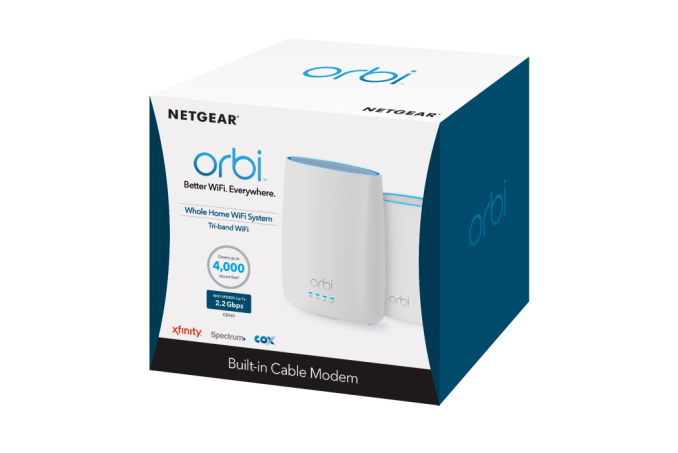
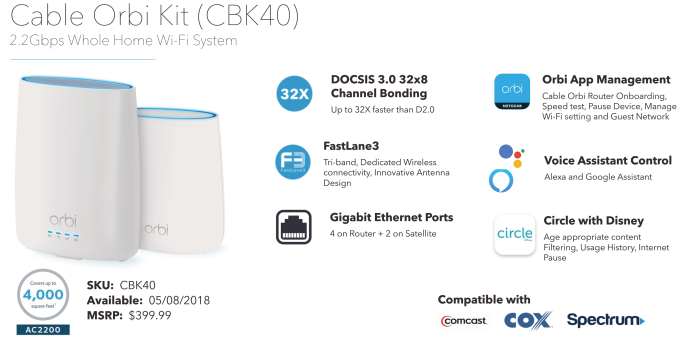
Most home networks fall under one of three categories: All three choices have their pros and cons, with the first option being preferred by consumers who are not tech-savvy to begin with. In that case, the customer usually pays a monthly rental fee to the ISP. The maintenance of the gateway (including firmware updates) is handled by the ISP too. Vendors such as Arris and Netgear have tried to play in this market segment with modem-router combo products in retail for direct purchase by the consumers. Such products have typically presented some usage challenges: Today, Netgear is launching the Orbi cable modem - a dual PCB solution with the same form-factor as that of the existing Orbi RBK40 kit. The dual PCB solution refers to the cable modem and the wireless routers coming on distinct boards, with separate firmware for each. ISPs can handle the firmware update for the modem segment, while the consumers can update the wireless router firmware independently. The activation process has also been simplified by Netgear, with new features in the Orbi mobile app making it a seamless process. Netgear has been very active in releasing new firmware features for their Orbi products (tying in with their pivot to a services-based revenue model for their offerings). Features such as 'Circle with Disney' (which has a premium subscription option) are turning out to be hits based on the feedback we have received from current Orbi customers. The ability to update the Orbi router firmware independent of the cable modem firmware is a key feature of the Cable Orbi. Addressing the two main concerns with combo devices allows Netgear to promote the advantages of an Orbi with an integrated modem: Netgear has two SKUs with the Cable Orbi hardware - the Cable Orbi Router (CBR40), priced at $300, is a single device that integrates the modem and wireless router into one unit. The Cable Orbi Kit (CBK40) bundles a satellite with the Cable Orbi Router for $400.
Coming to the technical specifications, the CBR40's wireless components are derived from the AC2200 Orbi RBK40 introduced last year - a Qualcomm Atheros IPQ4019 network processor with Wi-Fi SON features, and separate 2x2 radios for the client devices and the backhaul. The cable modem PCB is based on the Intel Puma chipset (we have reached out to Netgear to confirm that it is not the one affected by the network latency issue). It is a DOCSIS 3.0-compliant modem with a 32x8 channel bonding configuration supporting a maximum of 1.4 Gbps downstream and 262 Mbps upstream bandwidth. Netgear is obviously building on the success of the Orbi lineup with the integration of a cable modem into the lineup. This definitely increases the addressable market for Orbi products within the home networking space. Consumers using ISP-supplied gateways to blanket large areas with Wi-Fi would do little wrong in opting for the CBR40 or CBK40. Power users and tech-savvy consumers might prefer a more flexible solution with a discrete modem, router, switches, and access points. The Cable Orbi is not meant for those folks. For the average consumer, the Orbi lineup now has SKUs that can cater to varying requirements and budgets. | |||||||||||||||||||||||||||||||||||||||||||||||||||
| 11:30a | Google I/O Opening Keynote Live-Blog (10am PT) Hello everybody and welcome to the Shoreline Amphitheater in Mountain View where we're live at Google's IO 2018 opening keynote. | |||||||||||||||||||||||||||||||||||||||||||||||||||
| 4:20p | TSMC Details 5 nm Process Tech: Aggressive Scaling, But Thin Power and Performance Gains
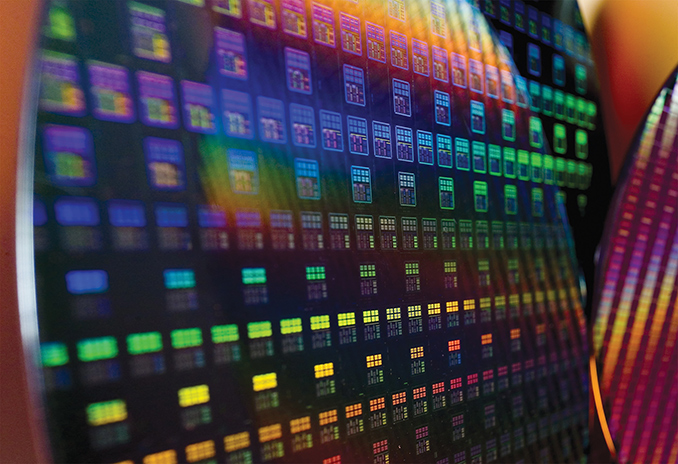
At a special event last week, TSMC announced the first details about its 5 nm manufacturing technology that it plans to use sometime in 2020. CLN5 will be the company’s second fabrication process to use extreme ultraviolet (EUV) lithography, which is going to enable TSMC to aggressively increase its transistor density versus prior generations. However, when it comes to performance and power improvements, the gains do not look very significant. Just like other fabs, TSMC will gradually ramp up usage of ASML’s Twinscan NXE:3400 EUV step and scan systems. Next year TSMC will start using EUV tools to pattern non-critical layers of chips made using its second-gen 7 nm fabrication technology (CLN7FF+). Usage of EUV for non-critical layers will bring a number of benefits to the CLN7FF+ vs. the original CLN7FF process, but the advantages will be limited: TSMC expects the CLN7FF+ to offer a 20% higher transistor density and a 10% lower power consumption at the same complexity and frequency when compared to the CLN7FF. TSMC’s 5 nm (CLN5) technology will increase the usage of EUV tools and this will bring rather massive advantages when it comes to transistor density: TSMC is touting a 1.8x higher transistor density (~45% area reduction) when compared to the original CLN7FF, but it will only enable a 15% frequency gain (at the same complexity and power) or a 20% power reduction (at the same frequency and complexity). With the CLN5, TSMC will also offer an Extremely Low Threshold Voltage (ELTV) option that will enable its clients to increase frequencies of their chips by 25%, but the manufacturer has yet to describe the tech in greater detail. The rather small, incremental improvements that TSMC is discussing for the CLN7FF to CLN7FF+ and CLN7FF+ to CLN5 transitions indicate that it gets increasingly harder to offer decent gains from generation to the next. It remains to be seen whether all of TSMC’s leading-edge customers will keep adopting all the latest process technologies that the company offers, or will miss certain cycles given small incremental increases, but large companies (such as Apple) adopted all the latest fabrication processes in the recent years (i.e., it made economic sense to adopt them).
Moving on to the readiness of TSMC’s process technologies with EUV, “Foundation” IP for CLN7FF+ has been validated in silicon, but various important blocks required for 28–112G SERDES, embedded FPGAs, HBM2, and DDR5 interfaces will not be ready before late 2018 or even early 2019. Fully certified EDA flows for CLN7FF+ will be ready by August. Meanwhile, EDA flows for CLN5 are in their infancy: version 0.5 will be ready by July and numerous IP blocks (PCIe 4.0, DDR4, USB 3.1, etc.) will not be ready until 2019. Next up is equipment readiness. As reported, TSMC is building a separate fab to make chips using its CLN5 process technology. The new Fab 8 will use numerous Twinscan NXE:3400 scanners, but TSMC admits that at present the average daily power levels of the light sources for their EUV tools is only at 145 W, not enough for commercial usage. Some of the tools can sustain 250 W production for a couple of weeks and TSMC has plans to hit 300 W later this year, but EUV tools still need improvements. There are also some issues to be solved with things like pellicles (they transmit 83% of EUV light and are expected to hit 90% next year), so EUV lithography in general is not ready for prime time just now, but is on track for 2019 – 2020. Related Reading: | |||||||||||||||||||||||||||||||||||||||||||||||||||
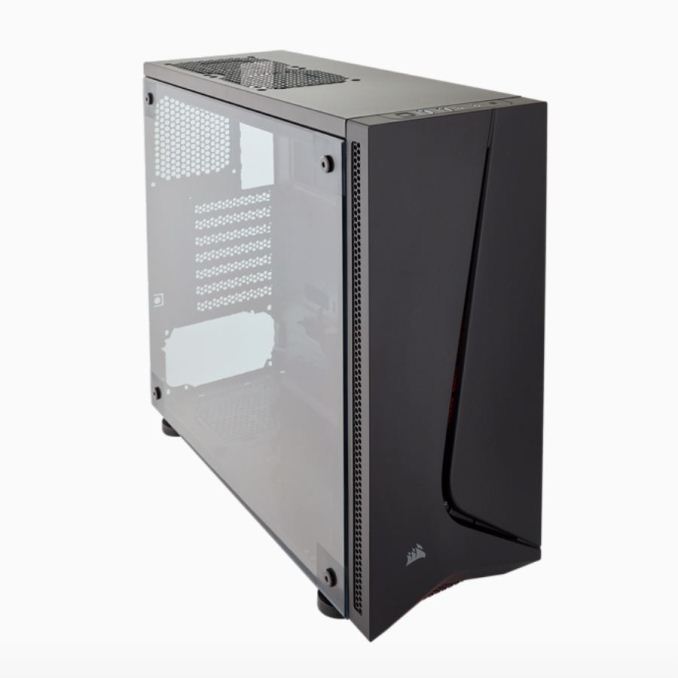
| 5:00p | Corsair Releases Value-Priced Carbide SPEC-05 Mid-Tower Case
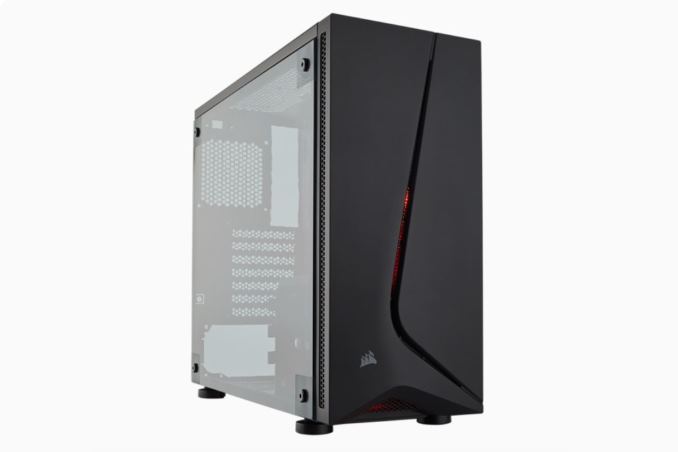
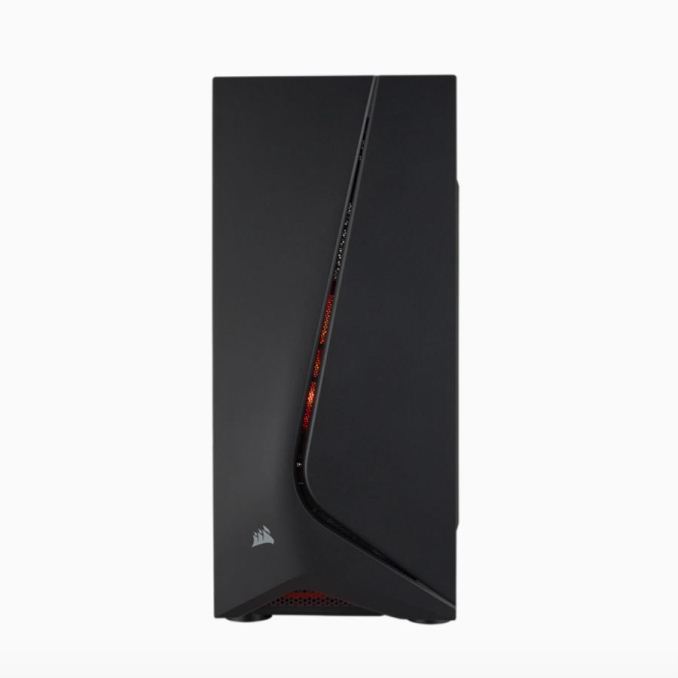
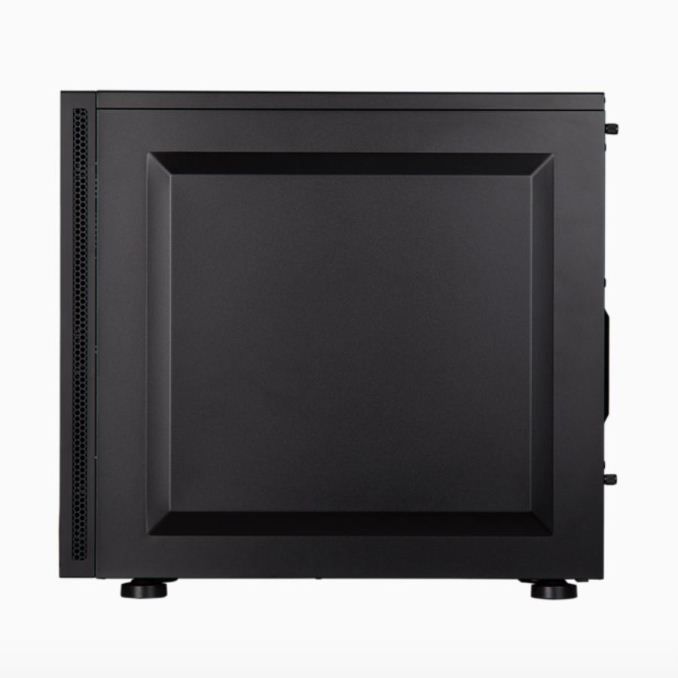
Corsair announced the release of a new case in the Carbide series, which they've named the SPEC-05 Mid-Tower Gaming Case. The $50 chassis adds to Corsair's SPEC value segment with a new exterior design as well as continued flexibility on the interior. The case supports Mini-ITX, MicroATX, and ATX sized boards, has room for up to a 240mm radiator as well as multiple hard drives and SSDs. The exterior uses an edge to edge windowed side panel and smooth flowing design on the front with an asymmetrical line down the front giving way to an attractive and inexpensive chassis.
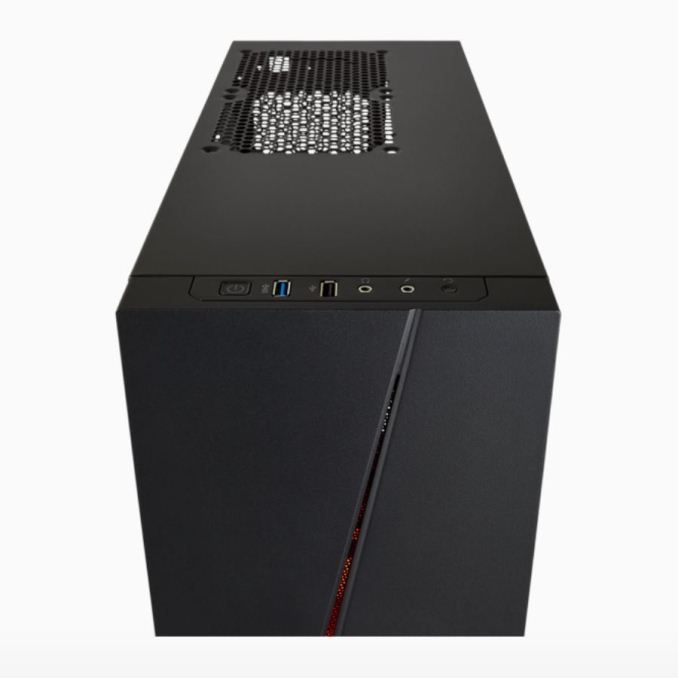
The edge to edge window design on the tinted side panel will give users an unobstructed view of the interior. The side panel is held on by flat screws requiring a tool to remove. The front panel of the case has a smooth look with a line slicing through the front. Behind it, the included 120mm red RGB fan peeks through the perforated mesh which makes the line. Additional intakes are found on both side of the front panel and include a removable dust filter with another keeping dust out of the PSU on the bottom. Though there is minimal filtering through the mesh on the front, a dust filter is found on the bottom of the case for the power supply. On the top of the case, Corsair has two USB ports, one USB 3.0, one 2.0, along with headphone and microphone jacks, as well as power and reset buttons.
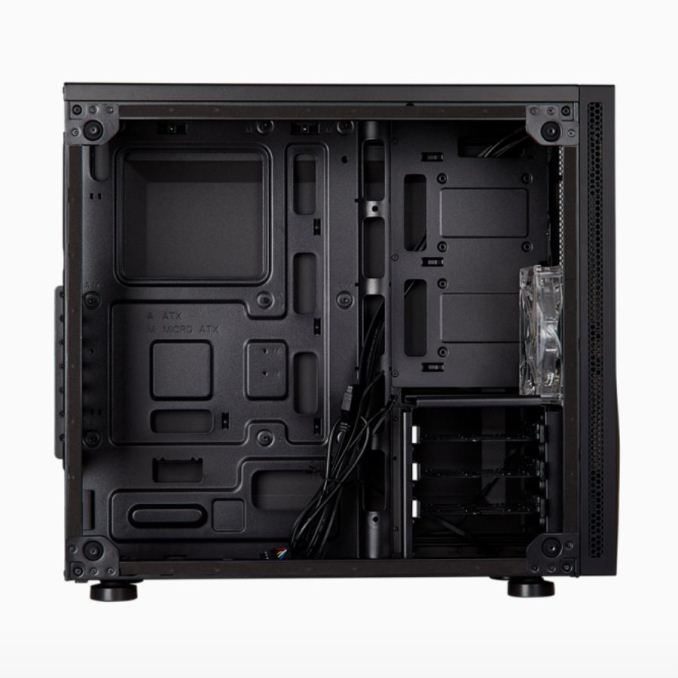
Inside the case, Corsair talks about wire management using multiple tie-down points and cable routing holes to neatly tuck the cables away for any size board. The right side panel also sticks out to allow for more cables to fit without the bowing we sometimes see out of a flat panel. There is a hard drive tray at the bottom front capable of holding three 3.5-inch and two 2.5" drives. Fan support is plentiful with up to six fans (3 Front, 2 Top, 1 Rear - one) when the hard drive cage removed (five otherwise). Corsair states radiator compatibility is 120mm, 140mm, or 240mm with placement in the rear (120mm) or the front (up to 240mm). The SPEC-05 is able to support video cards up to 14.5" long and CPU heatsinks up to 150mm tall.
Users are not going to find multiple included RGB fans, fan controllers, or USB3.1 ports at this price point, but for $50 the SPEC-05 checks off enough boxes for a good entry in the value segment.
Related Reading: | |||||||||||||||||||||||||||||||||||||||||||||||||||
| 6:00p | Join Us Tomorrow for an AT Forums AMA with AMD's James Prior
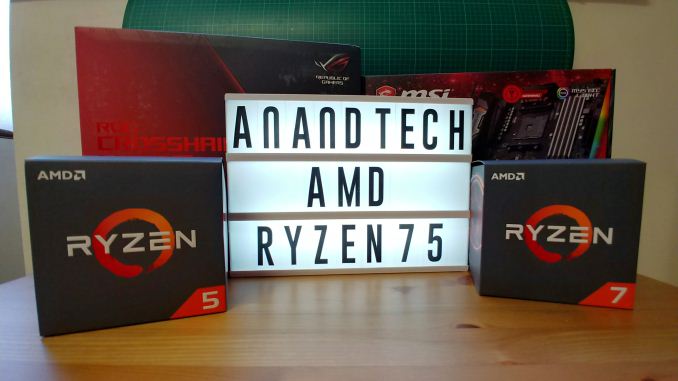
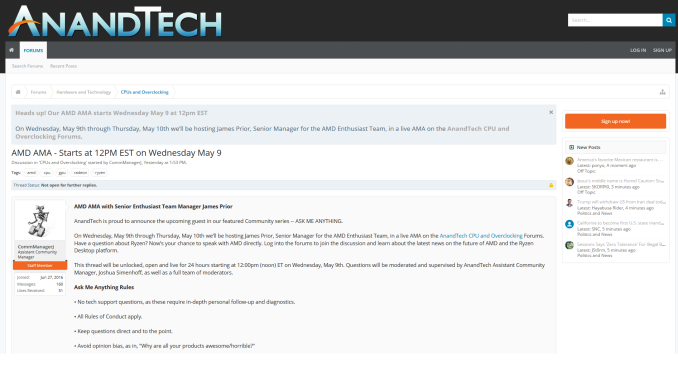
On Wednesday, May 9th through Thursday, May 10th AnandTech's community team will be hosting an ask-me-anything session with James Prior, Senior Manager for AMD's Client Enthusiast Team, on the AnandTech CPU and Overclocking Forums. Have a question about Ryzen? Now’s your chance to speak with AMD directly. Log into the forums to join the discussion and learn about the latest news on the future of AMD and the Ryzen Desktop platform. This thread will be unlocked, open and live for 24 hours starting at 12:00pm (noon) ET on Wednesday, May 9th. Questions will be moderated and supervised by AnandTech Assistant Community Manager, Joshua Simenhoff, as well as a full team of moderators. Ask Me Anything RulesOnly registered users will be able to ask questions, so if you haven’t yet, be sure to register now for your chance to participate! The official representatives will reply periodically, using a recognized and verified account. Please join us on this date to throw your questions into the mix and ask AMD what you've always wanted to ask!
| |||||||||||||||||||||||||||||||||||||||||||||||||||
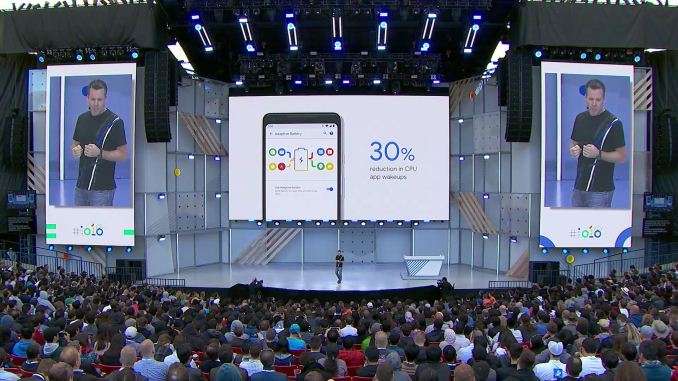
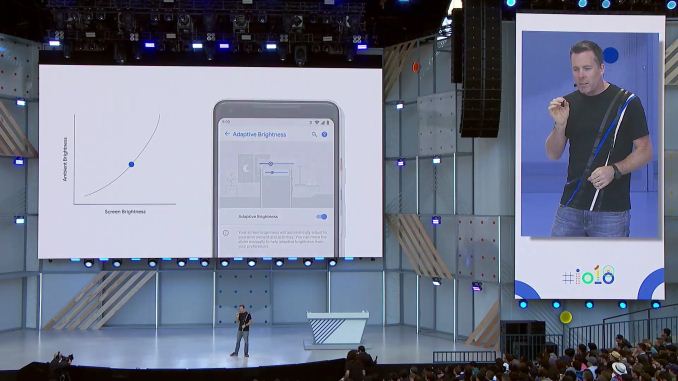
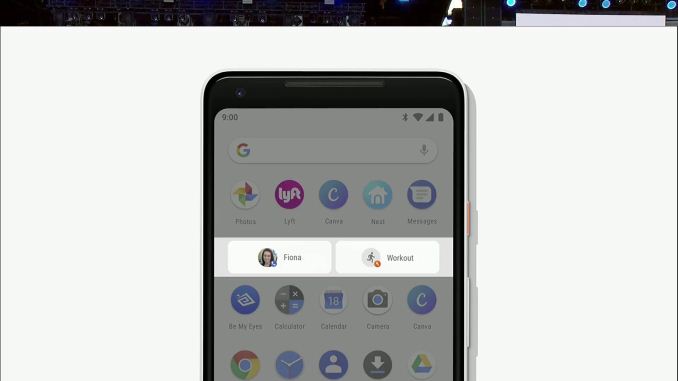
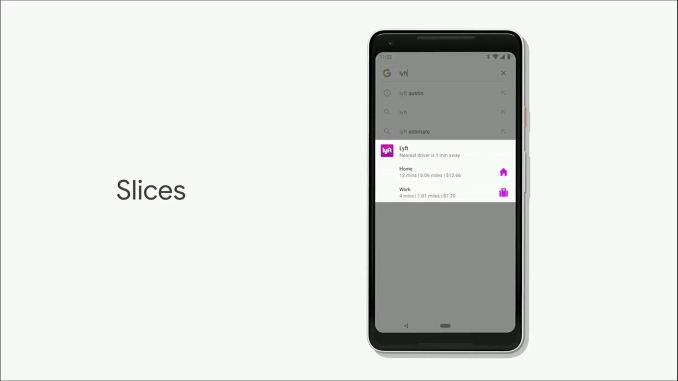
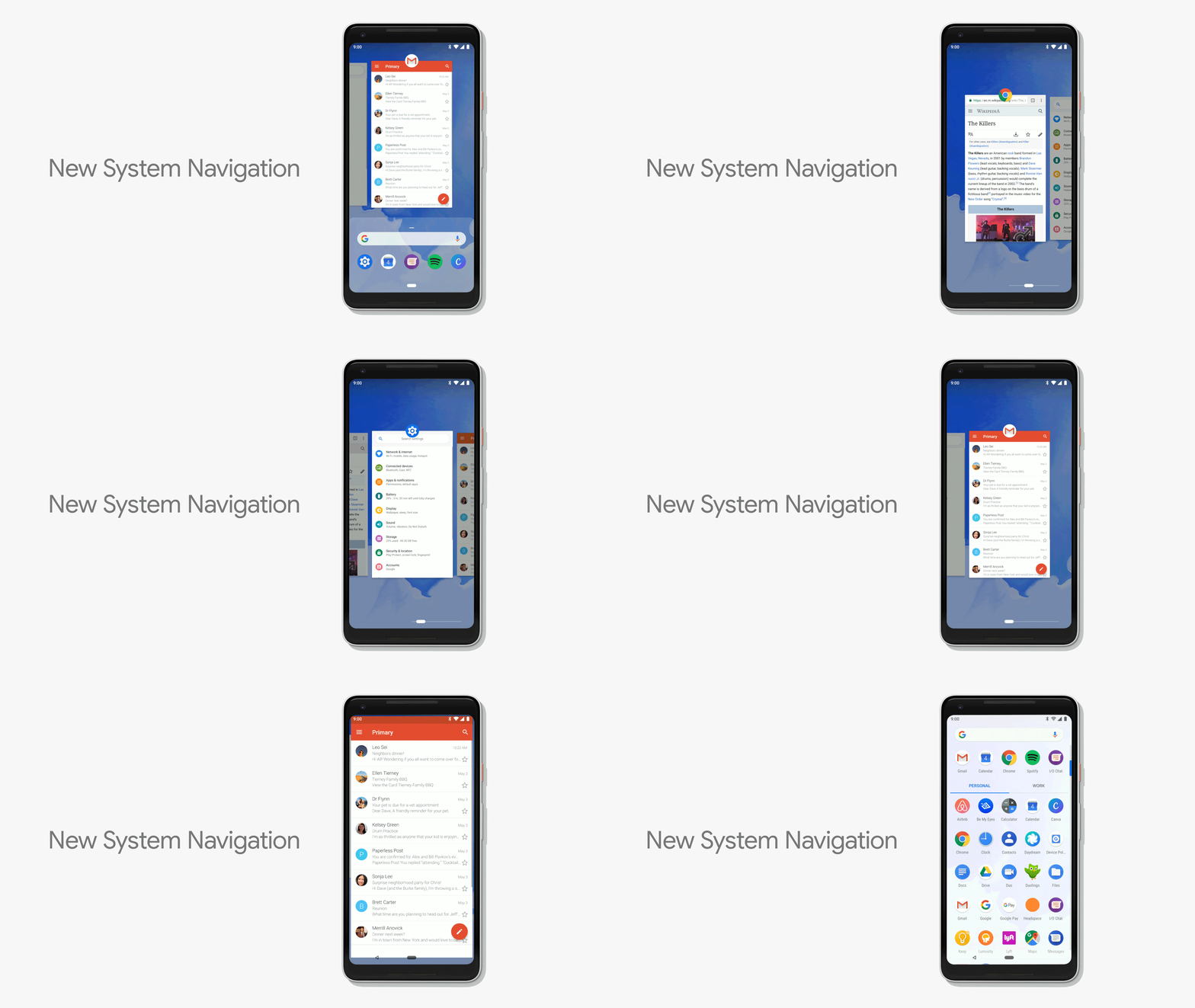
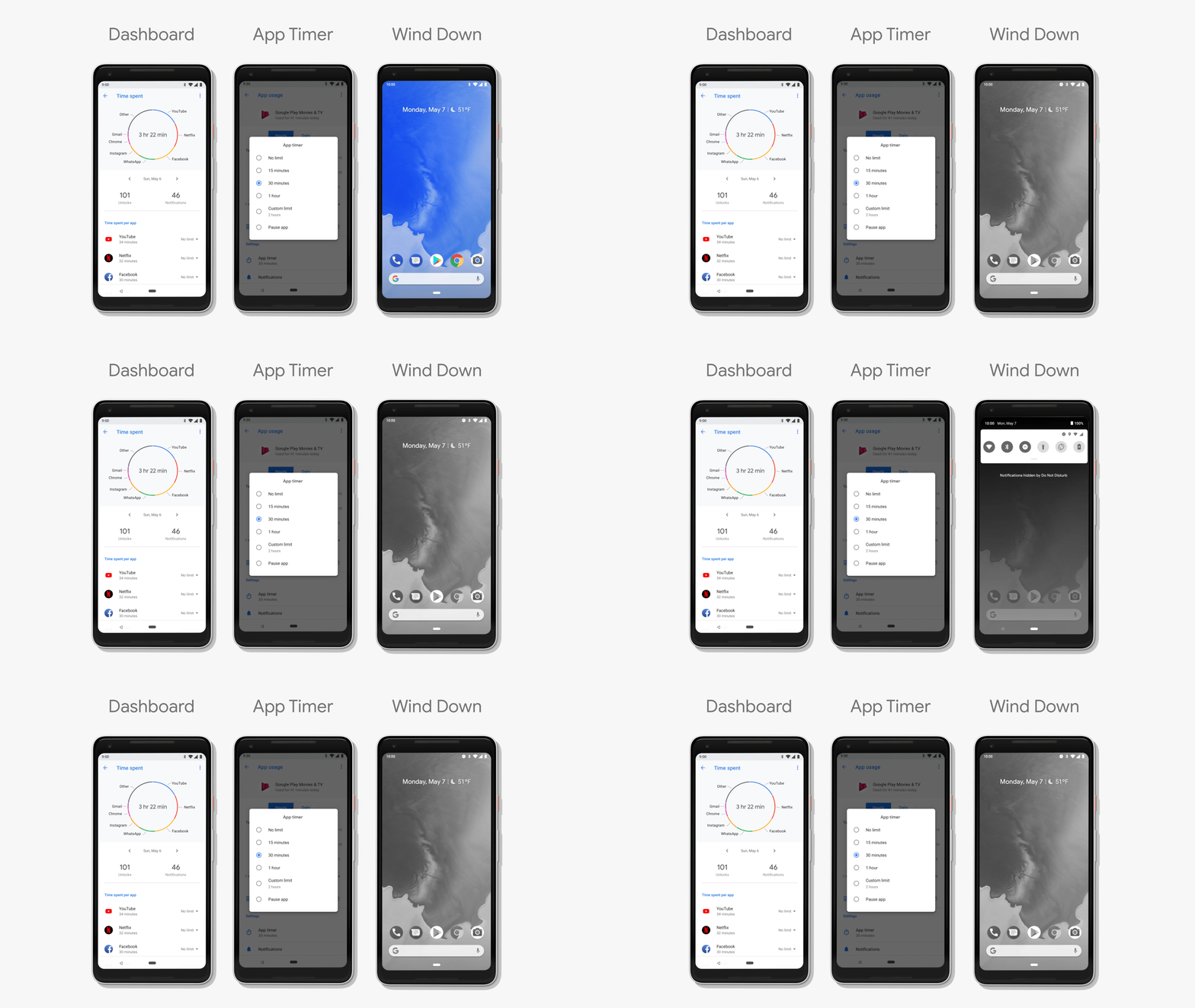
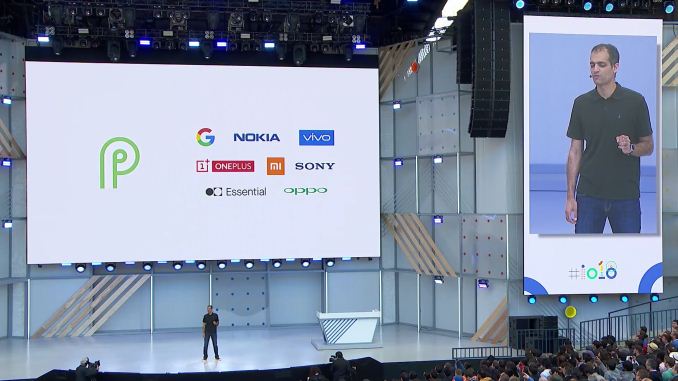
| 8:15p | Google Kicks Off Android P Beta, Details Shush Mode, Usage Dashboard, & Other New Features
Today at Google I/O 2018, Google announced several new Android P features that will see adoption in the newest Beta released today. We’ve first covered a few of P’s new features in our first developer preview coverage back in March. Adaptive Battery | |||||||||||||||||||||||||||||||||||||||||||||||||||





| << Previous Day |
2018/05/08 [Calendar] |
Next Day >> |