[Most Recent Entries] [Calendar View]
Thursday, May 10th, 2018
- Apple Announces The New Apple TV
- Google Assistant Released For NVIDIA's SHIELD TV; Other Vendors To Follow Shortly
- Xiaomi Mi Box Now Available in U.S.: Android TV 6.0 with 4Kp60 Output for $69
- Roku Unveils 2016 Streaming Media Players with 4Kp60 and HDR Support
- Steam Machines, Steam Link, & Steam Controller Launching November 10th
- Updates on Valve’s Steam OS, Steam Link, and Steam Machines at GDC 2015
- QNAP Begins to Ship AMD Ryzen-Based TS-x77 Series NAS: 6, 8, 12 Bays
- QNAP Launches TS-1277 NAS Powered by AMD's Ryzen CPUs: 12 Bays, 64 GB DDR4, Starts at $2,299
- QNAP at CES 2017 - Thunderbolt 3 and Xeon D NAS Units, Residential Gateways, and More
- Synology at CES 2017 - RT2600ac Wi-Fi Router, DSM Value Additions, and New Business NAS Units
- Netgear Expands ReadyNAS Lineup with Intel Denverton Atom Platform
- Delidding the AMD Ryzen 5 2400G APU: How To Guide and Results
- Analyzing Thread Thermals: Big Base Cooling Wins
- EKWB Launches EK FLuid Gaming A240R Kit: Full-Cover Vega GPU COoling & Supremacy AX CPU Block
- Immersion Server Liquid Cooling: ZTE Makes a Splash at MWC
- Maingear Display New F131 Desktop with new 'Apex' Integrated Cooling
| Time | Event | ||||||||||||||||||||||||||||||||||||||||||||||||||||||||||||||||||||||||||||||||||||||||
| 8:00a | Delidding The AMD Ryzen 5 2400G APU: How To Guide and Results Delidding is a process with the aim being to reduce CPU core temperatures on processors with a less-than-ideal thermal interface between the silicon and headspreader. The benefits of delidding a design with such an interface lead to having a cooler system, or the ability perform extra overclocking with a larger delta for thermal headroom. However, delidding a processor does carry risk, such as potentially damaging the CPU when done incorrectly and certainly voiding the warranty. In this article, we have produced a How-To guide for delidding one of the latest desktop processors: AMD's Ryzen 5 2400G APU. | ||||||||||||||||||||||||||||||||||||||||||||||||||||||||||||||||||||||||||||||||||||||||
| 1:30p | Viking Launches VT-PM NVRAM U.2 Drives
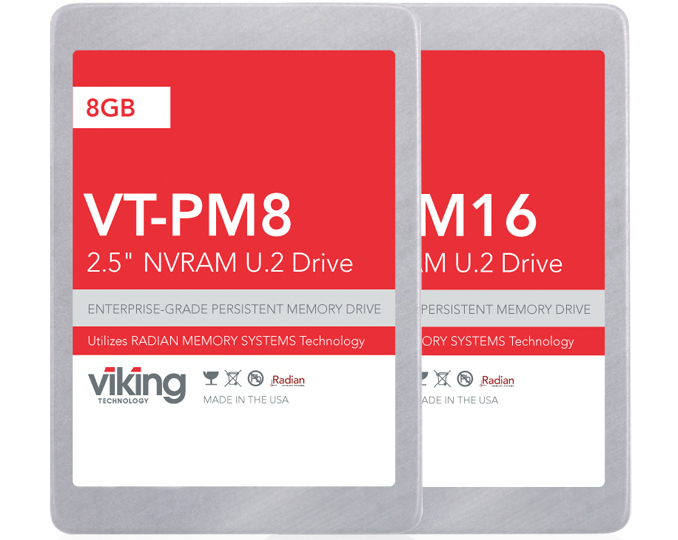
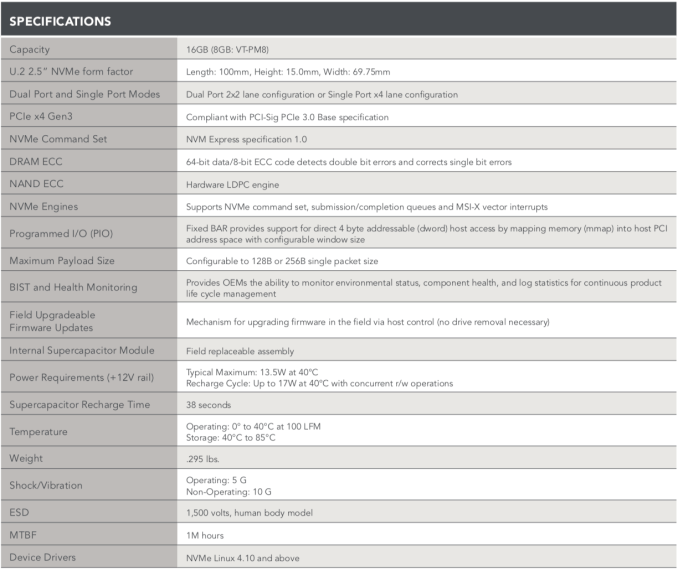
Viking Technology this week released its new VT-PM-series persistent memory drives that come in 2.5-inch U.2 form-factor and support hot-swapping capability. The drives are designed for applications that require a very high performance and an unlimited endurance, such as high-performance journalling and log storage for databases and filesystems. One of the key advantage of the drives when compared to regular NVDIMMs is support for hot-remove/surprise hot-add as well as an industry-standard interface. Viking’s VT-PM8 and VT-PM16 persistent memory drives use the U.2 interface operating in dual port 2x2 or single port x4 mode. The storage solutions are equipped with 8 GB and 16 GB of DDR4-2400 RAM that has a virtually unlimited endurance (well beyond that of NAND or even 3D XPoint) as well as 8 GB and 16 GB of non-volatile NAND that is used to preserve data in the event of power failure. The SSDs are outfitted with an internal supercapacitor power source that kicks off automatically when the main power is lost to transfer data from DRAM to flash using the Flush-to-Flash firmware. The drives are based on an architecture that can work with both DDR4 memory and NAND developed by Radian Memory Systems (it is unclear whether Radian uses an FPGA, or an ASIC). The architecture is fully compliant with the NVMe 1.0 command set that lets applications to access data on the VT-PM persistent memory drives via regular block or programmed I/O byte addressable access without any special requirements. To ensure data integrity, the silicon designed by Radian features a 64-bit data/8-bit ECC code to detect double bit errors and correct single bit errors in DRAM. Furthermore, the solution supports LDPC to ensure strong endurance and high performance of flash. In addition, Viking’s VT-PM drives support BIST (built-in self-test) that monitors components health and environmental status and then reports results to host systems. When it comes to performance, Viking’s VT-PM drives should be pretty fast due to a PCIe 3.0 x4 interface (supports 32 Gb/s ‘raw’ bandwidth) and usage of relatively fast DDR4 DRAM. As for power consumption, the drives need up to 13.5 W when operating as well as 17 W when recharging the supercapacitor (a process that takes 38 seconds). Viking’s VT-PM persistent memory drives are expected to be available shortly at prices that are up to negotiations.
Related Reading: | ||||||||||||||||||||||||||||||||||||||||||||||||||||||||||||||||||||||||||||||||||||||||
| 2:30p | Steam Link App to Bring Steam Games to iOS & Android-Based Phones, Tablets and TVs
Valve this week announced plans to enable streaming of games from Steam library to devices running Apple’s iOS and Google’s Android operating systems. Separately, Valve plans to make Steam Video app available for Android and iOS to enable playback of media acquired on Steam on mobile devices. The Steam Link app will be available for Apple’s iPhone, iPad, and TV devices as well as various smartphones, tablets and STBs running Google’s Android. The program will enable users to stream games to mobile devices or STBs that are connected via a 5 GHz Wi-Fi or wired Ethernet to a host system running macOS or Windows. The Steam Link app will be released on on May 21. At present, streaming a Steam game to a TV requires a stand-alone Steam Link STB to act as a receiver, so the app will eliminate any need for the device for TVs connected to Apple TV and Android TV STBs. Of course, a big question is whether touch controls of smartphones and tablets will be comfortable enough for games designed for keyboards and mice. Most likely not, of course, and for that reason the app will support Steam Controllers, MFI controllers and other devices across platforms to make PC/Mac games enjoyably playable on TVs and mobiles. Later this summer Valve will release its Steam Video application for Apple iOS and Google Android platforms, making movies, TV shows and other content acquired through Steam available on mobile platforms. The app will offer both streaming and offline modes. Related Reading: | ||||||||||||||||||||||||||||||||||||||||||||||||||||||||||||||||||||||||||||||||||||||||
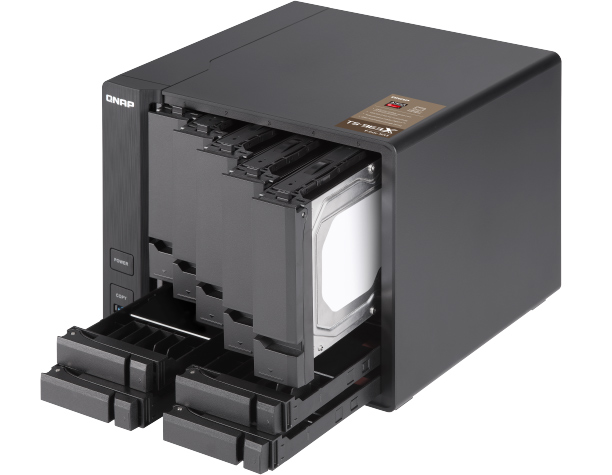
| 4:00p | QNAP Launches TS-963X NAS: x86 NAS With 9 Bays & 10 GbE/Multi-Gig Ethernet
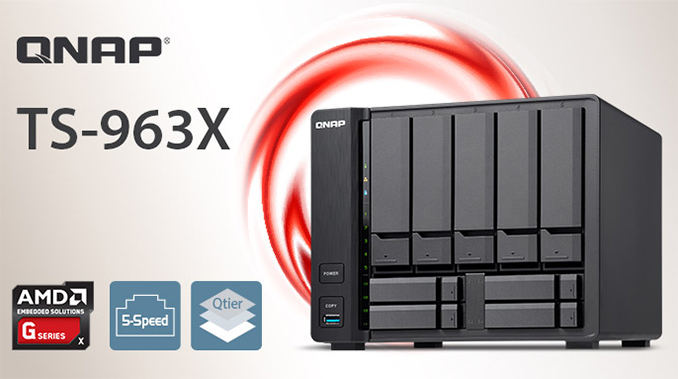
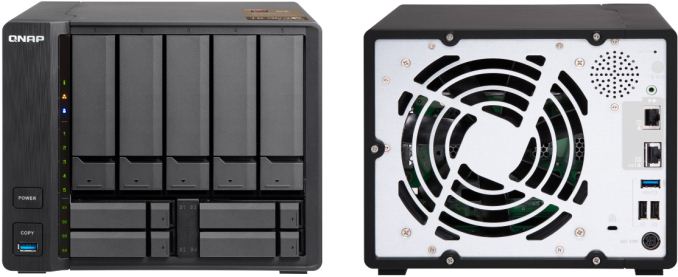
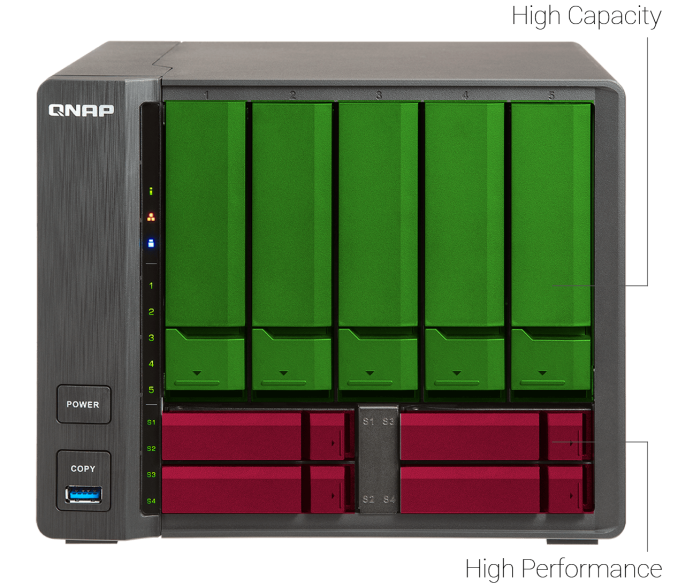
QNAP this week has taken the wraps off of their new 9-bay NAS family, the TS-963X series. The new storage devices sports a mix of 3.5-inch and 2.5-inch drive bays with support for the company’s Qtier file/data tiering technology, and also features integrated 10GBASE-T connectivity. Being the first 10GbE-enabled NAS in its class, the QNAP TS-963X products are primarily aimed at small businesses that need high capacity and fast access time. The QNAP TS-963X NAS features five hot-swappable 3.5-inch bays for high-capacity SATA HDDs as well as four hot-swappable 2.5-inch bays for high-performance SATA SSDs (keep in mind that such drives may be hard to find). The NAS is based on AMD’s GX-420MC SoC (two Excavator modules, 2 GHz, 2 MB L2 cache, Radeon iGPU with 128 stream processors, a 256-bit AES encryption engine, 17.5 W TDP) and run QNAP’s QTS 4.3 operating system. The latter supports various features, including snapshots, virtual JBOD, Qsync cross-platform file sharing (for Apple, Windows, and Linux machines), one touch copy as well as Qtier technology that automatically organizes frequently used file/data into tiers (by moving frequently used data to SSDs).
The QTS 4.3 can also support various first-party and third-party apps that can further enhance functionality of the QNAP TS-963X. For example, the Hybrid Backup Sync can synchronize files with local, remote, and cloud storage; the QVR Pro offers features required by a surveillance solution; whereas Virtualization Station enables users to host virtual Windows/Linux/Unix machines on a NAS (the TS-963X is VMware as well as Citrix ready, and is Windows Server certified).
One of the key features of the QNAP TS-963X NAS is integrated 10GBASE-T network card that supports 10 GbE, 5 GbE, 2.5 GbE, 1 GbE, and 100 MbE speeds. The TS-963X is one of the first NAS for small businesses to feature 10 GbE and multi-gig connectivity over an RJ45 connector using Cat5e/Cat6 cabling. As 10GBase-T and NBase-T networks become more widespread, 10 GbE NICs inside SMB-oriented NASes will become more widespread, but for now the TS-963X will offer this feature exclusively. QNAP’s NAS uses Aquantia’s relatively affordable AQtion AQC107 network chip, so the capability does not necessarily increase its pricing significantly.
QNAP says that the TS-963X will be available shortly in two versions: the TS-963X-2G with 2 GB DDR3L memory as well as the TS-963X-8G with 8 GB of DDR3L memory. The manufacturer yet has to disclose pricing of its new NAS, but it says that the TS-963X will carry a “budget-friendly” MSRP.
Related Reading: | ||||||||||||||||||||||||||||||||||||||||||||||||||||||||||||||||||||||||||||||||||||||||
| 5:00p | EKWB Releases New Hard Tubing Series Watercooling Kits
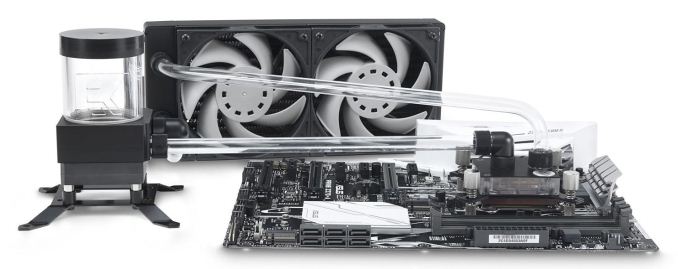
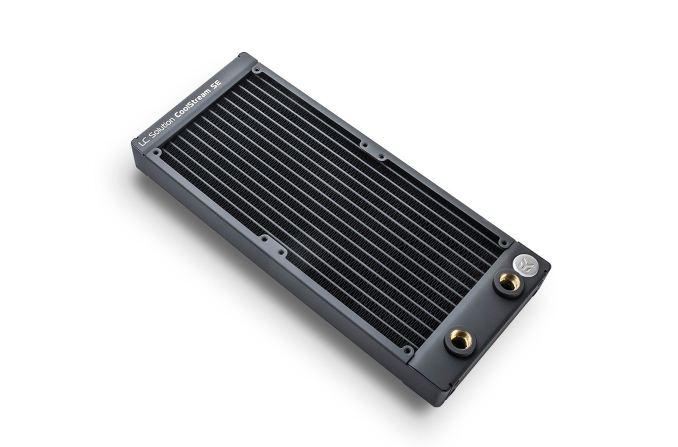
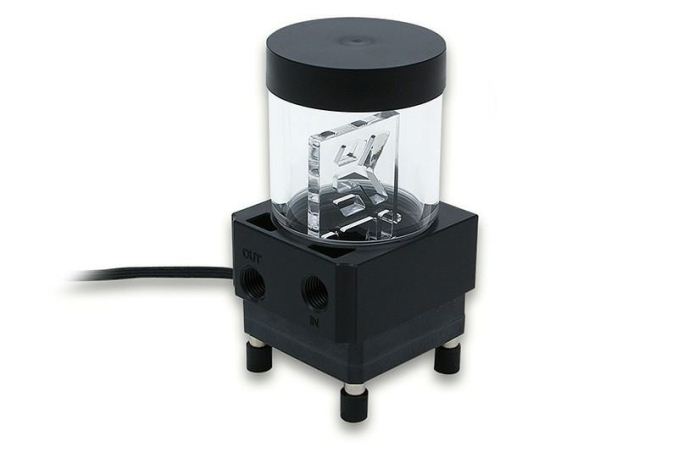
EKWB has offered enthusiasts water cooling parts and complete kits for years now. The kits are intended to simply custom water cooling in what can be a complicated matter. They offer users a one-stop solution for their water cooling needs including the pump, reservoir, radiator, fittings, and soft tubing – everything one needs to get started on cooling your system with water. To that end, EK has put together new kits, the EK-KIT HT240 and HT360 that includes hard tubing instead of the typical soft tubing we see on most DIY kits. Hard tubing will take a bit more thought and effort for loop design, but the appearance, in the end, is worth it to many.
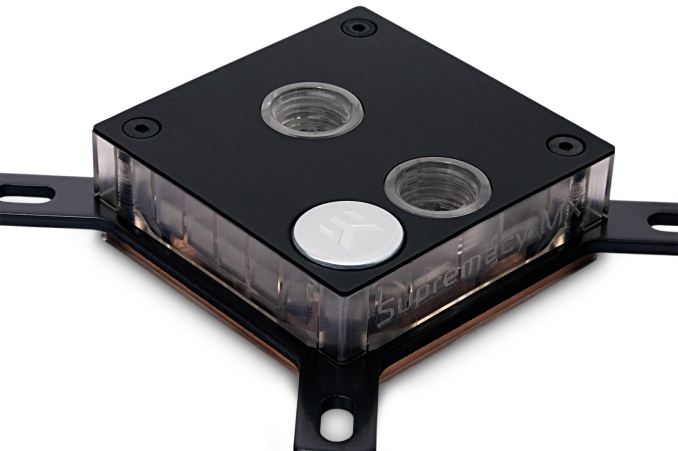
Outside of offering the hard tubing, the new kits come with the EK-Supremacy MX block; a universal CPU block intended to fit modern sockets (Read: 115x, 20xx, and AM4). It uses a universal mounting mechanism said to offer error-preventing, tool-less installation. The copper block is built using the same cooling engine as the popular EK-Supremacy EVO with the same flow properties and almost identical thermal performance according to EK. Both kits contain an EK-CoolStream SE radiator which is a slim (sub 30mm) radiator using parallel flow brass cooling chambers for reduced hydraulic flow resistance as well as copper fins with a fairly high 22 FPI density. The 240 kit includes a 240mm radiator while the 360 kit a 360mm radiator. Mating with the radiator is EK-Vardar F3-120 high-static pressure fans. This specific model is PWM controlled via a 4-pin header with speeds up to 1850 RPM rated at 29.5 dBA. Air flow rates are 63 CFM with static pressure measuring in at 2.24mm H20 which should have no issues sending air through the radiators.
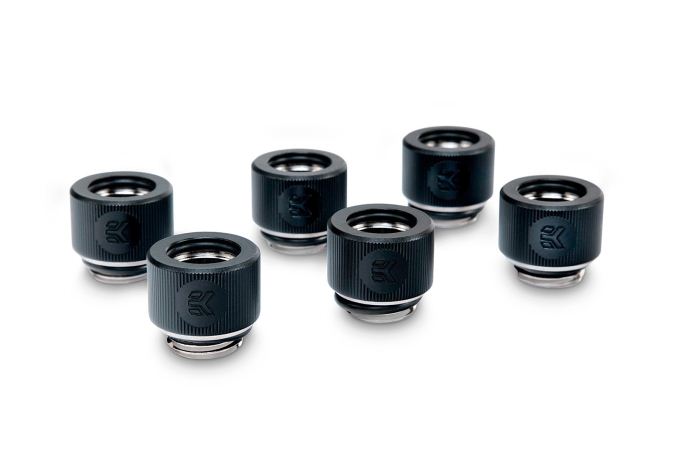
EK supplies an EK-XRES 100 SPC MX PWM water cooling pump reservoir combo which only needs power through a 4-pin PWM fan header for operation – no Molex connector required as the pump uses around 6W. PWM control will allow users to set automatic pump speeds dependant on CPU temperature through the onboard headers. The pump is rated with maximum pressure head at 3.2m (10.5 feet), with a maximum flow rate of 450L/h. This pump/res combo measures in at 2.6" x 2.6" x 4.6" making for a small footprint while being able to hold around 125ml of liquid. The kit also comes with its EK-Cryofuel Clear Concentrate coolant to mix with distilled water for filling the loop. Also included in the kit are six EK-HDC 12mm G/14 hard tube compression fittings. Designed specifically for use with solid tubing, the fitting is said to prevent the hard tube to be pulled out of the fittings by compressing a rubber gasket below the ring. The barb itself is constructed of nickel plated CNC machined brass with the locking ring made of black-chrome plated CNC machined brass. The kits also have two angled adapters, EK-AF 90°, to help simplify tubing routing.
As far as the hard tubing, EK uses an extruded acrylic and comes with four 500mm long 10/12mm (ID/OD) clear tubes. Users will need to purchase materials to bend the tubing and EK does offer an EK-HD Tube DIY kit that includes silicone cord/rod, sandpaper, and a hacksaw – a heat gun is not included. Primochill also has a rigid tool bender and is a bit more precise. Just like with soft tubing, if users happen to be new at running hard tubing, it is suggested to get additional hard tubing for the trial and error based work it can be to bend tubing properly. The new HT Series kits are available for purchase now through the EK Webshop and Partner Reseller Network. The EK-KIT HT240 is priced at $279.99/€259.90 while the EK-KIT HT360 is priced at $309.99/€279.90. There is a slight premium (around $20) for HT kits versus the S Series which use the same radiator, pump/res combo, and blocks.
Related Reading | ||||||||||||||||||||||||||||||||||||||||||||||||||||||||||||||||||||||||||||||||||||||||
| 9:40p | NVIDIA Announces Record Q1 FY 2019 Results
In what seems like a never-ending trend, NVIDIA today announced record results for their first quarter of their 2019 fiscal year. NVIDIA had revenue of $3.21 billion for the quarter, up an astounding 66% from a year ago. The company had margins of 64.5%, up 5.1% from last year. Operating income came in at $1.295 billion, which is up 134% from the same quarter of FY 2018, and net income was up even higher: 145% to $1.244 billion. Earnings per share were up 151% to $1.98.
NVIDIA has diversified, but gaming is still central to the company, and this quarter gaming revenue was up 67.7% from a year ago to $1.723 billion. Some of that growth was certainly attributed to cryptocurrency, but the company cited games such as PUBG and Fortnite as driving factors for revenue growth. And this is with a GPU lineup that is closing in on being two years old as well. The Datacenter segment grew 71% from a year ago to $701 million. In Q1 FY 2018, revenue was $409 million, and Q1 2017 it was $143 million, that’s 390% growth in just two years. Datacenter is now easily the second largest source of revenue for NVIDIA, and a strong lineup of products like the Tesla V100, along with an increased demand for GPUs in the datacenter, likely means this growth will continue. Professional Visualization also saw strong growth of 22.4% year-over-year, with $251 million in revenue for the quarter. The company announced the first Volta products in May of last year, including the GV100 with it’s 21.1 billion transistors, which is targeted at this market. Automotive, where NVIDIA found a lot of growth with their Tegra products, had much more modest growth at 3.57%, with revenues for the quarter of $145 million. The company was able to secure platform wins with several car manufacturers, but even with the addition of driving assists, automotive revenue has been more or less flat over the last year. NVIDIA did announce the DRIVE Constellation system at GTC 2018 just over a month ago, so the automotive end hasn’t been forgotten by the company, but it’s certainly been eclipsed by their other ventures in recent years. Finally, the OEM & IP revenue for the quarter was up 148% to $387 million for the quarter. NVIDIA is reaping the rewards of a successful partnership with Nintendo in the Switch console, and Tegra processor revenue was up 33%. Also, NVIDIA is including $289 million in revenue related to GPUs for cryptocurrency mining.
For the second quarter of FY 2019, NVIDIA is expecting revenues of $3.10 billion, plus or minus 2%, with margins of 63.3% plus or minus 0.5%. Source: NVIDIA Investor Relations | ||||||||||||||||||||||||||||||||||||||||||||||||||||||||||||||||||||||||||||||||||||||||



| << Previous Day |
2018/05/10 [Calendar] |
Next Day >> |