[Most Recent Entries] [Calendar View]
Friday, June 1st, 2018
- We will only see HCC processors for HEDT to begin
- The base LCC design is relegated to low-end Xeons, and
- Intel will design its next big microarchitecture update with EMIB* in mind
- To compete, Intel will have to put at least two dies on a single package.
- The AMD 2nd Gen Ryzen Deep Dive: The 2700X, 2700, 2600X, and 2600 Tested
- The ASRock X370 Gaming-ITX/ac Motherboard Review
- AMD Preps New Ryzen 2000-Series CPUs: 45W Ryzen 7 2700E & Ryzen 5 2600E
- Two New 35W Raven Ridge Parts: AMD Athlon 200GE and Athlon Pro 200GE
- AMD Launches Ryzen Pro with Vega: Mobile APUs and Desktop APUs
- AMD Launches Ryzen 3 2200GE & Ryzen 5 2400GE 35 W APUs
- The MSI B350 Tomahawk Motherboard Review: Gaming On a Budget
- Mining Can Be Fashionable? Biostar Wants To Sell Millenials its New Mining System
- Biostar Goes Mining: New TB250-BTC Pro Motherboard and RX 470D Mining GPU
- Colorful announces a Bay Trial Mining Motherboard with 8+1 PCIe slots
- ASUS Announces B250 Expert Mining Motherboard: 19 Expansion Slots
- Mining Cards Update: Zotac, Manli and Biostar Products Formally Confirmed
- The Plextor M9Pe NVMe SSD Review: Teaching An Old Chip New Tricks
- Intel QLC NAND Updates: Up to 20TB In 2.5-inch SSD
- Marvell Launches New SSD Controllers and RAID-Capable NVMe Switch
- Samsung 30.72 TB SSDs: Mass Production of PM1643 Begins
- Samsung’s PM1633a Now Available: $10k for 15 TB, $6k for 7 TB
- Samsung Begins to Ship 15.36 TB SSD for Enterprise Storage Systems
- Memblaze Launches PBlaze5 SSDs: Enterprise 3D TLC, Up to 6 GB/s, 1M IOPS, 11 TB
- Micron Introduces 9200 Series Enterprise NVMe SSDs
- Seagate Refreshes Enterprise SSDs With 3D NAND
| Time | Event | |||||||||||||||||||||||||||||||||||||||||||||||||||||||||||||||||||||||||||||||||||||||||||||||||||||||||||||||||||||||||||||||||||||||||||||||||||||||||||||
| 8:00a | Acer Announces AMD Gaming Lineup For Computex 2018
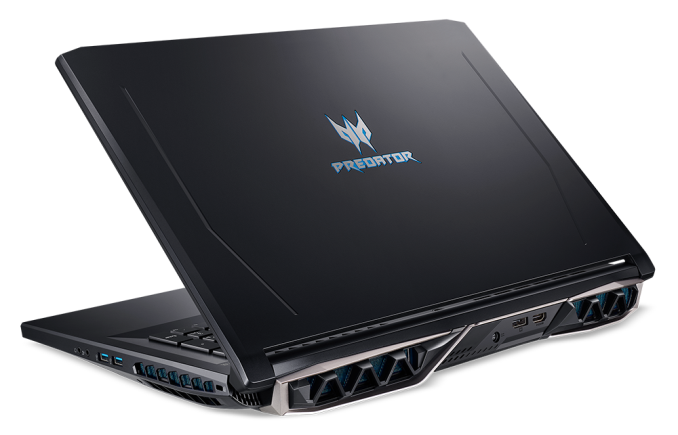
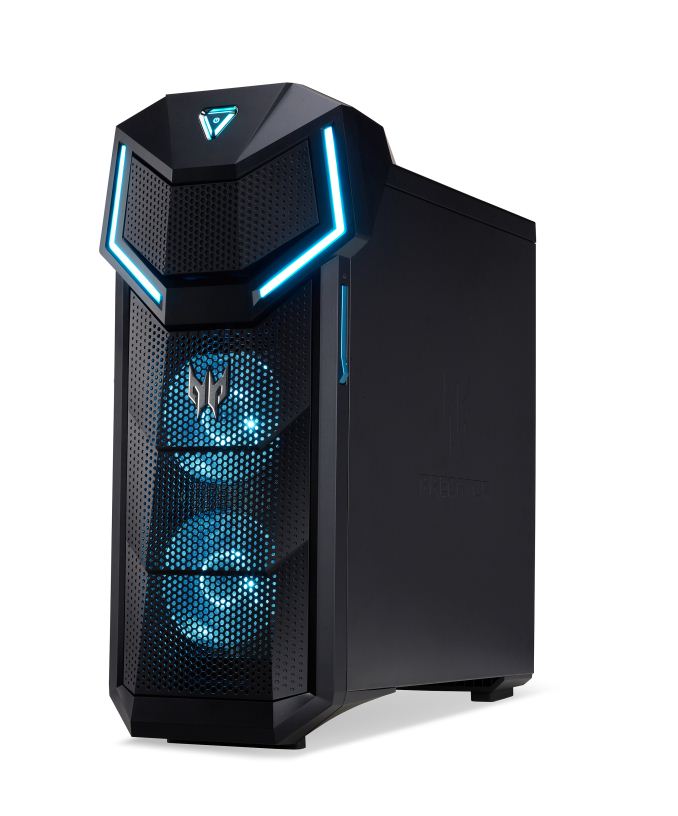
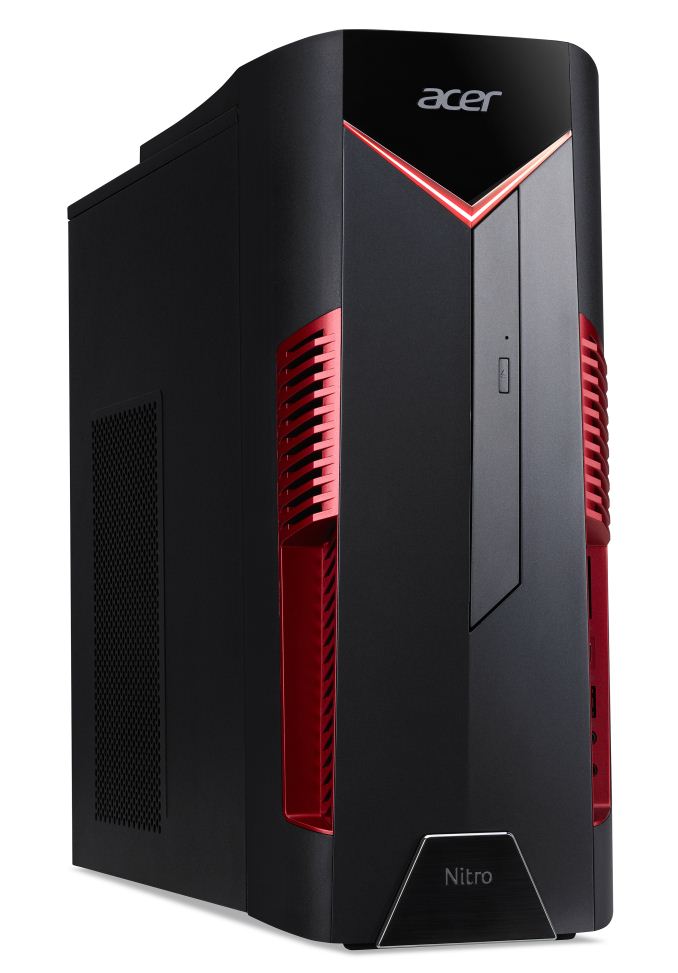
With Computex getting underway, Acer is announcing a couple of new devices in their gaming lineup which feature AMD processors. Acer’s new Predator Helios 500 is a gaming laptop with Ryzen Mobile and Radeon RX, and they’ve got a couple of gaming desktops as well in the Predator Orion 5000, and the Acer Nitro 50. Acer Predator Helios 500
Jumping into the Predator Helios 500 (PH517-61) laptop, it’s a full-on AMD model of their Helios lineup, featuring an AMD Ryzen 7 2700 processor which is paired with an AMD RX Vega 56 GPU with 8 GB of HBM2. This 17.3-inch laptop offers the customer a choice of either a 1920x1080 144 Hz display, or a 3840x2160 60 Hz IPS display, both of which support FreeSync variable refresh rate. Acer is cooling the laptop with AeroBlade 3D metal fans, and five internal heat pipes to transfer the heat over to those fans. The laptop features a 2.1 speaker setup and Acer TrueHarmony and Waves MaxxAudio, along with Waves Nx head-tracking technology which allows for spatial tracking of your headphones for more realistic 3D audio. We don’t have full specifications yet, but expect it to be similar to the Coffee Lake powered model already launched. Starting price for the Helios 500 AMD model is $2199, with shipments starting in July. Acer Predator Orion 5000
Next up is the Acer Predator Orion 5000 (P05-100) gaming desktop, which is powered by the AMD Ryzen 7 2700X processor, and paired with the latest AMD B450 chipset. It can be outfitted with up to a GTX 1080 GPU, and features a transparent side panel which are easy-open to access the components if and when you need to upgrade. Acer is cooling with the IceTunnel 2.0 airflow management design, and each thermal zone has its own airflow tunnel to get heat out of the case. As with the Helios laptop, Acer hasn’t yet provided all of the options yet, but pricing starts at $1499 with availability in September. Acer Nitro 50
Finally, the lower cost Nitro lineup also has a new desktop model in the Acer Nitro 50, which has the same AMD Ryzen 7 2700X as the Orion model, but smaller GPU options in the AMD Radeon RX 580 or NVIDIA GTX 160 GPU. It can be purchased with up to 512 GB of SSD and 3 TB of spinning disks, meaning you should be able to fit all of your games you would need at any one time. This model will be offered starting at $899.99 in September. Source: Acer | |||||||||||||||||||||||||||||||||||||||||||||||||||||||||||||||||||||||||||||||||||||||||||||||||||||||||||||||||||||||||||||||||||||||||||||||||||||||||||||
| 8:00a | The Riotoro Prism Gaming Mechanical Keyboard Review: Making A Strong Debut Today we are taking a look at Riotoro's first mechanical keyboard, the Ghostwriter Prism. The company's first mechanical keyboard is targeted towards demanding gamers and advanced users, with original Cherry MX Brown RGB mechanical switches, advanced media controls, and extensive programmability options. We check to see whether this new product has what it takes to please the most demanding segment of the PC market. | |||||||||||||||||||||||||||||||||||||||||||||||||||||||||||||||||||||||||||||||||||||||||||||||||||||||||||||||||||||||||||||||||||||||||||||||||||||||||||||
| 9:00a | A Thought on Silicon Design: Intel’s LCC on HEDT Should Be Dead
In the past couple of weeks, we have been re-testing and re-analysing our second generation Ryzen 2000-series review. The extra time and writing, looking at the results and the state of the market, led me down some interesting thoughts, ideas, and concepts, about how the competitive landscape is set to look over the next 12-18 months. Based on our Ryzen 2000-series review, it was clear that Intel’s 8-core Skylake-X product is not up to task. The Core i7-7820X wins in memory bandwidth limited tests because of the fact that it is quad channel over the dual channel competition, but it falls behind in almost every other test and it costs almost double compared to the other chips in benchmarks where the results are equal. It also only has 28 PCIe lanes, rather than the 40 that this chip used to have two generations ago, or 60 that AMD puts on its HEDT Threadripper processors.
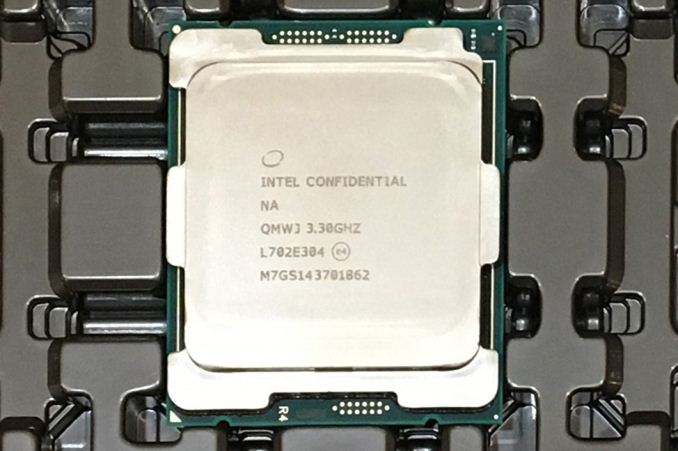
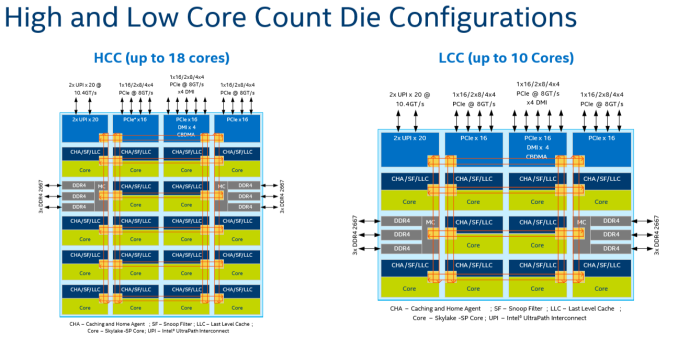
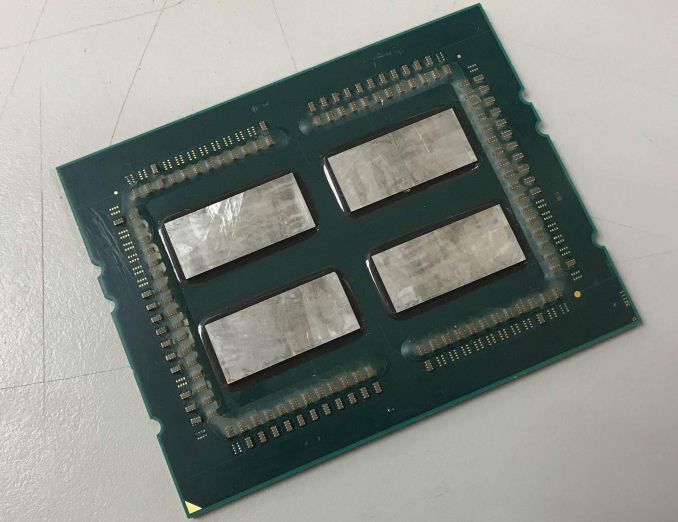
Intel uses its monolithic low-core-count (LCC) Xeon design for the 6-8-10 Skylake-X processors, as it has 10 cores in the silicon floor plan. AMD is currently highly competitive at 8 cores, with a much lower price point in the consumer space, making it hard for Intel to justify its 8-core Skylake-X design. Intel is also set to launch 8-core mainstream processors later this year, and is expected to extend its consumer ring-bus design from six-cores to eight-cores to do so, rather than transpose the 8-core LCC design using the latest Coffee Lake microarchitecture updates. Because of all this, I am starting to be of the opinion that we will not see Intel release another LCC Xeon in the high-end desktop space in the future. AMD’s Threadripper HEDT processors run mainly at 12 and 16 cores, and we saw Intel ‘had to’* release its mid-range core count (called high core count, HCC) silicon design to compete. *Officially Intel doesn’t consider its launch of 12-18 core Core i7/Core i9 processors a ‘response’ to AMD launching 16-core Threadripper processors. Many in the industry, due to the way the information came to light in spots and without a unified message, disagree. In this high-end desktop space, looking to the future, AMD is only ever going to push higher and harder, and AMD has room to grow. The Infinity Fabric, between different dies on the same package, is now a tried and tested technology, allowing AMD to scale out its designs in future products. The next product on the block is Threadripper 2, a minor update over Threadripper but based on 12nm and presumably with higher frequencies and better latencies as well. We expect to see similar 3-10% uplift over the last generation, and it is likely to be up to 16 cores in a single package coming out later this year.
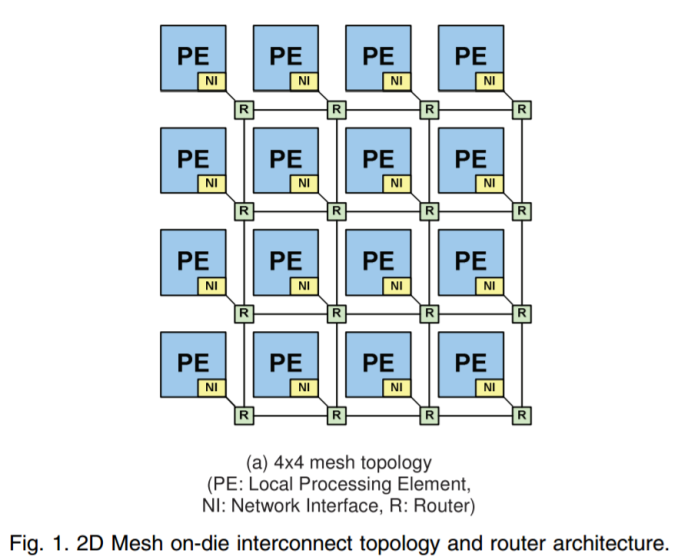
With AMD turning the screw, especially with rumors of more high performance cores in the future, several things are going to have to happen from Intel to compete: *EMIB: Embedded Multi-Die Interconnect Bridge, basically an intra-package interposer to connect two chips at high bidirectional speed without a bulky interposer by inserting a micro-interposer in the package PCB/substrate. We currently see this technology on Intel’s Core with Radeon RX Vega (‘Kaby Lake-G’) processors in the latest Intel NUC. For the next generation of server-class Xeon processors, called Cascade Lake-SP and which are expected to be coming either this year or early next (Intel hasn’t stated), we believe it to be a minor update over the current Skylake-SP. Thus for CL-SP, option (1)+(2) could happen then. If Intel wants to make the mainstream platform on Coffee Lake go up to 8 cores, the high-end desktop is likely to only see 10 cores and up. The simple way to do this is to put the HCC core design (could be up to 18 cores) and cut it as necessary for each processor. Unless Intel are updating the LCC design to 12 cores (not really feasible given the way the new inter-core mesh interconnect works, image below), Intel should leave the LCC for the low count Xeons and only put the HCC chips in the high-end desktop space.
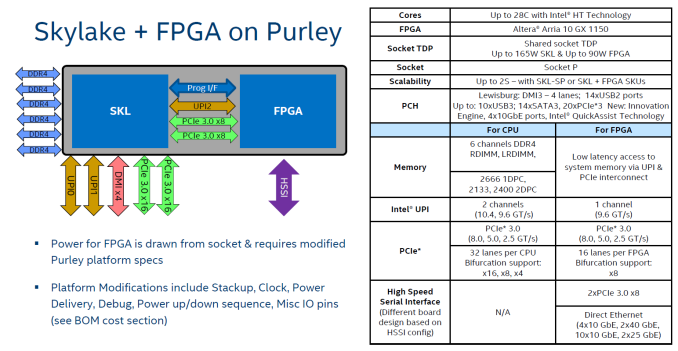
Beyond CL-SP, for future generations, options (3)+(4) are the smarter paths to take. EMIB adds additional expense for packaging, but using two smaller dies should have a knock-on effect with better yields and a more cost effective implementation. Intel could also leave out EMIB and do an intra-package connection like AMD. But one question is if Intel’s current library of interconnects, i.e. the ones that are competitors or analogues to AMD’s Infinity Fabric, are up to the task. Intel currently uses its UPI technology to connect between 2 socket, 4 socket and 8 socket platforms. Intel also uses it in the upcoming Xeon+FPGA products to combine two chips in a single package using an intra-package connection, but it comes at the expense of limiting those Xeon Gold processors down to two sockets rather than four (this is more a design thing of how the Xeon Gold has only 3 UPI connectors). But we will have to see if Intel can appropriately migrate UPI (or other technologies) across EMIB and over multiple dies in the same package. With the side of Intel, those dies might not need to be identical, like AMD, but as mentioned, AMD already has its Infinity Fabric in the market and selling today.
The question will be if Intel has had this in mind. We have seen ‘leaks’ in the past of Intel combining two reasonably high-core count chips into a single package, however we have never seen products like it in the market. If these designs are flying around Intel, which I’m sure they are, are they only for 10nm? Based on delays of 10nm, are Intel still waiting it out, or will they back-port the design as 14nm delays grow? Intel’s Dr. Murthy Renduchintala, in a recent JP Morgan investment call, was clear that 10nm high volume manufacturing is set for 2019 (didn’t say when), but Intel is learning how to get more design wins within a node rather than waiting for new ones. I would not be surprised if this is one project that gets brought into 14nm in order to be competitive. If Intel hasn’t done it by the time AMD launch Zen 2 on 7nm, the 10-15 year one-sided seesaw will tip the other way in the HEDT market. Based on previous discussions from one member of the industry, I do not doubt that Intel might still win in the absolute raw money-is-no-object performance with its best high-end $10k+ parts. They are very good at that, and they have the money and expertise for these super halo, super high-bin monolithic parts. But if AMD makes the jump to Zen 2 and 7 nm before Intel comes to market with a post-Cascade Lake product on 10nm, then AMD is likely have the better, more aggressive, and more investment friendly product portfolio. Competition is good. | |||||||||||||||||||||||||||||||||||||||||||||||||||||||||||||||||||||||||||||||||||||||||||||||||||||||||||||||||||||||||||||||||||||||||||||||||||||||||||||
| 10:00a | AMD B450 At Computex: ASRock Invite Mentions B450 Chipset on Display
ASRock on Thursday announced plans to demonstrate its new AM4 motherboards based on AMD’s yet-unannounced B450 chipset next week at Computex. The new chipset is expected to bring a number of important performance-related enhancements to AMD’s mainstream platform and allow upcoming systems to take advantage of faster memory and storage on affordable systems. While AMD yet has to confirm official specifications of the B450 chipset, we can make an educated guess about what to expect from the new unit. As reported in our Ryzen 2000/AMD X470 coverage, the X470 chipset is identical to the X370 in terms of general functionality, but it brings several important improvements over the predecessor: it consumes a lower amount of power, it enables support for faster memory, it supports improved CPU boosting techniques (XFR2 Enhanced and Precision Boost Overdrive), and it comes with the AMD StoreMI software (re-badged Enmotus FuzeDrive software) to build hybrid storage sub-systems consisting of SSDs and HDDs. That said, it is logical to expect the B450 to feature the same key advantages over the B350 as the X470 has over the X370: lower power, faster DRAM, and possibly StoreMI (some preliminary leaks prove that, but the information cannot be verified). The B450 is not going to support multi-GPU, it will also support a lower amount of USB 3.1 Gen 1 as well as SATA ports compared to the X470/X370, but it is going to be significantly better than the predecessor.
*Based on unofficial information ASRock has not disclosed anything technical about the motherboards it plans to showcase at Computex, so stay tuned tuned with us next week as we will be bringing the latest news from the show floor. Related Reading | |||||||||||||||||||||||||||||||||||||||||||||||||||||||||||||||||||||||||||||||||||||||||||||||||||||||||||||||||||||||||||||||||||||||||||||||||||||||||||||
| 11:00a | ASUS Announces H370 Mining Master: One Motherboard, 20 GPUs
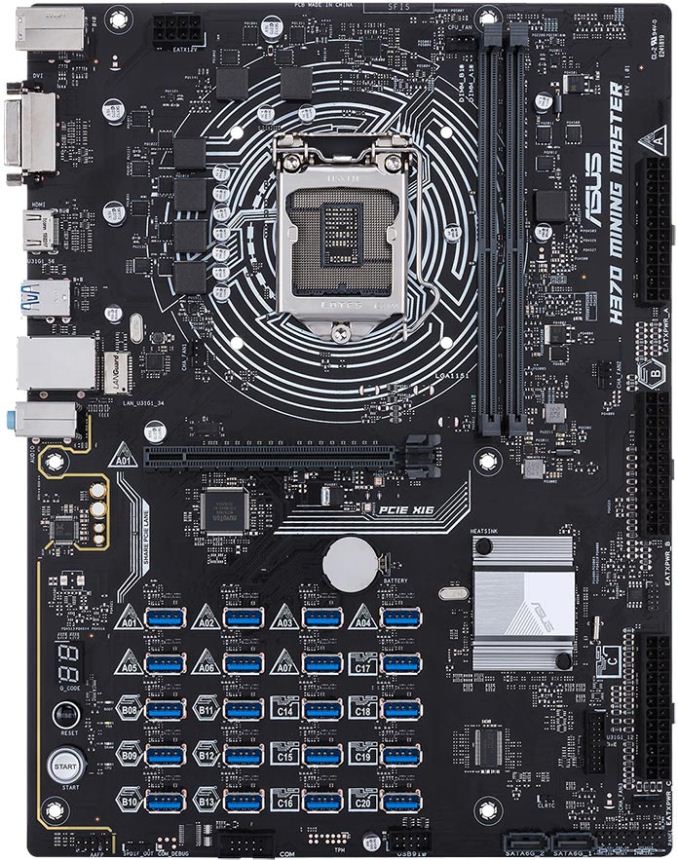
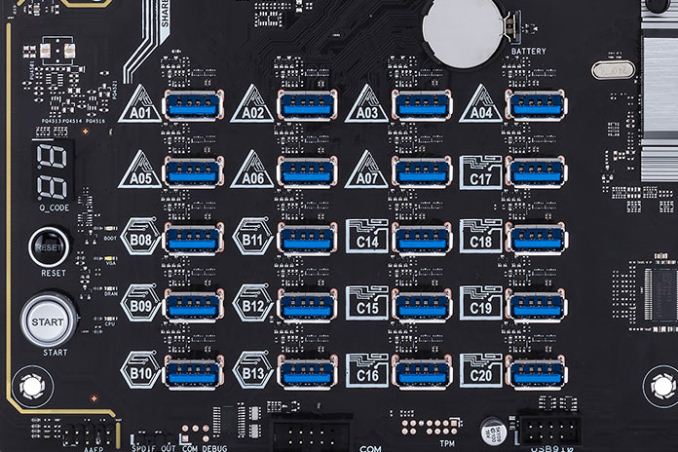
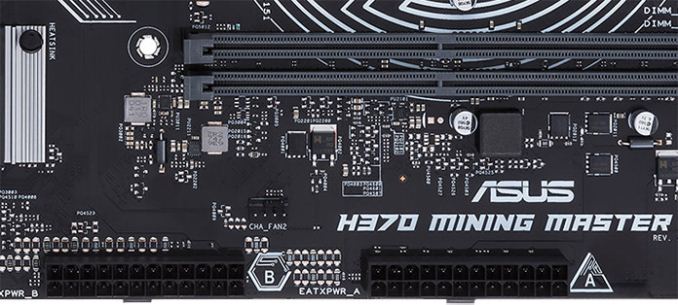
ASUS has announced the latest addition to its mining motherboards with the H370 Mining Master. This ATX sized board will support up to a mind-boggling 20(!) graphics cards via USB riser cables plugged directly into the PCB. Outside of an obvious benefit of increased density, ASUS says this setup can also minimize downtime by making problems easier to diagnose. The USB setup is said to allow miners to allocate more hardware and power budget to the GPUs doing the work rather than the infrastructure to support it. ASUS will be displaying a setup with this board at Computex using 12 Radeon RX470’s and eight NVIDIA GeForce P104 cards.
One of the first things one will notice on the board are the 20 USB 3.0 ports where one would normally see PCIe slots of varying sizes (on a mining motherboard, usually x1 slots). About the most we have seen in an ATX form factor is 18 in ASUS’ own B250 Mining Expert. The banks of vertical USB ports are said to be sturdier than a PCIe card and enables cleaner wiring and less clutter around the motherboard.
The board is able to support so many USB interfaces as crunching crypto blocks does not require a lot of interface bandwidth. Each card will use a PCIe x1 link which is routed over USB 3.0 wiring (USB 3.0, like PCIe, being a differential signaling bus). There are a few UEFI tweaks that are found in a special Mining Mode to help with efficiency. For example when in mining mode, the motherboard’s PCIe lanes run at Gen 1 speeds for improved compatibility and stability when using USB riser cards. Above 4G decoding is enabled which assists with supporting a lot of video cards as well as Launch CSM being disabled letting the board and GPUs UEFIs synchronize with each other avoiding firmware changes.
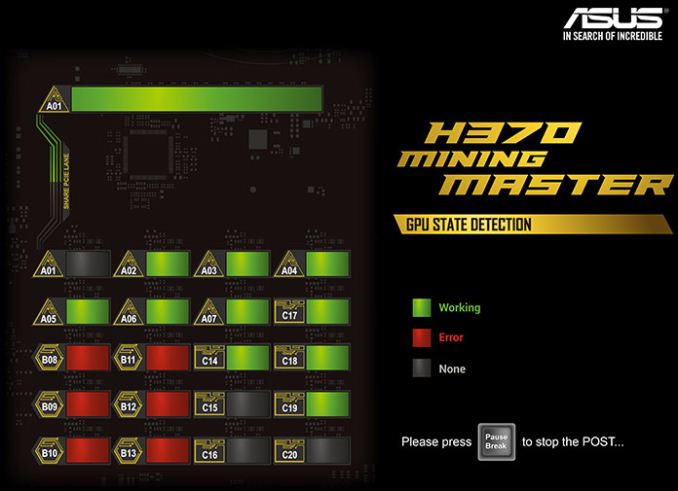
The ASUS H370 Mining Master includes a GPU state detection screen on POST displaying a graphical representation of the status of the cards (working, error, or none). The board also integrates individual debug LEDs for the CPU or memory that light up when there are problems which should further simplify the troubleshooting process.
Another standout feature is the three 24-pin ATX plugs used to power the board to connect up to three PSUs simultaneously. Each port is connected to a separate bank of riser ports, allowing users to scale up the number of GPUs gradually and to add more power as needed. The H370 Mining Master can startup multiple PSUs without issue by simply plugging the PCIe power connector on each card into the PSU at the corresponding riser port. Hardware wise the board stands on H370 chipset supporting Intel 8th Gen Core, Pentium, and Celeron processors while supporting up to 32GB of DDR4 2666 Non-ECC memory. It includes two SATA ports as well as Intel Gigabit LAN for network support. Video output can come from a GPU installed in the full-length PCIe slot (disables first USB riser port), or via HDMI or DVI-D outputs through the integrated GPU on the processor. Love or hate the minging scene, ASUS has brought to the table another mining board with increased density and ease of use trying to get an even bigger slice of the mining pie while it lasts. Pricing was not listed and availability is said to be later this year.
Related Reading: | |||||||||||||||||||||||||||||||||||||||||||||||||||||||||||||||||||||||||||||||||||||||||||||||||||||||||||||||||||||||||||||||||||||||||||||||||||||||||||||
| 12:00p | ZOTAC Preps Second-Gen Wearable Backpack "VR GO" PC
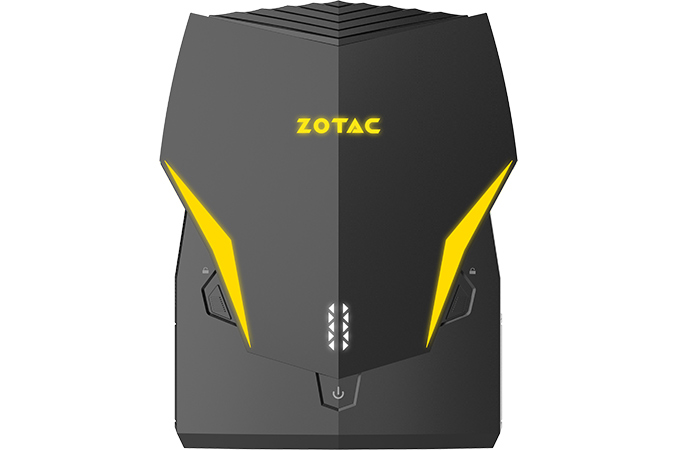
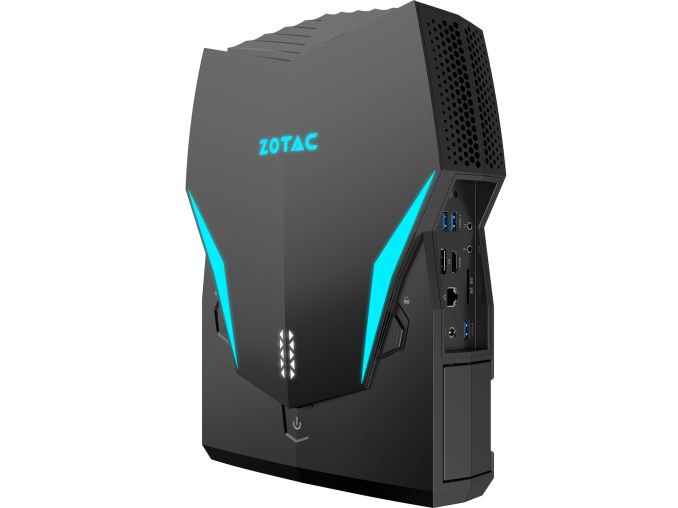
Multiple makers of gaming PCs formally introduced their wearable backpack PCs for VR gaming at Computex 2016 and have never updated these systems since then. But apparently after two years, it is time for an upgrade. ZOTAC announced on Thursday that it would demonstrate its VR GO 2.0 system at Computex 2018 next week. Having learnt from the first-generation VR GO, ZOTAC made its second-gen wearable backpack PC smaller and lighter than the original one. ZOTAC intends to disclose final specs of the unit at Computex (so stay with us), but it's likely that the new PC will be based on Intel’s Coffee Lake CPU with up to six cores, along with various SFF or mobile components (e.g., SO-DIMMs, mobile GPUs) to make the system small and more energy efficient.
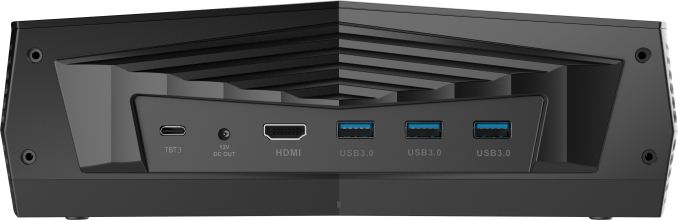
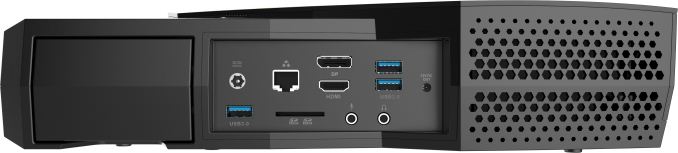
The new PC retains one of the key features of the original VR GO computer (besides its wearable nature, of course) — autonomous operation enabled by built-in batteries. Meanwhile, just like its predecessor, the VR GO 2.0 can be used like a regular desktop PC: its form-factor allows it to be laid out on a desk either vertically or horizontally and all the ports will remain accessible. Speaking of ports, the new VR GO is equipped with one Thunderbolt 3/USB Type-C header, six USB 3.0 Type-A connectors, one GbE, two HDMI outputs, a DisplayPort, an SD card reader, as well as two 3.5-mm audio jack.
Following the general market trend, the VR GO 2.0 will feature ARGB lighting on the back to make the system not only feel better than the first-gen VR GO, but also look more impressive.
Preliminary specifications, ETA, and other details about the ZOTAC VR GO 2.0 will be disclosed next week at Computex, so stay tuned with us for additional information about the system.
Related Reading: | |||||||||||||||||||||||||||||||||||||||||||||||||||||||||||||||||||||||||||||||||||||||||||||||||||||||||||||||||||||||||||||||||||||||||||||||||||||||||||||
| 1:00p | Kingston Begins Shipping 2TB UV500 Series SATA SSDs
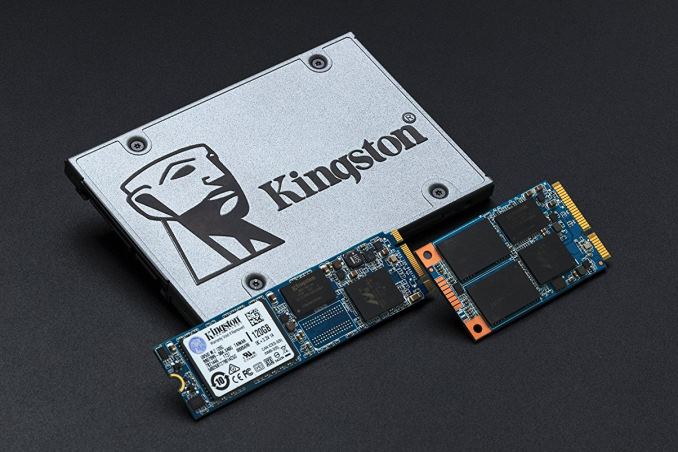
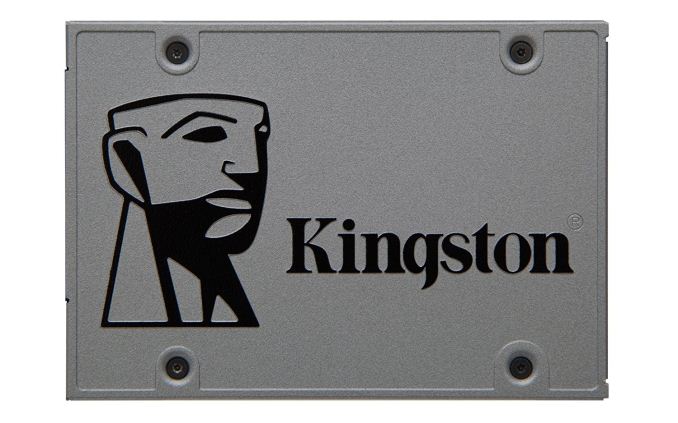
Kingston, who recently released their new UV500 line of SSD products, has announced it is now shipping a 2 TB capacity drive a 2.5-inch form factor. Kingston states the UV500 is their first 3D NAND-based SSD that features 256-bit hardware-based AES full-disk encryption as well as support for TCG Opal 2.0. The drives are specified to reach read/write speeds of up to 520MB/s and 500MB/s which match up on paper with many other SATA based SSDs.
The UV500 series drives use Marvell’s 88SS1074 SATA SSD controller mated with 3D TLC NAND. The controller supports third generation error-correcting, low-density parity check (LDPC technology), as well as reliability and endurance enhancements. As far as endurance goes, the UV500 series drives Total Bytes Written (TBW) written varies by capacity with the 120 GB drive rated for 60 TBW to the 960 GB at 480TBW. The 2 TB monster sits at 800 TB mark. They rate the Life expectancy to 1 million hours MTBF and are backed by a limited five-year warranty, about par for the course. The controller/NAND combo pushes the drive to speeds up to 520 MB/s reads and 500 MB/s writes from the 240GB models on up (120 GB is 520/320). IOPS were not listed on the 2TB drive however the 960GB model can reach up to 79000 reads and 45000 writes in IOMeter which is about average for the mainstream SSD category. Pricing at the Kingston website for the 2 TB model is $695.50 and only available in 2.5-inch form-factor.
Related Reading: | |||||||||||||||||||||||||||||||||||||||||||||||||||||||||||||||||||||||||||||||||||||||||||||||||||||||||||||||||||||||||||||||||||||||||||||||||||||||||||||
| 8:15p | “NVIDIA’s Next Generation Mainstream GPU” Presentation Briefly Listed for Hot Chips in August
On Wednesday, when Hot Chips officially announced the program and list of talks for the upcoming Hot Chips 2018 conference in August, among them was the tantalizingly named “NVIDIA’s Next Generation Mainstream GPU.” Offering only just a bit of official confirmation over NVIDIA’s successor to their Pascal-based GeForce 10-series products, the existence of this presentation would suggest a formal announcement within the next couple months. And while none of the presentations had any descriptions, not long after the program was published, references to NVIDIA’s presentation were redacted in the announcement. The timeslot is now listed as “TBD,” with all references to NVIDIA and their next-gen GPU having been scrubbed. Hot Chips hasn't mentioned why the official schedule has changed, but of the two practical theories - that this was an error and NVIDIA isn't presenting, or that NVIDIA's talk was supposed to be kept under wraps for a while longer - the latter is certainly the stronger theory right now.
In the past, NVIDIA has discussed architectures at Hot Chips only after they’ve been revealed, which would imply that NVIDIA intends (or intended) to announce the new architecture before that - perhaps in June or July - as Hot Chips takes place in mid-August. Our colleagues at Toms Hardware Germany noted their own sources as previously discussing a July release date. In any case, as these presentations and talks are submitted and approved well in advance of August, it's difficult to imagine that the original listing was a fluke. | |||||||||||||||||||||||||||||||||||||||||||||||||||||||||||||||||||||||||||||||||||||||||||||||||||||||||||||||||||||||||||||||||||||||||||||||||||||||||||||
_front off_575px.jpg)



| << Previous Day |
2018/06/01 [Calendar] |
Next Day >> |