[Most Recent Entries] [Calendar View]
Monday, June 4th, 2018
- Intel Launches Optane DIMMs Up To 512GB: Apache Pass Is Here!
- Intel Optane SSD 905P Coming Soon
- Intel Core with Radeon RX Vega M Graphics Launched: HP, Dell, and Intel NUC
- Intel Previews Optane Enterprise M.2 SSD
- Intel QLC NAND Updates: Up To 20TB In 2.5-inch SSD
- Samsung Unveils 32 GB DDR4-2666 SO-DIMMs
- AKiTiO’s Thunder3 10G Adapter Now Available: TB3-to-10GbE for Sub-$300
- Aquantia to Sell Its 5G and 10G Network Cards for $59 and $69 on Black Friday
- Aquantia Launch AQtion 5G/2.5G/1G Multi-Gigabit Ethernet Cards (NICs) for PCIe
- ASUS XG-U2008 10GBase-T Network Switch Released: 2x10G + 8x1G for $249
- Zotac at CES 2018: ZBOX MAGNUS Upgraded with Coffee
- Zotac ZBOX MAGNUS EK71080 Compact Gaming PC Review
- Zotac ZBOX MAGNUS EN1080K Compact Gaming PC Review
- Rivet Networks Launches the Killer E2500 Network Controller: Website Detection, New UI
- It’s Actually an Intel Chip: Rivet Networks Launches the Killer Wireless-AC 1550
- Lenovo Lists ThinkPad E485/E585: AMD’s Ryzen Mobile Land in Business PCs
- Dell Launches AMD Ryzen-Based Inspiron 13 7000 2-in-1 Convertible, Starts at $700
- Acer Unveils Nitro 5: 15.6-inch Gaming Laptop with AMD Ryzen Mobile & Radeon RX560
- More Ryzen Mobile: Acer Swift 3 with 2700U and 2500U Listed, From $750
- AMD Makes a Surprise Appearance: Ryzen Mobile with Qualcomm LTE
- Ryzen Mobile Now On Sale: HP’s ENVY X360
- HP Announces ENVY x360 15 With Ryzen Mobile
- Ryzen Mobile is Launched: AMD APUs for Laptops, with Vega and Updated Zen
- Corsair Announces Crystal 280X RGB Case: Micro-ATX
- When Size matters: Corsair Launches Obsidian 1000D Super-Tower Case
- Corsair Releases Value-Priced Carbide SPEC-05 Mid-Tower Case
- Glorious Glass: Lian-Li Alpha Series Cases Now Available
- More Glass: New FSP CMT330 and CMT520 Gaming PC Cases
- Coolermaster Announces Availability of New HP500 Mesh White Mid-Tower Case
- iBuyPower at CES: Project Case Builder, for Better case Customization
- DeepCool Releases Quad Stellar Four-lobed Chassis: 'Smart' Case, Unique Shape
- ATX, microATX, and mini-ITX motherboard support
- All sides built with high-density perforated mesh
- Dual-chamber design for better CPU and GPU cooling
- Two 3.5” and two 2.5” SSD/HDD bays/mounts
- Front: 2x 120mm fans or 240mm radiator
- Top: 2x 120mm fans or 240mm radiator
- Rear: 120mm fan
- 440x276x465mm (17.3x10.8x18.3”)
- ASUS ROG Goes For Power Supplies: ROG THor 1200W Platinum
- FSP Demonstrates Hydro PTM+ 1200 W: a Liquid-Cooled PSU with RGB LEDs
- CES 2016: Deepcool’s Gamer Storm brand Exhibits Water Cooling for a Power Supply
- FSP Dagger 500W and 600W SFX PSUs Come To Market: From $99 with 80Plus Gold
- FSP Announces Twins: 500W and 700W ATX PSU with Redundancy Capability
- The FSP Hydro G 750W Power Supply Review
- Thermaltake Adds RGB Lighting to Toughpower Grand Gold PSUs
- Game Traffic
- VoIP (TeamSpeak, Discord)
- Video on Host Machine
- Web Traffic, Unknown Traffic / Traffic from Guest Machines
- Update services, HTTP Downloads
- Other Downloads, Torrents
- It’s Actually an Intel Chip: Rivet Networks Launches the Killer Wireless-AC 1550
- Rivet Networks Announces Killer xTend
- Rivet Networks Announces Killer Support for 10 Gbps Network Controllers
- MSI at CES 2018: Updated GT75VR Gaming Laptop Killer Upgrade
| Time | Event | ||||||||||||||||||||||||||||||||||||||||||||||||||||||||||||||||||||||||||||||||||||||||||||||||||||||||||||||||||
| 12:47a | Computex 2018 NVIDIA Live Blog (1pm TW, 5am UTC) We're here at NVIDIA for our first Live Blog of Computex. Event starts in a few minutes. | ||||||||||||||||||||||||||||||||||||||||||||||||||||||||||||||||||||||||||||||||||||||||||||||||||||||||||||||||||
| 6:09a | ASUS ROG Press Event at Computex 2018 (6:30pm Taiwan, 10:30am UTC) ASUS' Press Event. For Those Who Dare, apparently. We've got some tasty news lined up, and we're coving the press event with a Live Blog. | ||||||||||||||||||||||||||||||||||||||||||||||||||||||||||||||||||||||||||||||||||||||||||||||||||||||||||||||||||
| 7:00a | The AnandTech Podcast, Episode 47: Intel Goes Super Premium Optane Today at Intel’s Data Center Memory Summit, the new ‘Apache Pass’ Optane memory DIMMs were announced, with capacities from 128 GB to 512 GB. This new 3D XPoint type of memory is focused on allowing persistent memory support on servers and will be available with the next generation of Xeon Scalable processors (which Intel has not announced yet). Also on the docket from Intel was some information on their high-density QLC 3D NAND solid state drives, and we have details on when they should be coming to market. Samsung also announced 32 GB SO-DIMM modules for high-end gaming laptops. The AnandTech Podcast, Episode 47:Featuring
iTunes Total Time: 38 minutes 34 seconds Outline mm:ss 00:00 Introduction Edited by Gavin Bonshor Related Reading | ||||||||||||||||||||||||||||||||||||||||||||||||||||||||||||||||||||||||||||||||||||||||||||||||||||||||||||||||||
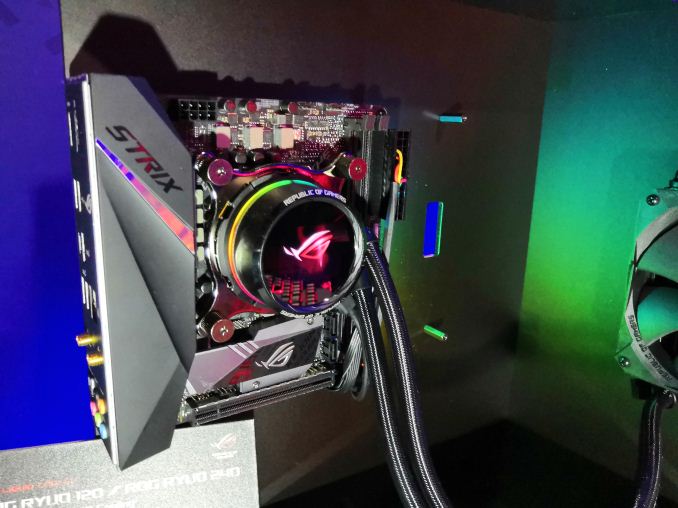
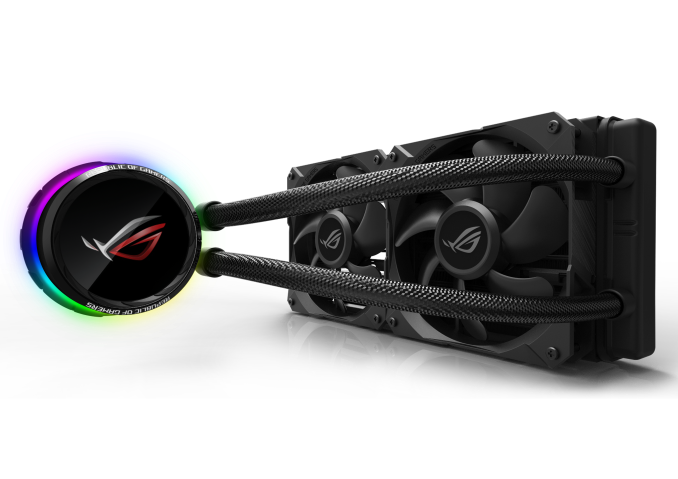
| 7:30a | ASUS ROG Coolers: Ryujin and Ryuo Liquid Coolers Announced
Coming out of ASUS’ press event are a pair of new ASUS liquid coolers, falling under the ROG peripherals range. The Ryujin will be the flagship model available in 360mm and 240mm variants, with the focus on style and ROG branding as well as performance. One of the key elements from ASUS is the surface treatment of the cooler and the radiator, to maintain the design aesthetic. The Ryujin also includes a 60mm fan inside the pump housing, pushing air around the CPU cooler to help increase the airflow around the CPU which can be lost when moving to a liquid cooling system. For the radiator, Noctua’s iPPC-2000 PEM fans are included, and a 1.77-inch LiveDash color OLED gives the stats for the cooler with support for custom images and gifs.
The Ryuo is the smaller version, offered in 240mm and 120mm versions, and a more conventional using the Asetek core. The OLED display is still here, with an additional 9 LEDs on the cooler itself. The radiator fans are actually designed by ASUS, using a Wing-Blade design, shared with ROG graphics cards and the Thor power supply. The fans are configured for high-airflow and low noise, although exact data was not provided.
More information about pricing and specifications as we get it.
| ||||||||||||||||||||||||||||||||||||||||||||||||||||||||||||||||||||||||||||||||||||||||||||||||||||||||||||||||||
| 7:31a | ASUS ROG Strix Gaming Chassis: Branding Beyond Components
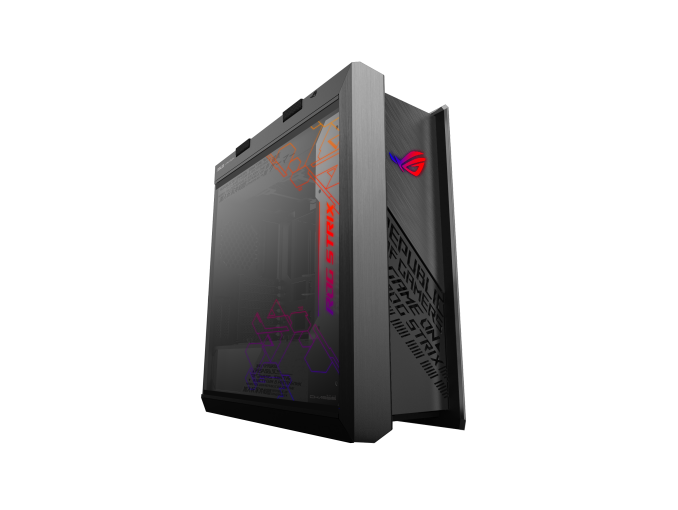
To cap the range of ASUS ROG announcements today, rather than offer pre-built systems with the ROG design, users will be able to buy an ROG branded chassis and be able to put whatever components they like into it. The ROG Strix Gaming Chassis implements the ROG logo and Aura Sync lighting that is found on the regular PC components. Added features to the chassis includes handles for carrying the chassis, room for liquid coolers (such as the new ones ASUS announced today as well), a vertical GPU bracket to showcase the graphics card, a Quick Charge 3.0 port, a USB 3.1 Gen 2 Type-C port, and tool free SSD caddies and dust filters. For the Aura Sync, the chassis has separate zones which can be controlled through the OS software. More information from Computex 2018 as we get it.
| ||||||||||||||||||||||||||||||||||||||||||||||||||||||||||||||||||||||||||||||||||||||||||||||||||||||||||||||||||
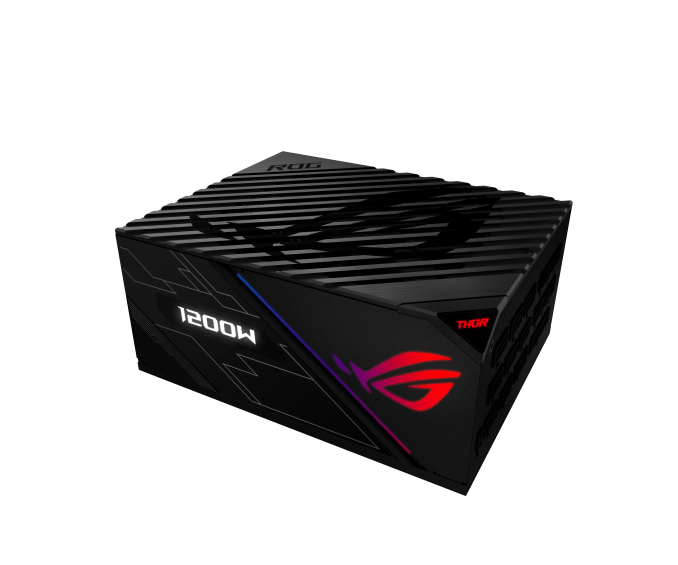
| 7:33a | ASUS ROG Goes For Power Supplies: ROG Thor 1200W Platinum
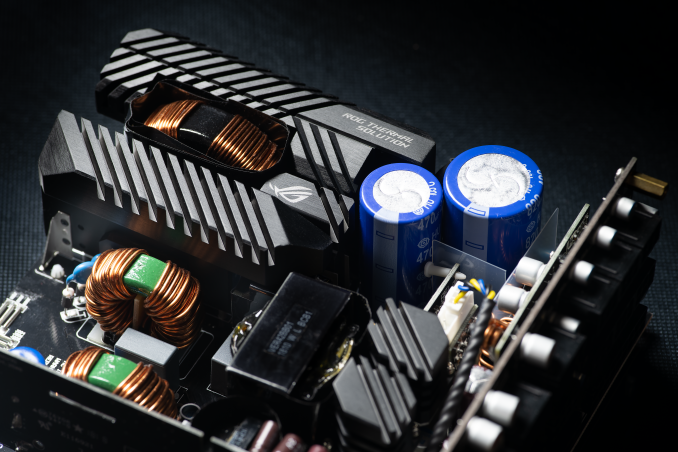
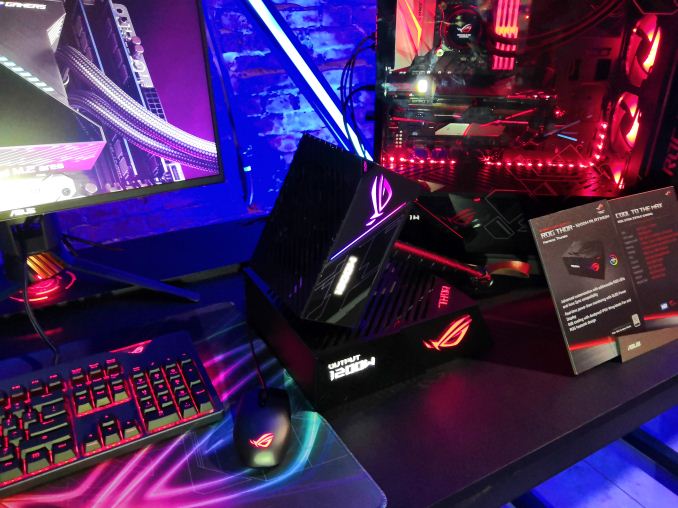
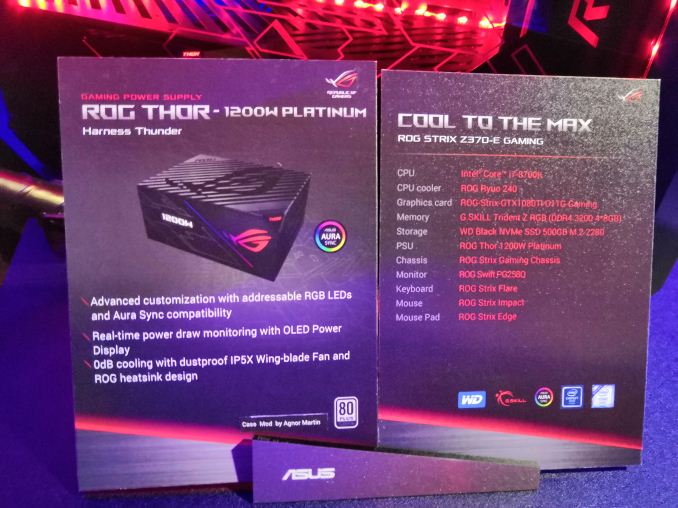
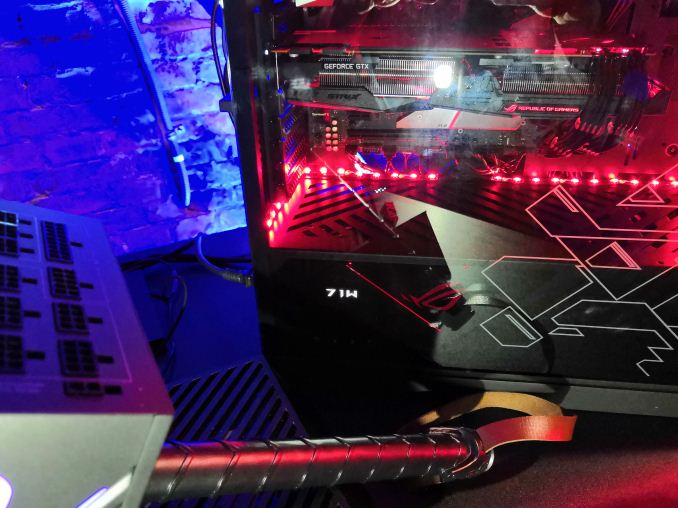
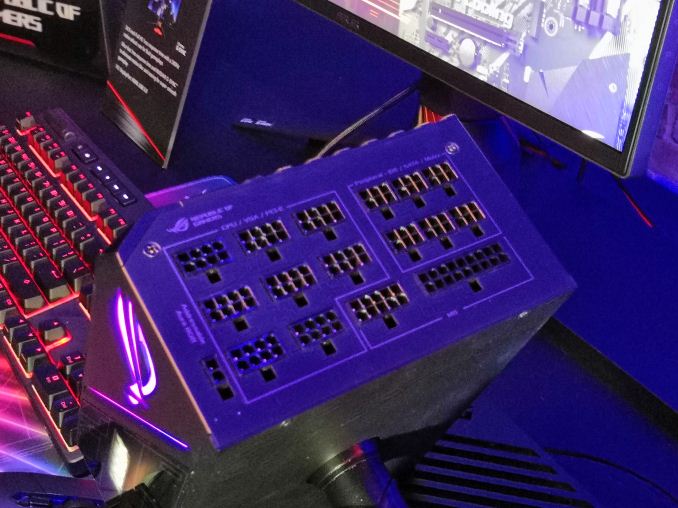
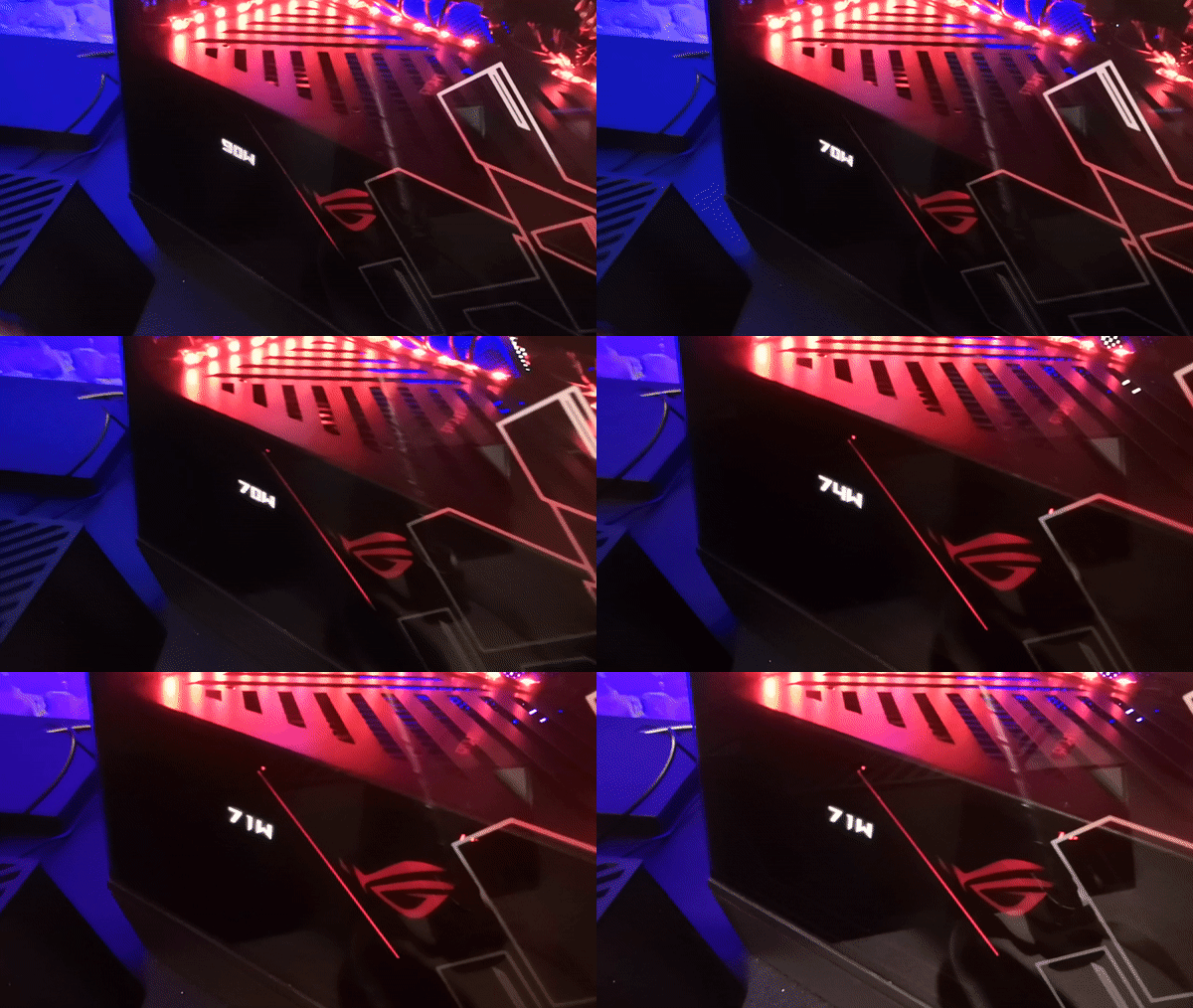
In order to build more around an individual brand, companies with Gaming brands are venturing out into more areas for other PC parts or peripherals. For the most part, these companies by an ODM design and slap their own sticker on it – this is especially true for mice, keyboards, mouse mats and such. ASUS is now going the extra stage, with power supplies. This week at Computex ASUS is announcing their ROG Thor power supply, rated at 1200W, with an 80PLUS Titanium listing.
Not many details were provided, however a 10-year warranty and customizable Aura lighting will be available. The added extra with ASUS’ Thor will be an embedded OLED display, showing the power consumption at a given time. At this point, we do not know how often this display updates, but one would hope it gives at least a one-second granularity.
More info as we get it at Computex.
| ||||||||||||||||||||||||||||||||||||||||||||||||||||||||||||||||||||||||||||||||||||||||||||||||||||||||||||||||||
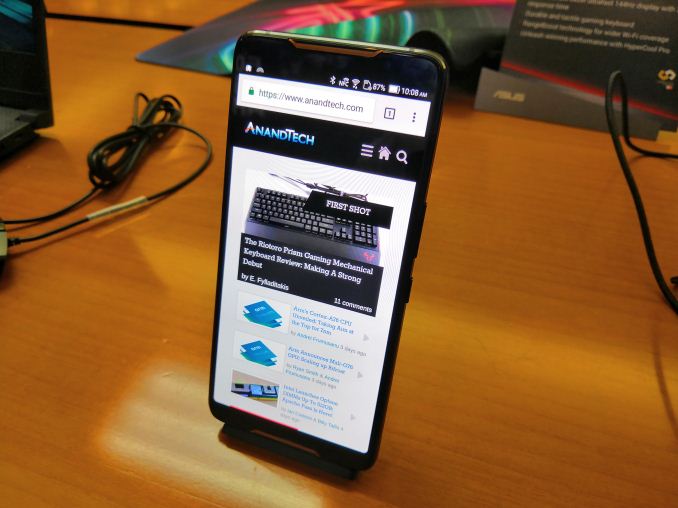
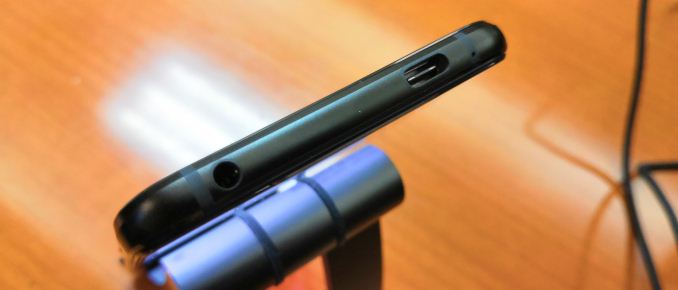
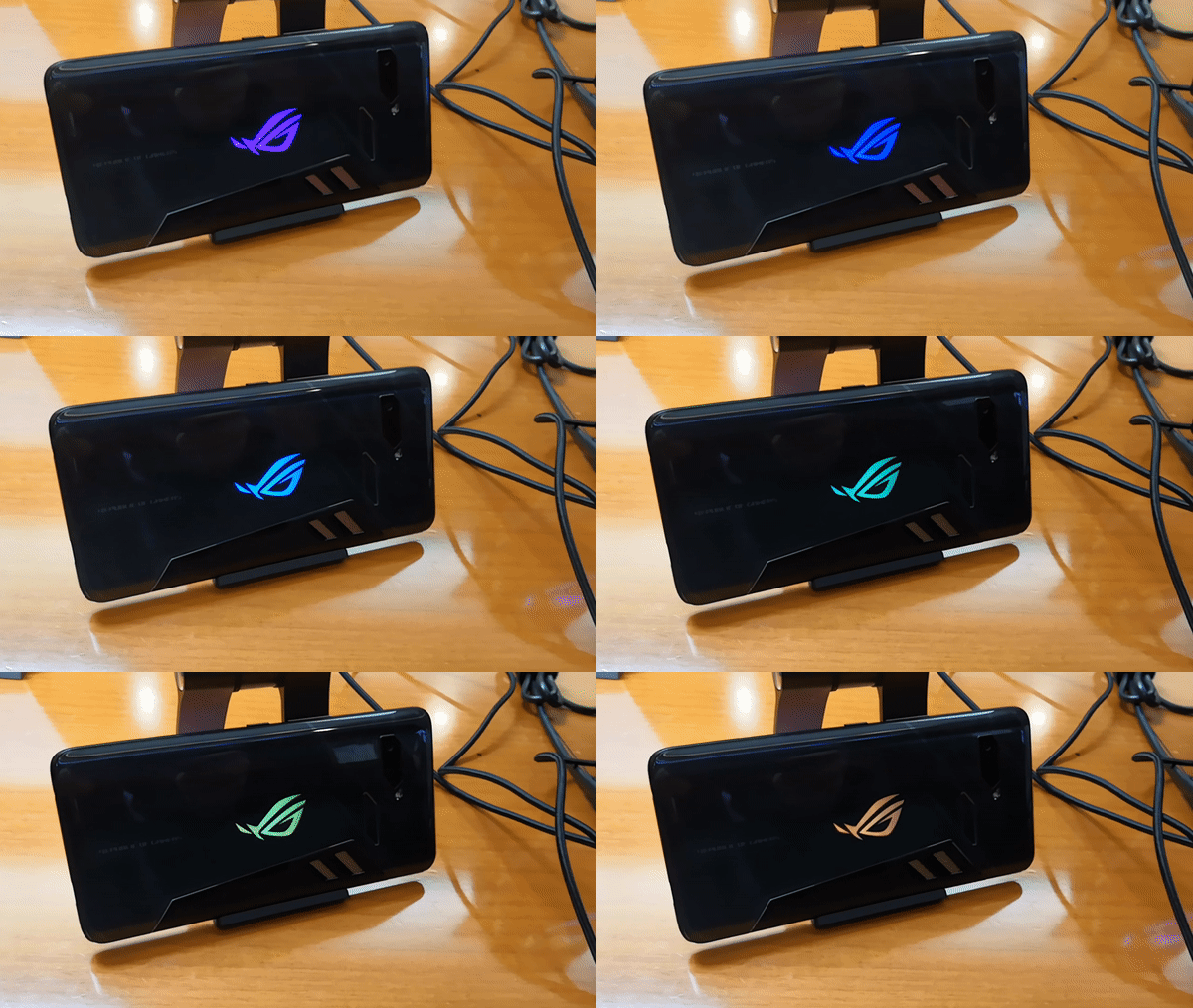
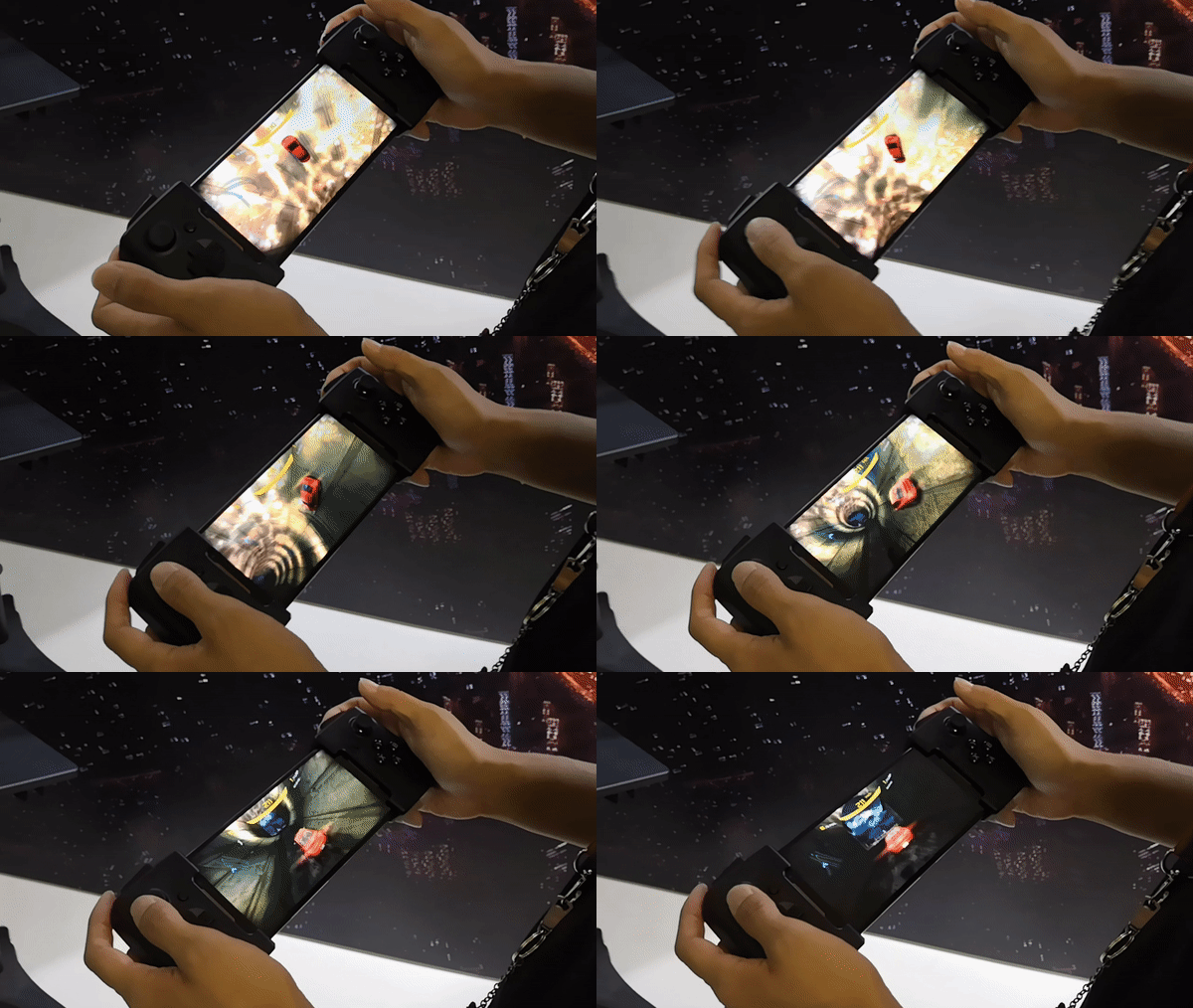
| 7:35a | ASUS Gaming Smartphone: 11mm-style ROG Phone with Speed-Binned Snapdragon 845 ASUS producing a gaming smartphone is one of the more esoteric news stories at the Computex 2018 trade show this year. To fire a shot right across the bow of Razer, ASUS is putting its ROG credentials on display: a speed-binned Snapdragon 845 running at a higher frequency than the standard S845 smartphones, a higher-than-standard 90 Hz refresh rate display with 1ms response time and 108% DCI-P3 gamut, programmable ultrasonic AirTrigger sensors, force feedback, and additional docks for purchase. One of the key elements is that ASUS built this phone with an 11mm thickness, well beyond the 7-8mm we see on flagship smartphones today. They have put that additional volume to incredible use for extra battery, more haptics, bigger speakers, more connectivity, and it's a showcase of what we could see if other smartphone manufacturers offered a bit extra z-height.
The 6-inch 2160x1080 AMOLED display is paired with the high-performance Snapdragon 845 SoC, 8GB DRAM, 128GB and 512GB of UFS 2.1 storage, along with a 4000 mAh battery, 20W ASUS Hyper Charge, support for 24-bit audio, and Corning Gorilla glass. One of ASUS’s key marketing points is the use of ASUS Aura RGB lighting, with the company stating that this is one of the first phones (if not the first) to fully exploit RGB in this way.
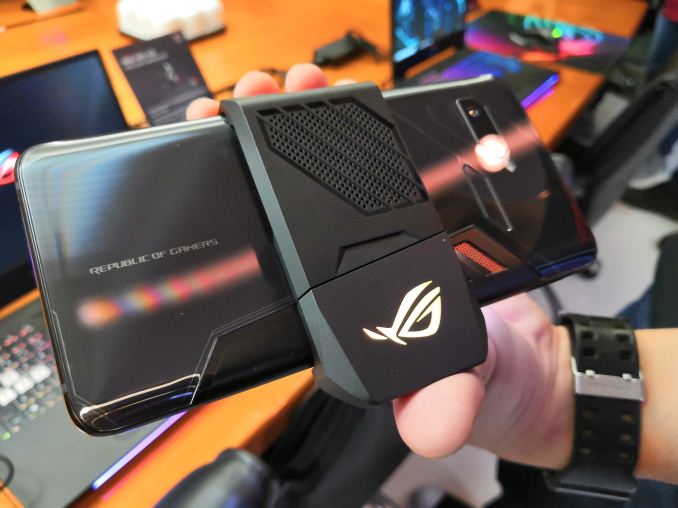
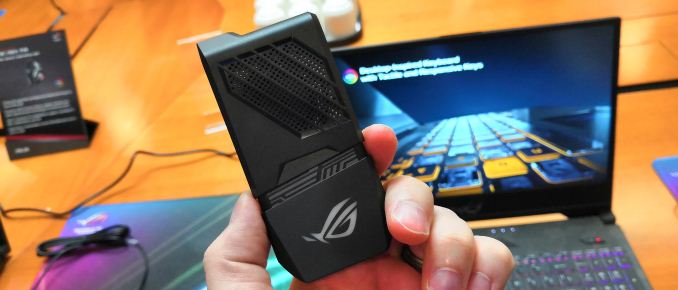
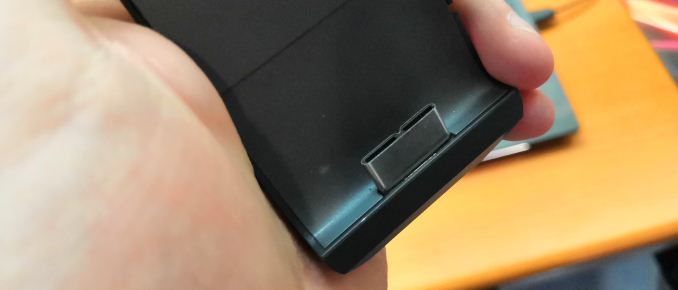
For control, ASUS will be adding three ultrasonic air touch sensors – two shoulder triggers being the main ones. These are designed to be fully programmable and are more sensitive with haptic feedback. With the AeroActive cooler, which is bundled with the phone, aside from an additional fan to help cool the phone and sweaty fingers, it provides an extra USB Type-C connector which is side mounted for direct charging, HDMI output, Gigabit Ethernet, and headphones.
ASUS will be offering the ROG Phone with a series of accessories, including a TwinView Dock to convert the machine into a dual-screen hand-held console. The Dock also offers front-facing quad-speakers, two extra physical trigger buttons, better haptic feedback, an enhanced cooling system, and a 6000 mAh extended battery back.
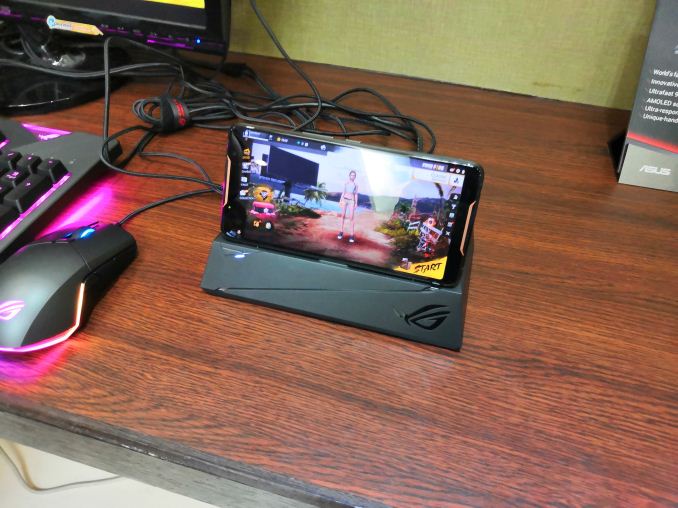
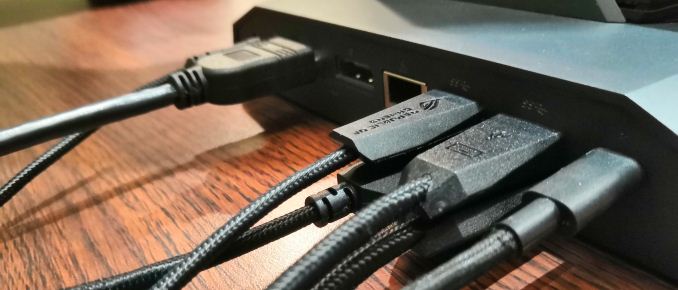
The Mobile Desktop Dock, another accessory, allows the phone to be connected to a 4K monitor, mouse, keyboard, and wired gigabit networking.
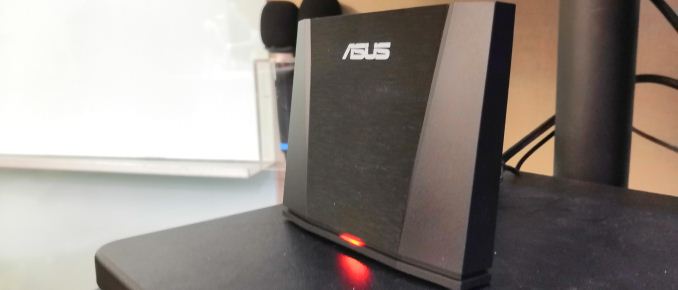
The Gamevice controller and the WiGig dock, also to be available, focuses on 802.11ad wireless display connections as well as a dual analog stick gaming – like a console .
More information as we get it at the show, hopefully with some hands on.
| ||||||||||||||||||||||||||||||||||||||||||||||||||||||||||||||||||||||||||||||||||||||||||||||||||||||||||||||||||
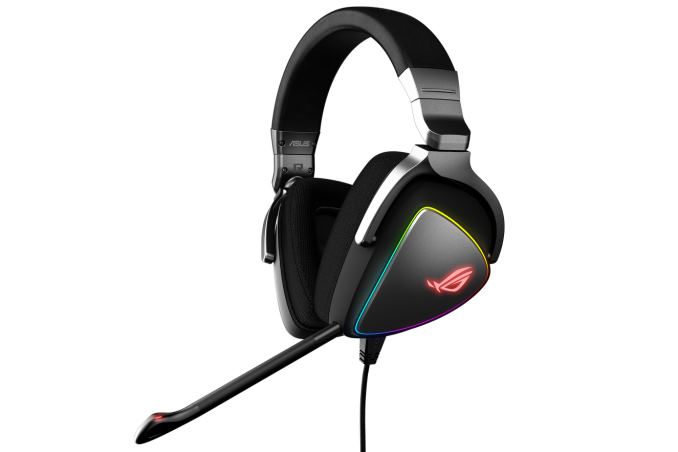
| 7:37a | ASUS ROG Delta Gaming Headset with Type-C Connection
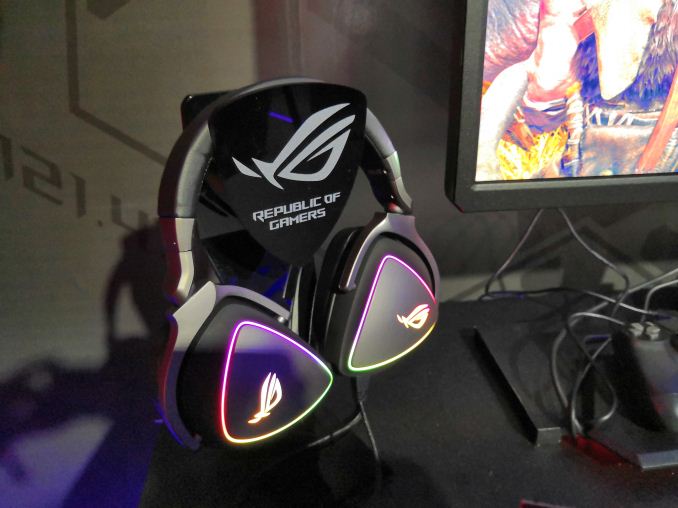
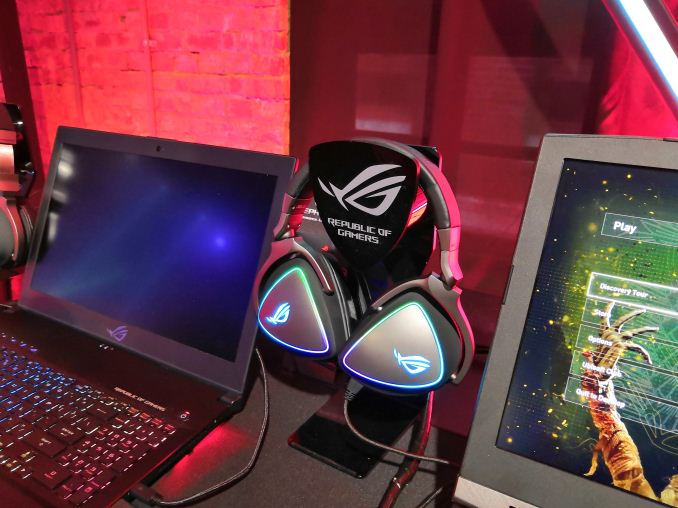
Another of ASUS’ announcement at Computex comes in the form of the ROG Delta Type-C headset adding to their line of audio devices. The new Delta headset uses an over-ear style padding along with a rigid boom mic projecting out of the left side. ASUS says the ROG Delta bridges PCs and mobile devices via its USB-C connectivity that works with the latest examples of both including their own Strix SCAR II and Hero II laptops as well as the recently announced ROG Phone.
ASUS goes on to describe the ROG Delta as a lightweight design designed to cradle users heads and comfortable to wear. The exterior contains RGB LED lighting around each ear cup along with the ROG symbol in the middle. The lighting is controlled with the Aura Sync RGB software. Internally, the ROG Delta uses an ESS based quad-DAC array with a 127-db(A) SNR. In addition, it splits the stereo signal ASUS says produces clearer and more refined sound for games and other content. A price was not listed for the USB Type-C connected ROG Delta headphones. Availability of all ASUS products announced at Computex will be available in the 2H 2018. More information and images to come later.
More Computex 2018 coverage is listed below.
| ||||||||||||||||||||||||||||||||||||||||||||||||||||||||||||||||||||||||||||||||||||||||||||||||||||||||||||||||||
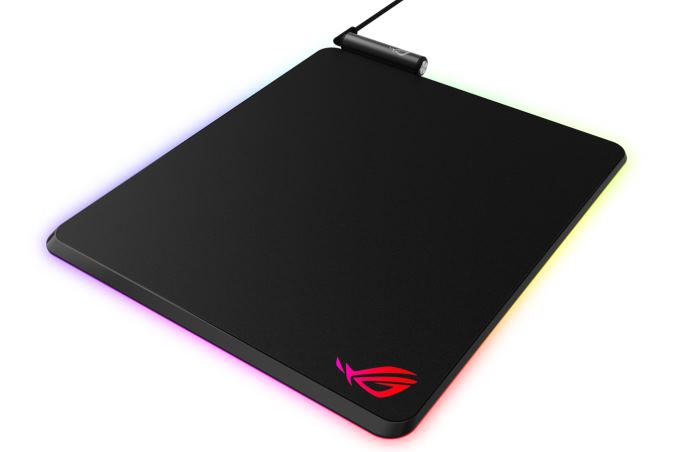
| 7:39a | ASUS ROG Balteus Qi: RGB Mouse Pad Plus Qi Wireless Charging
In another of ASUS’ Computex announcements, they have shared the impending release of their ROG Balteus Qi RGB mouse pad. The mouse pad combines a surface for the mouse to track clean as well as the ability to use Qi wireless charging on the desktop. The 370 x 320mm surface is portrait oriented and offers space for concurrent charging and gaming as well as RGB lighting for additional flare. The ROG Balteus Qi features 15 RGB LED lighting zones that are fully customizable using their Aura Sync RGB software. The mouse pad also has on-pad lighting mode button for on the fly adjustments and a USB 2.0 pass-through port. Additionally, a ROG Balteus (non-Qi) will also be available for those who would like the RGB mousepad but do not want/need the Qi charging capabilities (and likely a lower price tag). Availability of the Balteus Qi is 2H 2018. Pricing was not listed.
| ||||||||||||||||||||||||||||||||||||||||||||||||||||||||||||||||||||||||||||||||||||||||||||||||||||||||||||||||||
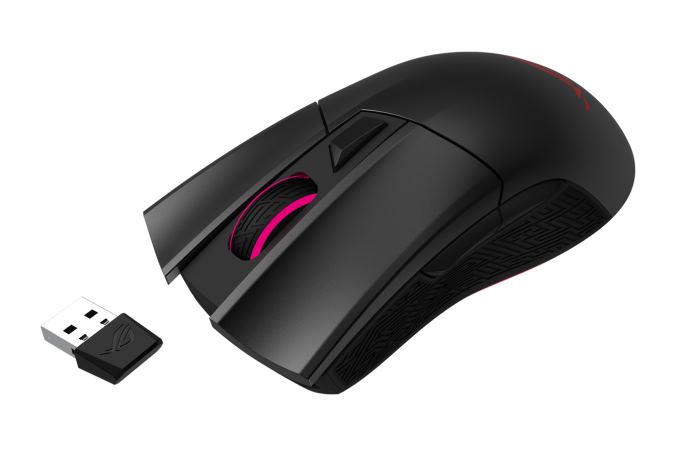
| 7:41a | ASUS ROG Gladius II Wireless Mouse
ASUS has also announced a new wireless mouse, the ROG Gladius II. The ROG Gladius II is the wireless version of the popular Gladius II released in 2017. The Gladius II wireless combines RF and low latency Bluetooth technologies with a new 16000 DPI sensor from Pixart to provide the tracking duties (versus 12000 found on the wired version). ASUS says they helped to optimize the sensor’s power consumption to improve battery life allowing the device to game for up to 24 hours with the RGB lightning turned off (no mention of the hours with it enabled). The Gladius II wireless mouse, like its wired brother, has three different RGB lighting zones able to be controlled through Aura Sync software. Pricing was not mentioned, however, the wired version can be found for $95 at Amazon so it is expected to cost a bit more. Availability is in the 2H 2018. More info as we get it at Computex.
| ||||||||||||||||||||||||||||||||||||||||||||||||||||||||||||||||||||||||||||||||||||||||||||||||||||||||||||||||||
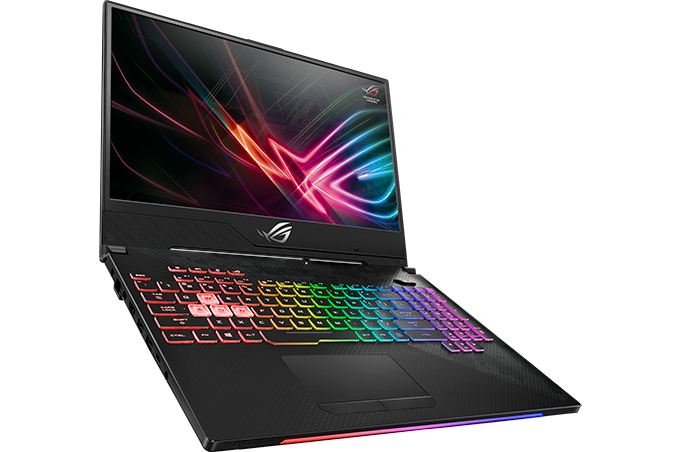
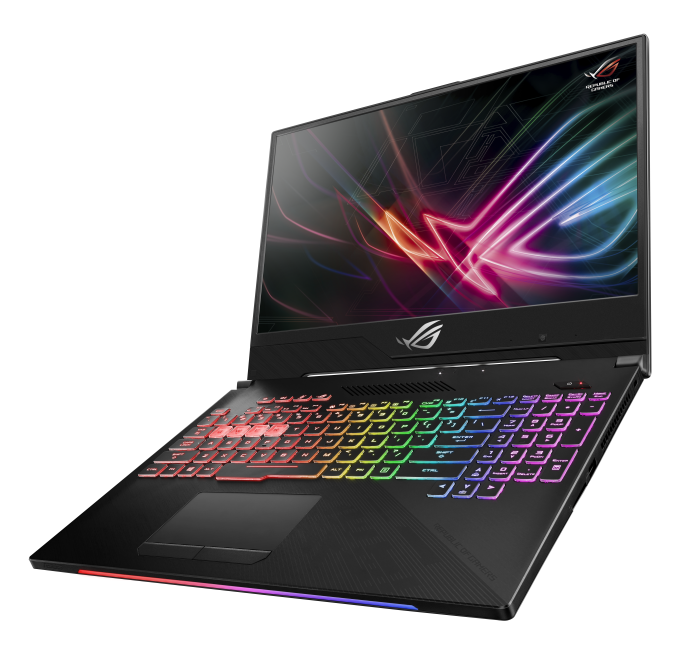
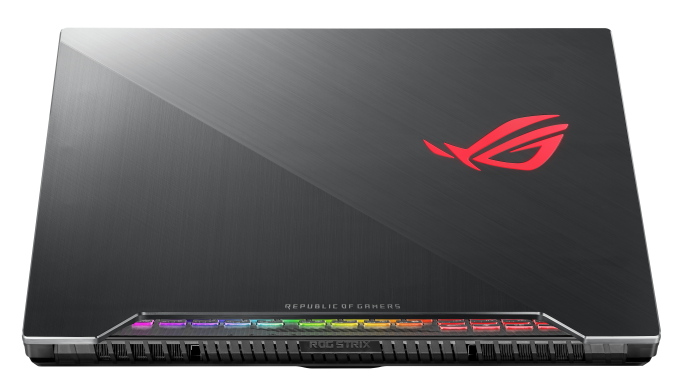
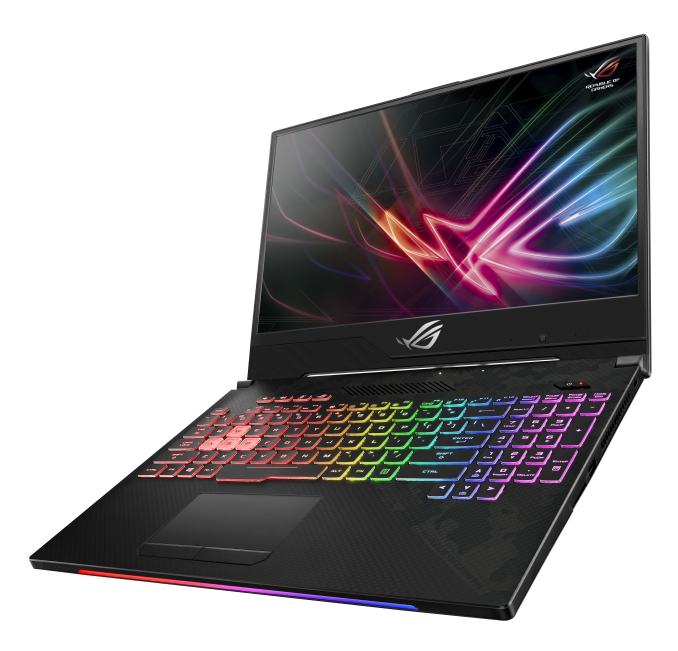
| 7:43a | ASUS ROG Strix Hero II & Scar II GL504 Laptops: CFL, 144 Hz, GTX 1070, New Chassis
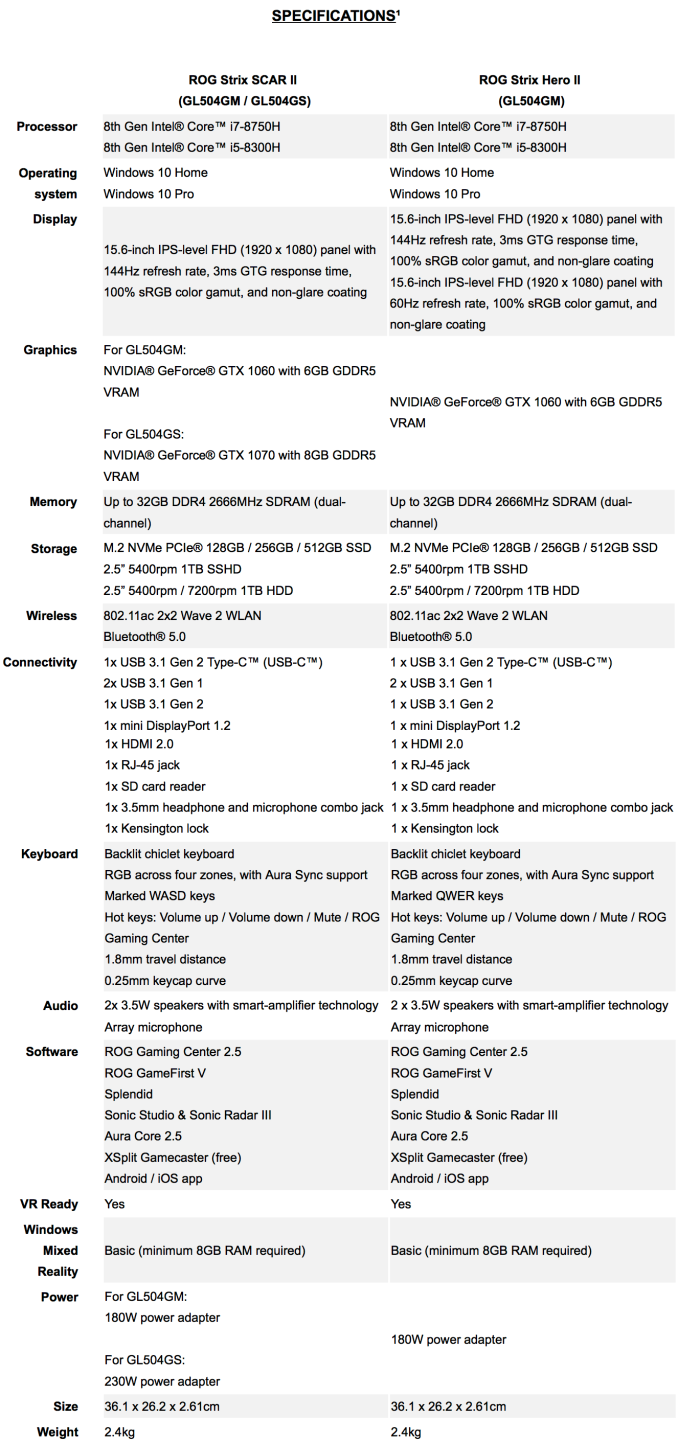
ASUS on Monday introduced its new ROG Strix Hero II and ROG Strix Scar II gaming laptops. Originally, ASUS positioned the ROG Strix family of notebooks as its entry-level gaming systems. The new GL504-series notebooks use different chassis, feature better display options, and up to GeForce GTX 1070 graphics. Quite predictably, they are also more expensive than their predecessors. Before jumping to details, let us remind you the key difference between the said notebooks. The ASUS ROG Strix Hero II and ROG Strix Scar II GL504-series laptops are based on exactly the same 15.6-inch platform, but the manufacturer positions them differently. The Strix Hero II PCs are designed for MOBA gamers, whereas the Strix Scar II — called after the SCAR rifle — are aimed at FPS gamers. Therefore, the latter may be outfitted with a better GPU, a display featuring a 144 Hz refresh rate (up from 120 Hz on the previous-gen models), whereas the former may come with a more affordable screen. Now, back to business.
The Base & CoolingThe new ASUS ROG Strix Hero II and Scar II GL504-series notebooks use Intel’s quad-core Core i5-8300H or six-core Core i7 8750H processors joined by up to 32 GB of DDR4-2666 memory and equipped with a hybrid storage system comprising of an up to 512 GB PCIe/NVMe SSD and an HDD (or Seagate’s FireCuda SSHD in case of entry-level SKUs). The ROG Strix Hero II is outfitted with NVIDIA’s GeForce GTX 1060 GPU (an upgrade when compared to the GL503), whereas the ROG Strix Scar II may come with either the GTX 1060 or a considerably more powerful GeForce GTX 1070 GPU. To cool down the rather powerful components, ASUS equips the new ROG Strix Hero II and the ROG Strix Scar II laptops with its latest cooling system dubbed the HyperCool Pro. The cooling system is comprised of two 12-Volt blowers capable of spinning at a very high speed (according to ASUS, which does not quantify the claim) along with multiple heat pipes and radiators featuring 0.1-mm thick fins installed around the perimeter of the chassis. Furthermore, the most powerful Strix Scar II GL504GS SKU comes with additional heat pipes for the GPU and VRMs that also tend to generate a lot of heat. The advanced cooling system enables CPUs to run in Turbo mode for longer periods of time. Meanwhile, ASUS allows users to set up their preferences for performance (Overboost mode) and silence (Silent mode), so the two blowers are not going to annoy when they are not needed (at least based on what ASUS says).
The Display & ChassisIn addition to the upgrade of internal components, the GL504-series laptops from ASUS also got a new chassis and a new 15.6-inch IPS Full HD display panel option. From now on, the manufacturer will offer the said laptops with an optional 144-Hz IPS Full HD panel from AUO featuring a 3 ms response time and an anti-glare coating (for some reason, ASUS never mentions NVIDIA’s G-Sync in its press release). In fact, all the GL504 machines come with the aforementioned coating.
It is important to note that the LCDs that ASUS uses on the GL504-series machines feature thinner bezels when compared to 15.6-inch GL503-series laptops, which reduces the width of the machines by about an inch, according to ASUS. Meanwhile, the new chassis are 2.61 cm (1.02 inch) thick whereas the previous-gen enclosure had a 2.28 cm (0.9-inch) z-height. So, while the systems have gotten narrower, they have also gotten thicker. Meanwhile, the weight of the laptops remained at about 2.4 kilograms, as before. Moving on to style aspects of the new chassis. Since the Strix Hero II is designed for MOBA actions, it features highlights on the QWER keys, whereas the Strix Scar II, being at the service of FPS gamers, highlights WASD buttons. Meanwhile, like all ROG-branded laptops (and ROG hardware in general), the GL504-series features RGB-lit keyboard as well as a customizable set of RGB LEDs on the back of the display. Obviously, ASUS’ Aura Sync technology is supported to handle compatible peripherals. ConnectivityWhen it comes to connectivity, then the main upgrade of the GL504-series vs. the previous generation is Intel’s Wireless-AC 9560 2x2 802.11ac Wave 2 Wi-Fi + Bluetooth 5.0 controller that can provide throughput of up to 1.73 Gbps when working over 160 MHz channels. In fact, ASUS says that it further improves Wi-Fi performance using its software RangeBoost technology that monitors which antenna has the best signal and prioritizes its usage. As for other I/O features, they are fairly standard by today’s standards: a GbE port, multiple USB 3.1 Gen 1/2 Type-A headers, a USB 3.1 Gen 2 Type-C connector, an SD card reader, an HDMI 2.0 output, a TRRS audio connector, a webcam, a microphone array, speakers, and so on. PricingThe new GL504-series ROG Strix Hero II and ROG Strix Scar II laptops raise the bar for the whole series in terms of performance and features, which is why they cost more than predecessors. The Strix Hero II starts at $1,699, whereas the Strix Scar II starts at 1,999.
More coverage from Computex 2018 can be found in the link below.
| ||||||||||||||||||||||||||||||||||||||||||||||||||||||||||||||||||||||||||||||||||||||||||||||||||||||||||||||||||
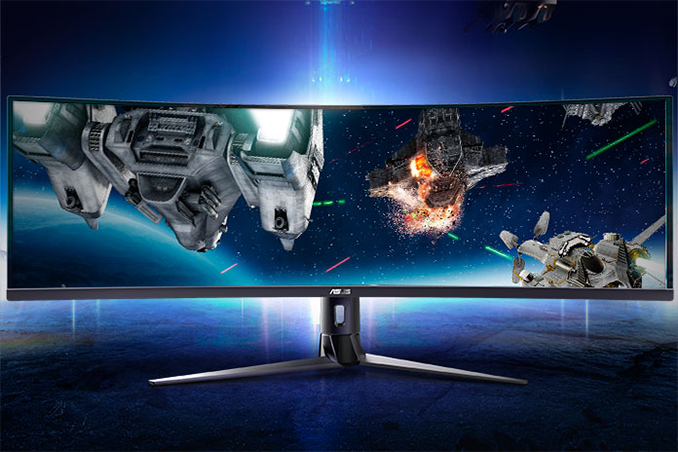
| 7:45a | ASUS Launches VG49V: An Ultrawide Curved 32:9 49-Inch FreeSync LCD
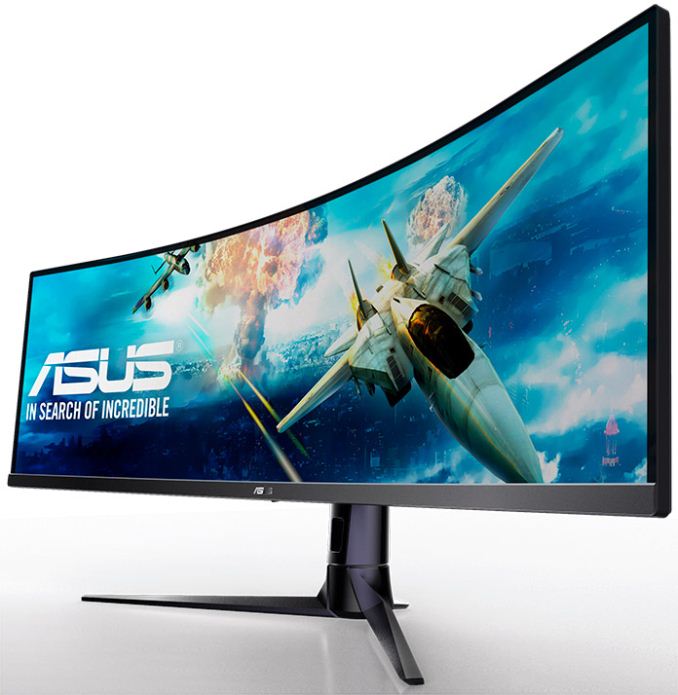
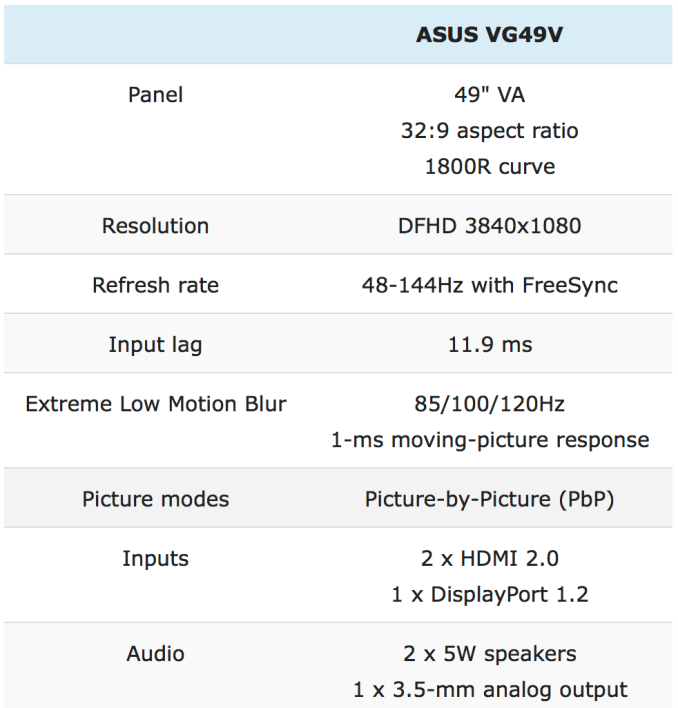
Last year Samsung released the industry’s first ultrawide 49-inch gaming display which proved that rather exotic products could be quite a success. At Computex, ASUS introduced its own ultrawide 49-inch that targets a more price-sensitive audience than Samsung’s model does. The ASUS VG49V display is based on Samsung’s 49-inch curved VA panel featuring a 32:9 aspect ratio, an 1800R curvature, a 144 Hz refresh rate and 3840×1080 resolution. The monitor does not have a quantum-dot enhanced backlighting and does not comply with AMD’s FreeSync 2 requirements. Meanwhile, the display does support FreeSync. When it comes to connectivity, the ASUS VG49V is outfitted with a DisplayPort 1.2 and two HDMI 2.0 inputs.
ASUS plans to demonstrate the VG49V at Computex, but the company did not disclose when it plans to ship the new unit. Given the fact that the panel has been in production for nearly a year now, it is likely that that the VG49V will hit the market this summer. As for pricing, the monitor does not carry the ROG brand, so expect the product to be reasonably priced, but keep in mind that an ultrawide 49-inch is still an exotic product.
| ||||||||||||||||||||||||||||||||||||||||||||||||||||||||||||||||||||||||||||||||||||||||||||||||||||||||||||||||||
| 7:56a | ASUS Displays New TUF Gaming Products
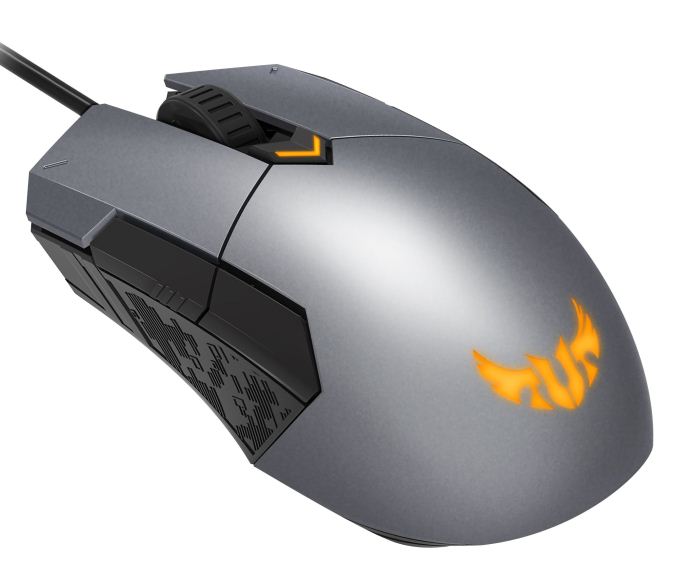
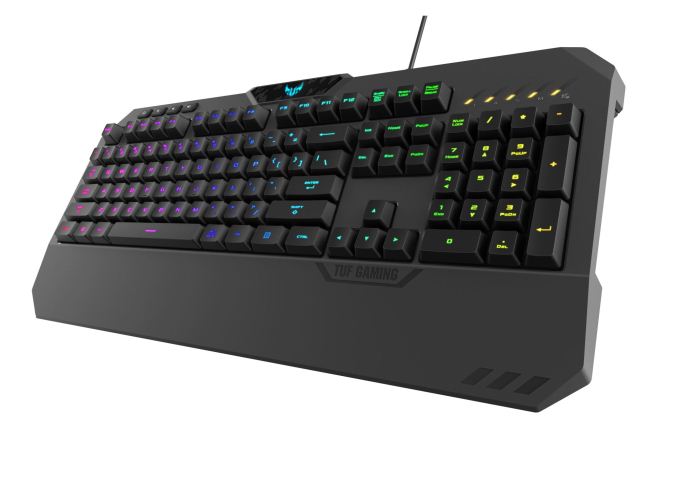
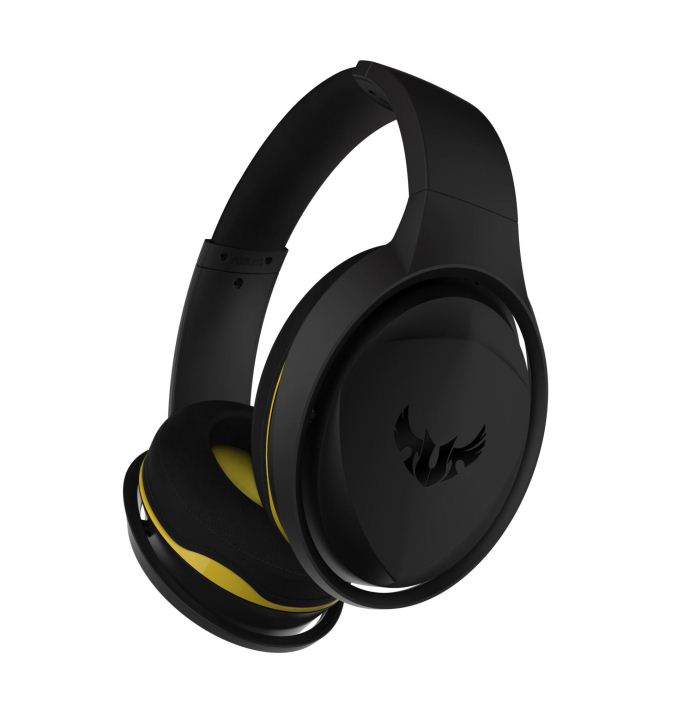
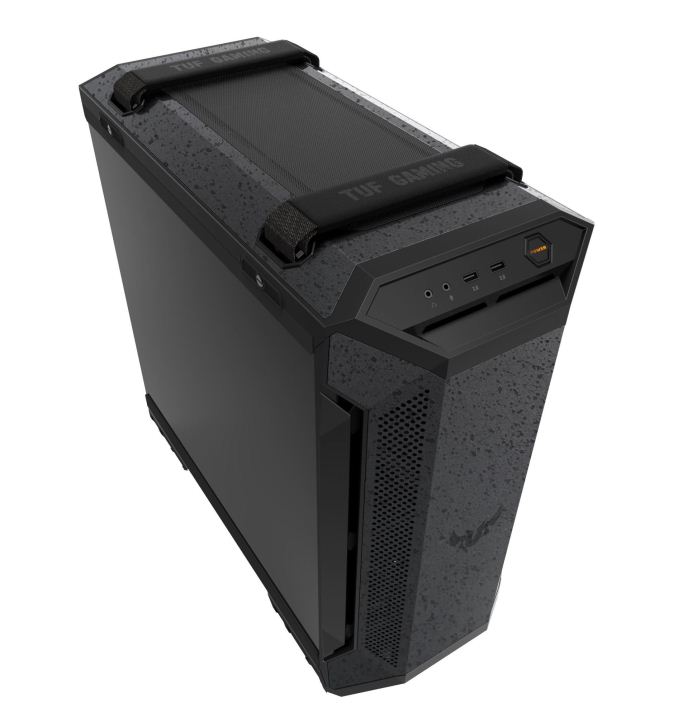
In another Announcement from Computex today, ASUS has shown four new peripherals designed for their new TUF gaming products in the TUF Gaming M5 mouse, K5 keyboard, H5 headset, and GT501 chassis. The TUF Gaming initiative is an ecosystem designed to make system building easier by identifying the same themed products which are compatible. ASUS has partnered with several in the industry including Antec, Apacer, Ballistix, Cooler Master, Corsair, Deepcool, Enermax, G.Skill and more. ASUS says the program is designed for gamers seeking stability and performance at an affordable price with a focus on delivering durable gear.
The TUF M5 mouse uses Omron switches under the left and right buttons rated for 50 million clicks. The mouse uses a Pixart PAW3327 optical sensor with resolutions up to 6200 DPI. Not quite the range other mice have, but ASUS says its enough for the vast majority of gamers. All buttons are programmable with functions or macros through the Armory II software.
The TUF Gaming K5 Keyboard has a splash-proof design able to withstand up to 60 ml of liquid under the Mech-Brane switches. The switches themselves use a tuned membrane to try and mimic the feel of a mechanical keyboard saying the feedback is similar to tactile mechanical switches with the soft landing of a rubber dome. The keyboard has five-zone Aura sync backlighting on the full-size keyboard. It also includes dedicated volume and multimedia short keys and 24-key anti-ghosting.
The TUF Gaming H5 headset wraps up the new peripheral collection with the headphones designed for durability and comfort. The stainless steel headband is said to add strength in a key area and also gives the headset a more premium look. Each over-the-ear ear cup uses a 50 mm Essence driver in an airtight changer. A removable mic boom is on the left-hand side and contains an analog microphone. The headset connects to the system via 3.5 mm audio jacks and includes a USB adapter for adding virtual surround sound.
The last TUF announcement comes in the form of a chassis in the TUF Gaming GT501 case. The GT501, like the peripherals above, all follow ASUS’ military-inspired theme and the GT501 continues that trend. It uses a steel infrastructure and plastic chassis with a tempered glass side panel to show off the components inside. Handles on top of the case allow for easier movement of the PC. Cooling is handled by three 140 mm PWM controlled fans with mounts for three fans on top and three at the front with both locations support dual-fan radiators up to 280 mm and triple fan units up to 360 mm. ASUS TUF will be available in 3Q 2018, pricing for the products was not listed. More information from Computex 2018 can be found below.
| ||||||||||||||||||||||||||||||||||||||||||||||||||||||||||||||||||||||||||||||||||||||||||||||||||||||||||||||||||
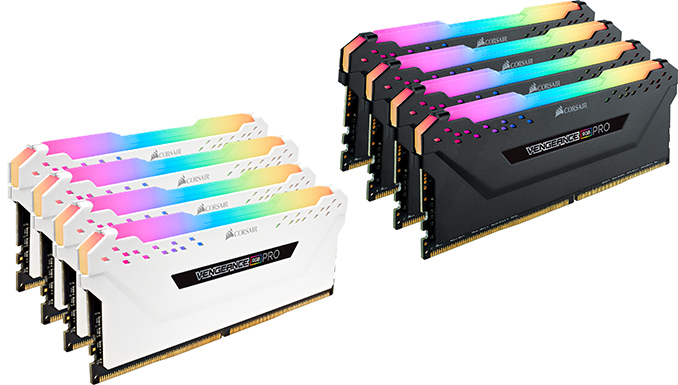
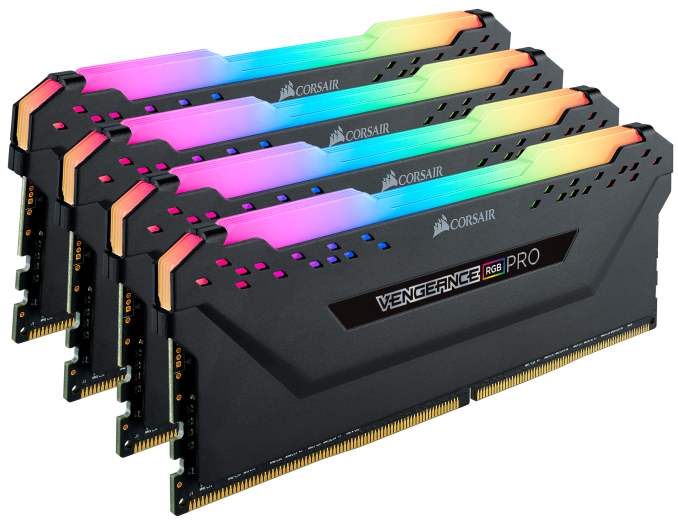
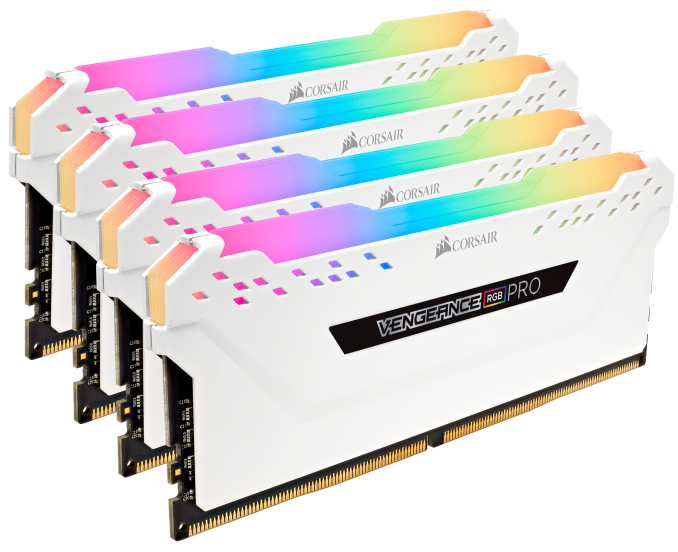
| 9:00a | Corsair Announces Vengeance RGB Pro Memory: Up to DDR-4000, 10 RGB LEDs
Corsair on Monday introduced its latest family of memory modules designed for enthusiasts and modders. The Vengeance RGB Pro DDR4 DIMMs bring together rather high performance and style: they are rated for up to DDR4-4000 and they use brand-new heat spreader with a lightbar that features 10 RGB LEDs, the highest number of diodes that we have seen in a memory module so far. Corsair’s Vengeance RGB Pro family of products initially includes about a dozen of 16 GB and 32 GB kits for dual-channel and quad-channel memory sub-systems speced for operation at 2666 MT/s – 4000 MTs data transfer rates at 1.35 V (see detailed information in a table below). The modules are based on various cherry-picked DRAM chips and use Corsair’s PCB for RGB LED-equipped memory modules (featuring traces for LED controls). As with all enthusiast-class modules, the new DIMMs come with XMP 2.0 SPD profiles for easier setting up on contemporary Intel platforms. As for compatibility with AMD Ryzen platforms, the modules that run at up to DDR4-3200 will work in such systems without problems, whereas for higher speeds additional tweaking and cooling may be required.
The Vengeance RGB Pro modules are equipped with all-new black or white aluminum heat spreaders as well as custom light bars with 10 RGB LEDs controllable using Corsair’s iCUE software. Meanwhile, the heat spreaders and lightbars are rather tall, so compatibility of the Vengeance RGB Pro with SFF systems or with PCs that use large air coolers is something that remains to be seen. Corsair plans to make the new modules available in the U.S. in the coming weeks or months. Exact pricing will be announced separately, but considering the fact that the Vengeance RGB Pro kits are positioned above the original Vengeance RGB, it is clear that the new memory kits will be sold at a premium.
** Officially mentioned in the table from Corsair's pre-release
See more coverage of Computex below.
| ||||||||||||||||||||||||||||||||||||||||||||||||||||||||||||||||||||||||||||||||||||||||||||||||||||||||||||||||||
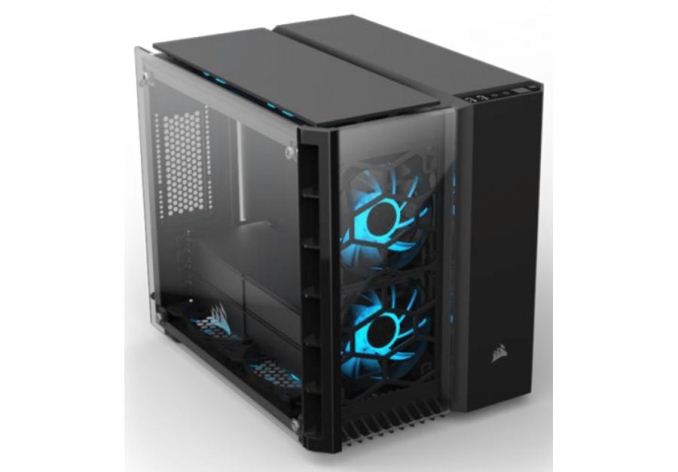
| 9:03a | Corsair Announces Crystal 280X RGB Case: Micro-ATX
Today, Corsair has announced the latest addition to the Crystal Series in the 280x RGB. Corsair describes the Micro-ATX chassis as having massive cooling in a small case. The 280X RGB has room for up to five 120mm fans with radiator space in the top (240/280mm) or up to 240mm radiators in the front and bottom with a dual-chamber internal layout. Three sides of the black chassis are made from tempered glass giving the chassis a premium appearance. The case includes two Corsair LL120 RGB fans with 32 individually customizable LEDs controlled by Corsair iCue software for its illumination. The 280X RGB is able to house up to two 3.5-inch drives and three 2.5” drives for ample mount points for storage. The chassis has filters in the front, roof, floor, as well as the PSU area use dust filters to help keep the internals cleaner from dust longer. Additionally, Corsair implements what they call a Direct Airflow Path Cooling where cool air is directed at the hottest components without drive cages getting in the way in an effort to keep the parts which need it, cooler. Pricing nor availability was mentioned by Corsair however it was spotted online in pre-sale form for a bit over $200. The chassis will also come in white. See more coverage of Computex 2018 below.
| ||||||||||||||||||||||||||||||||||||||||||||||||||||||||||||||||||||||||||||||||||||||||||||||||||||||||||||||||||
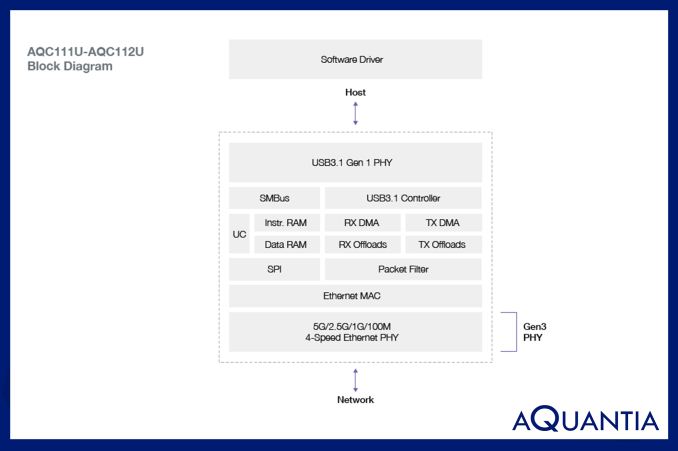
| 9:05a | Aquantia Multi-Gig: Single Chip USB 3.0 to 5G/2.5G Dongles Coming Soon
When discussing networking controllers, often we deal with single chips that convert PCIe to Ethernet. With Thunderbolt, an additional TB controller is needed at either end, increasing cost and power. However now with mobile devices losing dedicated Ethernet ports, and the rise in professional docking stations, converting from USB to a Wired Ethernet solution is usually a common choice for users that work out of hotels or those that want to add simple Ethernet capability to a device without any. Rather than use a USB-to-PCIe controller, Aquantia is pushing forward with its new generation of USB-to-Ethernet chips designed to run at 5G and 2.5G speeds. The new chips, the AQtion AQC111U and the AQtion AQC112U, are designed to simply the USB-to-Ethernet scenario while supporting multi-gigabit Ethernet speeds. Dubbed as ‘the easiest way to implement multi-gig’, the new chips are set to be used in dongles and docking stations from the main ODMs and OEMs in this space: Bizlink, Edimax, Goodway, and Sunrich. Hardware will be available in Q4 2018.
For users looking to install point-to-point wired Ethernet speeds beyond 1 Gbps / 133 MBps, this looks like it is going to be the best option without a switch and without buying the bulky and power hungry TB3-to-10G adaptors that currently exist on the market. Pricing will be announced by the vendors later this year, although to be commercially successful we hope that they will be in the $25-40 range. Equivalent 1G USB connectors currently cost sub-$10, for reference. Related Reading
| ||||||||||||||||||||||||||||||||||||||||||||||||||||||||||||||||||||||||||||||||||||||||||||||||||||||||||||||||||
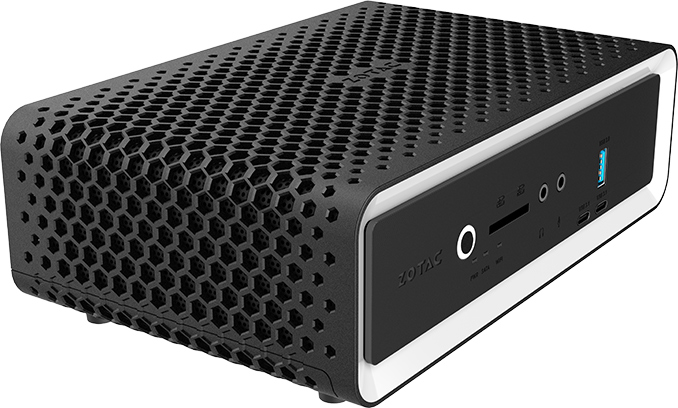
| 10:00a | ZOTAC to Demo ZBOX CI660 Nano Fanless UCFF PC with 8th Gen Core i7
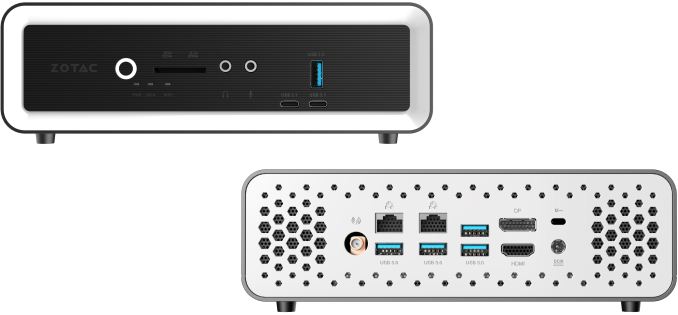
ZOTAC is prepping yet another passively-cooled ultra-compact form-factor (UCFF) PC aimed at people looking for silence and portability. The ZBOX CI660 nano system will feature a new chassis and use Intel’s 8th Gen Core i7 processor with four cores, which will be a significant upgrade when compared to ZOTAC’s previous-gen fanless machines powered by dual-core CPUs. The maker will demo the new system at Computex next week. The most noticeable thing about the ZBOX CI660 nano is its brand-new chassis. For years ZOTAC has used “half-cube” Intel NUC-like enclosures for the CI-series systems (technically, this shape is called cuboid/rectangular parallelepiped). With the CI660 nano, the company decided to go with a larger brick-like cuboid chassis (see estimated dimensions in the table below), possibly to improve cooling capabilities of the platform and increase maximum processor TDP to 25 W. The ZBOX CI660 nano features familiar honeycomb structure, so if you are familiar with ZOTAC’s PCs, you will recognize this one at first sight. ZOTAC says that the CI660 nano supports processors with up to 25 W TDP. This does not quite allow to install Intel’s Core i7-8559U CPU with four cores and Iris Plus Graphics 655 without programmable TDP reduction (from 28 W to 20 W), but the 25 W TDP may be important for another reason. Intel’s Core i7-8550U/8650U processors feature default TDP of 15 W and run at 1.8/1.9 GHz default frequency, but they can Turbo Boost themselves to 4/4.2 GHz provided that they stay within TDP and have sufficient cooling. Therefore, to keep the chips running faster for longer periods of time, or even TDP-up them all the way to 25 W to increase base frequencies, system makers need better cooling. As a consequence, some SFF/UCFF passively-cooled systems may get bigger. ZOTAC has not officially disclosed model numbers of CPUs it plans to use for the CI660 nano, but since Intel has only two 8th Gen Core i7 chips that fit into a 25 W thermal envelope, there are only two aforementioned options available.
Moving on to the connectivity of the ZBOX CI660. The system comes with 802.11ac Wi-Fi with an external antenna, two GbE ports, five USB 3.0 Type-A headers (one on the front), two USB Type-C ports connectors (on the front), a DisplayPort, an HDMI output, an SD card reader, and two 3.5-mm audio connectors. Meanwhile, unlike higher-end previous-gen CI-series machines, the new one does not have any Thunderbolt 3 ports.
ZOTAC will disclose more information (think configurations, ETA, MSRP, etc.) about the new ZBOX CI660 UCFF PCs at Computex, so stay tuned with us. Gallery: ZOTAC ZBOX CI660 nano
   
Related Reading: | ||||||||||||||||||||||||||||||||||||||||||||||||||||||||||||||||||||||||||||||||||||||||||||||||||||||||||||||||||
| 10:02a | ZOTAC Expands MEK Lineup with MEK Mini and MEK Ultra
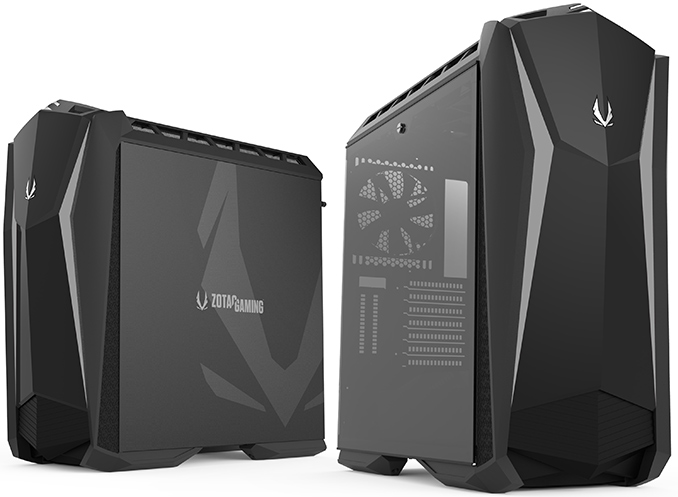
ZOTAC on Thursday announced plans to demonstrate an expanded range of its pre-built MEK systems at Computex next month. The new MEK Ultra PCs will address users who demand maximum performance and expandability, whereas the MEK Mini computers are aimed at clients who prefer compact machines. In a bid to address customers who would like to purchase a factory-built PC with an upgrade path, ZOTAC introduced its MEK tower systems last year. The computers were based on Intel’s quad-core Kaby Lake processors and the B250 PCH, they were incompatible with the six-core Coffee Lake chips and therefore offered a rather limited upgrade path as far as the CPUs are concerned. Meanwhile, the experiment was probably considered a success and this year the company will be expanding the MEK lineup with higher performance MEK Ultra as well as miniature MEK Mini systems. ZOTAC MEK Ultra: Big, Upgradeable, Overclockable
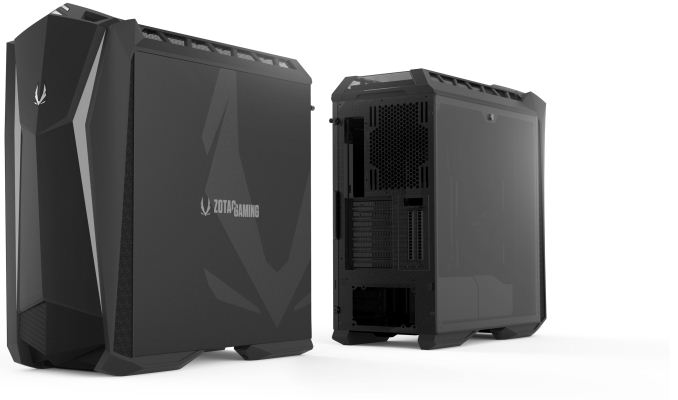
The ZOTAC MEK Ultra PC will be a classical tower based on an ATX motherboard and featuring all the perks that modern desktops have to offer: a tempered glass window, multiple fans, vertical installation of graphics card, RGB lighting, multiple bays for HDDs/SSDs, and so on. ZOTAC does not disclose specs of the MEK Ultra systems, but it is logical to guess that usage of ATX motherboards gives a lot of flexibility. Therefore, expect CPUs with more than four cores (unlocked and overclockable, of course), ultra-premium graphics cards, high-end storage options, loads of memory, advanced cooling, multiple ports, etc. Gallery: ZOTAC MEK Ultra
    ZOTAC MEK Mini: Small, Custom, Stylish
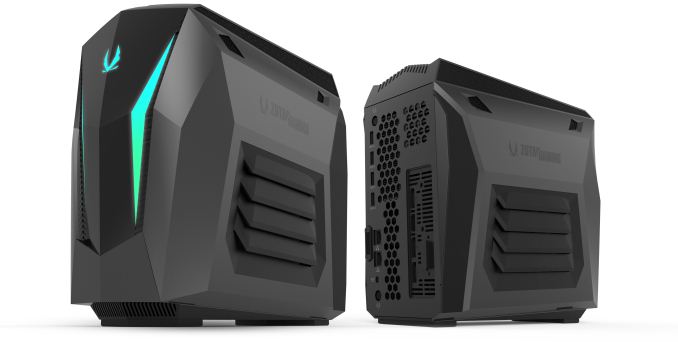
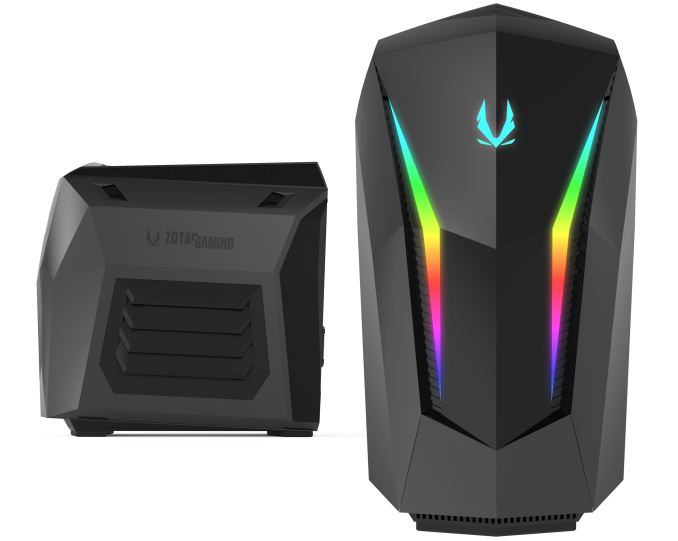
The MEK Mini system will share a different ideology than the MEK Ultra. This PC will use a custom motherboard, a custom external PSU, a custom CPU cooling system and so on. Based on the look of the MEK Mini PC, they will be more flexible and upgradeable than the ZBOX MAGNUS PCs from ZOTAC, yet their exact configurations and capabilities remain to be seen. The MEK Mini will be compatible with off-the-shelf graphics adapters (the most advanced version will be equipped with a ZOTAC GeForce GTX 1080 Mini video card), SSDs/HDDs (some configs will use Intel Optane Memory 32 GB drive for caching), but it is unclear whether it will be easy/possible to upgrade the processor. It is highly likely that ZOTAC will use Intel's six-core CPUs for the MEK Mini, but it is unclear whether the system will support CPU overclocking. The only thing ZOTAC says is that the MEK Mini will house processor and graphics adapter in different compartments for more efficient cooling. Meanwhile, when it comes to I/O capabilities, the MEK Mini will support two GbE ports, 802.11ac Wi-Fi, multiple USB 3.0 Type-A ports and so on. It is noteworthy that the MEK Mini uses the Killer Wireless AC 1550 and the Killer Ethernet E2500 network controllers to ensure minimal latency during gaming.
Gallery: ZOTAC MEK Mini
    ZOTAC will disclose more information about its upcoming MEK Ultra and MEK Mini PCs at Computex, so make sure to check out our coverage of the show next week.
Related Reading: | ||||||||||||||||||||||||||||||||||||||||||||||||||||||||||||||||||||||||||||||||||||||||||||||||||||||||||||||||||
| 10:04a | ZOTAC to Equip ZBOX MAGNUS Gaming PCs with Killer Network Controllers
ZOTAC announced plans to upgrade its flagship ZBOX MAGNUS SFF gaming systems/barebones with Rivet Networks’ Killer network controllers. The first systems to get the new chips will be demonstrated at Computex next week. ZOTAC intends to equip its upcoming ZBOX MAGNUS gaming systems with the flagship Killer Wireless AC 1550 2×2 802.11ac Wave 2 Wi-Fi + Bluetooth 5 controller (which is based on an Intel IP) that supports up to 1.73 Gbps throughput over 160 MHz channels as well as the Killer Ethernet E2500 GbE controller that supports a number of special features to reduce latency and prioritize gaming traffic over everything else. Meanwhile, a key advantage of using the two controllers from Rivet is the company’s Killer DoubleShot Pro technology that fuses usage of two controllers to provide an aggregate bandwidth of 1.83 Gbps or higher when an 802.11ac Wave 2 network is used.
The first ZBOX MAGNUS system to get the Killer network controllers will be the latest machines powered by Intel’s six-core Core i7-8700 (Coffee Lake) processors. In addition to the Killer ICs and the Coffee Lake CPU, another highlight of the aforementioned ZBOX MAGNUS is ZOTAC’s off-the-shelf GeForce GTX Mini graphics card. The new ZBOX MAGNUS will not be the only systems to be equipped with the Killer controllers as the manufacturer plans to use the aforementioned Killer controllers for its upcoming MEK Mini PCs. It is likely that over time ZOTAC will expand usage of Killer ICs to other products (e.g., AMD Ryzen-based systems), but the company yet has to make appropriate announcements.
ZOTAC will demonstrate its systems featuring Rivet’s Killet network controllers at Computex next week, so stay tuned with us for more details about the new PCs.
Related Reading: | ||||||||||||||||||||||||||||||||||||||||||||||||||||||||||||||||||||||||||||||||||||||||||||||||||||||||||||||||||
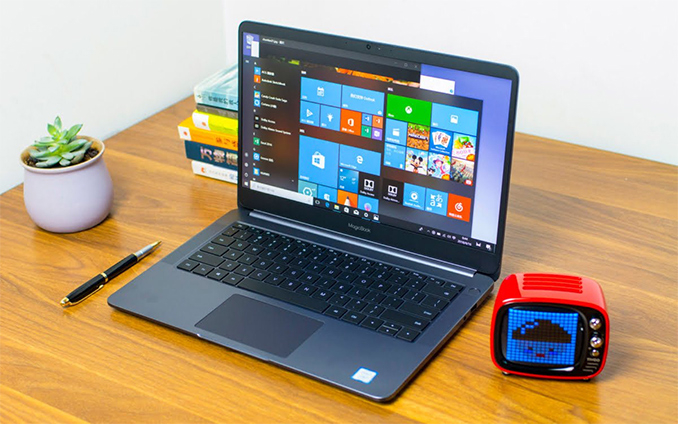
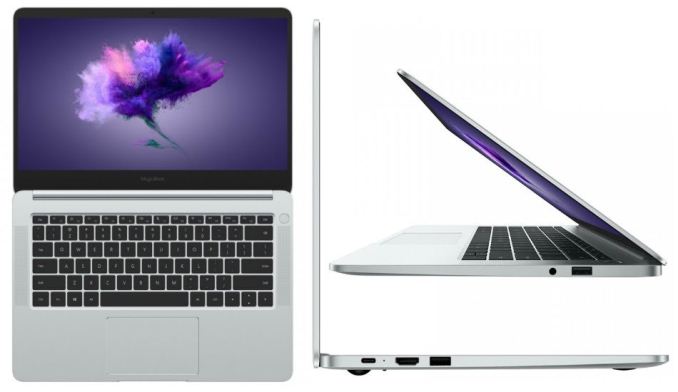
| 11:00a | Honor’s Thin-and-Light MagicBook with AMD Ryzen Mobile Listed
A Chinese retailer has started to list Honor’s MagicBook laptop based on AMD’s Ryzen Mobile processor. The thin-and-light notebook looks similar to the Intel-based MagicBook launched in April and will be officially available only in China. Huawei, the owner of the Honor brand, will be the fifth company to adopt AMD’s Ryzen Mobile after Acer, Dell, HP, and Lenovo. The Honor MagicBook 14 listed at JD.com is based on AMD’s quad-core Ryzen 5 2500U processor with integrated Radeon Vega 8 graphics, it is outfitted with 8 GB of DDR4 memory as well as a 256 GB SSD. The system has a rather mediocre 14-inch Full-HD panel that features a 250 nits brightness, a 800:1 contrast ratio, and can display 45% of the NTSC color gamut. As expected, the laptop is equipped with all the connectivity technologies that are found in today’s notebooks, including 802.11ac Wi-Fi, Bluetooth, two USB Type-A ports, one USB Type-C header, an HDMI output, and a TRRS audio connector. The laptop comes in an all-aluminum chassis that looks exactly like the one used for the original MagicBook. Meanwhile, the listing says that the AMD Ryzen-powered Honor MagicBook is 15.8 mm thick, which happens to be the z-height of the Intel Core-based Honor MagicBook (which uses Intel’s quad-core 8th Gen Core i5/i7 CPUs and NVIDIA’s GeForce MX150 graphics). Therefore, despite the fact that the MagicBook with Ryzen inside uses a different motherboard and cooling system, the manufacturer did not have to alter the chassis. As for weight, it is likely that it will remain in the range of 1.47 kilograms.
Other highlights of the Intel Core-powered Honor MagicBook also include a 57.4 Wh battery (a rather high capacity for a 13/14-inch machine) as well as four Dolby Atmos-badged speakers. Unfortunately, it is unknown which battery pack is used for the AMD-powered MagicBook, but since the rest of the components are the same, it is logical to expect Huawei to use the same 57.4 Wh battery for this model too. At least initially, the Honor MagicBook with AMD Ryzen Mobile will be available only in glacier grey, but eventually, the company may introduce additional color options, such as star grey and nebula violet. JD.com lists an absurdly high price tag for the Ryzen-powered MagicBook (over $1,500), so it is safe to say that pricing of the product is unknown at this point. Keeping in mind that the Core i5-based MagicBook costs around $800, it is logical to expect the Ryzen-based laptop to be priced in the same range.
Related Reading:Source: JD.com (via Liliputing) | ||||||||||||||||||||||||||||||||||||||||||||||||||||||||||||||||||||||||||||||||||||||||||||||||||||||||||||||||||
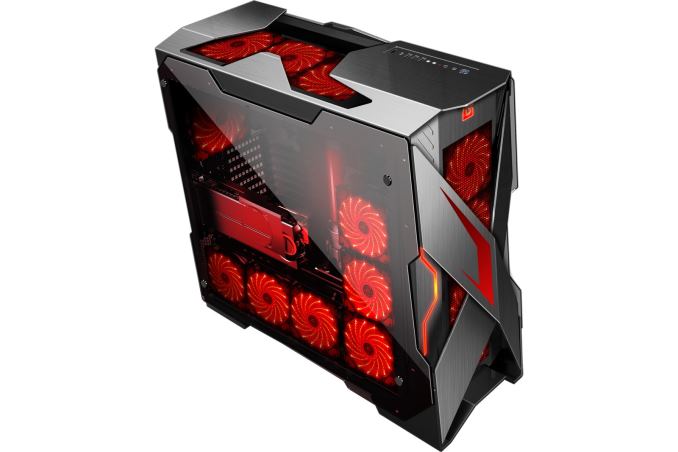
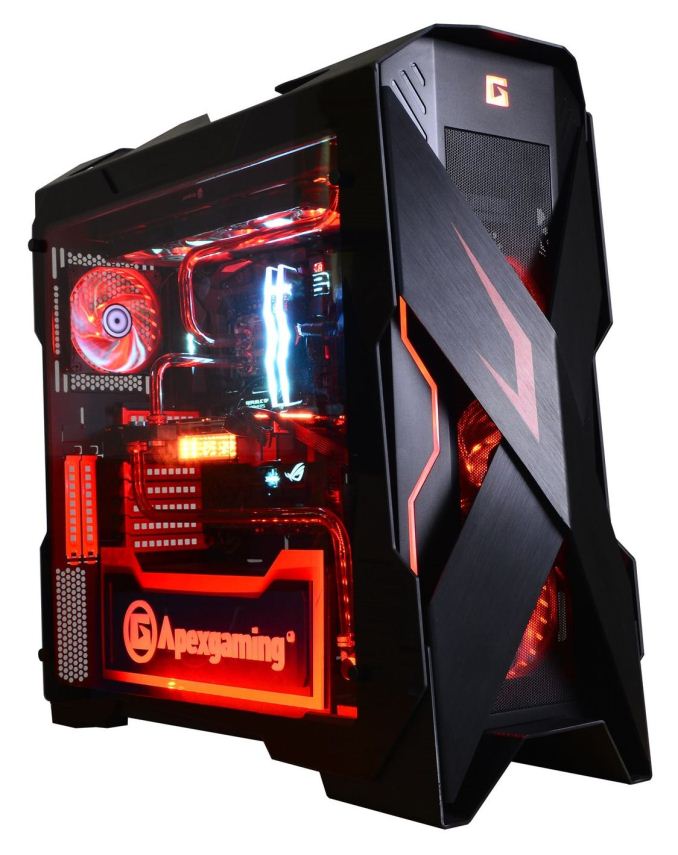
| 12:00p | Apexgaming Unveils X-Mars and Hermes Tempered Glass Chassis
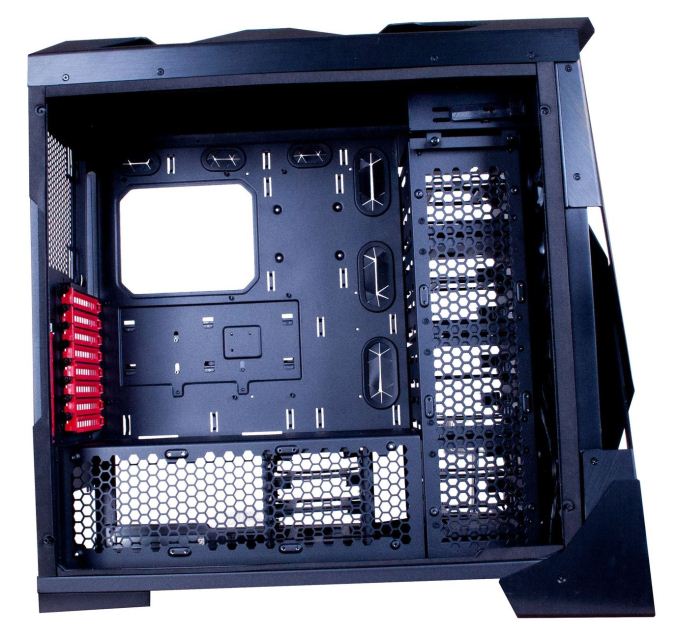
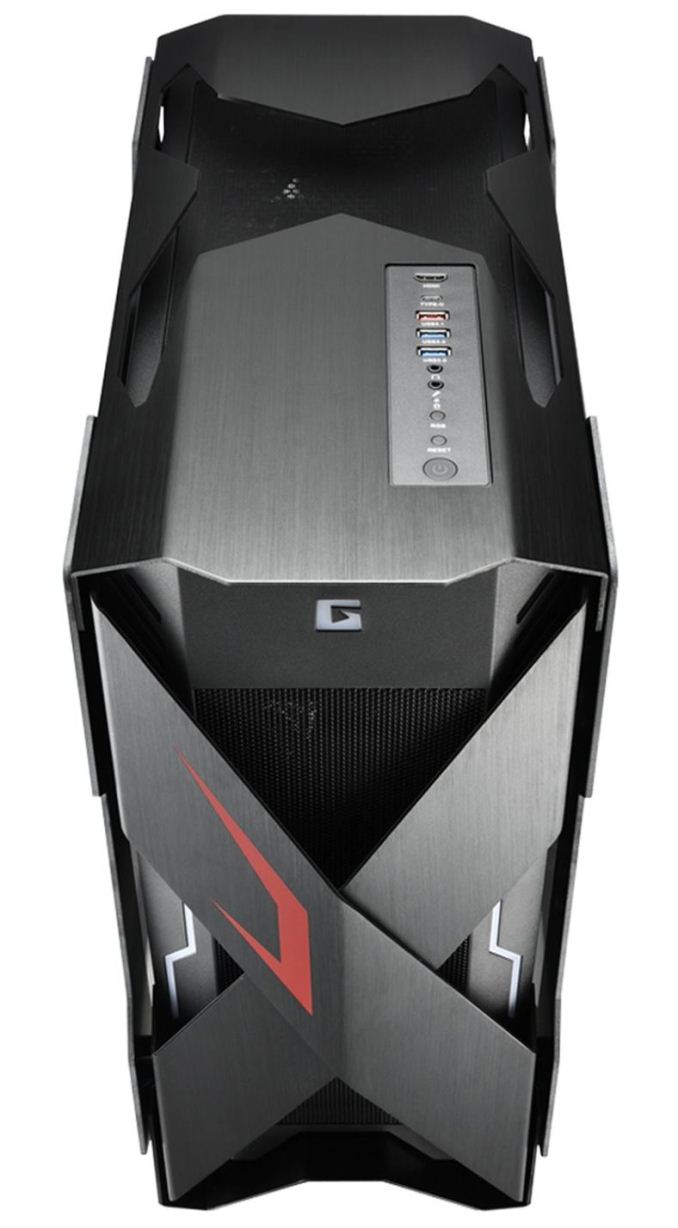
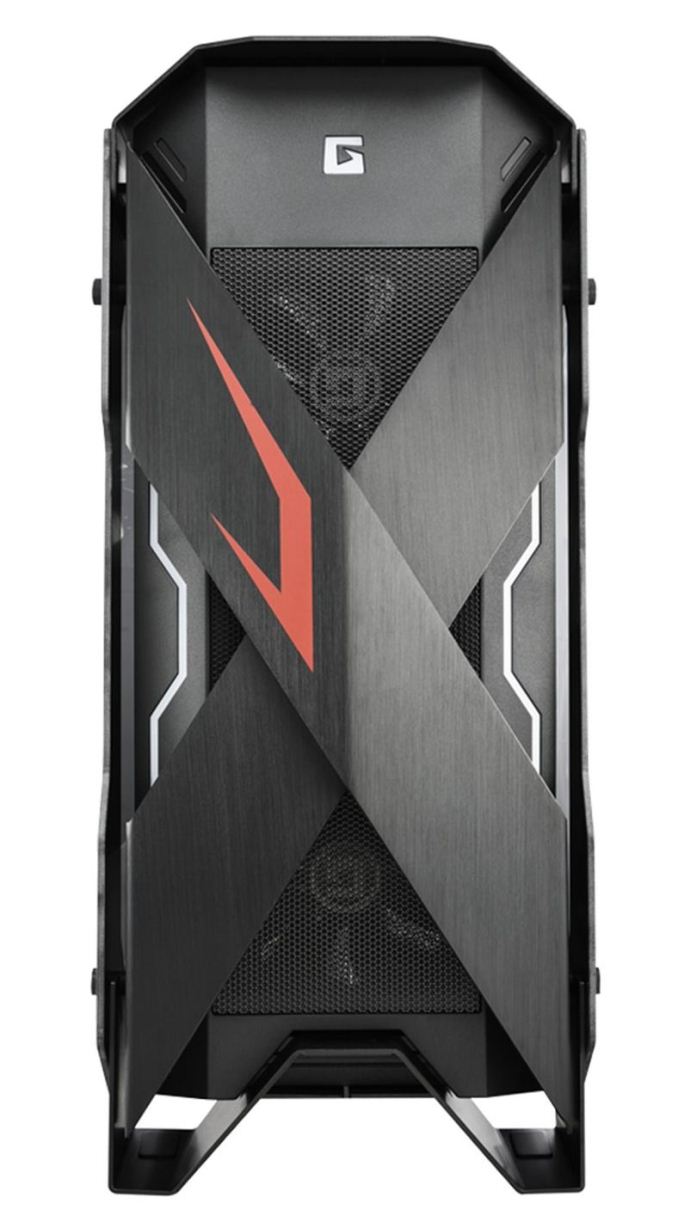
Apexgaming, known for manufacturing gaming cases, power supplies, and other computer peripherals, recently announced two reddot design award winners in the X-Mars full-tower E-ATX gaming chassis and the mid-tower Hermes case. The Hermes cases are slated to provide gamers with flexibility in assembling the case to their preference with the two front panels able to be separated for a unique look for each user along with panels made from various materials and colors available for building. The X-Mars full-tower E-ATX chassis has a really unique exterior design and made from steel, brushed aluminum, and tempered glass. The Hermes E-ATX mid-tower chassis will be available by the end of June with an MSRP of 59.90 to$69.90 while the X-Mars E-ATX full-tower chassis availability will be announced while the MSRP is a wallet-crushing $999. X-MarsThe X-Mars chassis is a standout case with its unique appearance. The X-shaped brushed aluminum pieces across the front provide an aggressive look head-on, while the full-window 4mm tempered glass design allows users to display and show off their system build. The case has fourteen RGB lights to illuminate the chassis. Controlling the RGB LEDs is an 8 port built in RGB controller that is able to connect with RGB capable motherboard to synchronize the light/color modes with the strips in the front panel. Front panel connectivity consists of a USB 3.1 Type-C and Type-A ports, two USB 3.0 ports, an HDMI port for VR gaming, as well as power/reset buttons, two 3.5mm audio jacks, and a button for RGB LED control.
Inside, the X-Mars supports a vertical graphics card mount with a maximum length of the video card u to 432mm and support for E-ATX motherboards up to 12” x 13”. The chassis has space for up to 14 120mm fans. With this the X-Mars is able to accommodate a single 480mm radiator up front, up to a 360mm radiator on top and 120mm on the rear. Drive mount points include capacity for up to 11 3.5-inch drives or 14 2.5-inch drives. Users are able to adjust the capacity arrangement according to needs.
The Apexgaming X-Mars E-ATX full-tower chassis availability will be announced with pricing suggested at $999 which is quite high for a chassis that isn’t fully customizable. A similar, smaller case, the X-Mars Junior, will be available by the end of June and retails for a much more palatable $189.90.
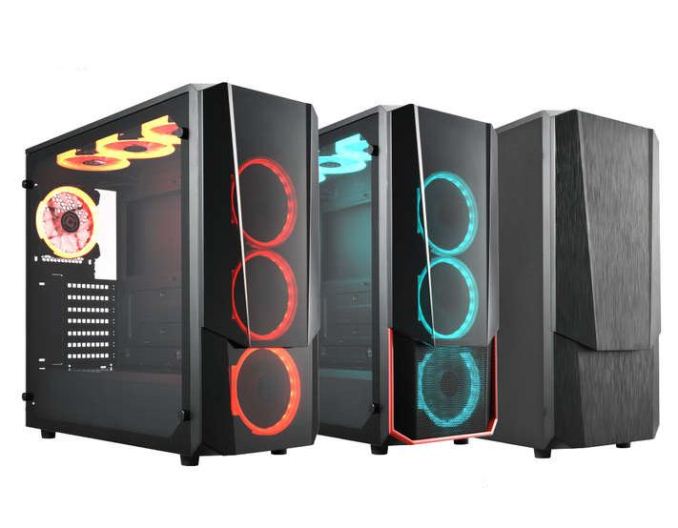
HermesThe Hermes cases are designed to be versatile both inside and out giving users front panel options to customize the appearance. Users are able to select different top and bottom front panels in order to create a unique style of gaming case. The case comes with a full-window tempered glass design for gamers/builders to display and show of their system inside. Front panel connectivity on the top of the cases consists of two USB 3.0 ports, power and reset buttons, two 3.5mm jacks for audio, as well as HDD activity and power on LEDs – No USB 3.1 support is found here, but isn’t really expected at its lower price point either.
Inside the Hermes cases are able to support video cards up to 432mm in length, and CPU coolers up to 172mm so fitment of large graphics cards and CPU heatsinks will have ample room (always look and measure!). The chassis can support motherboards from Mini-ITX up to E-ATX and like the X-Mars has a fair amount of room behind the motherboard tray for cable routing.
As far as cooling, the Apex supports up to seven 120mm fan mounts while radiator support in the front and top are up to 360mm and 120mm space on the rear. Storage capacity is up to five 2.5-inch SSD tool-free drives as well as two 3.5-inch locations for HDD.
The Hermes E-ATX mid-tower chassis will be available by the end of June with an MSRP of $59.90 to $69.90.
Related Reading: | ||||||||||||||||||||||||||||||||||||||||||||||||||||||||||||||||||||||||||||||||||||||||||||||||||||||||||||||||||
| 12:30p | The Apple WWDC 2018 Keynote Live Blog (Starts at 1pm ET) Kicking off at 10am PT (1pm ET) is Apple's annual World Wide Developers Conference keynote speach. We're live from always sunny San Jose, California, to see what Apple has in store this year from their marquee keynote event. Software? Hardware? Hopefully we'll see a bit of both. | ||||||||||||||||||||||||||||||||||||||||||||||||||||||||||||||||||||||||||||||||||||||||||||||||||||||||||||||||||
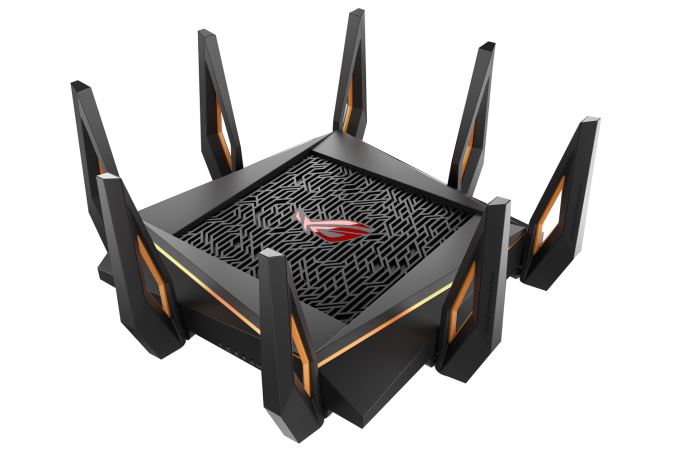
| 2:35p | ASUS Announces a Complete Lineup of 802.11ax Routers
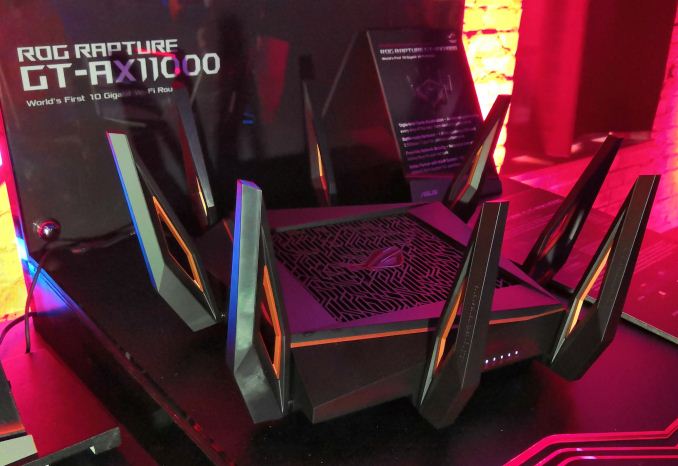
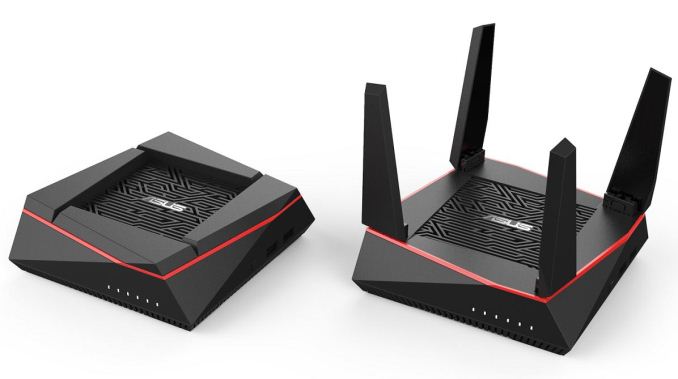
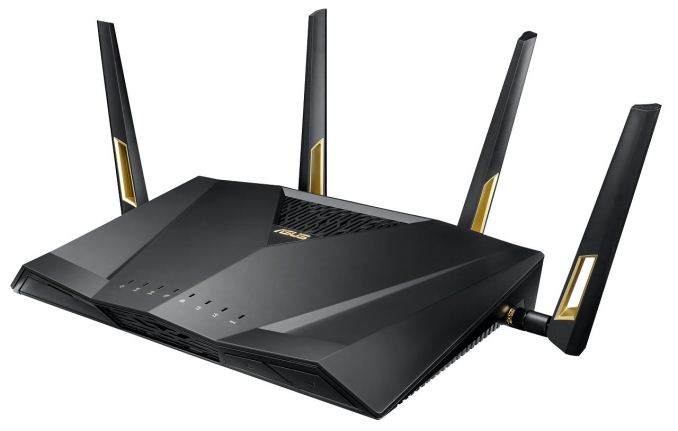
ASUS has announced a family of new routers designed to satisfy the ever-increasing bandwidth demands of the modern household. ASUS unveiled the ROG Rapture GT-AX11000 (ASUS says is the world’s first tri-band 802.11ax router), the RT-AX88U (more conventional dual-channel design), and the AX6100 WiFi System purpose-built for creating your own mesh network supporting AiMesh. ROG Rapture GT-AX11000
The ROG Rapture GT-AX11000 is the flagship Router and built for demanding networks. The ROG Rapture has a peak aggregate throughput of nearly 11000 Mbps: up to 1148 Mbps on the 2.4 GHz band and up to 4804 Mbps each of its dual 5 GHz bands (for a total of three bands). The additional 5 GHz band can be reserved for gaming devices to prevent other wireless activity from affecting the primary machines. The Rapture has multiple Gigabit Ethernet for wired connectivity and has an additional 2.5 Gbps Ethernet port for those who are lucky enough to break that 1 Gbps barrier ISP. The extra bandwidth will allow for a single system to communicate with multiple gigabit-type devices at peak speeds or utilize NAS devices able to team ports for higher throughput. The router also uses Game Boost adaptive QoS to analyze network traffic and prioritize gaming traffic ahead of other items. WiFi traffic is passed through eight antennas on top making the router look more like a futuristic trap of some sort. AX6100 WiFi System
ASUS says all routers will support AiMesh (ASUS technology for mixing multiple routers to create a mesh network) but the new AiMesh AX6100 WiFi System is purpose-built for the task. The AX6100 comes in a two-pack designed to extend WiFi coverage. Additional nodes using other AiMesh-compatible routers are possible to add even if they are based on 802.11ac. The AX6100, like the ROG Rapture, is a tri-band design. Its total aggregate throughput is up to 6100 Mbps with 4804 Mbps on the first 5 GHz band, the other offering 866 Mbps for 802.11ac devices, while the 2.4 GHz band able to reach 400 Mbps of 802.11n connectivity.
RT-AX88U
The RT-AX88U is said to use much of the same internals as the Rapture but used in a more conventional (read: less expensive) dual-channel design. The two bands support 802.11ax devices with 1148 Mbps on 2.4 GHz and up to 4804 Mbps on 5 GHz band for peak total bandwidth of about 6000 Mbps. Wireless signals pass through four antennae with the wired connections managed by a Gigabit WAN for the ISP, and eight Gigabit LAN ports for local devices. Many routers only have four which makes this device good for multiple wired users in close proximity, or pre-wired homes with multiple desktop/media devices. Both the RT-AX88U and the ROG Rapture are powered by a quad-core processor (not named). It has dual USB 3.0 ports for shared peripherals as well. The ROG Rapture GT-AX11000, AiMesh AX6100 WiFi System, and RT-AX88U will be available in Q3 2018. Pricing information was not listed. More Computex news is found below.
| ||||||||||||||||||||||||||||||||||||||||||||||||||||||||||||||||||||||||||||||||||||||||||||||||||||||||||||||||||
| 3:30p | Gigabyte Enters Memory Market with AORUS RGB LED RAM
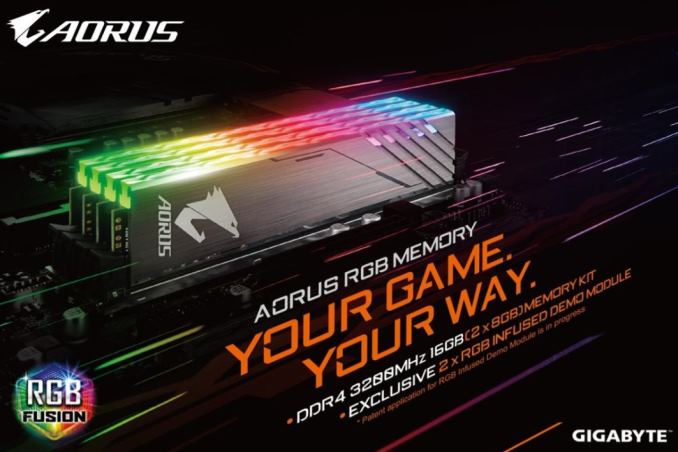
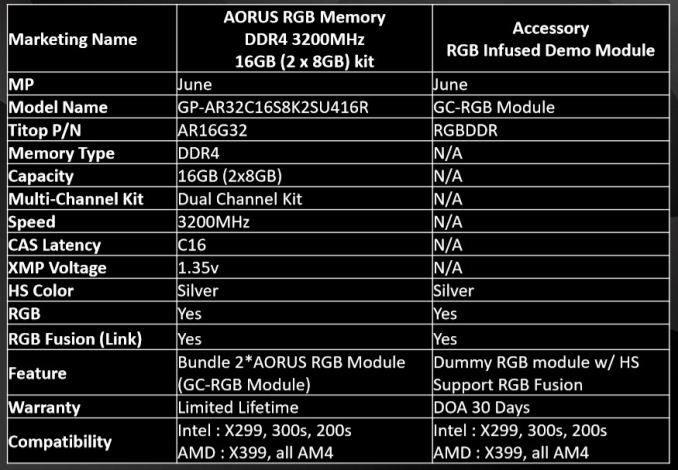
GIGABYTE is entering the desktop memory market with a new kit of AORUS-branded RGB LED RAM. The AORUS RGB LED memory is a dual-channel 16GB (2 x 8GB) kit of DDR4-3200 with a CAS latency of 16-18-18-38 running at 1.35V. Memory compatibility is listed as cross-platform with Intel X299, Z200/Z300 as well as AMD X399 and all AM4. GIGABYTE said it plans to ship the kit with two “dummy” sticks that don’t contain any memory chips, which are meant to fill your unoccupied DIMM slots for a uniformed RGB LED look without having to purchase a 4-DIMM kit. GIGABYTE also said the dummy modules are compatible with its RGB Fusion software (the same as the real memory modules), but it didn’t state whether or not the dummies will work with other motherboard RGB software. Additionally, the Fusion software features five new lighting modes that can be applied to compatible products, including the new RAM.
GIGABYTE’s entry into the memory marketplace is a bold move for the company at a time when supply chains seem to be waning. DRAM shortages have been affecting pricing for memory and graphics cards for months, and it’s surprising (if not somewhat suspicious) that GIGABYTE was able to tap a manufacturer for Samsung b-die ICs. The new Aorus RGB LED DDR4-3200 memory kit is set to arrive at the end of June with an MSRP of $229.
Derek Forrest Contributed to this Report. | ||||||||||||||||||||||||||||||||||||||||||||||||||||||||||||||||||||||||||||||||||||||||||||||||||||||||||||||||||
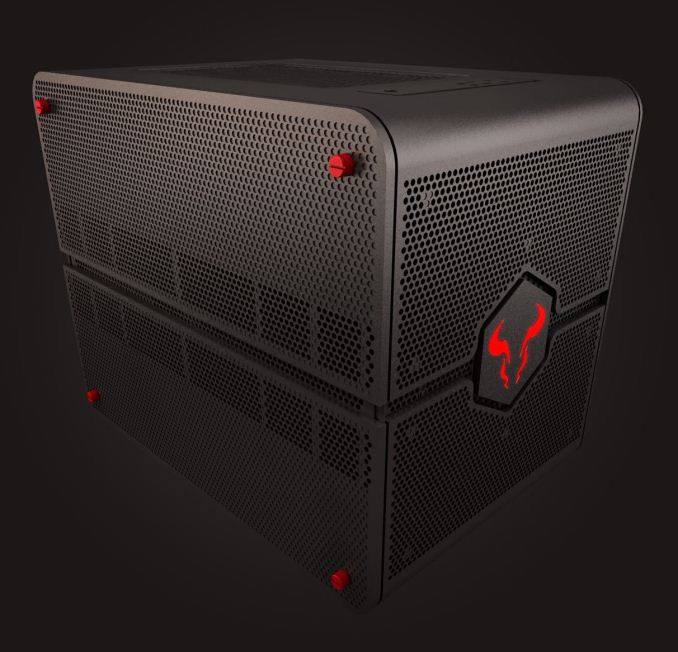
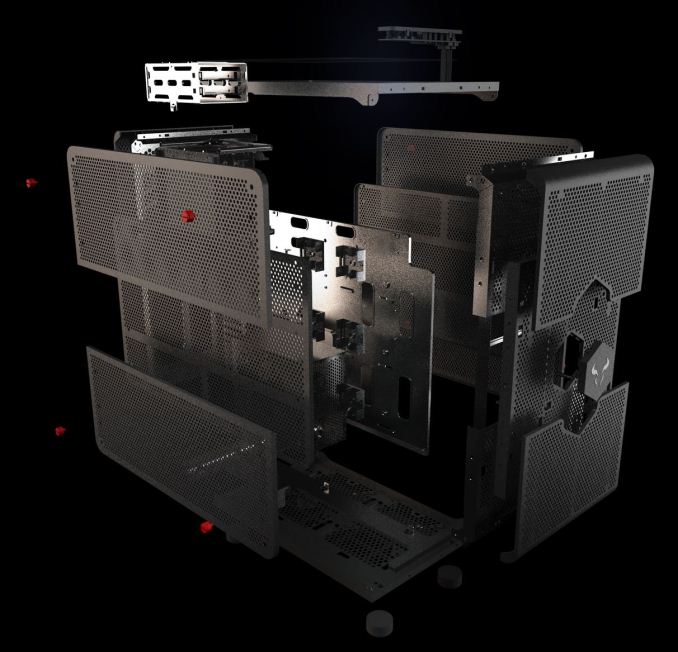
| 6:00p | Riotoro’s Project Morpheus Case Changes Shape to Fit Your Build
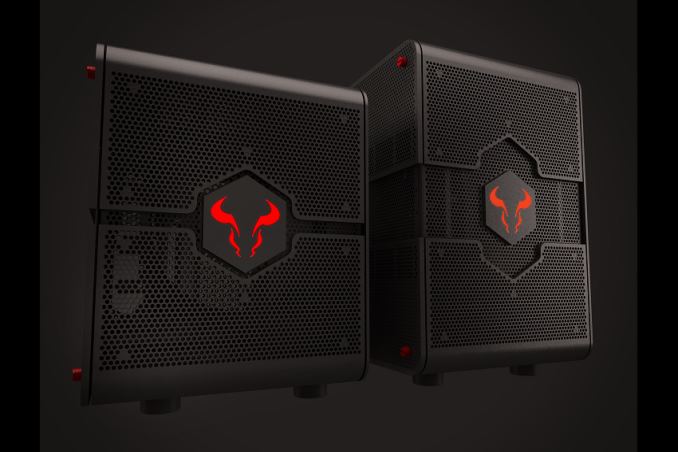
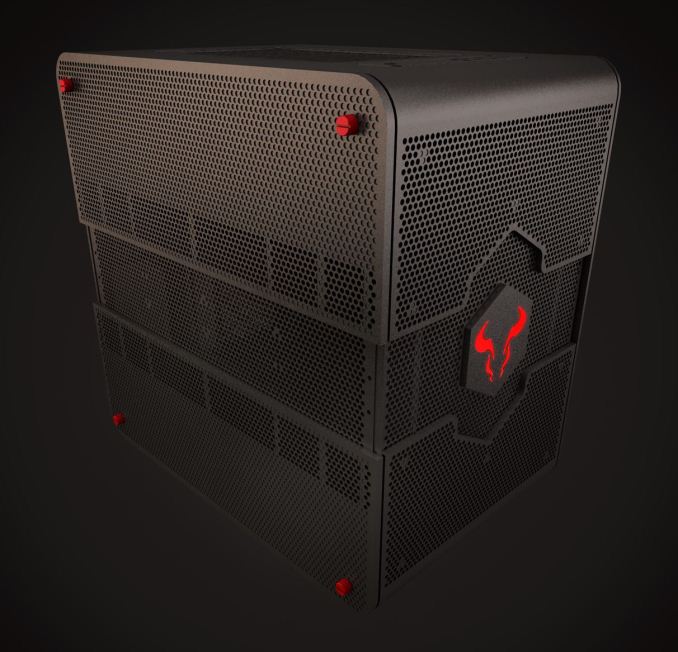
Case and accessory maker Riotoro has been churning out impressive, often budget-friendly products for years. But here at Computex 2018, the company seems to raise its profile with a new Project Morpheus PC, while hoping it finds favor among builders and gamers who often change up their PC hardware.
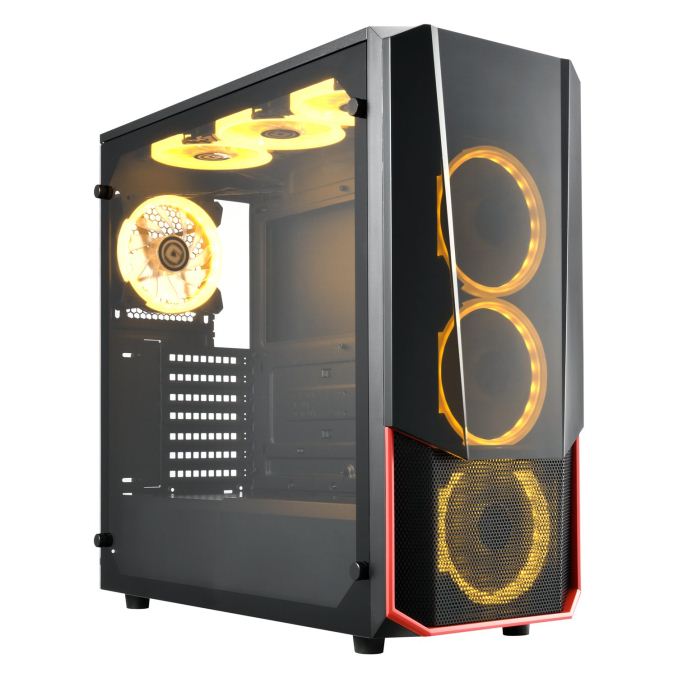
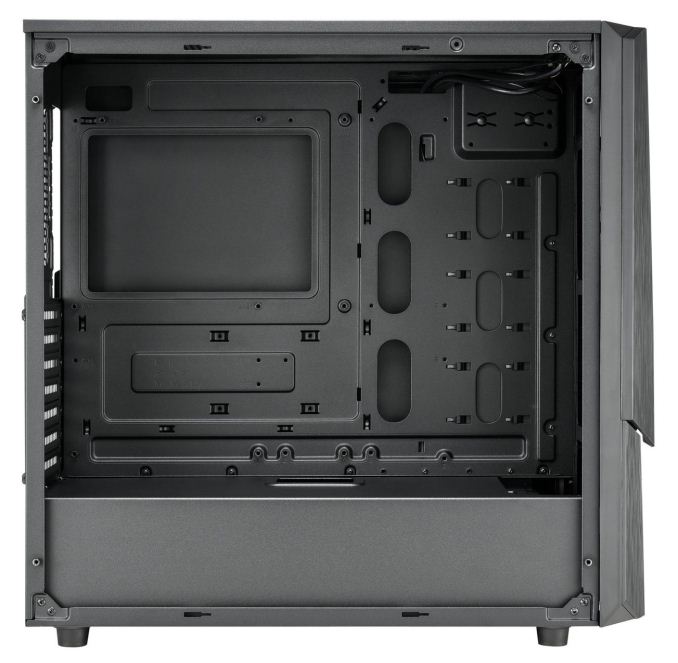
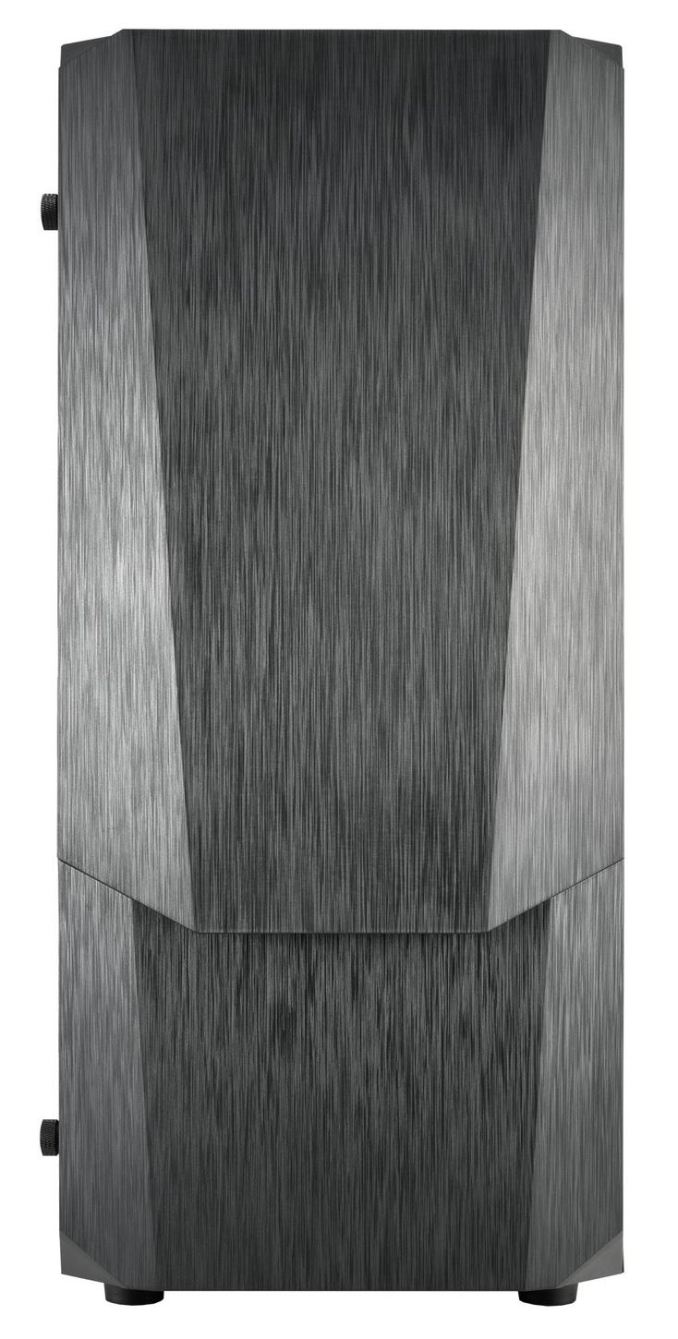
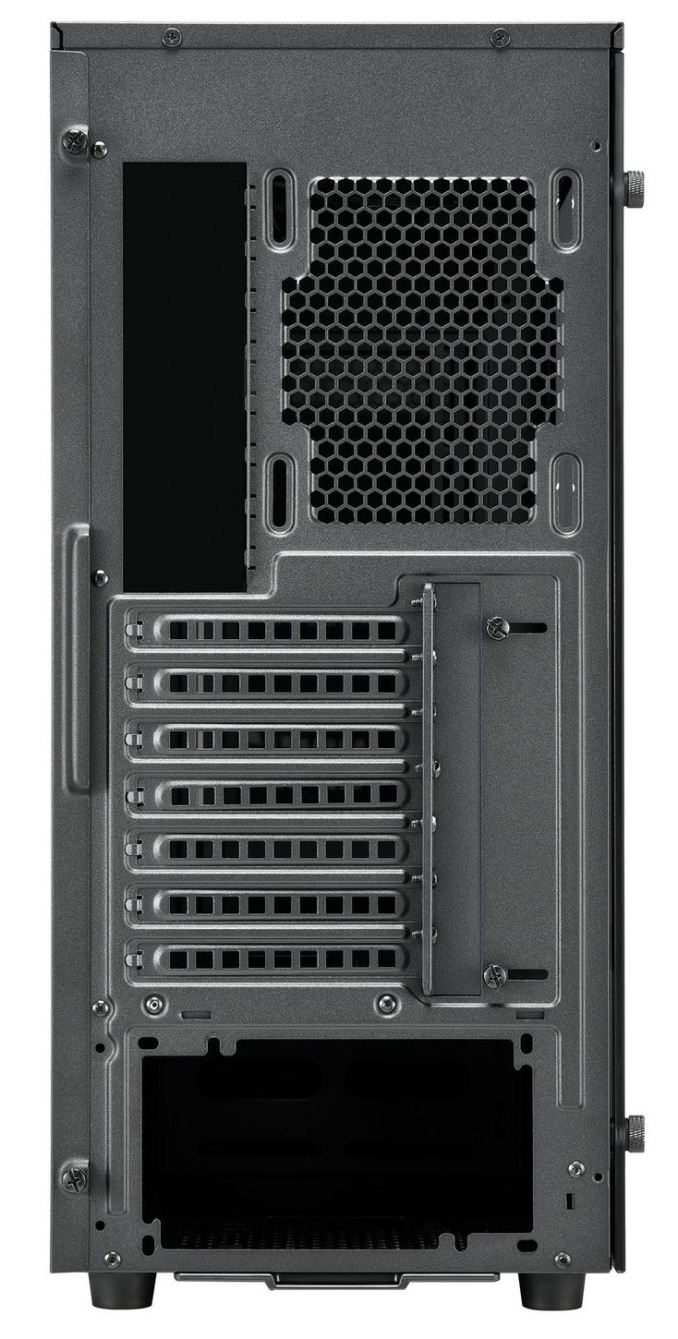
In a nutshell, this attractive chassis can be configured for either compact micro-ATX builds, or as a standard full-ATX mid-tower to make space for multiple graphics cards and/or other components. Cooling shouldn’t be an issue in either configuration, as much of the case is built of perforated metal mesh, and a removable front mount that makes way for as many as seven fans or two 240mm radiators. And you can leave your toolkit in the drawer when building, as the company says that Project Morpheus is a tool-free chassis, with ample consideration taken for cable routing. Connectivity comes in the form of both USB 3.0 and a USB-C port.
Here’s a quick look at some of the key specs and features of Project Morpheus. We’ll update this story when we hear more about pricing and availability. But this is a concept case, so don’t expect it to hit store shelves in the near future. Features:Cooling:Dimensions:
More Computex 2018 coverage is found below.
Matthew Safford Contributed to this Report. | ||||||||||||||||||||||||||||||||||||||||||||||||||||||||||||||||||||||||||||||||||||||||||||||||||||||||||||||||||
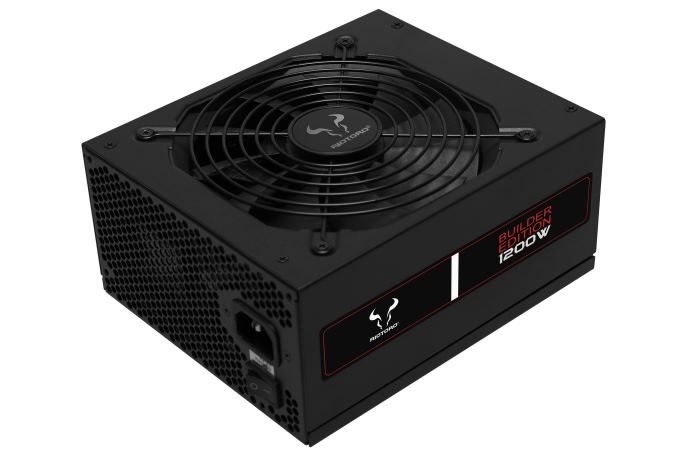
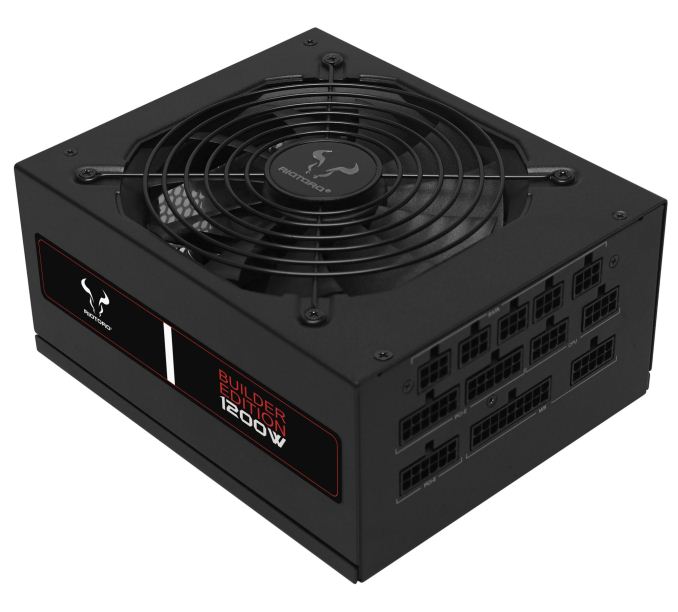
| 6:02p | Riotoro Announces 1200W 80+ Gold Power Supply
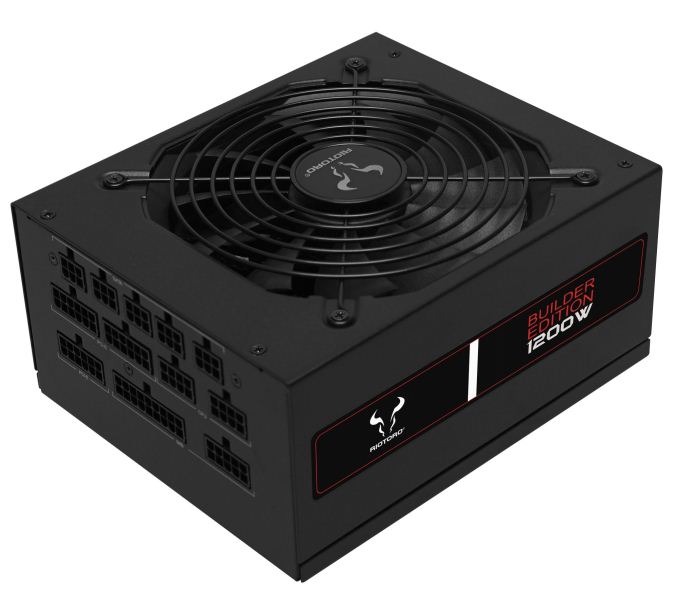
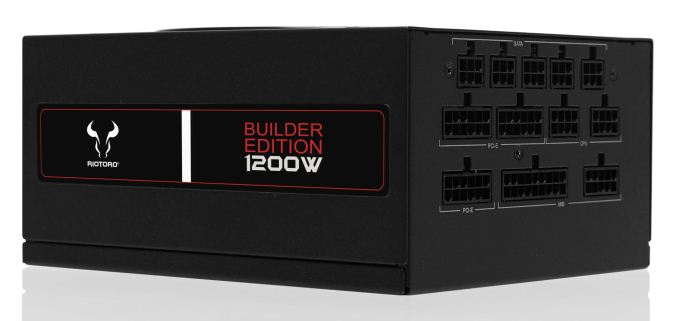
Riotoro announced a large capacity high-efficiency PSU at Computex named the Builder Edition 1200W. Riotoro pegs the power supply as being ideal for cryptocurrency mining, data servers, or extreme gaming PCs. The PSU is fully modular uses a long-life 135mm dual ball bearing fan and 100% Japanese capacitors. Just as all Riotoro PSU have, the Builder Edition 1200W features full voltage, current, power, and short-circuit protection with the device backed by a 5-year warranty.
Other features include a single 12V rail to power connected devices. The power supply comes with eight GPU PCIe power connectors and twelve SATA power connections assuring the device has plenty of power leads for power-hungry systems. The fully-modular device uses flat cables said to reduce clutter, easier to install and provide improved airflow.
Specifications for the Riotoro Builder Edition 1200W power supply is listed below.
The Riotoro Builder Edition 1200W is available now with an MSRP of $219.99 which is comparable to many 1200W Gold units on the market. We are not sure if the Builder's Edition will see additional lower power units in the future. See more coverage of Computex 2018 below.
Related Reading: | ||||||||||||||||||||||||||||||||||||||||||||||||||||||||||||||||||||||||||||||||||||||||||||||||||||||||||||||||||
| 8:00p | Killer xTend Goes Prime Time: Expanding the Wireless Network
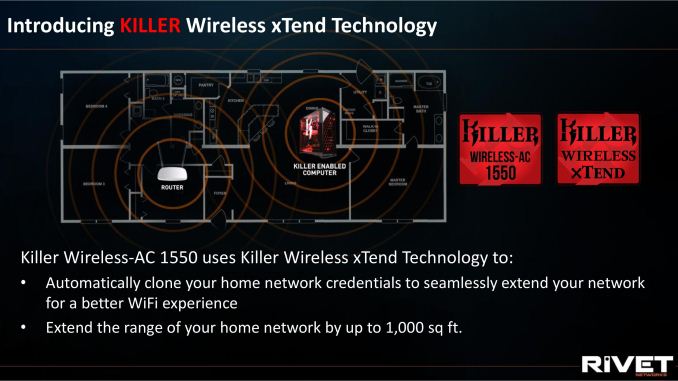
There has been several times in this life as a technology journalist when expanding my wireless network would have helped what I do. However, as is usually the case, my single wireless connection in my device is the one picking up the other Wi-Fi available, and cannot be used as an access point itself. Similarly, in a home, using a device to temporarily extend a wireless network for a better connection has obvious uses. Rivet Networks, the company behind the Killer networking controllers, now has the hardware and software in place for its Killer AC 1550 module to both connect to an access point and become an access point without an additional radio.
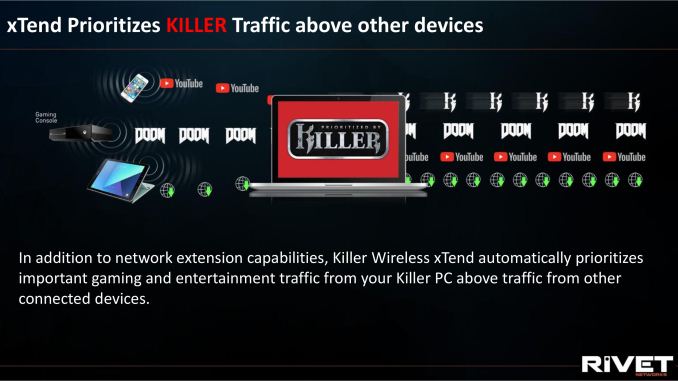
Extending a network without laying cable is typically done through Wi-Fi repeaters, extenders, or powerline adaptors with additional wireless radios. In order to get additional coverage, more radios are needed. Rivet Networks believes that the wireless modules within a PC can help bridge the gap, by making them act as access points to the network without the need for additional hardware. What Killer xTend on the AC 1550 does is, either by connecting with wires or wirelessly, will extend the network by creating an additional mesh point with the same SSID and password. With the Wi-Fi in and Wi-Fi out mode, the radio performs its duty in a time slicing multiplexer/de-multiplexer mode, giving both the incoming and outgoing signal 50% of the time but maintaining both. On top of this, Killer can implement its prioritization protocols to enable sustainable gaming performance on the Killer machine when others are streaming or downloading.
The Killer optimization tool, to recap, splits traffic into one of six priority levels. Based on a constantly updated whitelist, and a bandwidth learning tool that can detect if a user is in a game or video or download just by looking at the traffic, the Killer hardware will adjust the queue of traffic for higher priority items. By default, the system uses the following six priorities: With all the devices connected through the Killer PC, their traffic will default to a priority four, while the Killer PC will keep its priority levels for its traffic (which can be adjusted). Up to this point, Killer xTend has been enabled on motherboards with multiple wired network ports, allowing users to connect nearby consoles and Ethernet storage to the same network through a single machine, but now the xTend philosophy can be invoked through wireless connections. It should be noted that a Killer wired connection is required if the input from the main DHCP router is through a physical connection.
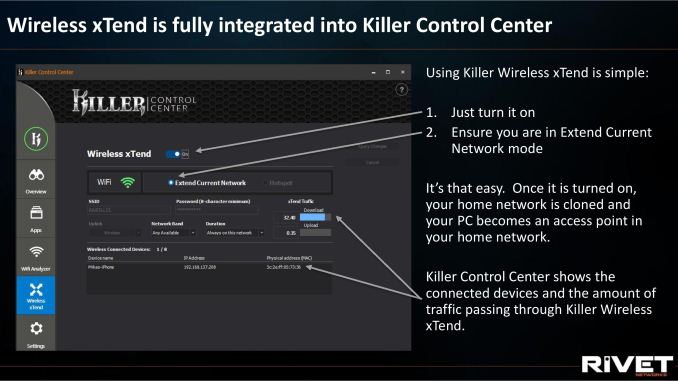
The interface is designed to be simple, with users available to extend the network (in Wi-Fi mode), or create a wireless hotspot (in wired and wireless mode). Users can adjust between 2.4 GHz and 5 GHz modes, as well as define an SSID and password in the wireless hotspot mode, however other standard networking features are on the to do list. Connected devices can be seen, with a maximum of eight supported. Currently the interface shows the total traffic of the connected devices (not the host system), and there are plans in the works to improve the configurability of this. As with the previous announcements like this, the main drawback is the loss of the connection when the host machine is in a sleep mode or turned off. The response to this from Rivet Networks is that this feature is not designed to be as a replacement for a proper home mesh – the point is that nearby devices can connect to the laptop or PC in a room and all piggy back off of a single signal to the wireless router rather than relying on their own connection as it adjusts when they move about with their own smartphones and such. The way Rivet is promoting this technology is to turn around and say that the AC 1550 works as normal, but this is an extra feature that can be used if needed at no additional BOM cost. From our perspective, such a device allows a single editor at a show to give a hotspot to everyone, if they are the ones that have paid for the hotel Wi-Fi (because in the US, it usually isn’t free for some reason). Or if one of our editors does not have a local SIM card, it solves that issue. This is more of a by-product of the feature, but a positive that I can use either way. Partners on board with the Killer Wireless xTend feature include Dell, MSI, Acer, Clevo, and Zotac, who is a new customer with Rivet and we might see some new mini-PCs with Killer networking at Computex this week. The Killer xTend Wi-Fi tool will first be available for users with the latest AC 1550 module, manufactured by Intel. If you didn’t catch the story that Intel is now making the Killer modules, check out our coverage here. The software will also be available for AC 1535 users, such as Dell XPS users, at a later date. Related Reading
| ||||||||||||||||||||||||||||||||||||||||||||||||||||||||||||||||||||||||||||||||||||||||||||||||||||||||||||||||||
| 10:30p | Qualcomm Announces Snapdragon 850: A Second Generation For Windows
Qualcomm’s big value-add to the laptop space last year, alongside running Windows on the company’s smartphone-focused Arm processors, was both battery life and mobile connectivity, promising performance, 20+ hours of use, and the ability to always be connected to the internet without the need to piggy back on a Wi-Fi signal. This year Qualcomm is launching its second generation Always Connected PC (ACPC) platform, and the Snapdragon 850 SoC, to power the new wave of devices. | ||||||||||||||||||||||||||||||||||||||||||||||||||||||||||||||||||||||||||||||||||||||||||||||||||||||||||||||||||
| 10:34p | ASUS Zen Press Event Live Blog (11:30am Taiwan, 3:30am UTC) Anton and I are at ASUS' consumer press event, more often called the 'Zen' press event. We expect a quick flurry of launches from Jonney Shih, so stay tuned for our coverage. The event is set to start at 11:30am Taiwan time (11:30pm ET). | ||||||||||||||||||||||||||||||||||||||||||||||||||||||||||||||||||||||||||||||||||||||||||||||||||||||||||||||||||
















| << Previous Day |
2018/06/04 [Calendar] |
Next Day >> |