[Most Recent Entries] [Calendar View]
Thursday, June 7th, 2018
- Chinese DRAM Industry Spreading Its Wings: Two More DRAM Fabs Ready
- Chinese Xi’an UniIC Semiconductors Starts to Sell DDR4 Chips and Modules
| Time | Event | ||||||||||||||||||||||||||||||||||||||||||||||||||||||||||||||||||||||||||||||||||
| 8:00a | Klevv Adds Kolors: RGB-Lit Enthusiast-Class Cras DIMMs & SSD Incoming
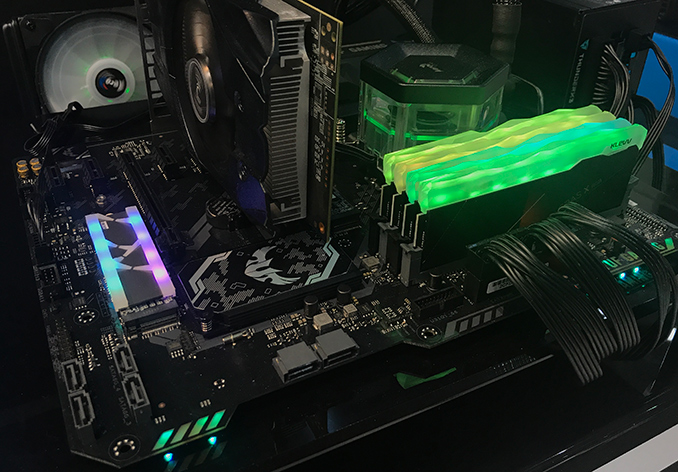
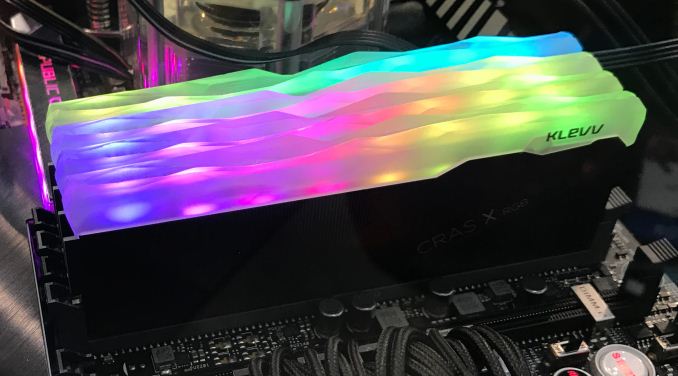
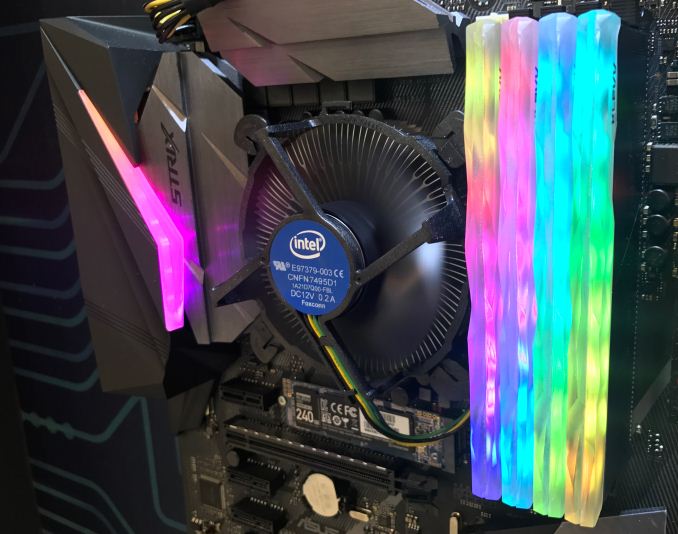
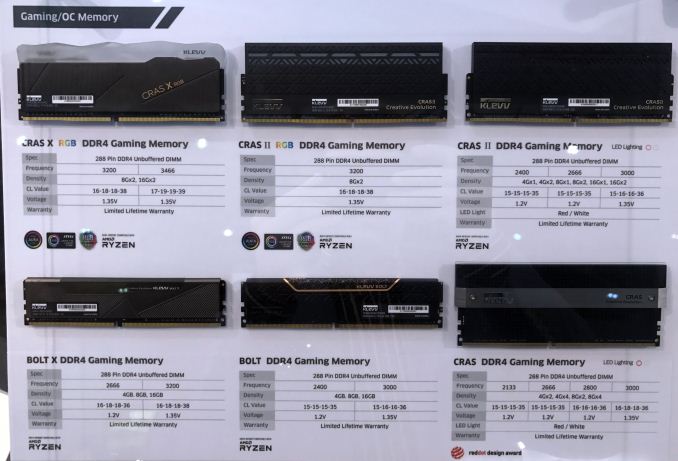
Klevv, a subsidiary of SK Hynix, has been around for quite a while targeting mass retail market with mainstream DRAM and SSD products. Recently Klevv decided to address the growing market of gamers and PC enthusiasts with more advanced offerings featuring fancy cooling systems and above-average performance. At Computex, the brand is demonstrating its upcoming RGB-lit products that will hit the market in late summer or early autumn. As noted above, up until now Klevv has offered products with rather mediocre specs that would hardly attract performance-demanding enthusiasts despite their look. With its upcoming Cras X RGB modules, Klevv will change that and offer 8 GB and 16 GB memory sticks rated for DDR4-3200 (CL16 18-18-38) and DDR4-3466 (CL17 19-19-39) operation at 1.35 V. This is still not quite the level of “extreme” modules from well-known suppliers, but it is a step in the right direction. Furthermore, at data transfer rates of up to 3466 MT/s, Klevv can guarantee compatibility with virtually all today’s platforms, including AMD Ryzen and Intel Core.
Each Klevv Cras X module will be outfitted with eight RGB LEDs that will be controllable using software from the largest makers of motherboards, such as ASUS, ASRock, GIGABYTE, and MSI. It is noteworthy that besides the Cras X, Klevv already has RGB-lit Cras II modules in its lineup, but they feature a different design and top at DDR4-3200.
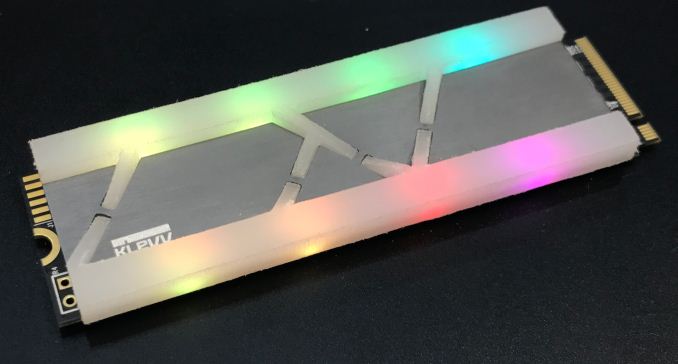
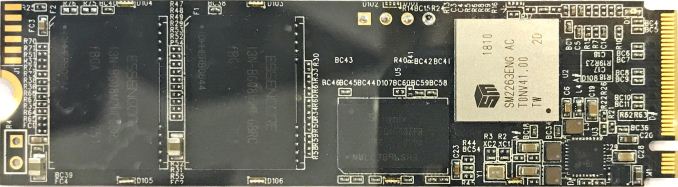
In addition to the RGB-lit memory modules, Klevv also intends to offer an RGB-lit M.2 SSD dubbed the Cras C700. The drive will be based on Silicon Motion’s SM2263-series controller as well as SK Hynix’s 3D TLC NAND memory.
Since the product is still in development, Klevv does not really want to share its performance numbers, but since SMI has already published its performance specs, we can expect the Cras C700 to offer something in the range of 2.4 GB/s for sequential read speed as well as up to 1.7 GB/s sequential write speed. The SM2263 is not exactly an enthusiast-grade controller from SMI’s perspective, but after Klevv/SK Hynix learn its behavior, they may adopt a more advanced SMI silicon for a more advanced SSD.
When it comes to availability, Klevv expects both Cras-branded products to hit the market in August or September, depending on the region. Right now, Klevv is establishing local offices in various European countries (e.g., Germany, Russia, etc.), so it looks like Klevv products will be more widespread on that side of the pond.
| ||||||||||||||||||||||||||||||||||||||||||||||||||||||||||||||||||||||||||||||||||
| 9:00a | Maxio Technology Demos SSD Based on ‘Chinese’ 3D NAND
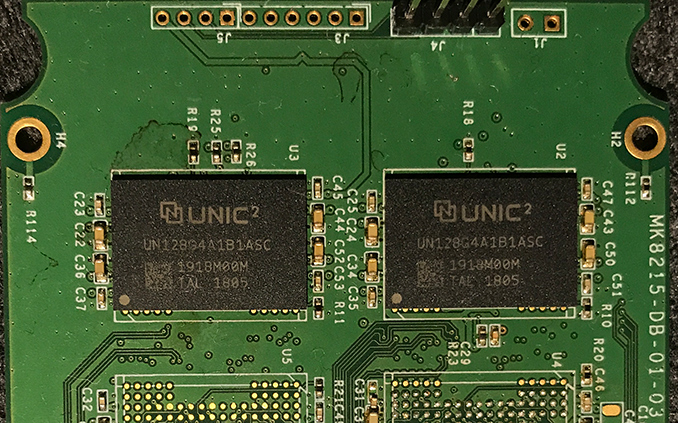
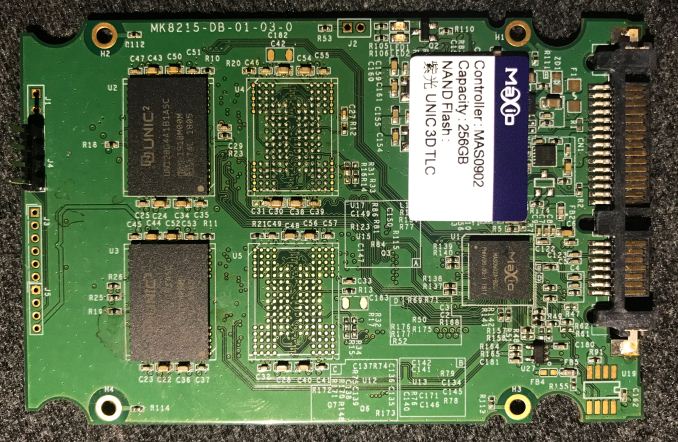
Having received tens of billions of dollars from the government, Chinese semiconductor industry is developing at a rapid pace. Earlier this year Chinese Xi’an UniIC Semiconductors began to sell its DDR4-2133 memory chips and right now Yangtze Memory Technologies Co. and UNIC Memory Technology are gearing up to start selling 64-layer 3D TLC NAND memory in volumes. Maxio Technology, a developer of SSD controllers with a subsidiary in China, is showcasing a prototype SSD based on its MAS0902 controller as well as 3D TLC NAND flash memory with UNIC markings. The SSD in question is an inexpensive 256 GB SATA drive aimed at entry-level PCs and its performance is in line with other cheap SSDs (hence, will barely impress enthusiasts). Meanwhile, memory used by the drive deserves some attention.
Yangtze Memory Technologies Co. and UNIC Memory Technology belong to Tsinghua Unigroup, a government-controlled high-tech conglomerate from China. Yangtze Memory is a maker of semiconductors that reportedly has the capability to produce 32-layer 3D NAND memory and is gearing up to make 64-layer 3D NAND, according to TrendForce. UNIC is responsible for selling memory and products on its base. The company has a capability to buy wafers, cut chips, package them, test them, and then build eMMC or SSD products. Since 32-layer 3D NAND is largely considered a test vehicle for 3D NAND, it is unlikely that such memory from Yangtze will get more or less widespread. Therefore, in a bid to help the development of the local SSD/eMMC/UFS industry before Yangtze comes up with commercially-viable 64-layered 3D NAND, UNIC is reportedly reselling Intel’s 256 Gb 3D TLC NAND chips under its own brand. Meanwhile, Maxio can take advantage of Tsinghua’s intention to build up a storage device industry and expand sales of its controllers in China. It will not be surprising if Intel’s own memory chips offer more features than the ICs sold under the UNIC trademark, but at present, it is impossible to find out more information. What is important is that Yangtze is on track with its 64-layer 3D NAND and eventually UNIC will sell Chinese-developed flash. Related Reading:
| ||||||||||||||||||||||||||||||||||||||||||||||||||||||||||||||||||||||||||||||||||
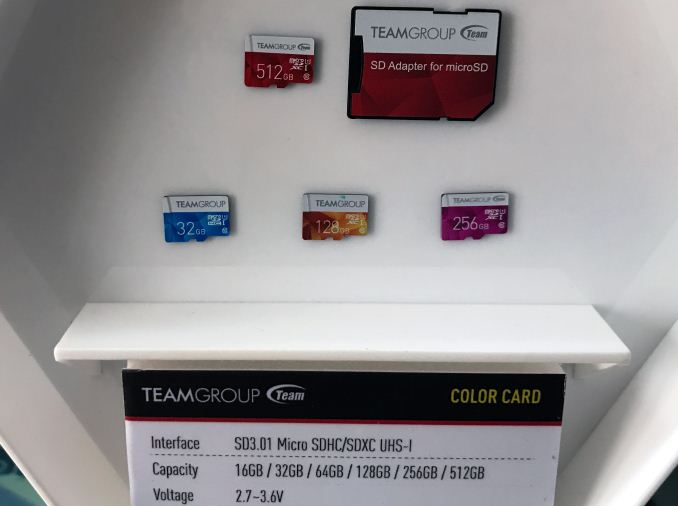
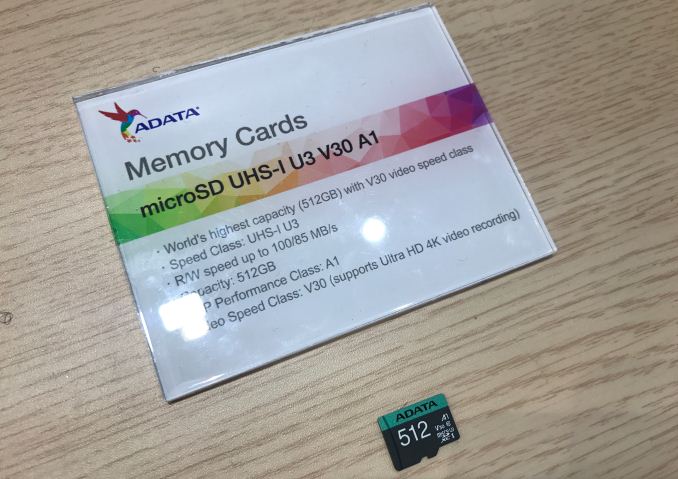
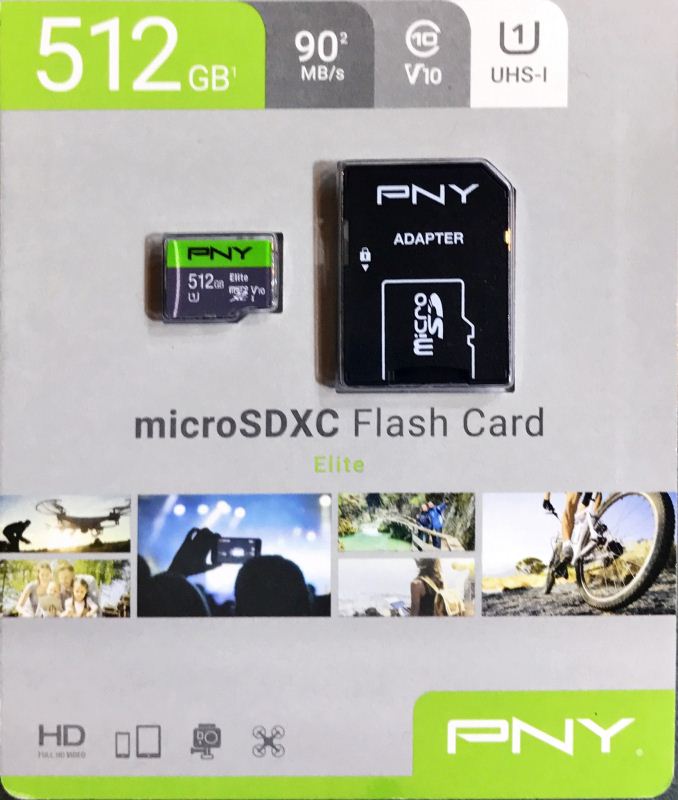
| 10:00a | ADATA, PNY, and Team Group to Launch 512 GB microSDXC Cards This Summer
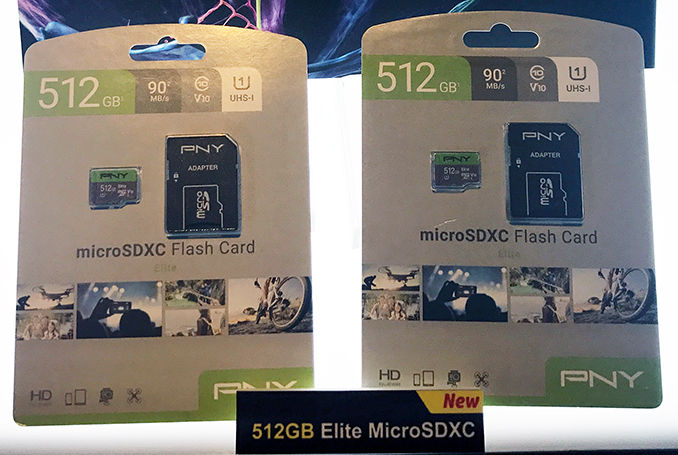
At least three well-known suppliers of NAND flash-based products — ADATA, PNY, and Team Group — are gearing up to start selling their 512 GB microSDXC cards next month. The products will offer similar performance-related specifications and will certainly not be cheap. However, with 512 GB microSDXC cards available from multiple suppliers, their prices will not hit the ceiling due to competition. The 512 GB microSDXC cards from PNY and Team Group use the SD 3.01/UHS-I bus to deliver up to ~90 MB/s data transfer rate. The cards carry the Class 10 and UHS Speed Class U1 badges that which guarantee that they support at least 10 MB/s minimum sequential writing speed, which is enough for taking pictures and FHD videos. In fact, specifications of the cards are similar to those of a 512 GB microSDXC card by Integral launched earlier this year.
The 512 GB microSDXC cards from PNY and Team Group do not support any Application Performance Classes and therefore might not be suitable for huge mobile games or VR applications. Meanwhile there is a growing number of Nintendo Switch owners who want high-capacity cards to store their games, so the new cards may get popular among such people (provided that their performance is enough).
Although ADATA’s 512 GB microSDXC card also relies on the UHS-I bus and supports read speed of up to 100 MB/s and write speed of 85 MB/s, it has an important advantage over competing offerings from the three aforementioned companies: it carries the Application Performance Class 1 (A1) badge. The card provides a sustained sequential performance of 10 MB/s, a performance of 1500 random read IOPS as well as 500 random write IOPS. Therefore, ADATA’s 512 GB microSDXC card can be used to store and run applications. Both Team Group and PNY intend to start shipping their 512 GB microSDXC cards sometimes in July. By contrast, ADATA plans to ship its 512 GB microSDXC product in August (a bit later, but with A1). As usual, actual availability will depend on the region and other factors. As for pricing, the three companies do not share their MSRPs just yet, but certainly such cards will cost quite a lot. For example, Integral charges around $350 per card, but at present it simply has no competitors and can charge any sum it likes.
| ||||||||||||||||||||||||||||||||||||||||||||||||||||||||||||||||||||||||||||||||||
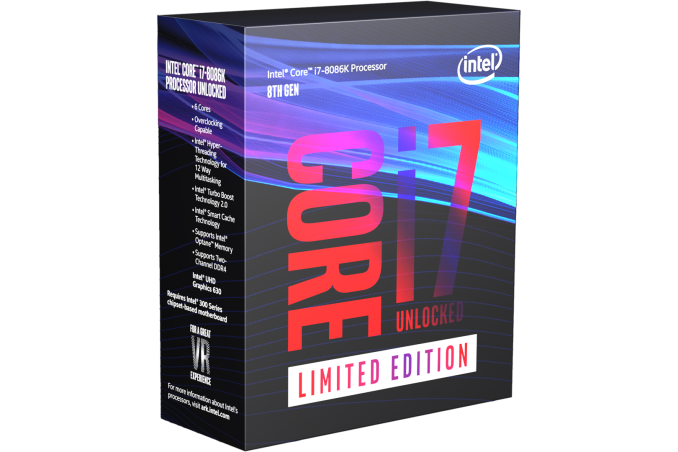
| 11:00a | Intel's Core i7-8086K Giveaway Kicks off Tonight at 8pm ET (Midnight UTC)
Alongside the announcement of their new x86 anniversary-themed hex-core processor, the Core i7-8086K, Intel also announced that they would be giving a significant portion of their inventory away as part of a massive, globe-crossing giveaway. In total, Intel is producing just 50,000 units of the specially binned Coffee Lake CPU. And of those, 8,086 – or about 16% – are slated to be given away starting tonight.
At 8pm Eastern (midnight UTC), Intel will be running a series of national 24 hour sweepstakes for the processors. Besides being notable for the sheer number of processors being given away – I simply cannot recall the last time any single event gave away 4-digits' worth of CPUs – an interesting quirk of Intel’s giveaway is that they are allocating a fixed number of CPUs in each sweepstakes nation. For the US this means 2,086 processors, another 2,000 for China, etc. Canada, South Korea, Taiwan, and other countries are also part of the giveaways. So while the giveaway crosses parts of the globe, the odds in any given nation are still decent, especially for places like Canada and Taiwan.
Note that this is a 24 hour giveaway; Intel is moving fast here and will be drawing winners next Monday. So for a shot at winning a CPU that, while lacking an official price, Intel is valuing at $425, there’s a relatively short window to enter. Otherwise this leaves 41,914 processors to be split between retail and OEMs, and while the $400+ price tag makes it decidedly un-cheap, I don’t imagine that Intel is going to have much trouble selling all of them. | ||||||||||||||||||||||||||||||||||||||||||||||||||||||||||||||||||||||||||||||||||
| 12:00p | ASMedia Demos USB 3.2 Gen 2x2 PHY, USB 3.2 Controller Due in 2019
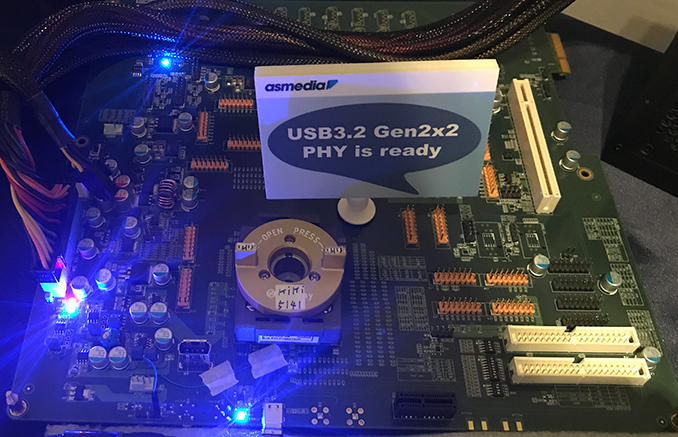
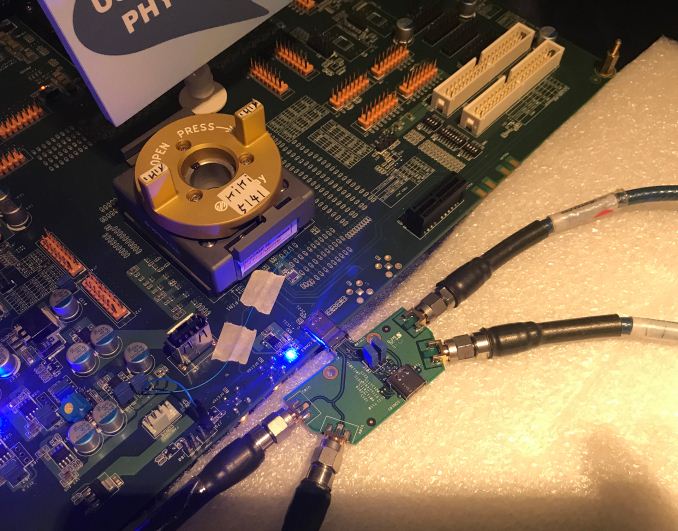
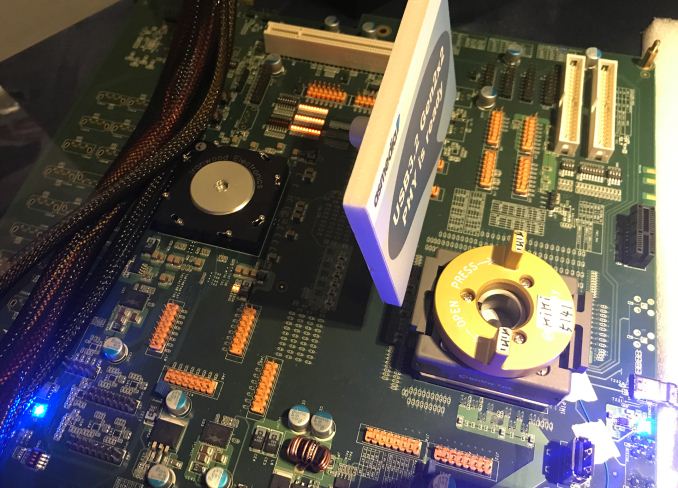
USB IF published the final USB 3.2 specification in September last year and so developers of controllers and physical interfaces (PHY) started to design their solutions supporting the new tech. As it appears, the development process is proceeding well at ASMedia, which is demonstrating its USB 3.2 PHY at Computex. The USB 3.2 uses two high-speed USB Type-C Tx/Rx channels to achieve 20 Gbps maximum throughput and while the technology retains the USB 3.1 physical layer data rates and encoding techniques, it still needs a new PHY to work. Just several days ago Synopsys demonstrated its USB 3.2 prototype solution, and apparently, ASMedia also has its USB 3.2 PHY ready. The company does not disclose which process technology it uses for the physical interface, but 10 Gbps data transfer rate is not something that has serious requirements.
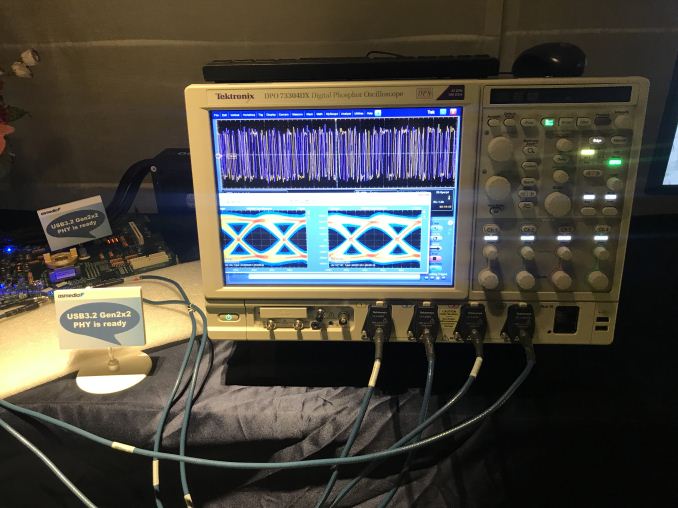
Based on the oscilloscope readings, ASMedia’s PHY works nearly ideally, so the next step for the company is building a USB 3.2 Gen 2x2 controller featuring this physical interface.
ASMedia says that its controller will be ready in 2019, but does not specify when exactly. Keeping in mind that it takes some time for actual hardware makers to adopt new controllers, do not expect USB 3.2 devices to hit the market earlier than in 2020.
| ||||||||||||||||||||||||||||||||||||||||||||||||||||||||||||||||||||||||||||||||||
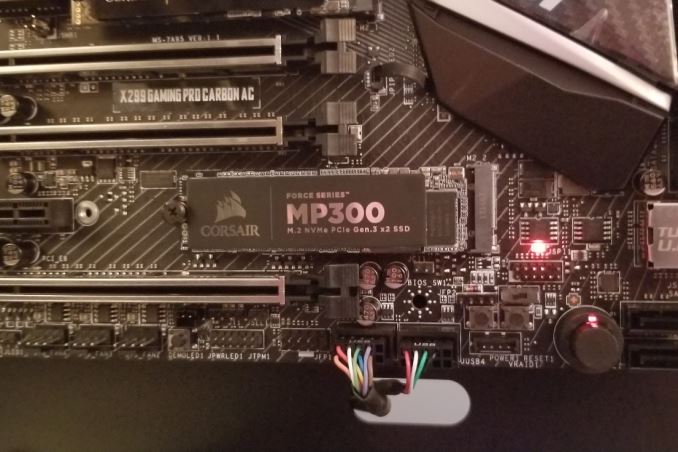
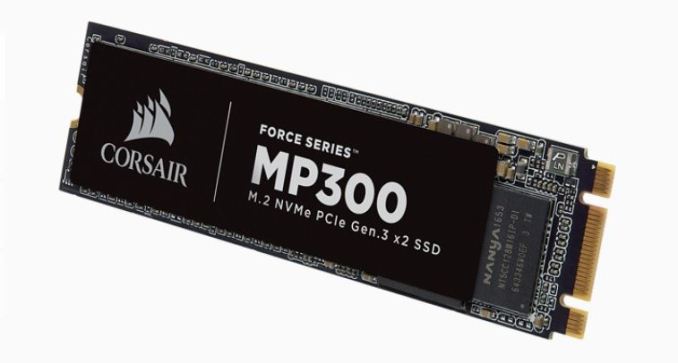
| 1:00p | Corsair's MP300 Entry-Level Consumer NVMe SSD Starts At Just $49
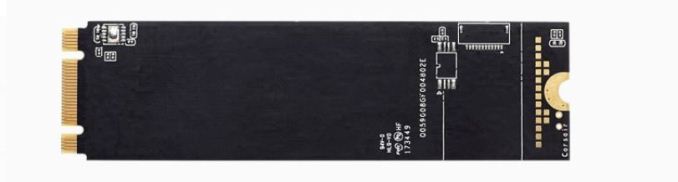
Early on in Computex, Corsair unveiled the new Corsair Force MP300 NVMe 1.3 TB M.2 SSD. Corsair announced the drive during our flight over, so we learned about it at the company's booth where the drive was prominently on display. The Corsair website shows the price ranging from just $49 (120GB) to $320 (960GB).
The drive is up to 3x faster than SATA and designed to help users transition away from the antiquated serial bus that was built for slower media. Specifications for the 3D TLC NAND drives (960GB) are 1600 MB/s sequential read and 1080 MBs sequential writes with IOPS coming in at 240K and 210K respectively. While these are not the fastest NVMe based drives on the market, on paper they are notably faster than the SATA counterparts. Yet Corsair's approach to the entry-level SSD market comes at a bad time, with pricing pressure coming from all directions. High-quality SATA SSDs like the Samsung 860 EVO 1TB just hit $250 (and even $150 for a few hours) and mainstream NVMe drives like the Adata SX8200 960GB sell for just $350. Corsair will have a difficult time getting this ship off the ground with current pricing for all but the 120GB model, which sells for dinner money at less than $50. At that price, it's hard not to consider the MP300 for a secondary drive used to ease the load on your primary storage by keeping cold data like movies, music, and even games on the MP300.
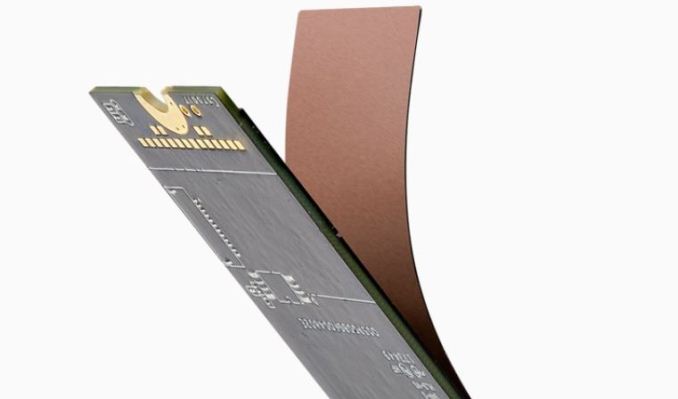
Corsair backs the new MP300 with a 5-year warranty, the same as the mainstream NVMe MP500. The new series also comes with support for Corsair's SSD Toolbox software and features a copper sticker that spreads the controller heat to aid in keeping the drive cool under intensive workloads. The drive is available now in all capacities at the Corsair website.
More information from Computex can be found below.
Chris Ramsayer contributed to this report. | ||||||||||||||||||||||||||||||||||||||||||||||||||||||||||||||||||||||||||||||||||
| 2:00p | Cooler Master Unveils CK620: A Thin Wireless Mechanical Keyboard
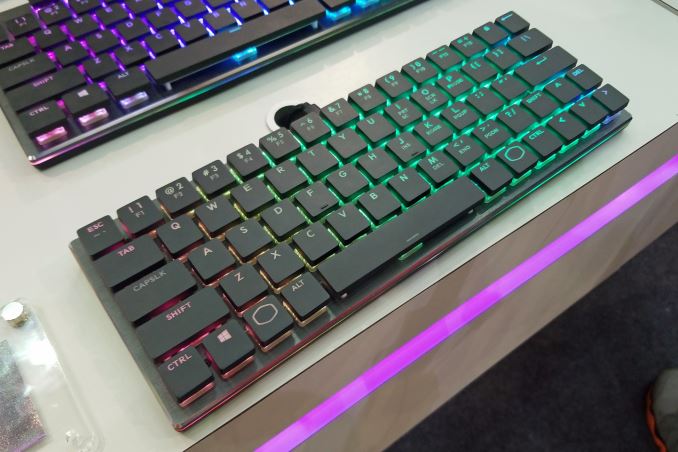
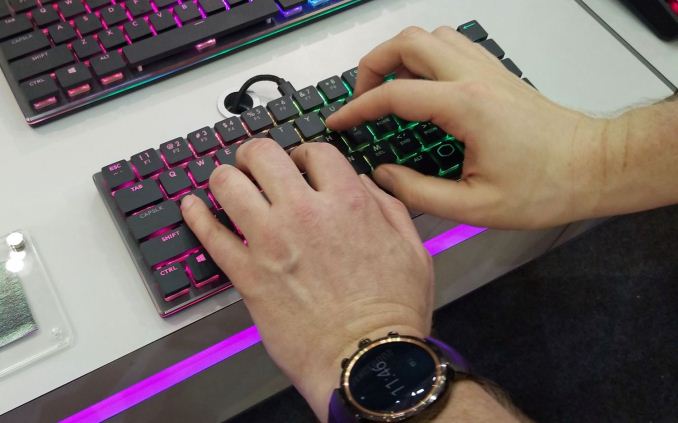
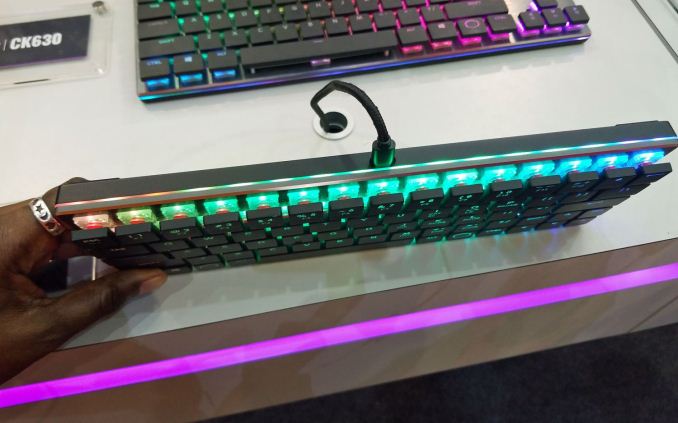
They say you can't take it with you and, when it comes to mechanical keyboards, they are usually right. While there's nothing like the feel of a good mechanical keyboard on your desk, for many, attempting to travel with one can prove to be a cumbersome experience. Enter Cooler Master's CK620. Due out at the end of this year or in early 2019, this compact mechanical keyboard can fit into most handbags and has an optional Bluetooth connection. The CK620 is one of the thinnest mechanical keyboards around thanks to Cherry's new, low-profile red switches. Red switches, particularly those from Cherry, have long been prized among gamers for their quick response time. These low-profile switches are 35-percent thinner than their regular counterparts and still have the great mechanical feel that power users crave.
Overall, the Cooler Master CK620 is 60 percent the size of a full keyboard and much more compact than a typical tenkeyless keyboard. Even the keycaps are optimized for space-saving because they are completely flat. Having the chance to spend a few minutes with the CK620, we were left feeling impressed with just how great it looks and feels. The keys appeared to have plenty of travel and were more than large enough for adult fingers. They had the snappiness you expect from a mechanical keyboard too. Even with all the space-saving, Cooler Master found room for RGB LEDs under each key. The silver base and black keys round out this impressive package.
Cooler Master stated that when it launches at the end of this year or early next year, the CK620 will be available in both a wired-only configuration and a model that can connect via Bluetooth and USB Type-C. They said to expect a modest five hours of battery life with the RGB lights on, but a good deal more with the lights off. In addition to the CK620, Cooler Master is coming out with two other low-profile keyboards. The CK630 is a less-compact, tenkeyless model that has more blank space around the arrow keys. The CK640 is a full-size keyboard with number pad. Pricing was not revealed.
Avram Piltch Contributed to this Report. | ||||||||||||||||||||||||||||||||||||||||||||||||||||||||||||||||||||||||||||||||||
| 3:00p | Patriot Readies Viper SSDs With Phison E12 And S12
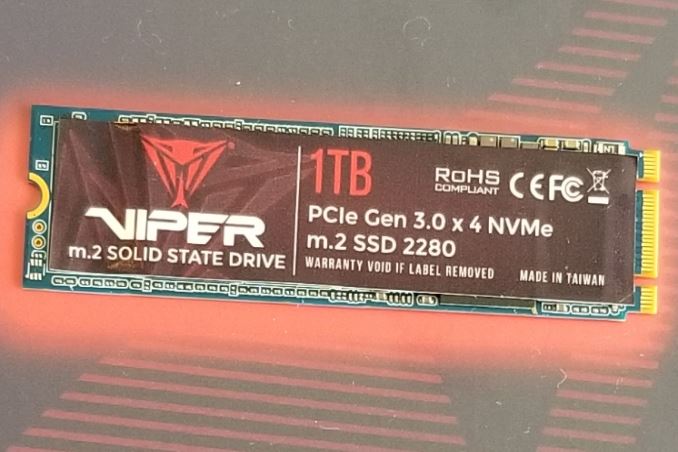
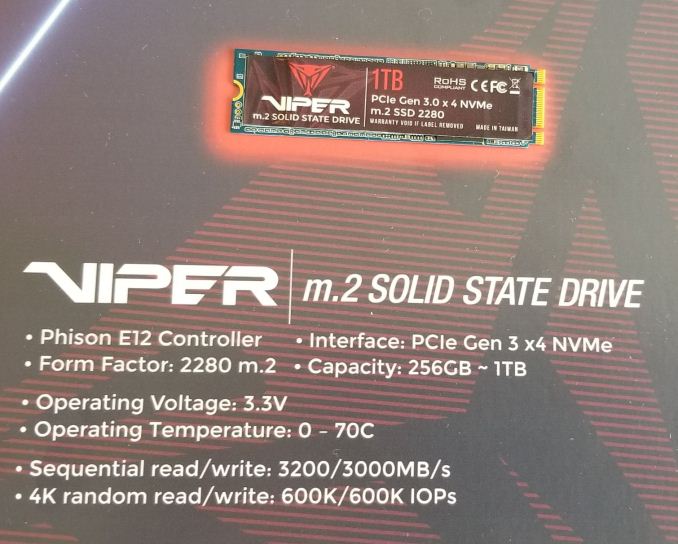
At Computex 2018, Patriot has shared that it's preparing to ship two new SSDs, the Viper M.2 SSD, and an S12 SATA SSD, to round out its 2018 product line. The Viper M.2 SSD packs up to 1TB of NVMe high-speed storage on a slim 2280 form factor with up to 3,200 MB/s read and 3,000 MB/s write speeds using sequential data. The random performance will peak at 600,000 IOPS, enough to satisfy any gamer, the line's target audience.
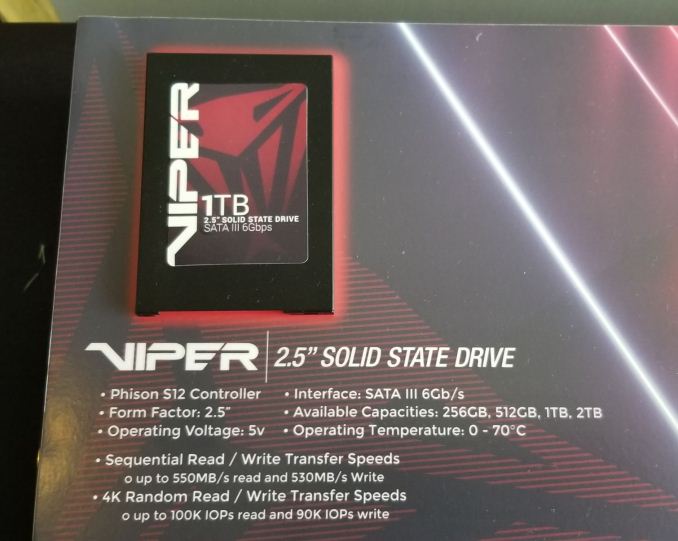
What Patriot adds to the story is just how close the Viper M.2 is to market. The company plans to ship the drive in 256GB, 512GB, and 1TB sizes in the next 30 days and hopes to sweep others with similar products as well as those based on Silicon Motion's SM2262EN coming later in the year. We didn't hear anything about retail pricing from the company, but don't expect this SSD to break the bank. The successor to Phison's successful and diverse S10 SATA controller, which played dual roles as a high-performance beast with MLC flash and low-cost general use SSD with TLC, is closer to reality. The Phison S12 will play a similar role with support for both 3D TLC and QLC making it a potent weapon in any SSD manufacturer's arsenal.
Patriot displayed the first retail S12 SATA SSD at Computex 2018 but says this model will only come after the Viper M.2 ships. With performance limited by the SATA bus at roughly 550 MB/s, the drive feels best suited for legacy system upgrades not compatible with NVMe and lower cost mainstream builds pieced together with a focus on maximizing the best bang for the buck.
Chris Ramsayer Contributed to this Report. | ||||||||||||||||||||||||||||||||||||||||||||||||||||||||||||||||||||||||||||||||||
| 4:00p | ASRock Shows Off B450 Lineup: Something For Everyone
AMD has yet to officially launch the B450 chipset, but that didn’t stop motherboard manufacturers from showcasing their upcoming AM4 B450 motherboards at Computex 2018. Of all the major motherboard brands present at this year’s venue, ASRock brought one of the most diversified lineups of B450 motherboards. B450 Gaming K4
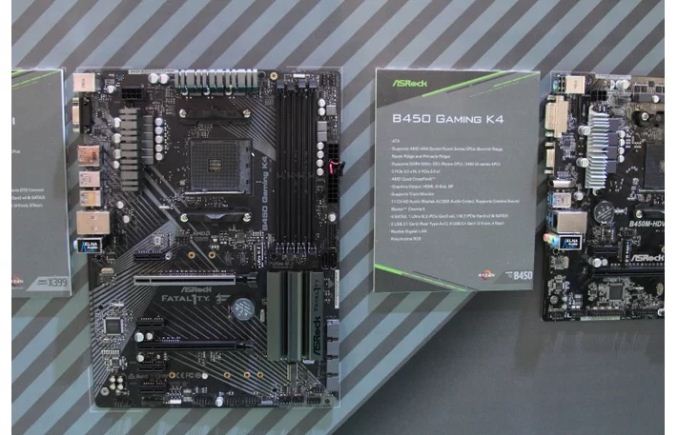
The B450 Gaming K4 is ASRock’s standard ATX offering. There’s a nine-phase VRM present drawing power from a single 8-pin EPS connector. The motherboard is equipped with four DDR4 memory slots that support frequencies scaling to 3,200MHz through overclocking. The motherboard also features two PCIe 3.0 x16 slots and four PCIe 2.0 x1 slots. This opens the door to the possibility of running an AMD Quad CrossFireX configuration on this motherboard. Graphics output consists of an HDMI port, DisplayPort, and D-Sub port with support for up to three monitors. The storage options on the ASRock B450 Gaming K4 consist of four SATA III ports, an M.2 PCIe Gen 3.0 x4 port, and an M.2 PCIe Gen3 x2 port. The audio solution is based on the Realtek ALC892 audio codec – while not the latest and greatest, will still put out good sound for most users. The rear I/O hosts two USB 3.1 (Type-A and Type-C) and four USB 3.0 ports. B450M-HDV
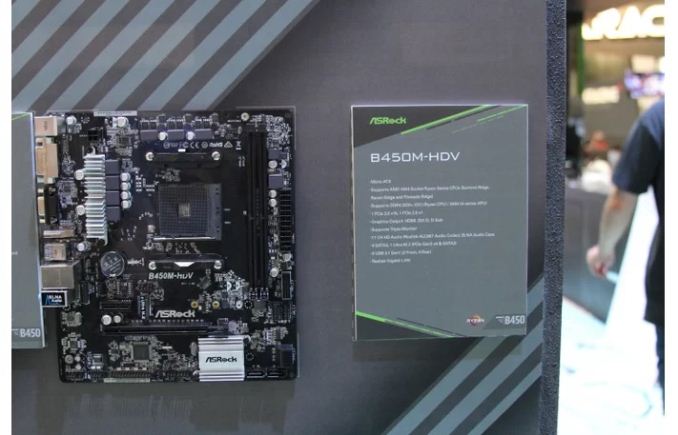
The B450M-HDV is a micro-ATX motherboard aimed at consumers who prefer to build compact systems. The motherboard is armed with a seven-phase VRM and a single 4-pin EPS connector feeding them the power. Two DDR4 memory slots can handle memory modules that exceed the DDR4-3200 specification. Options for expansion are a bit limited with only a single PCIe 3.0 x16 slot and PCIe 2.0 x1. Similar to the B450 Gaming K4, the B450M-HDV also comes equipped with one HDMI port, DisplayPort, and D-Sub port with support for triple monitors. There are a total of four SATA III ports, a M.2 PCIe Gen3 x4 port, and a M.2 SATA III port for users to connect their storage devices. The motherboard utilizes the Realtek ALC887 audio codec for its audio responsibilities and shares the same number of USB ports as the larger B450 Gaming K4. B450M Pro4
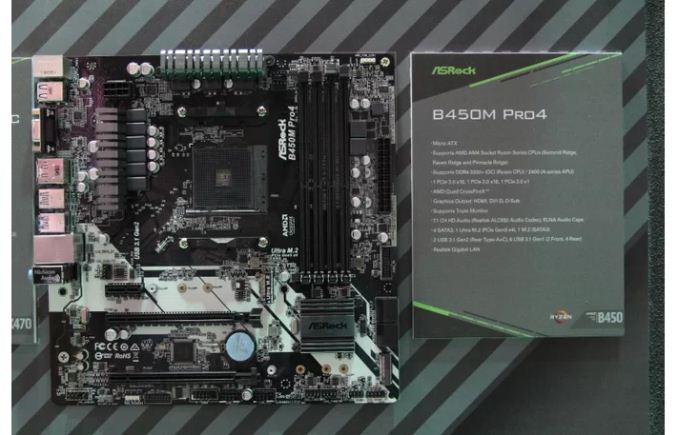
The ASRock B450M Pro4 falls into the micro-ATX category as well. In terms of feature set, it’s almost identical to the B450M-HDV except for a few key differences. Unlike the B450M-HDV’s seven-phase VRM, the B450M Pro4 rocks a more robust nine-phase VRM and an 8-pin EPS connector. They also differ from each other in the number of expansion slots and audio codec. The B450M Pro4 has an extra PCIe 2.0 x16 slot while also employing the Realtek ALC892 audio codec instead of the ALC887 codec found on the B450M-HDV. B450 Gaming-ITX/AC
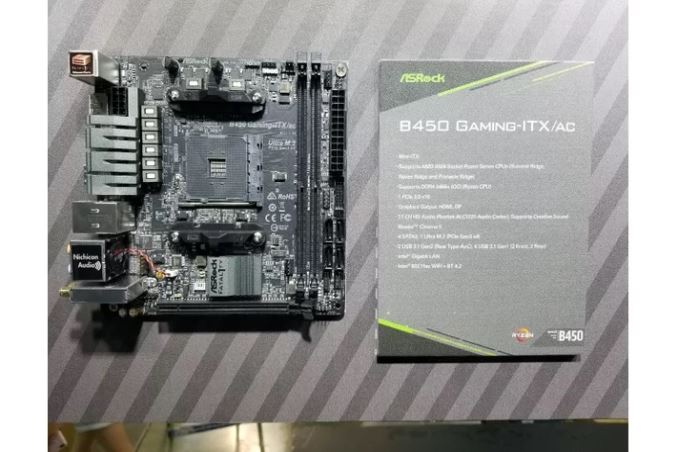
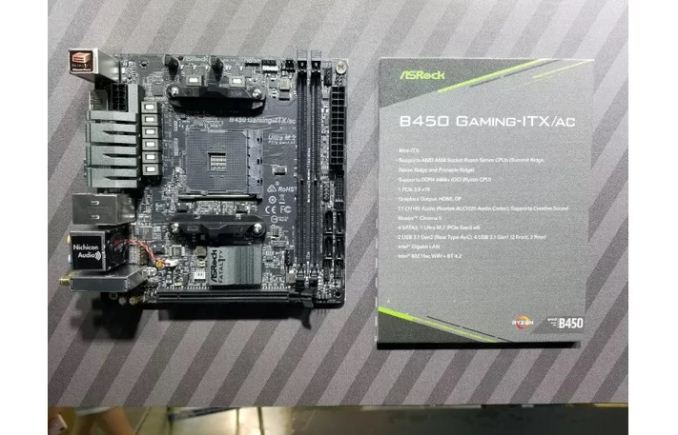
It's comforting to see that ASRock didn’t forget about Mini-ITX lovers. Like its micro-ATX siblings, the tiny B450 Gaming-ITX/ac packs two DDR4 memory slots. However, ASRock said the motherboard supports memory frequencies over 3,466MHz. Due to the nature of the form factor, the motherboard comes with a single PCIe 3.0 x16 slot. Video connectivity comes in form of an HDMI port and DisplayPort. The ASRock B450 Gaming-ITX/ac possesses four SATA III ports and a M.2 PCIe Gen3 x4 for storage. ASRock opts for the latest Realtek ALC1220 audio codec for this particular model. The rear I/O carries two USB 3.1 (Type-A and C) and two USB 3.0 ports at the rear. The itty-bitty motherboard also comes with built-in 802.11ac Wi-Fi and Bluetooth 4.2 connectivity. Pricing and availability were not shared. But we do expect to see the boards soon.
Zhiye Liu Contributed to this Report. | ||||||||||||||||||||||||||||||||||||||||||||||||||||||||||||||||||||||||||||||||||
| 5:00p | SMI Eyes Samsung's Performance Crown With SM2262EN Controller
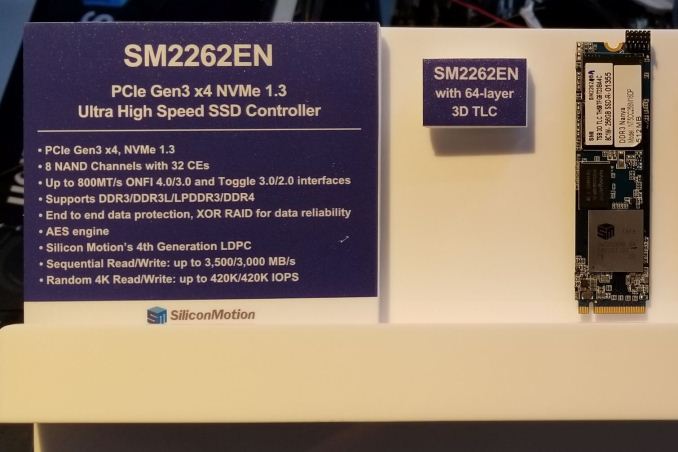
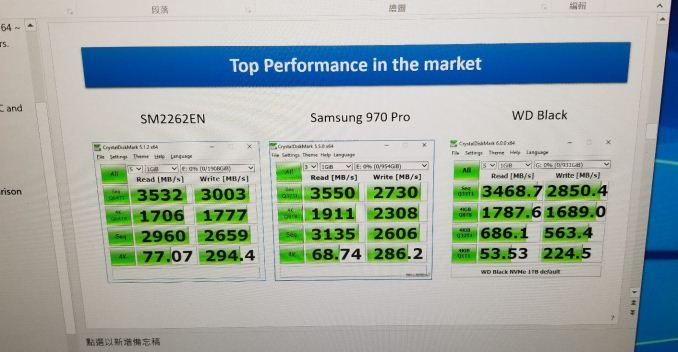
Silicon Motion, Inc controllers shipped in 30% of the world's SSDs last year. The company had a successful entry into the consumer SSD market and within just five years is ready to challenge Samsung for the performance crown. The top-tier performance comes from the SM2262EN, the successor to the SM2262 found in well-priced products like the Adata SX8200, HP EX920, and Intel 760p. The new controller features a software upgrade that significantly increases performance and pushes the user experience to new heights with commodity flash. The SM2262EN supports existing and next-generation flash memory with speeds of up to 800MT/s per channel. The 8-channel controller is also a drop-in replacement for existing SSDs designed around the SM2262 controller. A powerful 4th generation LDPC engine provides the robustness to support next-generation QLC memory as well as the 96-layer TLC coming to market in 2019. We've learned from manufacturers that the SM2262EN already has design wins. Adata plans to update the SX8200 with a new model in the same 8000 series family using the controller.
It's easy to see why companies plan to launch products with the new controller. SMI's internal testing shows the drive outperforming the Samsung 970 Pro in several key 4-corner tests and, unlike the 970 Pro, partners plan to launch 2TB models to gain market share in the void. The SM2262EN display is far from a parlor trick. The company, just like years past, allowed us to run tests on the system to see firsthand how fast the new SM2262EN paired with 64-layer memory is. So far, the initial performance shows a strong user experience that is simply the next step up from the retail drives shipping today with the SM2262 controller. If Silicon Motion's partners are able to meet or exceed the current mainstream NVMe price points where the SX8200 and EX920 reside, this will be a very popular controller for our readers.
Chris Ramsayer contributed to this article. | ||||||||||||||||||||||||||||||||||||||||||||||||||||||||||||||||||||||||||||||||||
| 6:30p | ZTE Gets a Reprieve: US Suspends Tech Ban In Exchange For Record Fines & US Oversight
Back in April, as punishment for continued violations of a previous export ban settlement with the US, the US Department of Commerce’s Bureau of Industry and Security enacted a denial order against ZTE. The order effectively cut off the company off from receiving most US technology, and as a result of this ban, ZTE’s operations, which heavily relied on importing both hardware and software from the US, ground to a halt, putting the future of the company in doubt. However ZTE’s immediate woes now appear to be coming to an end; the Bureau of Industry and Security and ZTE have come to an agreement that will see the US tech ban suspended in return for a massive settlement, leadership changes, and allowing significant & ongoing US oversight of the company’s compliance. Under the terms of the settlement, ZTE is paying an immediate $1B fine, on top of the existing $892M in fines they’ve already paid related to their misconduct in this case. Furthermore the company will have to completely clean house on its executive team and board of directors, replacing all of the members in both of those groups. Meanwhile to ensure ongoing compliance, ZTE is being required to put a further $400M in escrow, which would be forfeit if they violated US export regulations again. And the company will be required to host and pay for a US-selected compliance team that will oversee the company’s compliance over the term of the agreement. In return, the US will be suspending – but not removing – the US technology export ban that has caused the company to grind to a halt to begin with. This would allow the US to quickly re-instate the ban if ZTE violates the terms of the 10 year agreement. Overall this an unprecedented agreement with the BIS in both the size of the fines and the overall scope of the compliance monitoring. The immediate ramifications of this deal are that although ZTE is becoming cash-poorer, this will allow them to resume day-to-day business operations and get the business moving again. This includes once again being able to receive Qualcomm SoCs and the Android OS for their smartphones, along with the numerous components used in their networking gear. There are also some political ramifications to this deal – which are outside the scope of AnandTech’s purview – but as the New York Times notes, many see this as part of a larger peace offering in ensuring a new trade deal between the US and China. | ||||||||||||||||||||||||||||||||||||||||||||||||||||||||||||||||||||||||||||||||||



| << Previous Day |
2018/06/07 [Calendar] |
Next Day >> |