[Most Recent Entries] [Calendar View]
Thursday, June 21st, 2018
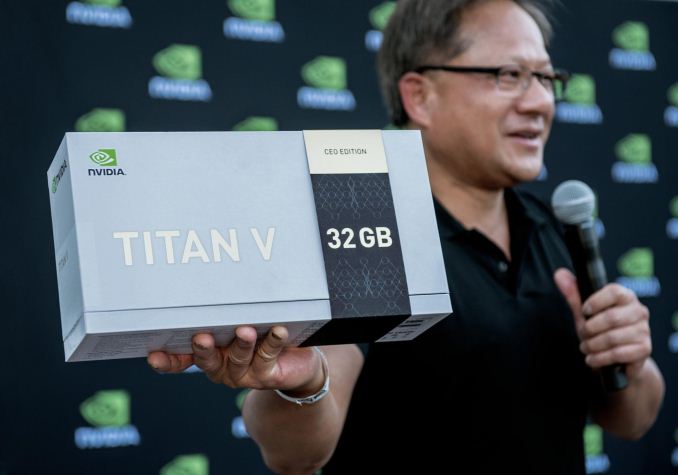
- NVIDIA is using new 8-Hi HBM2 memory stacks, as with their 32GB Tesla cards
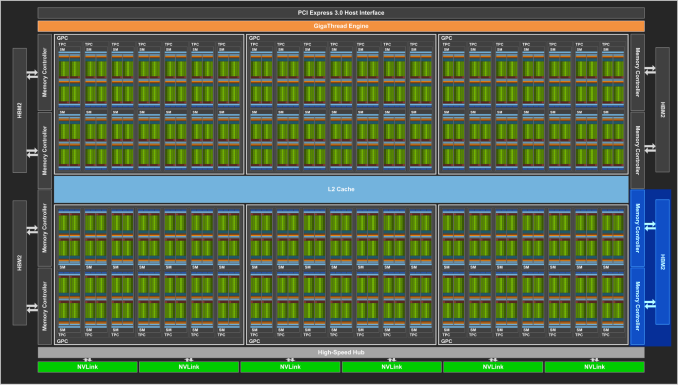
- Titan V CEO Edition has all 4 of its ROP/Memory Controller partitions enabled, up from 3 on the retail Titan V
| Time | Event | ||||||||||||||||||||||||||||||||||||||||||||||||||||||||||||||||||||||||||||||||||||||||||||||||||||||||||||||||||||||||||
| 7:30a | NVIDIA Unveils & Gives Away New Limited Edition 32GB Titan V "CEO Edition"
NVIDIA’s CEO Jensen Huang has over the years become increasingly known for his giveaway antics at AI conferences. In recent years the CEO has unveiled both the NVIDIA Titan X (Pascal) and the NVIDIA Titan V in this fashion. And now you can add one more reveal to this list, as last evening Huang gave out 20 units of a new Titan V SKU, the Titan V CEO Edition, at the Computer Vision and Pattern Recognition conference in Salt Lake City. According to NVIDIA, the aptly named SKU is apparently a “limited edition” product, and unlike past Huang reveals, NVIDIA has not sent out any announcements of a new product. So for the moment, this is not a retail product and is not immediately expected to become one. None the less, this is an unusual development as the new Titan V SKU is not simply a Titan V with additional memory, but rather has some notable configuration differences that set it apart from the regular Titan V.
Because this isn’t a retail SKU – at least not yet – NVIDIA hasn’t published official specifications for the card, so most of our table above is pending confirmation. However based solely on the 32GB VRAM capacity, we can accurately infer two very important points. It’s the latter point in particular that has some potentially significant ramifications for NVIDIA’s limited edition Titan V SKU. The standard Titan V itself is a salvage part with only 3 ROP/MC partitions enabled; consequently it only has 3/4ths of the memory bandwidth, pixel throughput, and L2 cache of its fully-enabled sibling. This has helped to differentiate the relatively cheap Titan V from the more expensive Tesla V100, with NVIDIA being able to leverage the memory capacity and memory bandwidth differences to ensure their flagship card remains attractive.
The end result is that the Titan V CEO Edition is not just a Titan V with more memory. In fact memory capacity aside, thanks to these changes there will almost certainly be meaningful (though not necessarily large) performance differences between it and the regular Titan V in any kind of memory bandwidth-bound scenario. And from I’ve heard from Titan V users over the past year, bandwidth-bound scenarios are more common than one might think, as the regular Titan V can fully saturate its memory bandwidth on compute alone and still come up short. Equally important, this means that at least on paper, there’s not much separating the new SKU from the 32GB Tesla V100 in terms of performance. As an added wrinkle, of the handful of specifications that NVIDIA’s blog post does cover, they list the new card as offering 125 TFLOPS of tensor core performance, whereas the retail Titan V is 110 TFLOPS. It’s not clear how NVIDIA gets this number, but importantly, it means that there may be further clockspeed or SM configuration changes that have yet to be revealed by NVIDIA. In any case, for the time being the only way to get this unexpected Titan V SKU is to get one of the 20 winners from NVIDIA’s giveaway to part with one. So the immediate impact to NVIDIA’s business – or to potential Titan buyers – is negligible. However given the fact that this is not just a Titan V with more memory, it does strike me as unusual that NVIDIA would produce a small batch of cards and then just stop, as someone just created a fair bit of extra work for NVIDIA driver & validation teams. So I wouldn’t at all be surprised if we see a similar SKU hit retail down the line, especially as the Titan V is the only remaining commercial GV100 product that doesn’t have a second, higher memory capacity configuration. | ||||||||||||||||||||||||||||||||||||||||||||||||||||||||||||||||||||||||||||||||||||||||||||||||||||||||||||||||||||||||||
| 8:00a | The GIGABYTE H370N WiFi Review: Mini-ITX with HDMI 2.0 and 802.11ac Wave 2 GIGABYTE has released a version of their most popular mini-ITX motherboards on the market with the H370N WiFi - a small form factor board designed to offer users a less expensive pathway into the latest Intel processors. The H370N WIFI includes most features of the Z370 chipset and a few extra bonus parts worth looking into. | ||||||||||||||||||||||||||||||||||||||||||||||||||||||||||||||||||||||||||||||||||||||||||||||||||||||||||||||||||||||||||
| 9:00a | Samsung Kicks Off Mass Production of 8 TB NF1 SSDs with PCIe 4 Interface
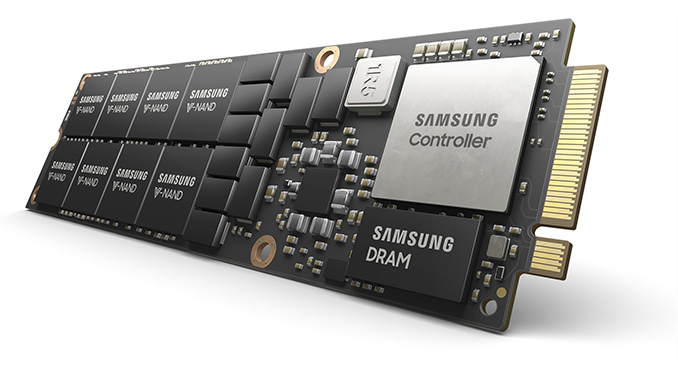
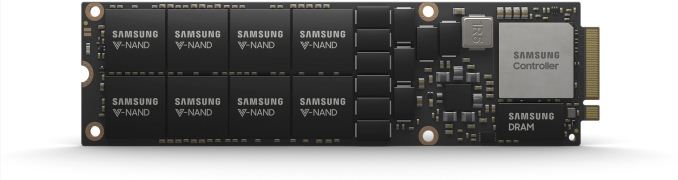
Samsung this week announced that it had started mass production of its new 8 TB NF1 SSDs. Samsung has been demonstrating prototype NF1 SSDs for slightly less than a year now, so it is not surprising that some of its customers are now ready to adopt them. The larger NF1 form factor allows for drives with double the capacity of M.2 SSDs, and they are aimed primarily at data-intensive analytics and virtualization applications that require higher performance and capacity than what M.2 can provide. Samsung’s NF1 SSDs are based on the company’s 512 GB packages comprising of 16 layers of 256 Gb TLC V-NAND memory devices, as well as the company’s proprietary controller accompanied by 12 GB of LPDDR4 memory. Prototype NF1 drives used Samsung’s Phoenix controllers already used for client SSDs, but the company yet has to confirm the chip it uses for its commercial NF1 SSDs. From performance point of view, the NF1 drives deliver sequential read speeds of 3100 MB/s and write speeds of 2000 MB/s. When it comes to random performance, the drives are capable of up to 500K read IOPS as well as 50K write IOPS. As for endurance, Samsung rates the drives for 1.3 DWPD.
Two interesting points that Samsung mentioned in its press release was the fact that its NF1 SSDs enabled an undisclosed maker of servers to install 72 of such drives in a 2U rack for a 576 TB capacity and the fact that the drives used a PCIe 4 interface. All previous public demonstrations of NF1 SSDs were carried out on 1U servers based on Intel’s Xeon processors and there is also an NF1-compatible server from AIC based on AMD’s EPYC CPU. Samsung’s customer who uses the NF1 drives will likely identify itself in the coming months. In the meantime, the only shipping processor supporting PCIe 4 is the IBM POWER9, whereas the only PCIe 4-supporting switches are available from Microsemi.
Samsung promises to start producing higher-capacity NF1 SSDs later this year. The company also says that JEDEC is expected to formally standardize the NF1 (aka NGSFF) spec this October. Related Reading: | ||||||||||||||||||||||||||||||||||||||||||||||||||||||||||||||||||||||||||||||||||||||||||||||||||||||||||||||||||||||||||
| 9:08a | Intel's CEO Brian Krzanich Resigns, CFO Robert Swan as Interim CEO This morning Intel released a formal press release stating that Brian Krzanich, now former CEO, had resigned. Current CFO Robert Swan has been named the interim CEO while the company looks for a replacement. As Intel does not have an immediate replacement, the resignation seems to be a snap decision relating to what Intel calls ‘a past consensual relationship with an Intel employee’ (believed to be a direct subordinate), and an expectation that employees adhere to a code of conduct regarding relationships. Sources have told CNBC that 'Krzanich violated a policy that said he could not have a relationship with an employee who directly reported to him. The relationship ended and took place "some time back," the people said. It's unclear with whom Krzanich had the relationship. The company was only recently made aware of the relationship, at which point they began probing and Krzanich was asked to resign'. Intel’s Board of Directors accepted Krzanich’s resignation and it was formally announced this morning. Krzanich has also departed the Board of Directors as well. Robert Swan, Intel’s Chief Financial Officer, will sit in the CEO seat effective immediately while a search has begun for a replacement for Krzanich. Swan’s credentials include nine years at eBay, and also time at Electronic Data Systems Corp, both positions held as CFO. Krzanich joined Intel in 1982 as a process engineer in one of the company's fabs in New Mexico, before coming manager of the plant, and rising through the system to COO in 2012 and CEO in May 2013. Under Krzanich’s leadership, Intel has diversified its product portfolio into new areas, such as FPGAs, IoT, Mobile, Wireless, autonomous vehicles, networking, 3D XPoint memory, and saw the company through successive generations of new processors, aiming to turn the company from a PC-centric business to a data-centric business (to use Intel's own terms). Key points along the way have been the drive for conflict-free materials, as well as diversity initiatives, with recent investment into other areas such as eSports. As a result, Intel recently posted its best quarterly financial reports ever, and the stock and value of the company continues to grow, leading to an overall 120% growth since 2013. Counter to this, Krzanich has also had to steer the company through the current issues surrounding their next generation 10nm process technology, which is was expected to be an integral part of the company portfolio last year, but is facing further delays. Also in recent months the announcements regarding Spectre and Meltdown vulnerabilities have also become public. Krzanich's page on Intel's website is no longer present. CNBC reports that in 2017, Krzanich's total compensation topped $21m. Intel states that ‘the board has a robust succession planning process in place and has begun a search for a permanent CEO, including both internal and external candidates’. Initial feelings from analysts suggest that internal candidates such as Dr Murthy Renduchintala might be in the running for the top spot. Intel's press release is as follows:
Source: Intel | ||||||||||||||||||||||||||||||||||||||||||||||||||||||||||||||||||||||||||||||||||||||||||||||||||||||||||||||||||||||||||
| 11:00a | MSI’s Four-Way M.2 PCIe Card: It Looks Like a GPU
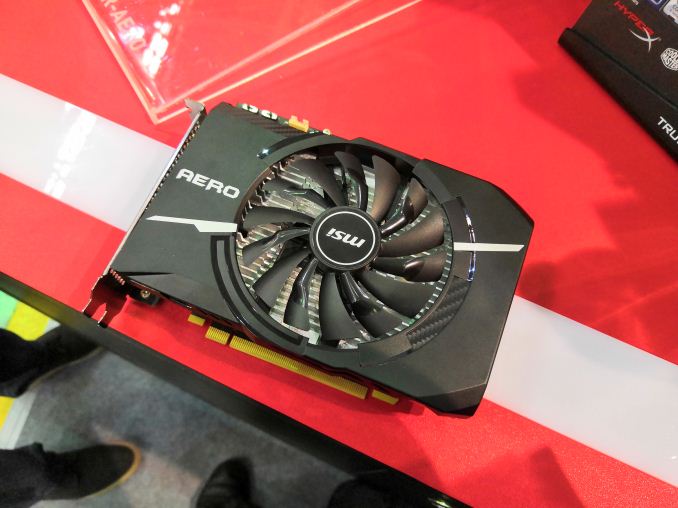
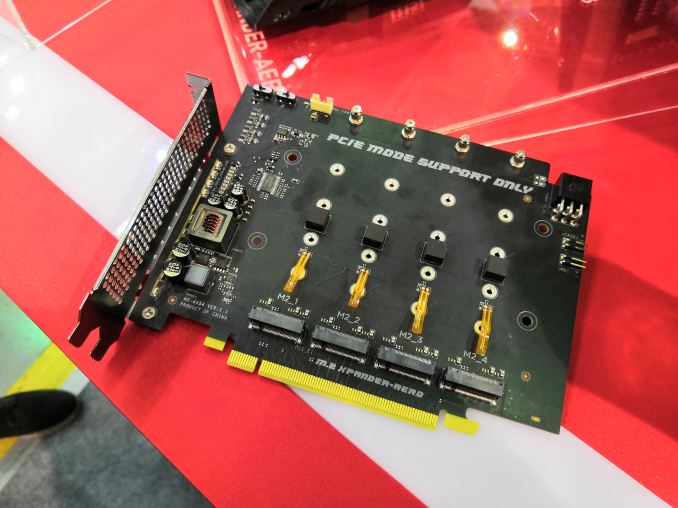
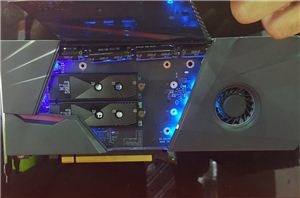
Having seen both ASUS and ASRock’s PCIe cards that support four M.2 NVMe drives each at a x4 connection at CES, and then GIGABYTE’s prototype card at Computex, there was only one company left to actually show one. MSI might be the fourth out of the four, but the design we saw goes above and beyond, perhaps to excess. If you ever wanted to crush an egg with a Buick, this is it.
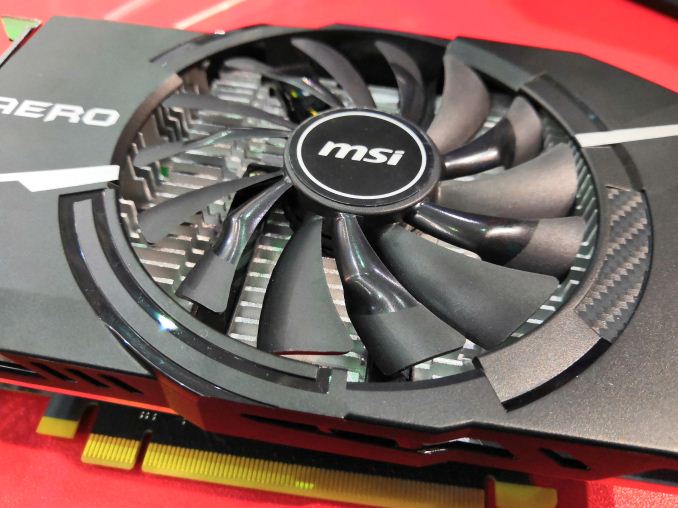
On the face of it, MSI’s variant looks very similar to the others. A simple PCIe 3.0 x16 card with four M.2 slots and some minor circuitry and everything follows the status quo. If you didn’t look closely enough, then the fact that the card had a double slot back plate might have passed you by, and it’s at that point that the MSI Aero fan comes into view. Yes, that’s right: MSI is pairing its four-way M.2 PCIe card with one of its styled GPU coolers.
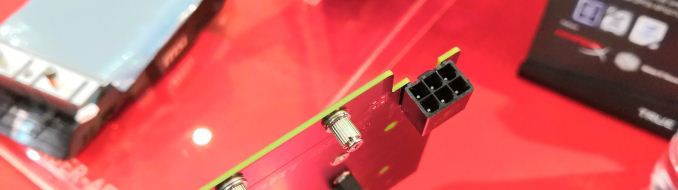
This means that if you have that specific workload that causes four high-end NVMe drives to start thermally throttling, MSI has you covered, and then some. This cooler should be easily capable of 50W+ of cooling, if not more, and the PCIe card even has a 6-pin connector in play, should 75W+ be needed.
MSI stated that they will be shipping this card in the same box as their new Threadripper X399 MEG Creation motherboard, which is part of the X399 motherboard refreshes for Threadripper 2. Beyond that, MSI expects to sell the card individually at retail at some point over the next few months.
| ||||||||||||||||||||||||||||||||||||||||||||||||||||||||||||||||||||||||||||||||||||||||||||||||||||||||||||||||||||||||||
| 1:00p | SilverStone Preps IP68 Water- and Dust- Proof Enclosure for 2.5-Inch Drives
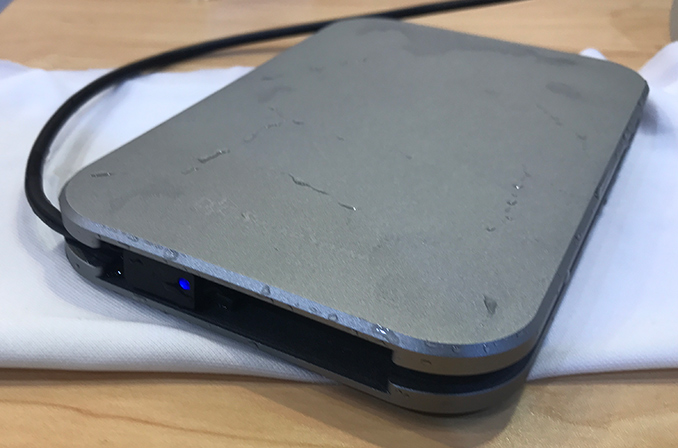
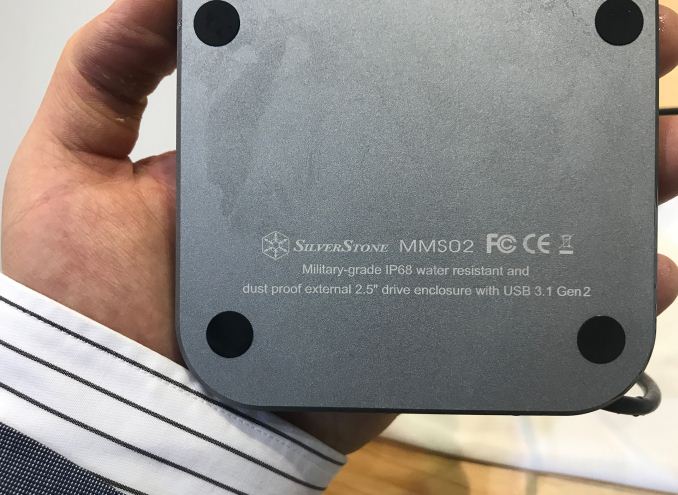
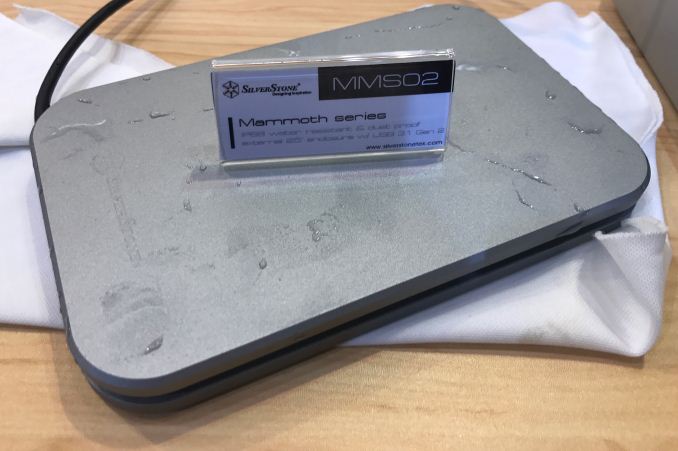
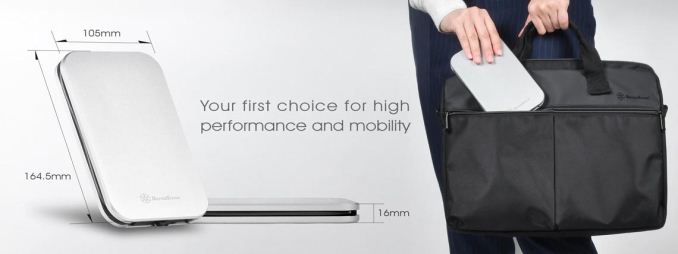
Rugged as well as water/dust-proof hardware usually comes in specially designed factory-sealed enclosures and is sold at a premium. SilverStone believes that if an enclosure is made right, it is good enough not only for factory assembly, but also for DIY builders. Interest towards rugged water and dust-proof storage hardware is rising these days as people tend to carry more external storage devices with them when travelling and realize value of their data. As an enclosure specialist, SilverStone is trying to satisfy demand for such mobile storage solutions by building its own rugged IP68-rated Mammoth MMS02 enclosure, which spots a USB 3.1 Gen 2 interface (10 Gbps) for 2.5-inch storage devices.
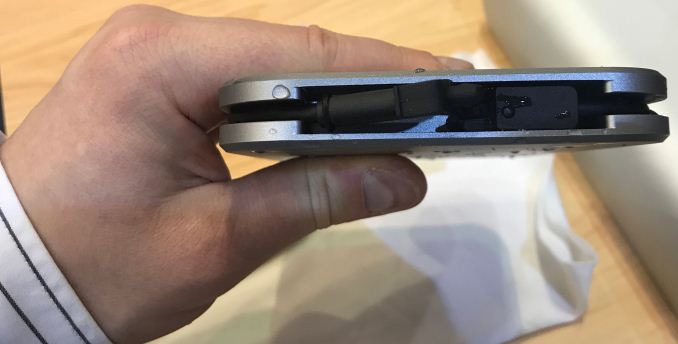
SilverStone’s MMS02 is bigger than your typical chassis for 2.5-inch SSDs/HDDs because the company wanted to ensure that it provides fine isolation against liquids and dust even when assembled by an end user. SilverStone’s label on the MMS02 says that the unit is “military-grade IP68 water resistant and dust proof”, but since IP ratings are applied by manufacturers after internal testing, the IP68 should technically be applied by the end user after assembly and testing. Meanwhile, the IP68 rating means that a unit is completely safeguarded against dust and is protected against submersion beyond one meter for one hour.
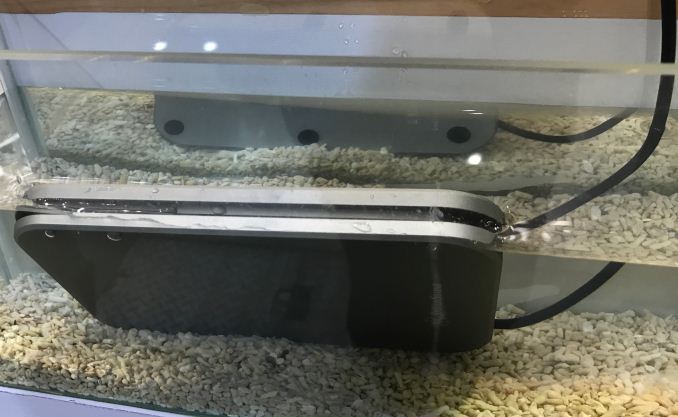
At Computex SilverStone demonstrated its Mammoth MMS02 by submerging it into a small tank of water, but keeping in mind that it had to survive there for a day, the showcase clearly validated that if assembled correctly, the MMS02 is hermetically sealed. The chassis is made of aluminum, so it is not subject to stains even if left wet for prolonged periods of time. Meanwhile, since aluminum is lighter than stainless steel, it helps mobility. However, it is also softer, so it is not as rugged against physical damage.
Unlike most enclosures for 2.5-inch storage devices, SilverStone’s Mammoth MMS02 comes with a USB 3.1 Gen 2 interface providing up to 10 Gbps of bandwidth (depending on the chip used, but it is certainly higher than 5 Gbps provided by regular chassis) and therefore is better suitable for fast SSDs.
SilverStone’s Mammoth MMS02 is already listed on the company’s website, so expect it to arrive to store shelves in the coming months. Pricing will depend on multiple factors, but since it is a unique IP68-graded enclosure, it will cost more than regular chassis for 2.5-inch devices.
| ||||||||||||||||||||||||||||||||||||||||||||||||||||||||||||||||||||||||||||||||||||||||||||||||||||||||||||||||||||||||||
| 3:00p | Shuttle Shows Off Coffee Lake-Powered Barebones Mini PCs
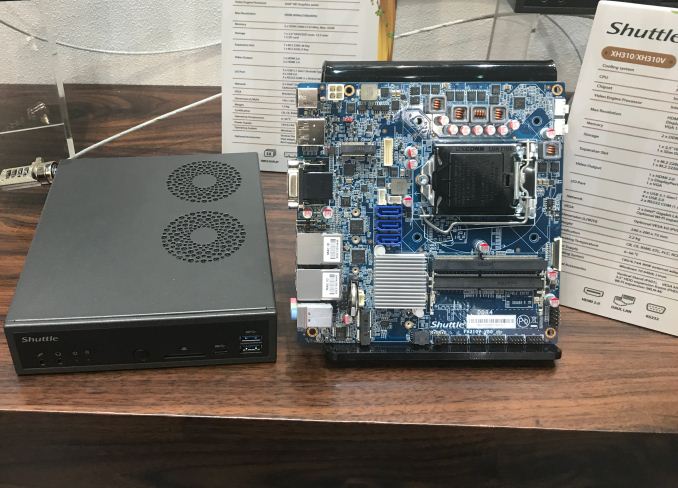
Shuttle is largely considered to be the father of the modern barebones mini PC market, as the company was the first to mass produce such products in the early 2000s. Nowadays Shuttle has numerous rivals and its positions are not as strong as they used to be. Meanwhile Shuttle is gradually recovering ground by developing competitive products aimed at performance-demanding users. At Computex, the company demonstrated a lineup of new barebones mini PCs for Intel’s Coffee Lake processors.
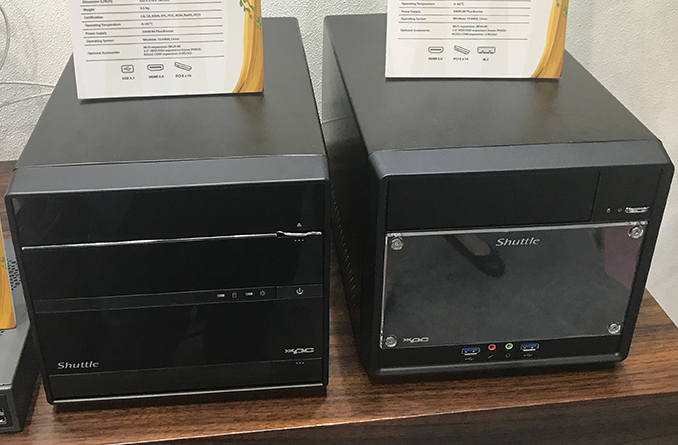
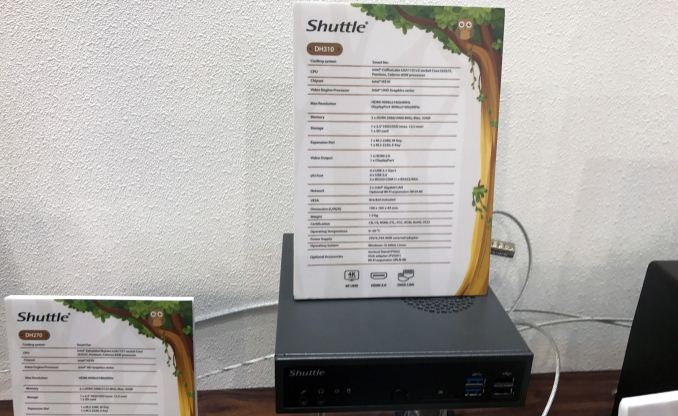
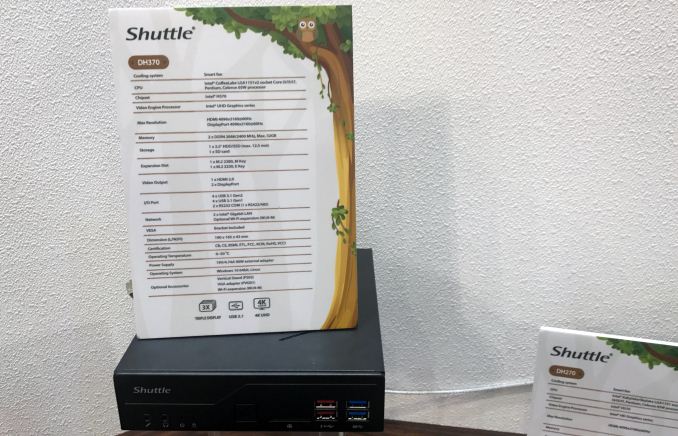
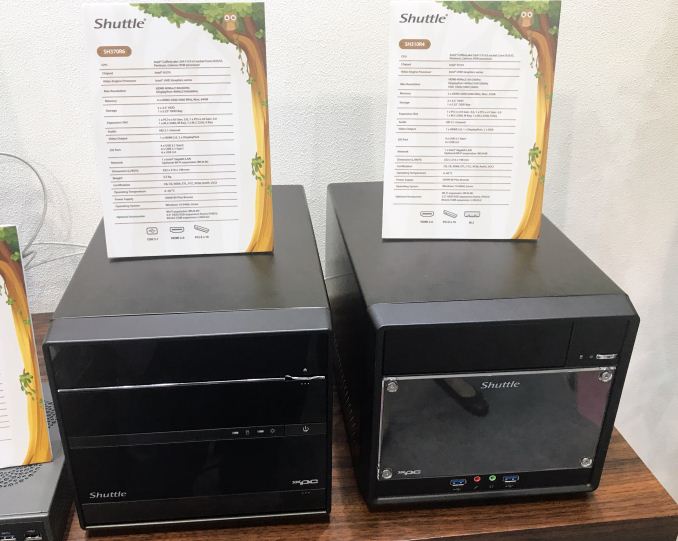
Shuttle’s lineup of Coffee Lake-powered PCs demonstrated at Computex consisted of four systems: two smaller and thinner computers that are designed for CPUs with mainstream TDP, as well as two more traditional XPC Cubes for PCs with expansion capabilities. The systems are based on Intel’s H310 and H370 chipsets, so they are not intended for enthusiasts who would like to overclock their CPUs. Though as SFF PCs are not generally designed for overclocking to begin with, using the H370 is hardly a downside for a compact system.
The ultra-compact XPC slim DH310 and DH370 barebones come in a chassis measuring 190×165×43 mm and support Intel’s 65W LGA1151 v2 processors, up to 32 GB of DDR4-2666 memory (two SO-DIMMs), an M.2-2280 SSD, and a 2.5-inch/12.5-mm SSD. Both systems rely on custom motherboards that cannot be upgraded, but which are key to how Shuttle is able to make the PCs so miniature. I/O capabilities of the systems are pretty regular: two GbE ports (driven by Intel controllers), an optional 802.11ac Wi-Fi, an SD card reader, four USB 3.1 Gen 1 headers, four USB 3.1 Gen 2 connectors, two DisplayPort 1.2, and one HDMI 2.0 output, and so on. As for power. the UCFF barebones are outfitted with 90 W PSUs.
Meanwhile The not-so-small Shuttle XPC cube SH310R4 and the SH370R6 measure 332×216×198 mm and support Intel’s 95W Coffee Lake processors. These machines can accommodate two or four DDR4-2666 DIMMs (32 or 64 GB in total), a PCIe 3.0 x16 graphics card, a 5.25-inch ODD, two 3.5-inch HDDs or SSDs, an M.2-2280 SSD, and a PCIe 3.0 x4 add-on card. As for I/O capabilities, these systems feature one GbE port, an optional M.2-2230 Wi-Fi module, 12 USB headers (USB 2.0, USB 3.0, USB 3.1), 5.1-channel audio, two DisplayPort 1.2, one HDMI 2.0 outputs, and so on. The Coffee Lake-based Shuttle XPC barebones come equipped with 300 W PSUs, so they can easily handle not only six-core processors but also higher-end graphics cards as well as fast power-hungry SSDs.
Shuttle’s upcoming XPC slim and XPC cube PCs featuring Intel’s 300-series chipsets are not yet listed on the company’s web site, so it is hard to say when they are set to hit the market. It is safe to assume that Shuttle will make its Coffee Lake-powered barebones available this year and will most likely try to start selling them during the back-to-school season, though this has yet to be confirmed.
| ||||||||||||||||||||||||||||||||||||||||||||||||||||||||||||||||||||||||||||||||||||||||||||||||||||||||||||||||||||||||||


| << Previous Day |
2018/06/21 [Calendar] |
Next Day >> |