[Most Recent Entries] [Calendar View]
Monday, July 2nd, 2018
- Philips Unveils 43-Inch 4K Gaming LCD with DisplayHDR 1000, DCI-P3, FreeSync
- BenQ Unveils EX3203R 32-inch Curved LCD with FreeSync 2, DCI-P3, & USB-C
- AOC Announces AGON AG322QC4 32-Inch Curved LCD with FreeSync 2 & DisplayHDR 400
- Samsung Announces First Freesync 2 Monitors: CHG70 & CHG90 - Quantum Dots, Up to 49”, 144 Hz, DCI-P3
- AMD Announces FreeSync 2: Easier & Lower Latency HDR Gaming
- Microsoft and AMD to Bring FreeSync 2 Support to Xbox One S and Xbox One X This Spring
- Philips Readies Curved Ultra-Wide 492P8 Display: 49”, 32:9, USB-C, Sub-$1100
- Philips Brilliance 328P6AU QHD Display Launched: USB-C Dock, 99% AdobeRGB, Color Calibrated
- Silverstone Launches NJ450-SXL Power Supply: Fanless SFX-L, 80Plus Platinum, 450W
- EVGA's Next-Gen Power Supply for SFX: Supernova 650GM
- Corsair Introduces New SF Series and Vengeance Series Power Supplies
- Going Big: EVGA's SuperNova 2000W G+ Power Supply
- ASUS ROG Goes For Power Supplies: ROG THor 1200W Platinum
- FSP Demonstrates Hydro PTM+ 1200 W: a Liquid-Cooled PSU with RGB LEDs
- CES 2016: Deepcool’s Gamer Storm brand Exhibits Water Cooling for a Power Supply
- FSP Dagger 500W and 600W SFX PSUs Come To Market: From $99 with 80Plus Gold
| Time | Event | ||||||||||||||||||||||||||||||||||||||||||||||||||||||||||||||||||||||||||||||||||||||||||||||||||||||||||||||||||||||||||||||||||||||||||||||||||||||||||||||||||||||||||||||||||||||
| 8:00a | The Kingston A1000 NVMe SSD Review: Phison E8 Revisited Kingston's first low-end NVMe SSD is the A1000, using Toshiba's latest 64-layer 3D TLC NAND and the Phison E8 controller. The price isn't quite down to SATA SSD levels, and the performance is nowhere near as impressive as high-end NVMe SSDs. The A1000 is in a tight spot where it offers a small step up from SATA performance for a not so small price premium. | ||||||||||||||||||||||||||||||||||||||||||||||||||||||||||||||||||||||||||||||||||||||||||||||||||||||||||||||||||||||||||||||||||||||||||||||||||||||||||||||||||||||||||||||||||||||
| 9:00a | MSI's New Threadripper 2 Motherboard on Steroids: X399 Creation
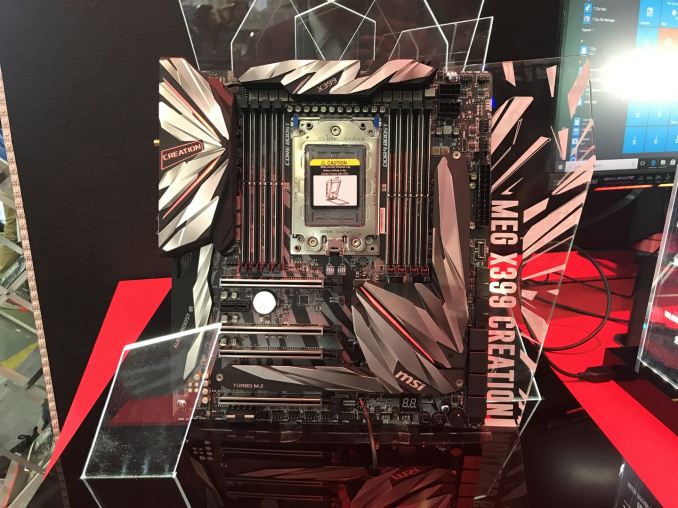
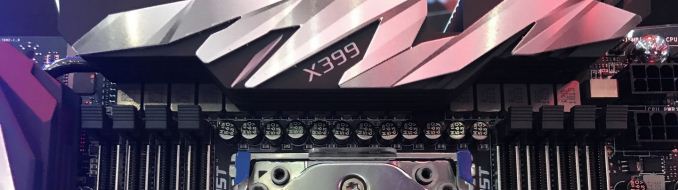
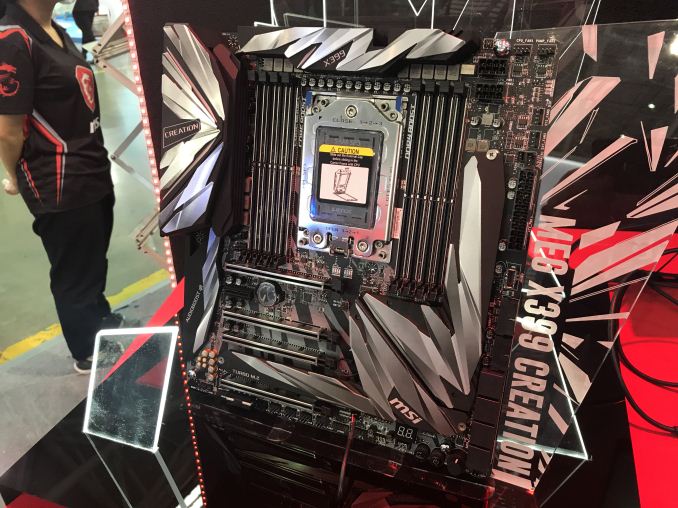
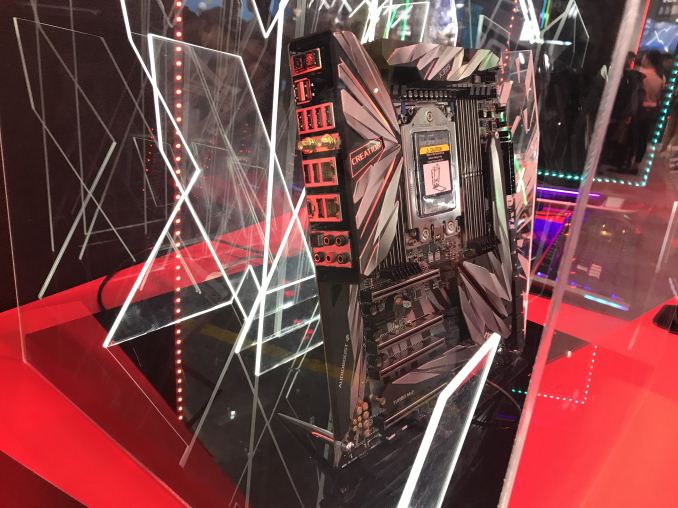
One of the most impressive motherboard designs coming out of Computex was MSI’s new X399 Creation motherboard. With Threadripper 2 around the corner, sporting support for up to 32 cores and 250W TDP, a couple of the motherboard manufacturers are building X399 ‘refresh’ motherboards that are optimized for the new processors, and this is MSI’s very impressive effort. The headline from this motherboard is the 19 power phases, arranged as 16 for the processor. This is likely a four-phase implementation with two doublers, but still comes in as eight more than the amount of phases for the CPU compared to any other Threadripper motherboard on the market. The effect of using more phases in this way means that the power multiplexing over time that occurs between phases gives each phase less time being the primary phase, as well as splitting the delivery with other segments, reducing the overall load and allowing for more headroom and/or better longevity. The power delivery is also sided with two 8-pin EPS 12V connectors.
The reason why most motherboard manufacturers only use eight is because the socket and memory design is bulky: ultimately there is only enough space for six phases, or eight if a smaller choke design is used. In order to fit sixteen, MSI has had to push the socket and memory down, forcing the manufacturer to choose to either lose one of the PCIe slots, or extend the board vertically (they seem to have done the latter). But this also gives the manufacturer a larger choice for phases and chokes with fewer space constraints, if a good enough power delivery heatsink is also applied. In these cases it sometimes requires more PCB layers to help with power/ground and routing, and MSI is using eight which is a high number for a consumer motherboard (usually 4-8, rarely 10), but not the highest (and server/workstation boards often use from 6 to 12 depending on the feature set).
On the board MSI is using a dual power delivery heatsink design, connecting the main power delivery heatsink by a heatpipe to a heatsink next to the rear panel that also helps to cool all the networking options. One thing to note is the styling on the heatsink and the board: it is very angled, and my feedback to MSI is that the board looks very busy. This is going to be MSI’s halo Threadripper 2 motherboard, and to be honest, the styling needs a good amount of work. For a Halo motherboard, MSI is supporting four PCIe slots from the processor, although without water cooling only 3-way is going to be used due to PCIe slot spacing. Between the slots is an M.2 PCIe 3.0 x4 slot, with another slot actually next to the DRAM slots, as the board is also extended in width as well (making it E-ATX). MSI will be bundling its Quad M.2 PCIe 3.0 x16 card when the board is sold, giving a total of six M.2 slots. MSI says that it supports seven M.2 total, although the last one does not seem to be obvious, so it could be on the rear of the motherboard. There is no U.2 slot, as it seems that the form factor is basically dead for the consumer market. For controllers, MSI has equipped the X399 Creation with dual Intel gigabit Ethernet ports, and an Intel 802.11ac Wi-Fi. For a halo motherboard I was expecting to see Aquantia’s 5G or 10G controller, however we do not get that here. There is no Thunderbolt either, but there are four USB 3.1 (10 Gbps) ports on the rear (one Type-C), and at least eight USB 3.0 ports, four or six of which on the back panel and two onboard headers for cases. There is also a Type-C onboard header, but it is not obvious if this is USB 3.0 or USB 3.1. Audio will be with an upgraded Realtek ALC1220 codec solution, with PCB separation between digital and analog signals and additional filter caps.
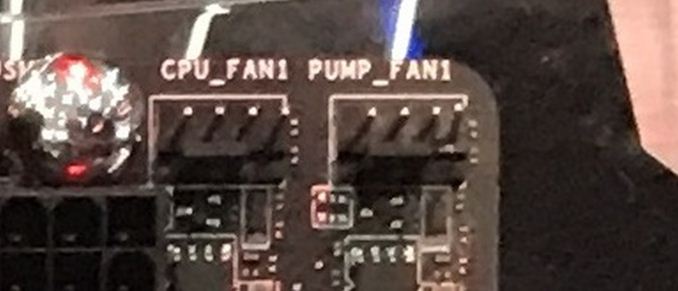
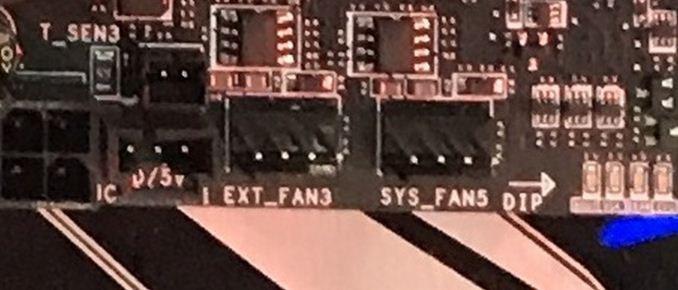
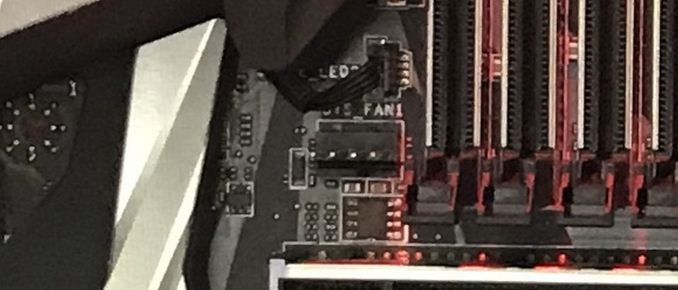
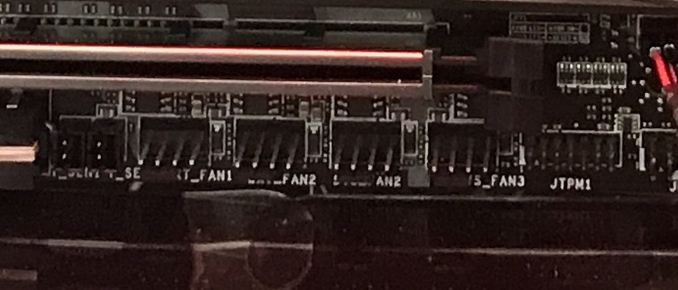
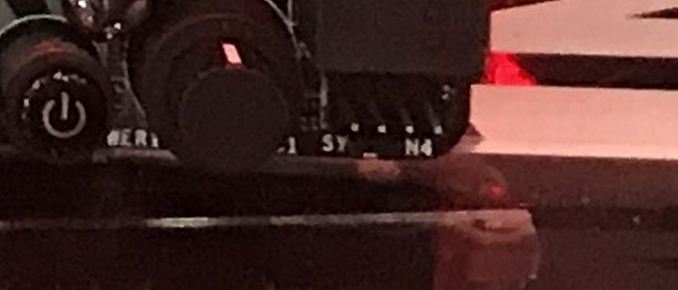
One of the features that MSI was keen to promote is that the board supports 10 fan headers in PWM mode but also three user-positioned thermal sensors that will be bundled in the box. This will allow users to define their thermal environment, with the software, how they need to.
We expect the MSI X399 Creation (or is it MSI MEG Creation?) to come to the market sometime soon, before the launch of Threadripper 2, or perhaps the same day as a launch partner with the processor. We expect a high price, although the lack of something like a 10G NIC will mean it won’t be super high. Gallery: MSI X399 Creation
     
| ||||||||||||||||||||||||||||||||||||||||||||||||||||||||||||||||||||||||||||||||||||||||||||||||||||||||||||||||||||||||||||||||||||||||||||||||||||||||||||||||||||||||||||||||||||||
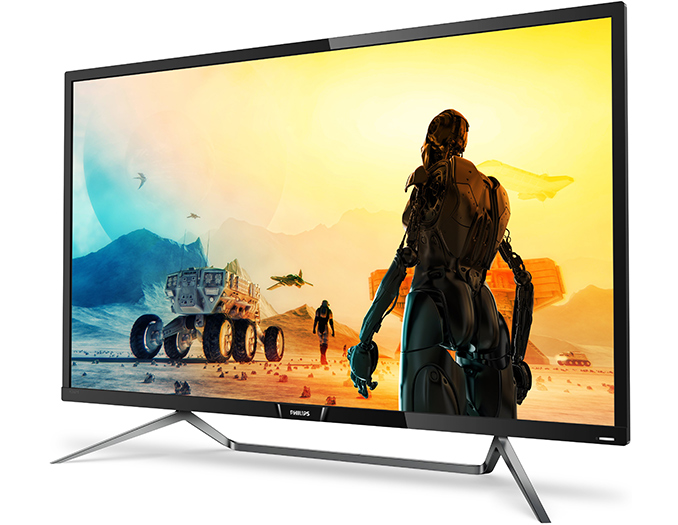
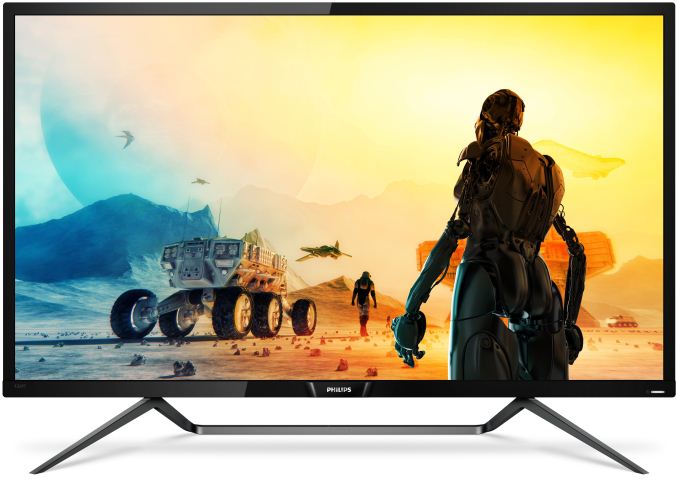
| 11:00a | Philips Momentum 43-Inch 4K DisplayHDR 1000 DCI-P3 Gaming LCD Now Available
Philips has started sales of its Momentum 436M6VBPAB ultra-high def gaming LCD, which happens to be one of the world’s first shipping monitors to obtain the DisplayHDR 1000 certification. Pricing of the product varies from country to country and from store to store, but in general its retail price is in line with a rather moderate sub-$1000 MSRP announced a couple of months ago. The Philips Momentum 43-Inch at a GlanceThe Philips Momentum 436M6VBPAB is based on a 43-inch 8-bit + FRC MVA panel featuring a 3840×2160 resolution, 720 – 1000 nits brightness (typical and peak), a 4000:1 contrast ratio, a 4 ms response time, 60 – 80 Hz refresh rate (optimal and overclocked), 178°/178° viewing angles, and so on (check out all the specs in the table below). A major selling point of the display it its Quantum Dot-enhanced backlighting that enables it to cover an above-average 97.6% of the DCI-P3 color gamut as well as 100% of the sRGB color range. The monitor is AMD FreeSync certified, however we haven't seen the FreeSync minimum refresh rate. So it's unclear whether this monitor supports a wide enough range for LFC. Though even if the LCD’s FreeSync ranges are far from what hardcore gamers might want, it is still good to have a dynamic refresh rate tech rather than not have it at all on a 43-inch gaming monitor. The 43-inch Philips Momentum was the industry’s first display to get the DisplayHDR 1000 logo from VESA (the second monitor to get the badge was the ASUS ROG Swift PG27UQ, which is now also shipping). This means that it complies with VESA’s rather strict requirements for brightness (600 nits full-screen long duration minimum, 1000 nits full-screen flash minimum) and black levels (corner maximum limit of 0.05 nits and tunnel maximum limit of 0.1 nits). The latter are particularly hard to get even on a VA panel, and all but requires local dimming. Philips hasn't published anything here, but from reports I've seen elsewhere, it sounds like they're using a 32 zone edge-lighting system.
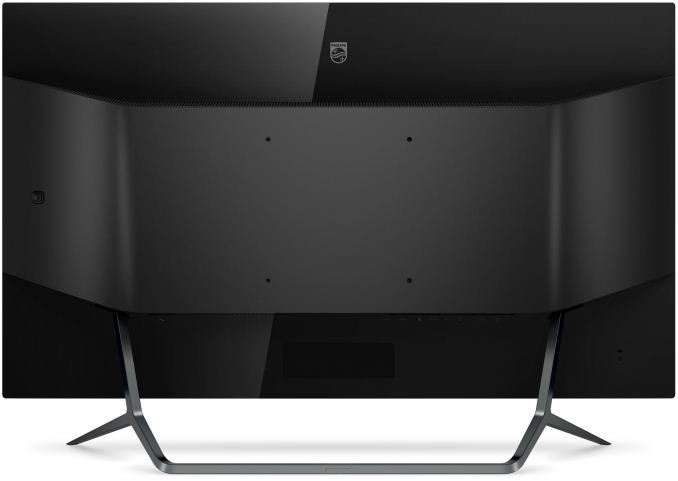
The Philips 436M6VBPAB has four display inputs: 1x DisplayPort 1.2, 1x Mini DisplayPort 1.2, 1x HDMI 2.0, and 1x USB Type-C that can be used both for display connectivity and as an upstream port for a USB 3.0 hub. As expected from an ultra-large LCD, the unit supports Picture-in-Picture and Picture-by-Picture capabilities from two sources. As for audio, the display has a 3.5-mm audio input, 3.5-mm audio output as well as two built-in 7-W speakers with the DTS Sound badge. Finally, the 43-incher comes with a remote controller that can be used to control the monitor as well as other devices connected using HDMI (e.g., media players, game consoles, etc.), which is particularly handy as the huge LCD will clearly be used for watching content. To read more about the Philips Momentum 43-inch monitor you can check out the original material covering the product as we move to the topic of the news story — availability and prices.
Pricing and AvailabilityThe Philips Momentum 436M6VBPAB is currently available from Amazon in the U.S., Germany, France, Spain, and Japan. Since the product is very special and probably is in high demand, its prices at Amazon in Europe seem to be somewhat inflated. Good news is that a number of stores in Austria, Germany, Poland, and Nordic countries are selling (or at least taking pre-orders) on the 43-inch gaming LCD at its MSPR of €799 or even below that.
Since the Philips 436M6VBPAB is sold not only by Amazon in the U.S., and a couple of large retail outets like MediaMarkt or Saturn in Europe, but can also be bought from smaller retailers, it is evident that the product is available worldwide at price points that do not really bite. Apparently, Philips (just like ASUS, MSI, Samsung, and NVIDIA) believes that demand for large gaming-grade displays is about to skyrocket and it has a product that offers premium features at a moderate price.
Related Reading: | ||||||||||||||||||||||||||||||||||||||||||||||||||||||||||||||||||||||||||||||||||||||||||||||||||||||||||||||||||||||||||||||||||||||||||||||||||||||||||||||||||||||||||||||||||||||
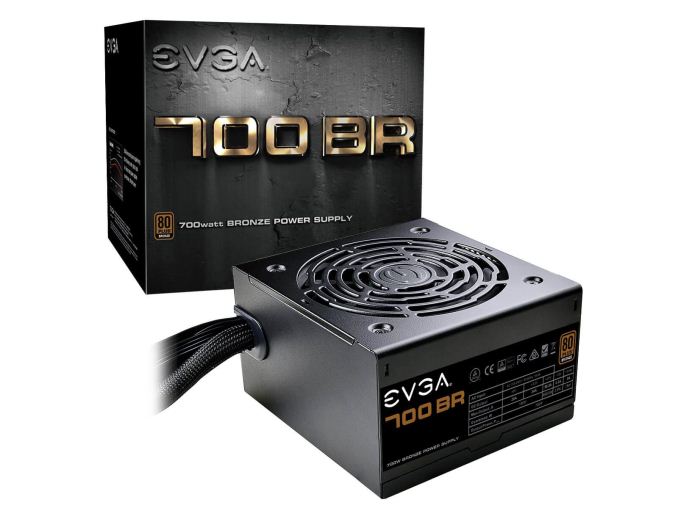
| 6:00p | EVGA Introduces BR Series Power Supplies: 80Plus Bronze, 450W-750W, $50+
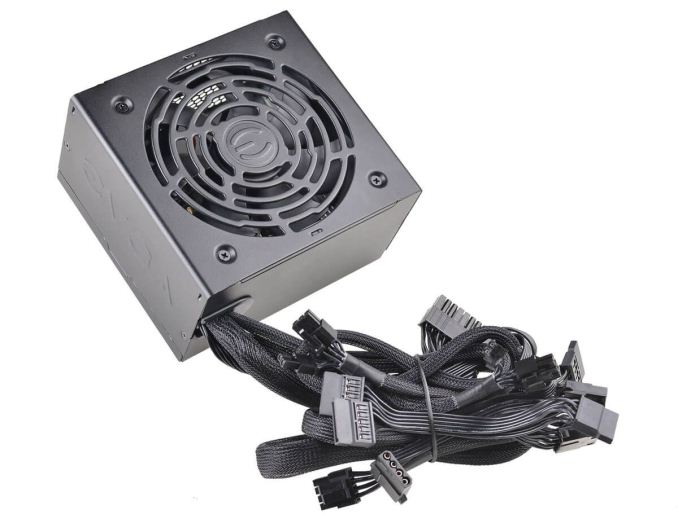
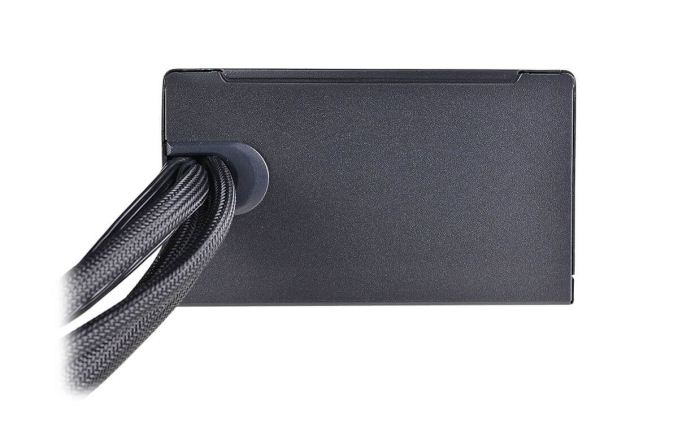
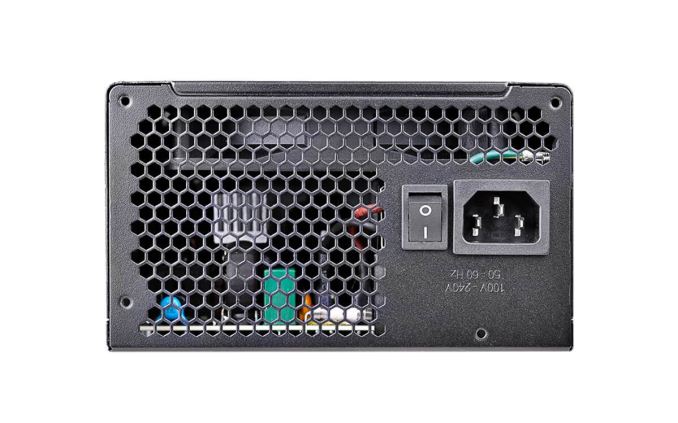
EVGA has introduced a new lineup of power supplies to add to their ever-growing list. Dubbed the BR series, EVGA says the new PSUs are built upon their existing bronze rated power supplies but have made improvements customers have asked for. The BR series is 80 PLUS certified, non-modular design using all black fully sleeved cables, 120mm sleeve bearing fan, better voltage stability on the 3.3V/5V rails, and is supported by a 3-Year warranty. The new lineup consists of four different SKUs, 450W, 500W, 600W, and 700W, which gives users plenty of options to purchase a properly sized unit.
The BR series power supplies come in the usual ATX form factor with a familiar black chassis. The devices' cables are hardwired as opposed to modular which saves the time of plugging in any cables but does trade off that minor convenience with the where to put all the cables. Keeping the power supply cool is a 120mm sleeve bearing fan that EVGA says results in quieter operation and longer lifespan. According to their documentation, the fan is always on with an idle rating of less than 20dBA which begins to ramp up around 50% loads for all of the SKUs (slopes will vary depending on model).
Improvements on the 3.3C and 5V rails come from a DC to DC converter with less signal noise which they say will help with stability on those rails. There is a long list of internal protections including OVP (Over Voltage), UVP (Under Voltage), OCP (Over Current), OPP (Over Power), SCP (Short Circuit), and OTP (Over Temperature) which should keep the hardware attached safe. EVGA offers a 3-year warranty on the BR series power supplies, notably less than their higher-tier G3 series, but still typical for more entry-level power supplies. The combined output value is rated at 30C which is a bit less than the 40C typically used, but these should still fare well in most environments. The BR series power supplies are available now at Newegg, Amazon, or the EVGA website. Pricing on the units are from $49.99 (450W), $54.99 (500W), $64.99 (600W), and $74.99 (700W). Amazon is currently offering two extra years, for a total of five, on the warranty if the unit is purchased and registered from now until 12/31/2018.
Related Reading: | ||||||||||||||||||||||||||||||||||||||||||||||||||||||||||||||||||||||||||||||||||||||||||||||||||||||||||||||||||||||||||||||||||||||||||||||||||||||||||||||||||||||||||||||||||||||


| << Previous Day |
2018/07/02 [Calendar] |
Next Day >> |