[Most Recent Entries] [Calendar View]
Thursday, August 2nd, 2018
- Toshiba’s 14 TB HDDs Now Available from Supermicro
- Toshiba Announces 14 TB PMR MG07ACA HDD: 9 Platters, Helium-Filled, 260 MB/s
- Toshiba Samples AL15SE HDDs: Up to 2.4 TB, 10K RPM, SAS
- Toshiba Launches S300 and V300 HDDs for Surveillance and Video Applications
- Toshiba Launches MN06ACA 10 TB HDD for NAS: 7 Platters, Up to 249 MB/s
- Logitech Acquires ASTRO Gaming, Strengthens Portfolio of Headsets for Consoles
- Logitech Acquires Saitek Brand and Product Lines, Expands Its Sim Controllers Biz
- Logitech 2014 Switzerland Tech Day: The Hills Are Alive With The Sound Of Romer G
- Samsung Foundry Roadmap: EUV-Based 7LPP for 2018, 3 nm Incoming
- Arm and Samsung Extend Artisan POP IP Collaboration to 7LPP and 5LPE Nodes
- The Future of Silicon: An Exclusive Interview with Dr. Gary Patton, CTO of GlobalFoundries
- EUV Lithography Makes Good Progress, Still Not Ready for Prime Time
- GlobalFoundries Gives 7 nm Capacity Update, Mulls Skipping 5 nm
- In Surround mode, the G-SYNC link in the NVIDIA Control Panel is missing.
- 1x3 Surround configuration cannot be set from the NVIDIA Control Panel.
- For GTX 1080 SLI configurations with G-Sync HDR, severe color corruption appears in World of Warcraft: Legion after launching with the Windows HDR setting enabled.
- Ghosting occurs in Dark Souls Remastered when using in-game temporal anti-aliasing on SLI configurations
- NVIDIA Surround hot keys do not work.
- NVIDIA Freestyle in GeForce Experience does not work with Dead by Daylight
- White dots may appear while Gamestreaming on overclocked GTX 1080 Ti
- Resource creation leak occurs in the driver when running Unreal Engine 4 games
- Graphical effects are missing in Wolfenstein II: The New Colossus
- Applications don’t run in IFlip when using the native resolution, preventing G-Sync from triggering
- Black textures appear in Wolfenstein II: The New Colossus
- On GTX 1080, Dolby Vision no longer works after updating LG TV firmware to 4.70.x.
- Windowed G-Sync mode may stutter after upgrading to Windows 10 Spring Creators Update
- Relating to DirectX NVCamera, performance drop occurs after enabling Freestyle for Euro Truck Simulator 2
- When playing a game in full-screen mode and playing a video from the Netflix Edge Browser, blue-screen crash occurs after multiple [Alt+Tab] switching between the two. The issue does not occur when playing Netflix video in Chrome
- Cursor shows brief corruption when hovering on certain links in Firefox and Steam
- Random DPC watchdog violation errors occur when using multiple GPUs on motherboards with PLX chips
- As a workaround, enable MSI (message-signaled interrupts) mode with a third-party utility
- Using power monitoring in GPU monitor tools causes micro stutter
| Time | Event | |||||||||||||||||||||||||||||||||||||||||||||||||||||||||||||||||||||||||||||||||||||||||||||||||||||||||||||||||
| 8:00a | Toshiba Unveils MN07 Series HDDs Featuring 12 TB & 14 TB Capacity
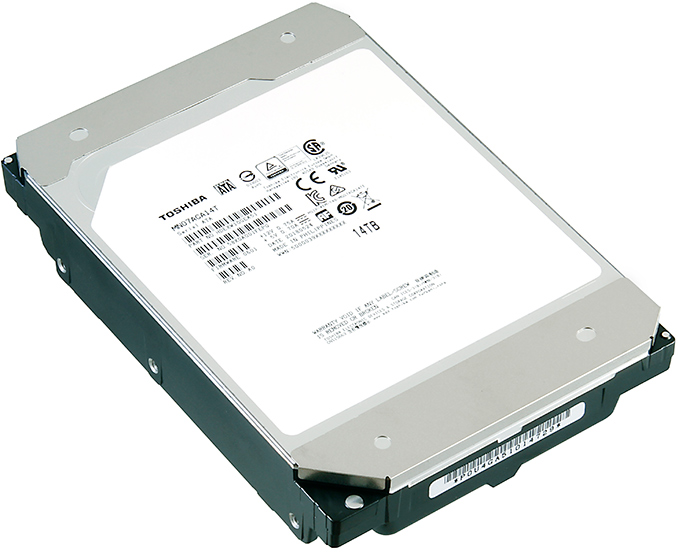
Toshiba on Tuesday announced its new hard drives featuring 12 TB and 14 TB capacity aimed at NAS and desktop applications. The HDDs are currently sampling to Toshiba’s partners and will hit the market a bit later this year. Toshiba’a MN07-series hard drives resemble the company's MG07 enterprise-grade helium-filled HDDs introduced late last year. Both MN07 and MG07 hard drives are based on eight or nine PMR platters from Showa Denko with ~1.56 TB capacity per platter. The new hard drives feature a 7200 RPM spindle speed, a 256 MB cache buffer, and use a SATA 6 Gbps interface. Like other HDDs for NAS applications, Toshiba’s MN07 come with NAS-optimized firmware and support an RV compensation technology to guarantee predictable performance in multi-drive environments. Meanwhile, unlike the enterprise MG07-series, the MN-series HDDs are rated for 180 TB per year workloads and 1 million-hour MTTF, but they do not offer various features that guarantee enterprise-grade durability and reliability (e.g., top and bottom attached motors, etc.). Toshiba said that it started sampling of its MN07-series 12 TB and 14 TB HDDs on Tuesday. The company did not name companies that will use it for their NAS offerings, but it is natural to expect various leading NAS makers to use the new drives in the coming months. One important thing to note about NAS HDDs in general is that they tend to show up in retail eventually, so, it is highly likely that Toshiba’s MN07-series hard drives will be available for purchase from stores like Amazon later this year. Related Reading | |||||||||||||||||||||||||||||||||||||||||||||||||||||||||||||||||||||||||||||||||||||||||||||||||||||||||||||||||
| 9:00a | The ASRock X470 Taichi Ultimate Motherboard Review: Aquantia 10GbE on Ryzen With the new X470 motherboard refresh to compliment the release of the Ryzen 2000-series of processors, motherboard vendors have had the opportunity to improve upon their previous X370 models. ASRock has released a new flagship AM4 socketed board without all of the gaming marketing and hype, with the focus this time around being realigned towards the enthusiast. The X470 Taichi Ultimate sits at the top of ASRock's AM4 motherboard stack as it aims to improve upon their existing X370 Taichi with features such as 10-gigabit networking. | |||||||||||||||||||||||||||||||||||||||||||||||||||||||||||||||||||||||||||||||||||||||||||||||||||||||||||||||||
| 10:00a | ECS Announces LIVA Z2 and LIVA Z2V Mini PCs
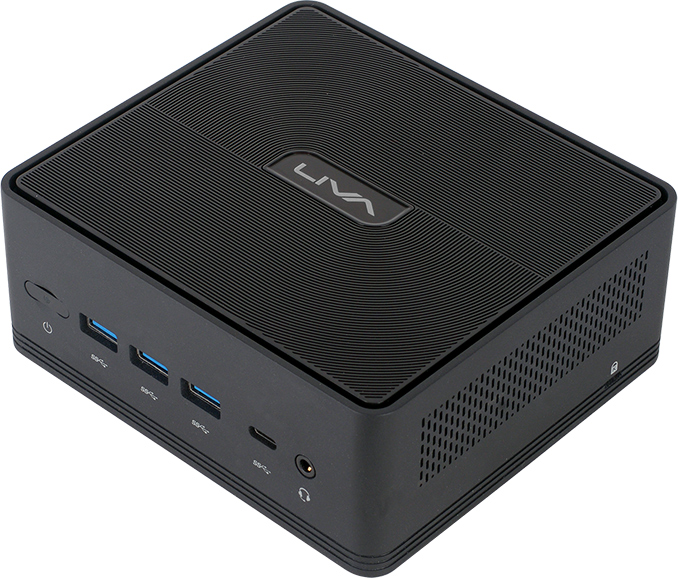
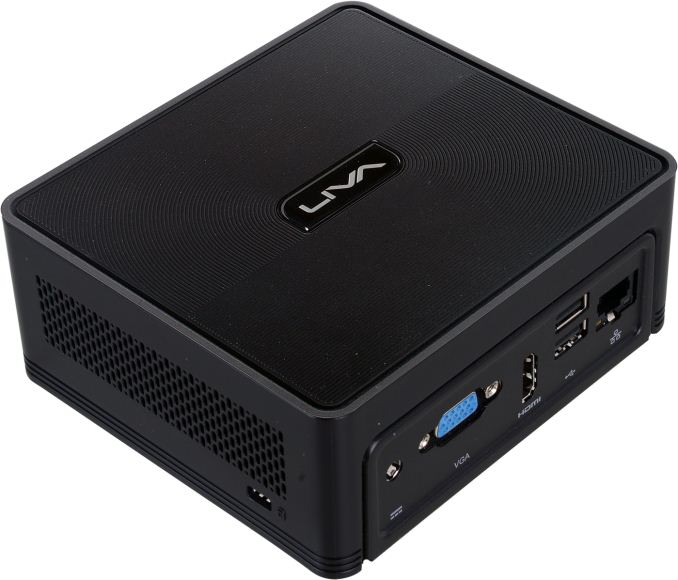
ECS this week formally announced its Gemini Lake-based ultra-compact form-factor (UCFF) desktop PCs that were first demonstrated in January. The new systems are aimed at office and digital signage applications, they also feature two GbE connectors, a requirement of ECS’ enterprise customers. The ECS LIVA Z2 and Z2V computers are based on Intel’s Gemini Lake SoCs with two or four cores as well as UHD 600-series integrated graphics. The new LIVA Z2-series UCFF PCs offer higher general-purpose performance compared to their LIVA Z predecessors because of the Goldmont Plus CPU microarchitecture. Furthermore, the new systems also feature an improved media processing engine with support for 10-bit HEVC and 10-bit VP9 video. Meanwhile, only the LIVA Z2 supports a native HDMI 2.0 / HDCP 2.2 display output capable of 4Kp60 resolution as well as hardware-accelerated Ultra HD media playback. The LIVA Z2V only has an HDMI 1.4 as well as a D-Sub display output, which are good enough for mainstream Full HD displays.
When it comes to memory and storage, the LIVA Z2 systems support DDR3L DIMMs with a 32/64 GB eMMC module for built-in storage, and have a 2.5-inch bay for SSDs/HDDs. As for general connectivity, the PCs feature an M.2-2230 slot for a Wi-Fi module, four USB 3.1 Gen 1 ports (three Type-A connectors, one Type-C header), and a 3.5-mm audio jack. Being very compact and measuring 132 mm × 118 mm × 56.4 mm, the ECS LIVA Z2 PCs use only 6 W of power supplied by an external PSU.
The ECS LIVA Z2 equipped with 4 GB of RAM and 32 GB of solid-state storage will cost starting from $240, the manufacturer announced earlier this year. Other configurations will be priced differently. Related Reading | |||||||||||||||||||||||||||||||||||||||||||||||||||||||||||||||||||||||||||||||||||||||||||||||||||||||||||||||||
| 11:00a | Logitech Acquires Blue Microphones
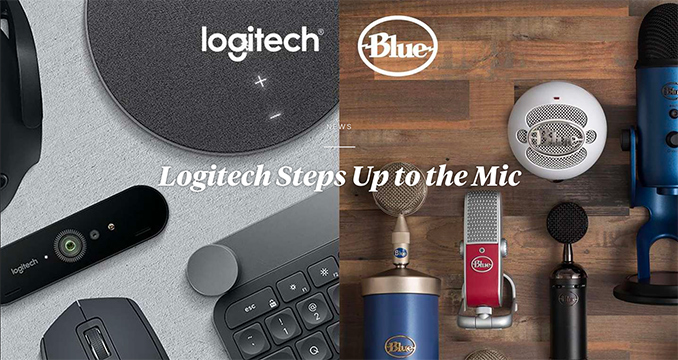
Logitech this week continued its spree of high-profile takeovers by announcing plans to acquire Blue Microphones, a maker of microphones for professional musicians and gamers. The two companies hope that with Logitech’s resources they will be able to quickly grow the Blue Microphones business, which will become an integral part of Logitech’s strategy. In the last ten years Logitech acquired five companies from audio and gaming industries. In the last couple of years, the company accelerated its takeover efforts by buying the Saitek brand from Mad Catz as well as acquiring Astro Gaming. Buying a microphone specialist makes sense for Logitech as Blue Microphones will complement its audio assets that already include speakers and headsets. Furthermore, Blue has a very strong brand because of the fact that its hardware are used by many famous artists, including Bob Dylan and Sting. Logitech will pay $117 million in cash for Blue Microphones and expects the deal to close in August. At present the companies say that Logitech will maintain Blue’s product lineups, but actual business decisions obviously remain to be seen. Related Reading: Sources: Logitech, Blue Microphones | |||||||||||||||||||||||||||||||||||||||||||||||||||||||||||||||||||||||||||||||||||||||||||||||||||||||||||||||||
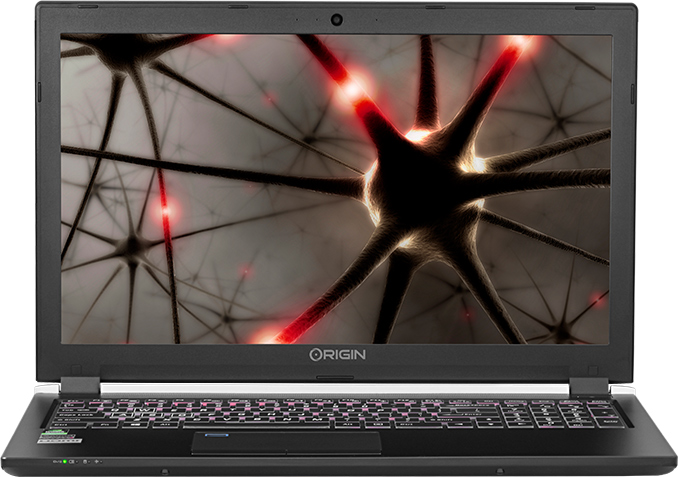
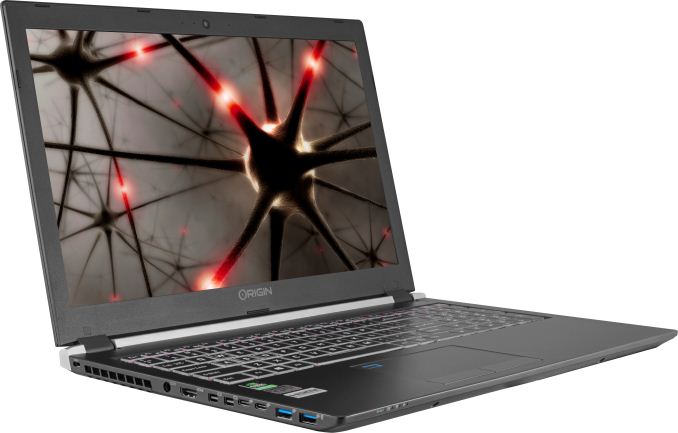
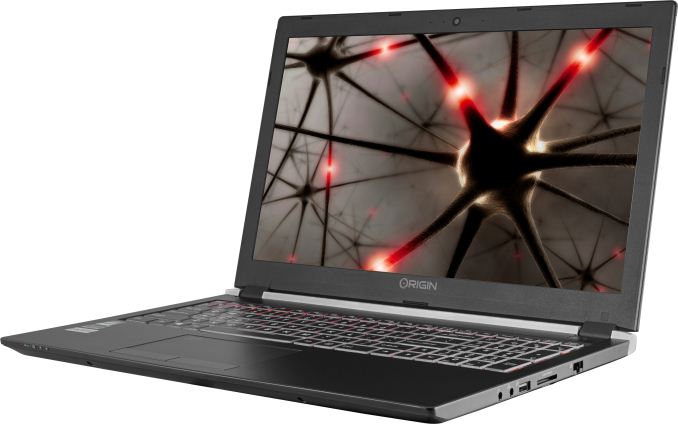
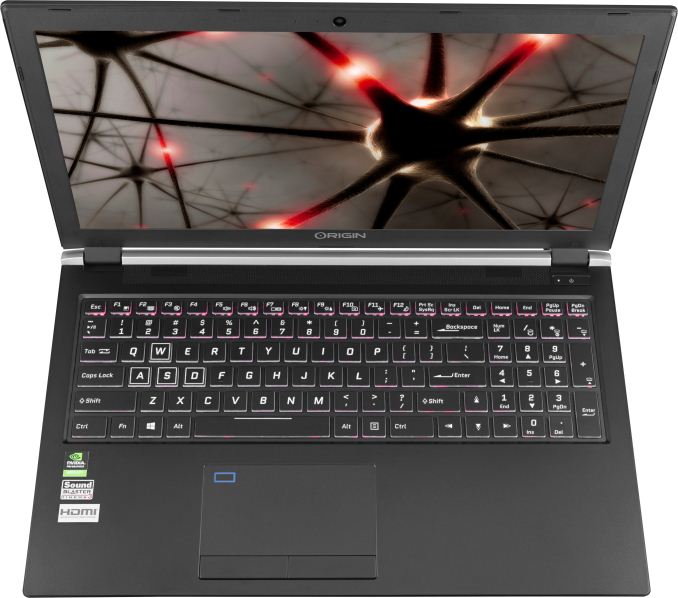
| 12:00p | Origin PC Announces NT-15 Quadro Workstation: Core i7 and Max-Q
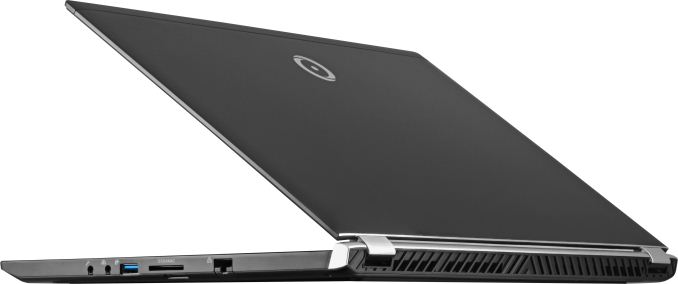
Origin PC on Wednesday introduced its first mobile workstation featuring a professional NVIDIA Quadro P5000 GPU. The NT-15 Quadro uses Intel’s 7th Generation Core i7 CPU and comes with a 15.6-inch 4K Ultra-HD display to satisfy demands of graphics professionals. As for portability, the system can hardly be called thin and light because the manufacturer needed to ensure high performance first, but it is also not heavy nor bulky. The Origin PC NT-15 Quadro is powered by Intel’s quad-core Core i7-7700HQ CPU (and therefore the Kaby Lake plarform) as well as NVIDIA’s Quadro P4000 discrete GPU (GP104GL) featuring the Max-Q design. The system can accommodate up to 32 GB of DDR4 memory, one M.2/NVMe SSD featuring up to 2 TB capacity, and one 2.5-inch/15-mm drive.
As for connectivity, it is fairly standard for a mobile workstation: an 802.11ac Wi-Fi + Bluetooth controller, a 1 GbE connector, four USB Type-A ports (three USB 3.1, one USB 2.0), two USB 3.1 Type-C headers, three display outputs, a 6-in-1 SD/MMC card reader, a Windows Hello-supporting webcam, a fingerprint scanner, and 3.5-mm audio connectors.
Unfortunately, Origin PC does not disclose battery life of its NT-15 Quadro workstation, but considering the fact that this is a desktop replacement machine with a high-end dGPU, it will work connected to a power outlet most of the time. Meanwhile, the PC features a 0.73-inch (1.85 cm) z-height and weighs 4.36 pounds (1.977 kilograms), so the system should be easy to transport.
Origin PC has offered high-performance laptops featuring advanced discrete GPUs throughout its history, but the NT-15 Quadro appears to be the company’s first recent workstation featuring a professional GPU based on the Pascal architecture. Despite being aimed at professionals, the NT-15 Quadro can still feature a custom paint job or laser etching for personalization purposes, a unique feature for workstations.
Origin PC did not touch upon pricing of its NT-15 Quadro workstation, but it is obvious that mobile workstations equipped with a professional-grade GPU are generally rather expensive. Furthermore, machines featuring 32 GB of RAM and terabytes of NAND flash storage also tend to cost a lot. Related Reading: | |||||||||||||||||||||||||||||||||||||||||||||||||||||||||||||||||||||||||||||||||||||||||||||||||||||||||||||||||
| 1:00p | ASML Ships Twinscan NXT:2000i Scanner for 7nm and 5nm DUV
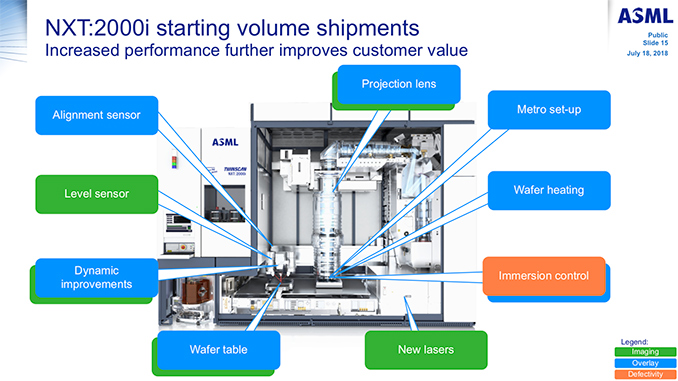
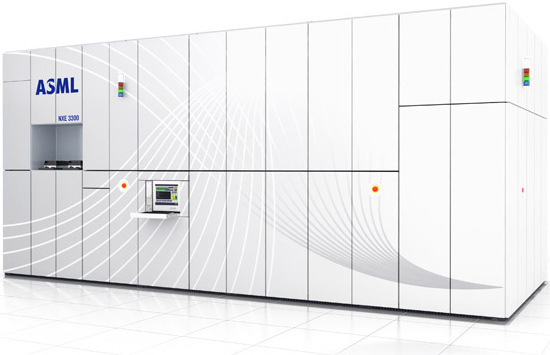
ASML, the company known for producing equipment for the manufacture of processors and semiconductors at foundries, has started to ship its new Twinscan NXT:2000i DUV (Deep Ultra Violet) scanner that matches overlay performance of the company’s Twinscan NXE:3400B EUV (Extreme Ultra Violet) scanner. The new machine will be used to make chips using 5 nm and 7 nm nodes and will be required by makers of semiconductors who will have tighter overlay requirements and will have to mix-and-match overlay capabilities between different types of step-and-scan systems. When leading manufacturers of chips start to use Twinscan NXE EUV lithography scanners for their 7 nm and more advanced process technologies in the coming quarters/years for some of the metal layers for the processors, DUV equipment is still required for other layers (for example, GlobalFoundries first version of 7nm is DUV only). Different makers of semiconductors will have their own specific requirements for their 7 nm and 5 nm process technologies particularly when it comes to on-product as well as mix-and-match overlay capabilities.
Being a producer of step-and-scan systems, ASML develops equipment with generic requirements in mind: for a 7 nm node there is an on-product overlay requirement of 3.5 nm, so scanners have to support an overlay budget of 2.5 nm. Such requirements are achievable on ASML’s Twinscan NXE:3350B as well as the NXT:1980D tools. For 5 nm nodes overlay requirements will be tighter: ASML says that it is working with an on-product overlay requirement of 2.4 nm, which means that its scanners will have to feature an overlay budget of 1.9 nm. This numbers have been achieved by the NXE:3400B as well as the NXT:2000i machines. Not all makers will need to match overlay accuracy across different step-and-scan systems, but those who will are going to need the new Twinscan NXT:2000i DUV scanners to work with the NXE:3400B EUV tools. The new systems do not necessarily offer a higher wafer throughput when compared to the NXT:1980D, but feature “several hardware innovations that will enable on-product overlay of 2.5 nm in mix-and-match use with EUV for the 7 and 5 nanometer logic nodes.” ASML started volume shipments of its new Twinscan NXT:2000i step-and-scan systems last quarter and will ramp up production of the new tools in the coming years. Traditionally, the company does not disclose MSRPs of its equipment as final prices depend on multiple factors, including volumes. Related Reading | |||||||||||||||||||||||||||||||||||||||||||||||||||||||||||||||||||||||||||||||||||||||||||||||||||||||||||||||||
| 2:40p | Apple’s Market Cap Hits $1 Trillion
A day after posting strong results for the third quarter of fiscal 2018, Apple has become the world’s first publicly traded company with a market capitalization of over $1 trillion. At press time Apple’s stock cost $206.90 and its market capitalization was $1.017 trillion. Meanwhile earlier this morning Apple’s stock hit $207.50, so it is likely that the company will stay around a $1 trillion market cap mark in the coming hours or days before either heading north or south. Apple’s best Q3 results ever were driven by strong sales of iPhones as well as a massive increase in revenue it gets for its services. In fact, while the company’s iPhone earnings for the quarter grew 20% year-over-year because of higher smartphone ASPs, Apple’s services revenue grew 31% year-over-year as the company has been expanding its offerings for some time now. At the same time, sales of iPad tablets and Mac PCs dropped 5% year-over-year. Originally founded as a maker of computers in 1976, Apple expanded to dozens of product categories in the 1990s, many of which were unsuccessful. After Steve Jobs returned to Apple as the CEO in 1997, he axed most of the product lines to focus on PCs. Starting from 2001, the company started to expand its family of products once again with the iPod music player that was followed by the Apple TV in 2006 (called iTV originally), the iPhone in 2007, the iPad in 2010, the Apple Watch in 2015, and the HomePod in 2017. In addition, the company acquired Beats Electronics in 2014. It is evident that the company branched into three new categories of products in the last eight years and while sales of Apple Watch and Beats products are increasing, Apple’s corporate revenues are growing mainly because of higher iPhone selling prices, such as the iPhone X at $999. While Apple is without any doubts ahead of other US-based high-tech companies in terms of market cap, it is not the world’s most expensive firm per se. Depending on who is doing calculations, the valuation of Saudi Aramco state-controlled oil and gas company is between $1.2 trillion and $1.5 trillion. Therefore, Apple still needs to grow further in a bid to become the world’s most valuable company in history. Related Reading | |||||||||||||||||||||||||||||||||||||||||||||||||||||||||||||||||||||||||||||||||||||||||||||||||||||||||||||||||
| 3:00p | HGST Launches Ultrastar DC SS530 SSDs: 3D TLC NAND, 15.36 TB, SAS 12 Gbps
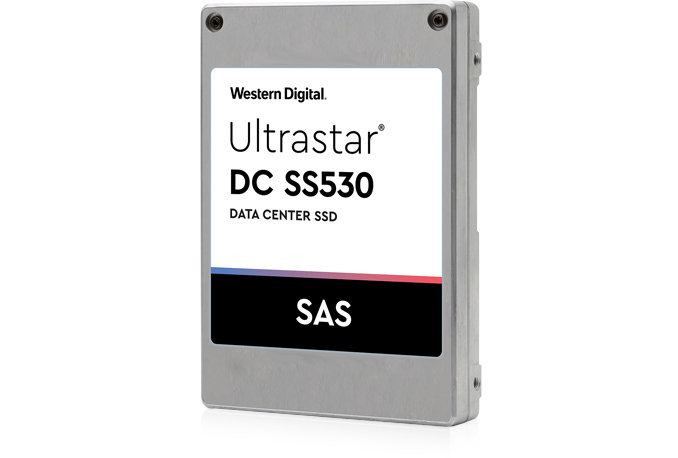
Western Digital has quietly added its new HGST Ultrastar DC SS530-series SSDs to its lineup of products. The new drives are aimed at mission-critical storage applications, such as financial transactions, e-commerce, virtualization, database analytics, etc. that use an SAS interface. The new SSDs carry up to 15.36 TB of user-accessible flash onboard and offer three endurance options to address read-intensive, mixed-use, as well as write-intensive workloads. The Ultrastar DC SS530 is based on the same proprietary controller architecture as the previous-generation Ultrastar SS300 drives (i.e., the controller was presumably co-designed with Intel), but the new one is based exclusively for second-gen 3D TLC NAND, whereas previously the manufacturer used both 3D TLC and 3D MLC memory. Features of the controllers used for the DC SS530 and the SS300 are similar too and include an extended error correction code (ECC with a 1x10^-17 bit error rate) to enable higher performance and data integrity, exclusive-OR (XOR) parity (in case a whole NAND die fails) as well as parity-checked internal data paths. Besides, the new DC SS530 complies with the T10 Data Integrity Field (DIF) standard, which requires all interconnect buses to have parity protection (on the system level), as well as a special power loss data management feature that does not use supercapacitors. Western Digital’s Ultrastar DC SS530 come in 2.5-inch/15-mm form-factor, feature an SAS 12 Gbps single-port/dual-port interface and are drop-in compatible with existing servers that support 9, 11, and 14 W per drive power options. The manufacturer will also offer a variety of the Ultrastar DC SS530 models supporting capabilities like TCG encryption, TCG+FIPS, and instant secure erase to comply with different security requirements. When it comes to sustained sequential performance, the Ultrastar DC SS530 drives offer up to 2254 MB/s read speeds as well as up to 2223 MB/s write speeds, which is slightly faster when compared to the Ultrastar SS300. Random read performance of all DC SS530 hits 440,000 IOPS, about 10% higher than the predecessor. When it comes to random writes, the SSDs rated for 10 DWPD (drive writes per day) can hit 320,000 IOPS, whereas the high-capacity drives rated for 1 DWPD can hit 100,000 IOPS. Given the fact that the DC SS530 support three power options, end users can choose between higher IOPS performance and lower power consumption (i.e., faster drives consume more energy). It is noteworthy that within its new Ultrastar DC SS530 family of SSDs Western Digital no longer offers drives rated for less than 1 DPWD, thus addressing only ‘classic’ enterprise applications with various workloads rather than solutions that are extremely read intensive. As for warranty and MTBF, the new SSDs are rated for 2.5 million hours MTBF and are covered with a five-year limited warranty (or the max PB written, whichever occurs first). Western Digital’s Ultrastar DC SS530 are listed on the company’s website, so chances are that the SSDs are already available to at least some of its customers.
Related Reading: | |||||||||||||||||||||||||||||||||||||||||||||||||||||||||||||||||||||||||||||||||||||||||||||||||||||||||||||||||
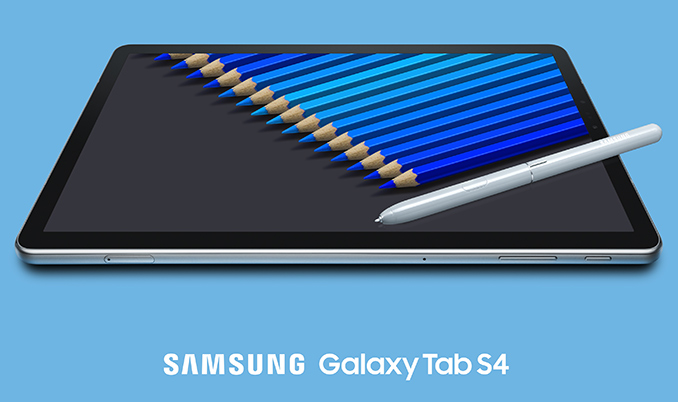
| 4:00p | Samsung Introduces Galaxy Tab 4: S835, 7300mAh Battery, Samsung DeX
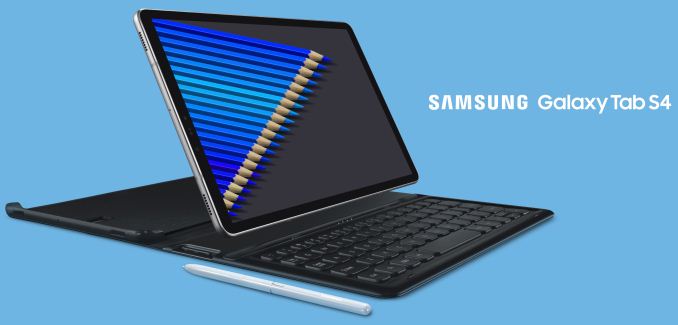
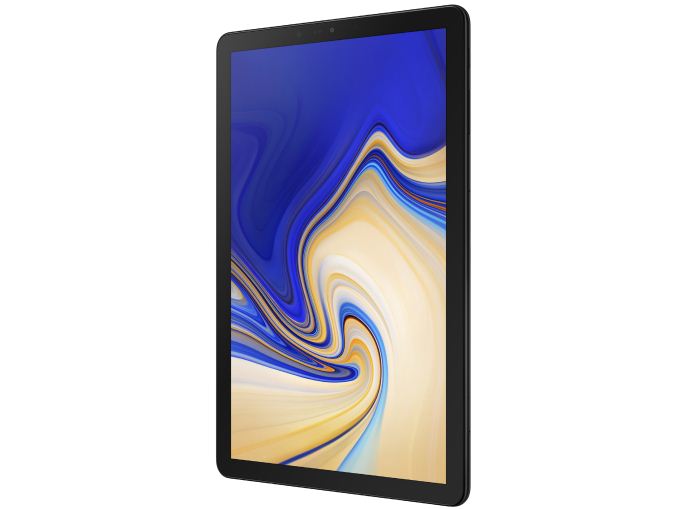
Samsung this week introduced its new 10.5-inch Google Android-based tablet. The new Galaxy Tab S4 uses Qualcomm’s high-performance mobile SoC, is outfitted with a premium sAMOLED display, and an advanced audio subsystem with the Dolby Atmos badge to satisfy users looking forward mobile entertainment. In addition, the Galaxy Tab S4 now supports Samsung’s DeX platform that enables to run productivity applications on desktop displays as well as Samsung’s Knox security platform. The Samsung Galaxy Tab S4 is based on the Qualcomm Snapdragon 835 SoC (four Kryo 385 Gold cores, four Kryo 385 Silver cores, Adreno 540 iGPU, 64-bit LPDDR4X memory, etc.) that is equipped with 4 GB of RAM, and 64 or 256 GB of NAND flash storage (expandable by 400 GB using a microSDXC card). The tablet has a 10.5-inch Super AMOLED display with a 2560×1600 resolution, which is a bit larger than the monitor used on the Galaxy Tab S3. As for imaging capabilities, the device has a 13 MP rear sensor as well as an 8 MP front sensor, both equipped with a flash. Wireless connectivity features of the Galaxy Tab S4 include a 4G/LTE Cat. 16 modem (on select SKUs), a 802.11ac Wi-Fi controller with MIMO support, and Bluetooth 5.0. Wired I/O includes POGO contacts for keyboards as well as a USB Type-C connector for various peripherals. In addition, the tablet has a whole set of sensors people come to expect from this type of products, including an accelerometer, a compass, a gyroscope, a proximity sensor, an iris scanner, and so on.
With a powerful SoC, a high-quality screen, and a stereo audio subsystem co-developed with AKG, the Galaxy Tab S4 will certainly attract attention of those who would like to consume content on their tablets. Meanwhile, the Galaxy Tab S4 also supports Samsung’s DeX platform that enables desktop-like experience on Android-based tablets (e.g., open up multiple windows, re-size windows, drag and drop content, etc.). Furthermore, DeX enables to attach the Galaxy Tab S4 using a USB Type-C to HDMI adapter if more screen real estate is needed. To take full advantage of DeX, users will need the optional Book Cover Keyboard that is sold separately. In addition, the Galaxy Tab S4 now fully supports Samsung’s Knox mobile security platform to protect valuable and confidential information.
Tablets have always been a mixed-bag type of product for everyone. On the one hand, high-end tablets are powerful enough for productivity applications. On the other hand, most people use them to consume content rather than create anything. Consequently, many companies nowadays tend to release inexpensive tablets running cheap SoCs and targeted at children and undemanding consumers. As a result, high-end Android-based tablets have become rare birds. In fact, among big brands only Samsung and Huawei release such products. In a bid to maximize sales and address needs of demanding consumers both companies have been expanding functionality of their high-end Android tablets in a bid to make them more attractive. For example, last year Samsung started to offer its S-Pen stylus with its Galaxy Tab S3 tablets and this year Huawei followed the suite with its M5 Pro devices. Meanwhile, the addition of DeX and KnoX enables the Galaxy Tab S4 to substitute notebooks in certain cases (once equipped with a keyboard). Evidently, Samsung is bringing capabilities of its tablets closer to capabilities of laptops and Apple’s iPad Pro devices. Samsung’s Galaxy Tab S4 will be available starting August 10 for $649.99 and $749.99 for the 64 GB and the 256 GB model, respectively. The company will bundle a stylus with its new tablets, but the aforementioned POGO keyboard will cost $149.99
Related Reading: | |||||||||||||||||||||||||||||||||||||||||||||||||||||||||||||||||||||||||||||||||||||||||||||||||||||||||||||||||
| 10:00p | NVIDIA Releases 398.82 WHQL Game Ready Driver
This week, NVIDIA released driver version 398.82 WHQL, featuring Game Ready support for next week’s Monster Hunter: World, as well as for Battle for Azeroth, a new World of Warcraft expansion launching on August 13th and 14th. The driver also includes a good amount of bug fixes, though notably excludes fixes for windowed G-Sync issues on Windows 10 Spring Creators Update and April 2018 Update. NVIDIA expects to resolve that issue with a hotfix in the near future, which was delayed for QA reasons. Making its mark as the seventh expansion pack for the now-venerable World of Warcraft, Battle for Azeroth has been preceded by not just alphas and betas, but a Battle for Azeroth Pre-Patch, which has been reportedly rocky at launch and has hotfixes still coming through. Nevertheless, one of the more notable elements was the addition of DirectX 12 support. At the time, it was stated that only AMD and Intel GPUs would take advantage of DX12 mode, with NVIDIA GPUs remaining on DX11. The development sparked some confusion, prompting Blizzard to issue a clarification. Essentially, DirectX12 support was intended for certain hardware and does not apply to NVIDIA, of which Blizzard considers their DX11 support “already heavily optimized” where there is no performance increase to NVIDIA hardware under DX12. Blizzard also noted that there were no graphical differences in World of Warcraft between DX11 and DX12 modes. NVIDIA suggests the GeForce GTX 1060 6GB (1280 cores), GTX 1070, and GTX 1080 for ~60 FPS performance at High details for 1080p, 1440p, and 4K respectively; in general, Blizzard has not changed its hardware recommendations over the base game. In terms of bug fixes, 398.82 lists the following resolved issues: Meanwhile, NVIDIA lists the following open issues for Windows 10: Otherwise, there were no other updates on G-Sync related issues, though of mild interest, NVIDIA mentioned off-hand that adding FreeSync support takes away resources from G-Sync development, and that, in regards to one of the new G-Sync HDR monitors, enabling HDR slightly lowers FPS. The updated drivers are available through the GeForce Experience Drivers tab or online at the NVIDIA driver download page. The latest GeForce Experience client can also be found separately on its own download page. More information on this update and further issues can be found in the 398.82 release notes. Related Reading | |||||||||||||||||||||||||||||||||||||||||||||||||||||||||||||||||||||||||||||||||||||||||||||||||||||||||||||||||



| << Previous Day |
2018/08/02 [Calendar] |
Next Day >> |