[Most Recent Entries] [Calendar View]
Friday, August 3rd, 2018
- HUAWEI P20 Series: Fusing art and technology, the P20 Series has been very well received among the fashion-forward consumers. The global shipments of the HUAWEI P20 Series surpassed 9 million units;
- HUAWEI Mate 10 Series: The latest HUAWEI Mate Series set the trend for mobile AI and strengthened the company’s position in the high-end market with global shipments of over 10 million units;
- HUAWEI nova Series: Globally, the number of nova smartphone users exceeded 50 million, contributing to growth of the overall mid-range smartphone market. Total shipments of the nova Series increased by 60 percent year-over-year.
- Huawei wearables achieved a remarkable 147 percent increase year-over-year;
- Retail business has grown and now Huawei operates over 53,000 Huawei stores and 3,500 Huawei Experience Stores globally. The company plans to bolster its retail network by adding another 10,000 retail stores and 700 Experience Stores around the world before the end of 2018.
- The Intel Xeon W Review: W-2195, W-2155, W-2123, W-2104 and W-2102 Tested
- Intel’s Xeon Scalable Roadmap Leaks: Cooper Lake-SP, Ice Lake-SP Due in 2020
- Power Stamp Alliance Exposes Ice Lake Xeon Details: LGA4189 and 8-Channel Memory
- Intel’s High-End Cascade Lake CPUs to Support 3.84 TB of Memory Per Socket
- Intel Documents Point to AVX-512 Support for Cannon Lake Consumer CPUs
- Intel Begins EOL Plan for Xeon Phi 7200-Series ‘Knights Landing’ Host Processors
- Intel Shows Xeon Scalable Gold 6138P with Integrated FPGA, Shipping to Vendors
- Sizing Up Servers: Intel's Skylake-SP Xeon versus AMD's EPYC 7000 - The Server CPU Battle of the Decade?
| Time | Event | |||||||||||||||||||||||||||||||||||||||||||||||||||||||||||||||||||||||||||||||||||||||||||||
| 4:35a | AMD Creates Quad Core Zen SoC with 24 Vega CUs for Chinese Consoles
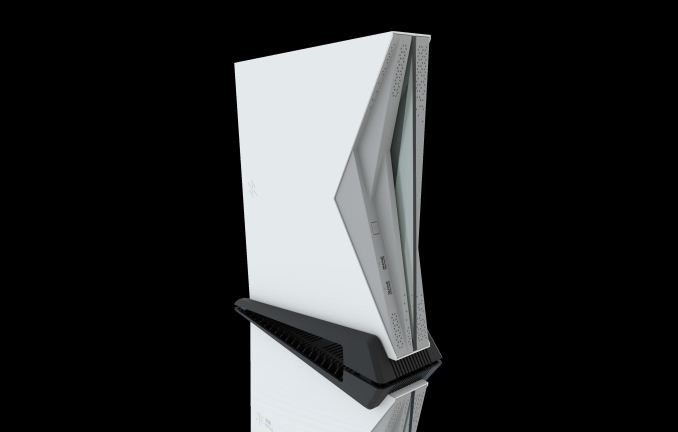
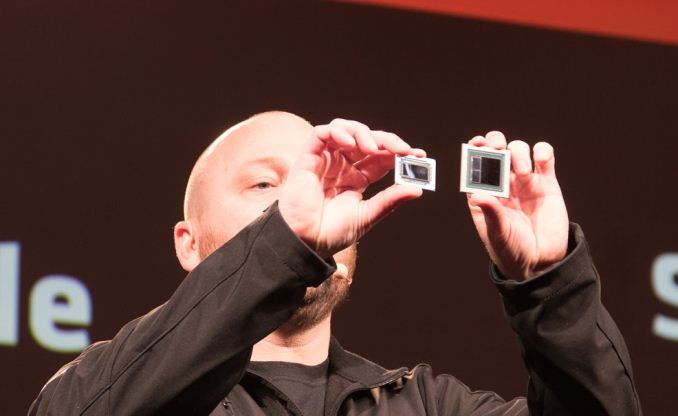
AMD has cornered the x86 console market with its handy semi-custom mix of processors and graphics. While we slowly await the next generation of consoles from Microsoft and Sony, today AMD and Zhongshan Subor announced that a custom chip has been made for a new gaming PC and an upcoming console for the Chinese market. The announcement states that a custom chip has been created for Subor that is based on four Zen cores running at 3.0 GHz and 24 compute units of Vega running at 1.3 GHz. The chip is supported by 8GB of GDDR5 memory, which the press release states is also embedded onto the chip, however it is likely to actually be on the package instead. Compare this to the specifications of AMD’s current SoC designs, such as the Ryzen 5 2400G, which has four Zen cores and 11 Vega CUs. Or Intel’s multi-chip design featuring four Intel cores and an AMD-based 24 compute unit GPU paired with 4GB of HBM2 memory. There is also AMD’s Vega Mobile chip, which is expected to be in the 24-32 compute unit range, however this is also paired with 4GB of HBM2.
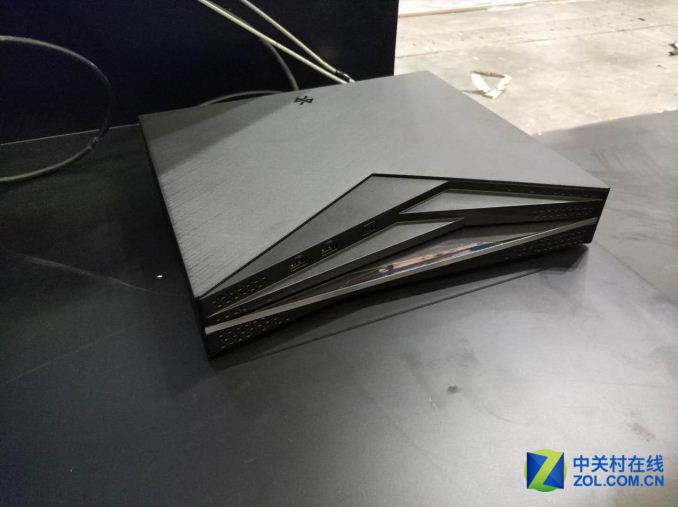
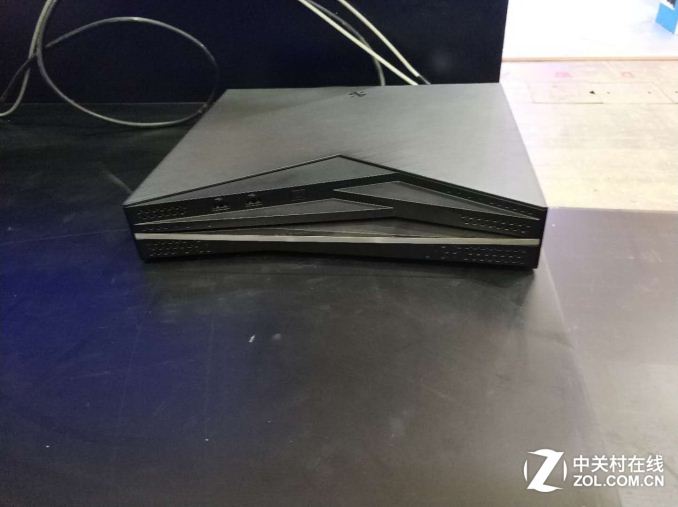
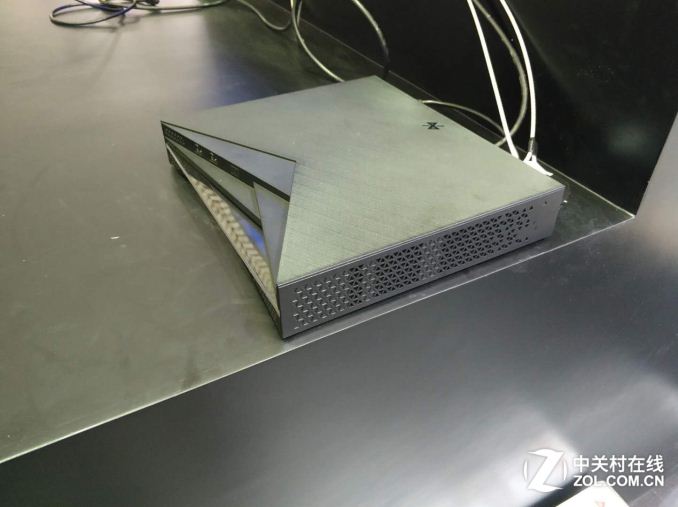
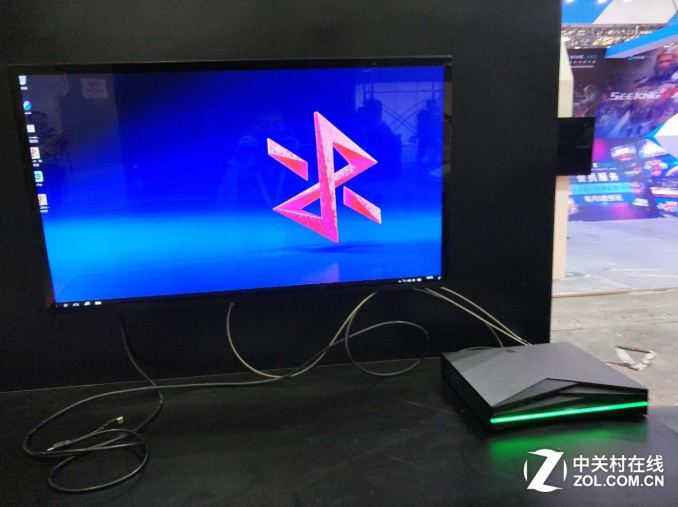
Assuming that this custom chip is a single chip design, with CPU and GPU, this means that AMD is handily gaining custom contracts and designing custom chip designs for its customers, even for consoles that won’t have the mass western appeal such as the Xbox or Playstation. The demo given at the ChinaJoy event (the Chinese equivalent of E3 it seems) in Shanghai was initially of a PC that Subor plans to launch in late-August with the new chip. An upcoming console, based on the same hardware, is expected to be launched by the end of 2018. AMD cites that this is a key win for its semi-custom division, especially in a key market such as China. In this market, AMD also has semi-custom collaborations with Tsinghua, and a Joint Venture with THATIC. The new SoC, name unknown, will support FreeSync, the Adrenalin software, and Rapid Packed Math, confirming that this is a true Vega design (unlike the chip used by Intel in its combination product). Update: Over at zol.com.cn, there are images of the unit:
Gallery: Zhongshan Subor with AMD Custom SoC
      Related Reading | |||||||||||||||||||||||||||||||||||||||||||||||||||||||||||||||||||||||||||||||||||||||||||||
| 6:45a | Huawei Takes #2 Smartphone Manufacturer Spot in 1H18
Huawei has released its business results for the first half of 2018, and has posted new record sales figures of 95+ million units. Most importantly, the company has now surpassed Apple in terms of smartphone shipments and has been able advance to the n°2 positioning with a global market share of 15.8% (It’s to be noted that we’re talking about unit shipments and not revenue). Looking back, it’s now been 3 years since we had the opportunity to go to Huawei’s headquarters in Shenzhen and we had been presented the company’s business goals for the future. Back then the company very much stated that its medium-term strategy was to become the number two vendor worldwide. With today’s results, this marks an important point for the Chinese vendor as its efforts over the past couple of years have paid off. Ever since my first coverage of the company 4 years ago I noted that there was great potential: It was evident that Huawei had great ambitions and product ethic, as it was able to recognize the faults in its products and progressively solve them over time and generations, very quickly iterating and improved its offerings. The threat to the competition as well as the disruption to the competitive landscape over the years very much materialised as a real thing, and today Huawei can be very much considered one of the leading smartphone vendors, not just in unit sales, but also in overall product quality. It’s to be noted that Huawei achieved this while essentially failing to officially enter the US market. Earlier this year when talking to Huawei about the set-back in the US, the pragmatic response was is simply that the company is just going to have to focus on improving its products until there’s sufficient consumer demand to overcome other entry-barriers.
The end of the year will be very interesting for Huawei mobile products as I’m expecting the next generation SoC to include ARM’s newest Cortex A76 cores as well as it being manufactured on TSMC’s new 7nm process, which after the last 2 generations of “unsynchronized” technology and product release scheduled will finally fall back into place and put the next designs in a very good competitive position that I’m looking forward to. Related reading: | |||||||||||||||||||||||||||||||||||||||||||||||||||||||||||||||||||||||||||||||||||||||||||||
| 7:30a | Galaxy Note 9 Leaks In Officially Uploaded Video
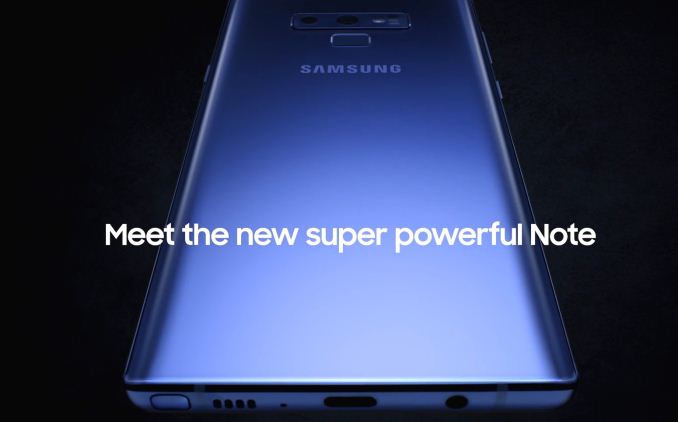
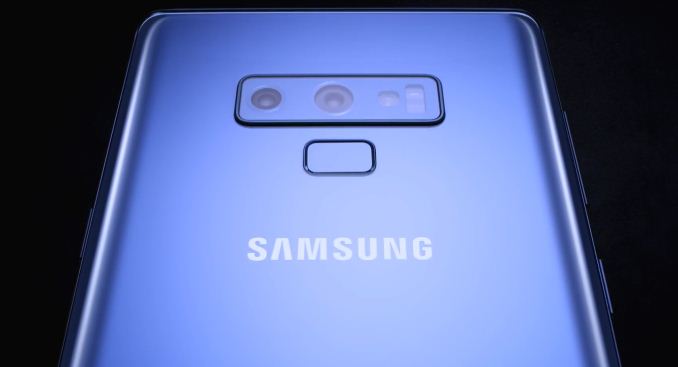
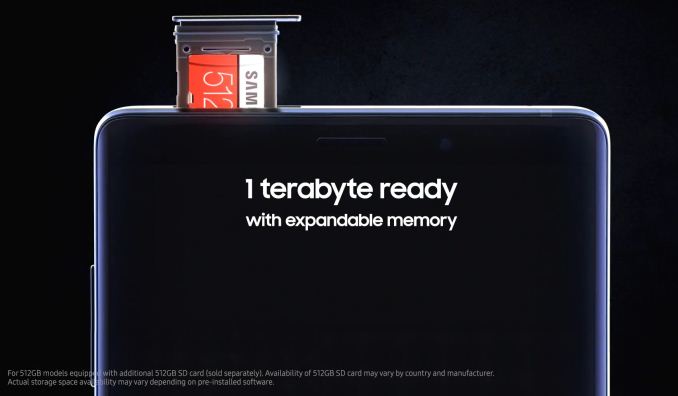
Samsung is said to have uploaded a promotional Galaxy Note 9 video onto its New Zealand YouTube media channel, depicting the new design as well as a couple of its newer distinguishing features. Samsung deleted the video, but SamMobile was able to download and re-host it.
In the video we see the basic design of the phone. Overall it seems Samsung has kept the changes very minor as the only really distinguishing difference to the Note 8 is the relocation of the fingerprint module from the right side of the horizontal camera setup to a centre placement underneath the cameras.
A big surprise is the advertising of maximum storage of 1TB. Naturally this is achieved by including microSD cards of up to 512GB, but the phone itself having a storage configuration of up to 512GB is notable as it’s the first time a mainstream vendor will be offering such high capacities. In all likelihood this would mean an across-the-board storage bump to 128/256/512GB tiers which is very much welcome.
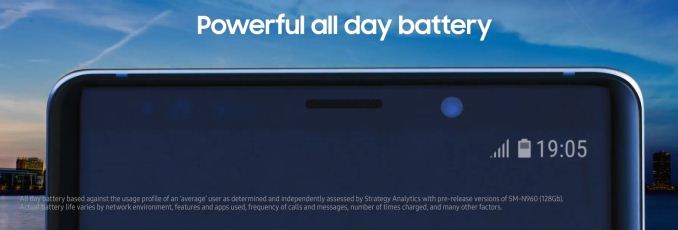
Lastly Samsung advertises “all-day battery” with the new phone. We don’t usually report on unconfirmed rumours, but it is said that the phone might come with a 4000mAh battery, which represents a 21% increase over the Note 8’s 3300mAh capacity. Samsung plans to officially launch the Note 9 at the next Unpacked event next Thursday on August 9th, and we’ll be there for hands-on coverage. | |||||||||||||||||||||||||||||||||||||||||||||||||||||||||||||||||||||||||||||||||||||||||||||
| 8:00a | Microsemi Announces PCIe 4.0 Switches And NVMe SSD Controller
Microsemi is starting their transition to PCIe 4.0 with updates to their Switchtec PCIe switch family and Flashtec NVMe SSD controllers. The new PCIe standard doubles the per-lane throughput from approximately 1GB/s to almost 2GB/s. The new Flashtec NVMe 3016 SSD controller features a 16-channel NAND interface and all the features of the existing 2016 controller, but the faster host interface will allow drives to exceed 8GB/s and 2 million IOPS when using a PCIe 4.0 x8 link. The 3016 controller is designed to allow for reuse of firmware developed for the previous generation of controllers, so new SSDs can be brought to market quickly. Microsemi's Flashtec controllers are used in many of the fastest enterprise SSDs, and the update to support PCIe 4.0 speeds should help Microsemi stay on top of this market segment. The first Switchtec PCIe switches to support PCIe 4.0 are intended to support GPGPU applications that rely on low-latency peer to peer DMA. These switches will be available with up to 100 PCIe lanes, but specific models and configurations have not yet been announced. Both the PCIe switches and the new NVMe controller are currently sampling to select customers. Microsemi's primary competition in the PCIe switch space comes from Broadcom's PLX switch family, which has not yet been updated to support PCIe 4.0 speeds. The Flashtec NVMe 3016 likewise doesn't have any direct competition. Adoption of the new switches and controllers may be slow due to the dearth of other PCIe 4.0 hardware. IBM's POWER9 processors and some of Mellanox's networking interfaces and processors are shipping with PCIe 4.0 support, but GPUs and x86 CPUs have not officially started the transition. Microsemi will be exhibiting at Flash Memory Summit next week, where we hope to see a working demo of their PCIe 4.0 solutions. | |||||||||||||||||||||||||||||||||||||||||||||||||||||||||||||||||||||||||||||||||||||||||||||
| 10:00a | Intel Details Upcoming SSDs For Datacenter Including QLC NAND
Intel has finally shared the naming and specifications for their first datacenter SSDs using QLC NAND flash memory, after recently announcing that the then-unnamed drive had entered mass production. Intel is also introducing a modification to their enterprise/datacenter SSD naming scheme, and announcing a refresh to their TLC-based SATA SSDs for datacenters.
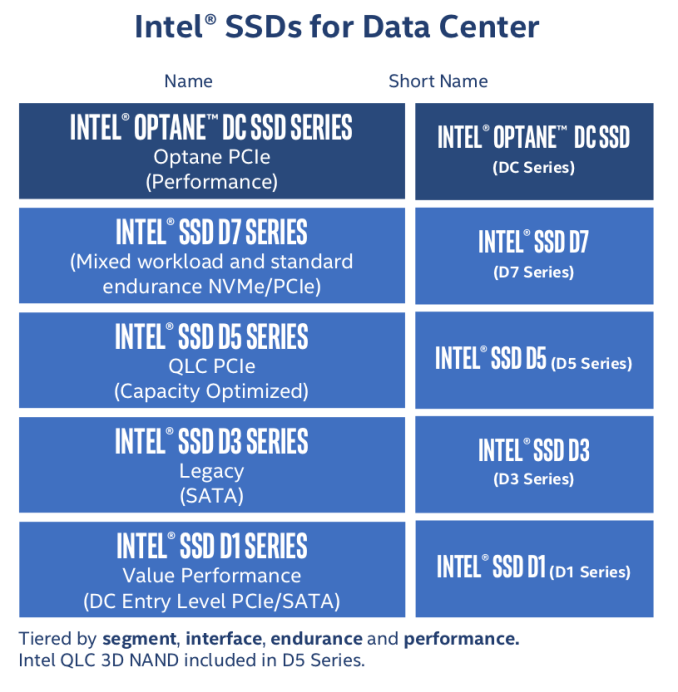
Intel's new naming system for their datacenter SSDs doesn't drastically change how models are numbered, but it does more clearly delineate between product segments, and resembles the Core i3/5/7 tiers for their consumer CPUs. The Optane DC SSDs will carry on with their current branding, but starting now all the NAND flash-based datacenter SSDs will be slotted into a D1, D3, D5 or D7 tier. From the top, we have the D7 series of NVMe SSDs for mixed workloads using TLC NAND, followed by the D5 series of high-capacity NVMe SSDs using QLC NAND, the D3 series of SATA SSDs, and the D1 series of entry-level PCIe and SATA SSDs that tend to be based on the same hardware platforms as Intel's client/consumer SSDs. Within each tier, individual products still bear similar model numbers, so the first QLC SSD is the Intel SSD D5-P4320, compared to existing TLC-based drives like the P4510 and P4610 (the successors to which will be in the D7 series).
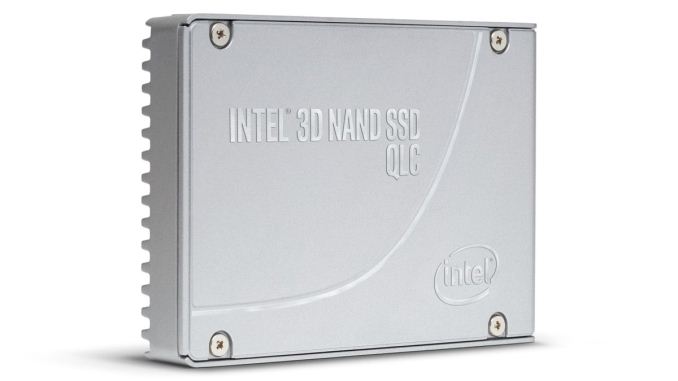
The Intel SSD D5-P4320 will debut with a 7.68 TB capacity in the 2.5" U.2 form factor, using 1Tb QLC dies manufactured on Intel's 64L 3D NAND process. Intel and Micron are the first to market with QLC SSDs while most of their competitors are not planning to ramp up QLC production until their 96L generation. As expected for a QLC SSD, the P4320 is intended for highly read-oriented workloads and has relatively low write performance specifications (especially since it doesn't use SLC caching like client/consumer drives). Intel provides two write endurance ratings: 0.9 drive writes per day for a sequential write workload, and approximately 0.2 drive writes per day for a random write workload, reflecting the higher write amplification factor that results from random writes. Given the 5 year warranty period, that works out to a rating of over 1600 P/E cycles in the sequential write case, so the more optimistic QLC endurance projections that started showing up last year are starting to come true. Intel has previously confirmed that they were sampling U.2 drives with at least 20TB of QLC NAND. Capacities greater than 8TB will be coming to market as the Intel SSD D5-P4326 later this year, with 16TB and 32TB models in both U.2 and EDSFF "Ruler" form factors. The P4320 is intended to displace existing uses of TLC-based SSDs while the denser P4326 will go after hard drives and hybrid SSD+hard drive tiered storage arrays. The 32TB EDSFF drives will allow Intel to pack a full 1 PB (1024 TB) of NAND into a 1U server.
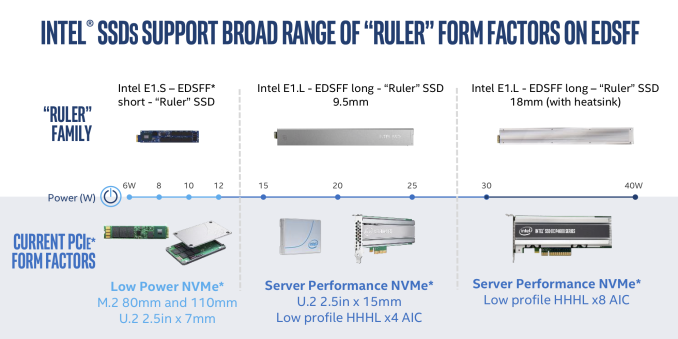
Now that Intel's Ruler SSD form factor concept has been standardized as the Enterprise & Datacenter SSD Form Factor (EDSFF), Intel is modifying their Ruler SSD designs to comply with the final standard and preparing to introduce Ruler form factors across their datacenter SSD product lines. The EDSFF standard defines both short and long drives, with either closely-spaced 9.5mm width or a broader 18mm spacing to allow for more airflow. Intel will be using these different options to cover a similar range of power levels to the current mix of M.2, U.2 and add-in card form factors.
Intel has refreshed their enterprise SATA SSD lineup with new 64L 3D TLC-based models but no QLC SATA drives so far. The D3-S4510 and D3-S4610 families currently include drive capacities from 240 GB up to 3.84 TB and target mixed read/write workloads with write endurance ratings ranging from 1.4 to 3.4 drive writes per day. Next year Intel will introduce 7.68 TB models for both families. These replace the DC P4500 and DC P4600 families that used Intel's first-generation 32-layer 3D TLC NAND flash memory. | |||||||||||||||||||||||||||||||||||||||||||||||||||||||||||||||||||||||||||||||||||||||||||||
| 11:00a | Intel to Hold Datacenter Conference Next Week
Through financial channels, Intel this week announced that it would hold a datacenter-related event for financial analysts, technology, analysts and the tech press next week in Santa Clara. There is potential for the company may make several important announcements regarding its datacenter products at the conference. Intel’s Data-Centric Innovation Summit will be held on August 8 at Intel’s headquarters in Santa Clara. Key presentations from the event will be webcast, so people around the world will be able to see all the announcements and understand Intel’s vision concerning next-generation datacenters.
What to expect from Intel’s Data-Centric Innovation Summit is an interesting question. Since datacenters today solve different problems, from streaming movies over the Internet to processing financial transactions to solving complex mathematical tasks, we expect Intel to talk about its different technologies that enable datacenters for various purposes and success stories. However the meaty bit should be if anything is announced, or roadmaps are confirmed. In particular, it is possible that Intel will talk about its forthcoming CPUs and FPGAs for mainstream as well as HPC servers. The chipmaker will also likely talk about its Optane products featuring 3D XPoint memory, though it is unclear whether it is going to touch upon next-generation 3D XPoint which was recently revealed in a roadmap. In fact, storage in general is gaining importance in the datacenter, so it will probably be a part of the conversation, given that the Flash Memory Summit conference is also happening at the same time. From last week’s leak about Intel’s Cooper Lake-SP and Ice Lake-SP processors we also know that Intel considers various AI/DL/ML solutions as integral parts of its datacenter strategy, so it is highly likely that we are going to hear something about these products too. Besides, Intel could talk about its upcoming quantum computing efforts (e.g., Tangle Lake test chip) as the era of quantum computing is coming closer (not that it is ready for prime time though). Intel’s Data-Centric Innovation Summit to a degree will be a substitute for the server-related sessions we used to have at the Intel Developer Forum tradeshow, which was usually held around this time of the year but discontinued back in 2017. Keep in mind that in addition to this event there will be two important conferences this month: Flash Memory Summit on August 7 – 8 as well as Hot Chips on August 19 – 21. Being a big company, Intel will be at both events, but at present we cannot tell you what exactly to expect from the company and whether anything exclusive will be revealed at HC and FMS. At Hot Chips, Intel has a talk titled 'Intel’s High Performance Graphics solutions in thin and light mobile form factors', and you can follow our live blog on AnandTech as it happens. Related Reading | |||||||||||||||||||||||||||||||||||||||||||||||||||||||||||||||||||||||||||||||||||||||||||||


| << Previous Day |
2018/08/03 [Calendar] |
Next Day >> |