[Most Recent Entries] [Calendar View]
Tuesday, August 7th, 2018
- AOC Launches the AG352QCX: 35-Inch 200 Hz 2560×1080 Curved Display with Adaptive-Sync
- Acer Predator X35 & ASUS ROG Swift PG35VQ Unveiled: 35-inch G-SYNC HDR Monitors - UltraWide, Curved, 200Hz
- JapanNext JN-VC490UHD and JN-VC550UHD: 49-55 inch, Curved 4K, FreeSync, HDCP 2.2, Under $900
- ASUS Announces ROG Strix XG32VQ and ROG Strix XG35VQ: Large, Curved, & Fast
- ASUS ROG Strix XG27VQ Available: 27” Curved, FHD@144Hz & FreeSync w/ELMB
- LG’s 34UC89G 21:9 Curved Display with G-Sync, 144 to 166 Hz, Available for $999
- The Intel Xeon W Review: W-2195, W-2155, W-2123, W-2104 and W-2102 Tested
- The Supermicro X11SRA Motherboard Review: C422 based Workstation for Xeon-W
- HP Z4 Workstations Get Xeon W and Core X, 18-Core
- SilverStone Preps IP68 Water- and Dust- Proof Enclosure for 2.5-Inch Drives
- Sharkoon Launches Quickstore One USB 3.1 Gen 2 Type-C Storage Device DIY Kit
- Western Digital Launches New My Book Duo Storage Systems: 360 MB/s, USB-C, 20 TB
- Western Digital Launches New My Passport Ultra HDDs: New Enclosure, Up to 4 TB
- LaCie Launches Rugged and d2 Thunderbolt 3 Storage Devices
- ASUS Unveils Ultra-Thin ZenBook Pro 15 with Six-Core Core i9, GTX 1050, Calibrated 4K LCD
- The ASUS ZenBook 3 Review: A Convincing Case for Quad Core Thin & Light Laptops
- ASUS ZenBook 3 Deluxe UX490UA: Kaby Lake, 16 GB RAM, 1 TB SSD, TB3, 14" FHD, 2.4 lbs
- HP EliteBook 1050 G1: Six-Core CPU, NVIDIA GPU, RAID, 15.6-inch 4K LCD
- MSI Announces GS65 Stealth: Thin & Lighter 15-Inch Gaming Laptop
- Samsung Odyssey Z Gaming Notebook: Going For Gamers with 8th Gen and Max-Q
- Origin PC Evo15-S Gaming Laptop: Core i7, GTX 1070 Max-Q, 1080p144
- ASUS Announces the Zenbook 3: A Macbook Competitor with Core i7, 16GB DRAM and 1TB SSD
- ASUS Announces the ZenBook Pro UX501
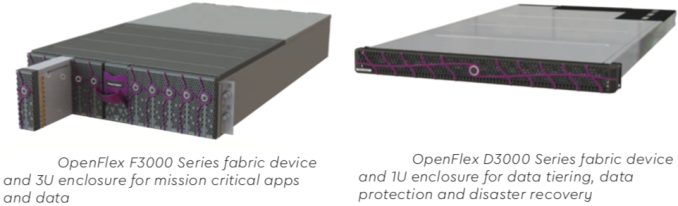
- The OpenFlex F3000 high-performance hot-swappable solid-state storage device with two 50 GbE ports and capacities ranging from 12.8 TB to 61.4 TB.
- The OpenFlex E3000 3U enclosure that that accommodates up to 10 F3000 devices with 128 TB – 614 TB capacity.
- The OpenFlex D3000 1U enclosure with two 25 GbE ports that houses several hard drives featuring up to 168 TB capacity.
- Western Digital to Use RISC-V for Controllers, Processors, Purpose-Built Platforms
- Toshiba Announces KumoScale NVMe over Fabrics Software
- HGST Launches Ultrastar DC SS530 SSDs: 3D TLC NAND, 15.36 TB, SAS 12 Gbps
- Western Digital Announces Client NVMe SSDs With New In-House Controllers
- Western Digital Launches HGST Ultrastar SS300 SSDs: 3D NAND for Data Centers
- HGST Ultrastar SS200 SSD: Up to 7.68 TB, 1.8 GB/s, Dual-Port SAS 12 Gbps
- HGST Ultrastar SN200 Accelerator: 7.68 TB Capacity, 6.1 GB/s Read Speed, 1.2M IOPS
- AMD Preps New Ryzen 2000-Series CPUs: 45W Ryzen 7 2700E & Ryzen 5 2600E
- Two New 35W Raven Ridge Parts: AMD Athlon 200GE and Athlon Pro 200GE
- AMD Launches Ryzen 3 2200GE & Ryzen 5 2400GE 35 W APUs
- AMD Readies Ryzen 3 2200GE & Ryzen 5 2400GE APUs with Reduced TDP
| Time | Event | ||||||||||||||||||||||||||||||||||||||||||||||||||||||||||||||||||||||||
| 8:00a | JapanNext Launches 35-Inch "UWHD" Curved LCD: AMVA & 200Hz Refresh w/FreeSync
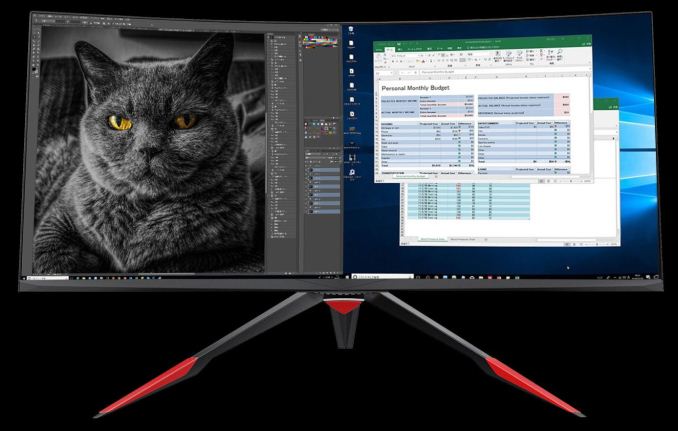
JapanNext this month has introduced its new 35-inch ultrawide curved gaming display. The tounge-twistingly named JN-35VCG200UWHD features a 2560x1080 "UWHD" resolution, a very low response time, as well as a FreeSync-enabled dynamic refresh rate of up to 200 Hz. The combination of features that the LCD supports is rare, but not particularly unique, meanwhile a good thing about this product is that it is more than 30% cheaper than its immediate rival. The JapanNext JN-35VCG200UWHD is based on a 35-inch AMVA3 panel with a 2560×1080 resolution, a 21:9 aspect ratio and a 1800R curvature. General specs of the monitor are fairly standard: 300 nits brightness, 2000:1 contrast ratio, 178°/178° viewing angles, 16.7 million colors, 3 ms response time (grey-to-grey), and so on. The key features of the display are AMD’s FreeSync dynamic refresh rate technology as well as the LCD’s massive 200 Hz refresh rate particularly welcome by gamers. JapanNext does not officially disclose the FreeSync range for the monitor, but I wouldn't be surprised if it was between 30 and 200 Hz, thus supporting low framerate compensation feature (LFC) and offering smooth gameplay across different genres. To actually hit 200 Hz at 2560×1080 owners will need to use a DisplayPort 1.2 or an HDMI 2.0 input. Meanwhile, to maintain compatibility with legacy PCs, the JN-35VCG200UWHD also has a DVI-D connector. Since owners will likely use their 35-incher with multiple PCs at once, the LCD also supports PiP and PbP capabilities, but only at 60 Hz.
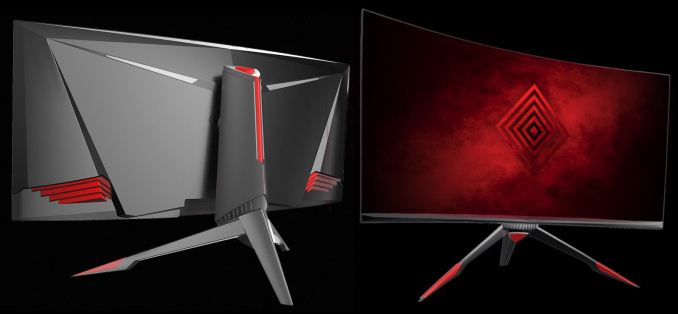
Since the JapanNext JN-35VCG200UWHD is aimed at gamers, it comes in a chassis featuring an aggressive design with red inlays and 1-cm bezels to make it easier to assemble a multi-display setup using two or three monitors. Furthermore the LCD supports various presets for different types of game genres. The only direct rival of the JapanNext JN-35VCG200UWHD is the AOC AGON AG352QCX, which was released in late 2016 and has similar features. In fact, the LCD from JapanNext has a slightly better panel and a lower response time.
The JapanNext JN-35VCG200UWHD display will be available in Japan at an MSRP of ¥89,980 ($808), which is 32% lower than $1,185, the price of the AOC AGON AG352QCX at Amazon. As an added kicker, for a limited time JapanNext will offer the new ultrawide display at a discounted price of ¥69,980 ($629). Considering the unique combination of features offered by the monitor, it is unlikely that JapanNext needs to sell it at a loss just to attract attention of early adopters. That being said, it looks like 35-inch ultrawide curved display with WFHD resolution and an up to 200 Hz refresh rate have a lot of room for price reductions.
Related Reading: Source: JapanNext (via Hermitage Akihabara) | ||||||||||||||||||||||||||||||||||||||||||||||||||||||||||||||||||||||||
| 9:00a | Update on Xeon W: Turbo Tables
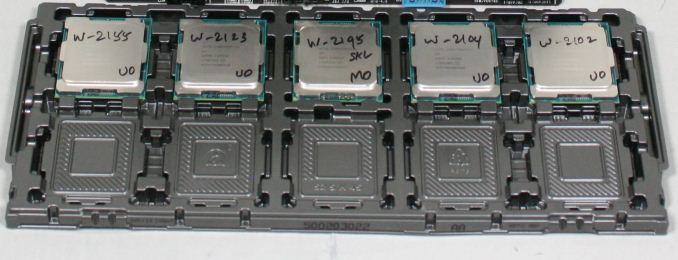
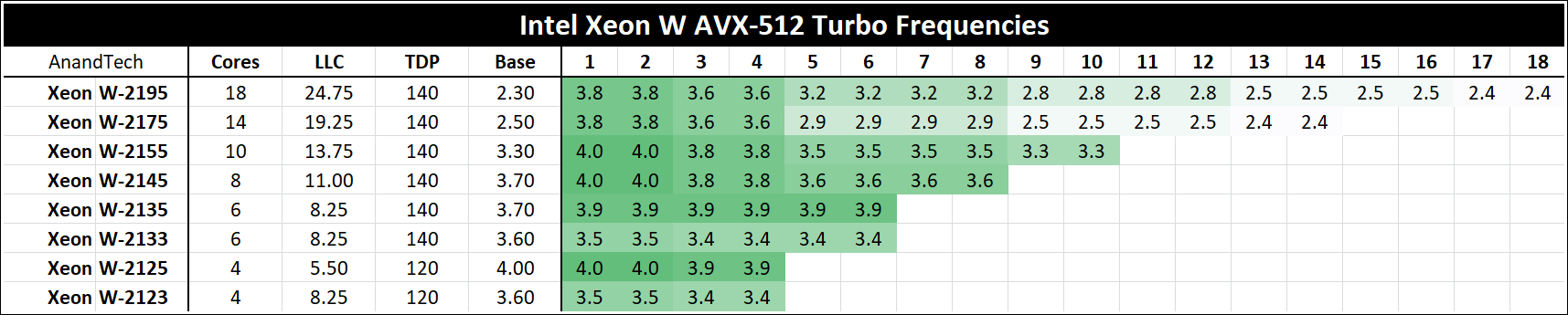
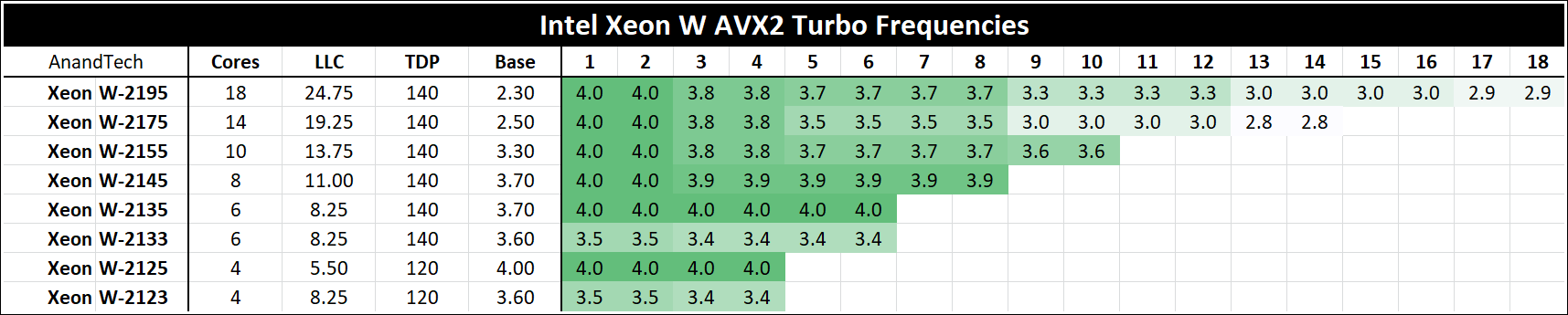
Last week we published our Xeon W review - Xeon W is the new name for Intel's Xeon E3-1600 series, but effectively replaces both the E3-1600 and E3-2600 chips that were commonly used in workstations. The new Xeon W line uses Skylake-X equivalent CPUs but enables ECC support for up to 512 GB of DRAM in a system, and while it uses the same LGA2066 socket as Skylake-X, due to product segmentation, Intel requires that the processors be used in a motherboard with an enterprise-grade C422 chipset. You can read our full review here, where we tested a high, medium, and low-end CPU from the range, as well as the two quad-core parts that are officially 'off-roadmap'. In the review we go into what exactly 'off-roadmap' means. The Intel Xeon W Review: W-2195, W-2155, W-2123, W-2104 and W-2102 Tested One of the questions that came out of that review were the per-core turbo values for each processor. Intel has of late had a bifurcated strategy when it comes to disclosing turbo values: on the consumer line it does not disclose any turbo values any more, except single-core turbo, and on the enterprise lines they have fortunately been forthcoming with the data when asked. Although it isn't an automatic process to get the data, we are thankful that it does turn up. The point of this article is to state we finally have the turbo values for Xeon W. Intel's per-core turbo data for these workstation parts are split up into three sections, due to the instruction sets they have. On the 'hardest' instructions, Intel uses special turbo values for AVX-512, as due to the way these instructions are processed, more heat is generated on chip. The chip has to balance frequency and power draw, so the AVX-512 data comes in at a lower frequency in order to keep the turbo in check.
The first thing to notice with this data is that for most CPUs, when the whole CPU is using AVX-512 instructions, the frequency will drop below the base frequency. For chips like the Xeon W-2123 and W-2133, even single core loading of AVX-512 will drop the frequency below the base frequency. Intel's base frequency does two things: first, it tells you the frequency at which TDP is applicable, and second it is the guaranteed minimum frequency for regular non-AVX instructions. Behind AVX-512 is AVX2, which is still somewhat of a strain on the processor beyond regular instructions, but not as much. Where AVX-512 requires dedicated die area for support of the vector units, AVX2 is built into the back-end of the standard core design.
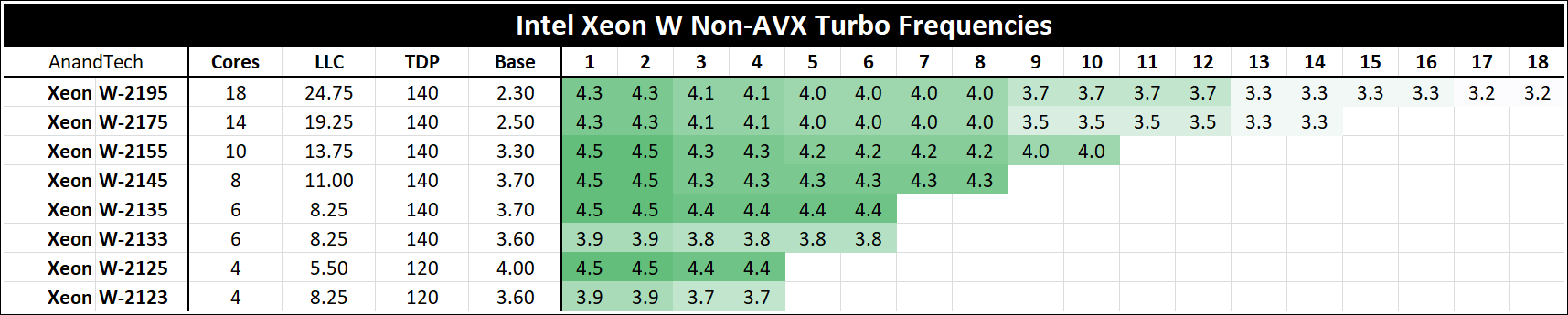
For AVX2, the W-2133 and W-2123 still end up below the base frequency of the processor. But for the big ones, like the W-2195, the full 18-core loading of AVX2 is 500 MHz faster than AVX-512. This is just an indication that users that are fine-tuning code should think about how much of the AVX-512 unit they can keep fed - the AVX-512 unit despite the 500 MHz difference is expected to be faster no doubt, but a half-fed AVX-512 might get trumped by a full AVX2. For the regular instructions, turbo goes a bit like this:
For a number of users, the key metrics here are the all-core turbos, with the 18-core part having an all-core turbo of 3.2 GHz. Interestingly the W-2155 and W-2145 sits well here: for any code that can't reliably go beyond 12-14 threads, having the higher frequency but lower core count part might actually perform better. We saw a bit of this in our review, with the variable threaded loads executing somewhat better on the W-2155 than the W-2195. We'll add this analysis to our main Xeon W review, but for those that requested the data, here it is! :) Related Reading
| ||||||||||||||||||||||||||||||||||||||||||||||||||||||||||||||||||||||||
| 11:00a | The Intel SSD 660p SSD Review: QLC NAND Arrives For Consumer SSDs The first consumer SSD with QLC NAND has arrived, and it shows that there isn't much to worry about. For most use cases, the Intel SSD 660p is as fast as a mainstream TLC-based NVMe SSD, but it finally brings NVMe prices all the way down to SATA levels. | ||||||||||||||||||||||||||||||||||||||||||||||||||||||||||||||||||||||||
| 12:00p | ASUS Unveils FX External HDDs with Aura Sync RGB & AES-256 Encryption
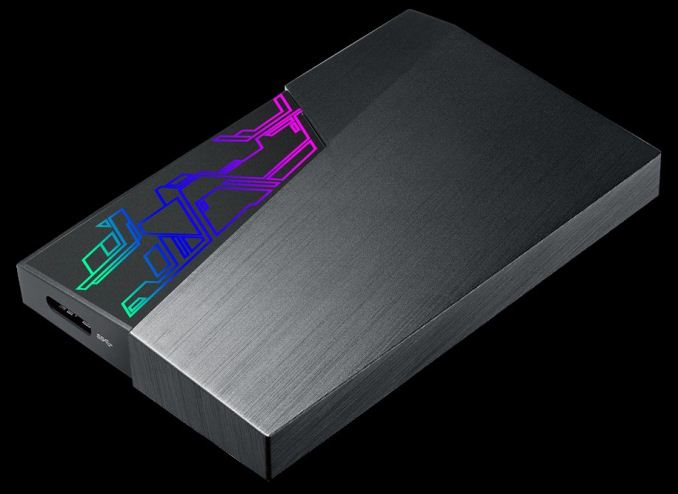
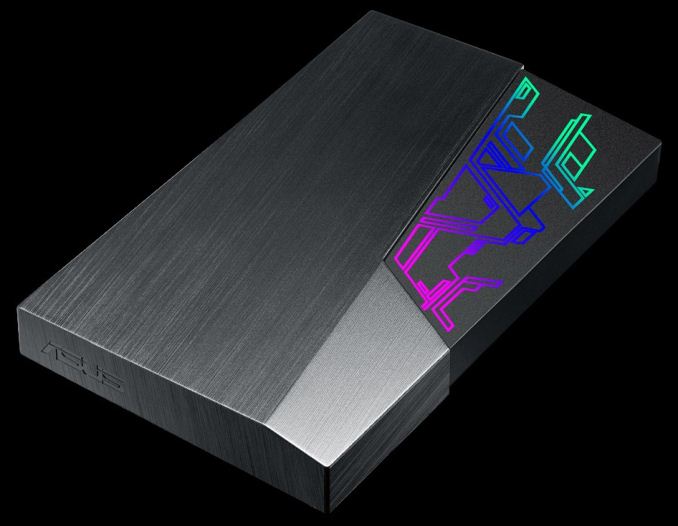
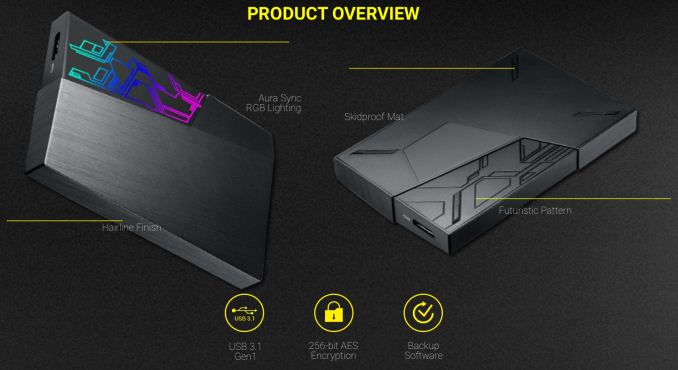
ASUS has introduced its new FX family of external storage devices, which are aimed at gamers and feature the company’s Aura Sync RGB lighting. The FX drives can store up to 2 TB of data and come with software for automatic backups. The ASUS FX external hard drives rely on 2.5-inch/7-mm HDDs featuring 1 TB or 2 TB capacity as well as ASMedia’s ASM1153E USB 3.0-to-SATA bridge, which supports up to 5 Gbps data transfer rates. The HDDs come in a brushed metallic chassis featuring RGB-lit futuristic patterns on both sides as well as skid proof mats on the bottom. The enclosure of the ASUS FX-series hard drives was designed to match its FX-series as well as ROG-series gaming laptops.
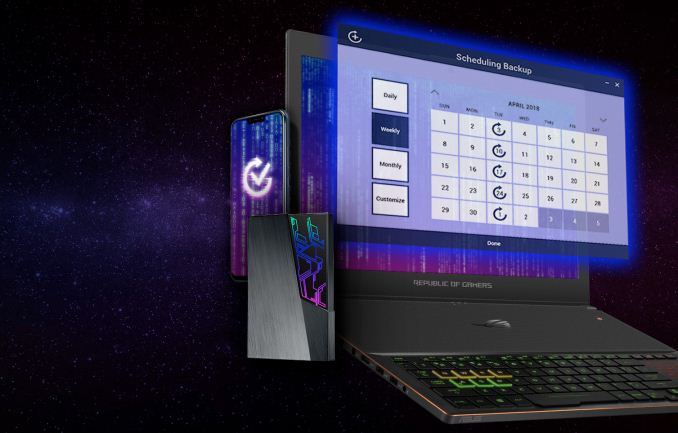
The external HDDs come with an automatic backup program that can automatically backup data from PCs, mobile devices, cloud storage, and more oddly, "social media." ASUS says that the FX HDDs are compatible with Microsoft Windows 7/8/10 as well as MacOS 10.8 and higher, but the company does not disclose whether its backup software can work in conjunction with Apple’s Time Machine (i.e. an HFS+ file system). Meanwhile, the ASUS FX drives also support AES-256 encryption, though it is unclear whether ASUS uses self-encrypting drives or just encrypts the data using its software.
ASUS does not disclose which 2.5-inch HDDs it uses for its FX external storage devices or their performance numbers. It's still common for 2.5-inch hard drives based on 1 TB platters use shingled magnetic recording (SMR) technology, and therefore offer a rather low (re)writing performance. In the meantime, it is possible that ASUS procured unannounced PMR-based HDDs featuring a more predictable performance.
The ASUS FX external hard drives are listed on the company’s website, so expect them to hit the market in the coming weeks months. Nothing is known about the pricing, but given the capacities do not expect the HDDs to be too expensive.
Related Reading: | ||||||||||||||||||||||||||||||||||||||||||||||||||||||||||||||||||||||||
| 2:00p | ASUS ZenBook Pro 15 UX550GE Laptop with Core i7 & 4K LCD Is Now Available
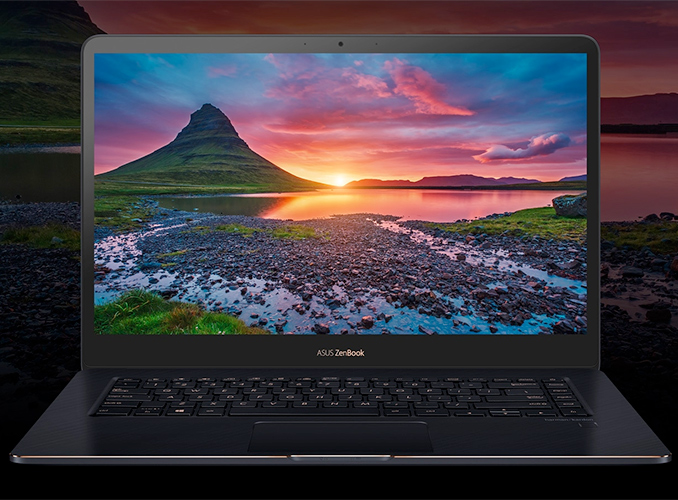
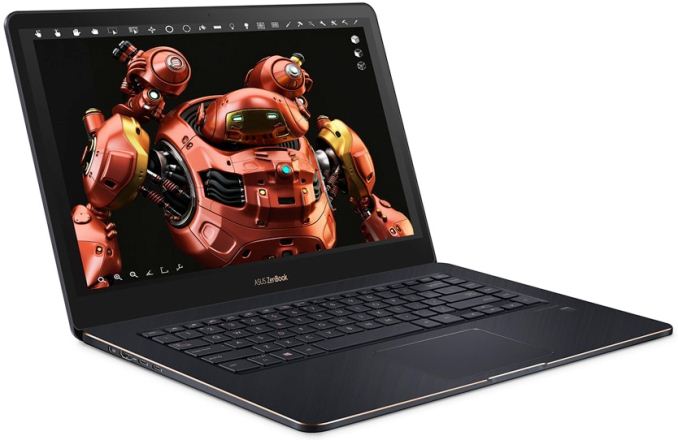
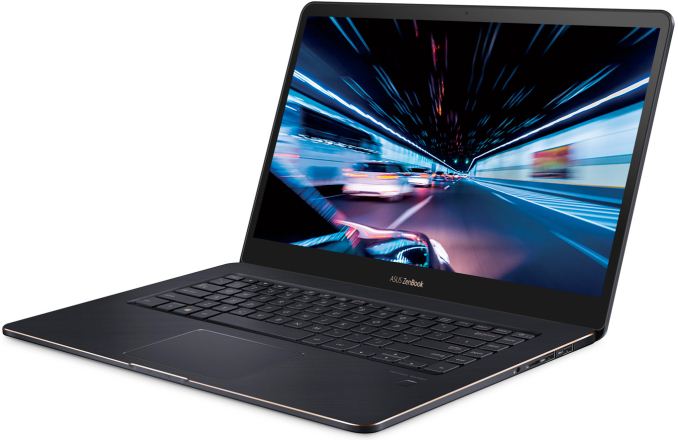
ASUS has started selling its 15-inch ZenBook Pro 15 UX550GE ultra-thin laptop featuring Intel’s six-core processor, NVIDIA’s discrete GPU as well as a factory-calibrated 15.6-inch display with a 4K Ultra-HD resolution. The laptop is available in only one configuration, but good news is that it is relatively affordable as it costs less than $2000. The ASUS ZenBook Pro 15 UX550GE-XB71T is based on Intel’s six-core Core i7-8750H processor accompanied by 16 GB of DDR4-2400 memory as well as a 512 GB NVMe SSD. The laptop has NVIDIA’s GeForce GTX 1050 Ti GPU with 4 GB of memory that drives its 15.6-inch multi-touch IPS display featuring a 3840×2160 resolution and is factory-calibrated to a Delta-E <2 accuracy.
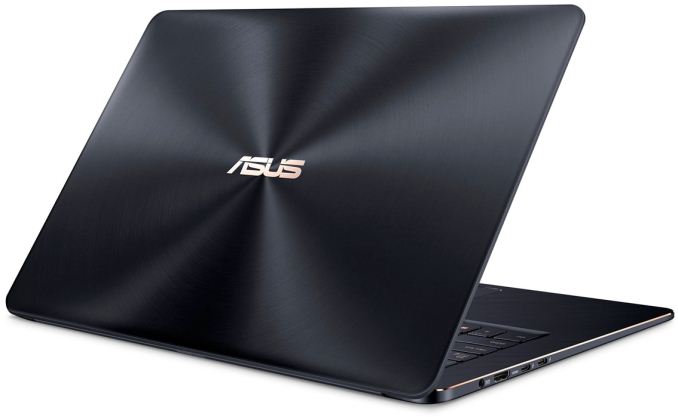
The latest ASUS ZenBook Pro 15 comes in ‘Deep Dive Blue’ aluminum unibody with rose gold edges to highlight its first-class nature and positioning. The laptop features an 18.9-mm z-height and weighs 1.86 kilograms, thus being thinner and lighter than most 15.6-inch laptops. As for battery life, the notebook can work for 9.5-hours on one charge (according to MobileMark 2014) on its 71 Wh lithium-polymer battery.
On the wireless connectivity side of things, we see Intel’s Wireless-AC 9560 CNVi solution featuring 802.11ac Wi-Fi (with up to 1.73 Gbps throughput) and Bluetooth 5.0. As for physical connectors, the notebook is equipped with two Thunderbolt 3 ports, two USB 3.1 Gen 2 headers, an HDMI display output, a microSD card reader, a TRRS audio jack, and a proprietary jack for charging. As for conferencing, the laptop has a VGA webcam, Harman Kardon-badged stereo speakers, and a microphone array.
The ASUS ZenBook Pro 15 UX550GE-XB71T notebook is available directly from ASUS in the U.S. as well as from large retailers like Amazon and Newegg. The laptop costs $1,799, but eventually ASUS may expand the number of configurations and introduce models that are more affordable (Core i5-8300H-based) or more expensive (Core i9-based).
Related Reading | ||||||||||||||||||||||||||||||||||||||||||||||||||||||||||||||||||||||||
| 2:37p | Flash Memory Summit, Toshiba Keynote Live Blog We're here at Flash Memory Summit! One of the first keynotes of the event is Toshiba, speaking about their use of Flash. | ||||||||||||||||||||||||||||||||||||||||||||||||||||||||||||||||||||||||
| 3:00p | Western Digital Announces OpenFlex Storage Architecture and NVMeoF Storage Devices
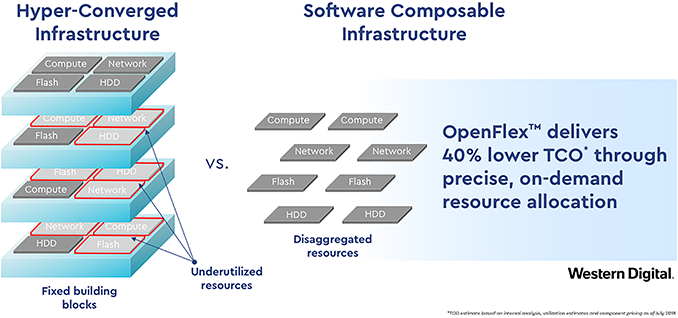
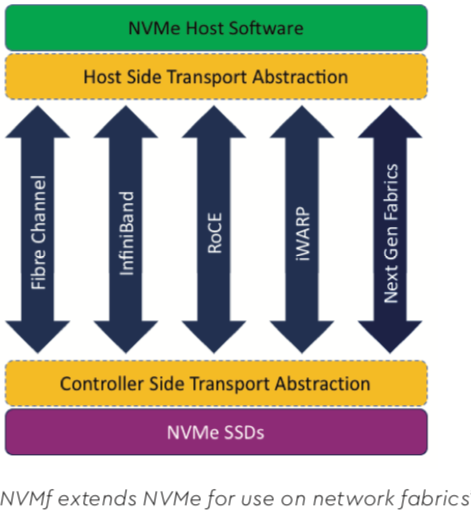
Western Digital on Tuesday introduced its new OpenFlex storage architecture and the first family of products supporting it. The OpenFlex architecture promises to enable operators of datacenters to independently scale compute, storage and network resources by using software composable infrastructure (SCI). Meanwhile Western Digital will share the mechanical specifications of OpenFlex products as well as publicly release its Kingfish API for managing SCI to make OpenFlex an open industry standard. The OpenFlex architecture relies on storage devices featuring SSDs and HDDs that use an NVMe-over-Fabric (NVMeoF) interface, and can be used to create independently scalable pools of storage connected to computing resources using standard technologies (such as Ethernet, InfiniBand, etc.). Western Digital says that independently scalable pools of various resources will allow customers to better utilize their installed hardware and software, therefore reducing the initial infrastructure investment and the total cost of ownership by eliminating problems like “stranded storage.”
In addition to its hardware OpenFlex architecture, Western Digital is also introducing its Kingfish API, which enables pools of devices to be presented as SCI and arranged into logical application servers. Western Digital says that since said storage pools are directly connected to other resources, logical application servers will not compete for resources and therefore will have more predictable performance. The latter claim looks rather promising, but certainly needs an independent verification. Furthermore, to take advantage of this capability, the Kingfish API has to be supported by popular datacenter software. So far Western Digital’s OpenFlex has gained support from various datacenter hardware and software products as well as from companies, including Apache Hadoop, Apache Spark, Apache Kafka, Apache Cassandra, Apache Mesos, Broadcom, Ceph, DriveScale, Hewlett Packard Enterprise (HPE), Inspur, Kaminario, Kubernetes, Marvell Technology Group, Mellanox Technologies, Microsoft SQL Server, Percona, and Super Micro Computer. Technically, all of the aforementioned should support the Kingfish API as well. Obviously, Western Digital will be the first to offer products based on the OpenFlex architecture. Initially, there will be three devices: The solid-state OpenFlex storage products will be available in Q4 2018, whereas the HDD-based D3000 1U box will launch in 2019. Though do note that Western Digital has yet to public prices for the new hardware.
Related Reading: | ||||||||||||||||||||||||||||||||||||||||||||||||||||||||||||||||||||||||
| 3:18p | Flash Memory Summit, Western Digital Keynote Live Blog Second Keynote for us: Western Digital | ||||||||||||||||||||||||||||||||||||||||||||||||||||||||||||||||||||||||
| 4:00p | Lenovo Posts Specifications of AMD’s Ryzen 3 2300X & Ryzen 5 2500X
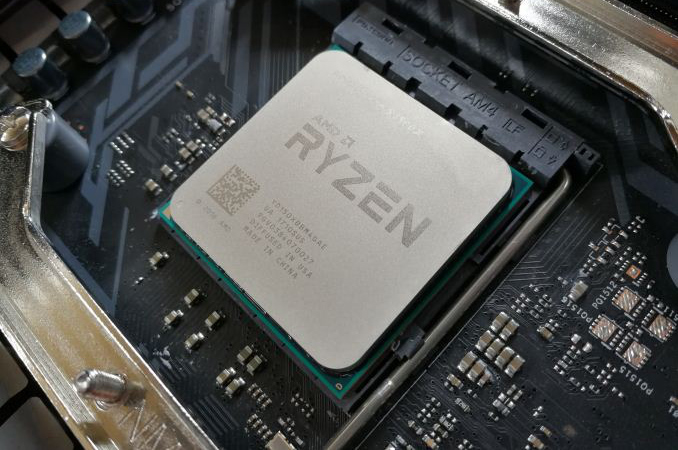
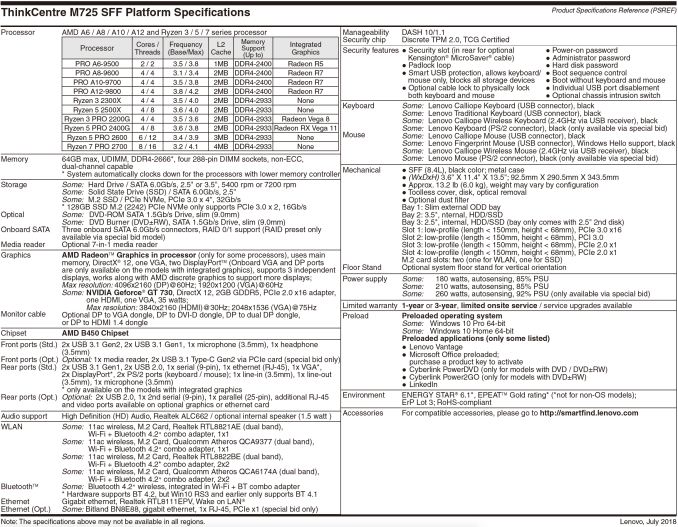
Proving once again that the only way to keep a secret is to not share it, Lenovo seems to have accidentally published the specifications of AMD’s yet-to-be announced Ryzen 3 2300X and Ryzen 5 2500X processors. The new chips are aimed at mid-range systems, but feature an unlocked multiplier as well as XFR on-the-fly frequency adjustment, which makes them particularly appealing to enthusiasts looking for additional bits of performance. Lenovo will offer AMD’s Ryzen 3 2300X and Ryzen 5 2500X processors with its ThinkCentre M725 SFF desktops along with a variety of other CPUs from the manufacturer, based on the spec sheet (published below). Eventually, AMD will make the chips available to its retail customers, replacing existing Ryzen 3 1300X and Ryzen 5 1500X products, but exact launch dates are unknown. The first details about the Ryzen 3 2300X and Ryzen 5 2500X processors were published back in May, so now we just need to fill in the gaps. Both CPUs feature four cores (with or without SMT) clocked at 3.5 – 3.6 GHz default that can automatically boost their frequency to 4 GHz, an increase when compared to the first-generation Ryzen chips. Besides, the new CPUs support DDR-2933 memory, another upgrade of Zen+ designs vs. original Zen. As for thermal dissipation, the chips are speced for a 65 W TDP, which makes them compatible with a wide range of systems.
Lenovo has been offering its ThinkCentre M725 SFF desktops since July, so the new processors from AMD are already in production and are available to select customers. It is highly likely that the CPUs will hit retail in the coming weeks. As for MSRPs, they will probably be comparable with those of existing Ryzen 3 1300X and Ryzen 5 1500X chips.
Related Reading: Source: Lenovo (via Tom’s Hardware) | ||||||||||||||||||||||||||||||||||||||||||||||||||||||||||||||||||||||||
| 4:34p | Flash Memory Summit 2018, Micron Keynote Live Blog: QLC Flash The afternoon keynote session has talks from Micron, SK Hynix, and YMTC, speaking all about future Flash products. This first talk is titled 'QLC Flash: Metting the Challenges of the New Data Economy'. | ||||||||||||||||||||||||||||||||||||||||||||||||||||||||||||||||||||||||
| 4:45p | Toshiba Announces XL-Flash Low-Latency 3D NAND
At Flash Memory Summit today, Toshiba announced a new variant of 3D NAND flash memory, XL-Flash. Made with the same basic process as their 96-layer BiCS4 3D NAND, XL-Flash uses shorter bit lines and word lines to build a flash memory die with many more planes than the two or four usually seen on current NAND devices. Toshiba claims that XL-Flash will have one tenth the read latency of TLC NAND, providing better random read IOPS, especially at low queue depths. Toshiba appears to be contemplating both SLC and MLC versions of XL-Flash and varying numbers of planes, but initially XL-Flash will be SLC. XL-Flash sounds very similar to Samsung's Z-NAND concept. Both seek to transform existing NAND flash into something that can compete against new non-volatile memories like Intel's 3D XPoint memory. Toshiba didn't mention anything about how the pricing or capacity will compare to current NAND, but it is safe to assume that the density is even lower than taking their 96-layer TLC and treating it as SLC NAND. XL-Flash is intended for enterprise and datacenter storage applications. | ||||||||||||||||||||||||||||||||||||||||||||||||||||||||||||||||||||||||
| 5:21p | Flash Memory Summit 2018, SK Hynix Keynote Live Blog: NAND Development Second keynote of the session is SK Hynix | ||||||||||||||||||||||||||||||||||||||||||||||||||||||||||||||||||||||||
| 5:50p | Flash Memory Summit 2018, Yangtze Memory Technology Keynote Live Blog: Unleashing 3D NAND The final talk of this session is from Yangtze Memory Technology (YMTC). We published their announcement this week, but they have set a very interesting talk for the show. The talk is called 'Unleasing 3D NAND's Potential with an Innovative Architecture'. | ||||||||||||||||||||||||||||||||||||||||||||||||||||||||||||||||||||||||





| << Previous Day |
2018/08/07 [Calendar] |
Next Day >> |