[Most Recent Entries] [Calendar View]
Thursday, August 16th, 2018
- Intel’s Crimson Canyon NUCs with Cannon Lake CPU & Radeon dGPU Available for Pre-Order
- First 10nm Cannon Lake Laptop Spotted Online: Lenovo Ideapad 330 for $449
- Intel Officially Launches Bean Canyon NUCs with Coffee Lake-U Processors
- The Intel NUC8i7HVK (Hades Canyon) Review: Kaby Lake-G Benchmarked
- Intel NUC8i7HVK (Hades Canyon) Gaming Performance - A Second Look
- Intel NUC6CAYH (Arches Canyon) Apollo Lake UCFF PC Review
- The EVGA X299 Micro Motherboard Review: A Smaller Take on X299
- EVGA X299 Micro2: A Refresh of the X299 Micro
- The EVGA X299 FTW K Motherboard Review: Dual U.2 Ports
- The ASRock X299 Extreme4 Motherboard Review: $200 Entry To HEDT
- The MSI X299M Gaming Pro Carbon AC Motherboard Review
- The ASRock X299E-ITX/ac Motherboard Review: An 18-core No-Compromise Mini-ITX
| Time | Event | ||||||||||||||||||||||||||||||||||||||||||||||||||||||||||||||||||||||||||||||||||||
| 8:00a | The Corsair H150i Pro RGB AIO Cooler Review: The Quiet Giant In today's review we are taking a look at the largest all-in-one liquid cooler Corsair is currently offering, the H150i Pro RGB. The H150i Pro RGB is largely based on previous products that the company introduced last year, with the palpable exception being the huge 360 mm radiator. Also, as its name suggests, the H150i Pro RGB features RGB lighting that is programmable via Corsair's new iCUE software interface. | ||||||||||||||||||||||||||||||||||||||||||||||||||||||||||||||||||||||||||||||||||||
| 8:30a | More 10nm Cannon Lake: Coming to Intel NUC, Officially
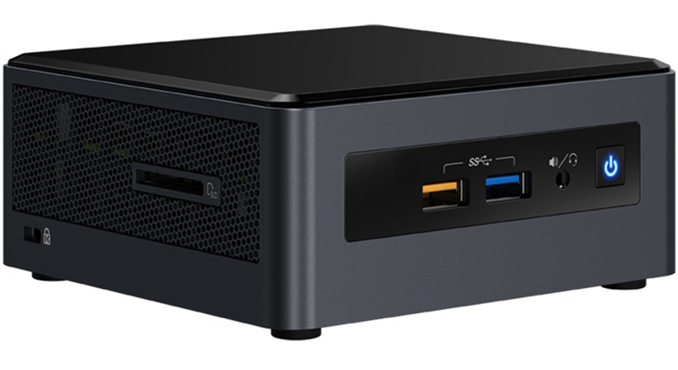
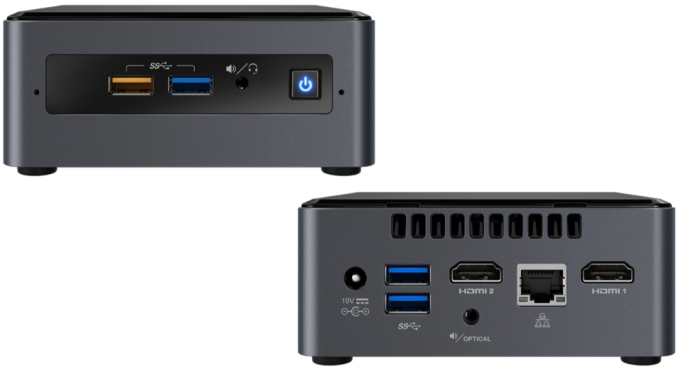
Intel late on Wednesday formally introduced its Crimson Canyon NUCs based on its 10nm Cannon Lake processors and equipped with AMD’s standalone Radeon 540 graphics chip. The new NUC8i3CY-series PCs are the first systems of their kind (SFF) to use Intel’s CPU made using its 10 nm process technology as well as a discrete GPU on a separate chip. A retailer specializing on custom-built Intel’s NUC UCFF PCs disclosed virtually all specifications of Intel’s NUC8i3CYSM and NUC8i3CYSN earlier this month, so we already know most of the details regarding the systems. The new NUCs are powered by Intel’s dual-core Core i3-8121U processor that works in tandem with AMD’s Radeon 540 dGPU (codenamed Lexa, based on Polaris architecture, featuring 512 SPs) with 2 GB of GDDR5 memory. The NUCs are outfitted with soldered-down 4 GB or 8 GB of LPDDR4-2666 memory and come with a 1 TB SATA hard drive. Users that want faster storage can install an M.2-2280 SSD with a SATA or a PCIe interface. When it comes to wireless connectivity, the NUC8i3CY-series UCFF PCs are equipped with Intel’s Wireless-AC 9560 CNVi 802.11ac Wi-Fi + Bluetooth 5 solution that supports up to 1.73 Gbps throughput over 160 MHz channels. As for physical connectors, the NUCs have one GbE, two HDMI 2.0a outputs, four USB 3.0 Type-A ports (one supporting charging), an SD card reader, a TRRS audio connector for headsets, and a digital audio connector for 7.1-channel sound systems.
The key feature of Intel’s NUC8i3CY-series systems is the Cannon Lake processor made using a 10 nm fabrication technology. The Core i3-8121U chip is clocked at 2.2 GHz base to 3.2 GHz turbo, which is slightly below frequencies of the Core i3-8130U (2.2 – 3.4 GHz) made using Intel’s 14+ manufacturing process. The Cannon Lake CPUs support AVX-512 extensions that can speed up operations with large datasets that are not common on UCFF PCs, so whether or not this technology makes sense for typical owners of NUCs is up to debate. What is noteworthy is that Intel has enough 10-nm CPUs to install them in its own NUCs that tend to be rather popular miniature desktops. Intel officially positions its NUC8i3CY-series systems as affordable solutions for gamers who play titles like League of Legends, TF2, as well as CS:GO and can therefore take advantage of AMD’s discrete Radeon 540 graphics chip. This dGPU is clearly faster than Intel’s UHD 630 iGPU in games, but Intel’s latest iGPUs have numerous advantages over AMD’s Polaris when it comes to media playback. For example, they featureVP9 10-bit decode, and support sophisticated copyright protection methods that require Intel’s SGX.
Intel said that its Crimson Canyon NUCs will be available in September, but did not announce their official prices. Previously it was reported that the NUC8i3CY-series systems will cost $530 – $575, but since this information is unofficial, it is always subject to change. Related Reading | ||||||||||||||||||||||||||||||||||||||||||||||||||||||||||||||||||||||||||||||||||||
| 9:01a | ASUS Announces The ROG Zephyrus S: Slimmest Gaming Laptop Available
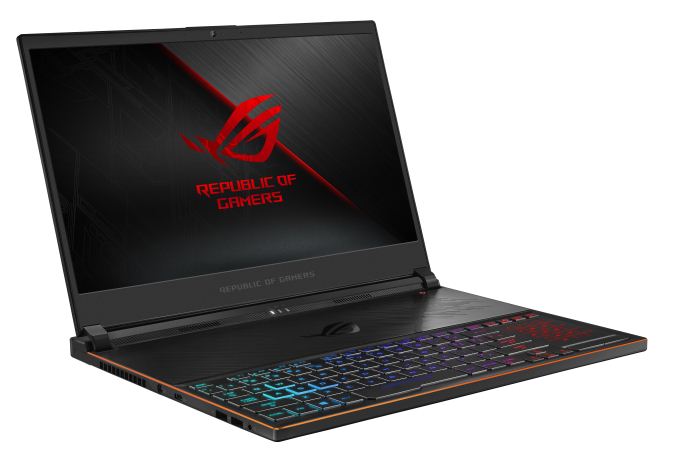
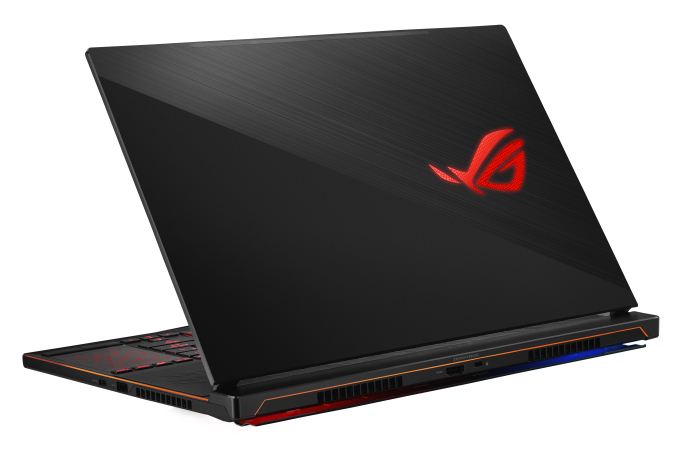
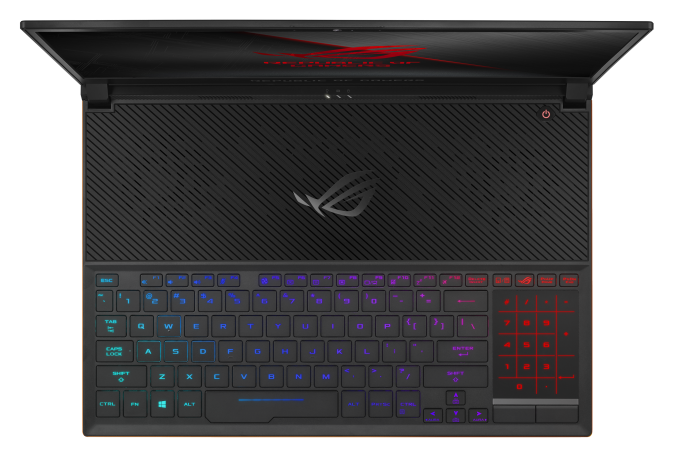
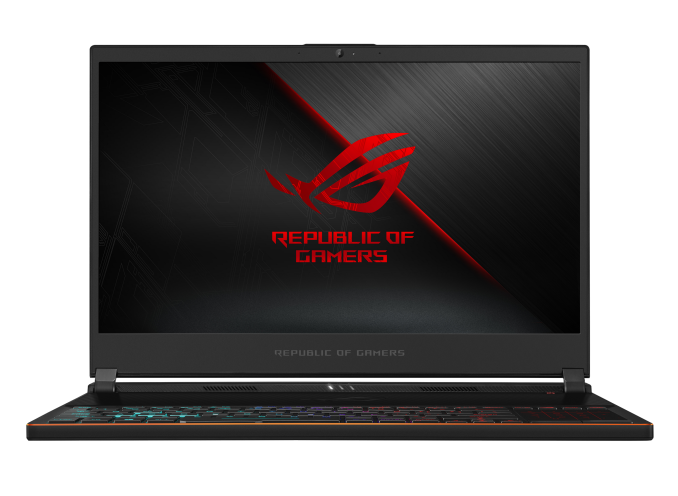
Today ASUS is announcing a new laptop in their Republic of Gamers series, which is the Zephyrus S (GX531). ASUS is marketing it as the world’s slimmest gaming laptop featuring the GTX 1070 Max-Q or GTX 1060, and at 14.95 to 15.75 mm thick, this should be a gaming laptop that is incredibly portable.
Powering the Zephyrus S is the Intel Core i7-8750H processor, with six cores and twelve threads, with a base frequency of 2.2 GHz and a maximum turbo frequency of 4.1 GHz. This is a 45-Watt Coffee Lake CPU. GPU options are either the NVIDIA GeForce GTX 1070 Max-Q in the GX531GS, or the GTX 1060 in the GX531GM model. There’s storage options from 256 GB to 1 TB based on NVMe SSDs, although one 512 GB model will be PCIe 3.0 x2, while other options are all x4 drives. Interestingly the more powerful GPU model has less maximum RAM, at just 16 GB maximum, whereas the GTX 1060 model will be available with up to 24 GB. We’ve confirmed this with ASUS, and it seems like an odd choice.
The Zephyrus S features a 15.6-inch 1920x1080 display, and as a gaming system, ASUS has outfitted it with a 144 Hz panel from AUO, but unlike some gaming laptops with a high refresh, the Zephyrus S comes with an AHVA panel from AUO and not a TN, so image quality should be quite good. ASUS has stated it covers 100% of the sRGB gamut, and the response time is just 3 ms. The display is in a thin-bezel design as well, which further shrinks the footprint of the laptop, with ASUS stating this new laptop is a 15.6-inch display in a chassis just a bit bigger than a typical 14-inch model.
Cooling is going to be a big concern on any gaming system, but especially when pushing the limits on device thickness as this one is. ASUS uses their Active Aerodynamic System (AAS) which opens a vent on the bottom of the laptop when the lid is lifted, and the vent stretches across the entire back of the body. The company says this improves airflow by 22% over a conventional design. There’s five heat pipes inside that pull heat from the CPU, GPU, and VRM, and the cooling is designed to keep the power components under 80°C for reliability. There are four heatsinks at the rear corners, which is double the number from the original Zephyrus. ASUS uses self-cleaning fans to keep dust from becoming the enemy, and the fans themselves have 83 blades each, with the fan speed of course controlled based on cooling profiles, with silent, balances, and overboost modes to choose the amount of cooling and noise you’ll see. ASUS has also moved the keyboard to the front of the device, which also helps with cooling. The keys offer 1.2 mm of travel, and the keyboard offers N-key rollover. As you’d expect, there’s support for RGB lighting as well through Aura Sync, although only with four zones.
If you’re in the market for a gaming laptop that needs to be portable, you’ll likely want to check this out. Prices will be announced when the laptop is launched in September. Source: ASUS | ||||||||||||||||||||||||||||||||||||||||||||||||||||||||||||||||||||||||||||||||||||
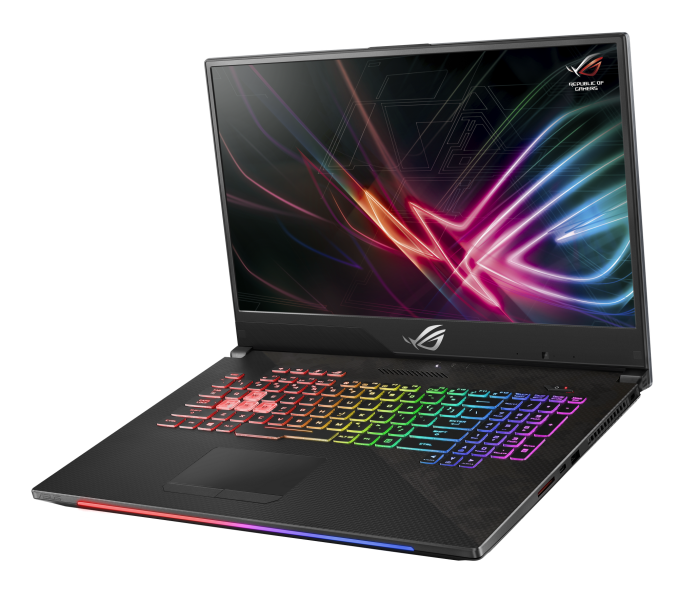
| 9:02a | ASUS Announces The ROG Strix SCAR II GL704: Thin Bezel 17-inch
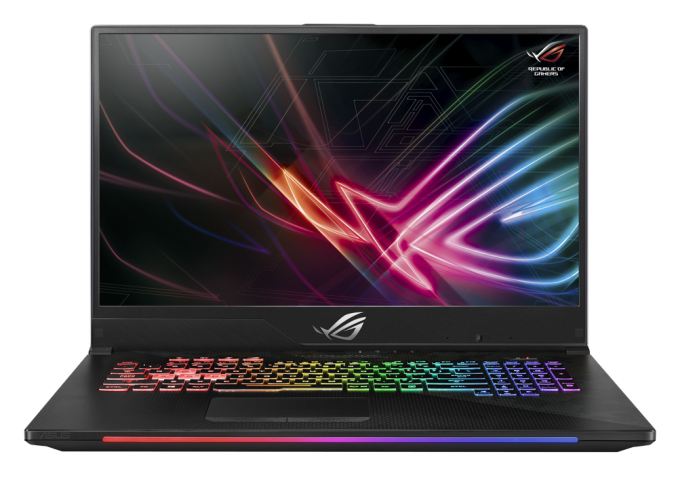
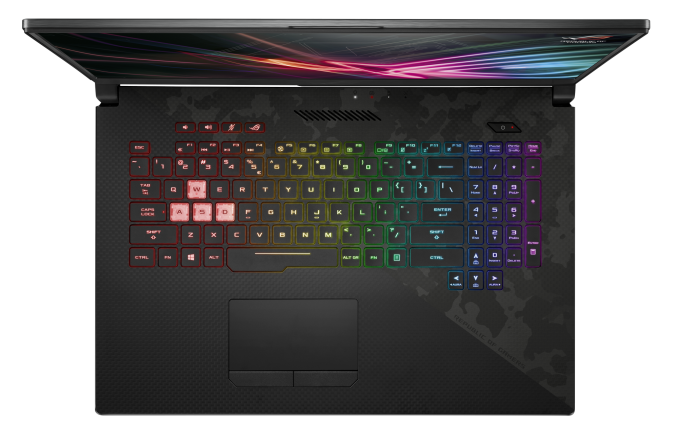
ASUS is updating their GL70x line today with the Strix SCAR II GL704, which looks like a nice upgrade for their Strix line. The GL704 has taken the thin-bezel revolution to the 17-inch gaming laptop, making it about the same size as previous 15.6-inch models.
The ASUS ROG Strix SCAR II GL704 is a bit of a mouthful of a name, but it should offer good performance for a mid-range gaming notebook, with either an Intel Core i5-8300H, or Core i7-8750H processor, and the NVIDIA GTX 1060 GPU. You can get up to 32 GB of DDR4 RAM, and 128 GB to 512 GB SSDs coupled with an optional 2.5-inch spinning 1 TB drive in either SSHD or HHD for extra storage.
ASUS will offer two displays. The base model is a 17.3-inch 1920x1080 60 Hz panel, but you can also get it with a 1920x1080 144 Hz model as well. Both panels are AUO AHVA panels (IPS) and should offer good colors and viewing angles, as well as the high refresh on the upgraded panel.
The laptop has contrasting Kevlar and camouflage textures, as well as a gun metal lid. You can’t get a gaming laptop without RGB lighting, and the Strix SCAR II offers seven zones of RGB, with four on the keyboard, two on the light bar on the front edge, and the final one on the ROG logo on the lid. In addition to the four zones of lighting on the keyboard, it also features keys with 1.8 mm of travel, which should be comfortable, and ASUS uses what they call Overstroke technology to have the key presses actuate at halfway through the travel. The keys are rated for 20 million key presses. ASUS has three heatsinks in the GL704, with one dedicated to the GTX 1060, and the other two shared between both the CPU and GPU. ASUS uses a thin-fin heatsink which they say offers better cooling and airflow in the laptop design. If you’re in the market for a mid-range gaming laptop, the ASUS ROG Strix SCAR II GL704 will be available in September, with full product pricing announced then. Source: ASUS | ||||||||||||||||||||||||||||||||||||||||||||||||||||||||||||||||||||||||||||||||||||
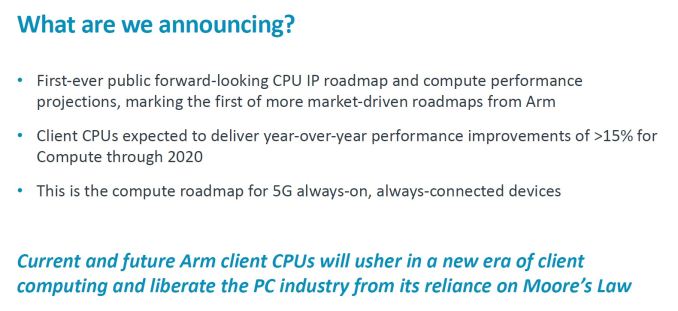
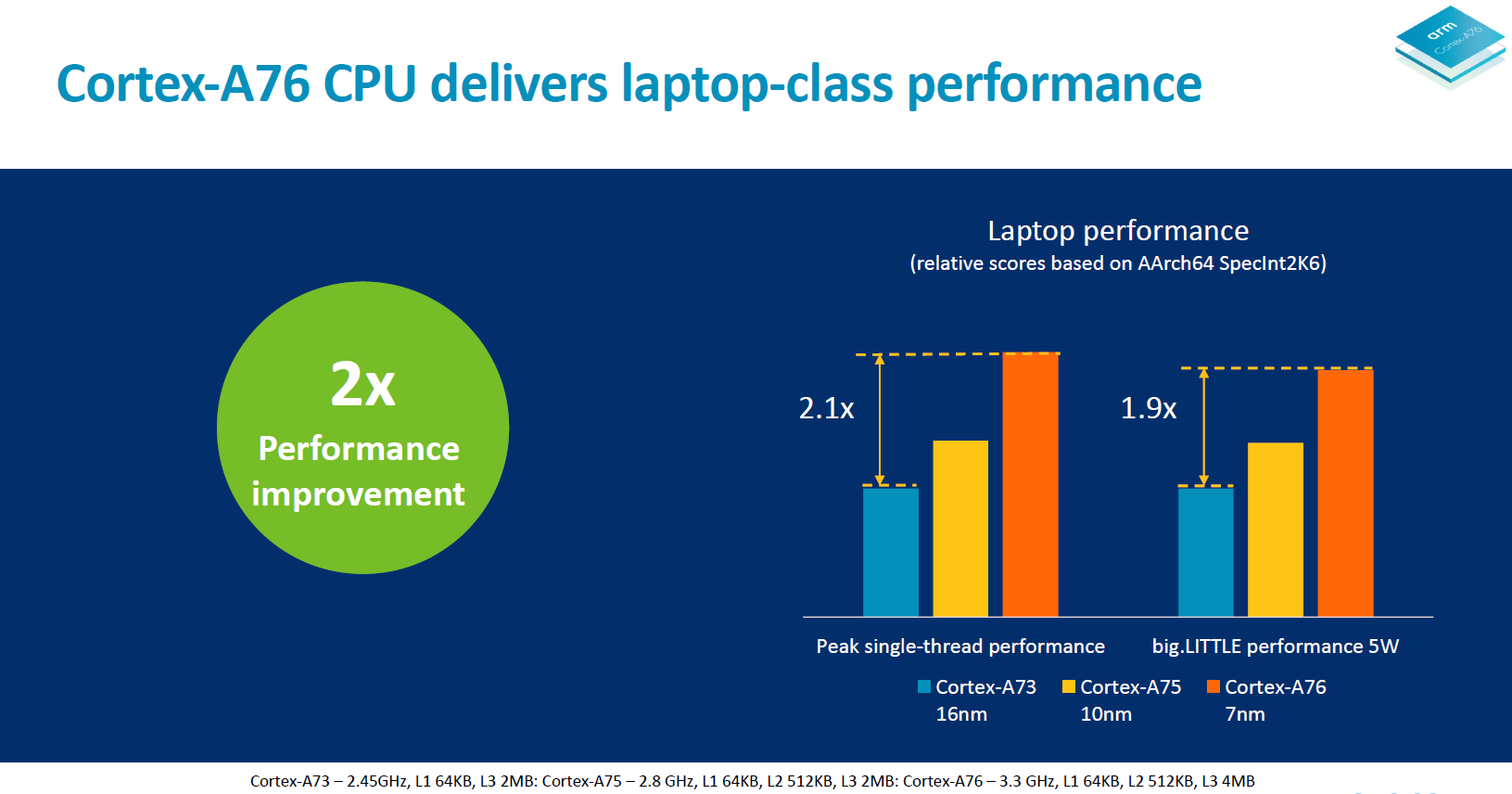
| 9:05a | Arm Unveils Client CPU Performance Roadmap Through 2020 - Taking Intel Head On Today’s announcement is an oddball one for Arm as we see the first-ever public forward looking CPU IP roadmap detailing performance and power projections for the next two generations through to 2020. Back in May we extensively covered Arm’s next generation Cortex A76 CPU IP and how it’s meant to be a game-changer in terms of providing one of the biggest generational performance jumps in the company’s recent history. The narrative in particular focused on how the A76 now brought real competition and viable alternatives to the x86 market and in particular how it would be able to offer performance equivalent to Intel’s best mobile offerings, at much lower power.
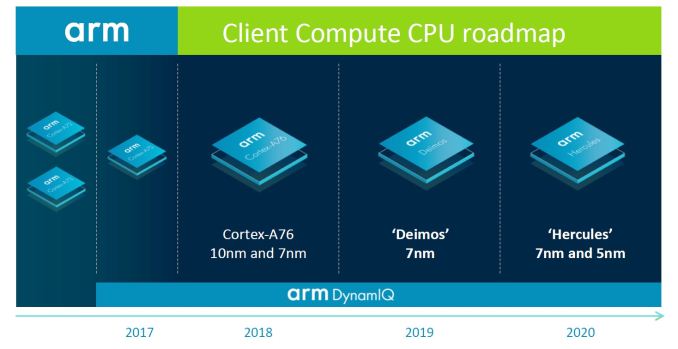
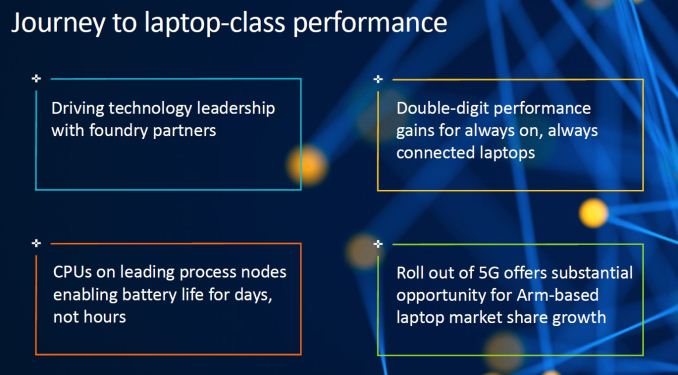
Arm sees always-connected devices with 5G connectivity as a prime opportunity for a shift in the laptop market. Qualcomm’s recent Snapdragon 835 and Snapdragon 850 platforms were the first attempts in trying to establish this new slice for Arm-based PCs. Today’s roadmap now publicly discloses the codenames of the next two generations of CPU cores following the A76 – Deimos and Hercules. Both future cores are based on the new A76 micro-architecture and will introduce respective evolutionary refinements and incremental updates for the Austin cores.
The A76 being a 2018 product – and we should be hearing more on the first commercial devices on 7nm towards the end of the year and coming months, Deimos is its 2019 successor aiming at more wide-spread 7nm adoption. Hercules is said to be the next iteration of the microarchitecture for 2020 products and the first 5nm implementations. This is as far as Arm is willing to project in the future for today’s disclosure, as the Sophia team is working on the next big microarchitecture push, which I suspect will be the successor to Hercules in 2021.
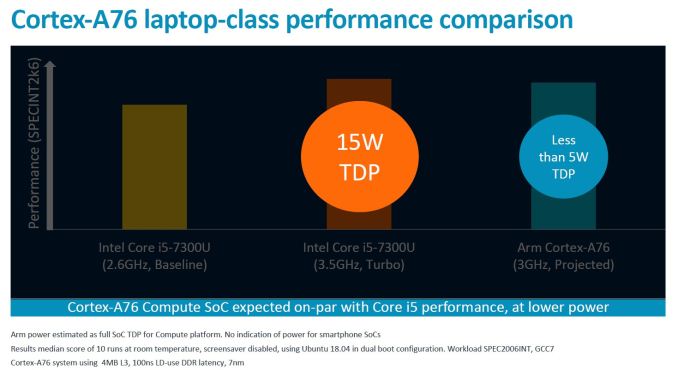
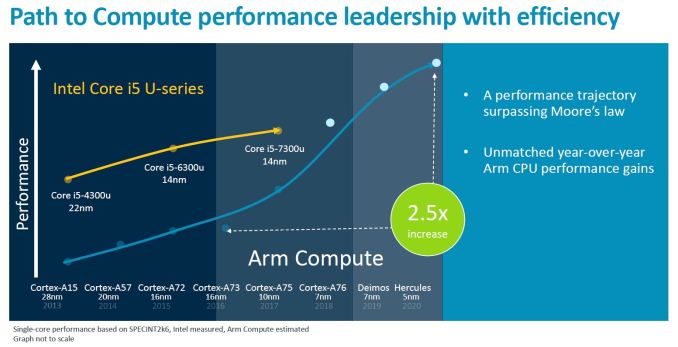
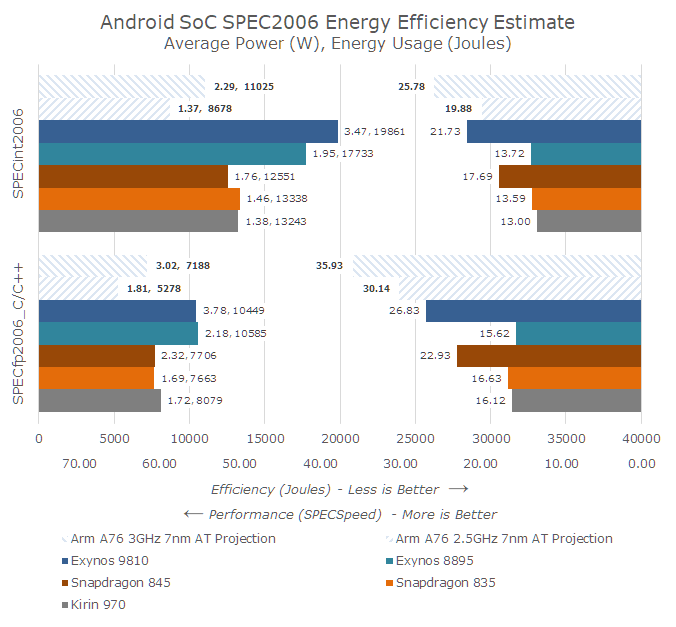
Part of today’s announcement is Arm’s reiteration of the performance and power goals of the A76 against competing platforms from Intel. The measurement metric today was the performance of a SPECint2006 Speed run under Linux while complied under GCC7. The power metrics represent the whole SoC “TDP”, meaning CPU, interconnect and memory controllers – essentially the active platform power much in a similar way we’ve been representing smartphone mobile power in recent mobile deep-dive articles. Here a Cortex A76 based system running at up to 3GHz is said to match the single-thread performance of an Intel Core i5-7300U running at its maximum 3.5GHz turbo operating speed, all while doing it within a TDP of less than 5W, versus “15W” for the Intel system. I’m not too happy with the power presentation done here by Arm as we kind of have an apples-and-oranges comparison; the Arm estimates here are meant to represent actual power consumption under the single-threaded SPEC workload while the Intel figures are the official TDP figures of the SKU – which obviously don’t directly apply to this scenario. We didn’t have internal data to verify Arm’s claims as of publishing of the article, but the 15W Intel figure is naturally on the high side, given that this just the official TDP representing multi-threaded workloads – a very quick test of CB15 ST power as reported by MSR registers on an 7200U at 3.1GHz measured 9.3W package+DRAM power while an 8250U at 3.35GHz came in at 11W. I haven’t correlated SPEC power on x86 to date, but I’m expecting it on average to be less than CB15. Even if the 15W figure for the 7200U is correct, and I’m expecting something more in the range of 9-11W, Arm might is using one of Intel’s notably less efficient performance points when doing the comparison for these SKUs. Of course this doesn’t invalidate the data as efficiency for the A76 at those frequencies would also not be optimal, it’s just something to keep in mind. It’s also interesting to see Arm scale back on the performance comparison as they’re using a 3GHz A76 as the comparison data-point – this is in contrast to the 3.3GHz maximum 5W performance point presented during TechDay. I had tried to estimate the A76’s power in mobile form-factors based on the different metrics Arm disclosed and came at an estimated 2.3W at 3GHz. Naturally Arm says “less than 5W” and they could be erring on the safe side of not over-promising – but if it had been *that* much lower, as in my estimate, we would have maybe seen even more aggressive marketing figures. In the end, until we get the first A76 devices in our hands, we won’t know for sure what the exact figures will be and at which point on the efficiency curve Arm’s projected 3GHz performance figures will end up at.
The last slide that is notable to talk about is the performance projections for Deimos and Hercules. Here Arm’s taking a direct stab at Intel’s lack of significant progress over the last few years and reiterating its confidence in the company’s ability in sustaining high CAGR (compound annual growth rate) performance figures for the next generations. Again at TechDay we quoted figures of 20-25% while today’s announcement contained a more conservative figures of “>=15%” – likely better representing a seemingly larger 20% projected boost for Deimos as well as what seems to be a 10% gain for the 5nm follow-up Hercules. Taking into account the relative positioning of the data-points in this chart, I did some quick correlation and it matches my initial estimated performance figures for a 3GHz A76 at around ~26 SPECint2006. Deimos and Hercules would come in at figures of ~31 and ~34 points.
Finally today’s announcement is a marketing exercise attempting to emphasise Arm’s performance and power commitments over the next few generations, trying to showcase it has the strategy and technology in place to make the Arm laptop market a real growth opportunity. If and how this pans out is something that we won’t find out at least until later on in the year, with the first actual A76 based large form-factor designs not being a thing until at least sometime in 2019. We’re eagerly awaiting the first A76 based mobile designs in the months to come and to have a first hand-on evaluation of the new microarchitecture family. Related Reading | ||||||||||||||||||||||||||||||||||||||||||||||||||||||||||||||||||||||||||||||||||||
| 12:00p | EVGA Launches X299 Micro ATX 2 Motherboard
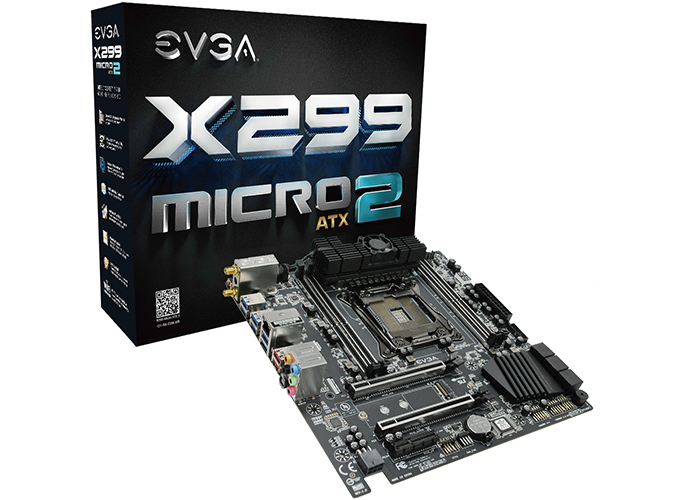
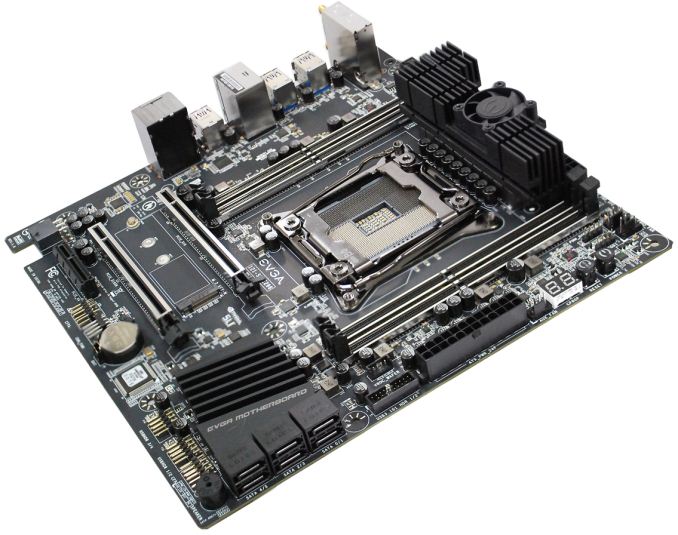
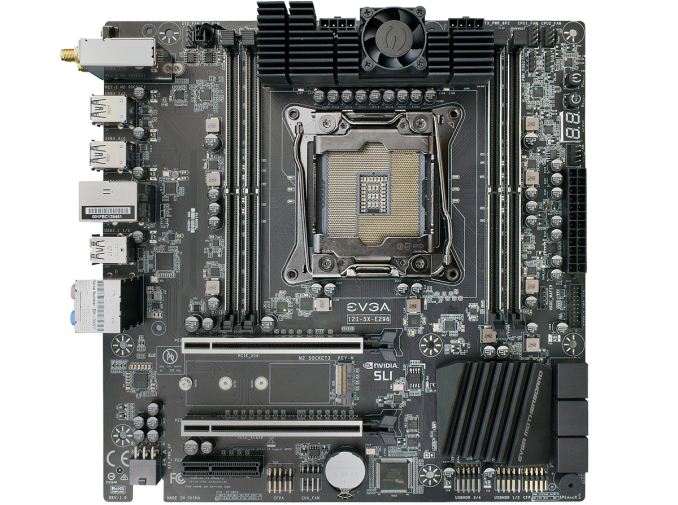
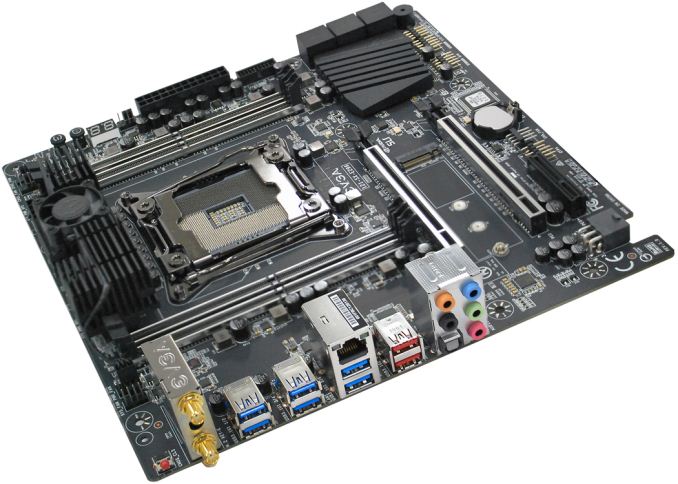
EVGA this week introduced its second-generation Micro-ATX motherboard based on Intel’s X299 platform. The new mainboard has an improved VRM configuration with more phases and a better cooling, which may enable a higher overclocking potential for Intel’s Skylake-X CPUs. In fact, despite it miniature size, the motherboard has a number of features more typical of fully fledged ATX systems. The EVGA X299 Micro ATX 2 for LGA2066 processors relies on an eight-layer PCB and is equipped with a 14-phase digital VRM, one that is now cooled down using a large aluminum heatsink with a miniature fan. Meanwhile, just like in case of the original version, the new X299-based Micro-ATX motherboard from EVGA has two 8-pin EPS connectors to guarantee clean and stable power supply to a CPU in a bid to maximize its overclocking potential.
When it comes to expansion capabilities of the EVGA X299 Micro ATX 2, the motherboard has four reinforced slots for DDR4 DIMMs (supporting up to 64 GB of memory), two PCIe 3.0 x16 slots for graphics cards or high-end SSDs (keep in mind that the exact amount of lanes depend on the CPU, Kaby Lake-X processors only support 16 PCIe lanes), a PCIe 3.0 x4 slot, and an M.2-2280 slot for SSDs. Besides, the motherboard also has six SATA ports for storage devices, a rather high amount for a Micro-ATX system.
Moving on to connectivity. The EVGA X299 Micro ATX 2 is equipped with Intel’s Wireless-AC 8265 802.11ac Wi-Fi + Bluetooth 4.2 controller, Intel’s i219V GbE silicon, six USB 3.1 Gen 1 ports, two USB 3.1 Gen 2 connectors, four USB 2.0 headers (available through internal headers), 7.1-channel audio connectors (analog + Toslink), and so on.
EVGA’s X299 Micro ATX 2 motherboard is now available directly from EVGA for $299.99 and will be available from leading retailers like Amazon as well as Newegg in the coming weeks or days. In the meantime, EVGA’s original mATX X299-based motherboard is now available for $186.
Related Reading: | ||||||||||||||||||||||||||||||||||||||||||||||||||||||||||||||||||||||||||||||||||||
| 2:00p | GIGABYTE's Cavium ThunderX2 Systems: 1U R181-T90 and 2U R281-T91
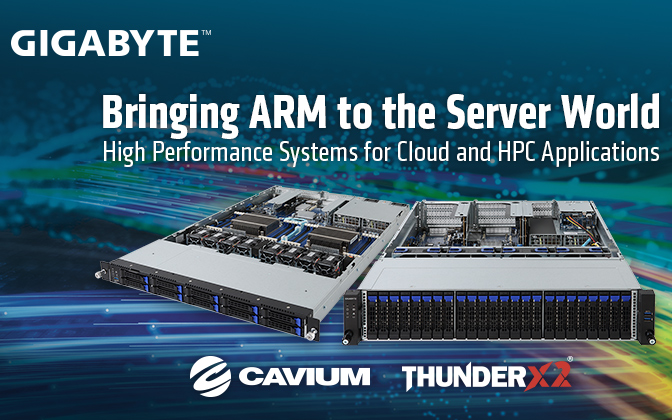
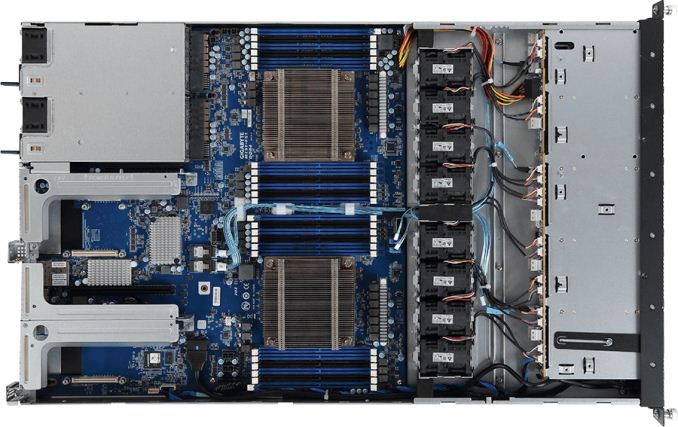
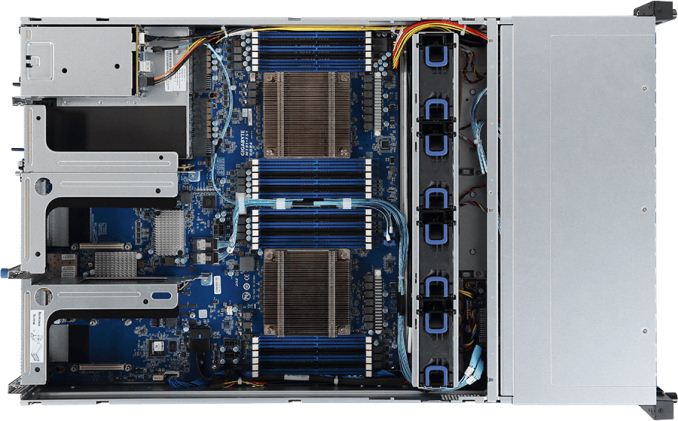
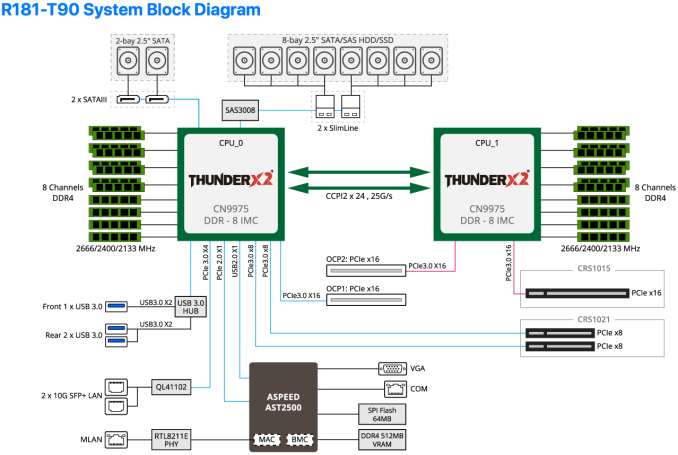
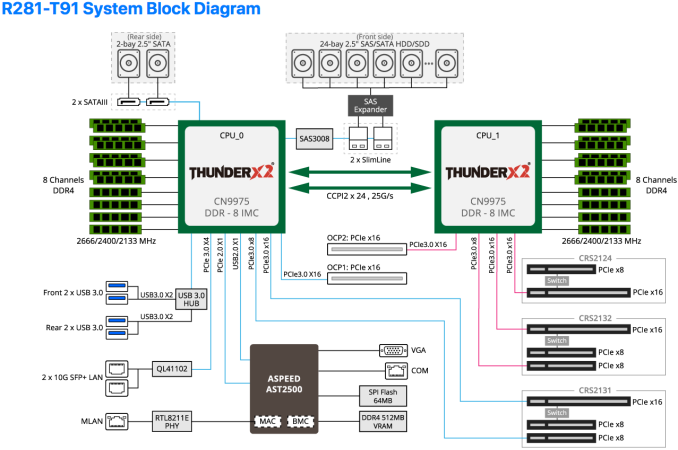
GIGABYTE's server division has started sales of its first servers based on Cavium’s ThunderX2 processors with up to 32 cores. Being among the primary companies to begin selling machines powered by these CPUs, GIGABYTE offers a lineup of two servers designed for cloud and HPC applications. GIGABYTE’s family of ThunderX2 servers currently includes two machines: the 1U R181-T90 and the 2U R281-T91. Both servers are based on Cavium’s ThunderX2 CN9975 processor featuring 28 cores running at 2.0 GHz as well as GIGABYTE’s MT91-FS1 motherboard (offered with slightly different configurations). The manufacturer promises that it will release other versions of the ThunderX2 machines based on faster 28-core and 32-core processors shortly, but does not elaborate. The platform has 28 DIMM slots supporting up to 1536 GB of DDR4 memory per box (792 GB of octa-channel memory per socket). The 1U server can support up to 10 2.5-inch drivers, whereas the 2U machine can connect up to 26 2.5-inch storage devices.
When it comes to expansion capabilities, the 1U R181-T90 supports two PCIe 3.0 x16/OCP slots, one PCIe 3.0 x16 slot, and two PCIe 3.0 x8 slots. The bigger 2U R281-T91 can naturally attach considerably more add-on components as it features two PCIe 3.0 x16/OCP slots, three PCIe 3.0 x16 slot, and five PCIe 3.0 x8 slots (check exact configurations in the table below). As for network connectivity, both machines are outfitted with two 10GbE QLogic QL41102 controllers as well as one GbE port for management.
GIGABYTE’s R181-T90 and the R281-T91 machines are equipped with dual redundant 1200-W 80Plus Platinum PSUs, so end-users and system integrators will have enough power to configure the servers according to their requirements. GIGABYTE’s R181-T90 and R281-T91 servers are exclusively available from PhoenicsElectronics in Europe and the U.S. MSPRs are unknown, which is not surprising as machines will be configured differently for different applications.
One of the reasons why servers running Armv8 SoCs are slowly gaining traction is due to software support. Programmers need to recompile their applications for Arm, but this process is taking a long time because the hardware itself is not widely available. Earlier this year GIGABYTE started to offer its ThunderXStation systems to software makers interested in Armv8. Therefore, at least some developers have received GIGABYTE’s ThunderX2-based machines and therefore the situation with software should be improving. At the same time, since only one of GIGABYTE’s partners currently offers Armv8-based servers and workstations, it is expected that the ThunderX2 platform will eventually spread to other partners. Related Reading | ||||||||||||||||||||||||||||||||||||||||||||||||||||||||||||||||||||||||||||||||||||
| 7:00p | NVIDIA Announces Q2 FY 2019 Results: Record Revenue
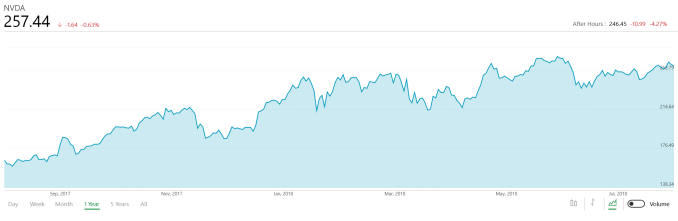
This afternoon NVIDIA announced their earnings for the second quarter of their 2019 fiscal year. As has been the trend over the last couple of years, NVIDIA continues to churn out the money, with record revenue across all of their platforms this quarter. Revenue was $3.12 billion for the quarter, up 40% from the same quarter a year ago. Margins for the quarter were 63.3%, up 4.9% from Q2 2018. Operating income was up 68% year-over-year to $1.157 billion, and net income was up 89% to $1.101 billion. This meant earnings per share of $1.76, up 91% from a year ago. Although it may sound like Q2 2018 was a poor quarter for NVIDIA with these kinds of gains for 2019, revenue was up 56% year-over-year back in Q2 2018.
Gaming continues to be the bread and butter for the company, even as they have diversified into other markets. For Q2 2019, gaming revenues were $1.805 billion, which is 52.2% growth over Q2 2018. That’s strong growth despite the drop in cryptocurrency demand for the consumer GeForce cards. Professional Visualization was up 19.6% in revenue to $281 million. It’ll be interesting to watch this market now that NVIDIA has just announced their Quadro RTX lineup just a few days ago. The Datacenter market continues to be a source of strong growth as well, with this segment up 83% year-over-year to $760 million in revenue. The company has been creating and expanding markets for their datacenter products, and have found a lot of homes in some very big infrastructures. Automotive was also up, but at only 13% to $161 million. Growth in this segment isn’t quite as rapid as some of their other inroads, but it’s a strong market that they’ve notched into with Tegra several years ago. NVIDIA now offers several platforms such as DRIVE for vehicle infotainment and driverless cars. The only real downside for the company is that it seems their OEM orders for cryptocurrency have dried up. They had forecast $100 million in revenue for the quarter for cryptocurrency chips, but delivered only $18 million, and project no meaningful contributions going forward. That’s good news for those of us who have been unable to buy a GPU over the last while, and unsurprising with the rapid decline in cryptocurrency prices. Looking ahead to next quarter, NVIDIA is expecting revenue of $3.25 billion, plus or minus 2%, with margins of 62.6% plus or minus 0.5%.
Source: NVIDIA Investor Relations | ||||||||||||||||||||||||||||||||||||||||||||||||||||||||||||||||||||||||||||||||||||
| << Previous Day |
2018/08/16 [Calendar] |
Next Day >> |