[Most Recent Entries] [Calendar View]
Monday, August 27th, 2018
- GlobalFoundries Stops All 7nm Development: Opts To Focus on Specialized Processes
- AMD “Rome” EPYC CPUs to Be Fabbed By TSMC
- AMD Demos 7nm Vega GPU: Betting Big on Machine Learning for Radeon Instinct; Shipping This Year
- The AMD Threadripper 2990WX 32-Core and 2950X 16-Core Review
- More Details About the ZhongShan Subor Z+ Console, with Custom AMD Ryzen SoC
- The AMD 2nd Gen Ryzen Deep Dive: The 2700X, 2700, 2600X, and 2600 Tested
- Setting TAA at 100% in Rainbow Six Siege causes screen to be blurry when not moving in after driver update.
- Fixed diagonal tearing by using win7-blit model for MSHybrid (Optimus) notebooks.
- OpenGL driver does not release the rendering context correctly for GTX 1050 and 1070
- Blue-screen crash occurs when using Oculus VR software.
- On 600/700 series Kepler GPUs, missing textures in DOOM when using Vulkan API.
- Stability issues occur when running LA Noire VR.
- Stuttering and performance issues occur for some Call of Duty Black Ops 4 configurations.
- Windowed G-Sync mode may stutter after upgrading to Windows 10 Spring Creators Update.
- The game stops responding when trying to enter any multiplayer game or single player mission with HDR and SLI enabled on Battlefield 1 with DX12 on.
- Some objects render incorrectly over the sticker when using the Freestyle Sticker filter on SLI configurations for Immortal: Unchanged
- NVIDIA graphics driver may not install correctly on certain Core 2 Duo/Quad systems.
- On GeForce GTX 1060 configurations, AV receiver switches to 2-channel stereo mode after 5 seconds of audio idle.
- Cursor shows brief corruption when hovering on certain links in Firefox.
- Random DPC watchdog violation errors occur when using multiple GPUs on motherboards with PLX chips.
- Using power monitoring in GPU monitor tools causes micro stutter.
- Some games may experience instability or stutter when playing with FRTC and Instant Replay enabled.
- Upgrade Advisor may not appear in Radeon Settings game manager.
- Far Cry 5 may experience dimmed or grey images with HDR10 enabled on some system configurations.
- Far Cry 5 may experience an application hang when changing video settings on some system configurations.
- Radeon Chill min and max values may not sync on multi GPU system configurations.
- Radeon FreeSync may fail to enable when playing Call of Duty: Black Ops 4.
- Radeon FreeSync may fail to enable when playing Monster Hunter: World.
- Some DirectX 12 gaming applications may experience instability while recording with Radeon ReLive on system configurations using Radeon R9 290 and Radeon R9 390 series graphics products."
- Cursor or system lag may be observed on some system configurations when two or more displays are connected and one display is powered off.
- Radeon RX Vega Series graphics products may experience elevated memory clocks during system idle.
- Strange Brigade may experience fps drops on multi GPU enabled system configurations when Enhanced Sync is enabled and Vulkan API is enabled.
- Flickering may be observed on some displays when Radeon FreeSync is enabled with Radeon ReLive enabled and recording.
- Video profiles may not correctly apply on web browser video content.
| Time | Event | ||||||||||||||||||||||||||||||||||||||||||||||||||||||||||||||||||||||||||||||||||||||||||||||||||||||||||
| 8:00a | MSI B360 Gaming Plus & B360 Gaming Arctic Review: Paternal Twins On The Cheap Today we get an opportunity to look at two motherboards out of MSI's B360 stable in the form of the B360 Gaming Plus and B360 Gaming Arctic. The two boards look dramatically different – with one black and red and the other white – however, under the hood they share the same DNA. Both boards include a single PCIe x4 M.2 slot, five SATA ports, Crossfire support, Intel Ethernet, Realtek audio and more making for a well-rounded option in the non-overclocking B360 lineup. We'll take a look at the boards to see what makes them tick and run them through our performance tests. | ||||||||||||||||||||||||||||||||||||||||||||||||||||||||||||||||||||||||||||||||||||||||||||||||||||||||||
| 10:00a | AMD Slashes Prices of First-Gen Ryzen Threadripper CPUs: Starting at $300
Following the launch of its second-generation Ryzen Threadripper processors earlier this month, AMD quietly began to slash prices of its first-gen Ryzen Threadripper CPUs. Right now, the most affordable Threadripper (1900X) costs around $300, whereas the former flagship 16-core processor is available for $720. However, there is a catch. Platforms featuring AMD’s X399 chipset and the TR4 socket are not cheap. Besides, if demand for processors increases spontaneously, so will the prices of motherboards. Now that some of AMD’s Ryzen Threadripper 2000-series processors are available for purchase, the original Ryzen Threadripper 1000-series look less attractive for the target audience and while there is no direct competition between the two product lines right now, it is in AMD’s best interests to sell off the remaining stock of the first-gen HEDT chips as soon as possible. In a bid to speed up the process, AMD recently slashed SRPs (suggested retail prices) of its first-gen Ryzen Threadripper processors to levels significantly below those set earlier this year, though not considerably below campaign prices. As a result of the price cut, the eight-core Ryzen Threadripper 1900X will cost around $300, the twelve-core Ryzen Threadripper 1920X will be priced at circa $400, whereas the former flagship Ryzen Threadripper 1950X will be available for $799. A quick check with Amazon indicates that retail prices of the said CPUs are very close to their SRPs, or even below them. For example, the octa-core 1900X is now available for $308, whereas the 16-core 1950X can be purchased for $720. The 1900X has more memory channels and PCIe lanes than any regular Ryzen processor, so the chip makes sense for those who need a lot of DRAM bandwidth and/or plans to use multiple high-end SSDs and/or graphics cards.
Evidently, Threadrippers need an AMD X399-based motherboard with the TR4 socket, which are usually more expensive than platforms for AMD’s mainstream Ryzen CPUs. MSI’s X399 SLI Plus — one of the more affordable TR4 mainboards — is currently available for $310, which is significantly higher than enthusiast-class motherboards for regular Ryzen processors (priced at $200 – $270). Furthermore, if demand for such platforms skyrockets because of affordable CPUs, retailers will hike their prices. It is unknown how many Ryzen Threadripper 1000-series CPUs are still in stocks of retailers and AMD as well as how fast these stocks will last. AMD’s Ryzen Threadripper 2950X is set to be released on August 31, whereas the model 2920X is due in October. Obviously, AMD is inclined to get rid of the first-gen Ryzen Threadripper chips as soon as possible so to avoid any internal competition. Related Reading: | ||||||||||||||||||||||||||||||||||||||||||||||||||||||||||||||||||||||||||||||||||||||||||||||||||||||||||
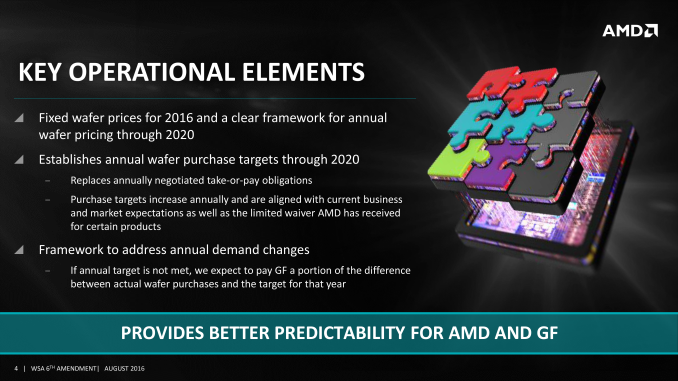
| 4:01p | GlobalFoundries Stops All 7nm Development: Opts To Focus on Specialized Processes GlobalFoundries on Monday announced an important strategy shift. The contract maker of semiconductors decided to cease development of bleeding edge manufacturing technologies and stop all work on its 7LP (7 nm) fabrication processes, which will not be used for any client. Instead, the company will focus on specialized process technologies for clients in emerging high-growth markets. These technologies will initially be based on the company’s 14LPP/12LP platform and will include RF, embedded memory, and low power features. Because of the strategy shift, GF will cut 5% of its staff as well as renegotiate its WSA and IP-related deals with AMD and IBM. In a bid to understand more what is going on, we sat down with Gary Patton, CTO of GlobalFoundries. | ||||||||||||||||||||||||||||||||||||||||||||||||||||||||||||||||||||||||||||||||||||||||||||||||||||||||||
| 5:40p | AMD: Jim Anderson Out, Saeid Moshkelani In as “Client Compute Group” General Manager
In a press release sent out this afternoon, AMD has announced a shuffle in leadership for the company’s client computing business unit, the core of AMD’s business and heart of their recent resurgence. Jim Anderson, who has been serving as the Senior Vice President and General Manager of AMD’s Computing and Graphics business group, is departing from the company. In his place, Saeid Moshkelani is being promoted to the position of Senior Vice President and General Manager of what AMD is dubbing the Client Compute Group. Jim Anderson had been serving as the GM of the Compute and Graphics group for the past 3 years. In his position, he reported directly to Dr. CEO Lisa Su and was responsible for the entirety of AMD’s client computing business, overseeing engineering, sales, and the general strategy of the group. AMD originally brought Anderson on board to turn around their client computing group in its darkest hour towards the tail-end of the Bulldozer generation, and in that respect, Anderson has been extremely successful, as Ryzen CPU sales have been very strong for AMD. After that success, however, Anderson has decided that he wants to leave to “pursue other opportunities”, according to AMD. And just looking at AMD’s hierarchy, as he was already SVP and GM of the group, there’s little room left inside of AMD for advancement. So for someone whose next step would be CEO, the best options are to either bide his time until the CEO spot becomes available (unlikely), or leave the nest and become a CEO at another company. In this case Anderson has opted for the latter, departing AMD and heading over to Lattice Semiconductor to be their new CEO. Replacing Jim Anderson will be an AMD insider, Saeid Moshkelani. Moshkelani is an engineering track executive whom prior to joining AMD in 2012, worked as an engineer and later in various engineering management roles at other companies. Since joining AMD, he has been serving as the GM of the Semi-Custom business unit. Curiously, his LinkedIn profile lists him as being promoted to a Corporate Vice President and General Manager of AMD’s “Client compute Business Unit” in May. However AMD had never publicly announced that promotion, and it’s not clear to me whether this is retroactive, or something different from his new role.
At any rate, Moshkelani is now a Senior Vice President and the GM in charge of what AMD is calling their “Client Compute Group”. In practice his duties appear to be identical to Anderson’s, in that he’s overseeing every aspect of AMD’s client computing products. And like Anderson, he will now report directly to Lisa Su. Overall, this executive shuffle is the latest high-profile departure for AMD. Anderson’s approximate counterpart on the GPU side of matters, Raja Koduri, left for Intel back at the end of 2017. So in the last year we’ve now seen the entire leadership of AMD’s client product groups replaced. And while the nature of these changes is rarely transparent – whether it’s someone leaving on their own volition or if AMD is cleaning house – what’s clear is that this is increasingly a very different AMD from what it was a short few years ago, with new product architectures and now new executives overseeing them. | ||||||||||||||||||||||||||||||||||||||||||||||||||||||||||||||||||||||||||||||||||||||||||||||||||||||||||
| 6:40p | AMD's 7nm CPUs & GPUs To Be Fabbed by TSMC, on Track for 2018 - 2019
With the announcement that its long-time manufacturing partner (and outright former fab) GlobalFoundries is dropping out of the race for bleeding-edge manufacturing nodes, the second big question of the day has been what this means for AMD. For all intents and purposes, AMD and GlobalFoundries have been tied at the hip since GloFo was spun off from AMD back in 2009, and consequently GloFo has always been AMD’s fab of choice for CPUs, and more recently GPUs. So with GlobalFoundries’ changes to their process development plans, AMD is outlining their new partnerships and manufacturing plans. In short, AMD is now shifting over the bulk of their bleeding-edge development to TSMC. The company is careful to note that they “intend to focus the breadth” of their 7nm production at TSMC rather than all 7nm production – leaving open the possibility of using TSMC rival Samsung in the future – but the message is clear that we should expect AMD’s major 7nm products to be fabbed out of TSMC now that GlobalFoundries is no longer an option. TSMC being AMD’s new bleeding-edge partner should of course come as no surprise, as TSMC has been the fab AMD has fallen back on for other projects in the past. TSMC was until the most recent generation the fab AMD used for their GPUs, and it’s where their semi-custom APUs for Microsoft and Sony have been made. Meanwhile AMD and TSMC have already previously announced that some of AMD’s forthcoming 7nm products, including their 7nm Vega and “Rome” EPYC CPU would be fabbed by the Taiwanese foundry. So today’s announcement is largely confirmation that AMD is going to continue down this path, with most (if not all) of their other planned 7nm products ending up at TSMC as well.
As it stands then, AMD’s plans remain largely unchanged. AMD’s 7nm Vega GPU has been successfully taped out, and it is currently sampling among AMD’s customers with a commercial launch towards the end of this year. Then in 2019, AMD intends to release its CPUs featuring its Zen 2 microarchitecture. These processors will also be fabbed by TSMC and the chip designer has already received the first working silicon. Farther out, AMD’s announcement also confirms that their upcoming Navi architecture GPUs, which are also planned for 7nm, will be fabbed at TSMC. Though AMD has not disclosed any timeframes regarding these GPUs and whether any of them have been taped out. Overall, AMD seems reasonably happy with the current state of affairs, stating that “Our work with TSMC on their 7nm node has gone very well and we have seen excellent results from early silicon.” As a close GlobalFoundries customer, I have to imagine that AMD was the first such customer informed of these plans, so they’ve had the most time to adjust their internal plans. None the less, the company sees it as win for their “flexible foundry” strategy, and as a result, they do not expect any changes to their product roadmaps despite the foundry changes. That said, while AMD seems to be handling this well, this isn’t a feint on their part, and that they’ve had to make changes behind the scenes. The company has confirmed to us that they had started development of a chip to be made using GlobalFoundries' 7LP process technology, but this one had not been taped out yet (it was on track for a Q4 tape out, according to GF). So we will be seeing products that weren’t originally intended for TSMC. As for AMD’s GlobalFoundries relationship, the company will be continuing to work with GlobalFoundries for some time to come. GloFo is still AMD’s fab for their current Vega, Polaris, and Zen/Zen+ chips, and AMD will continue making chips there. Furthermore should AMD decide to start on any new chips that don’t require a bleeding-edge manufacturing process (e.g. a chipset), then GlobalFoundries is still an option.
The biggest remaining question then will be what this means for AMD and GlobalFoundries longstanding Wafer Share Agreement (WSA), which has kept the two companies bound together tightly and required that AMD do most of its manufacturing at their former fab. Today’s announcement from GlobalFoundries and AMD has confirmed that the two companies will be renegotiating the WSA – presumably a requirement should GloFo no longer intend to offer bleeding-edge nodes – though to what extent remains to be seen. AMD by their own admittance is betting very heavily on 7nm products, so it’s not clear whether the company is going to need all that many wafers from GlobalFoundries in a couple years’ time. In the meantime, AMD does not believe it is going to need any WSA with TSMC. Related Reading: | ||||||||||||||||||||||||||||||||||||||||||||||||||||||||||||||||||||||||||||||||||||||||||||||||||||||||||
| 9:30p | NVIDIA Releases 399.07 WHQL Game Ready Driver
In the wake of last week’s GeForce RTX 20-series announcements, today NVIDIA has released driver version 399.07 WHQL, bringing Game Ready support for the Battlefield V Open Beta, as well as support for F1 2018, Immortal: Unchained, Pro Evolution Soccer 2019, Strange Brigade, and Switchblade. Just as importantly, 399.07 additionally consolidates the recent 398.86 and 398.98 hotfixes, the former resolving windowed G-Sync stuttering on Windows 10 April 2018 Update, and the latter resolving LA Noire VR and Call of Duty Black Ops 4 Beta issues. The Battlefield V Open Beta starts September 6, with early access on September 4 for Battlefield V pre-orders and Origin/EA Access subscription members. For NVIDIA, the upcoming Battlefield V (10/19/18) is also acting as a ‘flagship’ title of sorts for Turing’s real-time raytracing effects, alongside Shadow of the Tomb Raider (9/14/18) and Metro Exodus (2/22/19). Since GeForce Turing has yet to launch, Battlefield V’s various real-time raytracing effects are not applicable to the Open Beta, and because those effects are built on the Microsoft DirectX Raytracing API that has yet to release in full, the timeline is not clear.
The situation underlines, of course, the important caveat to Turing’s forward-looking features: explicit developer support in games. Displayed prominently at Gamescom 2018 and on their website, the three titles are part of 22 total games that NVIDIA have announced are supporting at least one RTX platform feature, which includes various real-time raytracing effects and deep learning super sampling (DLSS). As for the bug fixes, 399.07 lists the following resolved issues: Meanwhile, NVIDIA lists the following open issues for Windows 10: The updated drivers are available through the GeForce Experience Drivers tab or online at the NVIDIA driver download page. The latest GeForce Experience client can also be found separately on its own download page. More information on this update and further issues can be found in the 399.07 release notes. | ||||||||||||||||||||||||||||||||||||||||||||||||||||||||||||||||||||||||||||||||||||||||||||||||||||||||||
| 10:30p | AMD Releases Radeon Software Adrenalin Edition 18.8.2
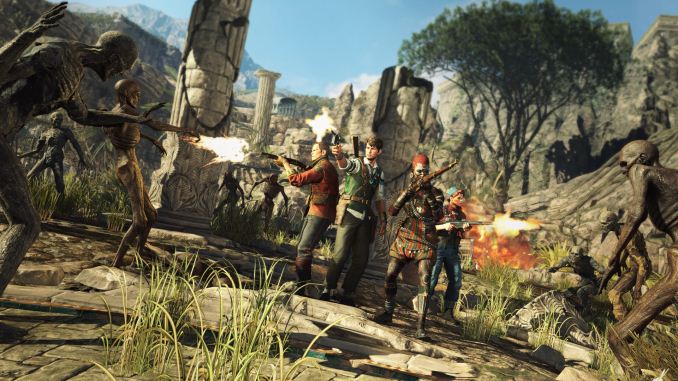
Today, AMD released Radeon Software Adrenalin Edition 18.8.2, featuring support for Strange Brigade, which releases tomorrow, as well as F1 2018. This update also supersedes the Strange Brigade Early Access driver that quietly released a couple days ago, and for that game AMD is observing up to 3 – 5% performance uplift compared to 18.8.1 on the Radeon RX Vega 64 and RX 580 8GB. Otherwise, 18.8.2 brings a number of bugfixes, including those for Far Cry 5. As far as Strange Brigade goes, the third-person co-op adventure shooter is developed by Rebellion (of Sniper Elite fame), and is actually one of AMD’s recent game development partnerships. Coming with DX12 and Vulkan support, as well as an in-game benchmark, the game takes place in 1930s Egypt with a playstyle not unlike Left 4 Dead, according to the developers, except with a pulpy light-hearted tone. The title is also part of AMD’s ongoing “Raise the Game” promotion, the three-game bundle for qualifying purchases of RX Vega, 580, and 570 cards, running to November 3rd, 2018.
Compared to 18.8.1, AMD cited up to 5% faster 4K performance on the RX Vega 64 and up to 3% faster 1440p performance on the RX 580 8GB. But overall, as a more casual oriented game, Strange Brigade’s system requirements are not particularly demanding, and for AMD graphics cards a Radeon HD 7870 2GB is recommended as the minimum. Moving on to the bugfixes, 18.8.2 resolves the following issues: In terms of documented open issues, 18.8.2 lists the following: 18.8.2 does not apply to APUs. The updated drivers for AMD’s desktop, mobile, and integrated GPUs are available through the Radeon Settings tab or online at the AMD driver download page. More information on these updates and further issues can be found in the Radeon Software Adrenalin Edition 18.8.2 release notes. | ||||||||||||||||||||||||||||||||||||||||||||||||||||||||||||||||||||||||||||||||||||||||||||||||||||||||||





| << Previous Day |
2018/08/27 [Calendar] |
Next Day >> |