[Most Recent Entries] [Calendar View]
Wednesday, August 29th, 2018
- 2 x Intel Xeon 8180 ($10009 x 2)
- 12 x 16 GB ECC RDIMM ($200 x 12)
- 2 x NVIDIA Quadro RTX 8000 ($000s x 2)
- Some Storage
- Some big power supply
- Some custom chassis
- Acer’s Predator X27 G-Sync HDR Display Listed in the USA, to Ship on June 1
- ASUS Demonstrates ROG Swift PG27UQ: 4K, 144 Hz, HDR, DCI-P3 and G-Sync
- Acer Announces Predator X27 Monitor: 4K@144 Hz with DCI-P3, HDR10, & G-Sync
- Samsung Announces First Freesync 2 Monitors: CHG70 & CHG90 - Quantum Dots, Up to 49”, 144 Hz, DCI-P3
- Acer Predator Z35P Available for Order: Curved 35" with 3440×1440@120 Hz and G-Sync
- Samsung Announces First Freesync 2 Monitors: CHG70 & CHG90 - Quantum Dots, Up to 49”, 144 Hz, DCI-P3
- BenQ Unveils EX3203R 32-inch Curved LCD with FreeSync 2, DCI-P3, & USB-C
- LG Announces 32UD99: 4K IPS Display with 95% DCI-P3, HDR and USB-C
- LG Introduces New UltraFine 4K and 5K Monitors
- Philips Brilliance 328P6AU QHD Display Launched: USB-C Dock, 99% AdobeRGB, Color Calibrated
- Philips Readies Curved Ultra-Wide 492P8 Display: 49”, 32:9, USB-C, Sub-$1100
- Philips Demos 328P8K: 8K UHD LCD with Webcam, Docking, Coming in 2018
| Time | Event | ||||||||||||||||||||||||||||||||||||||||||||||||||||||||||||||||||||||||||||||||||||||||||||||||||||||||||||||
| 1:01a | Dell Unveils Precision 2-in-1 5530 Workstation: 15.6-inch Kaby Lake-G with Pro WX
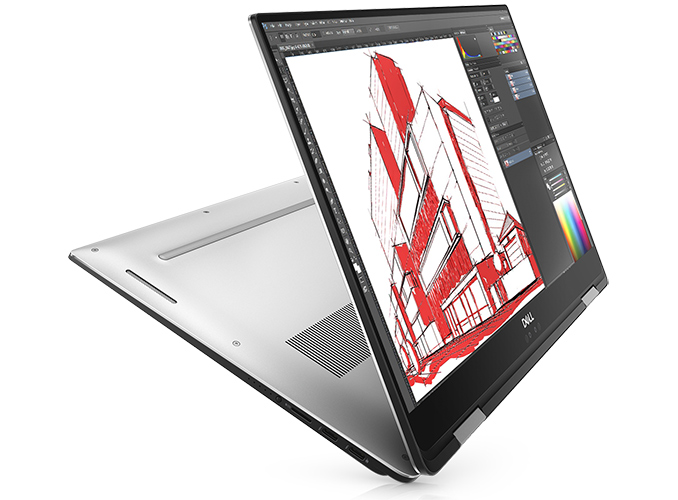
Dell on Wednesday introduced its first convertible mobile workstation, the Precision 2-in-1 5530. The new system is based on Intel’s newly introduced Kaby Lake-G processors with Radeon Pro WX Vega M GL graphics that is certified to run professional applications. The laptop itself has a lot of similarities with Dell’s XPS 15 2-in-1 hybrid notebook launched earlier this year. The Dell Precision 2-in-1 (5530) mobile workstations are based on Intel’s Core i7-8706G/8705G or Core i5-8305G processor with on-package AMD’s Radeon Pro WX Vega M GL GPU with 4 GB HBM2 memory. Unlike the Radeon RX Vega M GL GPUs used on regular Kaby Lake-G CPUs, the Pro WX solutions are fully qualified to run professional graphics applications and ship with appropriate drivers. Dell will equip its new laptops with 8, 16, or 32 GB of DDR4-2400 memory with the latter option available only after the launch. Storage sub-system of the Precision 5530 2-in-1 uses SSDs featuring a PCIe x4 3.0 interface and up to 2 TB capacity. | ||||||||||||||||||||||||||||||||||||||||||||||||||||||||||||||||||||||||||||||||||||||||||||||||||||||||||||||
| 1:15a | Dell Announces Ultrathin S2719DC LCD: FreeSync USB-C with HDR600
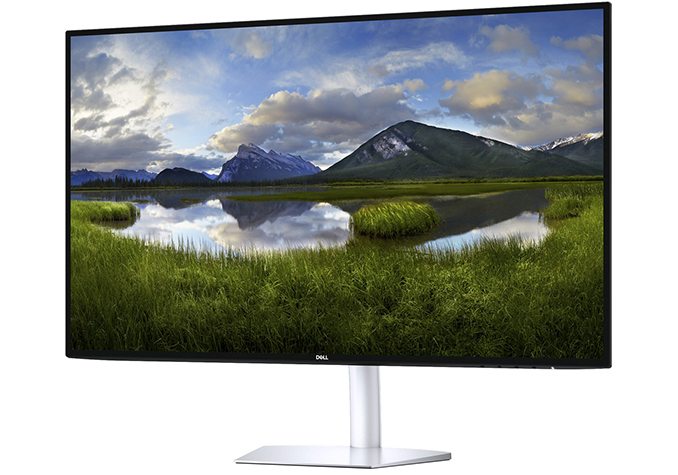
Dell has introduced its new Ultrathin 27-inch display that features a USB Type-C interface for modern PCs. The S2719DC is aimed primarily at space-constrained business environments, but in addition to being thin and featuring a modern interconnection, the new monitor also carries VESA’s DisplayHDR 600 badge, supports AMD’s FreeSync, and covers 90% of the DCI-P3 color gamut - three important features for multimedia enthusiasts. | ||||||||||||||||||||||||||||||||||||||||||||||||||||||||||||||||||||||||||||||||||||||||||||||||||||||||||||||
| 1:30a | Dell Refreshes XPS 13 2-in-1: Amber Lake 5W CPUs with Thunderbolt 3
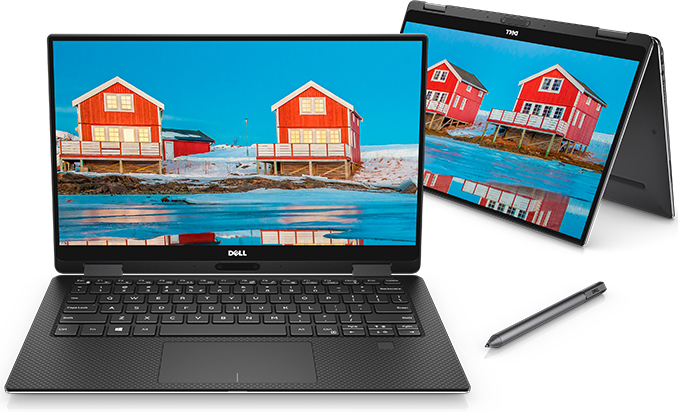
Dell on Wednesday upgraded its XPS 13 2-in-1 convertible laptops with Intel’s latest codenamed Amber Lake-Y processors. The new systems retained chassis and displays used on the previous-generation XPS 13 2-in-1, but because of the new CPUs they now can offer higher performance. Also, the new XPS 13 2-in-1 offer more DRAM and a higher-capacity SSDs.
| ||||||||||||||||||||||||||||||||||||||||||||||||||||||||||||||||||||||||||||||||||||||||||||||||||||||||||||||
| 4:02a | IFA 2018: Next@Acer Live Blog (10:30am CEST, 8:30am UTC)
The first official press event this year at IFA 2018 is Acer. We're expecting a glut of Whiskey Lake notebooks, plus a few extras about Predator. | ||||||||||||||||||||||||||||||||||||||||||||||||||||||||||||||||||||||||||||||||||||||||||||||||||||||||||||||
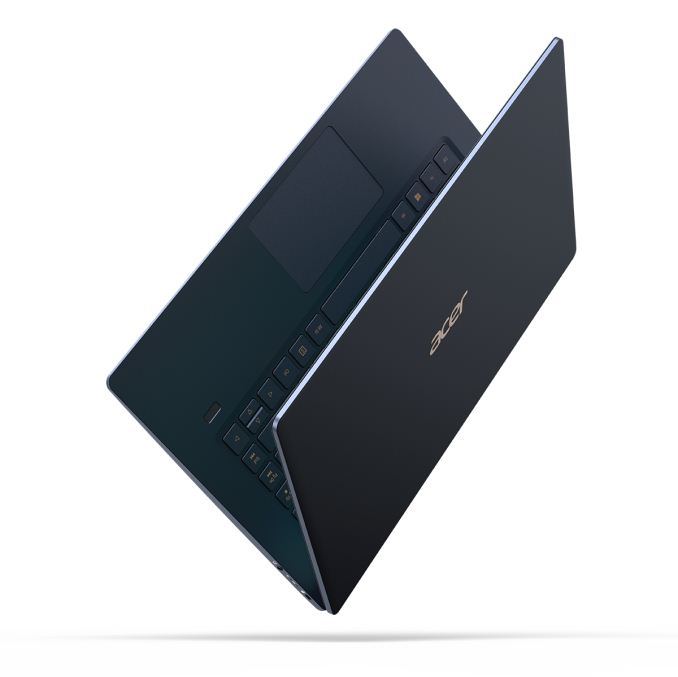
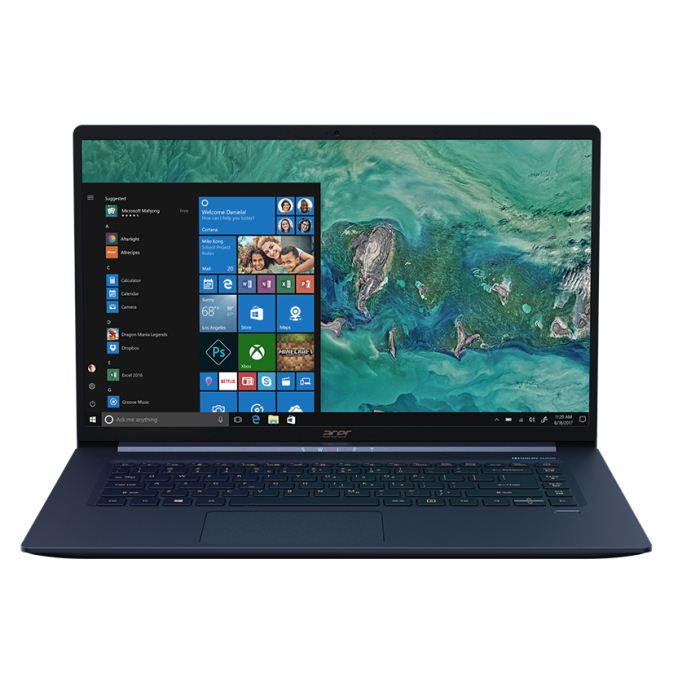
| 5:30a | Acer Launches Lightest Ever 15-inch Notebook: Swift 5 at 990 grams / 2.2 lbs
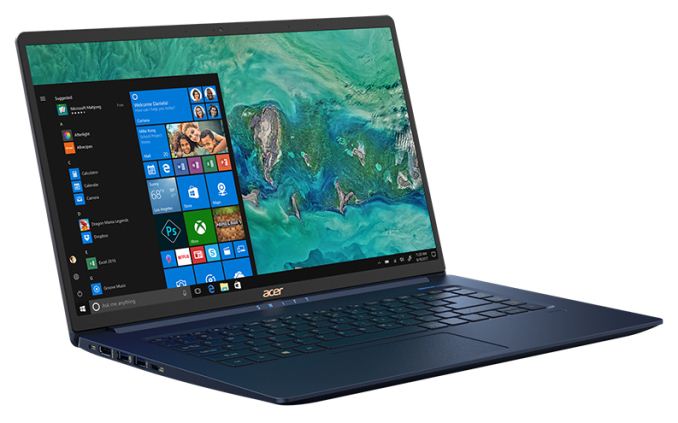
Everyone loves the lack of weight. Carting around a trade show, at least for me, helps the less I’m carrying, and so my work device has transitioned from a clunky beast into a light 13-inch thin-bezel with as much power and battery as I can put into it. The holy trinity of quality, battery, and weight, is hard to achieve. Acer thinks they have something at a 15-inch screen size that fits the bill. The newest Acer Swift 5 (SF515-51T) is officially launched today as the world’s lightest 15-inch notebook. The key behind the weight saving, says Acer, is the magnesium-lithium alloy clamshell design. We’ve seen laptops with this contruction before, such as the LaVie Z, however never in a 15-inch design. Acer is planning the Swift 5 to be a ‘productivity powerhouse’, featuring 8th generation processors.
The design reminds me a lot of the Zenbook Ultimate editions, with a small hinge, but this time with much thinner screen bezels. The display on this new machine is a 1080p IPS rather than 4K (likely to help with battery), with Acer promoting an 87.6% screen-to-body ratio. The system will lie flat with its hinge, rather than a full rotation, and the full unit measures 15.9mm (0.63-inch) thick. Under the hood, Acer is offering up to a Core i7-8565U, the latest Whiskey Lake 8th generation part, with up to 10 hours of battery life. Using the newest Whiskey Lake means also offering Intel’s 2x2 802.11ac 160 MHz Wi-Fi CRF, which Acer pairs with up to 16 GB of DDR4 and up to 1TB of NVMe PCIe storage. The keyboard is fully back lit.
Other features includes a USB 3.1 Type-C port, two USB 3.1 Type-A ports, and a HDMI port. The notebook will be available in North America in January, starting at $1099. | ||||||||||||||||||||||||||||||||||||||||||||||||||||||||||||||||||||||||||||||||||||||||||||||||||||||||||||||
| 6:10a | Acer Wants To Sell a Dual Xeon Predator X System: Please No
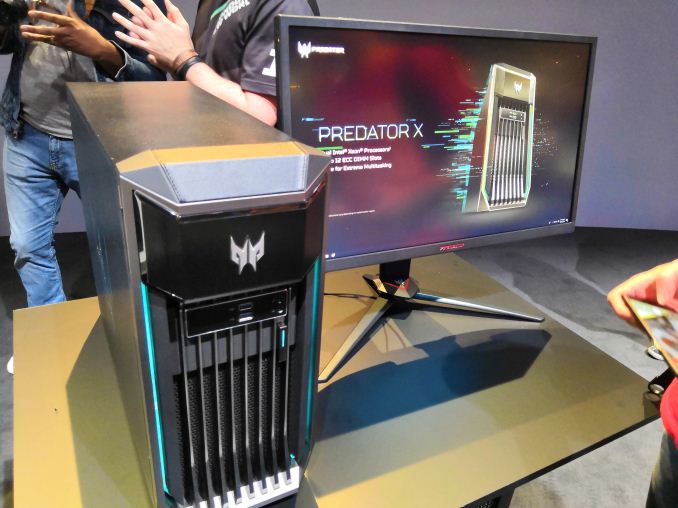
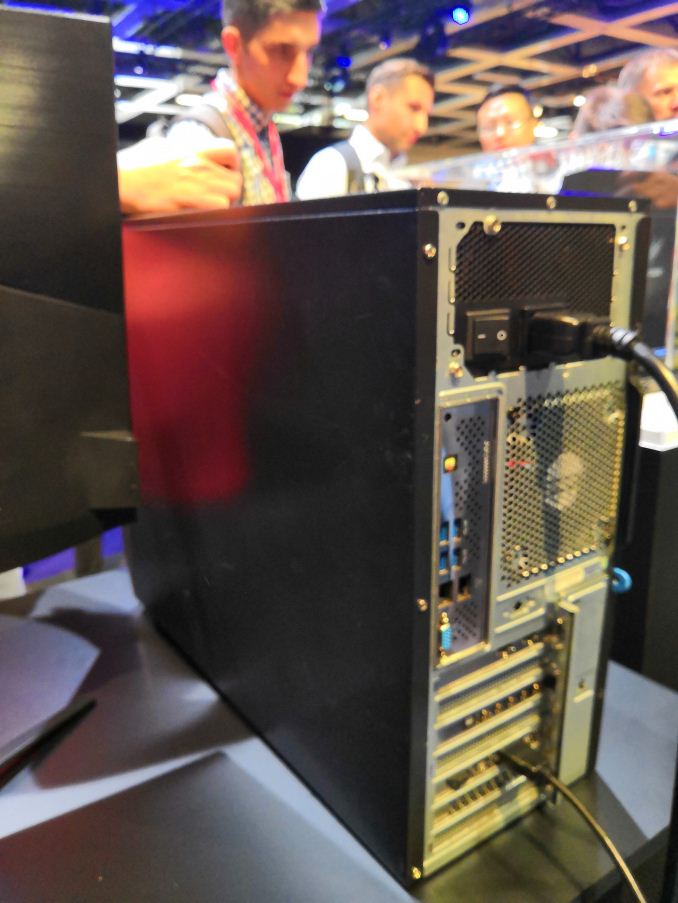
Acer’s leading gaming branding, Predator, is all about maximizing performance, particularly around gaming. In the modern era, that now extends into content creation, streaming, video editing, and all the sorts of things that drive the need for high performance. As we’ve seen several times over the years, just throwing more cores at the problem isn’t the solution: bottlenecks appear elsewhere in the system. Despite this, Acer is preparing a mind-boggling solution. The Acer Predator X is the new dual-Xeon workstation, with ECC memory and multiple graphics cards, announced today at IFA 2018. The premise of the system is for the multi-taskers that do everything: gaming, content creation, streaming, the lot. With this being one of Acer’s flagship products, we expect it to be geared to the hilt: maximum cores, maximum capacity. There-in lies the first rub: if Acer is going all out, this is going to cost something crazy: Of course, Acer is focusing this product for the next generation of processors (read, Cascade Lake-SP), and so none of the specifications have been put into place yet. However, there’s a fundamental aspect to dual-CPU systems that needs to be addressed.
Dual CPU systems have what is known as a Non-Uniform Memory Architecture (NUMA) – despite each CPU having direct access to memory, without a NUMA-aware operating system or software in place, memory for one process on one CPU can be allocated on the memory of the other CPU, causing additional latency. We tested this way back in 2013, and the situation has not improved since. Most software assumes all the cores and memory are identical, so adding additional latency causes performance to tank. Tank hard. Back in those 2013 articles, even scientific software was not built for multi-CPU hardware, and often performed worse than a single CPU with fewer cores. More recently, we’ve seen even single socket systems with a NUMA like environment such as the 32-core Threadripper 2 show performance deficits against monolithic solutions. Only in very specific scenarios (lightweight ray-tracing being the best), does performance improve.
When I approached the person who Acer put on stage to promote this new hardware for the Predator brand about these issues, he didn’t really have a clue what I was talking about. At first he confused it with having ECC, and describing the difference between bandwidth and latency seemed to go no-where. If Acer wants to promote this as a Windows machine, which I’m 99.9% sure they will, they really need to have some software wrapper in place to enumerate cores and put Core Affinity in place. Otherwise people will shell out a lot of money for, in a lot of cases, worse performance. But hey, maybe Acer is going after the VM gaming market? Right? One thing I was told is that Acer will be offering configurable variants. So you might be able to use a pair of Xeon Silver instead. Or remove that piece of 'leather' from the front of the chassis. | ||||||||||||||||||||||||||||||||||||||||||||||||||||||||||||||||||||||||||||||||||||||||||||||||||||||||||||||
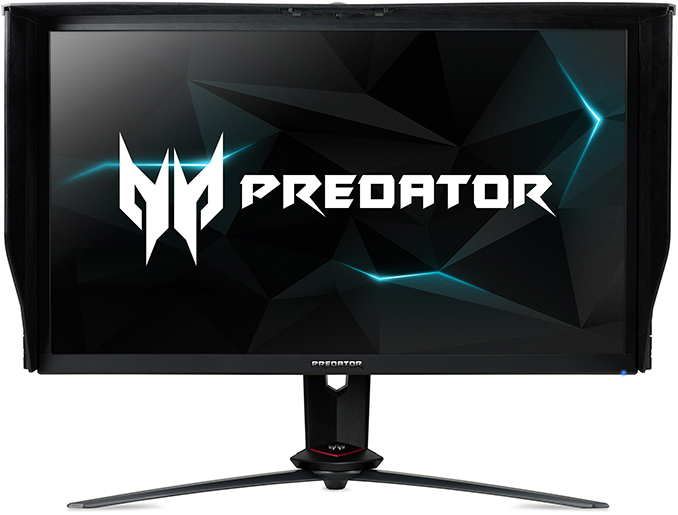
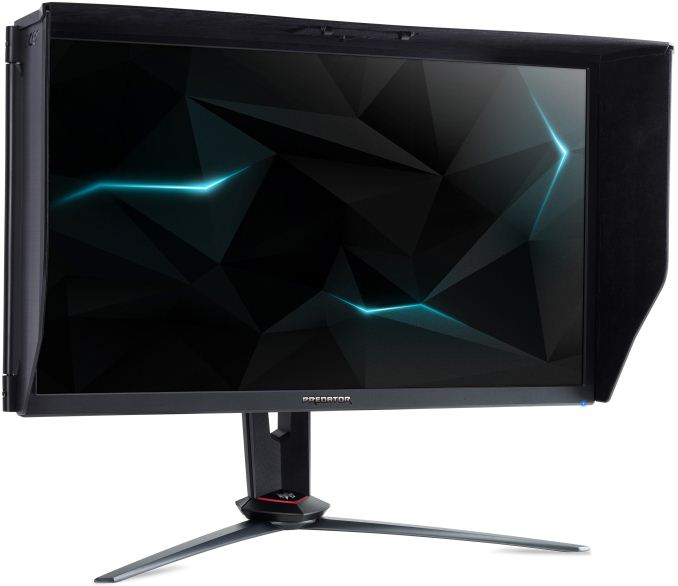
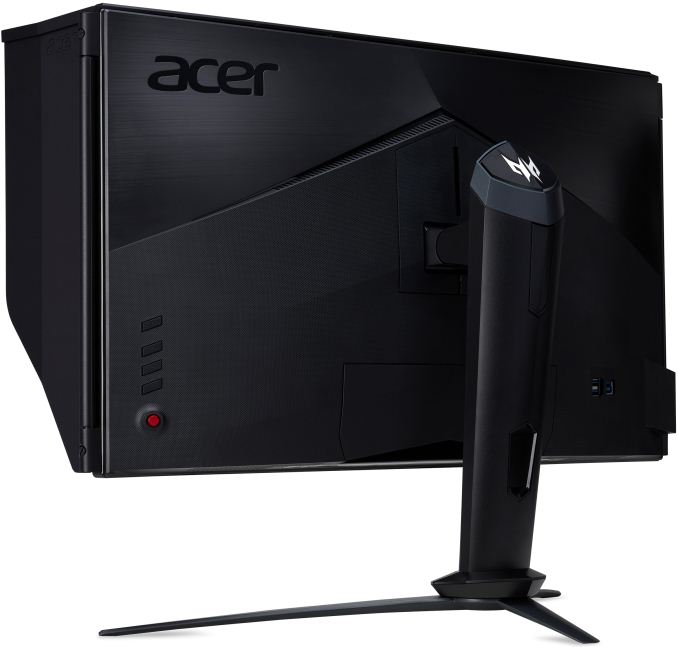
| 7:35a | Acer Unveils Predator XB273K 4Kp144 DisplayHDR 400 Gaming LCD
Acer on Wednesday introduced its new Ultra-HD gaming monitor with an up to 144 Hz dynamic refresh rate enabled by NVIDIA’s G-Sync. The Predator XB273K is aimed at serious gamers looking for both high resolution as well as fast refresh rates. Meanwhile, the new unit is considerably cheaper than Acer’s top-of-the-range Predator X27. The Acer Predator XB273K is based on an IPS-type panel featuring a 4K (3840×2160) resolution, with up to 400 nits peak brightness in HDR mode (the lowest DisplayHDR certification). The refresh rate goes up to 144 Hz, and is dynamic via the support of Nvidia's G-Sync. The panel has wide 178°/178° horizontal/vertical viewing angles thanks to its IPS panel. Acer yet has to disclose other specs of the LCD, but it already looks like the Predator XB273K resembles the company’s flagship Predator X27 display, but lacks FALD (Full array local dimming), quantum dot-enhanced backlighting, and NVIDIA’s G-Sync HDR. If it is indeed the case that the XB273K is based on the same AU Optronics’ M270QAN02.2 AHVA panel (Which is currently the industry’s only 4Kp144 panel), then it is reasonable to expect it to feature a 4 ms response time, along with some other peculiarities of said panel.
Despite the fact that the Predator XB273K lacks quantum dots, it still supports a wider-than-sRGB color gamut. Acer says that the monitor can cover 90% of the DCI-P3 color range and naturally 100% of the sRGB palette. To further maximize color accuracy and reduce reflections, Acer’s Predator XB273K will come with a light-shielding hood, just like its more expensive Predator X27 brother. By launching the Predator XB273K, Acer makes 4Kp144 G-Sync gaming slightly more accessible. Meanwhile, it should be kept in mind that to take full advantage of such monitors, gamers are going to need an NVIDIA GeForce GTX 10-series (or newer) graphics card with a DisplayPort 1.4 output and a fresh VBIOS. Bandwidth requirements of 4Kp144 8-bit monitors exceed what DisplayPort can deliver today; therefore, to stay within the bandwidth limits of the interface, the displays will either be limited to a 120 Hz refresh rate with full 4:4:4 chroma subsampling, or use 4:2:2 subsampling to get to 144Hz+. Speaking of connectivity in general, it is natural to expect the Predator XB273K to have at least one DisplayPort 1.4 input as well as one HDMI header for compatibility. Additionally, the monitor also has a quad-port USB 3.0 hub. UPDATE 8/30: Correcting bandwidth requirements.
Acer’s Predator XB273K will hit the North American market in the fourth quarter, in time for holiday season. In the U.S., the LCD will cost $1,299, whereas in Europe it is going to carry a €1,499 ($1,749 tax included) price tag.
Related Reading: | ||||||||||||||||||||||||||||||||||||||||||||||||||||||||||||||||||||||||||||||||||||||||||||||||||||||||||||||
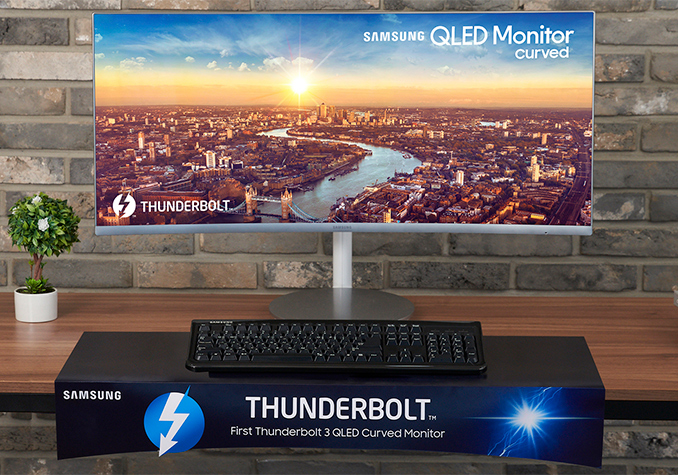
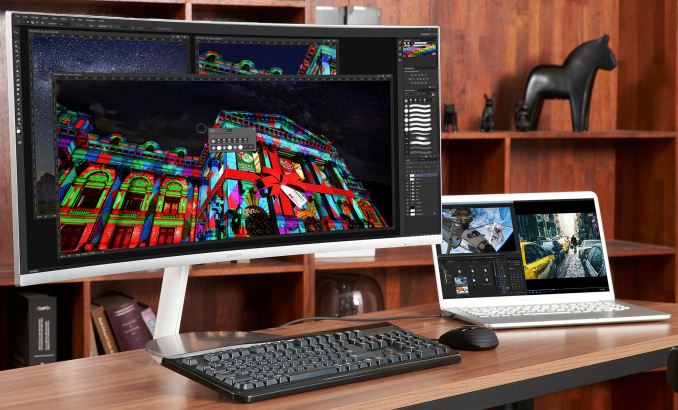
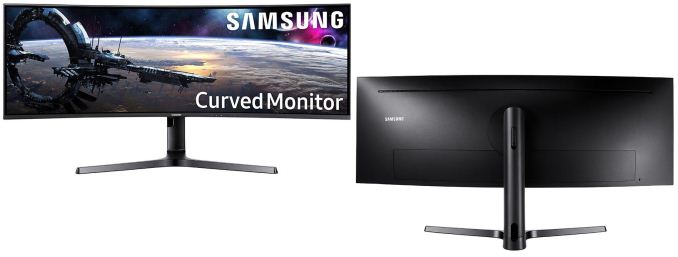
| 9:00a | Samsung Unveils CJ79 & CJ89 Curved LCDs: Quantum Dots, TB3 & USB-C
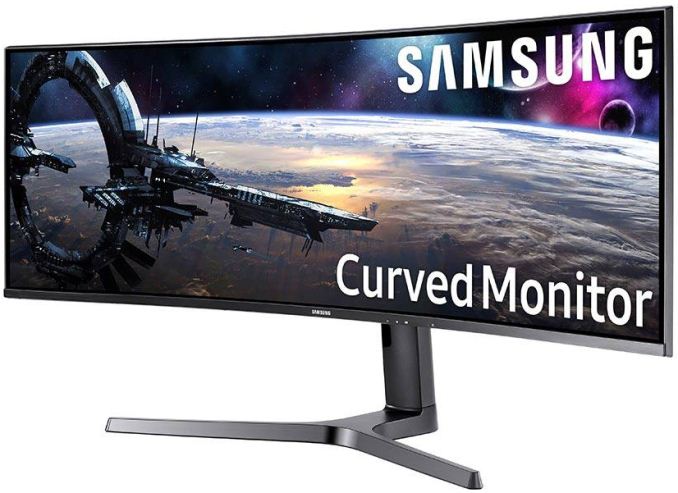
Samsung this week introduced its new CJ79 and CJ89-series curved displays, which are aimed at home and office audiences. The ultrawide CJ79 34-inch monitor features Samsung’s QLED backlighting to offer a wider color gamut, AMD’s FreeSync variable refresh technology, as well as Thunderbolt 3 inputs for compatibility with the latest notebooks. Meanwhile, the CJ89-series monitors are available in 43 and 49-inch sizes, and unlike the 34-inch model, uses USB Type-C connectivity instead. Similarly (and unexpectedly), while the larger LCDs feature refresh rates between 120 Hz and 144 Hz depending on the model, they do not support any dynamic refresh rate technology.
The Samsung CJ79 (C34J791) display is based on a 34-inch curved VA panel featuring a 3440×1440 resolution, a 21:9 aspect ratio, a 300 nits brightness (typical), a 3000:1 contrast ratio, a 1500R curvature, 178°/178° viewing angles, as well as a 100 Hz refresh rate with AMD’s FreeSync technology (precise ranges unknown). One of the key selling points of this monitor is its QLED backlighting (with quantum dots) to guarantee coverage of up to 92% of the AdobeRGB color space. Another important feature is Thunderbolt 3 connectivity accompanied by more regular DisplayPort 1.2 and HDMI 2.0 inputs. Besides, the monitor has a dual-port USB hub and stereo speakers.
The CJ79-series 34-inch display will be positioned as Samsung’s performance mainstream offering for home users seeking a large, high refresh rate monitor premium features like QLED and FreeSync, as well as rich connectivity options. As a bonus feature, the C34J791 covers up to 92% of the AdobeRGB color gamut, though it is doubtful that professional photographers will use an LCD supporting only 16.7 million of colors for their work.
Moving on to the larger Samsung CJ89 displays based on 43-inch (3840×1200) and 49-inch (3840×1080) VA panels and featuring a 32:10 as well as a 32:9 ultrawide aspect ratio, respectively. Both monitors sport a 300 nits brightness, a 3000:1 contrast ratio, a 1800R curvature, 178°/178° viewing angles, as well as a 120 Hz (43-inch) or 144 Hz (49-inch) refresh rate, but without FreeSync. These LCDs connect to hosts using USB Type-C or traditional DisplayPort 1.2 as well as HDMI 2.0 cables. Meanwhile, the larger CJ-series LCDs feature a five-port USB hub comprising of two USB Type-C headers, two USB 2.0 Type-A connectors, and one USB 3.0 Type-A port. Besides, just like the smaller LCD, the big ones come with stereo speakers.
All three displays are outfitted with stands that can adjust height and tilt, but only the larger CJ89-series LCDs can also adjust swivel. Being large monitors, the new CJ79 and CJ89-series fully support such capabilities as PiP and PbP and can work with more than one PC at once. Moreover, the C49J890 even has a built-in KVM switch allowing users to control two PCs using one keyboard and one mouse while working in PbP mode.
Samsung’s CJ79 and CJ89 monitors are already available in select European markets and will hit store shelves in other countries in the coming weeks or months. When it comes to pricing, the new units are not cheap at all. The C34J791 is currently available for pre-order for €878 ($1029, including VAT) from Amazon.de, meanwhile, the C49J890 is priced at €879 ($1030, including VAT) and higher, according to Geizhals.at. Related Reading: | ||||||||||||||||||||||||||||||||||||||||||||||||||||||||||||||||||||||||||||||||||||||||||||||||||||||||||||||
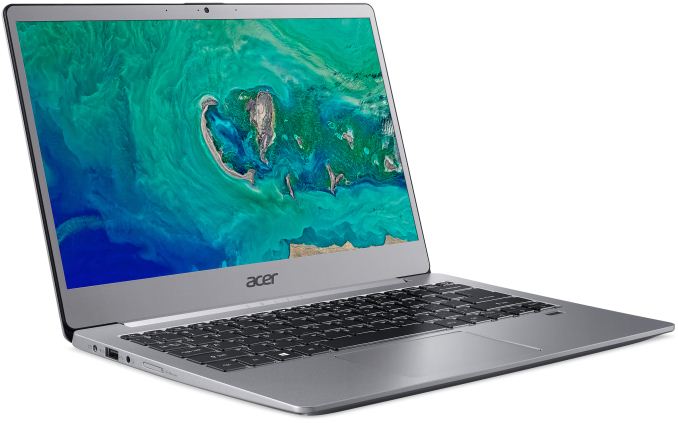
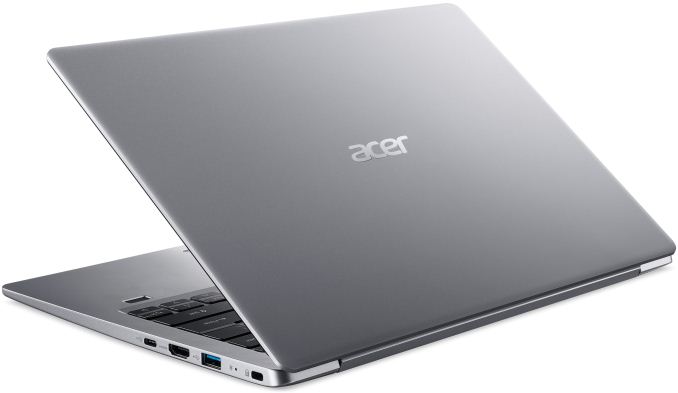
| 11:30a | Acer’s Swift 3 Laptop Gets 13.3-Inch Display, Slimmer Chassis, LTE Modem
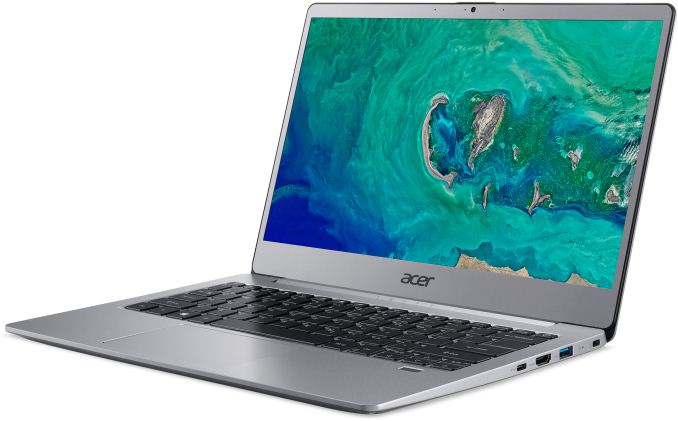
Acer on Wednesday introduced its most portable Swift 3-branded laptop to date. The new Swift 3 notebook features a 13.3-inch display and uses a thinner & lighter chassis than its 14-inch predecessors. Furthermore, premium versions of the laptop include a 4G/LTE modem to make them more attractive to road warriors. Quite naturally, the new Swift 3 laptops will be positioned above the existing PCs of the same series and will be more expensive. When Acer first announced its Swift 3 series notebooks in 2016, the company positioned them as inexpensive ($499 and up) highly-portable 14-inch mobile PCs for productivity applications. Eventually, Acer started adding premium features to its 14-inch models (e.g., discrete GPUs), as well as introducing SKUs featuring a larger 15.6-inch screen, thus slightly changing market positioning of the whole series. Today the company continues to broaden its Swift 3-branded lineup with its newest addition, introducting the all new Swift 3 with a 13.3-inch Full-HD display.
The upcoming Swift 3 SF313-series comes in a unibody aluminum chassis featuring a z-height of 15.9 mm (0.63”), which is 2 mm (0.08”) thinner compared to the original Swift 3 notebooks with a 14-inch LCD. The new Swift 3 with 13.3-inch display weighs in at 1.3 kg (2.86 pounds), which makes it significantly lighter than 1.8 kg (4 pounds) of the original models. Besides being more portable, the new notebooks will also run for up to 13 hours on one charge, three hours longer than its larger predecessors.
Moving on to technical specs of the Swift 3 SF313-series laptops. Acer says that the new notebooks are powered by Intel’s Core processors, yet does not disclose exact models. While it is safe to say that the CPUs in question belong to Intel’s Whiskey Lake-U or Amber Lake-Y families, it is not clear which chips Acer uses. Considering the fact that the manufacturer advertises a 13-hours battery life for its new Swift 3 SF313-series machines, it is highly likely that it uses Amber Lake-Y processors with a 5 W TDP. As for RAM and storage, the Swift 3 13.3-inch laptops will be outfitted with up to 8 GB of DDR4 as well as an up to 512 GB NVMe PCIe SSDs. When it comes to connectivity, the Swift 3 (SF313-51) has an 802.11ac + Bluetooth controller as well as an optional 4G/LTE modem for those who need to connect to the Internet everywhere, and who are not inclined to use their smartphone for tethering. As for physical I/O, the new 13.3-inch Swift 3 has two USB Type-A ports (a USB 2.0 and a USB 3.0), a USB Type-C header, an HDMI output, a TRRS audio connector, a microSD card reader, an optional fingerprint scanner, speakers, and a Windows Hello-compliant webcam.
Acer plans to start sales of its Swift 3 (SF313-51) laptops in EMEA this October starting at €799 ($934) including taxes. It is unknown whether the company intends to offer these 13.3-inch machines in North America and other regions.
Related Reading: | ||||||||||||||||||||||||||||||||||||||||||||||||||||||||||||||||||||||||||||||||||||||||||||||||||||||||||||||









| << Previous Day |
2018/08/29 [Calendar] |
Next Day >> |