[Most Recent Entries] [Calendar View]
Friday, September 7th, 2018
- Philips Readies Curved Ultra-Wide 492P8 Display: 49”, 32:9, USB-C, Sub-$1100
- MSI Optix MAG491C Hands-On: A 49-Inch 32:9 LCD with FreeSync
- ASUS Launches VG49V: An Ultrawide Curved 32:9 49-Inch FreeSync LCD
- Samsung Announces First Freesync 2 Monitors: CHG70 & CHG90 - Quantum Dots, Up to 49”, 144 Hz, DCI-P3
- ASUS Demonstrates ProArt PA34V Professional Curved UWQHD Display with TB3
- Samsung Unveils CJ79 & CJ89 Curved LCDs: Quantum Dots, TB3 & USB-C
- JapanNext Launches 35-Inch "UWHD" Curved LCD: AMVA & 200Hz Refresh w/FreeSync
- Toshiba Unveils MN07 Series HDDs Featuring 12 TB & 14 TB Capacity
- Toshiba’s 14 TB HDDs Now Available from Supermicro
- Toshiba Announces 14 TB PMR MG07ACA HDD: 9 Platters, Helium-Filled, 260 MB/s
- Toshiba Samples AL15SE HDDs: Up to 2.4 TB, 10K RPM, SAS
- Toshiba Launches S300 and V300 HDDs for Surveillance and Video Applications
- Toshiba Launches MN06ACA 10 TB HDD for NAS: 7 Platters, Up to 249 MB/s
- Acer Announces Predator Triton 700 Gaming Laptop: Core i7, GeForce GTX 10 Series, & 1 TB SSD
- Acer Predator 21 X Laptop with Curved Display Now Available, Only 300 to Be Made
- Acer Announces Nitro 5 Spin 15.6" Gaming Convertible: 8th Gen Core i7, GeForce GTX 1050
- Acer Announces Switch 7 Black Edition 2-in-1: Core i7, GeForce MX150, TB3, Fanless
- Acer Predator 21 X Laptop with Curved Display Now Available, Only 300 to Be Made
- Acer Unleashes Predator Helios 500 Gaming Notebook: Up to Core i9+, GTX 1070
- Acer Predator Helios 300 SE: White and Gold Gaming Laptop
- Acer Announces The Acer Predator 21 X: 21-Inch Curved Screen Gaming Notebook
- The Phison E12 Reference Design Preview: A Next-Gen NVMe SSD Controller
- Patriot Demos Viper M.2 SSDs with Phison E12, Up to 2 TB
- The Kingston A1000 NVMe SSD Review: Phison E8 Revisited
- Patriot Readies Viper SSDs With Phison E12 And S12
- The MyDigitalSSD SBX SSD Review: NVMe On The Cheap
- GIGABYTE Launches Its First SSDs: Phison PS3110 S10 with Toshiba’s 3D TLC
| Time | Event | ||||||||||||||||||||||||||||||||||||||||||||||||||||||||||||||||||||||||||||||||||||||||||||||||||||||||||||||||||||||||||||||||||||||||||||||||||||||||||||||||||||||||||||||||||||||||||||
| 9:00a | The SteelSeries Apex M750 Mechanical Gaming Keyboard Review: Set Apart by Software Today we are taking a look at the SteelSeries Apex M750, the highest-end mechanical keyboard that SteelSeries currently offers. The Apex M750 also sports the company's new QX2 mechanical switches, which we will also examine closely in this review. | ||||||||||||||||||||||||||||||||||||||||||||||||||||||||||||||||||||||||||||||||||||||||||||||||||||||||||||||||||||||||||||||||||||||||||||||||||||||||||||||||||||||||||||||||||||||||||||
| 10:00a | Philips Preps 499P9H Curved 49-Inch 5K Display with USB-C Docking & Webcam
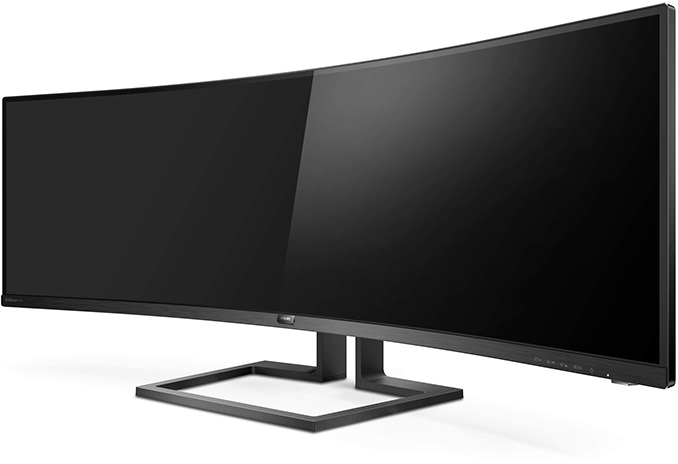
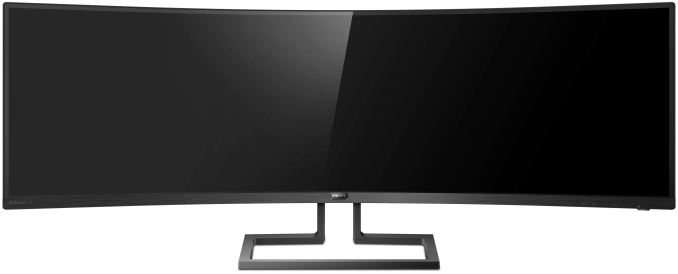
Last week at IFA, Philips demonstrated its upcoming ultra-wide curved 49-inch monitor. The new 499P9H display features a 5K resolution with a 32:9 apect ratio, and will be aimed at various B2B clients that normally use two LCDs. Among key selling points of the new monitor – besides its sheer size – are a pop-up webcam, a USB Type-C docking, and a GbE controller. A number of display suppliers have introduced their 49-inch ultra-wide LCDs featuring a 32:9 aspect ratio and a 3840 × 1080 resolution over the past few quarters. The displays are based on a Samsung panel and target various applications, including business/productivity and gaming. Philips was first to launch its ultra-wide 492P8 monitor after Samsung released its 49-inchers last year, so it is not surprising that it will be among the first third-party companies to adopt Samsung’s 5K ultra-wide VA panel that we're unofficially hearing is expected to hit mass production this month.
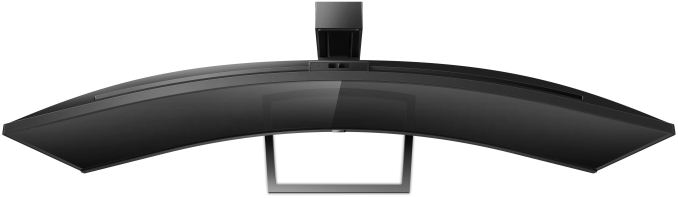
The Philips 499P9H offers a 5120 × 1440 resolution, which is called DQHD (dual quad HD), and is designed to substitute two 27-inch 2560 × 1440 monitors. Based on what we know about this panel unofficially, it has a 1800R curvature and supports refresh rates up to 120 Hz. B2B monitors featuring the panel will likely support a 60 Hz refresh rate, whereas their gaming counterparts will likely gain AMD’s FreeSync technology and a dynamic refresh rate between 48 Hz and 120 Hz (or 30 Hz and 120 Hz). Meanwhile, since we are dealing with a VA panel, expect a high contrast ratio along with 178º/178º vertical/horizontal viewing angles.
One of the important features of the Philips 499P9H monitor is its pop-up Windows Hello-compatible webcam, which will likely be welcome by various business and enterprise users who require a biometric authentication.
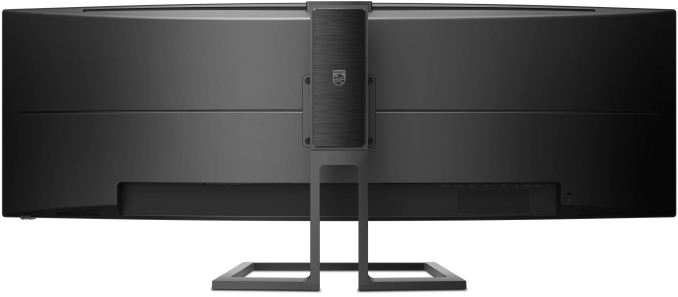
Since the Philips 499P9H has to be compatible with a wide variety of PCs, it features not only a USB Type-C connector with docking and power delivery capabilities, but also a more traditional DisplayPort 1.2 input and two HDMI 2.0 ports. Like other large displays, the 499P9H naturally supports picture-by-picture (PBP) and picture-in-picture (PiP) modes as such LCDs are usually used with multiple PCs at once. In addition, the monitor has a dual-port USB 3.0 hub as well as an Ethernet connector to provide a GbE connectivity to Apple’s MacBooks and other laptops that only feature USB Type-C headers. Philips did not touch upon the ETA nor MSRP of its upcoming 499P9H display at the trade show. Since Samsung yet has to kick off mass production of the panel and start using it itself, expect the 499P9H to arrive sometimes in 2019. Keep in mind that since the 499P9H is aimed primarily at B2B clients, it may not be readily available from the usual retailers.
Related Reading: | ||||||||||||||||||||||||||||||||||||||||||||||||||||||||||||||||||||||||||||||||||||||||||||||||||||||||||||||||||||||||||||||||||||||||||||||||||||||||||||||||||||||||||||||||||||||||||||
| 11:00a | Toshiba Unveils MG07SCA 12 TB & 14 TB Enterprise-Class HDDs with Dual-Port SAS
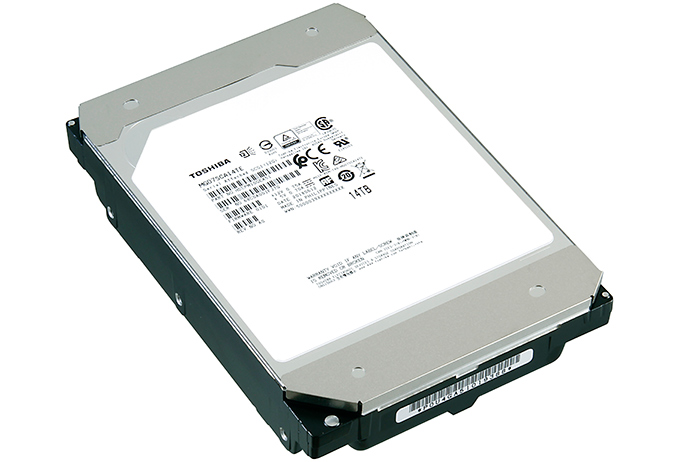
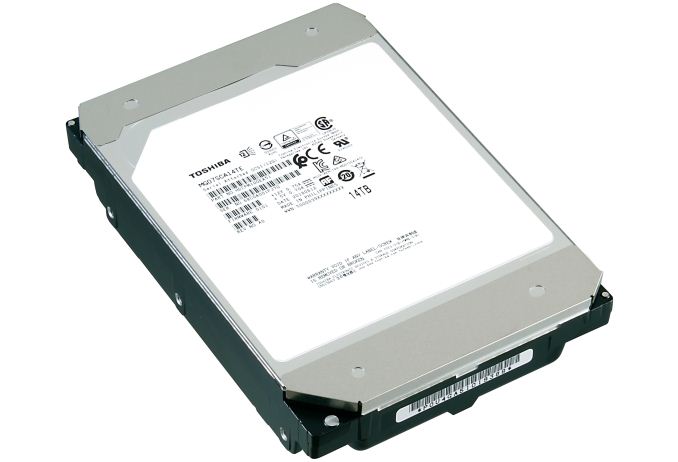
Toshiba is announcing that it has started sampling of its latest MG07SCA-series enterprise-class helium-filled hard drives. Notable for utilizing a dual-port SAS interface, the HDDs are aimed at business-critical servers and are rated for 550 TB per year workloads. Toshiba’s MG07SCA lineup of enterprise-grade hard drive includes two SKUs at 12 TB and 14 TB respectively. The flagship 14 TB model relies on nine PMR platters from Showa Denko with ~1.56 TB capacity each, whereas the 12 TB model relies on eight platters. Both HDDs feature a 7200 RPM spindle speed, a 256 MB cache buffer, and a dual-port SAS 12 Gbps interface. Just like their SATA brethren, the new SAS hard drives are based on Toshiba’s latest-gen helium-filled platform for business-critical HDDs with all the possible enhancements to improve reliability and durability, including top and bottom attached motors, RVFF, environmental sensors, and so on. The MG07SCA-series HDDs also support Toshiba’s proprietary feature for enterprise-grade hard drives — a persistent write cache (PWC) with power loss protection (PLP), which is particularly important for 4K sector drives that emulate 512B sectors. The PWC with PLP capability protects data in case of power loss while performing read-modify-write (RMW) operation to align the source write request with the physical sectors it has to modify. When it comes to performance, the MG07SCA drives offer exactly the same specs as their SATA counterparts. The top-of-the-range 14 TB HDD is speced for a 260 MB/s maximum sustained transfer rate, whereas the 12 TB model is slightly slower at around 250 MB/s. Toshiba says that the new SAS hard drives can perform up to 167 read IOPS, and, up to 70 write IOPS (4 KB blocks) when subject to random accesses. As for power, the HDDs consume up to 7.8 W – 8.28 W during random reads and writes depending on the model. As noted above, Toshiba’s MG07SCA HDDs are aimed at business-critical workloads and are therefore rated for 550 TB average annualized workload, 2.5 million hours MTBF, and are covered with a standard five-year warranty.
Toshiba did not reveal prices of its MG07SCA-series hard drives or when its direct customers intend to start offering them to end users (i.e., operators of datacenters). In general, pricing of such drives depends on the volume ordered, whereas qualification of HDDs for business-critical applications usually takes from months to quarters depending on various factors.
Related Reading: | ||||||||||||||||||||||||||||||||||||||||||||||||||||||||||||||||||||||||||||||||||||||||||||||||||||||||||||||||||||||||||||||||||||||||||||||||||||||||||||||||||||||||||||||||||||||||||||
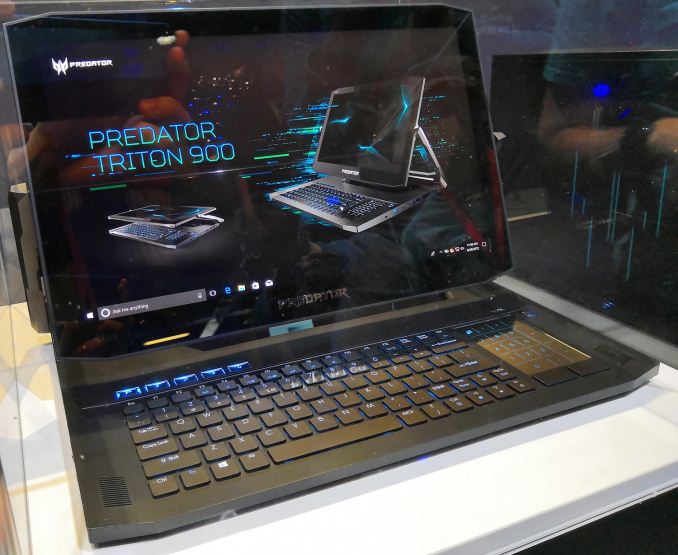
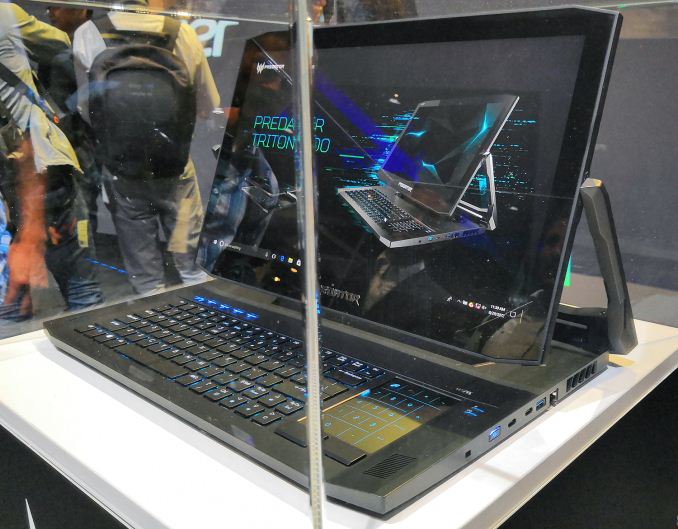
| 1:00p | Acer Shows Off Triton 900: 17-Inch Convertible Gaming Laptop
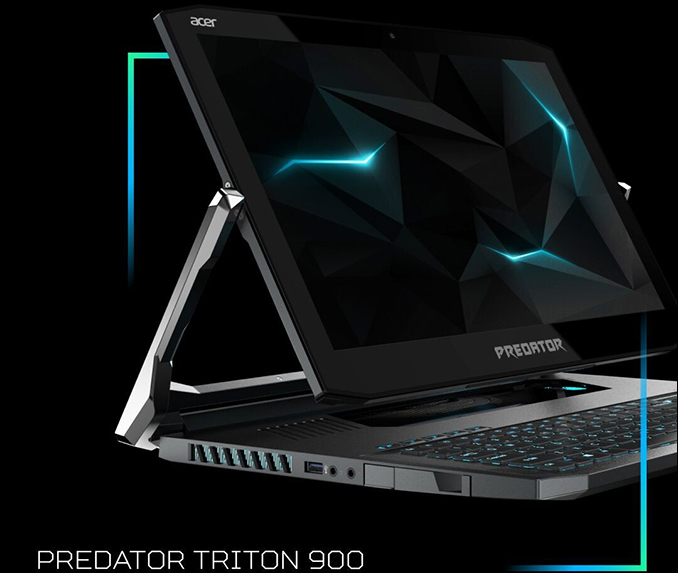
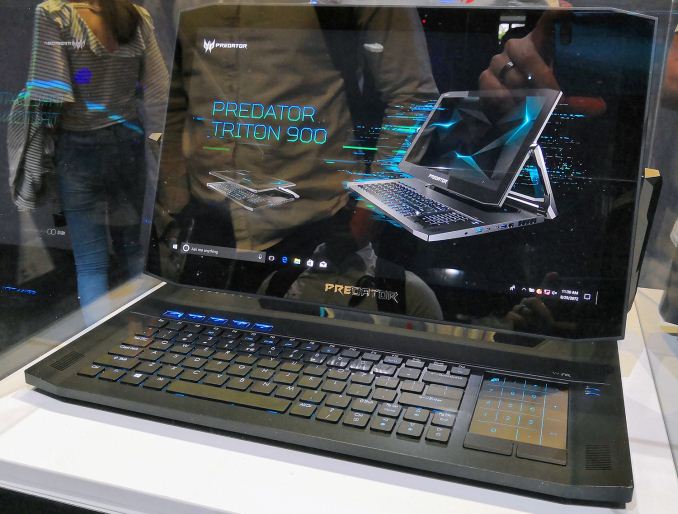
Acer last week demonstrated its upcoming ultra-high-end convertible gaming laptop. The Predator Triton 900 notebook is the first high-end mobile PC that uses a convertible form-factor; previously Acer only experimented with entry-level and mid-range convertible gaming laptops. The Acer Predator Triton 900 comes with a 17-inch display featuring an Ultra-HD (3840×2160) resolution that supports NVIDIA’s G-Sync dynamic refresh rate, but the manufacturer does not disclose ranges of the latter. The LCD is attached to a CNC-machined hinge that can flip it into various modes, including laptop and tablet. Just like its predecessor, the Predator Triton 700, the new notebook places its programmable mechanical keyboard in a rather unorthodox location in order to enable better cooling for high-TDP components while retaining a relatively low z-height. Meanwhile, the laptop’s trackpad can be flipped and transformed into a numpad. Speaking of cooling, it's worth noting that the new Predator Triton 900 is outfitted with Acer’s fourth-generation cooling system featuring Aeroblade 3D fans made of metal, which can generate up to 3.8 CFM of air flow, and which the manufacturer says can offer better cooling performance than traditional coolers.
Acer does not disclose which processor and graphics chips it will be using inside the Predator Triton 900, but considering all the efforts with the form-factor and cooling, it is safe to say that the notebook will pack something like Intel’s Core i7/i9 with overclocking capability along with an NVIDIA’s GeForce GPU.
As for connectivity, the Predator Triton 900 looks pretty standard. Besides usual Wi-Fi + Bluetooth on the wireless side of things, the laptop has one Thunderbolt 3 port, one USB Type-C header, two USB 3.0 Type-A connectors, two display outputs (HDMI and a DisplayPort), Gigabit Ethernet, and two 3.5-mm audio jacks. There is also a mysterious bay on the left side of the laptop that could be a compartment for a 2.5-inch storage device or an add-on card, but we cannot confirm the nature of this bay just now.
Acer did not disclose price or availability timeframe for its Predator Triton 900 notebook. Typically, companies tend to release products they demonstrate at IFA towards holiday season in the U.S. Meanwhile, considering the fact that the 17-inch convertible gaming laptop is a very special product that may require additional work and Acer’s history of showing early prototypes at IFA, the Predator Triton 900 may not hit retail until sometime in 2019. Related Reading: | ||||||||||||||||||||||||||||||||||||||||||||||||||||||||||||||||||||||||||||||||||||||||||||||||||||||||||||||||||||||||||||||||||||||||||||||||||||||||||||||||||||||||||||||||||||||||||||
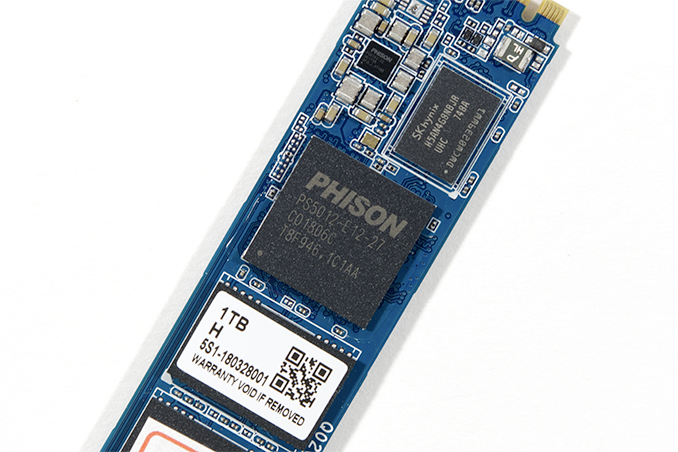
| 4:15p | Phison: PS5012-E12 Controller in Mass Production, 20+ SSDs Incoming
Phison and its partners have been absent from the high-end SSD market in the past couple of years. This is partly because its memory supplier, Toshiba, was somewhat late with its SSD-grade 3D NAND memory, but also partly due to its own product planning. Looking to put an end to this absence, this week the company has announced that it has initiated mass production and shipments of its latest PS5012-E12 controller, which is expected to bring Phison and its allies back to the high-end market segment. The Phison PS5012-E12 controller features eight NAND channels with 32 CE targets, a DDR4/DDR3L interface for DRAM caching, and a PCIe 3.0 x4 interface. As for features, the chip supports the NVMe 1.3 protocol, LDPC-based error correction, a variety of encryption methods (AES-256, TCG Opal, TCG Pyrite), and a number of proprietary technologies to improve reliability and durability of SSDs. Notably, the controller is made using a 28 nm manufacturing technology, which is a very advanced fabrication process for SSD processors. This should ensure that it packs enough compute horsepower for proper ECC and signal processing when working with modern 3D TLC and 3D QLC NAND memory. Phison will offer three versions of the PS5012-E12 controller: the original one for high-end client SSDs, the PS5012-E12C with a reduced number of channels and CE targets for mid-range drives, and the PS5012-E12DC for enterprise drives with some additional performance and feature set enhancements. Speaking of performance, Phison promises that high-end SSDs based on the PS5012-E12 will offer up to 3450 MB/s sequential read speeds, up to 3150 MB/s sequential write speeds, as well as up to 600K random read/write IOPS. Phison says that its partners have started development of over 20 projects based on the PS5012-E12, but does not disclose whether this includes the cheaper and datacenter variations of the controller. Keeping in mind that the chip is in volume production and Toshiba’s 64-layer 3D TLC NAND is readily available, expect drives based on the PS5012-E12 to hit the market in the coming months. So far, Patriot and MyDigitalSSD have confirmed plans to use Phison’s PS5012-E12 controller, with the latter already taking pre-orders for the BPX Pro. In the meantime, Phison has a long list of partners who currently offer higher-end, mid-range, and entry-level SSDs powered by Phison’s controllers, including Corsair, GIGABYTE, Kingston, Lite-On, TEKQ, Team Group, Toshiba, Palit (Galax, KFA2, etc.), PNY, ZOTAC, and so on.
MyDigitalSSD plans to start shipping the BPX Pro within a few weeks, and they are currently taking pre-orders. They are often one of the first to ship Phison's new controllers and have historically offered some of the best prices with drives like the original BPX and the more recent SBX. Most Phison E12 consumer drives will probably feature specs similar to the BPX Pro, though later drives may move to Toshiba's 96-layer 3D NAND:
Related Reading: Source: Phison | ||||||||||||||||||||||||||||||||||||||||||||||||||||||||||||||||||||||||||||||||||||||||||||||||||||||||||||||||||||||||||||||||||||||||||||||||||||||||||||||||||||||||||||||||||||||||||||
| << Previous Day |
2018/09/07 [Calendar] |
Next Day >> |