[Most Recent Entries] [Calendar View]
Friday, September 21st, 2018
- Lenovo Lists ThinkPad E485/E585: AMD’s Ryzen Mobile Land in Business PCs
- Honor’s Thin-and-Light MagicBook with AMD Ryzen Mobile Listed
- Dell Launches AMD Ryzen-Based Inspiron 13 7000 2-in-1 Convertible, Starts at $700
- Acer Unveils Nitro 5: 15.6-inch Gaming Laptop with AMD Ryzen Mobile & Radeon RX560
- More Ryzen Mobile: Acer Swift 3 with 2700U and 2500U Listed, From $750
- HP Announces ENVY x360 15 With Ryzen Mobile
- Ryzen Mobile is Launched: AMD APUs for Laptops, with Vega and Updated Zen
- ASUS ROG Coolers: Ryujin and Ryuo Liquid Coolers Announced
- My Face on a CPU Cooler: Two Minutes with ASUS’ Ryujin CLC
- Cooler Master Launches Wraith Ripper Cooler for Threadripper 2 CPUs
- Be Quiet!, Threadripper: The Dark Rock Pro TR4 HSF Is Here
- Arctic Announces the Freezer 33 TR: An Air Cooler Designed for AMD’s Threadripper
- Enermax Unveils LiqTech TR4 II LCS: A 500W TDP Threadripper 2 Cooler
- Enermax Launches LiqTech TR4 AIO LCS for AMD's Threadripper: 100% IHS Coverage, 500 W TDP
| Time | Event | |||||||||||||||||||||||||||||||||||||||||||||||||||||||||||||||||||||||||||||||||||||||||||||||||||||||||||||||||||||||||||||||||||||||||||||||||||||||||||||||||||||||||||||||||||||||||||||||||||||||||||||||||||||||||||||
| 8:30a | The i-Rocks Pilot K70E Capacitive Gaming Keyboard Review: Our First Capacitive Keyboard In today's keyboard review we are taking a look at the first capacitive keyboard that found its way into our labs, the i-Rocks Pilot K70E. The Taiwanese company managed to design and market a capacitive keyboard while keeping the price tag relatively affordable. Today we'll find out how this keyboard feels and if it is a threat to the already well-established mechanical keyboard market. | |||||||||||||||||||||||||||||||||||||||||||||||||||||||||||||||||||||||||||||||||||||||||||||||||||||||||||||||||||||||||||||||||||||||||||||||||||||||||||||||||||||||||||||||||||||||||||||||||||||||||||||||||||||||||||||
| 9:00a | Intel Expands Optane 905 SSDs To 1.5TB
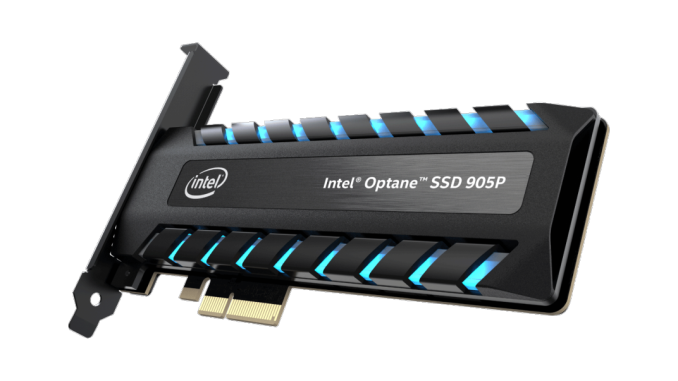
Intel has officially launched the next wave of Optane SSDs, continuing a gradual rollout of higher density drives as their production of 3D XPoint memory catches up with demand. Intel's flagship consumer SSD family is still split between the Optane SSD 900P and 905P, with the more recent 905P filling out the higher capacities while bringing modestly improved performance and power efficiency. This week's releases are the 1.5TB 905P add-in card and 960GB and 1.5TB 905P U.2 drives, bringing the consumer lineup and the enterprise P4800X line both up to the same maximum capacity. The larger capacity options don't bring any more performance improvements because they are still using the same controller, and even the smallest 280GB 900P had enough 3D XPoint dies to keep every channel of the controller busy. The bigger drives do have higher power consumption, with the 1.5TB 905P add-in card rated for up to 17.7 W for write operations. We have probably reached the end of the line for capacity increases while Intel is still using first-generation 3D XPoint memory for their consumer Optane products, because Intel is still charging well over $1/GB and that means even the 1.5TB 905P will cost more than a well-equipped gaming PC. However, interesting things are happening at the lower capacities.
Newly launched products in bold, unreleased products in italics.
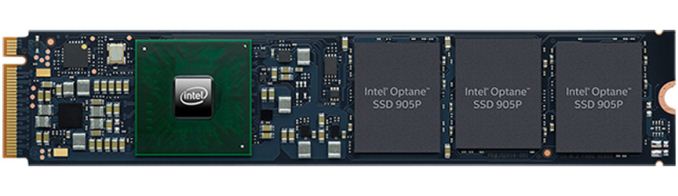
The M.2 version of the Optane 905P that was previewed at Computex is getting closer to release, and the specifications are now shown on the 905P product page (though not yet on ark.intel.com). The 1.5TB U.2 drives are the first products to use BGA packages of eight 3D XPoint dies, for a capacity of 128GB per package. Those same packages could potentially be used to deliver a 750GB M.2 version of the 905P. However, power consumption is getting to be a problem with the 380GB M.2 rated for 11.7W during write operations. M.2 connectors are typically rated to carry only 4.5A across all the 3.3V supply pins, for a limit of 14.85 W. A 750GB M.2 would likely need some throttling or other power saving measures in order to reliably operate within that limit, and even the 380GB drive will likely stress the current delivery capacity of some M.2 slots. On the enterprise side of things, the P4801X M.2 drive has still not officially launched, but ark.intel.com is listing a 100GB P4801X U.2 drive. The capacity is similar to the Optane SSD 800P's 118GB limit, but the P4801X is still using the full seven-channel controller with a PCIe x4 host interface so performance is far higher. The 100GB P4801X isn't as fast as the larger P4800X and 900P/905P drives—write speeds in particular have suffered with a mere 1GB/s sequential write and 250k random write IOPS. But the latency ratings for this small Optane drive are still just as fast, and the active power rating of 7W is quite reasonable for a M.2 drive.
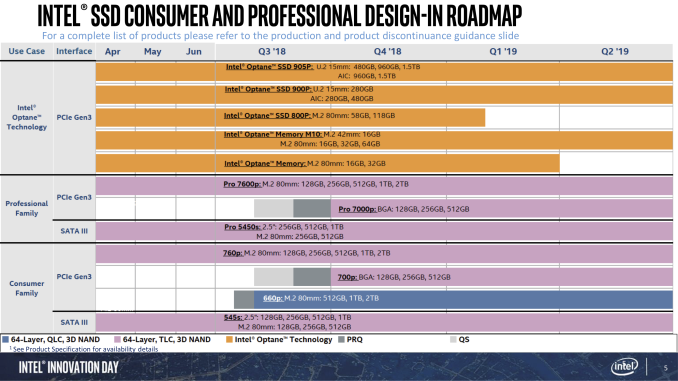
Intel's announcement this week has been accompanied by fresh roadmap leaks from a slide deck intended for an event in November. The file was found on Intel's Russian website and appears to be authentic, but the information in it is still subject to change. The leaked roadmap shows the original Optane Memory M.2 and the Optane SSD 800P being discontinued in early 2019, though the Optane M10 M.2 cache module will remain through at least the middle of next year. A discontinuation of the 800P would clear the way for a consumer counterpart to the smaller P4801X, in M.2 form factor. Intel might not want to put such a product in their 905P product line, but capacities in the 100-200GB range would be a very welcome performance boost over the 800P while still remaining somewhat affordable. However, this still wouldn't give Intel a high-performance Optane M.2 SSD for the mainstream consumer market because the current 905P and P4801X M.2 hardware is a 110mm-long double-sided M.2 card that can't physically fit in laptops and would also be incompatible with some desktops. | |||||||||||||||||||||||||||||||||||||||||||||||||||||||||||||||||||||||||||||||||||||||||||||||||||||||||||||||||||||||||||||||||||||||||||||||||||||||||||||||||||||||||||||||||||||||||||||||||||||||||||||||||||||||||||||
| 11:00a | Lenovo Launches 12.5-Inch ThinkPad A285 with AMD Ryzen PRO APUs
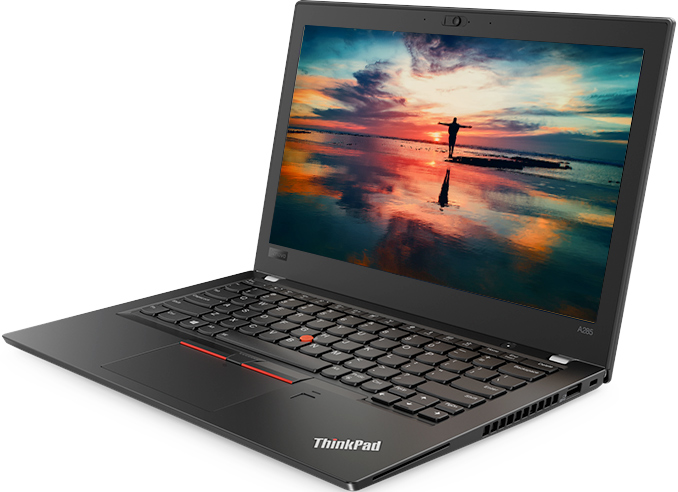
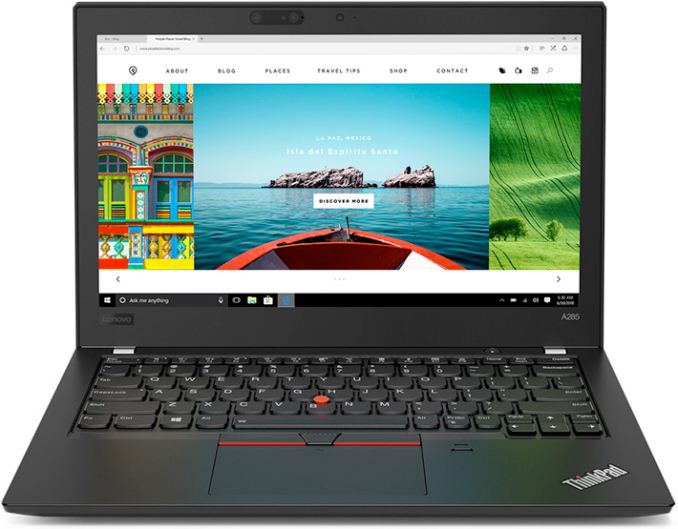
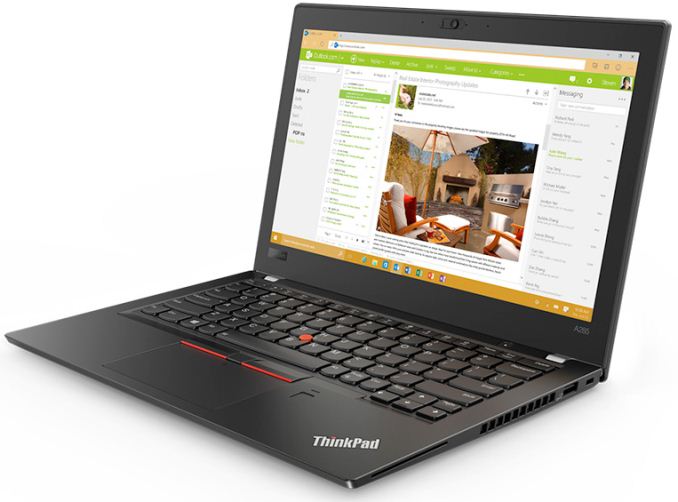
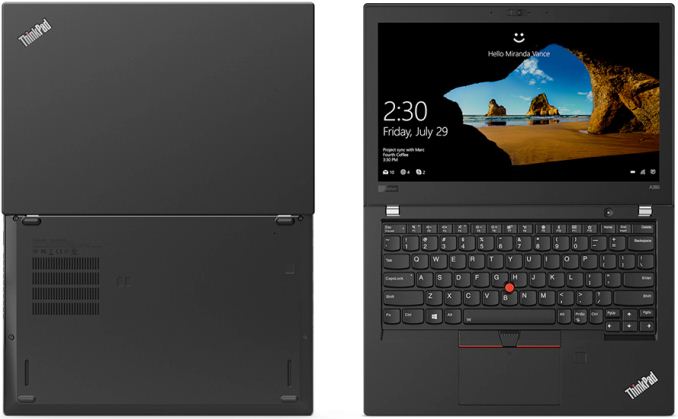
Lenovo Japan on Thursday said that it would begin selling its ThinkPad A285 laptop on September 21. The mobile PC is one of the thinnest and lightest notebooks based on AMD’s Ryzen PRO introduced thus far. Besides being very compact, the ThinkPad A285 is among the first Ryzen PRO-based laptops to feature a suite of business and enterprise-oriented features from AMD and Lenovo. Lenovo’s ThinkPad A285 notebooks will be available in a variety of configurations aimed at various price points. Different configs will be based on AMD’s Ryzen 7 PRO 2700U with the Radeon Vega 10, Ryzen 5 PRO 2500U with the Radeon Vega 8, or Ryzen 3 PRO 2200U with the Radeon Vega 6 APUs. Other options will include 8 or 16 GB of soldered-down DDR4-2400 memory, and depending on exact model they will be equipped with a PCIe/NVMe SSD (up to 512 GB) with OPAL 2.0-encrypted options available to interested parties.
Besides different internal hardware options, Lenovo intends to offer its ThinkPad A285 laptops with two 12.5-inch display options: lower-end machines will come with a 1366×768 display, whereas higher-end models will be equipped with a 1920×1080 panel and 10-point multitouch capabilities. Meanwhile, Lenovo Japan plans to offer an A285 with a non-touch Full-HD screen.
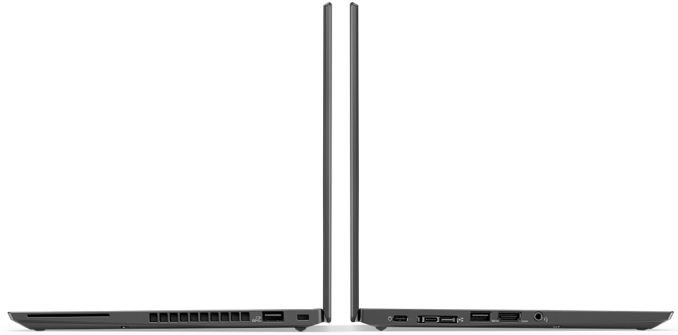
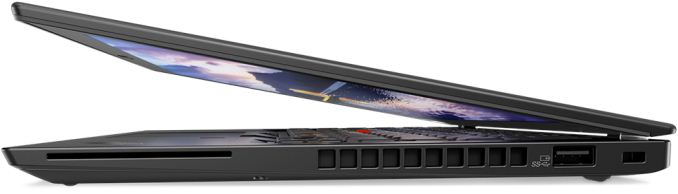
Next up is connectivity. On the wireless side of things, the Lenovo ThinkPad A285 features a 2×2 802.11ac + Bluetooth 4.2 controller, which is a standard feature for today’s business notebooks. As for physical connectors, the notebook is equipped with a GbE port that requires a dongle, two USB 3.1 Type-C ports (used for data, power, display, and docking connectivity), two USB Type-A (3.0 and 2.0) ports, an HDMI 1.4 output, a micro SD card reader, a 720p webcam, a TRRS audio jack for headsets, Dolby Audio Premium-certified speakers, a microphone array, and so on.
As noted above, since we are dealing with a Lenovo ThinkPad based on AMD’s Ryzen PRO APU, all A285 models are outfitted with a match-in-sensor fingerprint reader, a Windows Hello-compatible webcam with ThinkShutter cover, a dTPM 2.0 chip, AMD’s Transparent Secure Memory Encryption (TSME), DASH remote management, and so on. Lenovo is the first notebook vendor to offer Ryzen PRO-based mobile PCs pervasively featuring all of the aforementioned security and management features. Lenovo also notes that all A285 machines comply with 12 military-grade requirements to ensure that they can work in extreme conditions.
Moving on to dimensions and weight. Since Lenovo plans to offer ThinkPad A285 with two display options and with and without multitouch capabilities, the resulting dimensions and weights differ between the variants. Non-touch SKUs weigh 1.13 kg and are 17.4-mm thick. By contrast, touch-enabled models weigh 1.26 kg and are 17.8-mm thick. To put these numbers into perspective, Lenovo’s own IdeaPad 720S comes in a 13.6-mm thick aluminum chassis and weighs around 1.14 kilograms. The consumer laptop lacks numerous features that the ThinkPad A285 has (e.g., toughness, biometric security, TrackPoint, docking capabilities, just to name a few), but its indisputable trumps are the 13.3-inch LCD (there is even a 4K option) as well as portability.
Time to talk about battery life of Lenovo’s ThinkPad A285 laptops. Evidently, 12.5-inch notebooks are used by road warriors because of their dimensions and such customers need to work autonomously for prolonged periods of time. Lenovo in turn would appear to be using a 45 Wh battery pack with all of the ThinkPad A285 SKUs. This battery can last for 7.4 – 10.9 hours, depending on display panel/APU configuration (see the table below for details), which is not bad, but which is well below what the company’s ThinkPad X1 Carbon offers with its 57 Wh battery (i.e. 12 hours with a WQHD display, 15 hours with a Full-HD LCD).
Lenovo Japan plans to start selling the ThinkPad A285 starting today (Friday). The most affordable SKU in the Land of the Rising Sun is priced at ¥178,000 w/o tax ($1,582), whereas the most advanced model costs ¥223,000 w/o tax ($1,983). Keeping in mind that PCs are somewhat overpriced in Japan, expect the ThinkPad A285 to be cheaper in other parts of the world. In the meantime, keep in mind that their configurations may be a little different as well. Related Reading: Sources: Lenovo Japan, Lenovo, PC Watch | |||||||||||||||||||||||||||||||||||||||||||||||||||||||||||||||||||||||||||||||||||||||||||||||||||||||||||||||||||||||||||||||||||||||||||||||||||||||||||||||||||||||||||||||||||||||||||||||||||||||||||||||||||||||||||||
| 12:30p | Vietnamese Retailer Leaks Some Intel 9000-Series Coffee Lake Refresh CPUs
We’ve spoken here at AnandTech several times on the upcoming Z390 chipset and also a few words on new processors for those motherboards. Intel has promised a new consumer-grade launch this year, so we are patiently waiting for more information. As it turns out, some retailers get that itch early – in this case, a Vietnamese retailer has listed five processors for sale. | |||||||||||||||||||||||||||||||||||||||||||||||||||||||||||||||||||||||||||||||||||||||||||||||||||||||||||||||||||||||||||||||||||||||||||||||||||||||||||||||||||||||||||||||||||||||||||||||||||||||||||||||||||||||||||||
| 1:00p | ASUS Unveils ROG Ryujin AIO LCSes for AMD’s Ryzen & Ryzen Threadripper
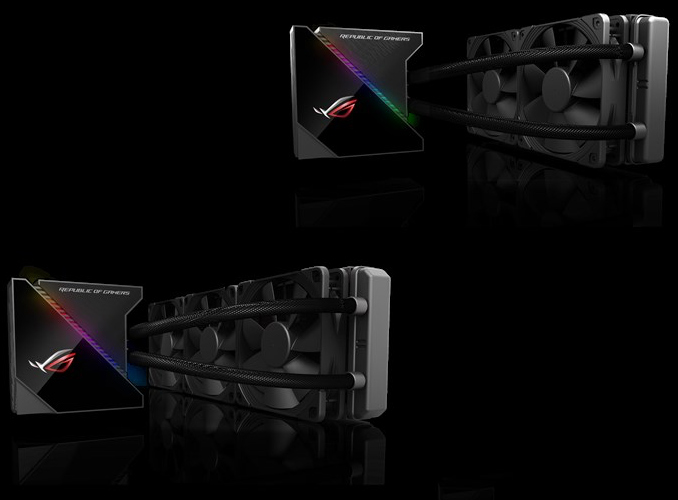
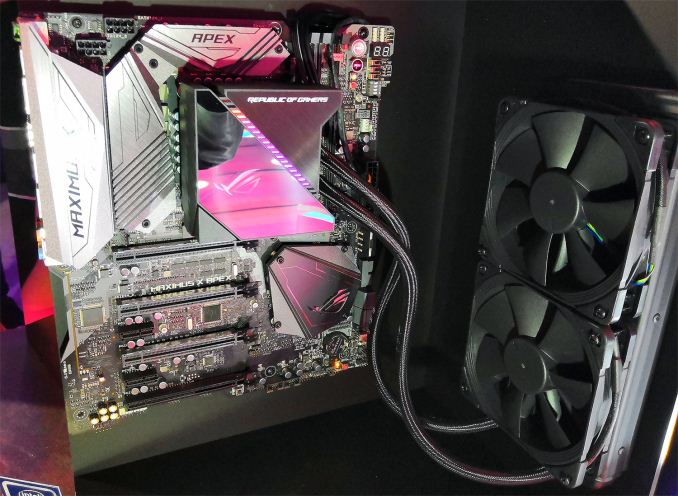
ASUS has released two ROG Ryujin closed-loop liquid coolers designed for AMD’s Ryzen and Ryzen Threadripper processors. Both AIO LCSes feature a square waterblock with an embedded OLED screen that can be used for monitoring or style/personalization purposes. In addition, the waterblock has a small fan to cool down the CPU VRMs. ASUS’ ROG Ryujin 240 and ROG Ryujin 360 closed-loop liquid coolers rely on an ASUS-designed proprietary waterblock, and which is compatible only with AMD’s CPUs in AM4 and TR4 packaging (for now, AMD only supplies mounting brackets for contemporary AMD CPUs). ASUS does not describe design of its pump/waterblock beyond the fact that it is large, square, features an embedded 1.77-inch OLED display, as well as a microfan that can cool down surrounding components by up to 20°C, according to the maker. Meanwhile, the relatively large dimensions may indicate that the block can cover 100% of the TR4 CPU IHS (integrated heat spreader), which means efficient cooling for AMD’s latest multi-core Threadripper 2 processors for "extreme" workstations. The manufacturer does not specify the maximum amount of thermal energy its ROG Ryujin LCSes can dissipate, but good large closed-loop liquid coolers can remove upwards of 500 W of heat.
As the names of the ROG Ryujin 240 and ROG Ryujin 360 LCSes imply, they are equipped with radiators carrying two or three 120-mm fans. For its top-of-the-range coolers ASUS uses premium Noctua IndustrialPPC-2000 PWM fans, which are rated for 2000 RPM with noise levels up to 29.7 dBA, to ensure their reliable and quiet operation over prolonged periods of time. Speaking of reliability, it is also worth mentioning that the LCSes are equipped with reinforced sleeve tubing that promises to be very durable. Like most ASUS ROG components introduced in the last couple of years, the ROG Ryujin AIO liquid coolers are built not only to perform, but to too look strikingly distinctive. Besides the aforementioned 1.77-inch OLED screen, the waterblock features Aura Sync RGB LEDs. It is noteworthy that the display, the RGB LEDs, and the fans can be controlled using the ASUS Vortex software, which greatly simplifies the process. ASUS currently lists its ROG Ryujin 240 and ROG Ryujin 360 closed-loop liquid coolers on its global website, so expect the products to become available shortly. MSRPs of the products are unknown at this point. Related Reading: Sources: ASUS (1, 2) via TechPowerUp | |||||||||||||||||||||||||||||||||||||||||||||||||||||||||||||||||||||||||||||||||||||||||||||||||||||||||||||||||||||||||||||||||||||||||||||||||||||||||||||||||||||||||||||||||||||||||||||||||||||||||||||||||||||||||||||
| 3:00p | AMD’s Athlon 200GE Processors Now Available
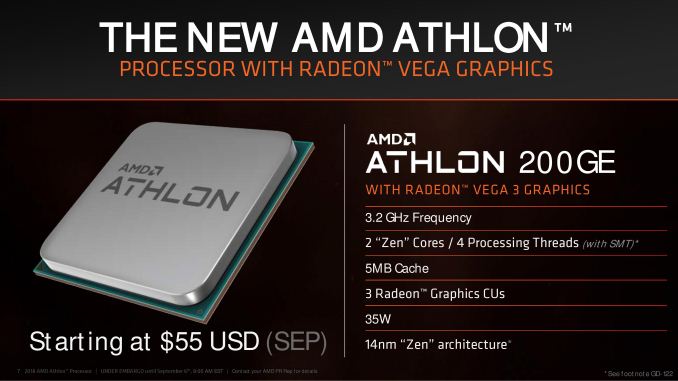
AMD this week started selling its entry-level Athlon 200GE APUs designed for the most affordable PCs. The Athlon 200GE costs less than $60 at retail and happens to be the cheapest processor carrying AMD’s Zen cores as well as the Radeon Vega iGPU. It also has a 35 W TDP and is therefore compatible with virtually all AM4 motherboards and cooling systems. The AMD Athlon 200GE carries two SMT-enabled Zen cores running at 3.2 GHz frequency, a Radeon iGPU featuring 192 stream processors operating at 1 GHz, 1 MB L2 cache, 4 MB L3 cache, a dual-channel DDR4-2667 memory controller, and so on. The APU can power affordable PCs that do not need a lot of compute horsepower and enables AMD to compete against Intel’s entry-level Celeron and Pentium processors for this market segment using its latest technologies (Zen and Vega).
Notably, even with the low price, AMD isn't holding back on feature support here. Since the CPU is drop-in compatible with AMD’s 300 and 400-series platforms, systems based on the CPU will support high-performance NVMe SSDs, USB 3.1 Gen 2 interface, 4Kp60 display output(s) and so on. As an added bonus, AMD’s AM4 platforms also support DRAM overclocking and an upgrade path all the way to eight-core Ryzen 7 CPUs.
In addition to the Athlon 200GE processor, AMD is gearing up to release its higher-performing Athlon 220GE and Athlon 240GE processors later this year, which will further improve its competitive positions in the entry-level segment. While AMD has formally started to sell its Athlon 200GE processor, its actual availability is a bit of a mixed bag. In the U.S., the Athlon 200GE can be pre-ordered for $59.99 only from Newegg. Other stores may follow shortly, but right now the chip is a rare animal in the U.S. The processor is more readily available in the U.K., but prices vary greatly from £50 to £73 ($65 - $96). The situation is much better in mainland Austria and Germany: the Athlon 200GE can be purchased from multiple retailers at prices that make sense. Meanwhile, Amazon seems to overprice the chip in France and Spain.
Related Reading: | |||||||||||||||||||||||||||||||||||||||||||||||||||||||||||||||||||||||||||||||||||||||||||||||||||||||||||||||||||||||||||||||||||||||||||||||||||||||||||||||||||||||||||||||||||||||||||||||||||||||||||||||||||||||||||||



| << Previous Day |
2018/09/21 [Calendar] |
Next Day >> |