[Most Recent Entries] [Calendar View]
Monday, October 8th, 2018
- Samsung’s One Invisible Connection: 75 Gbps and 230W in a Ultra Thin Cable
- Sharp’s 8K UHD TV Available in Japan, Listed in Europe for €11,899
- Sharp Announces 2nd Gen 8K UHD TVs at IFA
- AUO to Ship 8K UHD TV Panels in Coming Months
- Philips Demos 328P8K: 8K UHD LCD with Webcam, Docking, Coming in 2018
- Dell’s 32-inch 8K UP3218K Display Now For Sale: Check Your Wallet
- Intel Publishes Spectre & Meltdown Hardware Plans: Fixed Gear Later This Year
- Spectre and Meltdown in Hardware: Intel Clarifies Whiskey Lake and Amber Lake
- Intel at Hot Chips 2018: Showing the Ankle of Cascade Lake
- An Interview with Lisa Spelman, VP of Intel’s DCG: Discussing Cooper Lake and Smeltdown
- Intel CEO Addresses the Industry on Meltdown and Spectre Issues in Open Letter
| Time | Event | ||||||||||||||||||||||||||||||||||||||||||||||||||||||||||||||||
| 8:30a | Intel Fall PC Desktop Event Live Blog (Starts at 10am ET/14:00 UTC) We're here in New York for an event that Intel is calling their "Fall Desktop Launch Event". In theory we should know very little about what Intel is announcing, but in practice it would seem that large parts of Intel's announcements have been posted by Intel, their partners, and their resellers in the last week or so. This includes the new 8-core Core i9-9900K processor (complete with box!) and the Z390 chipset. None the less, today's event should cast the rumors aside and clarify just what Intel is working on for the rest of 2018 and beyond for desktop PCs. | ||||||||||||||||||||||||||||||||||||||||||||||||||||||||||||||||
| 9:00a | Samsung Starts to Take Pre-Orders on 85-Inch Q900 8K UHDTV
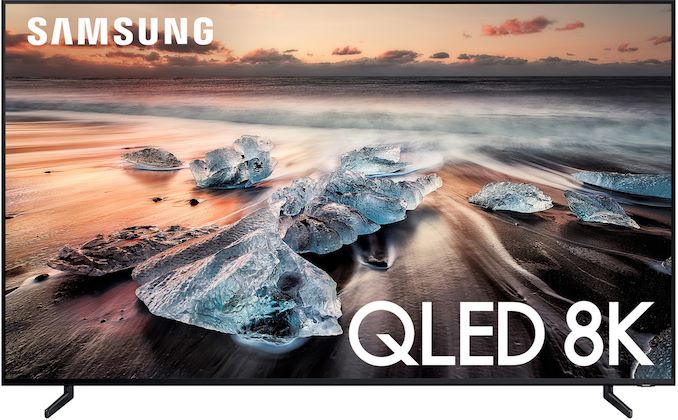
Samsung this month has started to take pre-orders on its first commercial 8K UHDTV, the Q900, which sports a 7680×4320 resolution. Besides the sheer number of pixels that the Samsung Q900-series UHDTV can display, the family features a plethora of premium technologies from the manufacturer, including QLED FALD-like backlighting, a proprietary 8K upscaling technology, support for a varity of HDR formats, and so on. The price per unit? Well, it is on par with a new Ford Fiesta in the U.S. Samsung’s Q900-series 8K UHDTV lineup will include 65, 75, 82, and 85 inch models. The first product that the manufacturer plans to make available later this month is the flagship 85-inch (Q85Q900RA) SKU aimed at the most demanding users who are concerned about the quality and experience in the first place.
Samsung's Q900RA UHDTVs are based on the company’s panels, which are backed by a quantum dot-enhanced LED backlight that is also capable of FALD-like operation, which Samsung dubs Direct Full Array Elite technology. The televisions feature a peak brightness of 4000 nits, which is the maximum brightness at which HDR content is mastered today. Speaking of HDR, the Q900-series officially supports HDR10, HDR10+, and HLG formats, but not Dolby Vision (at least for now). As for color gamut, the Q900-series can reproduce 100% of the DCI-P3 space.
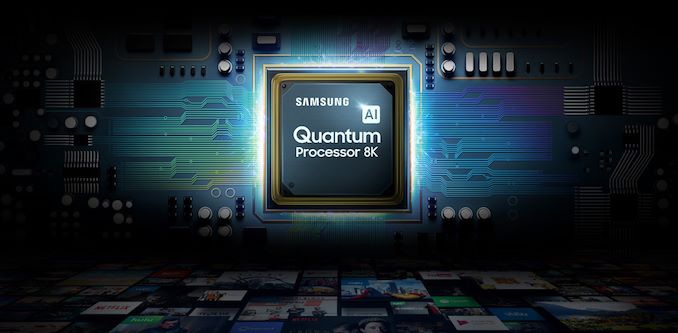
Serving as the brains of Samsung’s Q900RA televisions is the company’s Quantum Processor 8K, which is responsible for all decoding, upscaling, and other operations. One of the features of the SoC that Samsung is especially proud of is its proprietary 8K AI Upscaling technology, which is designed to enhance the quality of digital content to panel’s native resolution (does not work with PCs, games, analogue content, etc.). The only thing that Samsung explains about the tech is that it uses “AI-based formulas” for “intelligent upscaling”. The SoC is also apparently able to interpolate content to 240 FPS.
When it comes to audio output capabilities, Samsung’s 85-inch Q900RA UHDTV is equipped with a 60-W 4.2-channel audio subsystem. Moving on to connectivity. Like all ultra-premium UHDTVs from Samsung, the Q900-series uses the company’s optical One Invisible Connection to the One Connect Box, which has all the physical inputs. In the case of the Q900, the box has four HDMI headers, three USB ports, and one LAN connector. In addition, the Q900-series supports 802.11ac Wi-Fi and Bluetooth. Samsung’s 85-inch Q900RA QLED Smart UHD TV (QN85Q900RAFXZA) can be pre-ordered now for $14,999.99 (by contrast, the Fiesta starts at $14,260). The manufacturer will start shipments of the product on the last week of October, which starts on the 28th.
Related Reading: | ||||||||||||||||||||||||||||||||||||||||||||||||||||||||||||||||
| 10:18a | Intel Announces Xeon W-3175X: 28-Core Processor for Extreme Workstations
Intel on Monday officially introduced its 28-core processor for extreme workstations that it teased first back in June. The new chip comes with unlocked multiplier and can run at up to 4.3 GHz in burst mode. The Intel Xeon W-3175X CPU is based on the Skylake/Cascade Lake microarchitecture and is compatible with motherboards featuring Intel’s LGA3647 server-based socket. The CPUs runs at 3.1 GHz stock, but can increase its frequency to 4.3 GHz, it features a six-channel DDR4 memory controller that supports up to 512 GB and a massive 38.5 MB cache. Since the chip uses a new socket, it is naturally not compatible with any motherboards available on the market. Meanwhile, to date, only ASUS and GIGABYTE have confirmed plans to offer mainboards for Intel’s Xeon W-3175X.
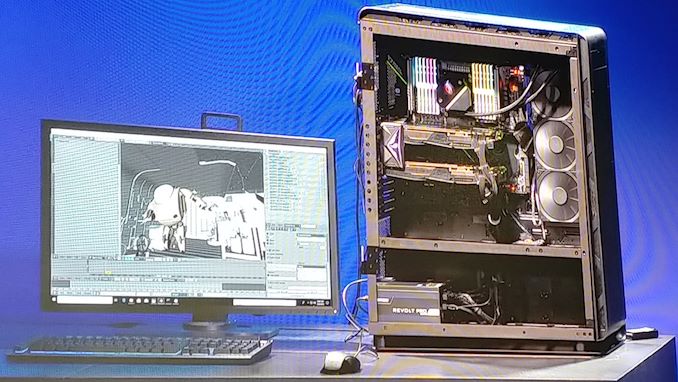
The new 28-core processor has a massive TDP of 265 W and considering the fact that it comes with an unlocked multiplier and can be overclocked, that power draw may get even higher. That said, the Xeon W-3175X will require a very robust cooling system, preferably a liquid-based one. At least, Intel itself demonstrated the chip with a cooler featuring two fans and a 240-mm radiator.
Intel aims the Xeon W-3175X primarily at content creators, which is why the platform offers 68 PCIe lanes (44 on the CPU + 24 on the chipset), enough to install more than one graphics card, numerous high-end NVMe SSDs, and whatever special-purpose accelerator is required.
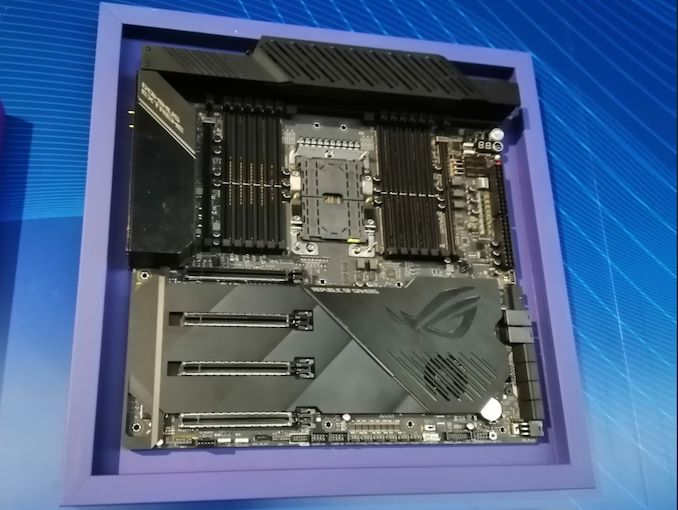
The ASUS ROG Dominus Extreme is one of the first motherboards specifically designed for the Xeon W-3175X processor. The platform features not one, but two 24-pin power connectors to ensure that the processor and other components have enough juice. The mainboard carries four PCIe 3.0 x16 slots for add-in-cards along with multiple M.2. slots for SSDs. This is a breaking news. We update the story as we get more information. Related Reading: | ||||||||||||||||||||||||||||||||||||||||||||||||||||||||||||||||
| 10:38a | Intel Announces 9th Gen Core CPUs: Core i9-9900K (8-Core), i7-9700K, & i5-9600K Among many of Intel’s announcements today, a key one for a lot of users will be the launch of Intel’s 9th Generation Core desktop processors, offering up to 8-cores on the mainstream consumer platform. These processors are drop-in compatible with current Coffee Lake and Z370 platforms, but are accompanied by a new Z390 chipset and motherboard launch as well. The highlights from this launch is the 8-core Core i9 parts, which include a 5.0 GHz turbo Core i9-9900K, rated at a 95W TDP. | ||||||||||||||||||||||||||||||||||||||||||||||||||||||||||||||||
| 10:50a | Intel's Basin Falls Skylake-X Refresh: Core i9-9980XE with up to 15% Better Power Efficiency One of the interesting things about Intel’s latest generation of high-end desktop parts was the jump from ten cores at the peak to eighteen, as Intel moved its high core count Skylake-X die into the consumer market. This meant more cores, at a higher cost, and now Intel had seven different processors rather than three or four. Today Intel is releasing information about an update to this platform: seven new processors, with higher frequency, but there’s something funny going on with the cache. | ||||||||||||||||||||||||||||||||||||||||||||||||||||||||||||||||
| 12:01p | Intel Z390 Motherboard Overview: 50+ Motherboards Analyzed As far back as May of this year details of Intel's Z390 chipset were seemingly leaked accidentally (or was it?). And ever since then, speculation has been rife with what Intel has up its metaphorical sleeve. Every time Intel launch a new range of processors there seems to be a new supporting chipset, and with the release of Intel's 9th generation processors later on this month, the floodgates have opened on the new Z390 chipset. Intel's latest chipset in turn will offer native USB 3.1 Gen2 connectivity, integrated 802.11ac, and an update to Intel's Management Engine firmware. | ||||||||||||||||||||||||||||||||||||||||||||||||||||||||||||||||
| 9:20p | Intel’s New Core and Xeon W-3175X Processors: Spectre and Meltdown Security Update
Spectre and Meltdown vulnerabilities made quite a splash earlier this year forcing makers of hardware and software to release updates in order to tackle them. There are several ways to fix the issues, including software, firmware, and hardware updates. Each generation of product is slowly implementing fixes, including some of the chips that Intel announced today. At its Fall Desktop PC event earlier today, Intel, among other things, disclosed details concerning mitigations for Spectre and Meltdown vulnerabilities. Unlike Cascade Lake processors for servers and Whiskey Lake processors for notebooks, the new Intel Xeon W-3175X relies on software and firmware fixes for Spectre and Meltdown. By contrast, just like Cascade Lake and Whiskey Lake, the 9th Gen Core i7/i9 processors feature a number of hardware mitigations. Take a look at the state of things today in the table below.
As it currently stands, because the new Coffee Lake Refresh processors, the i9-9900K, the i7-9700K, and the i9-9500K, are built from new silicon designs, Intel was able to implement hardware fixes for variant 3 (rogue data cache load) and L1 terminal fault. These fixes are not in the Core-X Skylake-X Refresh processors as these are still the same silicon but with different binning and cache arrangements. Related Reading | ||||||||||||||||||||||||||||||||||||||||||||||||||||||||||||||||





| << Previous Day |
2018/10/08 [Calendar] |
Next Day >> |