[Most Recent Entries] [Calendar View]
Friday, December 21st, 2018
- The Ulefone T2 Pro Hands-On: A 6.7-inch Stunner Smartphone
- Cat at MWC 2018: S61 Smartphone with FLIR Cam, Laser Distance Measurer, Air Quality Sensor
- Rugged Hands-On: The Land Rover 'Explore' Smartphone
- AMD’s Athlon 200GE Processors Now Available
- AMD Announces New $55 Low-Power Processor: Athlon 200GE
- Two New 35W Raven Ridge Parts: AMD Athlon 200GE and Athlon Pro 200GE
- AMD Ryzen 5 2400G and Ryzen 3 2200G Core Frequency Scaling: An Analysis
- AMD Announces Four New Ryzen CPUs: 2700E, 2600E, 2500X, and 2300X
- GlobalFoundries Weds FinFET and SOI in 14HP Process Tech for IBM z14 CPUs
- Hot Chips: IBM's Next Generation z14 CPU Mainframe Live Blog (5pm PT, 12am UTC)
- Assessing IBM's POWER8, Part 2: Server Applications on OpenPOWER
- GlobalFoundries Stops All 7nm Development: Opts To Focus on Specialized Processes
- Samsung Starts Mass Production of Chips Using Its 7nm EUV Process Tech
- Samsung Begins Sales of 65-Inch Q900R 8K UHDTV in the UK
- Samsung Starts to Take Pre-Orders on 85-Inch Q900 8K UHDTV
- Samsung’s One Invisible Connection: 75 Gbps and 230W in a Ultra Thin Cable
- Sharp’s 8K UHD TV Available in Japan, Listed in Europe for €11,899
- Sharp Announces 2nd Gen 8K UHD TVs at IFA
- AUO to Ship 8K UHD TV Panels in Coming Months
- Philips Demos 328P8K: 8K UHD LCD with Webcam, Docking, Coming in 2018
- Dell’s 32-inch 8K UP3218K Display Now For Sale: Check Your Wallet
| Time | Event | ||||||||||||||||||||||||||||||||||||||||||||||||||||||||||||||||||||||||||||||||||||||||||||||||||||||||||||||||
| 9:00a | Ulefone Armor 6 Rugged Smartphone: 6.2-Inch IP68 with 5000 mAh
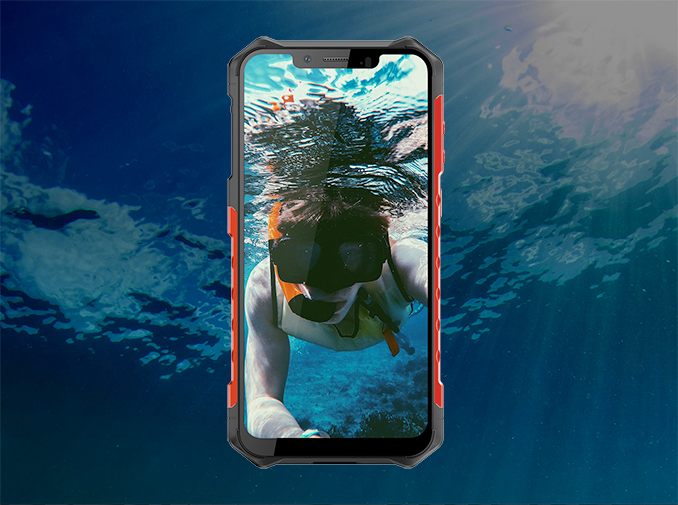
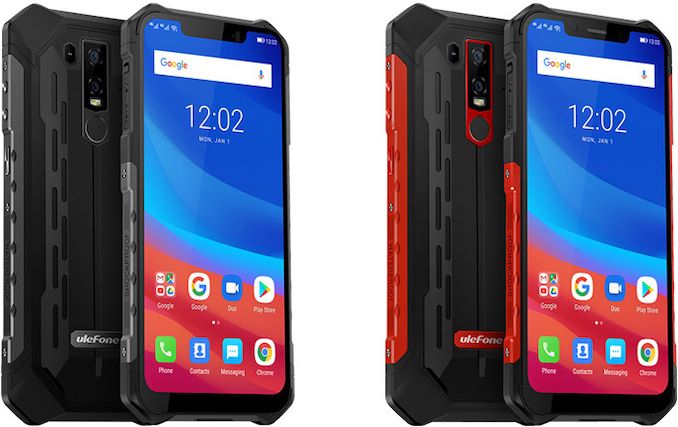
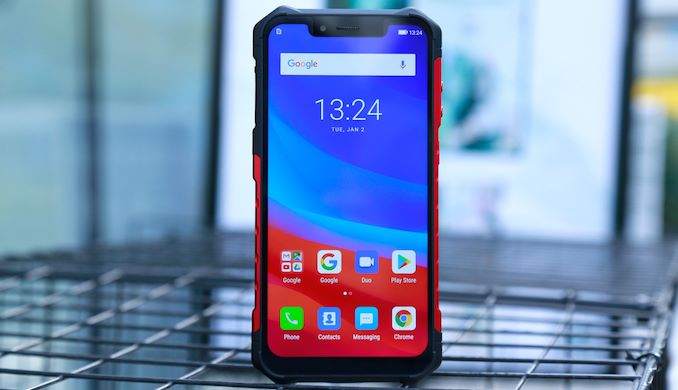
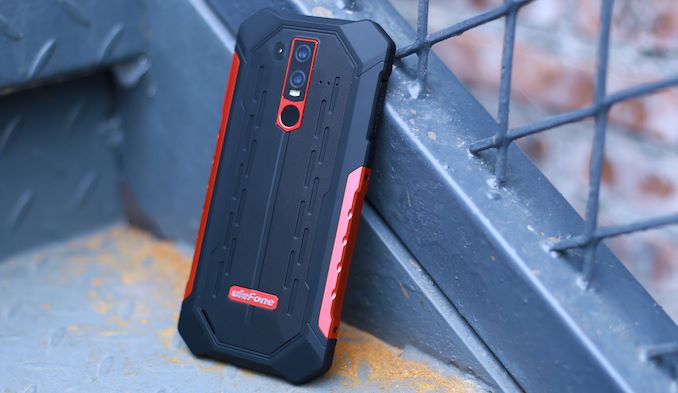
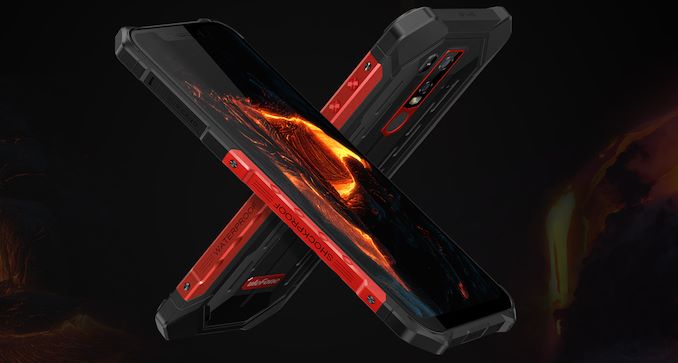
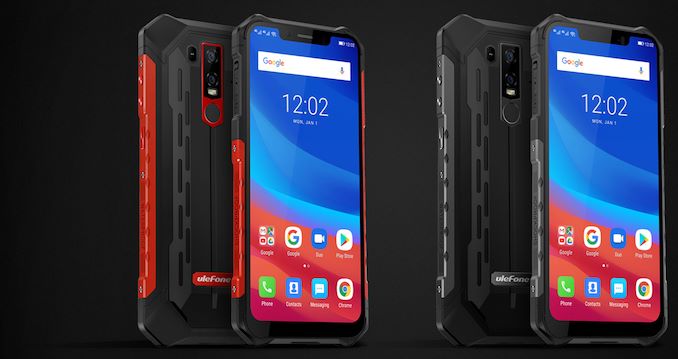
Ulefone this week introduced its new high-end shockproof and waterproof smartphone. Dubbed the Rugger Armor 6, the ruggized phone combines an IP68-rated chassis, a large display, multiple special-purpose sensors, and a high-performance SoC. Clearly keying in on a specific market segment for the new phone, the Armor 6 will also ship with multiple pre-loaded applications that are intended to be useful during traveling or just in various harsh locales. Broadly speaking, most rugged smartphones have to make trade-offs to reach their design goals, such as using an inelegant chassis, mediocre hardware inside, or rather ordinary displays. While the general reasons behind such design decisions are more or less obvious (e.g., keep their BOM costs and heat soak in check), there are many people who prefer to have a rugged smartphone without making quite so many compromises. The Ulefone Armor 6 in turn is looking to carve out a niche for itself in that market by offering a rugged design with above-average hardware. On the outside, the Armor 6 has a a rather decent looking chassis featuring a die cast frame covered with protective rubber and red or grey metallic inlays. The enclosure is rated to handle drops from 1.2 meters, submersion into water (up to 1.5 meters for up to 60 minutes), thermal shocks, corrosive environments, and so on. Meanwhile, framing a 6.2-inch 2246×1080 LCD display protected using Corning’s Gorilla Glass 5, the Armor 6 is generally pretty large and heavy: it is 160 mm tall, 13.3 mm thick, and weighs 228 grams. All of which makes the Armor 6 a lot larger than standard consumer smartphones, but is fairly typical for this market segment.
Moving on to the insides of the Ulefone Armor 6. The smartphone is powered by MediaTek’s Helio P60 SoC, a eight-core design with quad A73 and quad A53 Arm cores as well as Aem's Mali-G72MP3 GPU. The SoC is paired with 6 GB of DRAM and 128 GB of NAND flash storage. Many recent ruggedized smartphones have been based on cheaper SoCs with low-power Cortex-A53 CPU cores, so the Armor 6 is notable for its performance potential. As it appears, Ulefone decided not to cut corners and used a relatively high-performance SoC with Cortex-A73 cores in order to ensure that owners of the handset can use all applications they need to with a comfortable level of performance.
As far as connectivity is concerned, the handset supports 30 frequency bands as well as GPS/AGPS+GLONASS+Beidou positioning. As a result it can be used in 90% areas over the world, which is particularly useful for people who travel to various remote corners of the globe. As for local connectivity, the Armor 6 supports 802.11ac Wi-Fi, Bluetooth 4.2, NFC, as well as a USB 2.0 Type-C port for data transfers and charging of its 5000 mAh battery. Speaking of charging, the phone also supports 10 W Qi wireless charging.
One particularly interesting feature of the Armor 6 are its advanced imaging capabilities, which are comprised of a 16 MP + 8 MP main camera with an ƒ/2.0 large aperture and dual LED flash, as well as an 8 MP selfie camera with an ƒ/2.0 large aperture. In order to improve the resulting image quality and boost the effective resolution of photos taken with the phone, it's configured to use both cameras at once, combining their inputs using a special algorithm designed by Arcsoft and running on the SoC ISP. While a neat feature in and of itself, the unfortunate side-effect is that Ulefone is advertising this higher interpolated resolution as the native resolution of the camera system, which in practice isn't the case.
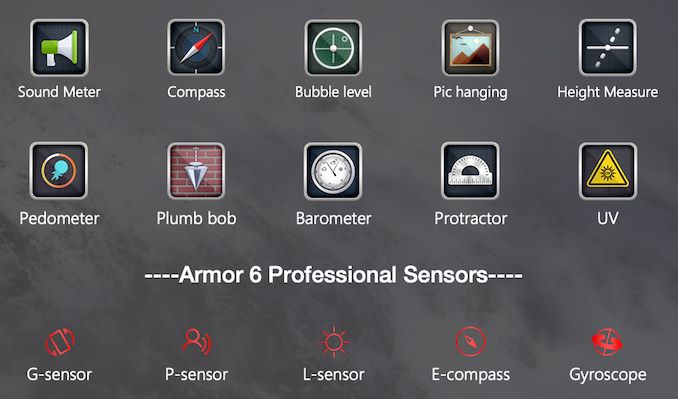
Meanwhile when it comes to sensors, the Ulefone Armor 6 has plenty that its target audience should appreciate. Among other things, the smartphone is equipped with a p-sensor, an ultraviolet sensor, a coulometer, along with the other more common sensors found in current-generation smartphones. The smartphone comes pre-loaded with multiple special-purpose applications (e.g., Sound Meter, Pedometer, Bubble Level, Barometer, Protractor, UV Light Tester, Plumb Bob, etc.) that take advantage of the sensors, making it easier to access the phone's full capabilities.
Ulefone said that its Armor 6 smartphone will ship in 2019, though they aren't supplying an exact timeframe. The company also hasn't yet announced a price, though if it's any pattern, the company’s current-gen high-end rugged smartphones run for $350 – $370 in the US.
Related Reading: Source: Ulefone | ||||||||||||||||||||||||||||||||||||||||||||||||||||||||||||||||||||||||||||||||||||||||||||||||||||||||||||||||
| 10:45a | AMD Athlon 220GE and Athlon 240GE with Radeon Vega Graphics Launched
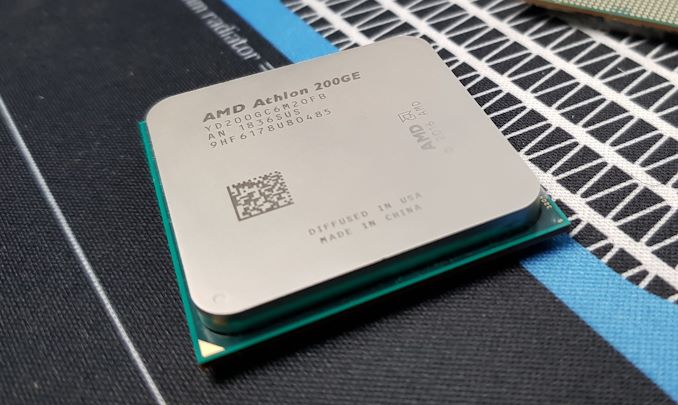
AMD has announced availability of the Athlon 220GE and Athlon 240GE processors it announced back in September. Based on the Zen microarchitecture and featuring built-in Radeon Vega graphics, these parts are priced well below $100 per unit, focusing on the mass market, and the new chips have a TDP of 35 W. Coming on the heels of the Athlon 200GE chip introduced earlier this year, the new Athlon 220GE and Athlon 240GE processors increase the performance of AMD’s inexpensive CPUs and make the company’s sub-$100 desktop product line more complete. Just like the Athlon 200GE, the new 220GE and 240GE models integrate two SMT-enabled Zen cores operating at 3.4 and 3.5 GHz frequency (respectively), a Radeon Vega iGPU featuring 192 stream processors operating at 1 GHz, 1 MB L2 cache, 4 MB L3 cache, a dual-channel DDR4-2667 memory controller, and so on. Higher clocks enable AMD’s new Athlon processors to better compete against Intel’s entry-level Celeron and Pentium processors for the market of cheap PCs that do not need a lot of compute horsepower yet benefit from a high integration as well as a low TDP. The new Athlon 220GE and Athlon 240GE CPUs are drop-in compatible with motherboards based on AMD’s 300 and 400-series chipsets that support high-performance NVMe SSDs, USB 3.1 Gen 2 interface, 4Kp60 display output(s) and so forth. The same AM4 platforms are compatible with AMD’s higher-performance Ryzen processors, providing owners of the new Athlon-based systems an upgrade path to eight-core Ryzen 7 CPUs.
Both new processors will be available for order from leading retailers shortly, AMD said. When it comes to pricing, the new Athlon 220GE (3.4 GHz) sits right above the model 200GE (3.2 GHz) with a $65 price tag. Meanwhile, the dual-core Athlon 240GE (3.5 GHz) costs $75, or $24 less than the quad-core Ryzen 3 2200G, which offers significantly more compute and graphics horsepower.
Related ReadingSource: AMD | ||||||||||||||||||||||||||||||||||||||||||||||||||||||||||||||||||||||||||||||||||||||||||||||||||||||||||||||||
| 11:30a | IBM to use Samsung 7nm EUV for Next-Gen POWER and z CPUs
IBM has announced it has signed an agreement with Samsung Foundry to produce its next-generation processors. This includes processors for IBM Power Systems, IBM z, and LinuxONE systems, all using Samsung’s 7 nm fabrication process that uses extreme ultraviolet lithography (EUVL). The decision comes as no surprise as GlobalFoundries, IBM’s manufacturing partner for CPUs, decided to abandon development of 7 nm and more advanced technologies. IBM and Globalfroundies manufacturing agreement, whereby fabs, IP, and $$ were given to GlobalFoundries to make IBM's CPUs, ends this month. IBM and Samsung have collaborated for 15 years researching and developing various semiconductor production materials and technologies as part of IBM’s Research Alliance. Considering the fact that Samsung’s and GlobalFoundries’ fabrication processes rely on R&D conducted internally and as part of IBM’s Research Alliance, IBM developers know what to expect from these technologies. IBM said that under the current agreement, the two companies will expand and extend the strategic partnership, but did not elaborate whether this means development of a custom version of Samsung’s 7LPP manufacturing process for IBM. At present, the companies call the tech to be used for IBM’s chips as “7 nm EUV”. IBM has traditionally used custom manufacturing processes to build its IBM POWER processors for servers and IBM z CPUs for mission-critical mainframes. IBM’s chips combine a high core count and complexity with very high frequencies, which is why the company required highly-custom process technologies that relied on SOI wafers, featured an increased amount of metal layers, a reduced transistor density, and other adjustments. Typically, technologies fine-tuned for IBM CPUs by IBM Microelectronics and then GlobalFoundries were only used for these products (partly because of IP and partly because of costs).
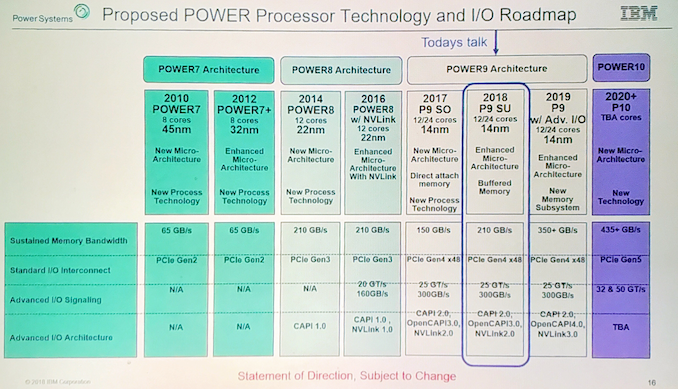
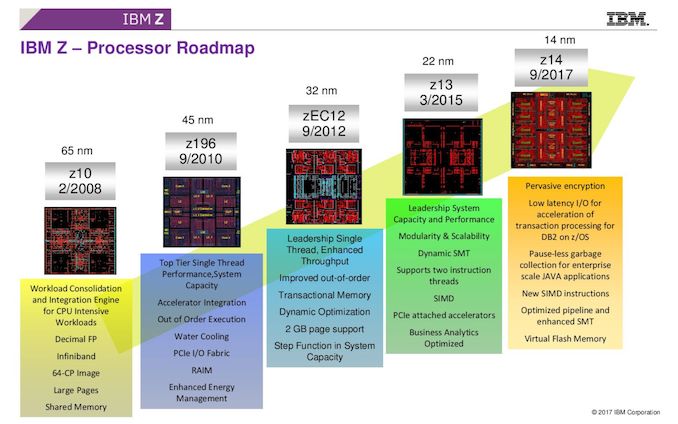
The two companies also did not disclose what exactly Samsung Foundry will produce for IBM. Based on IBM’s current roadmap for POWER processors, its 2019 CPUs will be made by GlobalFoundries using a custom 14 nm fabrication process. Meanwhile, the company’s next-gen POWER10 products set to hit the market in 2020 or later will allegedly use a different manufacturing tech. Meanwhile, IBM’s next-gen z15 processors for IBM Z mainframes, which are not introduced on a per-annum cadence, will most likely be fabbed by Samsung.
Samsung Foundry recently started to use its 7LPP manufacturing tech for high-volume production of undisclosed chips. This fabrication process uses EUVL tools for select layers only in a bid to reduce cycle times. Related ReadingSources: IBM, Samsung | ||||||||||||||||||||||||||||||||||||||||||||||||||||||||||||||||||||||||||||||||||||||||||||||||||||||||||||||||
| 1:00p | New 8K OLED Displays for Tablets and Laptops: 8.3 and 13.3 Inches
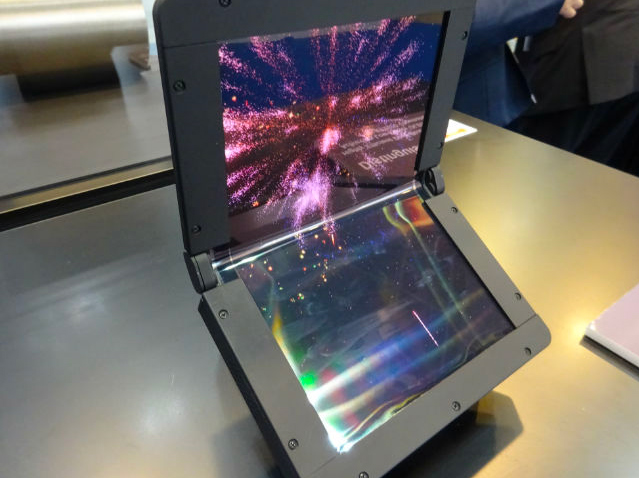
Semiconductor Energy Laboratory, a technology developer from Japan, has developed the industry’s first 8.3 and 13.3-inch OLED displays featuring an 8K resolution. The monitors use crystalline oxide semiconductor technology and they are likely preliminary designs for future product commercialization. The company also recently showcased a bendable 8.6-inch OLED panel, potentially for a foldable tablet or smartphone.
Both of SEL’s OLED panels featuring a 7680×4320 resolution use a color filter that relies on CAAC-IGZO (c-axis aligned crystalline indium gallium zinc oxide) material. The 8.3-inch 8K panel can boast with a rather high pixel density of 1061 pixels per inch and has a refresh rate of 60 Hz. The larger 13.3-inch 8K panel features a pixel density of 662 PPI, but has a refresh rate of 120 Hz, which is particularly high for an OLED. The 8.3-inch 8Kp60 OLED was demonstrated last month at SEMICON Japan, whereas the 13.3-inch 8Kp120 OLED currently exists only in SEL’s labs. The 8.3-inch display is 1062 PPI. For comparison, Sony's Z5 Premium with a 5.5-inch display and 4K resolution was 801 PPI. At 8.3-inches, it's a little big for a smartphone, so it will be interesting if that size can come down a little bit. 8K at 6.5-inches would be 1355 PPI, so the power draw would be quite interesting.
Other notable developments of SEL include a foldable 8.6-inch OLED panel with an 1920×1200 resolution rated for 10,000 bend/unbend cycles (that is 27.4 folds per day over a year) as well as OLED panels capable of displaying the BT.2020 color space.
The primary focus of Semiconductor Energy Laboratory’s work is development of crystalline oxide semiconductor technologies for various applications including chips and displays. CAAC-IGZO is recognized as one of next-generation materials that enable high-resolution low-power displays, so SEL is working on its practical implementations. Being an IP-licensing company, SEL does not have its own production capacities, so it will need a partner to make CAAC-IGZO-based 8K OLEDs a reality. Related ReadingSource: Optronics Online | ||||||||||||||||||||||||||||||||||||||||||||||||||||||||||||||||||||||||||||||||||||||||||||||||||||||||||||||||



| << Previous Day |
2018/12/21 [Calendar] |
Next Day >> |