[Most Recent Entries] [Calendar View]
Friday, December 28th, 2018
- Intel Discloses Plans to Spend $5 Billion on Fab 28 Expansion in Israel
- Intel to Expand Production Capacities at Multiple Fabs
- Intel to Equip Fab 42 for 7 nm
- Intel: EUV-Enabled 7nm Process Tech is on Track
- Intel Further Boosts CapEx to Meet Demand for 14nm Chips
- ASUS Unveils ProArt PQ22UC OLED Monitor: 4K, 99% DCI-P3, 0.1 ms Response Time
- New 8K OLED Displays for Tablets and Laptops: 8.3 and 13.3 Inches
- Dell’s Ultrasharp 30-inch 4K OLED Now On Sale: UP3017Q for $3500
- The Lenovo ThinkPad X1 Yoga Review: OLED and LCD Tested
- Comino Crypto Mining Rigs: Liquid-Cooled 16 GPUs in a 4U Server
- ASUS Announces H370 Mining Master: One Motherboard, 20 GPUs
- Mining Can Be Fashionable? Biostar Wants to Sell Millenials its New iMiner Systems
- Colorful Announces a Bay Trail Mining Motherboard with 8+1 PCIe Slots
- ASUS Announces B250 Expert Mining Motherboard: 19 Expansions Slots
- ASUS & Sapphire Release Pascal & Polaris-based Cryptocurrency Mining Cards
- Biostar’s iMiner A578X8D Crypto Mining Machine Now Available
- The Intel 9th Gen Review: Core i9-9900K, Core i7-9700K and Core i5-9600K Tested
- Analyzing Core i9-9900K Performance with Spectre and Meltdown Hardware Mitigations
- Intel Announces 9th Gen Core CPUs: Core i9-9900K (8-Core), i7-9700K, & i5-9600K
- Intel Coffee Lake Refresh: Global Price Check on 9900K, 9700K, 9600K
| Time | Event | |||||||||||||||||||||||||||||||||||||||||||||||||||||||||||||||||||||||||||
| 10:00a | Israeli Parliament Approves Intel Fab 28 Expansion Grant
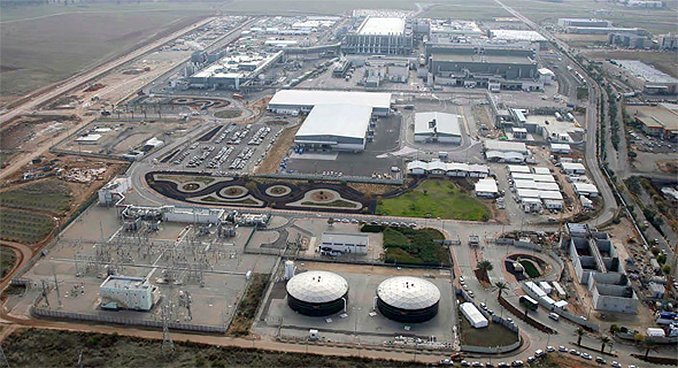
The Finance Committee in Israeli parliament this week approved a grant to Intel to expand its Fab 28 production facility in Kiryat Gat. The decision confirms that Intel’s expansion of its factory had been approved by local authorities and the company may proceed with the project. Under the terms of its investment plan proposed in May 2018, Intel intends to invest $5 billion (NIS 18 billion) in its Kiryat Gat ventures until 2020. The Knesset Finance Committee approved a plan to provide Intel a grant of $185.5 million (NIS 700 million) on the condition that it will hire 250 new employees and spend $560 (NIS 2.1 billion) with local vendors and retailers per annum. The grant was awarded as a part of changes for Israeli national budget for 2018, so the company has already received the money or is about to. Intel has been expanding its Fab 28 for years now. In 2013 the company acquired Micron’s 200-mm fab located adjacent to Intel’s Fab 28 (in fact, the facility was initially called Fab 18 and belonged to Intel prior to 2008) and announced plans to convert it to 300 mm wafers, essentially making it a part of its Fab 28 complex. In 2014 the semiconductor giant announced a $6 billion investment plan to prepare its Fab 28 to produce CPUs using its 10 nm process technology. The CPU maker got $450 million (NIS 1.7 billion) in state grands from Israel as a part of this project and reduced corporate tax rate of 5% (vs. standard 23%). The company’s new Fab 28 production lines that went online in late 2016 are currently using Intel's 14nm process and it is unclear whether the facility is ready for 10 nm or not. The new $5 billion plan for Fab 28 is a part of Intel’s recently announced intention to expand manufacturing capacities globally. Under the terms of this plan, Intel will equip its Fab 42 for its 7 nm process technology, expand and upgrade its fab in Ireland, and add fab space to its Oregon plant. Related Reading: Sources: CalcalisTech, Times of Israel, Haaretz/TechNation | |||||||||||||||||||||||||||||||||||||||||||||||||||||||||||||||||||||||||||
| 12:00p | AnandTech Year In Review 2018: Flagship Mobile As we’re drawing to a close of the calendar year, it is time to look back and revisit what 2018 has brought to the mobile space. Unlike the PC industry, the mobile space follows a quite unrelenting and precise release schedule – meaning that we’re guaranteed new products every year: This can be a double-edged sword for new flagship mobile devices, as new technologies can be either ready at the leading edge of a new product cycle – or in the worst case they can miss the current generation altogether by a few months and have to be relegated to the next generation. Overall, smartphone companies have an incredibly complex task at hand in attempting to deliver products that not only represent an improvement to last year’s devices, but also to be able to distinguish themselves from the current competition. In this piece, we’ll have a closer look at the distinguishing trends of 2018 and how major players have executed their strategies this cycle. | |||||||||||||||||||||||||||||||||||||||||||||||||||||||||||||||||||||||||||
| 12:20p | JOLED Demos 21.6-Inch OLED Monitor for Gamers
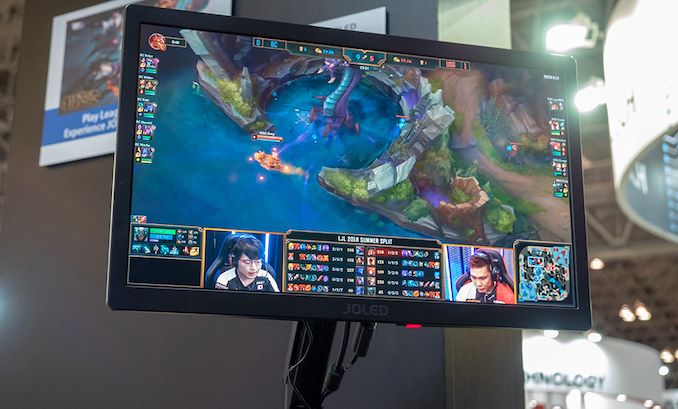
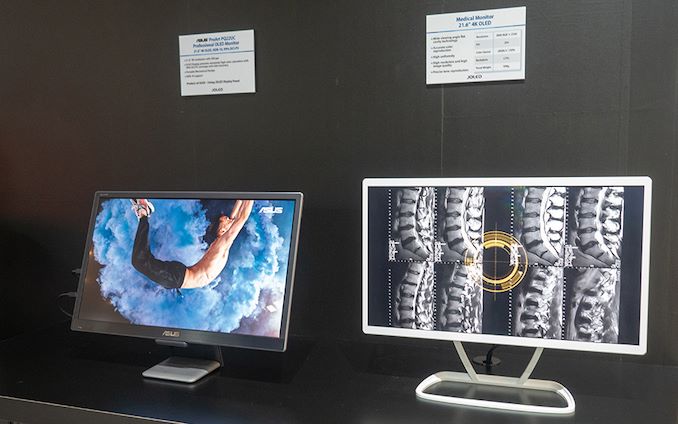
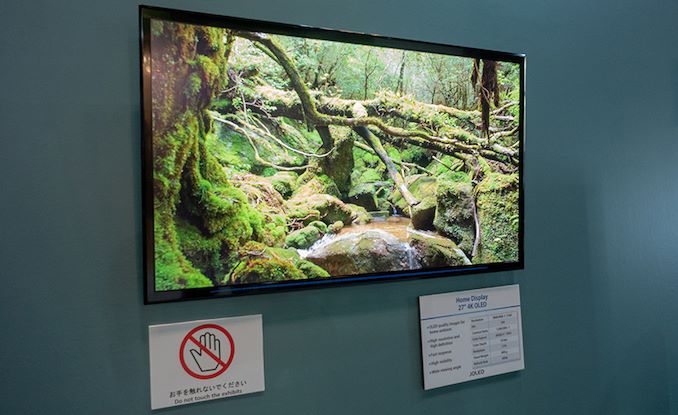
JOLED, a joint venture between Sony and Panasonic, has demonstrated multiple PC-oriented printed OLED-based monitors at Finetech Japan trade show. Among other things, the company exhibited OLED displays for gamers, home applications, and professionals. Some of the products are already on the market, or are about to be released, and others are prototypes.
One of the advantages that OLED has over conventional LCD technology is a very fast response time, which makes the tech particularly appealing for gamers. Meanwhile, due to cost and longevity reasons, hardly any company has addressed this audience with an OLED solution. At the show JOLED demonstrated a prototype of its 21.6-inch OLED display that was co-developed with Burning Core, a Japanese gamers team that JOLED sponsors. The monitor features a 1920×1080 resolution and was test driven at Finetech Japan.
In addition to a 21.6-inch Full-HD OLED panel, JOLED also has a high-contrast 21.6-inch Ultra-HD OLED panel in its arsenal. The company has been shipping a medical 21.6-inch 4K OLED display under its own brand (presumably only in Japan) since late 2017. Also, a similar (or the same) 21.6-inch Ultra-HD OLED panel is used by ASUS for its ProArt PQ22UC monitor that is yet to hit the market.
Besides 21.6-inch OLED panels for consumer and professional applications, JOLED has developed a 27-inch 4K OLED panel too. The prototype the company demonstrated at the exhibition was a wall-hanging monitor aimed at smart home applications (smart speakers, IoT, etc.). The positioning of the device is a bit odd because a 27-inch OLED would have been a good solution for PCs, but for some reasons the company does not want to address this market with this panel just yet.
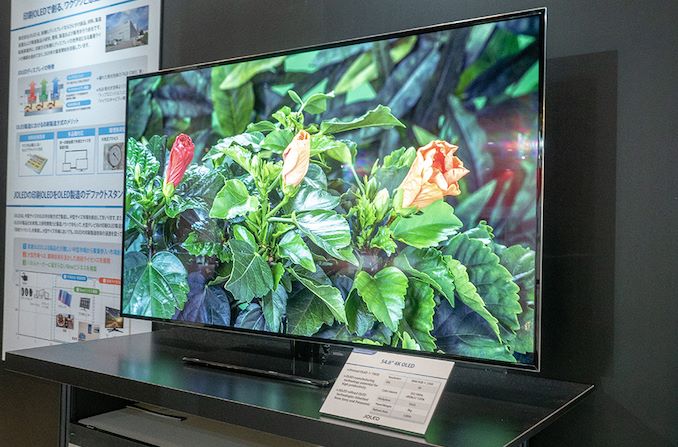
Also aimed at consumers is JOLED’s 55-inch OLED Ultra-HD panel for UHDTVs. This device was demonstrated as a proof of concept to show that the company’s printed OLED technology is suitable for large-sized applications such as TV sets.
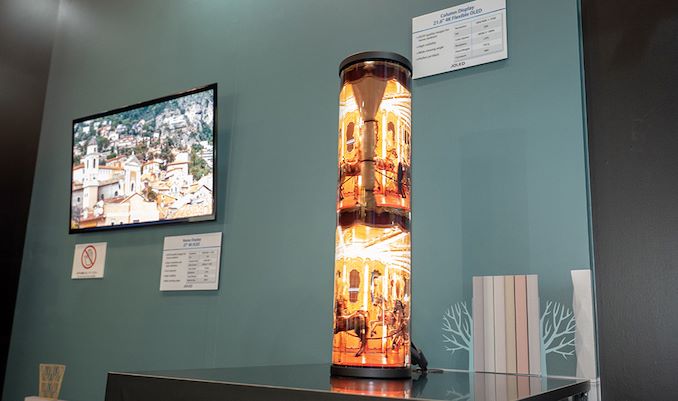
Amongst its consumer/professional-oriented OLED devices, JOLED showcased prototype of a rather unique 21.6-inch column-style 4K monitor featuring plastic substrate. The similar substrate is also used for a 21.6-inch curved 4K display designed for digital signage applications in metro/trains and other similar places.
Related Reading: Source: JOLED, OLED-Info (via TechPowerUp) | |||||||||||||||||||||||||||||||||||||||||||||||||||||||||||||||||||||||||||
| 4:00p | From $600 to $55: Prices of Mining Hardware Drop
Cryptomining frenzy of the recent 18 months have encouraged computer component manufacturers to develop hardware tailored for mining infrastructure. At some points earlier this year, these components retailed for hefty sums of money. As rates of Bitcoin, Ethereum, and other similar currencies have dropped, so too have prices of motherboards, power supplies, and GPUs.
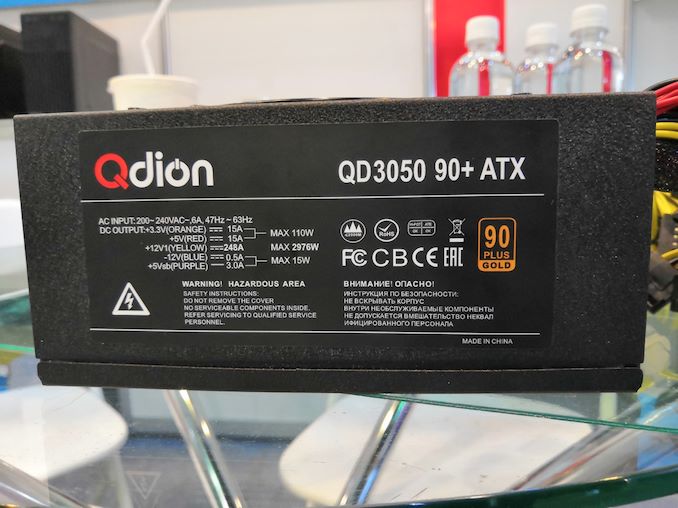
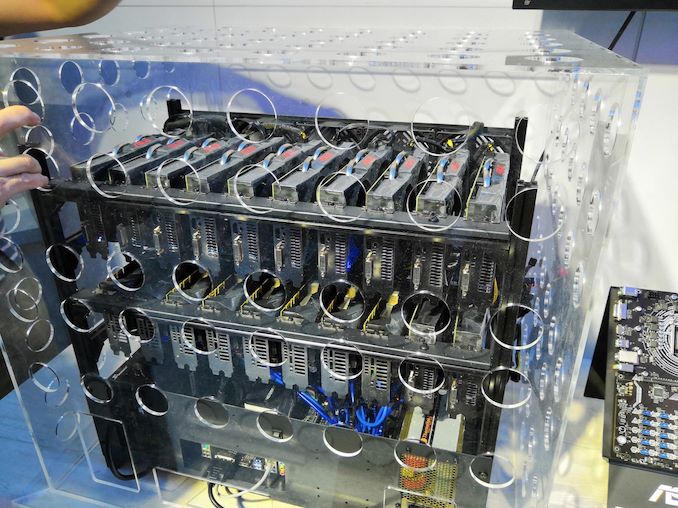
From $17,000 to $3,900The period between April 2017 and April 2018 was particularly good for cryptocurrency, which stimulated many hardware companies to try their luck to design hardware aimed specifically for mining and mining infrastructre. In the recent quarters, manufacturers of motherboards have introduced special platforms featuring multiple PCIe slots; producers of PSUs launched power supplies for many graphics cards; suppliers of chassis released special-purpose stands and cases; multiple companies unveiled special-purpose turnkey mining machines, whereas some even offered to rent such systems in the cloud.
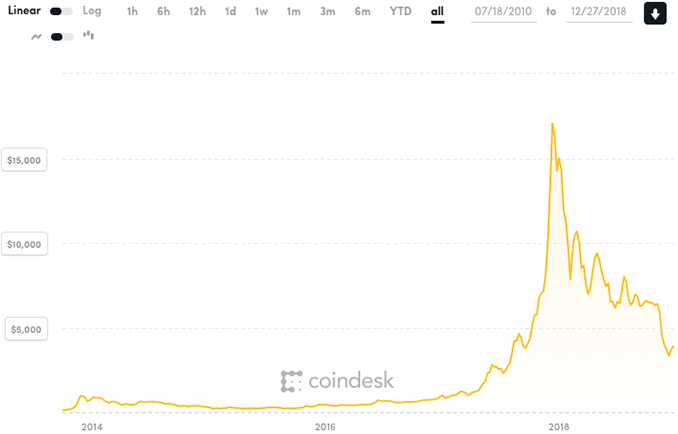
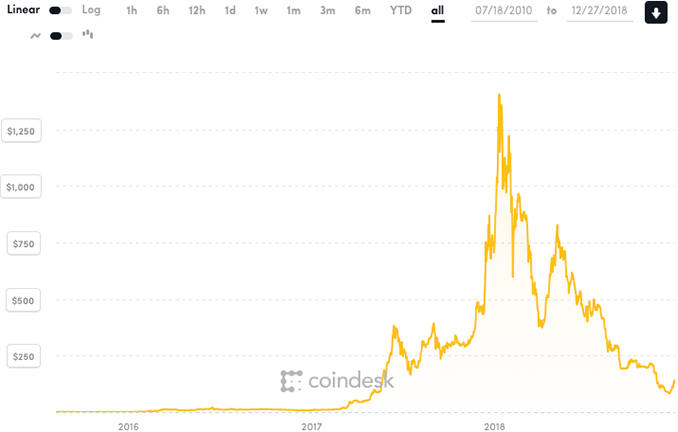
Since the peaks, Bitcoin-USD exchange rates have dropped from around $17,000 in December 2017 to $3,900 in December 2018, according to CoinDesk. Ethereum suffered the same fate and dropped from around $1,350 in January 2018 to $130 in late December 2018. With exchange rates collapsing that significantly, the interest towards mining dropped along with demand and prices of appropriate hardware.
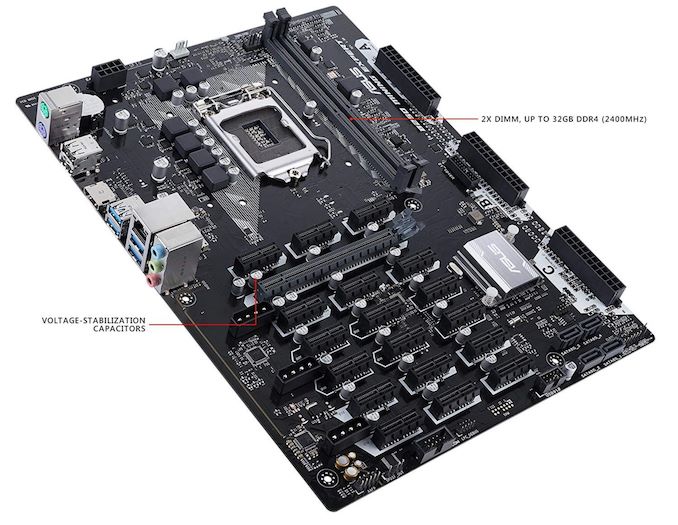
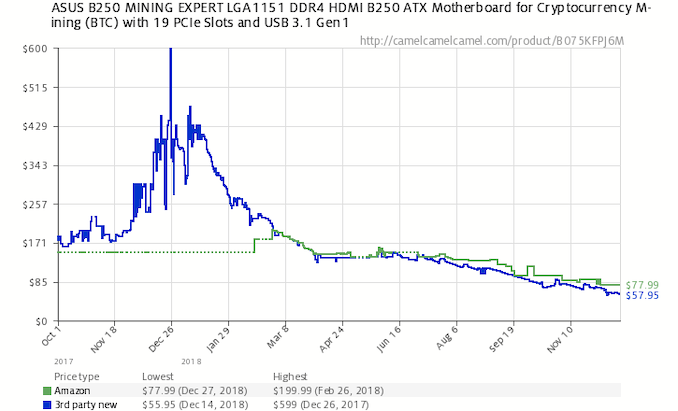
In a bid to understand the significance of mining hardware price drops, we decided to analyze several popular cryptocurrency mining hardware devices sold at Amazon. Every decent rig starts from a motherboard, so we are going to start from them. The B250 Mining Expert from ASUS as well the B360-F PRO from MSI are among the most capable platforms for mining with 19 and 18 PCIe slots, respectively.
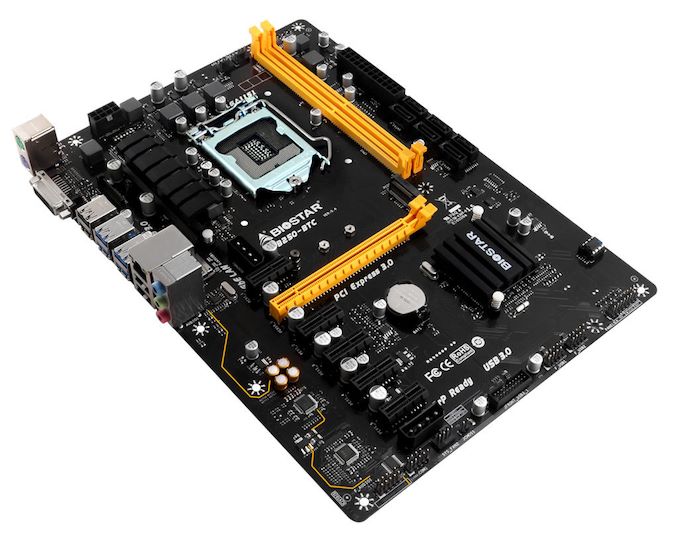
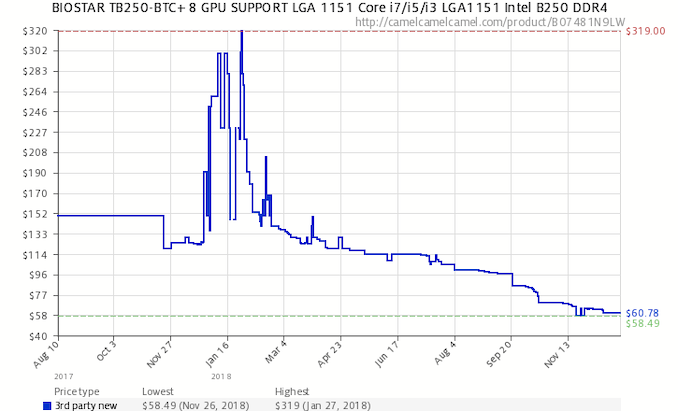
The ASUS B250 Mining Expert used to cost from $400 to $600 about a year ago, but right now it is possible to get it for $58 - $78. The situation is similar with the MSI B360-F PRO: it used to cost $200 in May, but now it can be obtained for $63 - $96. Biostar’s TB250-BTC supports “only” eight GPUs, yet it used to cost $250 - $320 from December 2017 to February 2018. By contrast, today it is priced at around $60.
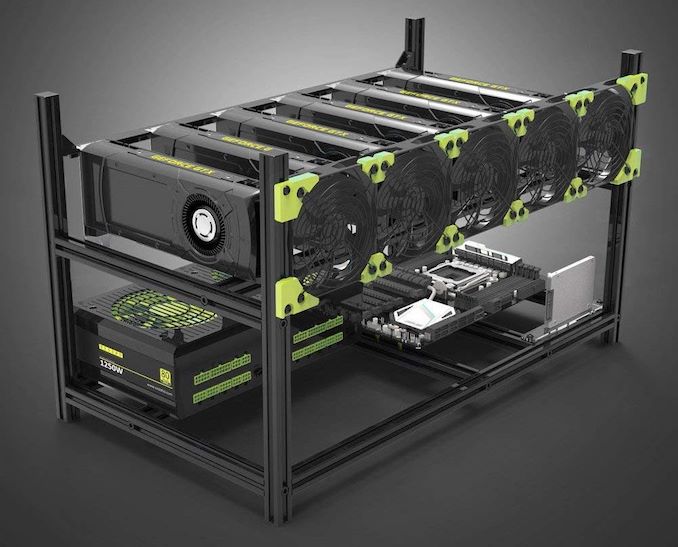
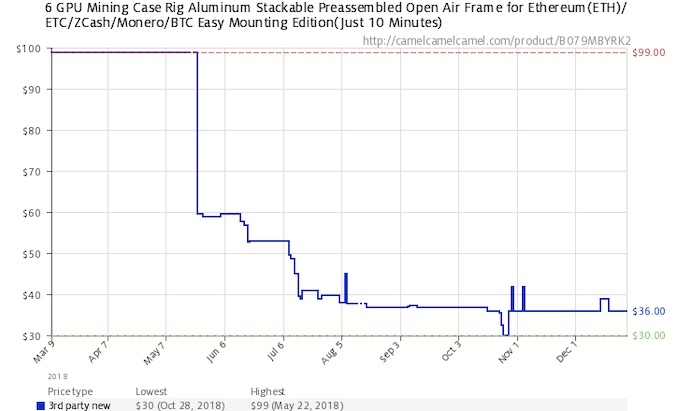
Mining rigs usually need chassis so we decided to check out dynamics of mining chassis: an entry-level open-air frame from Astarin that supports up to six graphics cards.
The 6-way frame for mining rigs that used to cost $100 in March, is now available for $36, a nearly three times decline.
Getting enough GPUs was a big problem for “professional” miners and those who did not have a good/close relationship with GPU manufacturers. They had to buy from retailers, which is why demand for mainstream and performance mainstream graphics cards increased and their prices hit a historical peak.
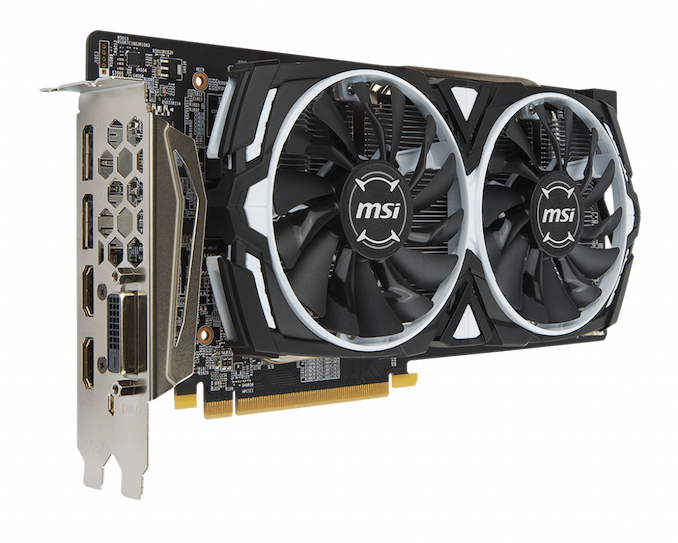
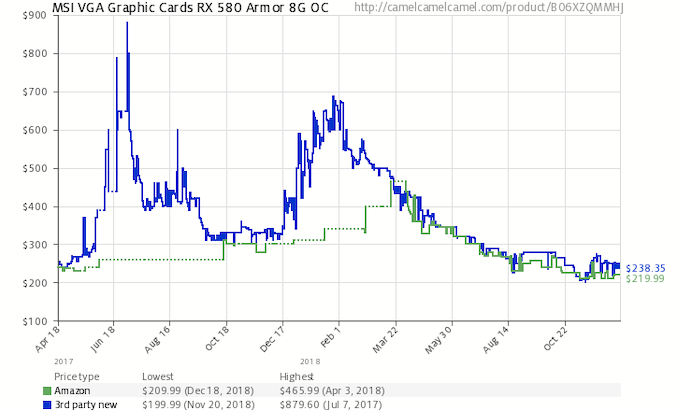
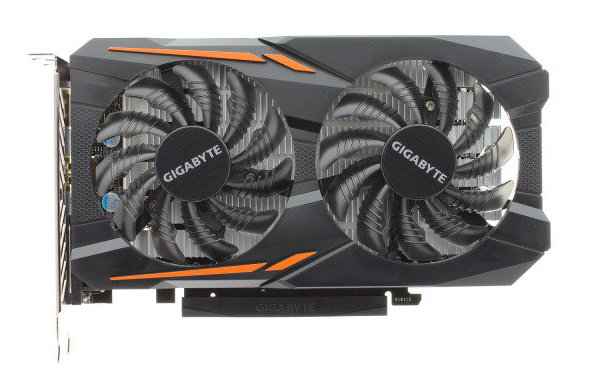
MSI’s Radeon RX 580 Armor 8 GB OC used to cost $420 - $700 in the period from late-2017 to early-2018, but at present it is available for $220 - $240. The situation is similar with GIGABYTE’s Radeon RX 570 4 GB. The product that used to cost $450 - $600 a year ago is now sold for $150 - $184. The EVGA GeForce GTX 1060 SC 6 GB graphics card, currently priced at $250 - $280, used to cost $430 or even $700 (depending on the retailer) earlier this year and that is if you were lucky enough to get one.
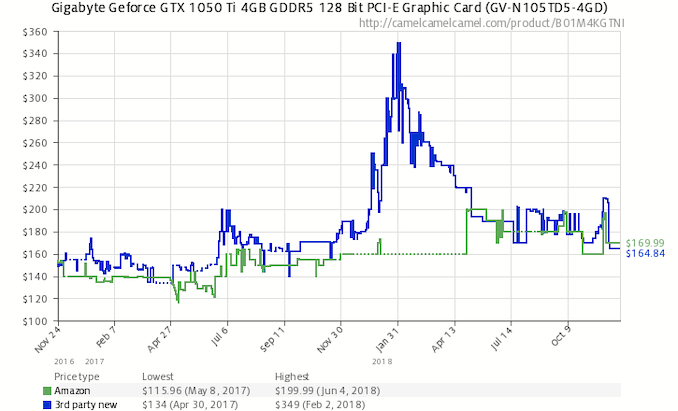
Launched at an MSRP of $139 in late October 2016, NVIDIA’s GeForce GTX 1050 Ti has been overpriced throughout its lifetime. Amazon sold GIGABYTE’s GeForce GTX 1050 Ti for $200, whereas its partners were bold enough to offer it for as high as $350 when demand for mining hardware peaked in January 2018. Right now, the board can be obtained for $165 - $170. Some ThoughtsOnce cryptocurrencies became an investment tool for various market players, exchange rates began to increase at rapid paces as more money was pumped into them. Contrary to usual scenarios, when unqualified investors often avoid highly volatile items like currencies or commodities, this time enough people decided to try their lack and mine Bitcoins or other cryptocurrencies at home, investing in hardware. Hardware makers were eager to satisfy demand for mining rigs and invested in appropriate R&D and manufacturing. Meanwhile, like any stock or commodity, cryptocurrencies could not grow forever or stay at their peak for too long, and exchange rates have began to depreciate. It remains to be seen when they are set to bottom out. Ot looks like there will be many people left with mining hardware that cannot be applied elsewhere as well as companies with redundant inventory. Related ReadingSources: CoinDesk, CamelCamelCamel | |||||||||||||||||||||||||||||||||||||||||||||||||||||||||||||||||||||||||||
| 5:00p | Unannounced Intel Core i9-9900KF, i7-9700KF, i5-9600KF and i5-9400F CPUs Listed
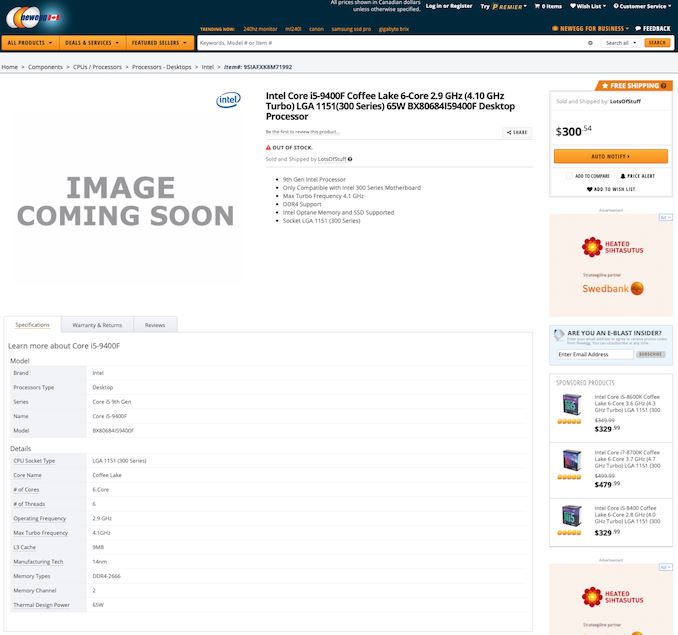
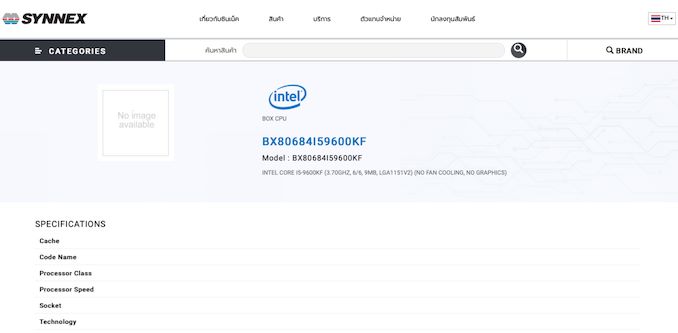
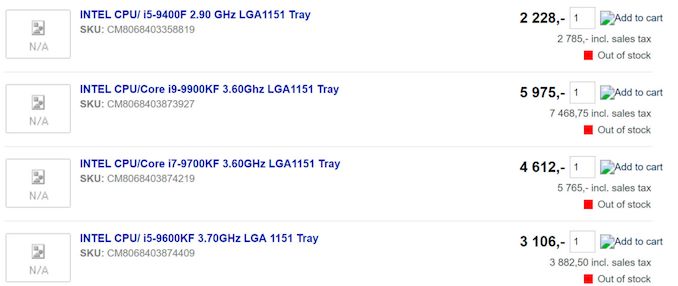
So far Intel's 9th Gen Core on desktop only features three models aimed at the higher end of the spectrum. The launch of the lineup consisting of these three products with unlocked multiplier does not yet have any “locked” parts aimed at mainstream PCs, although we are expecting them at some point. The question is one of when they will come. As it appears, from listings of numerous companies in the supply chain, Intel is finally gearing up to expand its Coffee Lake Refresh family with new models. The products in question are the eight-core Core i9-9900KF and Core i7-9700KF, as well as the six-core Core i5-9600KF and Core i5-9400F. These devices have been listed by retailers Data-Systems.Fi, Newegg, and distributor Synnex (see screenshots below). According to Intel’s existing nomenclature, the CPUs with model numbers ending with F, like 9400F lack integrated graphics, so we suspect the new processors will primarily target higher-end systems featuring discrete graphics. This will mark the first time that Intel has launched integrated graphics-free processors in its mainstream family at the high-end for many, many years. The higher-end Core i9-9900KF, Core i7-9700KF, and Core i5-9600KF look set to run at the same frequencies and feature the same cache configurations as their non-F colleagues. As for the Core i5-9400F, this six-core chip runs at 2.9/4.1 GHz, well below the clocks of the i5-9600K, but will have a TDP of 65 W. All of these parts, according to the listings, will be able to be used in current 300-series motherboards.
Intel has not officially confirmed existence of these CPUs, or mentioned plans to release them. In the meantime, listing of the Core i5-9600KF by Newegg and the Core i5-9400F by Synnex Thailand indicates that their launch is likely imminent. Avid readers will remember that CES 2019 is taking place in early January, so the question is whether Intel starts to sell these CPUs more or less quietly ahead of CES, or if it will announce them publicly at the trade show. In any case, if Intel proceeds with the launch (or rather when), it may broaden availability of its latest eight-core and six-core CPUs both in terms of physical availability and in terms of pricing (i.e., the i9-9900KF will hopefully cost less than the i9-9900K). In the meantime, one has to remember that Intel has high demand issues in general, so the effect of the launch is something that remains to be seen. It could be that the company will not focus on the Pentium/Celeron parts this time around, but instead make these higher-performing (and higher margin) offerings more regular.
Screenshots:
Related Reading: Source: Newegg, Synnex, Tom’s Hardware | |||||||||||||||||||||||||||||||||||||||||||||||||||||||||||||||||||||||||||


| << Previous Day |
2018/12/28 [Calendar] |
Next Day >> |