[Most Recent Entries] [Calendar View]
Tuesday, January 8th, 2019
| Time | Event | ||||||||||||||||||||||||||||||||||||||||||||||||||||||||||||||||||||||||||||||||||||||||||||||||||||||||||||||||||||||||||||||||||||||||||||||||||||||||||||||||||
| 8:00a | CES 2019: Lian Li’s Limited Edition LANCOOL ONE, Champagne Edition
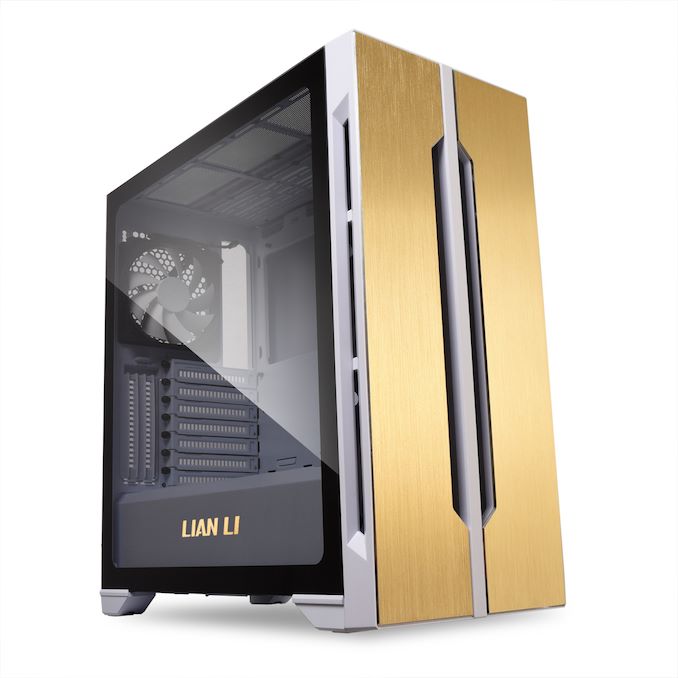
When a PC technology company plays in a competitive market, where margins are tight, there are kudos all around when a product becomes overly successful and gets all the users or PC builders interested. Lian Li has had success recently with the LANCOOL ONE, a seemingly minimal sleek chassis design buoyed by its front symmetry, see-through panel, and customizability. After announcing that it would be making a limited run of five models called the ‘Champagne Edition’, demand was so high that they're going to make a few more for retail.
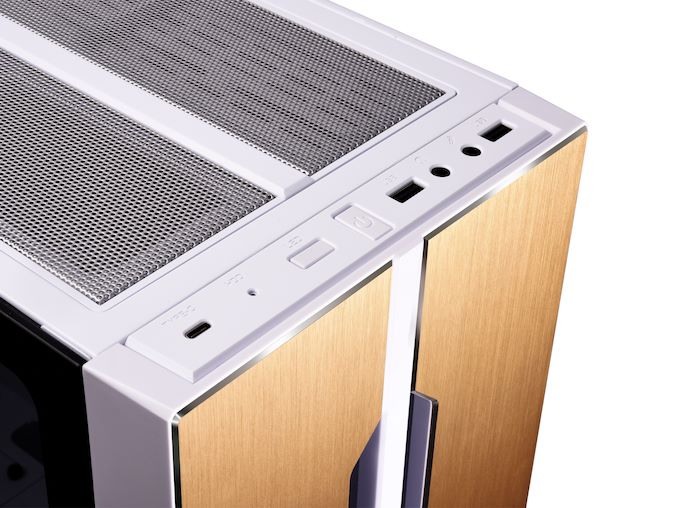
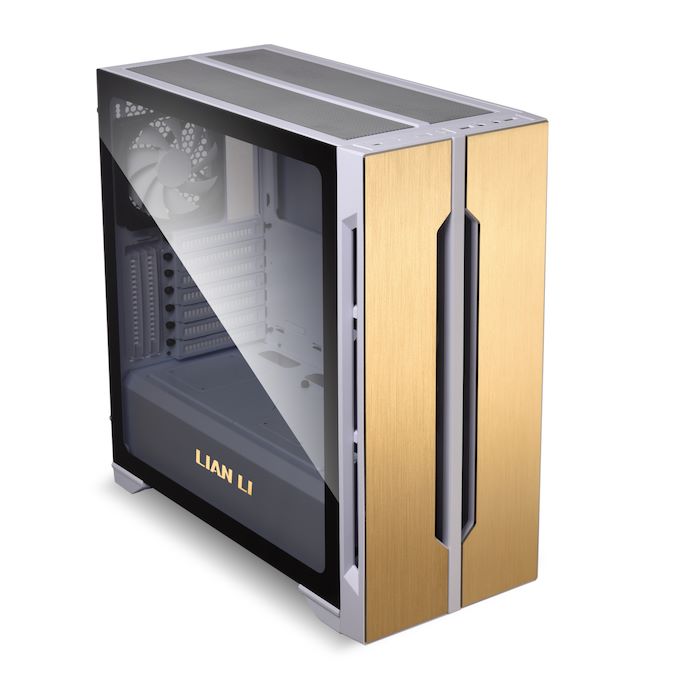
Don’t get me wrong, this is a nice looking case. Lian Li describes the design as ‘timeless, elegant’, which are usually words you hear during a commercial about a super expensive watch. That being said, there are more cases with RGB than watches with RGB. The front panel has a brushed metal finish with a symmetric design, with RGB lighting in the middle where users can see into the case. The airflow vents for the case are on the side as part of the front structure, while there are exhaust vents on the top. Also on the top is the front panel IO, which includes a Type-C port, two Type-A ports, two 3.5mm jacks, a power button, and a button to cycle through the LEDs.
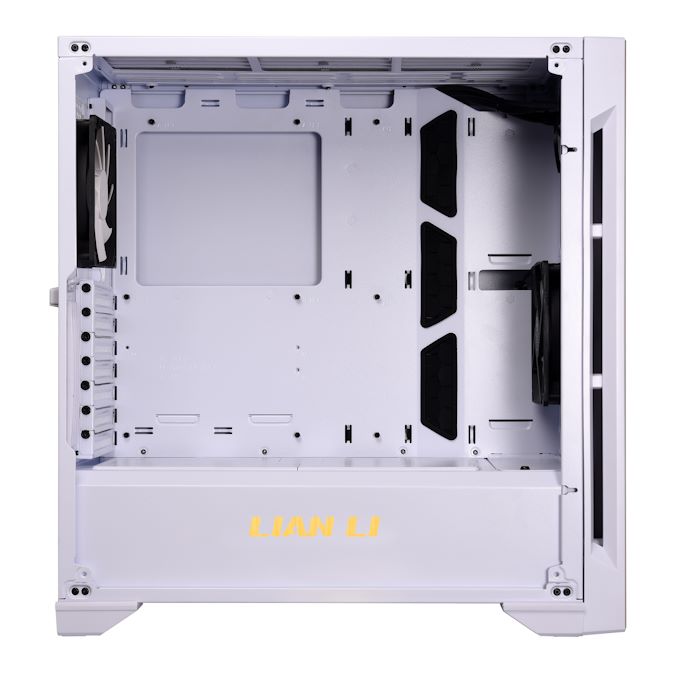
Aside from the color combination of the chassis and the front panel, which works well as a design ID, the key part of the chassis is the side panel. Using tempered glass, similar to many contemporary chassis, the white internal power coating combined with the slight tint in the window really makes the yellow gold of the Lian Li logo for the PSU shroud stand out. The chassis can take up to regular sized ATX motherboards, with space for seven PCIe slots, along with support for one two-slot GPU in a vertical orientation if a PCIe ribbon is used.. On the top of the shroud are two detachable segments to put SSDs or additional fans, and two drives can be supported at the front of the chassis by the front fans. The front contains one 120mm fan, but can support a 360mm radiator, and the top vent will also support a 360mm radiator, but not at the same time (otherwise go for two 120mm fans or 240mm liquid cooling). The rear has a single non-RGB fan, and if a user wants to go all out with just fans, the chassis will support nine 120mm fans.
Lian Li is only making 1000 of these, all of which will be individually numbered, but will be sold worldwide. Given the low number of units, the company isn't listing the retailers that will be selling them; instead they're directing buyers to their social media page for more details. Is it just me, but that color isn’t Champagne? Perhaps Champagne Edition is meant to be something related to status? We know Lian Li hasn’t had the best success with naming products recently, such as the Strimer (pronounced STREAMER). | ||||||||||||||||||||||||||||||||||||||||||||||||||||||||||||||||||||||||||||||||||||||||||||||||||||||||||||||||||||||||||||||||||||||||||||||||||||||||||||||||||
| 8:30a | FSP Twin Redundant PSU: 900W Due Later This Year
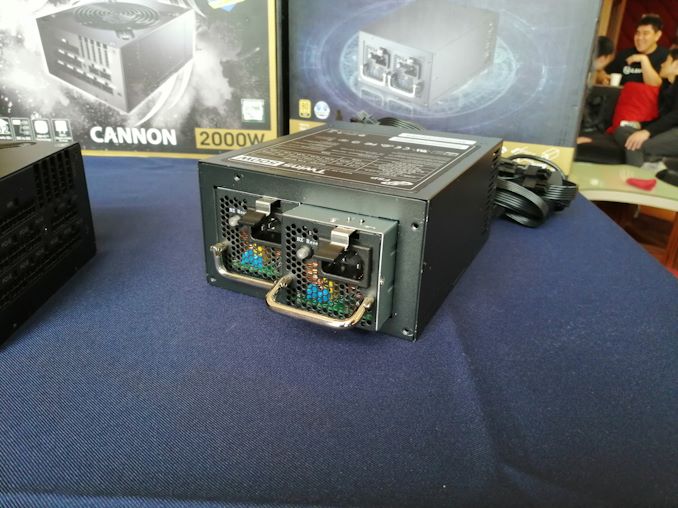
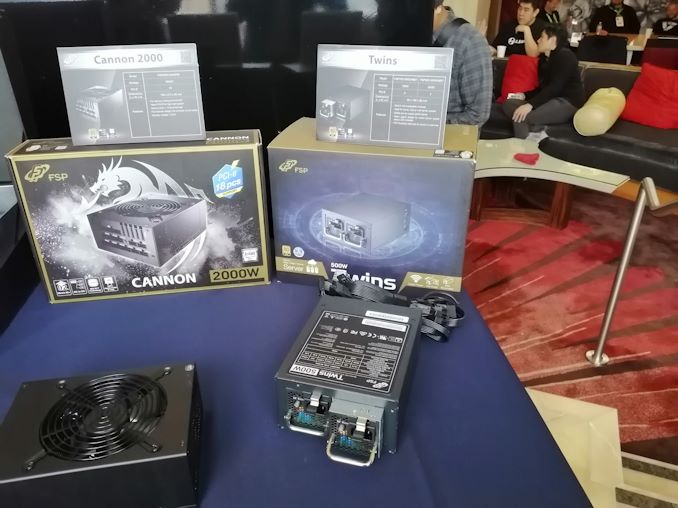
The consumer market is not used to the idea of redundant power supplies. For the enterprise market, redundant PSUs give peace of mind by eliminating a single point of potential failure. It can also protect the components should one power supply have a mishap, as the other supply can take over. The power supplies can be hot plugged as well, keeping the system alive in case one power supply needs to be replaced. For desktop/workstation users who want this level of security, there have not been many options to choose from except to purchase from the enterprise market. Last year, FSP introduced its 'Twin' range of redundant power supplies for consumers.
Over 2018, the company introduced two units, a 700W and a 500W model. The hardware fits into a standard ATX power supply bay, and the only difference in setups will be that two power cords are needed. The pickup of these units in certain markets has been so good, the company is working on a 900W model to address the higher-end of the target market. We were told that work on this unit is ongoing, and likely to be shown at the end of the year. FSP makes its own power supplies as an ODM, so they want to also hit the efficiency points as well. I was told that I'll likely see it either at Computex later this year or next year at CES. | ||||||||||||||||||||||||||||||||||||||||||||||||||||||||||||||||||||||||||||||||||||||||||||||||||||||||||||||||||||||||||||||||||||||||||||||||||||||||||||||||||
| 9:00a | Toshiba Announces Fourth-Generation BGA SSD with 96L 3D NAND
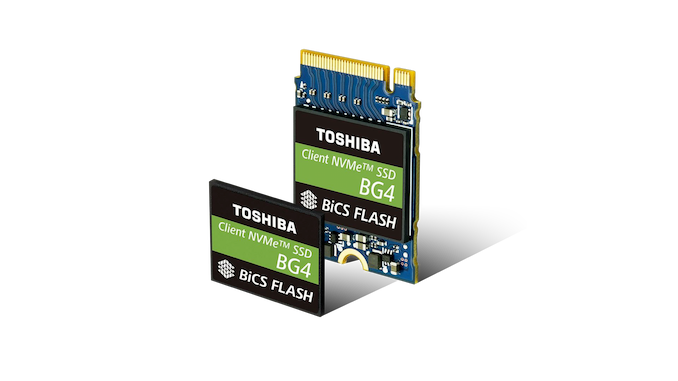
Toshiba has announced the fourth iteration of their OEM client NVMe SSD that is delivered as a single BGA chip package containing both the SSD controller and the NAND flash memory. The Toshiba BG4 is a significant upgrade over the BG3: Toshiba's new 96-layer 3D TLC replaces their 64-layer NAND, allowing for higher capacities and lower power consumption. The PCIe 3 x2 controller used in the BG2 and BG3 is replaced by a new controller supporting PCIe 3 x4, opening the door to much higher sequential I/O performance. The BG4 is still a DRAMless SSD that relies on the NVMe Host Memory Buffer (HMB) feature to mitigate the performance penalties that a DRAMless drive otherwise suffers from. Toshiba has enhanced their use of HMB with the addition of parity checking for data the SSD stores in host DRAM, providing an extra layer of data protection even when the host system does not use ECC memory. The BG4's firmware has also been tweaked to expand the range of user data mapping information that can be cached in the host memory buffer, improving performance for use cases like copying large files. These changes mean that the BG4 will ask to use a larger chunk of host memory to accelerate its operation, but the requested HMB size is still less than 100MB. Other firmware changes have focused on improving random I/O performance and reducing the impact of background flash management on interactive performance. Preliminary performance numbers from Toshiba indicate that random write performance has almost doubled, and random read performance is well over twice as fast as the BG3.
The change to a wider PCIe x4 host interface does not require the BG4 to adopt a larger BGA package size than its predecessors, but the version that is mounted on a removable M.2 2230 card now uses type-M keying instead of the B+M keying typically used for M.2 SATA and PCIe x2 SSDs. The switch to 96L 3D TLC with a higher per-die capacity has allowed some drive capacities to be thinner (1.3mm vs 1.5mm for the 512GB model), and has allowed a 1TB model to be introduced to the BG series for the first time. Toshiba was the first to ship SSDs with 96L NAND with last year's XG6 high-end NVMe SSD, and it looks like the BG4 will be the second 96L SSD to start shipping. Toshiba's BG series has always been an entry-level NVMe SSD product for the OEM market, so it has largely escaped attention from consumers. Even the BG3's retail derivative Toshiba RC100 failed to have much impact due to a combination of higher than SATA prices, limited availability, and strong competition from the cheapest high-end NVMe SSDs that have overshadowed all attempts to establish a low-end NVMe market segment. However, the BG series has been growing in popularity with OEMs as an attractive alternative to small and slow eMMC for ultra-mobile devices. More recently, the BG3 has even been used in desktop systems as one of the cheapest ways for OEMs to be able to advertise NVMe storage. The BG4 is likely to see even broader adoption thanks to the higher performance, wider capacity range, and pricing that Toshiba says will be directly competing against SATA SSDs. The Toshiba BG4 is currently sampling to select OEMs for qualification. Toshiba expects to provide review samples around the end of Q1, along with broader availability in Q2. A retail version has not been announced, but the BG4 seems positioned to fare better in the retail market than the BG3-based RC100, so we would not be surprised to see an RC200 by the end of the year. | ||||||||||||||||||||||||||||||||||||||||||||||||||||||||||||||||||||||||||||||||||||||||||||||||||||||||||||||||||||||||||||||||||||||||||||||||||||||||||||||||||
| 10:00a | Zotac's MEK Mini: An Impressive Gaming Mini-PC
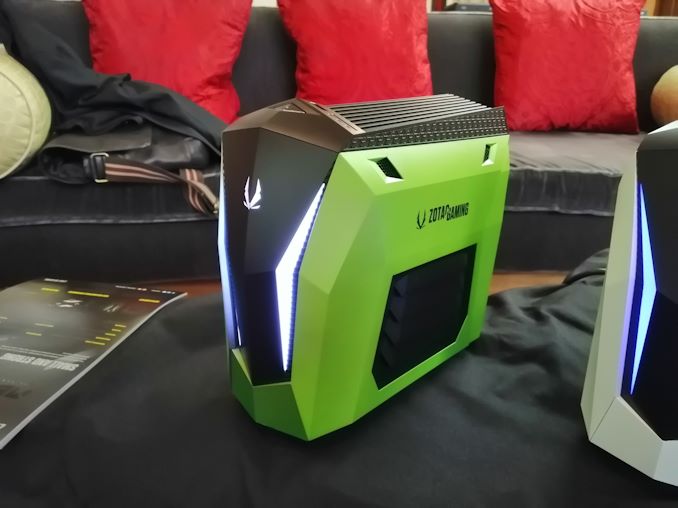
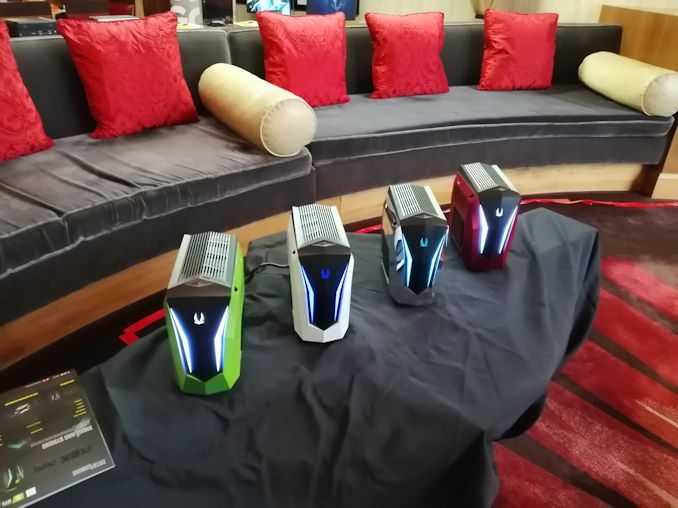
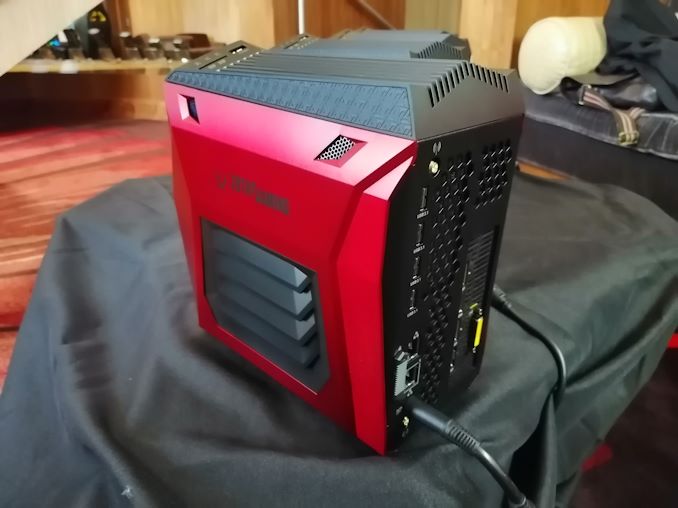
Having a small gaming machine is the goal of a number of users - I personally tend to oscillate between something massive and something small, but either way, I want it powerful. Here at CES, Zotac had its new MEK Mini on display and the design ID of it looks really impressive, along with good specifications inside.
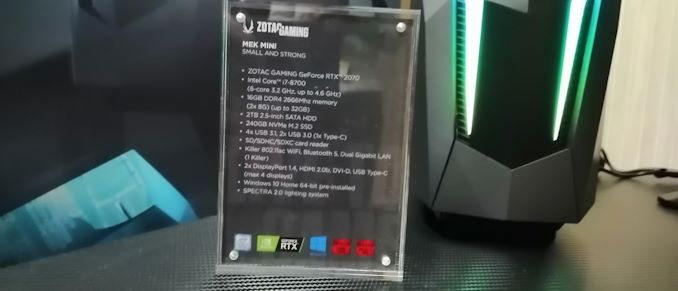
The MEK Mini was previewed back at Computex, but is set to hit the market at the end of Q1. Inside it will have a custom motherboard, an Intel 8th Generation processor, Zotac's RTX 2070 mini graphics card, and the system will be equipped with Wi-Fi and dual network ports (Intel and Killer). The units on display were near-final production parts, and the company is working on which color combinations work best. There was an NVIDIA green, a white, a mirror finish, and a dark red. Personally, I liked the green and the mirror finish. All it needs now is a handle!
Pricing is not finalized, and will depend on processor choice and memory. The MEK Mini sits as the smallest member of the MEK family, alongside the MEK Ultra Gaming PC and MEK1.
| ||||||||||||||||||||||||||||||||||||||||||||||||||||||||||||||||||||||||||||||||||||||||||||||||||||||||||||||||||||||||||||||||||||||||||||||||||||||||||||||||||
| 11:00a | CES 2019: Samsung Launches The Notebook 9 Pro And Notebook Flash
Samsung announced several products at its press conference today at CES, including a couple of very nice looking notebooks, aimed clearly at opposite ends of the market. The Samsung Notebook 9 Pro is a premium Ultrabook, and the Notebook Flash is a budget device with some nice features for the price range. Samsung Notebook 9 Pro
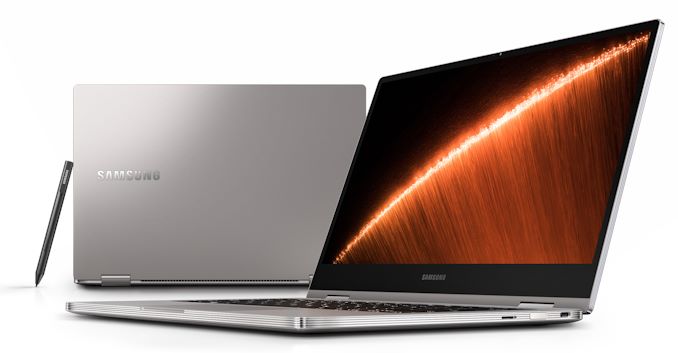
Samsung’s latest entrant in the Ultrabook range is the Notebook 9 Pro, featuring a diamond-cut aluminum chassis, and thin 6.7 mm bezels surrounding the 13.3-inch 1920x1080 display. The Notebook 9 Pro is powered by the latest Whiskey Lake processors, specifically the Intel Core i7-8565U with a base frequency of 1.8 GHz, and a boost frequency of 4.6 GHz. This is paired with Intel’s UHD 620 graphics. The laptop is listed as 8 GB of LPDDR3 RAM and a 256 GB NVMe drive. As this model isn’t available yet, we’re unsure if there will be upgradable SKUs for this as well but it is very likely there will be. The laptop features a 55 Wh battery, and Samsung rates it as up to 14 hours of battery life. The wireless is listed as 802.11ac 2x2 Giga, meaning it’s likely the Intel 9265 network adapter. A premium Ultrabook should offer Thunderbolt 3, and the Notebook 9 Pro offers two TB3 ports, along with USB-C and microSD. The laptop is thin and light, although not class leading. At 14 mm (0.55-inches) thick, and coupled with the 2.84 lb weight, it should be easy to transport. The laptop also comes with an active pen, which is a nice feature. Pricing is not yet announced, but the laptop will be available in early 2019. Samsung Notebook Flash
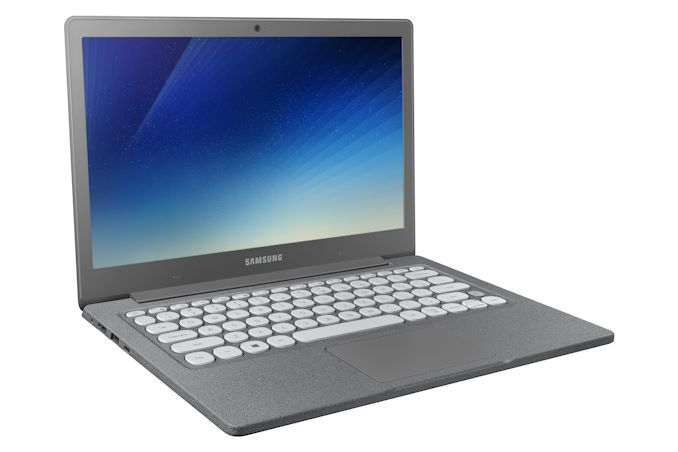
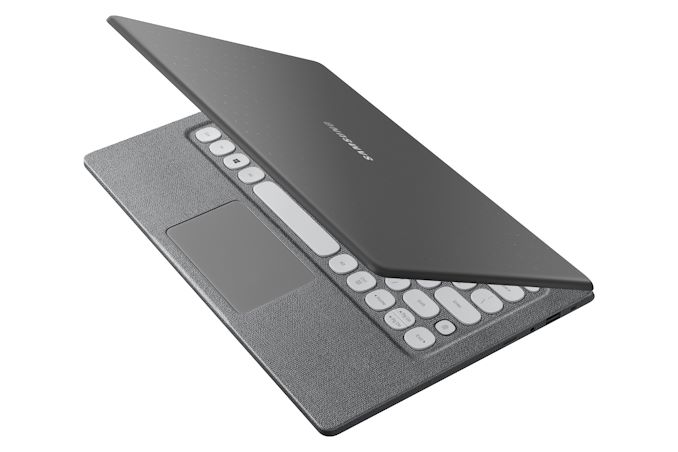
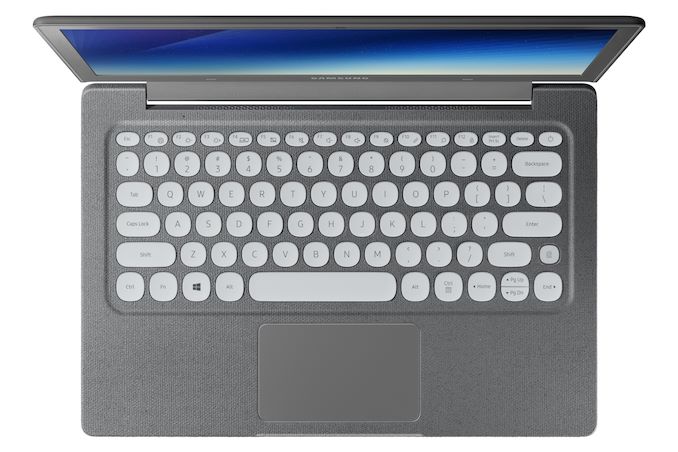
Buyers have their pick of plenty of great Ultrabooks these days, but those looking for a laptop on the other end of the pricing spectrum have been hard pressed to find too much innovation. Samsung is stepping in to help fill this void with the Notebook Flash. This is a great looking notebook for this price segment, and offers some features not found in many other laptops in this class.
The charcoal exterior is plastic, but has a modern look to it with a textured chassis that should really help to knock down the smudges. The 13.3-inch display is a 1920x1080 panel as well, which likely means it’s an IPS and not the TN variants we still sometimes see at this end of the price range. We’ve reached out to Samsung to clarify. The display bezels aren’t quite as thin as some of the more premium designs, but again, not unexpected for the price. There's even a fingerprint reader available. Samsung powers the Notebook Flash with either the Intel Celeron N4000, which is a dual-core Gemini Lake SoC, with a 1.1-2.6 GHz frequency range. For $50 more, buyers would be well served to step up to the optional Intel Pentium Silver N5000, which is still Gemini Lake and therefore Atom based, but with four cores and a 1.1-2.7 GHz range. Samsung offers the Notebook Flash with 64 GB of eMMC, which is enough for light work, and there’s a microSD / UFS slot as well if more space is required. The laptop only offers 4 GB of RAM, but thanks to Gemini Lake this will be LPDDR4, and the 39 Wh battery is rated for up to 10 hours. There’s two USB-C ports, one USB 3.0 Type-A, and one USB 2.0 Type-A, along with HDMI. Wireless is the same as the 9 Pro, which is a 2x2 Giga rated, so likely the Intel 9265.
The Notebook Flash will be available on January 15th, with the N4000 model priced at $349.99, and the N5000 for $399.99.
Source: Samsung | ||||||||||||||||||||||||||||||||||||||||||||||||||||||||||||||||||||||||||||||||||||||||||||||||||||||||||||||||||||||||||||||||||||||||||||||||||||||||||||||||||
| 11:35a | More Intel 9th Gen Desktop CPUs: Core i7-9700, Core i3-9100, Pentium Gold G5420, and a new Core i3-8100F ?
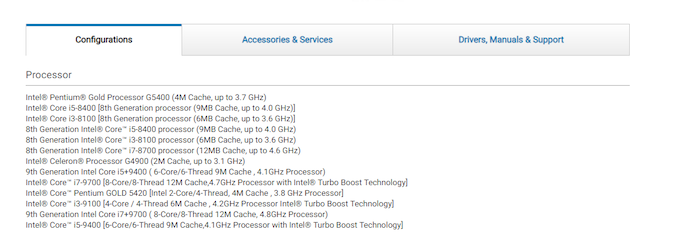
After yesterday when Intel casually mentioned that it was announcing six new processors in its 9th Generation desktop line, without providing any specifications through the usual channels, it turns out that there are several more on the way beyond the six mentioned. Over at Dell’s Australia website, it has updated one of its mini-PCs to offer the Core i7-9700, the Core i3-9100, and the Pentium Gold 5420 processors. These three go beyond the six that were mentioned in Intel’s keynote, but Dell has some of the specifications on hand. Here is what the current 9th Generation processor lineup looks like now:
On top of that, there is one new processor that doesn’t fall into either of the two buckets, and is strange all on its own. Astute eyes found the Core i3-8100F listed on Intel’s public CPU database, ARK, but only if one goes searching for a specific CPU number. (This sometimes means the CPU is off roadmap). This is an 8th Generation processor, but it follows the naming scheme of the new processors, where ‘F’ processors have zero integrated graphics.
All in all, for anyone trying to keep track of the different types of processors that Intel offers, this is all very confusing, and it doesn’t have to be.
| ||||||||||||||||||||||||||||||||||||||||||||||||||||||||||||||||||||||||||||||||||||||||||||||||||||||||||||||||||||||||||||||||||||||||||||||||||||||||||||||||||
| 12:00p | CES 2019: Samsung Announces The Notebook Odyssey
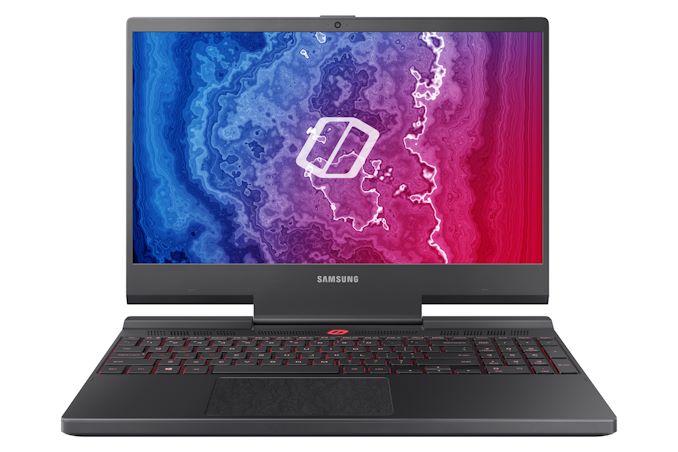
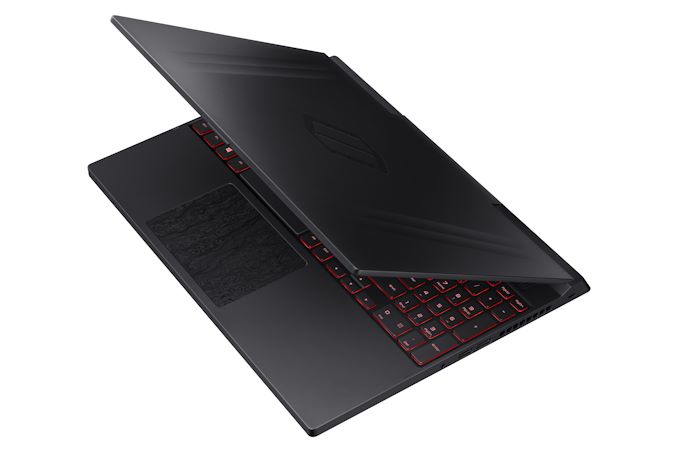
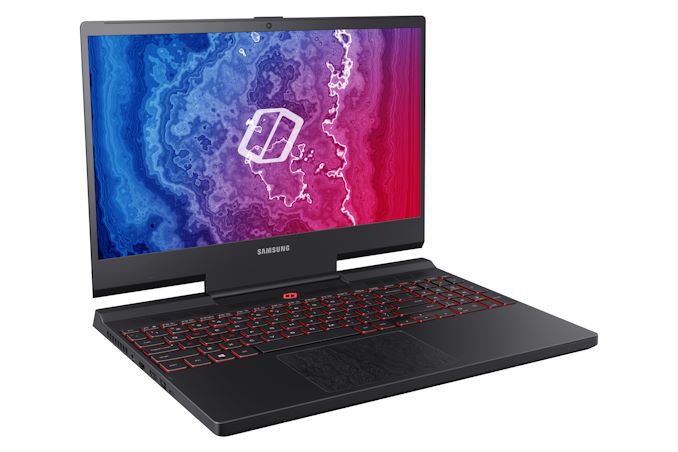
At the Samsung press conference today, Samsung announced its updated gaming laptop, the Samsung Notebook Odyssey. With the announcements by NVIDIA this week, it shouldn’t be a surprise to see a lot of updated gaming laptops, and Samsung’s 15.6-inch model offers the top of the range GeForce RTX 2080.
Samsung’s Notebook Odyssey is fully decked out, featuring a hex-core Intel Core i7, likely the Core i7-8750H, although not specifically named. There’s two SO-DIMM slots for DDR4, and by default it comes with 16 GB, although that will likely be configurable when the notebook launches. The heart of any gaming notebook is the GPU though, and the NVIDIA RTX 2080 is featured here, offering the highest performance of any laptop GPU. There are two SSD slots, and the laptop comes with a single 256 GB NVMe drive, but users can add more if needed. There’s also a 1 TB HDD, which is useful for game storage considering the size of modern games with UHD assets. The 15.6-inch display is a 1920x1080 panel, but with a 144 Hz refresh rate and G-SYNC capability, so gaming should be incredibly smooth considering the powerhouse of a GPU installed.
The all-aluminum laptop is fairy thin, at 19.9 mm, but still quite heavy being that it’s a gaming laptop and has to cool a lot of hot components. At 2.4 Kg / 5.2 lbs, it’s somewhat portable. It’s about half the weight of a DTR machine, but the two “Jet Blade” blowers have 83 blades each, and there is a five-heatpipe heat transfer system as well, so the laptop should be able to stay cool, but that doesn’t mean it will be quiet.
Samsung hasn’t announced pricing yet, but the Notebook Odyssey will be available in early 2019. Source: Samsung | ||||||||||||||||||||||||||||||||||||||||||||||||||||||||||||||||||||||||||||||||||||||||||||||||||||||||||||||||||||||||||||||||||||||||||||||||||||||||||||||||||
| 1:00p | CES 2019: Rivet Networks Killer E3000, a 2.5 GbE Controller
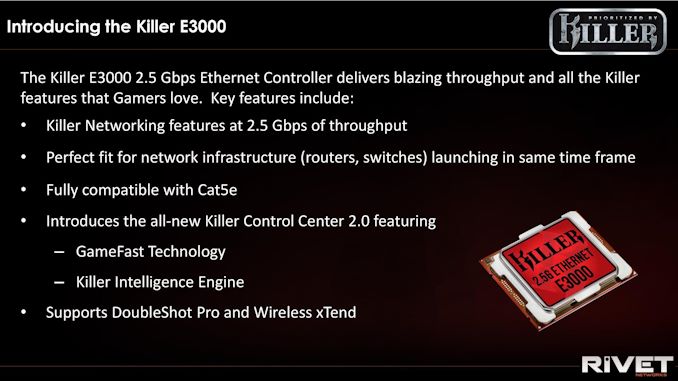
The Killer brand of networking controllers and Wi-Fi modules have been a constant part of the computing ecosystem for over a decade. As of late, the value-add of their products has been the implementation of heuristic analysis techniques to detect data stream types (video, torrent, gaming), allowing the hardware to prioritize data streams accordingly. Last year, Rivet Networks (the company that develops and owns Killer) announced a collaboration with Intel to develop an 802.11ac Wave 2 module, built on Intel hardware, but with the Killer secret sauce. For CES this year, the company is announcing its foray into multi-gigabit Ethernet controllers. The Killer E3000 is a networking chip that supports 2.5 gigabit, 1 gigabit, and 100 megabit connectivity speeds. It will debut on a number of OEM devices during Q1, including Dell, Alienware, Acer, and also desktops and motherboards. The chip uses Killer's Advanced Stream Detect Technology that classifies data streams and prioritizes the data pipe accordingly, catching any software that is not already in a predetermined 1000 application settings list.
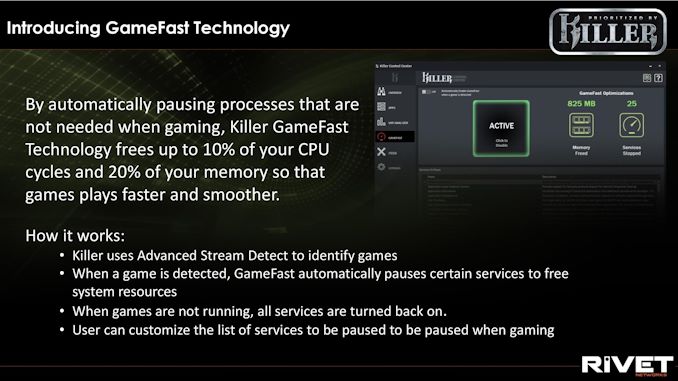
Control over the prioritization will be done through the latest new Killer Control Center 2.0 software, allowing users to manually configure or monitor network activity. The software also comes with GameFast, which pauses known processes that steal CPU cycles (such as search indexing or background maintenance) during gameplay. Rivet reports up to 10-20% of CPU and memory can be saved depending on the system in question. The software also includes KIE, Killer's Intelligence Engine, that will offer suggestions to improve network connectivity based on the settings of the system and the quality of the connection.
Obviously, the big question around 2.5 GbE networking is asking where the switches are - there's no point having 2.5 GbE if there's nothing to connect it to! Rivet Networks answered this by saying that as routers come to the market that support >1 Gbps Wi-FI speeds, such as Wi-Fi 6 (802.11ax), physical connections to these routers will also need to be upgraded to ensure consistent data-rates for all connected devices. In the press release, it was confirmed that Acer's new Predator Triton 900 and Triton 500 gaming notebooks will support the Killer E3000 controller. Other devices will be announced through 2019. | ||||||||||||||||||||||||||||||||||||||||||||||||||||||||||||||||||||||||||||||||||||||||||||||||||||||||||||||||||||||||||||||||||||||||||||||||||||||||||||||||||
| 2:00p | CES 2019: ASUS Unveils the ROG Matrix RTX 2080 Ti With Hybrid Cooling
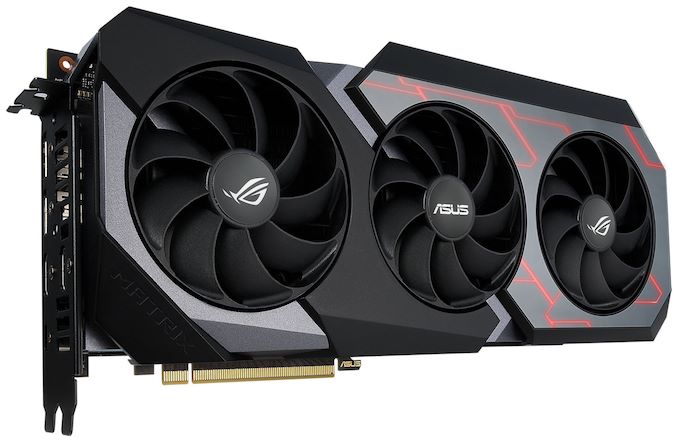
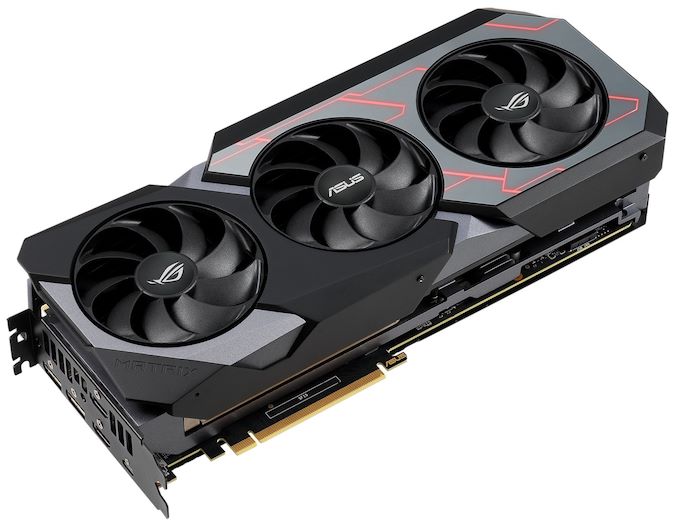
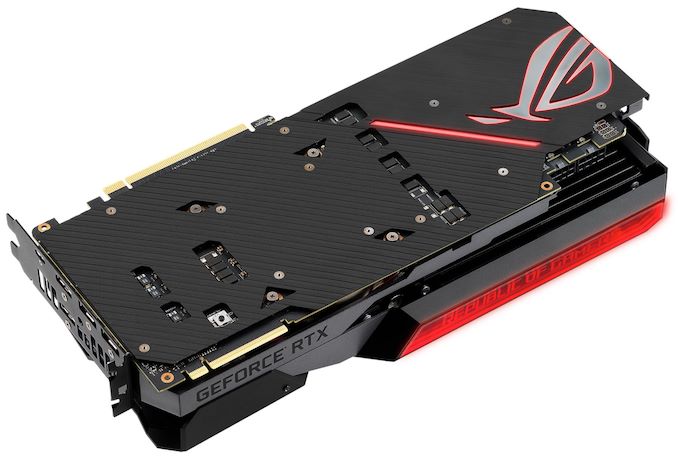
ASUS has announced a brand new Turing based model to their range with the ROG Matrix RTX 2080 Ti graphics card. The Matrix branding is synonymous with premium and the RTX 2080 Ti feature set looks nothing short of feature packed. What makes the ROG Matrix RTX 2080 Ti stand out from the crowd is the use of ASUS's new Infinity Loop cooling hybrid cooling solution. Infinity Loop integrates a closed loop cooling system within the cooling shroud housing a pump, radiator and tubing within a triple fan designed cooler. Due to constraints that are associated with cramming numerous components underneath what looks like a seemingly regular GPU cooler, the ROG Matrix RTX 2080 Ti takes up a total of three PCIe slots. ASUS claims the Infinity Loop cooling solution beats rival vendors with 120mm hybrid cooling designs and even competes with models that feature 240mm radiators. Included on the rear of the PCB is a metallic carbon fibre styled backplate with swathes of RGB LED lighting throughout the cooler which is supported by the ASUS AURA Sync software. The Infinity Loop cooler has three Axial-Tech fans and also features 0db technology. This means when the card is operating below 55 degrees Celsius, the Matrix cooler operates passively for optimal acoustic performance while light gaming and performing general tasks such as web browsing.
In line with a top of the range product, ASUS has stated that each ROG Strix RTX 2080 Ti PCB used goes through an aggressive binning process to ensure each Matrix card adheres to the high boost core clock speed of 1815 MHz out of the box. This is an 11% overclock over the standard RTX 2080 Ti Founders Edition which has a boost core clock of 1635 MHz out of the box. The GDDR6 memory of the ROG Matrix RTX 2080 Ti is also overclocked to 1850 MHz while the Founders Edition model has a memory clock of 1750 MHz. This makes the ROG Matrix one of the fastest out of the box RTX 2080 Ti models on the market.
The rear panel of the ROG Matrix RTX 2080 Ti deviates from the standard RTX 2080 Ti Founders Edition slightly with two DisplayPort 1.4, two HDMI 2.0b and a USB Type-C VirtualLink video output. Power wise the Matrix RTX 2080 Ti uses two 8-pin PCIe power inputs and has a rated TDP of 300 W; 40 W more than the RTX 2080 Ti Founder Edition model which has a 260 W rating. ASUS hasn't specified a price as of yet for the ROG Matrix RTX 2080 Ti but given utilization of the exclusive Infinity Loop cooling technology, it's not expected to be cheap. The ROG Matrix RTX 2080 Ti is set to make its entry into the market later this month. | ||||||||||||||||||||||||||||||||||||||||||||||||||||||||||||||||||||||||||||||||||||||||||||||||||||||||||||||||||||||||||||||||||||||||||||||||||||||||||||||||||
| 2:30p | New Generation of Optane M.2 SSDs Coming Soon
Intel's Optane products so far fall into one of two categories. At the high end is the flagship P4800X enterprise SSD and its derivatives for the enthusiast market. At the low end are the small M.2 modules intended primarily for caching use. It's this latter category that is being upgraded from PCIe 3x2 to a PCIe 3x4 host interface, moving the cache drives and small Optane SSDs more toward the mainstream NVMe SSD market. Based on leaked roadmaps, we know that the original Optane Memory and its refresh Optane Memory M10 are being replaced by the new Optane Memory M15, codenamed Carson Beach. The Optane SSD 800P is being replaced by the new Optane SSD 815P, codenamed Bombay Beach. Capacity options are changing slightly for the M15 cache modules, which offer 16GB to 128GB in M.2 2280 form factor and 16GB to 64GB in M.2 2242 size. The Optane SSD 815P will be available in the same 58GB and 118GB capacities as the 800P.
It appears that Intel is continuing with the rather confusing mismatch of advertised capacities between the Optane Memory and Optane SSD products. In reality, the Optane Memory 64GB and Optane SSD 58GB products have the exact same usable capacity, and the same will hold true for the 128GB vs 118GB. The smaller advertised capacities are more in line with how SSD vendors traditionally relate claimed GB to actual usable capacity, while the Optane Memory parts are advertising the nominal raw capacity of their 3D XPoint memory without reflecting space used for error correction or spare area for defect and wear management. The system requirements for the above Optane products are unchanged from their predecessors. Optane Memory caching requires a Kaby Lake or newer platform and the use of Intel's Optane Memory storage drivers for Windows. Otherwise, both the M15 and 815P are standard NVMe SSDs that can be used as regular data or boot drives in any system that supports flash-based NVMe SSDs.
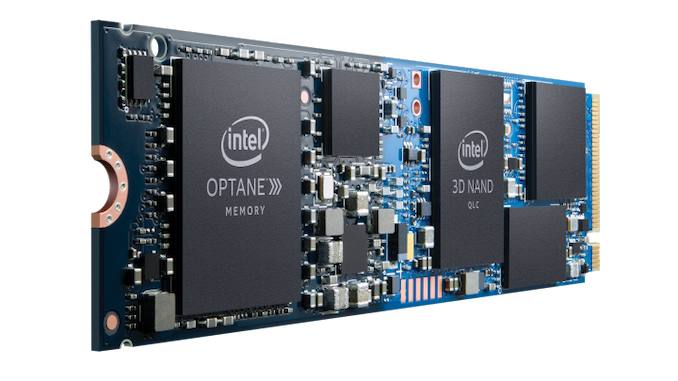
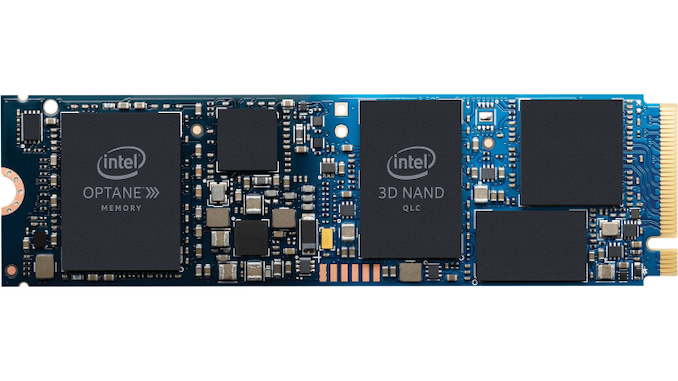
The third new Optane product is by far the most interesting: the Optane Memory H10 with Solid State Storage, codenamed Teton Glacier. Where previous Optane Memory products have been intended to serve as a cache in front of a mechanical hard drive, the H10 is Optane caching for QLC NAND, with both 3D XPoint and flash memory on the same M.2 module. The H10 bundles 16GB of Optane cache with 256GB of QLC NAND, or 32GB cache with 512GB or 1TB of QLC. So far, Intel has only shared a mock-up rendering that looks like an Intel 660p and Optane Memory module squeezed onto one M.2 2280 card, but with enough changes to the layout that it doesn't appear to be just a photoshop of images of the two existing products. The first half of the board appears to contain the same Silicon Motion SM2263 controller used on the 660p, and one package each of DRAM and QLC NAND. The second half of the board looks like an existing Optane Memory module, with its own controller and 3D XPoint memory packages. We're not sure if this photo is an accurate representation of the real product, but it indicates that two PCIe lanes are routed to the SM2263 controller and two to the Optane controller. This suggests the Optane Memory H10 will appear to the host system as two different NVMe SSDs, and will likely require PCIe port bifurcation support to operate a PCIe x4 M.2 slot as two PCIe x2 links. This could potentially limit compatibility to M.2 slots that use PCIe lanes provided by the PCH. Officially, the Optane Memory H10 will require a Whiskey Lake or Coffee Lake platform. Unofficially, this may be the first Optane product that doesn't work out of the box as a plain NVMe SSD on any platform that supports NVMe. The dual-controller nature of the H10 means that the SSD caching functionality still depends on driver software, and is not managed transparently by the SSD itself. Intel will have to develop a unified 3D XPoint+3D NAND controller to pull that off. Intel has not formally announced the M15 or 815P, but they have put up a product page for the H10. The Optane Memory H10 is planned for release in Q2 2019 with OEM systems from the usual suspects: Dell, Lenovo, HP, Acer, ASUS, and unspecified others. We expect the M15 and 815P to arrive at the same time or sooner. | ||||||||||||||||||||||||||||||||||||||||||||||||||||||||||||||||||||||||||||||||||||||||||||||||||||||||||||||||||||||||||||||||||||||||||||||||||||||||||||||||||
| 3:30p | SanDisk's Mainstream Extreme PRO Portable SSD Goes NVMe
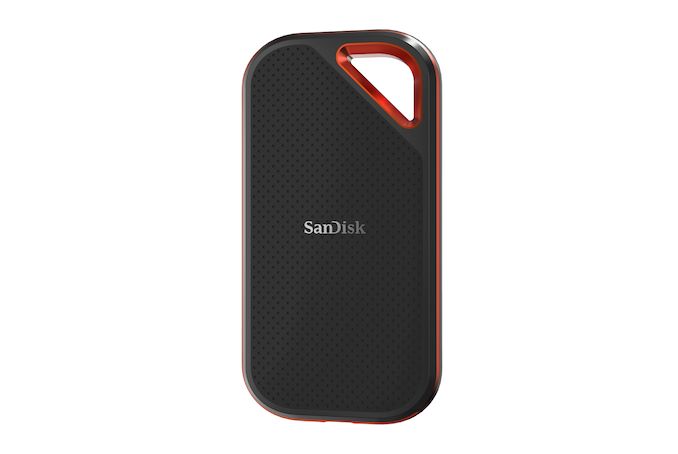
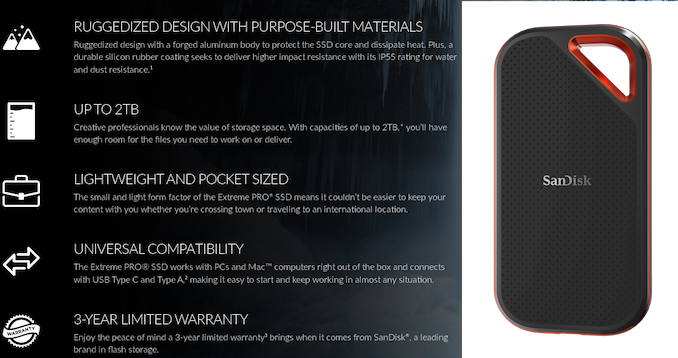
At CES 2019, Western Digital demonstrated a number of direct-attached flash solutions. Out of all the showcased items with imminent retail availability, one deserves separate mention. Under the SanDisk brand, Western Digital is introducing an higher-performance follow-up to the the SanDisk Extreme Portable SSD (a portable USB DAS that has impressed us with its performance and thermal characteristics). The new product carries the PRO branding and will be available in retail in Spring 2019. Almost all high-end flash-based bus-powered storage devices now use a Thunderbolt 3 Type-C interface with a PCIe 3.0 x4 NVMe SSD behind the Alpine Ridge controller. Some vendors have made an attempt to bring economical alternatives in this market segment by using a PCIe 3.0 x2 NVMe SSD (reference design from Phison). However, leading brands such as Western Digital / SanDisk and Seagate have refrained from playing in this market with mainstream offerings. The reason is not hard to see, as these high-performance Thunderbolt 3 SSDs can't be used with regular USB Type-C ports despite being physically compatible. This results in the vendors having to field customer support calls from the average users. Thanks to the introduction of USB to NVMe bridges such as the JMicron JMS583 and the ASMedia ASM2362, it is now possible to create M.2 NVMe SSD enclosures with a USB interface. Intel's Titan Ridge Thunderbolt 3 controller (the follow-up to Alpine Ridge) also includes a USB fall-back when used in client devices (Alpine Ridge has USB fall-back only when used in a host configuration). We reviewed MyDigitalSSD's M2X Storage Enclosure (using the JMS583 bridge chip), and found that it delivered great performance. Such storage enclosures do come with some caveats - particularly with respect to the firmware / power state configurations of the NVMe SSD being used. Western Digital is introducing a similar configuration with the SanDisk Extreme PRO Portable SSD. The form factor and industrial design seem to be following the venerable SanDisk Extreme Portable SSD, retaining the IP55 rating. That SSD uses a M.2 SATA SSD in a plastic enclosure with a silicon rubber coating. The Extreme PRO Portable SSD uses a NVMe drive, and the enclosure is made of aluminum (for better thermal performance) with the same silicon rubber coating. This is necessary because the NVMe SSD may likely end up generating more heat because of the increased speeds. Western Digital is claiming reads at up to 1 GBps with the Extreme PRO Portable SSD.
From a market perspective, it is great that WD is making NVMe-USB bridges mainstream. The firmware of the internal SSD is fully under their control, and the company does extensive validation prior to releasing products into the market. Therefore, we have no doubts that the 'ready-to-use out-of-the-box' SanDisk Extreme PRO Portable SSD will have very wide compatibility across a variety of USB ports (ranging from delivering full performance over USB 3.1 Gen 2 ports to operating within the power constraints enforced by USB ports in legacy systems). The SanDisk Extreme PRO Portable SSD will be available in 500GB, 1TB, and 2TB capacities, starting in Spring 2019. Pricing is yet to be decided, though it will need to be competitive against similar-performing DIY configurations that can be built for around $90 / $135 / $260 at those capacity points. Like the SanDisk Extreme Portable SSD, the PRO version comes with a USB 3.1 Gen 2 Type-C interface, and includes a Type-A adapter. It will have a 3-year warranty. | ||||||||||||||||||||||||||||||||||||||||||||||||||||||||||||||||||||||||||||||||||||||||||||||||||||||||||||||||||||||||||||||||||||||||||||||||||||||||||||||||||
| 4:00p | Western Digital Demonstrates 4TB USB-C Thumb Drive Prototype at CES 2019
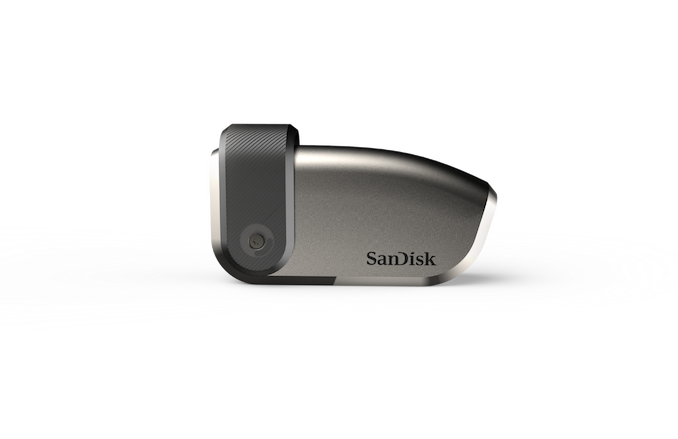
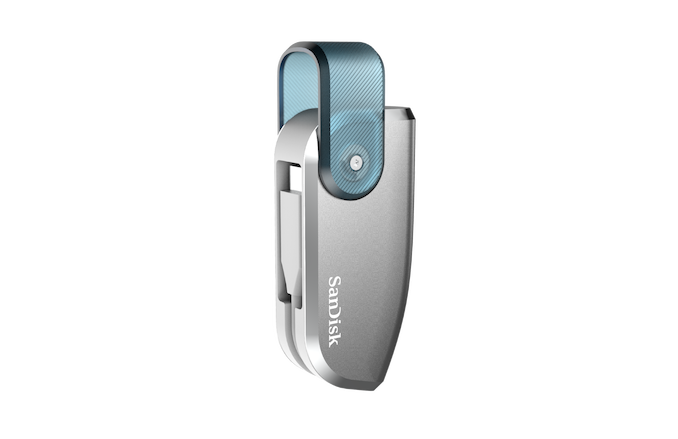
At CES 2019, Western Digital is demonstrating a prototype of a 4TB thumb drive with a Type-C interface. To be more precise, the form factor is that of a thumb drive, but the Type-C connector currently hangs off a wire. Given that it is a prototype, and has little chance of hitting the market at reasonable price points in the imminent future, this is expected. The main intent is to showcase the technological prowess of SanDisk's flash solutions. As expected, the prototype carries the SanDisk branding.
Based on the form factor, we believe that the product is using the 1.33Tb QLC 96L NAND that started sampling in Q3 2018. The prototype bodes well for compact high-capacity thumb drives in the near future. These will be for use-cases where high performance is not a requirement (think of reads and writes in the 20 - 200 MBps range). We are waiting on WD to provide additional technical details regarding the actual configuration used in the prototype. We have also requested for the performance numbers they are able to achieve in such a compact form factor with the high-capacity dies. | ||||||||||||||||||||||||||||||||||||||||||||||||||||||||||||||||||||||||||||||||||||||||||||||||||||||||||||||||||||||||||||||||||||||||||||||||||||||||||||||||||
| 4:30p | Western Digital at CES 2019: External Flash Storage Solutions Showcased
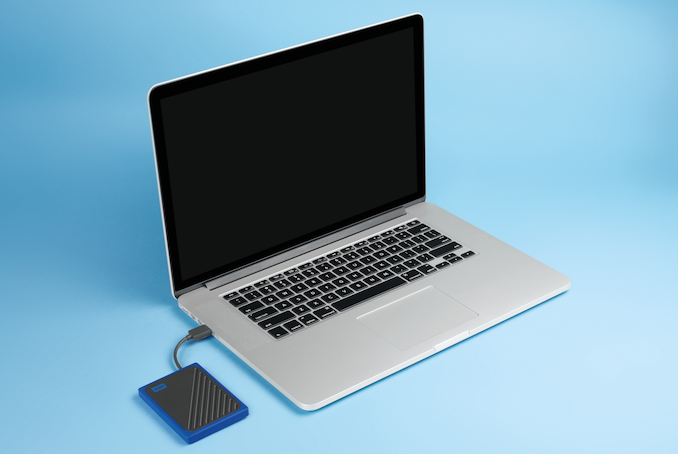
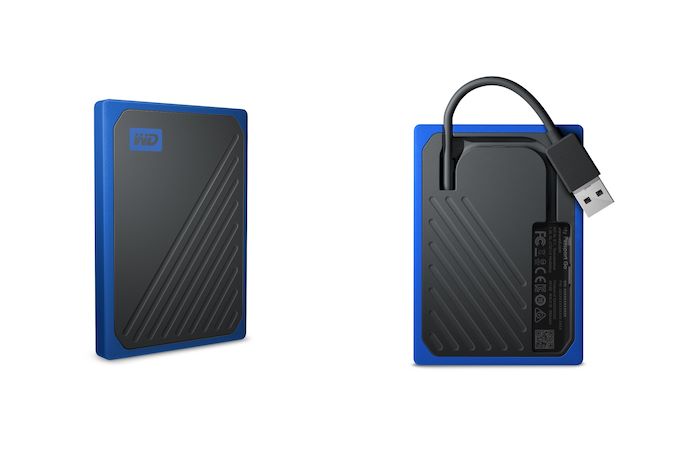
In addition to the SanDisk Extreme PRO Portable SSD and the 4TB thumb drive prototype demonstration, Western Digital also had announcements related to a couple of additional external flash storage solutions. The WD My Passport Go is the entry-level portable SSD from the company, and it is marketed as an economical alternative to the My Passport SSD. It claims speeds of up to 300 MBps (pointing to the use of a low-cost TLC or QLC drive internally) and comes with a USB 3.0 Type-A interface (the integrated cable tucks into the shock-resistant rubber frame). The product has been available in retail for a few months now, priced at $170 for the 1TB version and $90 for the 500GB one.
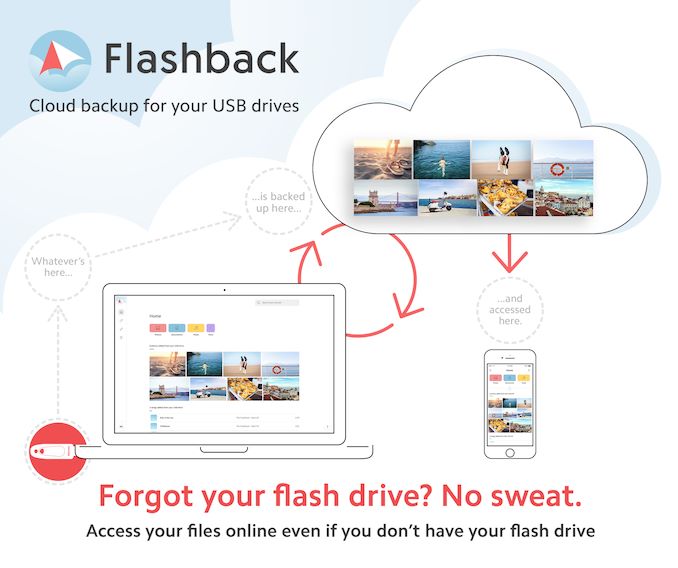
A cloud-based subscription offering, 'Flashback', is also being launched at CES. It is being marketed as a cloud back-up service and is currently available along with two of their thumb drives - the SanDisk Ultra and the SanDisk Ultra Fit.
Pricing ranges from $1/yr for the 16GB models to $10/yr for the 256GB ones. The two thumb drives mentioned come with one year of free Flashback service. It is a nifty model, allowing consumers quick access to the contents of the USB drive if they don't physically have access to it at that moment. The downside is that the drive must be connected to an Internet-connected computer (PC or Mac) after any content changes in order to maintain the most recently copy of the flash drive contents in the cloud. | ||||||||||||||||||||||||||||||||||||||||||||||||||||||||||||||||||||||||||||||||||||||||||||||||||||||||||||||||||||||||||||||||||||||||||||||||||||||||||||||||||
| 5:00p | CES 2019: Razor Displays The Razor Raptor Gaming Monitor
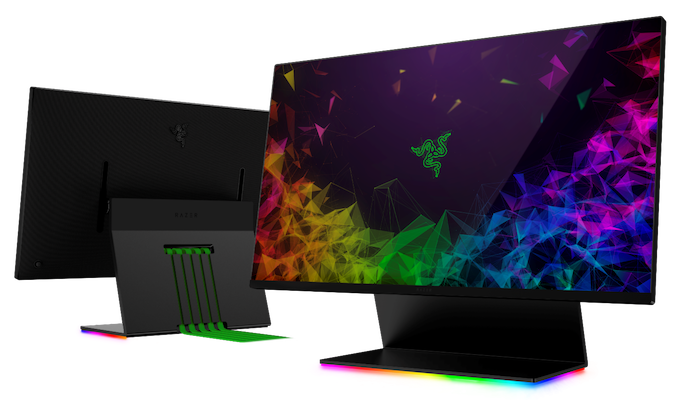
Razer is pretty well known for its gaming peripherals, as well as its gaming focused notebook lineup, so today’s announcement of a new gaming monitor from the company makes a lot of sense. It offers some excellent features for gamers, as well as the premium touch that Razer does so well. The 27-inch display features a 2560x1440 resolution for the IPS panel, and offers a 144 Hz refresh rate. For gaming, response rate is also critical, and the Razor Raptor offers a 7 ms typical response, which can be reduced to 4 ms with Overdrive, and 1 ms with Motion Blur reduction. It features AMD Radeon FreeSync, which just got a lot more useful with NVIDIA’s announcement to finally support it, and coupled with the 144 Hz refresh rate, should offer incredibly smooth gaming under a wide variety of scenarios.
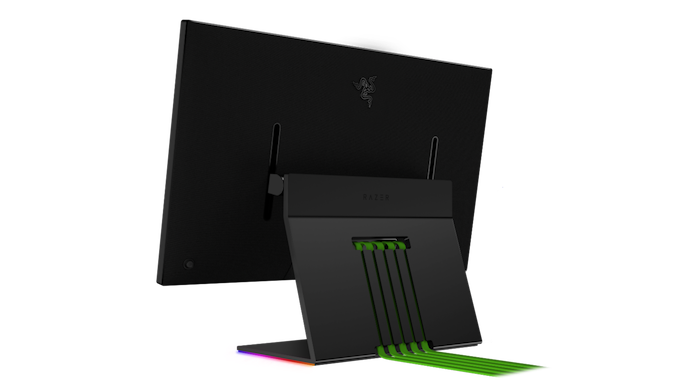
The display covers 95% of the P3-D65 gamut and offers a 1000:1 contrast ratio. Razer states that they will offer pre-programmed color profiles in the monitor itself, which is good news for users and hopefully will include a sRGB mode. The display features a picture-in-picture mode as well. Razer has always offered a unique, premium design, and the Razor Raptor definitely follows in those footsteps. The display bezels are just 2.3 mm, and the base of the unit is made from forged aluminum. The backplate is a blend of fabric and metal, and the monitor offers some very unique cable management, with five CNC milled channels to house the five included Razer green cables. As a Razer product, it also of course supports the Razer Chroma lighting, with LED strips to illuminate the base customizable through their software. There’s all of the expected connectivity as well, with USB-C, HDMI, and DisplayPort, with the USB-C also providing power delivery, and two USB 3.1 Type-A ports for peripherals.
Razer is expecting the Raptor to be available later this year, with an estimated MSRP of $699.99. | ||||||||||||||||||||||||||||||||||||||||||||||||||||||||||||||||||||||||||||||||||||||||||||||||||||||||||||||||||||||||||||||||||||||||||||||||||||||||||||||||||


_575px.jpg)





| << Previous Day |
2019/01/08 [Calendar] |
Next Day >> |