[Most Recent Entries] [Calendar View]
Thursday, February 21st, 2019
- Logitech Launches G Pro Wireless Gaming Mouse with 16,000 DPI Sensor
- Logitech Unveils G305 Mouse with Lightspeed Wireless, ‘Hero’ 12,000 DPI Sensor
- Logitech Boosts Precision of G203 Prodigy Mouse to 8000 DPI via Firmware Update
| Time | Event | |||||||||||||||||||||||||||||||||||
| 9:00a | Best SSDs: Q1 2019
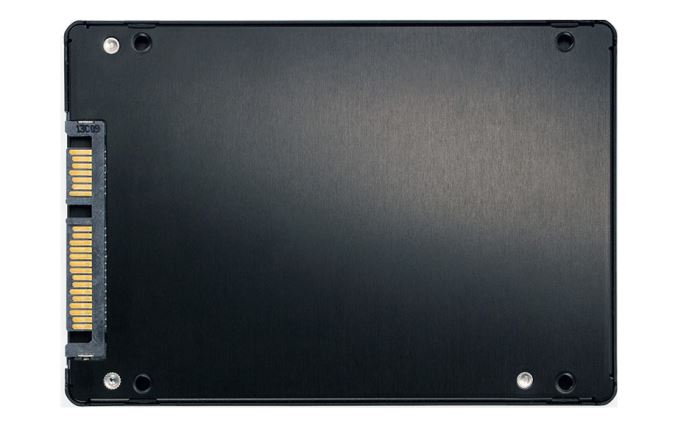
The unsung hero of PC performance, these days it’s often storage that makes the difference between a fast, responsive PC and something that feels like less. A processor can only work as quickly as it can be fed data, and this is where a good solid state drive can help even a slow system become faster. Whether it’s an upgrade for an older system still packing a hard drive, or building out a new system from scratch, picking the right SSD is one of the more important decisions to make in configuring and customizing a computer. To help with this, we’ve assembled our SSD guide, outlining the best choices in SSDs of every form factor and price range. Last year saw massive SSD price drops across the entire market. Prices are still declining, but not as quickly as they were several months ago. Overall, the market has settled down quite a bit, but there are some important changes underway. The first products using 96-layer 3D NAND started shipping last year, but with NAND prices (and margins) so low, manufacturers aren't eager to burn capital ramping up 96L production. The transition away from 64L will take most of the year, but that's not a problem: so far, the 96L products offer only minimal improvements to performance or power efficiency. Not much is changing with SSD controllers at the moment, either, and even in the high-end NVMe market segment we're seeing many new products re-using familiar old controllers. We don't expect any significant changes in the controller landscape until the Phison E16 brings PCIe 4.0 support to consumer SSDs in the second half of 2019. | |||||||||||||||||||||||||||||||||||
| 11:00a | NVIDIA Quietly Releases GeForce MX250 & MX230: Entry-Level Laptop GeForce
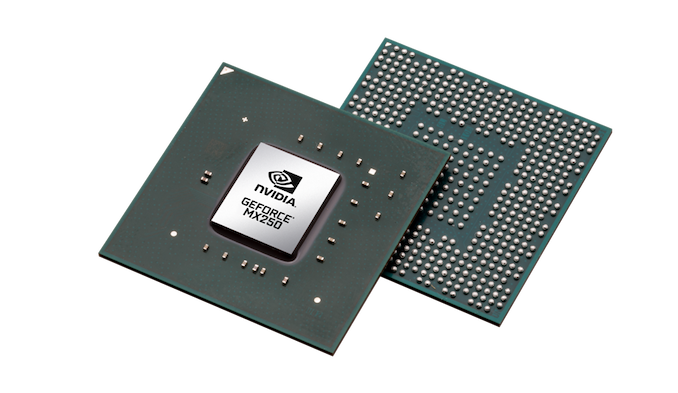
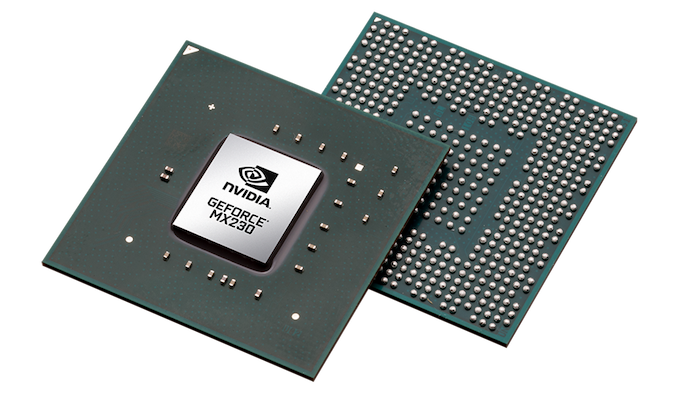
With the launch of their GeForce 20 Series parts already well underway, it was only a matter of time until NVIDIA updated their low-end parts as well, and that time has finally arrived. Quietly published on NVIDIA’s website this morning are the product pages for the GeForce MX250 and MX230 graphics processors. The entry-level members of NVIDIA’s laptop lineup, these Pascal parts will eventually replace the current GeForce MX110/130/150 parts. As has annoyingly become tradition for NVIDIA, they’re officially saying very little about the new parts. The official specifications don’t include anything about clockspeeds, CUDA core counts, ROPs, etc. Instead, NVIDIA only confirms a basic set of features: both parts use GDDR5 memory, both feature GPU boost functionality, and both are based on the company’s Pascal architecture. Taking a stab in the dark here, these are almost certainly cut-down GP108 parts, similar to the previous MX150. So we’re looking at 384 (or fewer) CUDA cores at various frequencies, attached to GDDR5 over a 64-bit memory bus.
NVIDIA’s low-end parts have typically been half a generation or so behind their leading parts, so the MX250 and MX230 are no exception. Despite this, as the previous MX130 was based on Maxwell (GM108) and sometimes paired with DDR3, this is actually a big step up for these parts. Still, clockspeed is going to be everything here as far as performance goes, as these low-end parts tend to ship with a wide variety of clockspeeds depending on what a laptop manufacturer needs. NVIDIA for its part does once again offer their “GeForce Performance Score”, but since these values are relative to a floating target – in this case the UHD 620 iGPU in Intel’s Whiskey Lake-U i5-8265U, the scores can’t be compared to past NVIDIA parts. Not that it matters for NVIDIA or its customers, as NVIDIA is competing with Intel’s iGPUs as a first-tier performance upgrade, not competing with their own past parts. In this case, NVIDIA is touting their parts as offering 2.6x and 3.5x the performance of the UHD 620 respectively. Based on NVIDIA's previous release cadences for their low-end laptop parts, xpect to see these new processors show up in laptops in the very near future. Traditionally these parts are paired with Intel U-series processors, and I expect to see the same here.
| |||||||||||||||||||||||||||||||||||
| 2:00p | Hands on with the Samsung S10+, S10, and S10e: Which Witch is Which? Standing as the world’s largest smartphone retailer, Samsung’s flagship family leads the way into how the company sees the next generation of user experience and interaction. Each release has a different level of fanfare, and this year was slightly eclipsed by the announcement of the Samsung Galaxy Fold, coming soon. Nonetheless, Samsung had three high performance devices ready to rock in 2019. | |||||||||||||||||||||||||||||||||||
| 3:00p | Xilinx Announce New RFSoCs for 5G, Covering Sub-6 GHz and mmWave
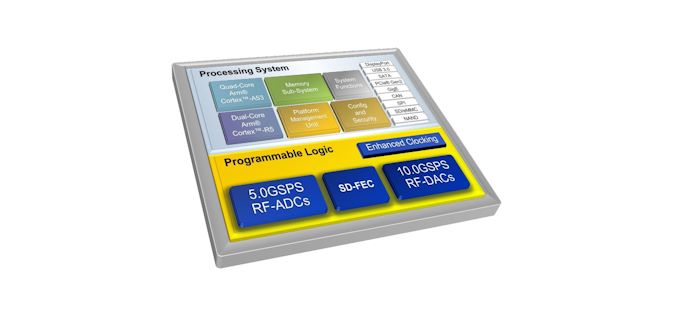
More often than not, embedded wireless equipment, the infrastructure that powers it, and the systems that test the deployed hardware don’t just use off-the-shelf parts. As with 4G and 3G before it, the range of technologies required for 5G requires the backbone for deployment and testing. This hardware usually has many requirements, such as flexibility, density, fast time to market, and reconfigurability. Today Xilinx is announcing its next generation of Zynq Ultrascale+ RFSoCs to address this market. | |||||||||||||||||||||||||||||||||||
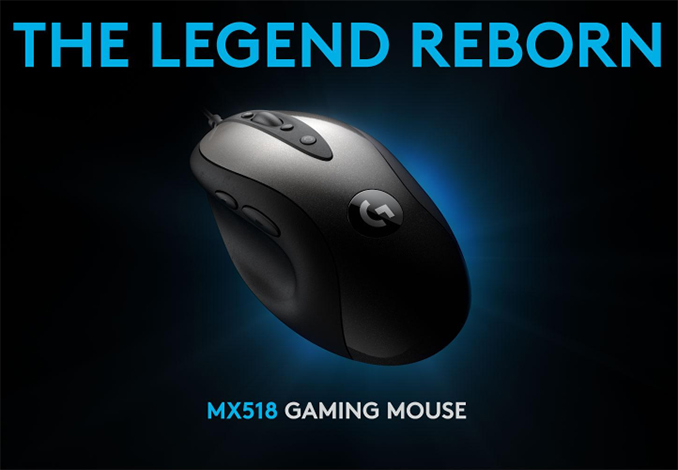
| 7:00p | Logitech Re-Launches ‘Legendary’ MX518 Mouse with 16,000 DPI Sensor
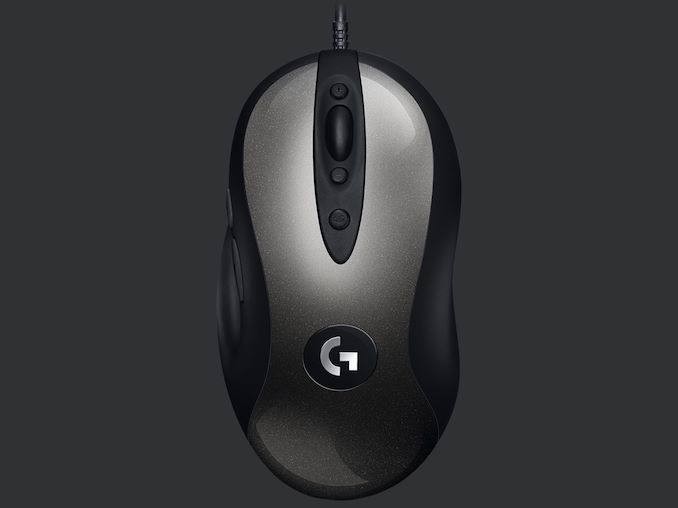
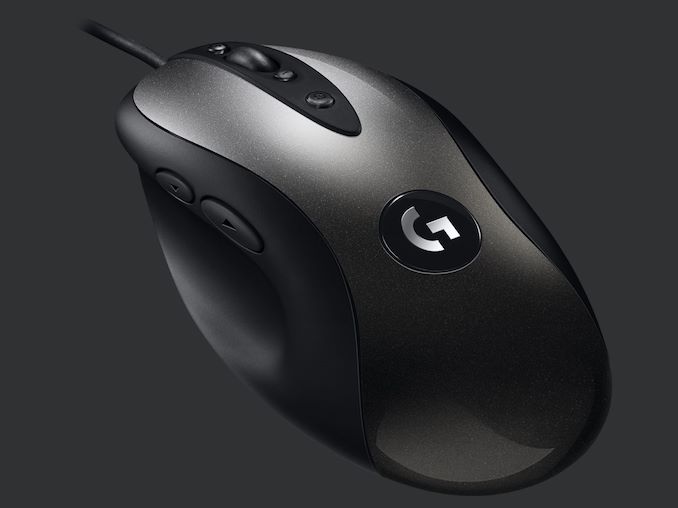
Logitech this week introduced its all-new MX518 mouse, which incorporates its latest HERO sensor as well as a new SoC. The new mouse is designed to be better than its predecessor from 14 years ago in every aspect possible, but one of the things still remained intact: its ambidextrous shape that many consider an ideal shape for a gaming mouse. New Sensor in Renowned EnclosureThe Logitech G MX518 is based on the company’s 32-bit ARM Cortex-M-based SoC, which offers a 1ms USB polling rate. It's paired with the company’s HERO sensor, which is tuned to provide an up to 16,000 DPI resolution (up from 1600 DPI on the original one from 2005). The company also rates its mouse for up to 40 G maximum acceleration as well as for up to 400 IPS (inches per minute) maximum acceleration, which is in-line with advanced wireless gaming mice available today. As for the weight, the new MX518 weighs 102 grams. Being aimed primarily at experienced gamers with nostalgia about the good old days, the new G-series MX518 is wired, it supports a number of features found on modern mice, including eight programmable buttons (something that was implemented on the original one too) and five onboard memory profiles.
The same processor and sensor are used for Logitech’s G603, G305, and G Pro Wireless gaming mice, so we can say that the new Logitech G MX518 is based on a modern and already proven platform. Furthermore, the new MX518 adds Logitech’s premium “Nightfall” finish to give the mouse a high-end feel. A Look BackThe year was 2005. The market of computer mice was already pretty much diverse, but the market for peripherals for gamers was still quite young. Logitech had introduced its premium MX-series lineup of products several years before that and the lineup was rather broad by the middle of the decade. The key selling points of the range topping MX mice (on the MX 1000 to be more precise) were ability to work on fancy surfaces like glass (which required usage of a laser sensor), precise ergonomics (yet mostly designed for the righties), and performance that was much higher when compared to mainstream mice from the times yet considerably below what was available from gamers-oriented mice, such as those from Razer.
Since it was pretty much obvious for everyone in the industry that hardware for gamers was set to become a multi-billion-dollar market, Logitech introduced its first premium G-series mice in 2005. Yet, its top-of-the-line offering for gamers, the MX518, formally belonged to the renowned MX family and in terms of performance actually outpaced the flagship MX1000 model. Because the MX518 was one of the first gaming mice from Logitech, its shape was rather minimalistic, yet very comfortable to use, and which many believe was perfect. Furthermore, it MX518 supported multiple features that are standard on high-end gaming mice today, but which were quite innovative back then. A Legend ReturnsThe relative simplicity, ergonomics, and cost were presumably the key reasons why Logitech decided to re-launch its MX518 with new internals. Given the nostalgia and pedigree that come with the name, the new MX518 has a good chance to become popular, and it makes a great bit of sense for Logitech to capitalize on that. The new Logitech G-series MX518 is already available directly from the manufacturer for $59.99. Related Reading: Source: Logitech | |||||||||||||||||||||||||||||||||||
| << Previous Day |
2019/02/21 [Calendar] |
Next Day >> |