[Most Recent Entries] [Calendar View]
Thursday, March 21st, 2019
- Things We Missed: Realtek Has 2.5G Gaming Ethernet Controllers
- AKiTiO Thunderbolt 3 Dock Pro with Aquantia 10 GbE
- AKiTiO’s Thunder3 10G Adapter Now Available: TB3-to-10GbE for Sub-$300
| Time | Event |
| 9:00a | Intel’s Xeon & Xe Compute Accelerators to Power Aurora Exascale Supercomputer
Intel this week announced that its processors, compute accelerators, and Optane DC persistent memory modules will power Aurora, the first supercomputer in the US projected to feature a performance of one exaFLOP. The system is expected to be delivered in about two years, and goes beyond its initial Xeon Phi specification released in 2014. |
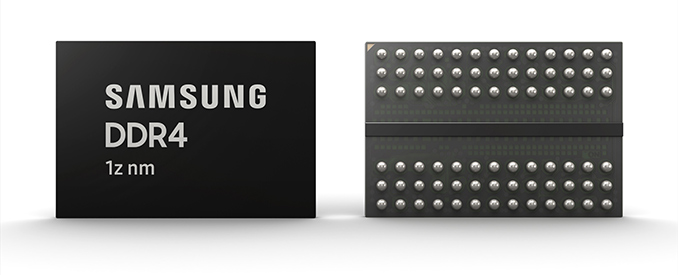
| 11:30a | Samsung Develops Smaller DDR4 Dies Using 3rd Gen 10nm-Class Process Tech
Samsung has completed development of its 3rd-generation 10 nm-class manufacturing process for DRAM as well as the first 8 Gb DDR4 chip that uses the technology. The 1z-nm process technology is said to be the world’s smallest process node for memory, and will enable Samsung to increase productivity without needing to go to extreme ultraviolet lithography (EUVL) at this time. The company plans to start volume production using the technology in the second half of 2019. |
| 12:30p | The GIGABYTE Z390 Aorus Master Motherboard Review: Solid, But Not Special The mainstream motherboard market is still predominantly focused on gamers and gaming features. From the useful to the inane, saying a device is 'gaming' is clearly bringing in the sales, and it becomes an all out marketing war. Each company is clearly trying to build a gaming brand beyond the company name, even if it means always being confused at how to pronounce it (Ay-orus, or Or-us?). Nonetheless, it is clear that each motherboard company is piling on the R&D dollars, as well as the design dollars, to ensure that it can convince users to part with some hard earned money in their next build. GIGABYTE's latest attempt is the Z390 Aorus Master, a motherboard that on paper sets its sights on features, aesthetics, and capability. |
| 2:00p | Xiaomi Black Shark 2 Gaming Phone: Snapdragon 855, 12 GB RAM, 240 Hz Polling
The smartphone market is no longer growing as rapidly as it used to several years ago, but it is actively segmentizing as customers want their handsets to be tailored for their needs. This presents opportunities for companies with R&D capabilities as they can capitalize on special-purpose devices. A couple of years ago Xiaomi established its Black Shark subsidiary to address mobile gamers. Since then, Black Shark has introduced two gaming handsets. This week, the subsidiary introduced its third offering. |
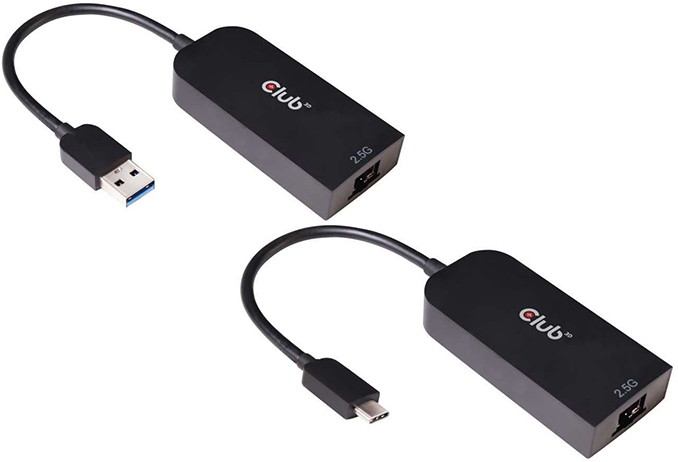
| 4:00p | Club 3D Launches 2.5 GbE USB Type-A & USB Type-C Dongles
Club 3D has introduced its 2.5 GbE dongles featuring a USB Type-A or a USB Type-C interface. The adapters are designed to add 2.5 Gbps wired Ethernet to PCs without internal GbE controllers. For laptops, this is becoming increasingly more widespread. Club 3D’s CAC-1420 (USB Type-A to 2.5 GbE) and CAC-1520 (USB Type-C to 2.5 GbE) are extremely simplist devices: they feature an RJ-45 connector on one side, and a USB 3.1 Gen 1 (5 Gbps) interface on another. The dongles are USB-powered and therefore do not need any external power adapters. As for compatibility, they can work with PCs running Apple’s MacOS X 10.6 ~ 10.14 as well as Microsoft’s Windows 8/10. The manufacturer does not disclose which 2.5 GbE controller it uses, but it is highly likely that the dongles use Realtek’s RTL8156 controller specifically designed for such applications. The only other option is from Aquantia, who only offers a joint 2.5/5 GbE controller. Apart from notebooks without a GbE port that have to work in corporate environments with wired networks (including those that use 2.5, 5, and 10 GbE networks), Club 3D’s new adapters can be used to upgrade older desktop PCs that need a faster Ethernet connectivity. Club 3D has not announced pricing of the 2.5 GbE CAC-1420 and CAC-1520 adapters. Related Reading: Source: Club 3D (via Hermitage Akihabara) |


| << Previous Day |
2019/03/21 [Calendar] |
Next Day >> |