[Most Recent Entries] [Calendar View]
Friday, June 21st, 2019
- P30 Pro
- P30
- Mate 20
- Mate 20 Pro
- PORSCHE DESIGN Mate 20 RS
- P30 lite
- P smart 2019
- P smart+ 2019
- P smart Z
- Mate 20 X
- Mate 20 X (5G)
- P20 Pro
- P20
- Mate 10 Pro
- PORSCHE DESIGN Mate 10
- Mate 10
- Mate 20 Lite
- Report: Arm Suspends Business with Huawei - Future Chip Development In Jeopardy
- Update: Huawei Issued Waiver by U.S. to Continue Software Updates & Hardware Maintenance
- Huawei Launches Mate 20 X 5G in the UK: Available in June
- The Huawei P30 & P30 Pro Reviews: Photography Enhanced
- Huawei Launches the P30 and P30 Pro: P is for Photography
- The Mate 20 & Mate 20 Pro Review: Kirin 980 Powering Two Contrasting Devices
- SK Hynix Announces SSDs with 72-Layer 3D NAND ICs, Own Controllers
- KLEVV Launches NEO N500 SSDs Based on SK Hynix’s 72-Layer 3D NAND
- Klevv Adds Kolors: RGB-Lit Enthusiast-Class Cras DIMMs & SSD Incoming
- SK Hynix Begins Sampling of 96-Layer 1 Tb 3D QLC NAND
- Essencore 2 TB PCIe 4.0 SSD Enters The Game
- PS3111-S11T + N18
- PS3113-S13T + BiCS4
- PS5013-E13T + BiCS4 1.33 Tb
- Zotac's MEK Mini: An Impressive Gaming Mini-PC
- ZOTAC Mek Mini: A Small High Performance Gaming PC
- ZOTAC Publishes Specifications of MEK Mini, MEK Ultra PCs
| Time | Event | |||||||||||||||||||||
| 6:00a | Huawei Clarifies Android Update Situation, Commits to Android Q for Last 2 Generations
Huawei last night launched an information campaign about the status of software updates on existing devices in the face of the company’s troubles with the U.S. Commerce Department. The important news is that Huawei is confirming to and committing to continues security and Android platform updates, specifically the upcoming release of Android Q. In general the news is no surprise as certification and approval happens several months before the actual software update. With Huawei receiving a reprieve on updates, it means in general business continues as usual for the moment being. Specifically, Huawei confirms Android Q firmware updates approval requests have already been submitted for the following devices: Related News: | |||||||||||||||||||||
| 8:00a | The Chuwi AeroBook Review: One Small Step For Chuwi For the last several years, Chuwi has been shaking up the bottom end of the PC market with low-cost alternatives to the big manufacturers that offer significantly more PC for the money than you’d typically see. But, until this year, Chuwi has focused only on the lowest cost notebooks. Their signature over the last couple of years has been more RAM, more storage, and a better display than most other notebooks in their price range, making them an easy recommendation in the value end of the spectrum. Today we are taking a look at the latest notebook from Chuwi, the AeroBook, and here Chuwi has deviated from their norms. Luckily these risks all result in a better user experience, but of course come at a cost. | |||||||||||||||||||||
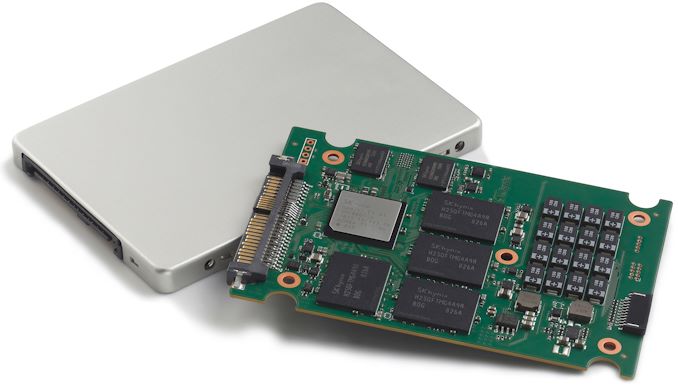
| 9:00a | SK Hynix Launches 2nd Gen Enterprise SSD: 72-Layer 3D NAND & In-House Controller
SK Hynix on Thursday introduced its 2nd generation enterprise-grade NVMe SSDs, which are based entirlely on the company's in-house SSD technology. The new drives offer 4 – 8 TB capacities depending on form-factor, and compared to their predecessors offer 30% improve sequential read speeds as well as 70% faster random write speeds. Select customers of SK Hynix have already received the new drives for qualification purposes. SK Hynix’s 2nd gen enterprise NVMe SSDs are based on the company’s Gemini controller – an eight NAND channel design – as well as 72-layer 3D NAND chips marked at H25QFTMG4A9R (these stacks rely 512 Gb 3D TLC NAND devices with a 13.5 MB page size). The drives will be available in M.2 form-factor with up to 4 TB capacity as well as in U.2 form-factor with up to 8 TB capacity. As far as performance is concerned, SK Hynix says that its 2nd gen enterprise NVMe SSDs offer up to 3.2 GB/s sustained sequential read speeds as well as up to 160K sustained random write IOPS, both of which are significantly higher performance numbers than the company’s 1st gen enterprise NVMe drives introduced last summer.
When it comes to applications, the new SSDs can be configured for both read-intensive as well as mixed-use workloads, which means they can be applied to the vast majority of use cases that are out there (cloud, datacenters, AI/ML, big data, edge computing, etc.) SK Hynix will demonstrate its 2nd gen enterprise NVMe SSDs at HPE Discover in Las Vegas, which takes place from June 18th to 20th. Mass production of the SSDs will kick off in the second half of the year. Meanwhile, global cloud service providers and server makers have already begun qualification of the new drives. Related Reading: Source: SK Hynix | |||||||||||||||||||||
| 10:00a | Huawei Announces Nova 5 & Nova Pro in China: Introduces New Kirin 810 Chipset
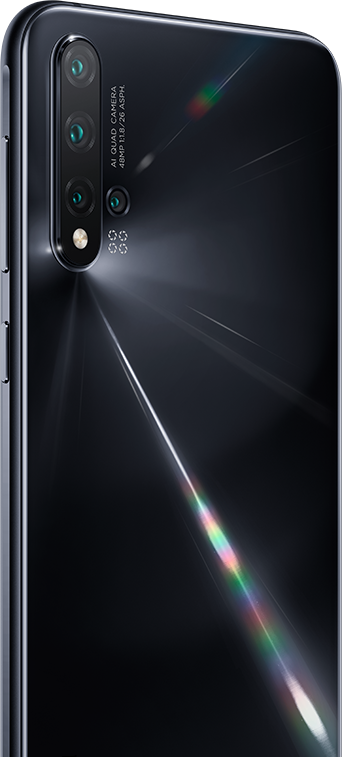
Today Huawei announced the brand new Nova 5 series of smartphones. The company released the new Nova 5, Nova 5 Pro and Nova 5i in China with availability later this month. The new Nova 5 and 5 Pro are particularly interesting because they now represent Huawei’s lowest priced devices with OLED displays, also featuring high-end cameras and SoC options. | |||||||||||||||||||||
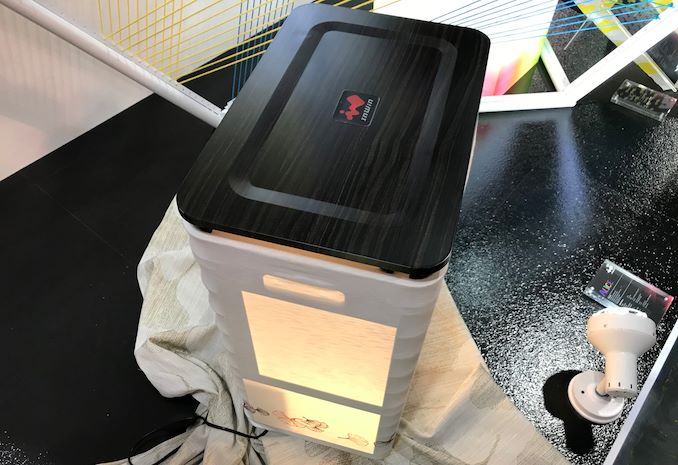
| 11:00a | InWin’s Alice: A Unique Chassis Made of Fabric and Plastic
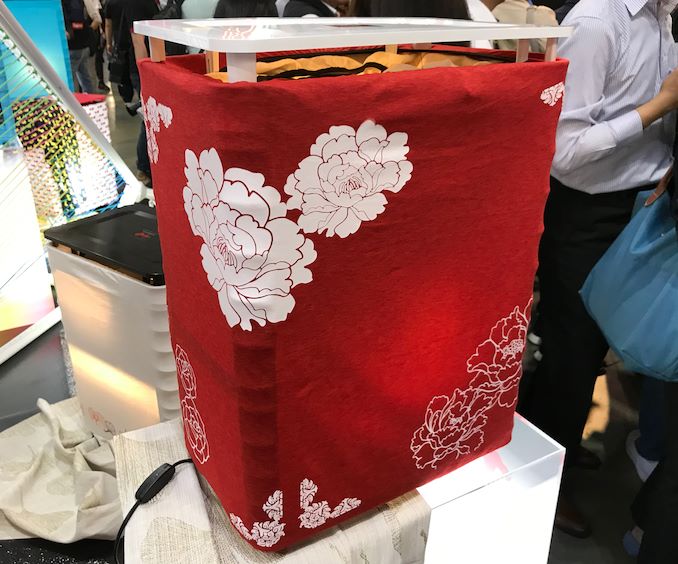
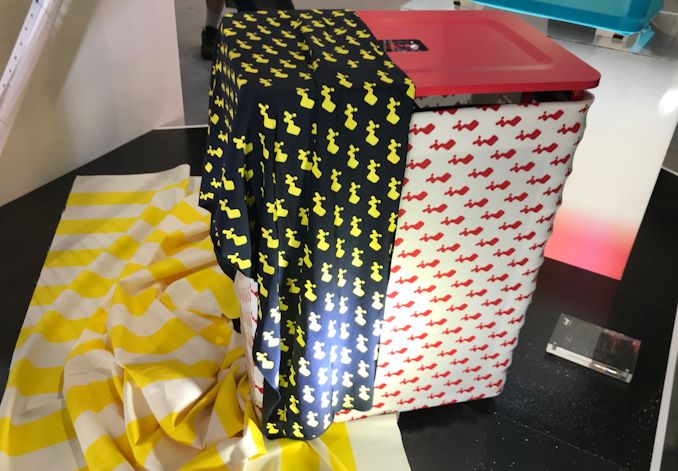
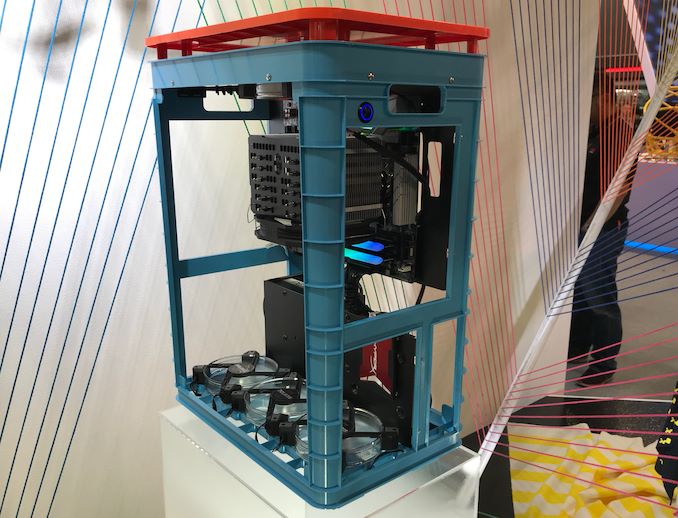
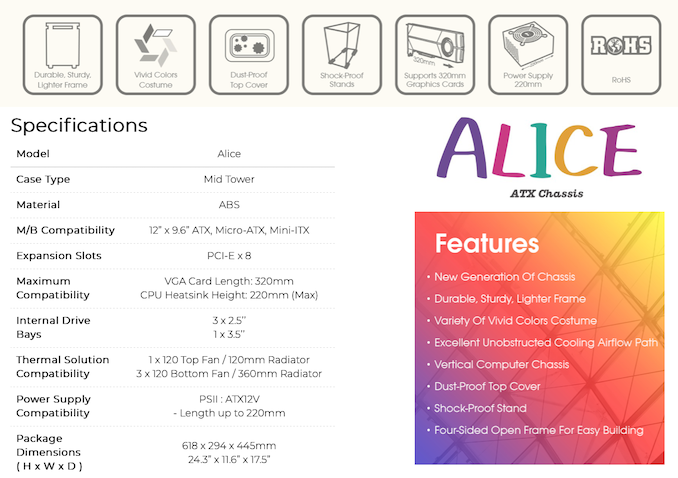
Over the past few years makers of PC cases have tried virtually all materials to make their boxes: aluminum, steel, glass, various plastics, you name it. In an attempt to offer something completely new, InWin has decided to offer Alice, a case made of plastic and fabrics, a combination never seen before in a mass market computer case. InWin’s Alice is an ATX open frame vertical tower PC case made of ABS plastic that wears a "costume" made of fabrics. The manufacturer claims that the skeleton of the case is durable, sturdy, shock-proof, and lightweight, though it does not compare it to products made of metal.
The chassis can accommodate an air cooling system that is up to 220 mm high, a 320-mm long graphics card, a 220-mm deep PSU, three 2.5-inch storage drives, and one 3.5-inch drive. When it comes to cooling, the Alice can house a 120-mm fan/radiator on top as well as three 120-mm fans/a 360-mm radiator on the bottom. Meanwhile, since fabrics do not completely restrict the movement of air, airflows inside the case should be fine. On the other hand, because fabrics also aren't good for blocking noises, end users will likely go with a hybrid cooling system to maximize performance without producing too much noise.
Inspired by Alice in Wonderland by Lewis Carroll, InWin’s Alice will come in a variety of color schemes. Granted, it is easy to make ABS chassis of different plastics and use fabrics with a variety of prints. The maker says that it can even build the case to order if its clients demand something unique.
InWin’s Alice PC case will be available in the near future at price points below $100.
| |||||||||||||||||||||
| 1:00p | ADATA Demonstrates HD830 Ultra-Rugged HDDs
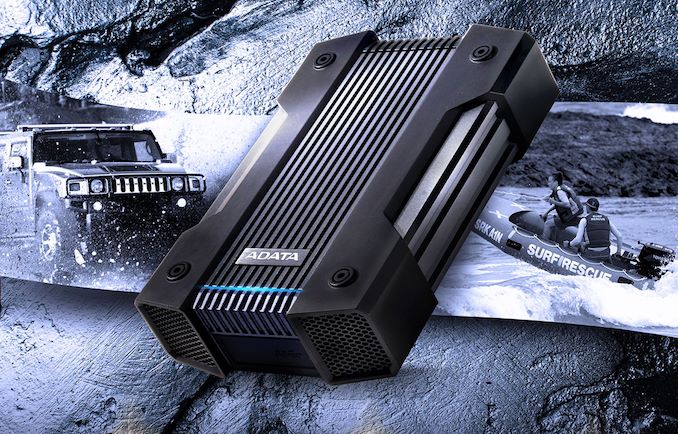
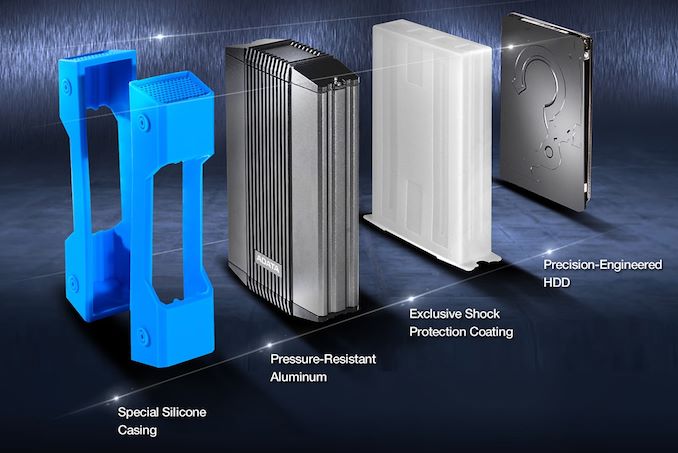
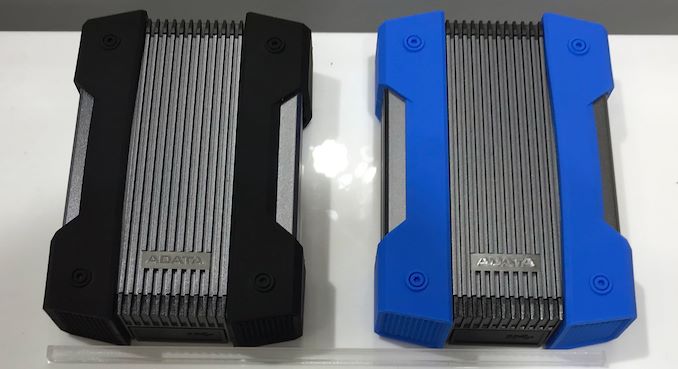
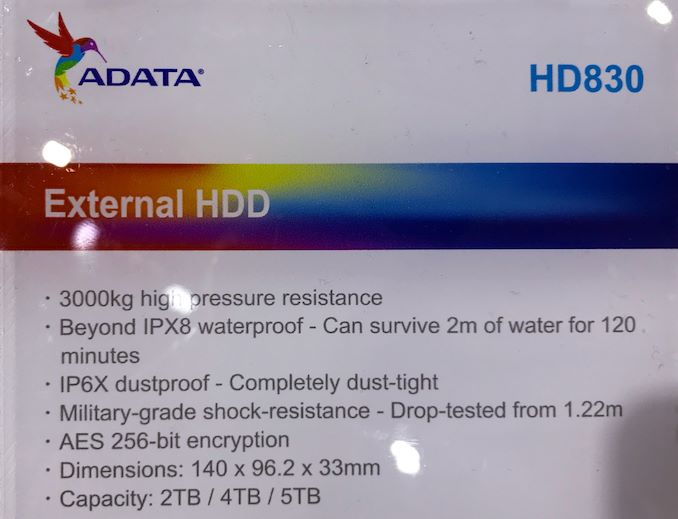
There are many reasons why external storage devices are gaining traction these days, so storage vendors have been aiming to expand their product lineups and offer storage solutions that meet market needs while still offering a degree of differentiation from their rivals. ADATA for its part already has a comprehensive lineup of consumer-grade external HDDs and SSDs, so at this year’s Computex the company introduced its new HD830 ruggedized external hard drive, which is designed to withstand rather tremendous pressure and is water, dust, and shock-proof. ADATA’s HD830 comes in 2 TB, 4 TB, and 5 TB capacities. The drive can survive up to 3 tons (3000 kilograms) of pressure – enough to survive being run over by a car. It can also withstand drops from 4 feet as well as the regular bumps of life. The HD830 storage devices are completely sealed against dust and water: they can survive for 120 minutes when submerged at a two-meter depth. The drives use a micro-B USB 3.1 to USB 3.1 Type-A cable to connect to their hosts.
To ensure the durability of their drives, for the HD830 series ADATA packs a 2.5-inch HDD into a special plastic container that guards against shocks and liquids, which is then put inside an aluminum enclosure that further reinforces the whole container. The aluminum chassis is then itself protected by using a special silicone shock-absorbing casing. Last but not least, the HD830 has its own shock sensors as well as LEDs that detect and inform users the drive is hit during its operation or a disk error occur.
One thing to keep in mind is that modern high-capacity 2.5-inch HDDs are based on shingled magnetic recording with all of its peculiarities when it comes to performance. So expect HD830 to come with those associated performance quirks. Though admittedly, the main advantage of these drives is their rugged construction, not extreme performance. ADATA is already selling its HD830 external HDDs via Amazon for $103, $152, and $196 for 2 TB, 4 TB, and 5 TB, respectively. Expect wider retail availability in the near future.
| |||||||||||||||||||||
| 3:00p | Phison Demonstrates Turnkey SSDs Based on 3D QLC NAND
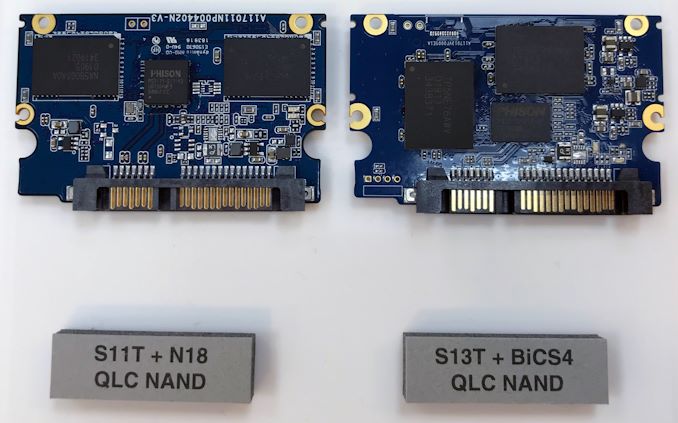
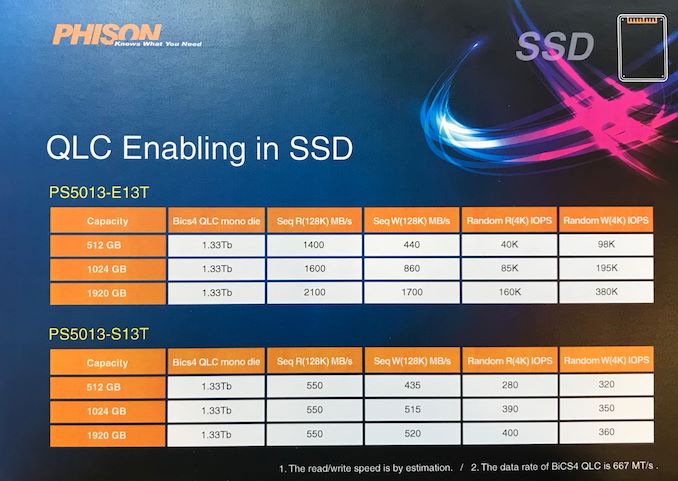
3D QLC NAND promises to become a significant phenomenon on the consumer SSD market thanks to its relatively low cost per gigabyte, further pushing down already dropping SSD prices. As one of the leading suppliers of turnkey SSDs, Phison for its part demonstrated QLC SSD prototypes at this year's Computex, using QLC NAND from both Micron and Toshiba. To date, Phison has validated three of its controllers for use with 3D QLC NAND flash memory: two SATA controllers and one PCIe controller. The PS3111-S11T and PS3113-S13T are aimed at entry-level SATA SSDs, whereas the PS5013-E13T is designed for inexpensive PCIe 3.0 x4 NVMe drives. The S13T and the E13T support Phison’s 4th Generation implementation of LDPC-based ECC as well as other modern features designed to prolong endurance of SSDs and improve their performance, which are critical components to making QLC SSDs viable on the market.
As these are all prototypes of low-end drives, Phison isn't promising much in the way of performance; but then that's part of the tradeoffs that come with low-end hardware. Realistically speaking, PCIe SSDs will feel this pinch the most, as as cheap, low-capacity drives will use just a couple of NAND chips, limiting their ability to take advantage of parallelism. Meanwhile, for SATA drives the interface itself limits performance of modern NAND flash, so 3D QLC's performance limits are a lot less obvious. All told, the performance numbers below speak for themselves, with the 512 GB 3D QLC-based SATA looks set to offer up to 550 MB/s sequential read speeds as well as up to 435 MB/s sequential write speeds.
The following combinations of controllers and 3D QLC NAND chips has been validated by Phison. Eventually, the list and the number of combinations will be expanded. Since Phison demonstrated its turnkey 3D QLC-based SSDs at Computex, expect actual products to show up on the market later this year or early in 2020. MSRPs will, of course, depend on the price of 3D NAND at the time, as well as market demand for QLC SSDs.
| |||||||||||||||||||||
| 5:00p | Spotted at Computex: ZOTAC’s Mek Mini Prebuilt PC Goes Pink
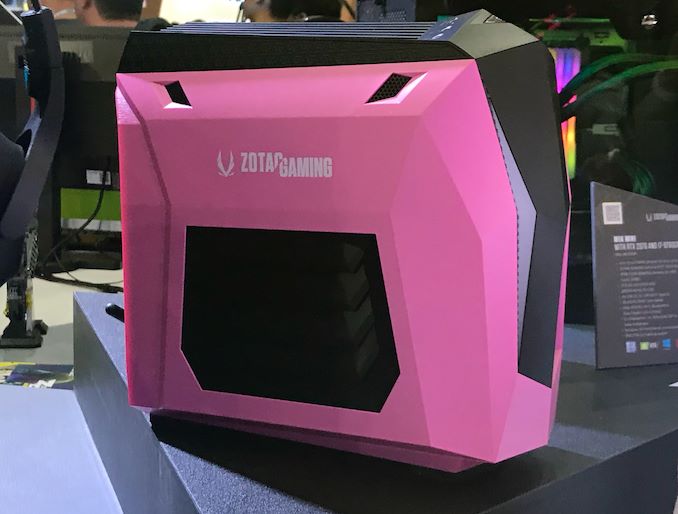
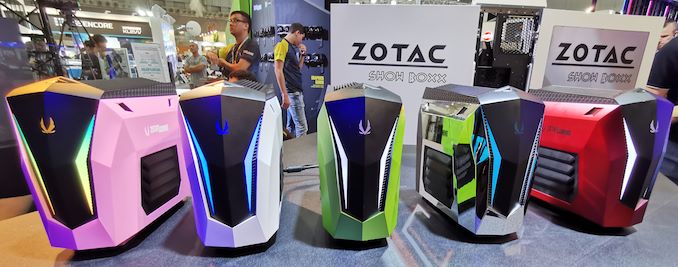
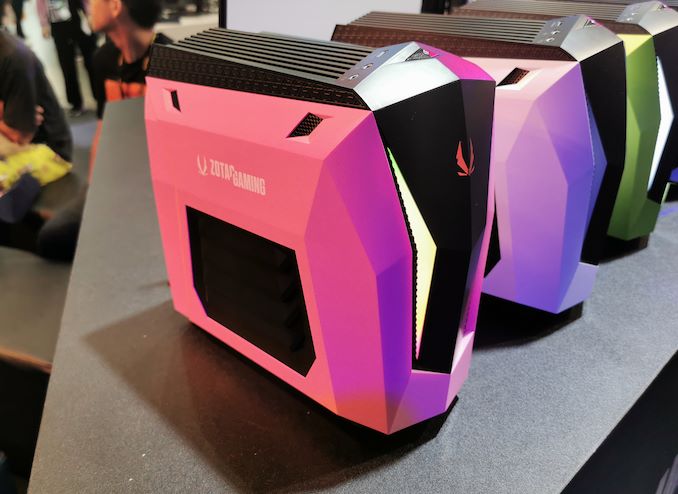
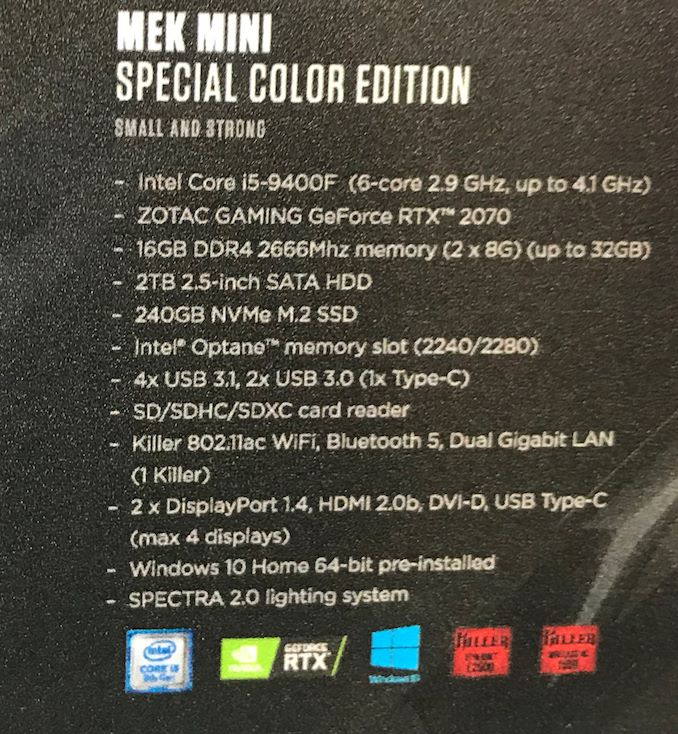
Having launched their gaming-focused Mek Mini, Mek Ultra, and VR Go 2.0 computers over the past year, ZOTAC can now address virtually all segments of gaming PC market. But even with their current lineup, there are customers that require something that looks uncommon and exclusive. To that end, ZOTAC is working on colorful versions of its Mek Mini desktop, including, of course, a pink version. Back at CES, the company originally demonstrated four Special Color Editions of its Mek Mini systems, with cases in green, white, grey, and red. So for this year's Computex, ZOTAC showcased a pink version of its Mek Mini, to complete their rainbow lineup.
As far as hardware is concerned, ZOTAC’s Mek Mini Special Color Edition systems are based on Intel’s Core i5-9400F six-core processor, and is accompanied by NVIDIA’s GeForce RTX 2070 graphics card with 8 GB of GDDR6. The PCs are also equipped with 16 GB of DDR4-2666 memory, a 240 GB PCIe/NVMe M.2 SSD, as well as a 2 TB 2.5-inch hard drive.
ZOTAC yet has to announce details about the availability of its Mek Mini Special Color Edition systems, but since they are based on Intel’s 9th Gen Core processors (vs. 8th Gen Core CPUs on regular models), expect them to be available when the manufacturer feels a need for a refresh of its existing compact gaming PCs.
Related Reading:
| |||||||||||||||||||||




| << Previous Day |
2019/06/21 [Calendar] |
Next Day >> |