[Most Recent Entries] [Calendar View]
Friday, August 9th, 2019
- NVMe 1.4 Specification Published: Further Optimizing Performance and Reliability
- Phison’s PS5016-E16 & PS5019-E19: The First PCIe 4.0 Client SSD Controllers
- Phison Demonstrates Turnkey SSDs Based on 3D QLC NAND
- ADATA Launches XPG Gammix S50: A PCIe 4.0 x4 SSD
- Phison PS5016-E16 PCIe 4.0 SSDs: Random Read/Write Performance Disclosed
- TeamGroup Cardea Zero PCIe 4.0 x4 SSD: Up to 1 TB
- More 2TB PCIe 4.0 SSD Options: Patriot with Custom Firmware coming Q4
- Galax Goes White: A PCIe 4.0 2TB SSD with a White PCB
- Samsung 30.72 TB SSDs: Mass Production of PM1643 Begins
- Samsung Launches Broad Range Of Datacenter SSDs
- Samsung Launches Energy-Efficient PM883 SSD with SATA 3.3, LPDDR4
- Samsung At Flash Memory Summit: 96-Layer V-NAND, MLC Z-NAND, New Interfaces
- Samsung Unveils 6th Generation V-NAND Memory with Up to 136 Layers
- Samsung at Flash Memory Summit: 64-layer V-NAND, Bigger SSDs, Z-SSD
- LG Display & SK Hynix Looking to Diversify Industrial Suppliers as Row with Japan Intensifies
- Supply of DRAM, NAND & Displays Could Be Disrupted by Japan & South Korea Dispute
| Time | Event | ||||||||||||||||||||||||||||||||||||||||||||||||||||||||||||||||||||||||||||||||||||||||||||||||||||||||||||||||||||||||||||||||||
| 8:00a | Phison Previews Next-Gen PCIe 4.0 SSD Controllers: Up to 7 GB/s, NVMe 1.4
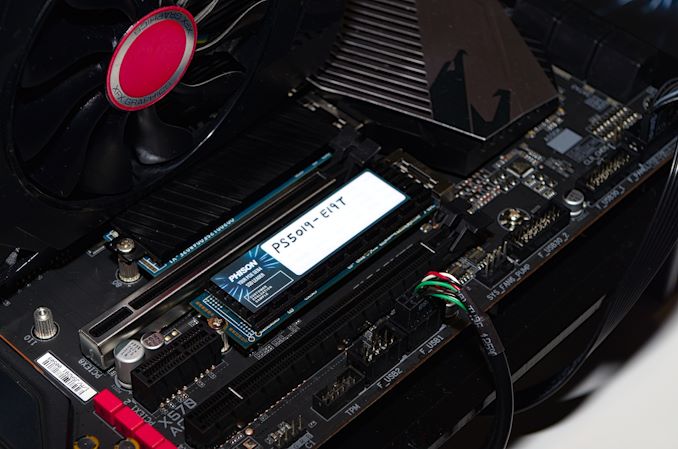
At FMS 2019, Phison shared the specs for its next generation of client SSD controllers. The PS5018-E18 high-end controller will be made using a FinFET process technology and promises to boost sequential read and write performance of drives to 7 GB/s. The PS5019-E19T mainstream controller will be a quick follow-up to the E13T that is currently in production but has not yet shipped in retail products. With its PS5016-E16 chip, Phison was the first to introduce client SSD controllers with a PCIe 4.0 x4 interface and is currently enjoying its unique position on the market. The PS5016-E16 is essentially an update of the PS5012-E12 — still featuring two Arm Cortex-R5 cores, eight NAND channels rated at 800 MT/s and made using TSMC’s 28 nm process technology, but now featuring a PCIe 4.0 x4 PHY and enhanced error correction capabilities. In the coming months, Phison's entry-level NVMe controller will get a similar successor: the new PS5019-E19T will be based on the PS5013-E13T (one Arm Cortex-R5 core, four NAND channels, 28nm technology), but featuring a new PCIe 4.0 x4 PHY and thus enabling cost-effective yet fast SSDs. Phison’s next-generation PS5018-E18 high-end client SSD controller with a PCIe 4.0 x4 interface will be significantly different from the current E16. The chip gains a third Arm Cortex-R5 core, NVMe 1.4 compliance, improved hardware security algorithms, and will be made using TSMC’s 12 FFC fabrication process. The most important improvement in the new controllers is support for faster NAND interface speeds of up to 1200 MT/s. This is necessary to get full performance out of 96L and newer 3D NAND. For the high-end E18 this allows the controller to actually deliver twice the throughput of any PCIe 3.0 x4 drive, where the E16 can only use a fraction of the extra bandwidth provided by the PCIe 4.0 upgrade. The faster NAND interface also allows the E19T to hit sequential speeds that are slightly faster than a PCIe 3.0 x4 link can handle, despite the E19T having only four NAND channels instead of the eight channels used by high-end NVMe controllers. Peak power consumption for both the E19T and E18 will be higher than for their respective predecessors, but that's because they are so much faster; the newer controllers will actually be more efficient. Phison's booth at FMS included live demos of the E13T, E19T and E16 controllers, but the E18 controller was not in attendance. The low-end E19T controller will be sampling by the end of the year and is likely to show up in retail drives by the end of Q1 2020. This means that the E13T is likely to be very short-lived in the retail market. The high-end E18 will be arriving a bit later, sampling in Q1 2020 and hitting the shelves in Q3, a year after the E16 it replaces.
Related Reading: | ||||||||||||||||||||||||||||||||||||||||||||||||||||||||||||||||||||||||||||||||||||||||||||||||||||||||||||||||||||||||||||||||||
| 10:00a | Samsung Preps PM1733 PCIe 4.0 Enterprise SSDs For AMD's "Rome" EPYC Processors
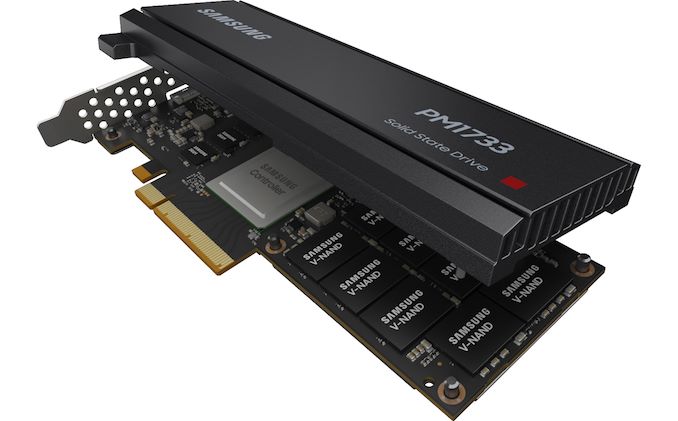
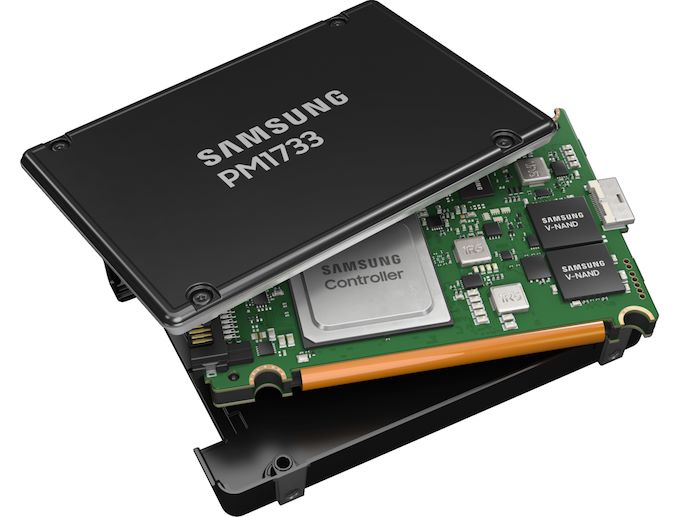
With the launch of AMD's new second generation "Rome" EPYC processors, AMD's numerous hardware partners have been lining up to announce their own wares built around the new processors. And this doesn't just go for OEMs and integrators, but it also extends to component suppliers who have been eagerly awaiting the first x86 server processor with PCIe 4.0 support. To that end, yesterday Samsung sent out an announcement confirming that their previously announced PM1733 enterprise SSD supports AMD's new processors, and that just in time for inclusion in Rome systems, they'll be shipping this quarter. Samsung first announced the PM1733 last fall, as part of its general SSD roadmap update for the then-forthcoming year. The PM1733 is the successor to their PM1723b enterprise SSD, and is designed to take advantage of the bandwidth advances provided by PCIe 4.0. Based on the company’s proprietary controller and paired with 512 Gb 5th Generation V-NAND memory chips, the drive family is rated for read speeds of up to 8 GB/second. Interestingly, Samsung is offering both PCIe 4.0 x4 and x8 versions of the SSDs, with the U.2 versions using a x4 interface while the alf-length half-height (HHHL) card versions will use x8. The U.2 drives with dual-port capability will offer capacities of up to 30.72 TB, whereas the HHHL cards will carry up to 15.36 TB of useful V-NAND flash. Overall, Samsung's focus on the drive in terms of specifications is on the drive's read performance rather than its write performance. Along with its 8 GB/sec rated sequential read speed, Samsung says the PM1733 can handle random reads of up to 1500K IOPS, which would make the PM1733 among the fastest drives announced so far.
Samsung will start shipments of its PM1733 SSDs this quarter. Among x86 platforms, the PCIe 4.0 capabilities of the drives will only be available on AMD EPYC 7002 and AMD Ryzen 3000 platforms, but the devices will also work with current PCIe 3.0 platforms from Intel and AMD. The manufacturer has not disclosed prices of the new PM1733 SSDs so far. Related Reading: Source: Samsung | ||||||||||||||||||||||||||||||||||||||||||||||||||||||||||||||||||||||||||||||||||||||||||||||||||||||||||||||||||||||||||||||||||
| 12:00p | Japan’s Ministry Approves Shipments of Industrial Chemicals to South Korea
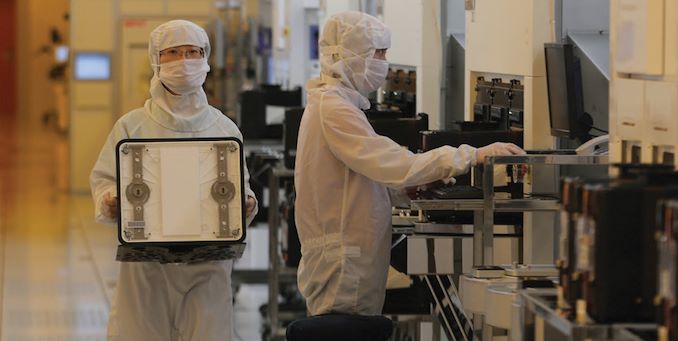
Amidst the ongoing trade conflict between Japan and South Korea, there is some good news to close the week out. The Japanese Ministry of Economy, Trade and Industry has approved a new shipment of industrial chemicals to South Korea, which the latter country's high-tech manufacturers rely on for the ongoing production of processors and other components. This is the first of shipment to be approved since early July, when a diplomatic conflict between the two countries broke out. If South Korean manufacturers get the materials on time, it will help to avoid a painful disruption in the manufacturing and shipping of various tech components, including DRAM, NAND flash, LSI chips, and display panels. Starting as of early July, Japanese producers must now get approval for individual exports to South Korea of polyimides (used both for LCDs and OLEDs), photoresists, and high-purity hydrogen fluoride (used to make chips, such as LSI, DRAM and NAND devices). The major Japanese manufacturers — JSR, Showa Denko (SDK), and Shin-Etsu Chemical — not only control the lion’s share of the global supply for these chemicals, but they also are among the only suppliers that can meet the quality needs that companies like LG, Samsung, and SK Hynix have built their manufacturing lines around. Export reviews in Japan may take up to three months, whereas South Korean makers typically only keep one to two months' worth of materials in stock because they are highly toxic and uneasy to store. Luckily, the first individual exports was approved by the ministry in about four weeks. The review by the officials concluded that the shipments will not be used for military purposes. However, the ministry did not disclose what specific chemicals are set to ship. Presumably, the South Korean giants will get their needed materials shortly. Here is what trade minister Hiroshige Seko told local journalists.
One thing to keep in mind is the starting from July all individual exports from Japan to South Korea will have to be approved separately, which means these shipments will have to pass export review procedures every few weeks. Related Reading: Source: The Japan Times | ||||||||||||||||||||||||||||||||||||||||||||||||||||||||||||||||||||||||||||||||||||||||||||||||||||||||||||||||||||||||||||||||||
| << Previous Day |
2019/08/09 [Calendar] |
Next Day >> |