[Most Recent Entries] [Calendar View]
Wednesday, September 11th, 2019
- New Hlo 15TB HDDs: Western Digital Unveils the Ultrastar DC HC620
- Western Digital’s Ultrastar DC HC330: A 10 TB HDD for Enterprises w/ 40% Faster Writes
- Western Digital Launches Ultrastar DC HC530 14 TB PMR with TDMR HDD
- Matrox to Use AMD GPUs in Their Next Generation Multi-Display Graphics Cards
- AMD Unveils Radeon Pro WX 3200: A Professional Graphics Card for Sub-$200
- AMD Announces Radeon Pro WX 8200: Pro Vega For Under A Grand
- Thunderbolt Docks Are Here: Belkin Thunderbolt Express Dock & Matrox DS-1
- Fast & Furious: The Alienware 27 (AW2720HF) 240 Hz IPS Monitor with FreeSync
- LG Unveils 27 and 37.5-Inch IPS Monitors with 1 ms Response Time
- LG to Demo UltraWide 38-Inch 144Hz Gaming & 49-Inch Workstation Displays at CES
- LG Unveils UltraGear 34GK950 34-Inch Curved Gaming Displays with Nano-IPS
| Time | Event | ||||||||||||||||||||||||||||||||||||||||||||||||||||||||
| 9:30a | Western Digital 20 TB HDD: Crazy Capacity for Cold Storage
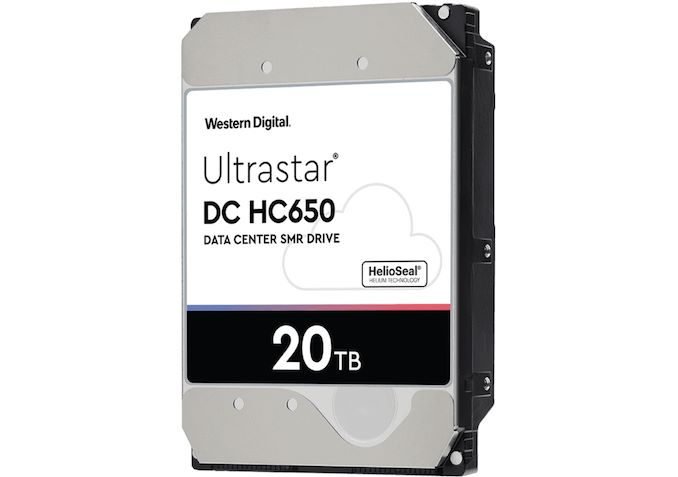
As operators of cloud datacenters need more storage capacity, higher capacity HDDs are being developed. As data hoarders need more capacity, higher capacity HDDs are needed. Last week Western Digital introduced its new Utrastar DC HC650 20 TB drives - hitting a new barrier in rotating data. The drives feature shingled magnetic recording (SMR) technology, which layers data on top of another much like a shingled roof, and therefore is designed primarily for write once read many (WORM) applications (e.g., content delivery services). Western Digital’s SMR hard drives are host managed, so they will be available only to customers with appropriate software. Western Digital’s Utrastar DC HC650 20 TB is based on the company’s all-new nine-platter helium-sealed enterprise-class platform, a first for the company. The new 3.5-inch hard drives feature a 7200 RPM spindle speed and will be available with a SATA 6 Gbps or SAS 12 Gbps interface depending on the SKU. Since the product is not expected to be available immediately, the manufacturer does not disclose all of its specifications just yet, but has stated that key customers are already in the loop. Featuring a very high per-platter capacity of around 2.2 GB, the Utrastar DC HC650 20 TB HDDs offer a higher sequential read performance than its predecessors, but its IOPS per TB performance is lower than that of older HDDs. That said, Western Digital’s clients who will use the 20 TB SMR HDDs will need to manage the physical limitations of SMR, by maximizing sequential writes. As far as availability is concerned, the 20 TB version of the Ultrastar DC HC650 SMR drives will be available as samples by the end of the year. Actual shipments will start once the drives are qualified by customers. Because the HDDs will be available to select customers only, Western Digital does not publish per-unit pricing. Related ReadingSource: Western Digital | ||||||||||||||||||||||||||||||||||||||||||||||||||||||||
| 10:30a | Matrox Acquired by Co-Founder
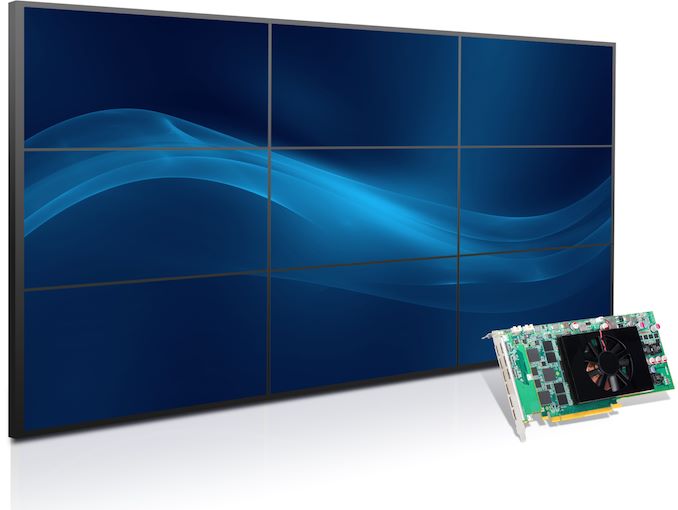
Matrox on Monday announced that Lorne Trottier, a co-founder of Matrox, has acquired 100% ownership of the Matrox group of companies, which includes three divisions: Matrox Imaging, Matrox Graphics, and Matrox Video. Founded in 1976 by Lorne Trottier and Branko Matić, Matrox may not be a widely-known name among the PC crowd these days as it has been years since the company released its own GPU and essentially quit the market of consumer graphics cards. Back in the day, Matrox’s Parhelia and Millennium G400/G450/G550 graphics cards provided superior 2D image quality (something that was very important back in the CRT era), but failed to offer competitive performance in 3D games. This failure led the company to leave the market of consumer graphics cards and focus on niche markets instead. Back in 2014 Matrox officially ceased to design its own graphics processor IP and has been using AMD’s Radeon GPUs coupled with its renowned software since then. In fact, when it comes to multi-display graphics cards and other graphics solutions for various purposes as well as for specialized niche solutions for video and imaging applications, Matrox has rather unique offerings. Serving aerospace, broadcast, financial, cinematography, digital signage, and other industries, Matrox almost certainly earns good profit margins. It is hard to say how change of the ownership will affect product development and roadmap of Matrox, but usually such changes focuse the companies on their key products, which enables growth. Since Matrox has always been a privately held company, financial terms of the deal were not disclosed. Here is what Lorne Trottier had to say:
He added:
Related Reading: Source: Matrox | ||||||||||||||||||||||||||||||||||||||||||||||||||||||||
| 11:30a | Need for Speed: The LG UltraGear (27GN750) 240 Hz IPS Monitor with G-Sync
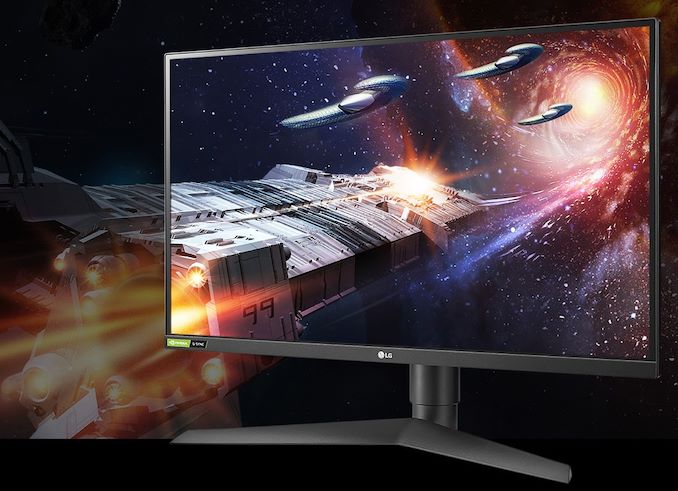
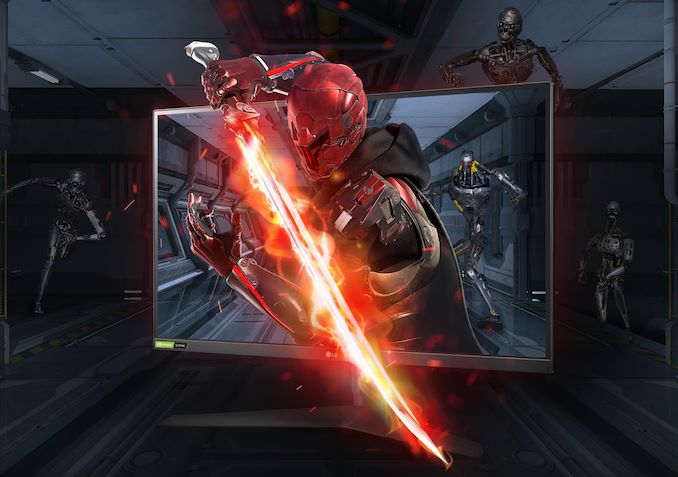
LG has expanded its family of UltraGear displays aimed at hardcore and esports gamers. The newest model, the UltraGear 27GN750, supports a 240 Hz maximum refresh rate as well as NVIDIA’s G-Sync variable refresh rate technology. The LG UltraGear 27GN750 is the industry’s first IPS monitor featuring such a high refresh rate along with the G-Sync technology. Based on the so-called ‘fast IPS’ 27-inch panel, the LG UltraGear 27GN750 has a 1920×1080 resolution, 400 nits brightness, a 1000:1 contrast ratio, 178°/178° viewing angles, a 1 ms GtG response time, and a variable refresh rate of up to 240 Hz supported by NVIDIA’s G-Sync technology. Unfortunatelly, LG does not disclose the range of the VRR supported by the LCD. The 27-inch gaming monitor can display 16.78 million of colors and can reproduce 99% of the sRGB color space. Furthermore, it also carries VESA’s DisplayHDR 400 badge and therefore supports HDR10 transport.
Because LG’s UltraGear monitors are designed predominantly for gamers, they support numerous features aimed at this audience, including LG’s Dynamic Action Sync mode, Black Stabilizer, and Crosshair. As far as connectivity is concerned, the LG UltraGear 27GN750 has one DisplayPort, two HDMI inputs, as well as a dual-port USB hub.
Being one of the leading makers of high-end displays and offering hundreds of models, LG introduced its separate UltraGear brand targeted at demanding gamers only in mid-2019, somehow later than its competitors. The addition of the rather unique (as of today) UltraGear 27GN750 featuring a 240 Hz refresh rate enables the company to address a new market segment of gamers that require maximum performance yet demand quality of an IPS panel. In fact, this is the world’s second IPS LCD featuring a 240 Hz refresh rate and its only competitor is Dell's Alienware 27 model AW2720HF. Related Reading: Source: LG | ||||||||||||||||||||||||||||||||||||||||||||||||||||||||
| << Previous Day |
2019/09/11 [Calendar] |
Next Day >> |