[Most Recent Entries] [Calendar View]
Monday, October 21st, 2019
- YouTube, Netflix Publish First Videos Transcoded Using AV1
- Alliance for Open Media Releases Royalty-Free AV1 1.0 Codec Spec
- G.Skill Shrinks Latencies of DDR4-4000+ Kits for Coffee Lake: DDR4-4266 CL17 Announced
- G.Skill Reveals Trident Z Neo DDR4-3800 CL14 Kit for AMD Ryzen 3000
- G.Skill Unveils Trident Z Royal Hexa-Channel 192 GB DDR4-4000 Kit for Xeon W-3175X
- G.Skill Trident Royal Crystalline DRAM: Premium Gemstone Glamour
- Corsair Announces Vengeance RGB Pro Memory: Up to DDR-4000, 10 RGB LEDs
- AMD: Next Gen Threadripper and Ryzen 9 3950X, Coming November
- TRX40 Chipset For Upcoming AMD Ryzen Threadripper Listed
- AMD Brings Ryzen 9 3900 and Ryzen 5 3500X To Life
- AMD Ryzen 9 3900: A 12-Core 65W CPU Listed
- AMD Ryzen 5 3500 & 3500X Support Spotted
- AMD Announces Ryzen Pro 3000 Series CPUs For Q4
- AMD: Next Gen Threadripper and Ryzen 9 3950X, Coming November
- AMD Brings Ryzen 9 3900 and Ryzen 5 3500X To Life
- AMD Ryzen 9 3900: A 12-Core 65W CPU Listed
- AMD Ryzen 5 3500 & 3500X Support Spotted
- AMD Announces Ryzen Pro 3000 Series CPUs For Q4
- Lenovo Launches ThinkPad X1 Carbon Gen 7: Thinner, Lighter, Comet Lake Inside
- Lenovo’s 2019 ThinkPad X1 Yoga: An Ultralight Convertible with Comet Lake
- Lenovo Unveils ThinkPad P1 Gen 2: New 15.6-Inch Carbon Fiber Chassis
- Lenovo Unveils ThinkPad X1 Extreme Gen 2: New CPU, GPU, OLED Display Option
- AMD’s New 280W 64-Core Rome CPU: The EPYC 7H12
- AMD Rome Second Generation EPYC Review: 2x 64-core Benchmarked
- The AMD 2nd Gen EPYC "Rome" Launch Live Blog
- AMD Zen 2 Microarchitecture Analysis: Ryzen 3000 and EPYC Rome
| Time | Event | ||||||||||||||||||||||||||||||||||||||||||||||||||||||||||||||||||||||||||||||||||||||||||||||||||||||||||||||||||||||||||||||||||||
| 8:00a | Chips&Media Launches Wave510A Hardware AV1 Decoder IP
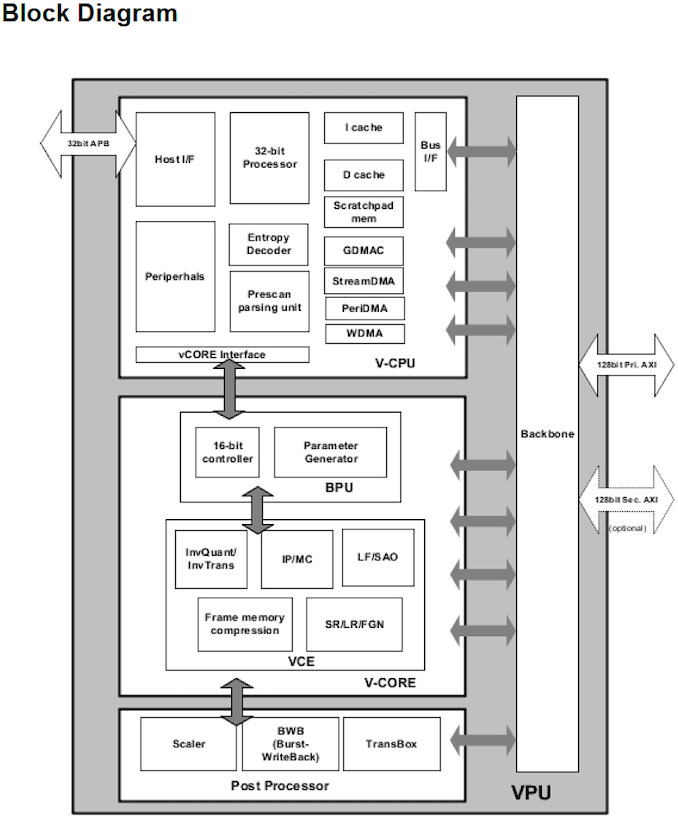
Chips&Media this month has started to license out its Wave510A hardware decoder IP, the industry’s first AV1 video decoder. The base decoder core supports decoding up to 4Kp60, but it can be scaled out to handle 4Kp120 and 8Kp60 resolutions as well. The IP is designed to be integrated into SoCs for various applications, including televisions, STBs, smartphones, and PCs. Meanwhile, since the Wave510A only decodes AV1 streams, it will likely be licensed by parties who want to add AV1 to their existing SoCs. The Wave510A video processing unit (VPU) IP is based on two fundamental units: the V-Core and the V-CPU. The 32-bit V-CPU controls the whole IP block, communicates with host CPU, parses bitstream syntax from sequence to slice header unit, and prescans slice data. The V-Core performs entropy decoding, inverse scan, inverse transform/quantization, motion compensation, and loop filtering. The IP VPU can be connected to host using Arm’s 32-bit AMBA3 APB bus, and also has two 128-bit AMBA3 AXI busses to access external memory and on-chip SRAM. The Chips&Media Wave510A can decode AV1 Main profile @ L5.1 50 Mbps at 8 or 10-bit color depths, with 4:2:0 chroma subsampling. The VPU can output to various displays at up to 8192x8192 resolution in various formats. When clocked at 500 MHz, it can support up to 4Kp60 realtime decoding in a single-core configuration, whereas in a dual-core configuration it can decode 4Kp120 and 8Kp60 streams.
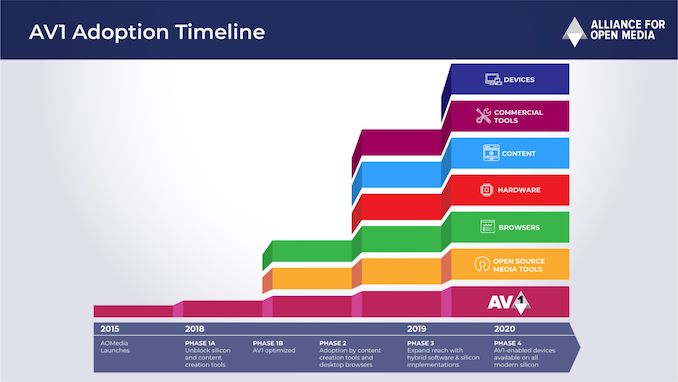
The AV1 royalty-free codec was introduced about 1.5 years ago by the Alliance for Open Media (AOMedia), and it is gaining traction throughout the industry. Over the past few months we have seen multiple technology licensing companies announcing hardware encoder IP blocks as well as several SoCs that already support AV1 decoding using in-house developed IP (or using general-purpose cores). Amphion Semiconductor was the first company to announce an AV1 decoder with its CS8142 decoder IP, but this part is still in development. By contrast, the Wave510A from Chips&Media is available now and can licensed in the form of a verified synthesized RTL source. Meanwhile, the Wave510A only supports AV1, so to build a complete video decode pipeline supporting codecs like HEVC and AVC, designers will have to license or develop additional IP blocks to support those other codecs. On the other hand, the Wave510A can be easily added to existing designs and improve their feature set.
Related Reading: Source: Chips&Meida (via Design & Reuse) | ||||||||||||||||||||||||||||||||||||||||||||||||||||||||||||||||||||||||||||||||||||||||||||||||||||||||||||||||||||||||||||||||||||
| 9:00a | The Microsoft Surface Laptop 3 (15-Inch) Review: AMD Ryzen Surface Edition This year at Microsoft’s somewhat annual Surface update event, Microsoft surprised everyone by not only announcing a newer and larger Surface Laptop 3, bumping the screen size from 13.5-inches to 15-inches, but also by selecting an AMD processor for the laptop. Though still an incremental shift when looking at the entire Surface lineup, it was a big change for Microsoft, as well as a big win for AMD. Not only is Microsoft now offering a traditional, clamshell laptop in the ever-popular 15-inch form factor, but it's the highest profile laptop yet to ship with one of AMD's APUs. | ||||||||||||||||||||||||||||||||||||||||||||||||||||||||||||||||||||||||||||||||||||||||||||||||||||||||||||||||||||||||||||||||||||
| 11:00a | Royal Memory: G.Skill’s 32 GB DDR4-4000 CL15 Kit for AMD & Intel
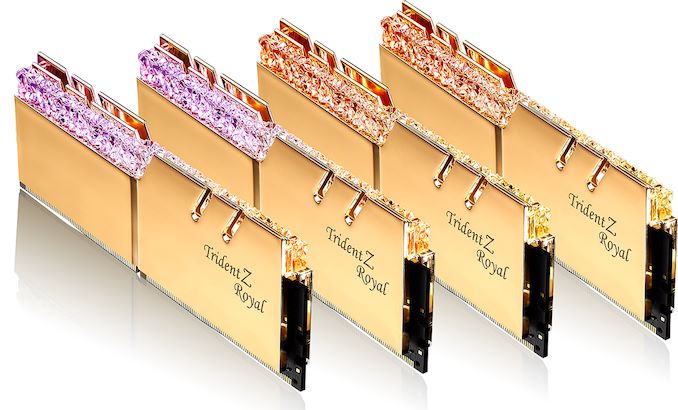
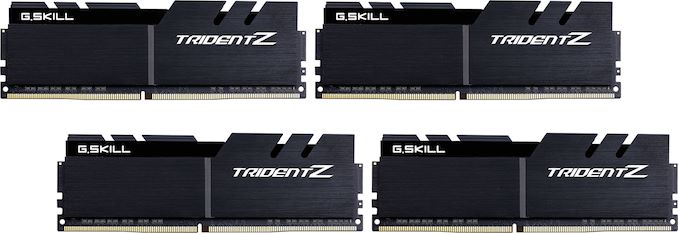
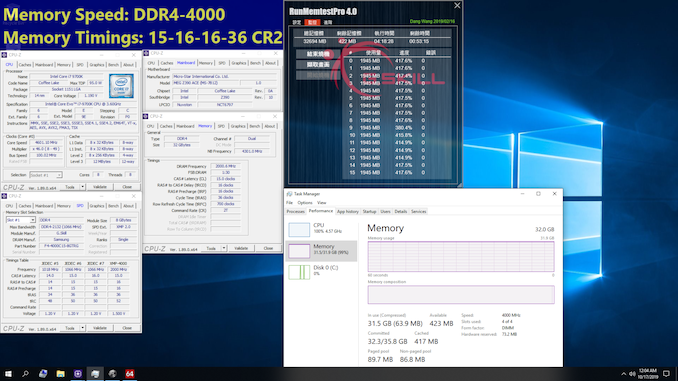
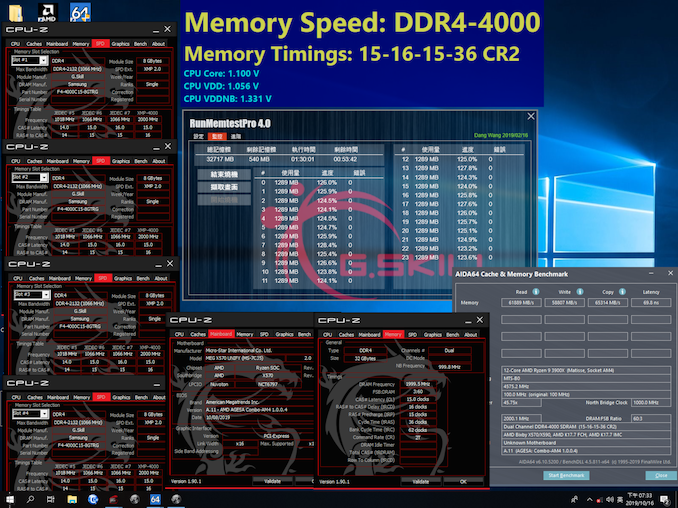
Bucking the trend of ever higher clocked DDR4 memory kits, G.Skill has introduced a new high-end memory kit that is focused on lower memory latencies. Compatible with both Intel and AMD platforms, the premium memory kit offers CL15 latencies at up to DDR4-4000 speeds. G.Skill’s Extreme Low Latency DDR4-4000 32 GB kit consists of four 8 GB modules based on cherry-picked Samsung’s 8 Gb B-Die chips. The sticks are rated for 4000 MT/s CL15 16-16-36 at 1.5 V. The modules use G.Skill’s custom PCB, feature an XMP 2.0-enabled SPD, and come with G.Skill’s blingy Trident Royal Z heat spreaders with a crystaline RGB lightbar, or regular Trident Z with classic all-black heat spreaders. The Extreme Low Latency DDR4-4000 32 GB kit has been validated both on AMD’s X570/Ryzen 3000 platform (using MSI’s X570 Unify motherboard) and Intel’s Z390 platform (using MSI’s MEG Z390 Ace motherboard). Keeping in mind that we are dealing with modules that work at clocks and latencies well beyond those recommended by JEDEC at voltages that are a whopping 25% higher than spec for DDR4 DIMMs, one will clearly need a high-end motherboard with a VRM that can deliver clean and quality power to the modules.
G.Skill will start sales of its Trident Z Royal 32 GB DDR4-4000 CL15 kit late in Q4 2019. Pricing has yet to be announced, but considering their high-end specifications, expect them to be expensive.
Related Reading: Source: G.Skill | ||||||||||||||||||||||||||||||||||||||||||||||||||||||||||||||||||||||||||||||||||||||||||||||||||||||||||||||||||||||||||||||||||||
| 12:00p | Details About 3rd Generation Ryzen Threadripper Appear: 24 and 32 Cores, Up to 280 W
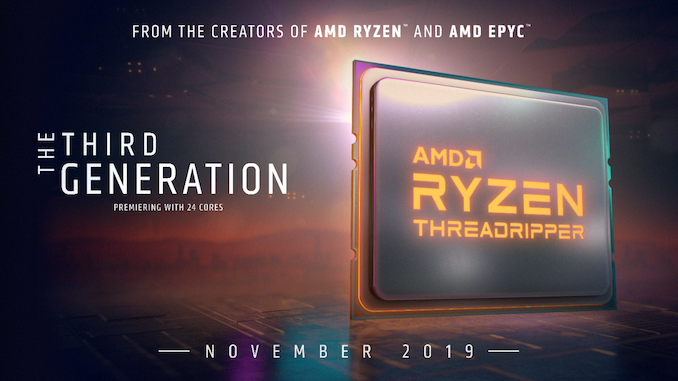
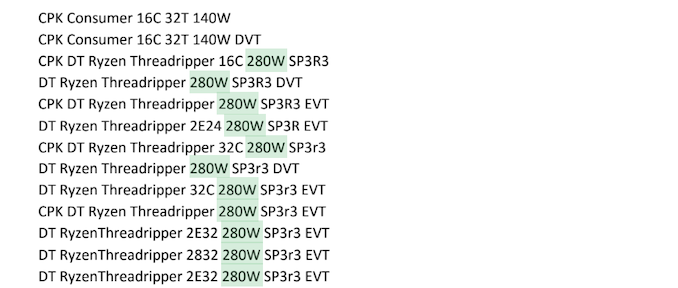
AMD has already officially confirmed plans to launch its 3rd Generation Ryzen Threadripper processors this November, but naturally kept all the details to itself. At the time, it stated that the first products to market will be 24-core products. According to the company’s Product Master document that was published by AMD, it looks like some preliminary information about the CPUs is now in. Based on the document (as well as previously released claims by the company), AMD’s Ryzen Threadripper 3000-series family will include 16-core, 24-core, and 32-core CPUs with a TDP up to 280 W for its most extreme parts. This is up from a 250 W TDP featured by AMD’s Ryzen Threadripper 2000 processors with up to 32 cores. The new process technology along with a higher thermal design power will likely enable the new CPUs to run faster and offer a significant performance increase when compared to predecessors (plus, keep in mind performance boost from the Zen 2 microarchitecture).
The new CPUs are also said to use a new variant of the SP3 socket called SP3r3, which questions if they will be drop-in compatible with previous-gen motherboards. Considering the fact that AMD is preparing new chipsets for its next-generation Ryzen Threadripper processors, but has been stated with providing socket compatibility, it will be interesting when AMD defines the compatibility table. This is likely a differentiator for PCIe 4.0 support. AMD’s Product Master list is seemingly targeted at the company’s sales teams and contains OPN codes along with US ECCN, HTS, and CCATS codes that are required by the US export regulators. Although the document mentions a variety of products, at least some of them are potential or partner-specific devices not exactly located in the company’s roadmap for mass products. Therefore, the information from the list should be taken with a grain of salt, as some of these parts may not be hitting the market. Related ReadingSources: AMD, Reddit, Tom’s Hardware, Komachi_Ensaka/Twitter, Planet3DNow.de | ||||||||||||||||||||||||||||||||||||||||||||||||||||||||||||||||||||||||||||||||||||||||||||||||||||||||||||||||||||||||||||||||||||
| 1:00p | Biostar Unveils Racing X570GTA Motherboard
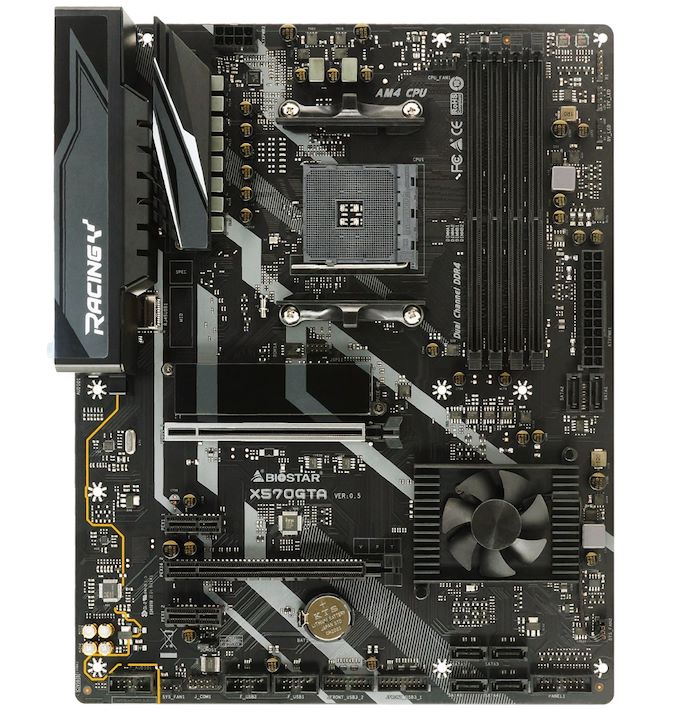
Adding to its small X570 product stack, Biostar has unveiled its latest ATX sized model, the Biostar Racing X570GTA. While nothing to do with 'Grand Theft Auto', the X570GTA takes the more budget-focused stance with a Realtek RTL8111H Gigabit Ethernet controller, a Realtek ALC887 HD audio codec, and has support for DDR4-4000 memory. Bordering on one of the most basic feature-sets we've come across for any current model on the X570 chipset, the Biostar Racing X570GTA encompasses its typical Racing brand theme with a black and grey accented design. The X570GTA has a full-length PCIe 4.0 x16 slot which has a coating of metal slot reinforcement, a second full-length PCIe 4.0 x4 slot from the chipset as well as two PCIe 3.0 x1 slots.
Storage support consists of a single PCIe 4.0 x4 M.2 slot with support for SATA drives too, as well as six straight-angled SATA ports supporting RAID 0, 1, and 10 arrays. Although not as prolific as some vendors offer on its lower-spec X570 models, the Biostar Racing X570GTA has support for DDR4-4000 memory with support for up to 128 GB; AMD recommends that the sweet spot for Ryzen 3000 processors is DDR4-3600. Delivering power to the CPU is a single 8-pin 12 V ATX input and the power delivery isn't determined, but we have reached out to Biostar to find out. The CPU section of the power delivery is cooled by a svelte looking aluminium heatsink, while the SoC/IGP area is laid bare. The X570 chipset is actively cooled, and Biostar hasn't focused too much on aesthetics with its design with no integrated RGB LEDs.
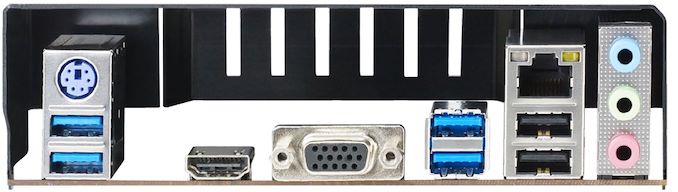
On the rear panel of the Biostar Racing X570GTA is a limited amount of USB connectivity with just four USB 3.1 G1 Type-A, and two USB 2.0 ports. Users looking to use a Ryzen based APU can access integrated graphics with a pair of HDMI and D-Sub video outputs, while a PS/2 keyboard port, three Realtek ALC887 codec powered 3.5 mm audio jacks, and a Realtek RTL8111H Gigabit Ethernet port make up the rest. The Biostar Racing X570GTA is set to hit retail next month with an MSRP of $160. This puts it same price bracket as the MSI X570-A Pro which benefits from an extra PCIe 4.0 x4 M.2 slot and has a Realtek ALC1220 HD audio codec. Related Reading | ||||||||||||||||||||||||||||||||||||||||||||||||||||||||||||||||||||||||||||||||||||||||||||||||||||||||||||||||||||||||||||||||||||
| 2:00p | AMD Ryzen 7 3750X with 105 W TDP: Spotted at AMD
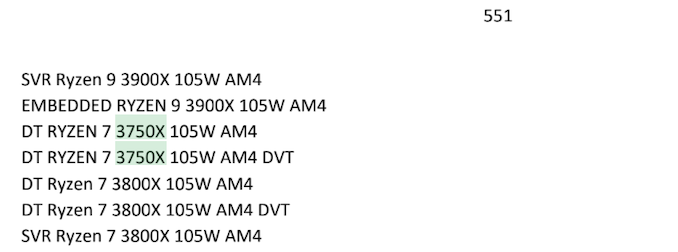
AMD has accidentally published its Product Master list - a list with all of its consumer, enterprise, and OEM parts listed. In the latest publication, it reveals multiple CPUs that could potentially be released in the future. The document, which is dated September 2019, indicates that AMD may be mulling to launch its Ryzen 7 3750X product with a 105 W TDP, though does not disclose its specifications or if it is OEM-only.
As the product number suggests, AMD’s Ryzen 7 3750X will sit between the eight-core Ryzen 7 3800X and the eight-core Ryzen 7 3700X, which leads to a suggestion that we are dealing with another eight-core CPU with SMT. Meanwhile, the base frequency difference between the Ryzen 7 3700X and 3800X is only 300 MHz, which is pretty narrow, whereas the former features a mainstream TDP of 65 W, while the latter can go all the way to 105W.
Keeping in mind that AMD already has a rather diverse Ryzen 3000 (aka Matisse) family and the fact that the company may have various ideas how to improve its product lineup, it is not particularly easy to make predictions about future products, especially if they may end up as OEM-only products, inside desktops of only one or two partners. The only thing that is certain at this point is that AMD might be considering to strengthen its desktop family if it feels necessary. AMD’s Product Master document seems to be aimed at the company’s sales teams and contains OPN codes along with US ECCN, HTS, and CCATS codes that are required by the US export regulators. While the list mentions numerous products, at least some of them are potential or partner-specific products. Related ReadingSources: AMD, Reddit, Tom’s Hardware, Komachi_Ensaka/Twitter, Planet3DNow.de | ||||||||||||||||||||||||||||||||||||||||||||||||||||||||||||||||||||||||||||||||||||||||||||||||||||||||||||||||||||||||||||||||||||
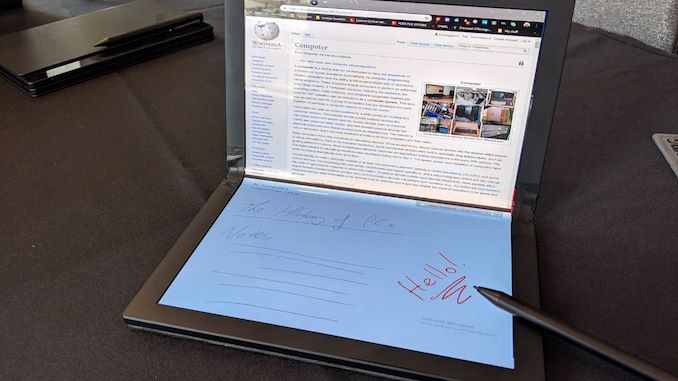
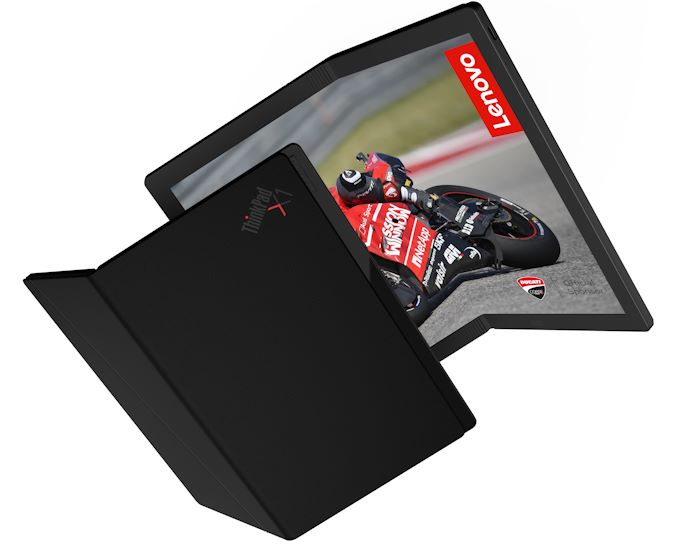
| 3:00p | Lenovo: Foldable ThinkPad X1 to Launch in 2020
At Canalys Channels Forum last week, Lenovo finally revealed launch timeframe for its foldable ThinkPad X1 hybrid notebook that was first revealed in May. The company says that the machine is ready from hardware standpoint, but it needs its software partners to polish off their programs for the innovative unit. Lenovo’s foldable ThinkPad X1 features a 13.3-inch OLED display featuring a ‘2K’ resolution that can be folded in half to fit it into a small bag. The hybrid notebook can be used in tablet, book, and clamshell modes to serve different purposes. It can also be attached to a stand or a dock for workloads that require a mechanical keyboard and a mouse. The foldable ThinkPad X1 uses an undisclosed Intel processor as well as Microsoft’s Windows operating system and is therefore compatible with a wide variety of software applications.
Milanka Muecke, director of global commercial communications and brand at Lenovo, described the foldable ThinkPad X1 device as a fully-fledged PC that fits in the palm of a hand:
Lenovo now expects to ship its foldable ThinkPad in the second quarter of 2020, though it is unclear when it will be revealed from April to June (Note, June is Computex). From the hardware standpoint, the product is sound, but software still needs certain fixes, according to Gianfrano Lanci, COO of Lenovo:
The high-ranking executive of Lenovo does not expect foldable ThinkPad X1 to be an immediate bestseller (probably because of price and other factors), but as a new form-factor it will enable Lenovo to tap into emerging market segments. One of the obvious segments that the foldable ThinkPad X1 will address will be high-performance tablets like Apple’s iPad Pro. Meanwhile, Lenovo will ship its device several months before Microsoft’s launch of dual-screen Surface Neo that targets the same segment.
Related Reading: Sources: The Register, Laptop Mag, TechRadar | ||||||||||||||||||||||||||||||||||||||||||||||||||||||||||||||||||||||||||||||||||||||||||||||||||||||||||||||||||||||||||||||||||||
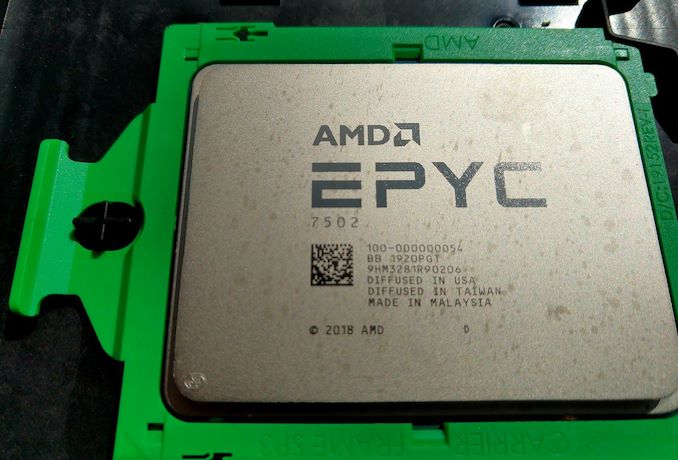
| 4:00p | AMD May Be Prepping More 280 W EPYC Enterprise CPUs
Back in September, AMD announced its 64-core EPYC 7H12 processor - a 280 W TDP behemoth with an increased base frequency designed specifically for the high-performance computing market. Based on AMD’s Product Master list inadvertently published by the company earlier this week, the company may release more EPYC CPUs with an extended TDP. As it turns out, the EPYC 7H12 will not be the only Rome CPU with a 280 W TDP. AMD’s Product Master document lists the EPYC 7R22 and the EPYC 7R32 with a 280 W TDP, as well as the EPYC 7V12 with a 240 W TDP. We have no idea whether these CPUs are to be released for the wider market, are for OEMs only, or if they are in the plans, or which market segments they will address. Meanwhile, a high TDP might indicate that AMD intends to release more processors for HPC in general or maybe even a specific HPC customer, or they might have a specific feature not available on other processors.
The document also mentions various EPYC CPUs with TDP levels of 180 W or 225 W, but nothing else is known about these processors. AMD’s 64-core EPYC 7H12 with a 256 MB L3 cache features a 2.60 GHz base frequency, a 3.30 GHz turbo frequency, as well as a 280 W TDP. Compared to the EPYC 7742, the 7H12 has a 350 MHz higher base clock, a 100 MHz lower turbo clock, but a 55 W higher TDP. While the CPU is socket compatible with other Rome processors and support the same features, it is expected to be used primarily in large HPC datacenters that need a maximum sustained performance and that do not care about power consumption.
There is one important thing to note about AMD’s Product Master list, which is an internal document that contains OPN codes along with US ECCN, HTS, and CCATS codes that are required by the US export regulators. The paper lists hundreds of products, yet some of them are potential products that may or may not be released, whereas other are off-roadmap client-specific SKUs not supposed to be generally available. Related ReadingSources: AMD, Reddit, Komachi_Ensaka/Twitter, Planet3DNow.de | ||||||||||||||||||||||||||||||||||||||||||||||||||||||||||||||||||||||||||||||||||||||||||||||||||||||||||||||||||||||||||||||||||||




| << Previous Day |
2019/10/21 [Calendar] |
Next Day >> |