[Most Recent Entries] [Calendar View]
Thursday, November 21st, 2019
- Intel’s ‘Frost Canyon’ NUC Revealed: SFF PC w/ Comet Lake
- Intel Launches Comet Lake-U and Comet Lake-Y: Up To 6 Cores for Thin & Light Laptops
- Intel Launches Low-End Comet Lake CPUs: Pentium Gold 6405U & Celeron 5205U
- Intel's Bean Canyon (NUC8i7BEH) Coffee Lake NUC Review - Ticking the Right Boxes
- Intel NUC8i7HVK (Hades Canyon) Gaming Performance - A Second Look
- Intel’s Crimson Canyon NUCs with Cannon Lake CPU & Radeon dGPU Available for Pre-Order
- Intel’s Islay Canyon Mini NUCs Available: Whiskey Lake, Radeon 540X, 8GB LPDDR3
- SK Hynix Starts Production of 128-Layer 4D NAND, 176-Layer Being Developed
- SK Hynix Begins Sampling of 96-Layer 1 Tb 3D QLC NAND
- SK Hynix Launches 2nd Gen Enterprise SSD: 72-Layer 3D NAND & In-House Controller
- Essencore 2 TB PCIe 4.0 SSD Enters The Game
- SK Hynix NAND Update: 3D NAND Output Cut, Slowdown Capacity Expansions
- Oculus Link Software: Connecting Oculus Quest to a Gaming PC
- Oculus Quest Announced: A 6DoF Standalone VR Headset
- Oculus Rift S VR Headset: An Upgraded Virtual Reality Experience
- VirtualLink USB-C Alt Mode Announced: Standardized Connector for VR Headsets
- Oculus Announces Oculus Go: Untethered VR For $199 USD
- Oculus Announces Six Week Sale of $399 Rift + Touch Bundle
- HP Launches Their S430c 43.4-Inch Ultrawide Curved Display
- Philips Brilliance 499P9H Ultra-Wide 49-Inch Monitor Now Available
- Philips Reveals 346B1C 34-Inch 100 Hz Curved UltraWide Monitor with USB-C Docking
- Philips Brilliance 272P7VUBNB: A Sub-$350 27-Inch 4K IPS Monitor with 65W USB PD & GbE
- HP’s E344c: A 34-Inch Curved Ultra-Wide Productivity Monitor
- Philips 328P6VU Professional 4K Display: DisplayHDR 600, USB-C, GbE
| Time | Event | ||||||||||||||||||||||||||||||||||||||||||||||
| 8:00a | Intel Confirms Comet Lake-Based NUC 10 ‘Frost Canyon’ UCFF PCs
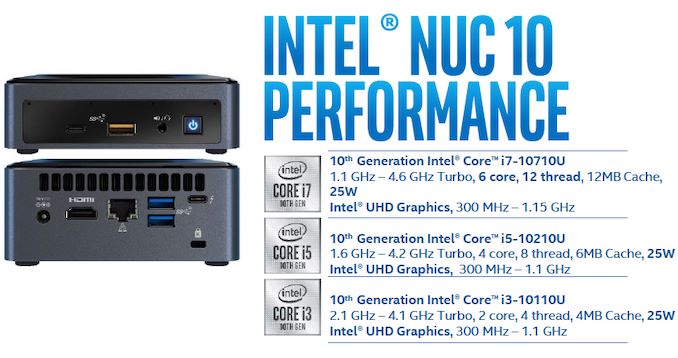
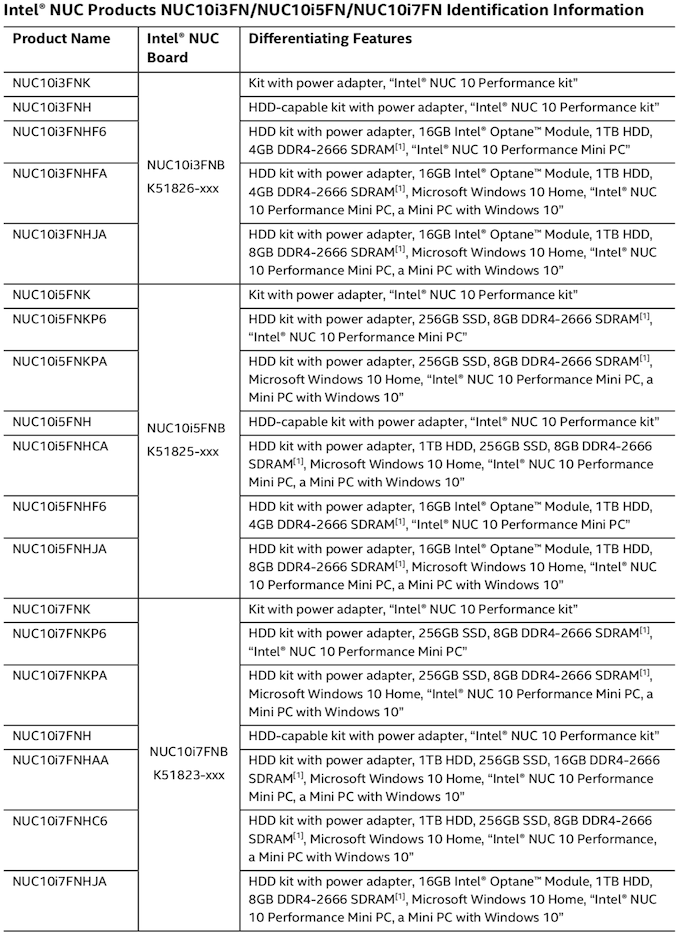
Intel has officially confirmed plans to release its NUC10 ‘Frost Canyon’ ultra-compact form-factor PCs with mobile Comet Lake processors. The main selling point of the systems will be CPUs with up to six x86 cores as well as support for up to 64 GB of DDR4 memory, offering the laptop platform in a pint-sized desktop form factor. Intel’s NUC 10 ‘Frost Canyon’ lineup is based on Intel’s 10th Generation Core i3-10110U/i5-10210U/i7-10710U processors with two, four, or six cores, as well as UHD Graphics. The NUC family will include three base versions: the slim NUC10FNK with an M.2 slot for SSDs, the taller NUC10FNH with a 2.5-inch bay and an M.2 slot, as well as the NUC10FNB motherboard enabling third parties to build clones of the Frost Canyon in different chassis. In total, Intel will offer over 20 different NUC 10 SKUs (PCs, kits, boards), offering different specifications, level of performance and pricing. All systems will use CPUs featuring a configurable TDP-up of 25 W and therefore the processors will work at higher Turbo clocks all the time granted that they will be cooled using an active cooling system.
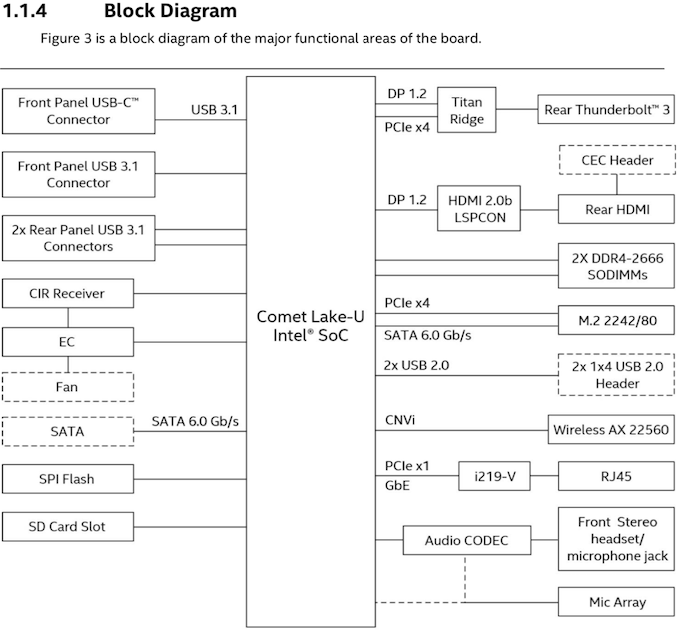
The Intel NUC 10 platform will have a Thunderbolt 3 port controlled by Intel’s Titan Ridge chip, USB 3.2 Gen 2 and USB 2.0 Type-A ports, GbE, HDMI, and the usual audio connectors. As an added bonus, the Frost Canyon NUC PCs are also equipped with far-field microphones supporting Amazon’s Alexa and Microsoft’s Cortana assistants. With rather powerful processors and sophisticated connectivity, Intel’s Frost Canyon UCFF PCs look very potent for various applications except gaming as Intel’s UHD Graphics can barely satisfy those who play demanding titles. Good news is that the systems feature a Thunderbolt 3 port that can be used to connect an external graphics box, but the latter tend to be rather expensive. Intel’s NUC 10 will be available in the coming weeks. Prices have not yet been published.
Related Reading: Source: Intel (Thanks to SH for the tip) | ||||||||||||||||||||||||||||||||||||||||||||||
| 9:00a | AMD Clarifies "Best Cores" vs "Preferred Cores" Discrepancies For Ryzen CPUs Over the last several weeks there’s been increasing discussions in the AMD enthusiast community about how the company’s new Ryzen 3000 processors interact with Windows, and in particular on how the new CPUs’ boost behaviour behaves in relation to a discrepancy between what tools such as Ryzen Master showcase as the best CPU cores, and what operating systems such as Windows interpret as being the best CPU cores. Today AMD is officially commenting on the situation and why it arises, whilst also describing what they’re doing to remedy the discrepancies in the data. | ||||||||||||||||||||||||||||||||||||||||||||||
| 10:00a | SK Hynix Sampling 128-layer 3D NAND SSDs
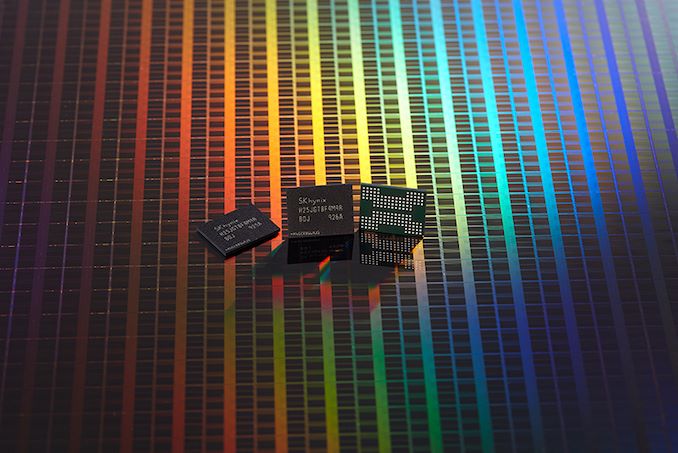
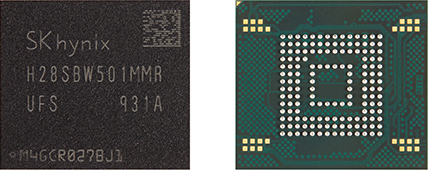
SK Hynix announced this week that they have started sampling products based on their 128-layer 3D NAND flash memory, which will soon start showing up in end-user devices. A year ago, they launched their 96-layer 5th generation 3D NAND, but low prices prompted them to cut output and their 4th generation 72L 3D NAND is still their main flash product. SK Hynix announced back in June that their 128L 3D NAND had moved from development to mass production, and now it has been incorporated into SSDs and UFS modules that are sampling to major customers. The 96L generation represented a major technological advance for SK Hynix, with a switch to a denser "peripheral under cell" structure and a big jump in per-die IO speeds. The peripheral under cell structure is a significant enough change that SK Hynix used it as justification for branding their flash as "4D NAND", but Intel and Micron have been doing pretty much the same thing since their first generation of 3D NAND. The 128L generation from SK Hynix promises a further speed increment from 1.2GT/s to 1.4GT/s (though this may not be achieved in the first round of products due to lagging controller support), and debuts with an industry-leading 1Tb (128GB) capacity TLC die. In the near term, SK Hynix plans to introduce the new generation of 3D NAND into market segments with the highest margins, while their more mature 72 and 96-layer processes stick around for the more cost-sensitive products.
Using eight of those 128L 1Tb TLC dies, SK Hynix has developed a 1TB USF 3.1 module that is just 1mm thick. They expect smartphones using this storage to be in mass production in the second half of 2020.
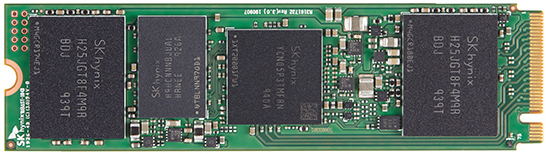
In the client SSD market, OEMs are now qualifying SK Hynix's latest generation M.2 NVMe SSDs with capacities of up to 2TB and power draw of around 3W, compared to 6W for their previous generation SSDs that use 96L TLC. SK Hynix expects these SSDs to start showing up in notebooks in the first half of 2020. SK Hynix's NVMe SSD controller is still using PCIe 3.0 instead of PCIe 4.0, unsurprising given their focus on mainstream market segments and power efficiency. This SSD is described as operating the flash with a 1.2GT/s interface running at 1.2V, so either SK Hynix's chips aren't actually ready to run at 1.4GT/s as planned, or they backed off a bit to save power.
The 128L 3D NAND will take a bit longer to work its way into the enterprise storage market. SK Hynix is planning to offer capacities of up to 16TB in the EDSFF E1.L form factor; mass production of these drives is planned for the second half of 2020. As with the client NVMe SSDs, SK Hynix is still using PCIe 3.0 instead of PCIe 4.0, but they plan to deliver support for the latest NVMe 1.4 protocol. The enterprise SSD market is a particular area of focus for SK Hynix. The arrival and cost-effectiveness of their 72-layer enterprise SSDs helped them increase market share to 10.3% for Q2 of this year compared to just 1.8% the year before, and they hope to keep the momentum going. All of the above-mentioned products use SK Hynix controllers in addition to SK Hynix memory (NAND and DRAM). They are one of just three companies capable of this degree of vertical integration, and for years Samsung has been showing just how powerful that strategy can be. SK Hynix has been held back by poor execution for their first several generations of 3D NAND, but lately they seem to have been catching up. We recently tested their consumer SATA drive and found its performance to be adequate and the power efficiency to be quite good; we also have some enterprise drives on the way from SK Hynix to see how they are doing in that market. Related Reading: | ||||||||||||||||||||||||||||||||||||||||||||||
| 5:00p | Oculus Link Software Available: Oculus Quest Can Now Tether to PCs
Oculus VR this week started to distribute its Oculus Link software, enabling owners of the standalone Oculus Quest VR headsets to connect them to gaming PCs and play games originally developed with the Rift and Rift S in mind. For now, VR gamers will have to use a quality third-party USB 3.2 Gen 1 Type-C cable, but later on the company promises to release its own long cable. From now, a beta version of the Oculus Link application for Oculus Quest is available from Oculus VR as a part of the Gear VR Build 11.0 software update. To connect the Oculus Quest to a PC, one needs a high-quality USB 3.2 Gen 1 Type-C cable, though since most USB 3.x cables are around 1.5 meters long, you'll want to track down a longer specialty cable. Otherwise, Oculus promises to release a five-meter long USB-C cable in the near future to provide more freedom. Meanwhile, PC users will want to pay particular note to the fact that only NVIDIA cards are supported with the Link software at this time; Oculus will be adding AMD support at a later date. The Oculus Quest is a standalone VR HMD featuring a display of a 3200×1440 (1600×1440 per eye) and powered by the Qualcomm Snapdragon 835 application processor. The device comes with Touch controllers bundled with the original Rift, yet relies on its inside-out 6-degree-of-freedom (6DoF) positional and controller tracking that does not require any external sensors. In theory, making Oculus Rift games available to owners of the Oculus Quest and a compliant PC is a big deal for Oculus VR as it expands total available market of VR PC games and therefore strengthens the entire platform. This clearly does not hurt in the light of the fact that the Half-Life: Alyx game is coming and many fans of the series will have to use a VR headset to enjoy it. Meanwhile, it remains to be seen how good the actual PC gaming experience offered by the Oculus Quest will be provided that it has a higher-resolution display (when compared to both Rift and Rift S) and uses a different tracking system. Related Reading: Source: Oculus VR | ||||||||||||||||||||||||||||||||||||||||||||||
| 6:00p | Philips Unveils Brilliance 439P9H SuperWide 32:10 Curved Prosumer Monitor
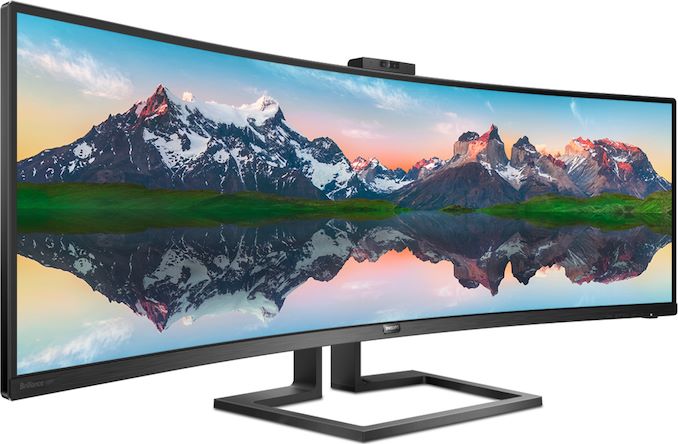
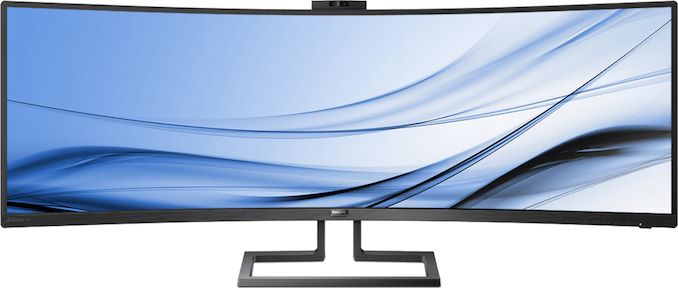
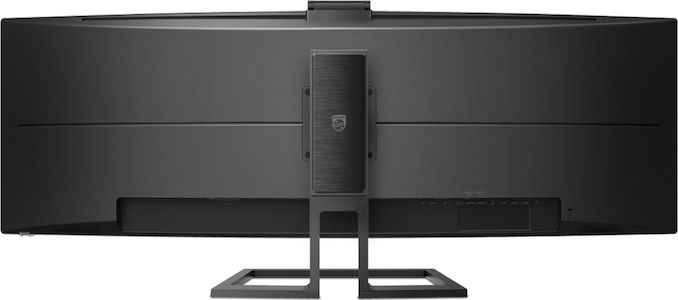
Philips this week announced a new ultra-wide display aimed at prosumers. The curved Brilliance 439P9H brings together a large 32:10 aspect ratio panel with USB Type-C docking capabilities, an integrated KVM switch, a wide color gamut, factory calibration, and more. And while the monitor is not aimed at color-critical workloads, many users who need accurate colors may actually consider it. The Philips Brilliance 439P9H uses a curved VA panel featuring a 1.8-meter radius curvature, and a 3840x1200 resolution. Other characteristics of the LCD include a max brightness of 450 nits, a 3000:1 contrast ratio, 178º/178º vertical/horizontal viewing angles, a 4 ms GtG contrast ratio, and up to a 100 Hz refresh rate. The display can reproduce 123% of the sRGB, 95% of the DCI-P3, 91% of the AdobeRGB, and 105% of the NTSC color spaces. Furthermore, it comes factory calibrated to a Delta<2 accuracy in case of the sRGB color gamut.
The Brilliance 439P9H has a rather interesting positioning. Being a P-line monitor, it is aimed at professionals and prosumers, which is why it has a built-in KVM switch to appeal to those who are going to use the display instead of two smaller LCDs with two PCs. It also offers a pop-up 2 MP webcam with IR sensors for Windows Hello, USB-C docking with up to 90 W power delivery, a GbE port, built-in speakers, and a USB 3.0 hub. On the other hand, VESA DisplayHDR 400 certification and Adaptive-Sync support will certainly please gamers. Given the intersection of features, Philips clearly wants to address a rather wide audience of prosumers with its 439P9H, yet not exactly professionals with color-critical workloads or demanding gamers with a need for an ultra-high refresh rate.
Given the nature of the Brilliance 439P9H, it is not surprising that Philips equipped it with a host of ports, including two DisplayPort 1.4 inputs, one HDMI 2.0b port, and two USB 3.2 Gen 1 Type-C (with DP Alt Mode and 90 W PD) inputs. Furthermore, it also has a quad-port USB 3.0 hub, a GbE port, and a headphone output. One indisputable advantage of the Brilliance 439P9H is its stand that can adjust height, swivel, and tilt. Typically, ultra-large displays come with basic stands that can only regulate tilt, so the Brilliance 439P9H stands out of the crowd.
The monitor is being first released in the UK for £879. Which will likely translate into an MSRP of around $950 in the US. Related Reading: Source: Philips | ||||||||||||||||||||||||||||||||||||||||||||||


| << Previous Day |
2019/11/21 [Calendar] |
Next Day >> |