[Most Recent Entries] [Calendar View]
Monday, January 6th, 2020
- Quick & Deadly: Alienware 25 (AW2521HF) 240 Hz Fast IPS Monitor Revealed
- 280 Hz Fast: ASUS Releases TUF Gaming VG279QM IPS Monitor w/ 280 Hz
- Supersonic: ViewSonic’s Elite XG270 240 Hz IPS Monitor w/ VRR & HDR
- Need for Speed: The LG UltraGear (27GN750) 240 Hz IPS Monitor with G-Sync
- Fast & Furious: The Alienware 27 (AW2720HF) 240 Hz IPS Monitor with FreeSync
- HP's Omen X 27: A 240Hz QHD Monitor with FreeSync 2 HDR
- ADATA Launches Premier ONE UHS-II SD Cards: 3D MLC, Up to 290 MB/s, V90 Labels
- Sony Announces SF-G UHS-II SD Cards: Up to Nearly 300 MB/s Read/Write Performance
- FreeTail EVOKE Pro SDXC UHS-II Memory Card Capsule Review
- Lenovo Unveils ThinkVision Creator Extreme P27: A Professional Monitor with Mini LED FALD
- NEC's MultiSync PA311D, a 10-bit IPS 4K Professional Monitor
- Dell’s Introduces UltraSharp 27-Inch 4K Monitor (UP2720Q) With Integrated Colorimeter
- Philips Brilliance 272P7VUBNB: A Sub-$350 27-Inch 4K IPS Monitor with 65W USB PD & GbE
- CES 2020: Dell’s New UltraSharp U2520Q & U2720Q USB-C Monitors for Designers
- Lenovo Unveils ThinkVision Creator Extreme P27: A Professional Monitor with Mini LED FALD
- ASUS ProArt PA32UCG: The Ultimate Mini LED 4K 120 Hz Monitor with HDR 1600
- ASUS Mini LED Professional Monitors Update: Available This Year
- Acer Joins Mini LED Monitor Club with Professional-Focused ConceptD CM7321K
- ASUS at CES 2019: ProArt PA32UCX 4K Monitor with 1000-Zone FALD Unveiled
- AUO’s Mini LED Monitors: 32-Inch 4Kp144, 65-Inch 4Kp144, VR, & Others
| Time | Event | ||||||||||||||||||||||||||||||||||||||||||||||||||||||||||||||||||||||||||||||||||||||||||||||||||||||||
| 12:05a | Nixeus Announces NX-EDG274K: A 27" 144Hz FreeSync-Certified 4K Gaming Monitor
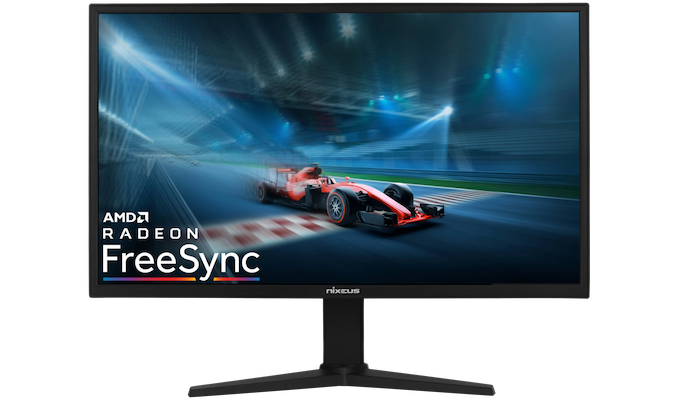
Nixeus is announcing the addition of a 27" 4K monitor to their EDG series at CES 2020. The NX-EDG274K gaming monitor sports a 3840x2160 panel, a 144 Hz maximum refresh rate, and AMD’s FreeSync dynamic refresh rate technology. It comes with two DisplayPort 1.4 connections with VESA Display Stream Compression Technology in order to support the massive bandwidth required for driving 4K resolution at 144 Hz. The monitor allows users to adjust the adaptive over-drive and anti-ghosting FreeSync settings with OSD settings. 128 distinct levels are available for users to have fine-grained control. The Nixeus NX-EDG34 display builds upon a AHVA panel with a 3840×2160 resolution, and is capable of reaching 350 nits typical brightness (up to 400 nits in HDR mode), a 1000:1 contrast ratio, 178°/178° viewing angles, and a 4 ms GtG response time. In terms of refresh rates, the monitor's maximum rate is 144 Hz, and in variable refresh mode it operates in a 48 Hz – 144 Hz range. The LCD can display 16.7 million colors and supports an HDR mode, which suggests a wider-than-sRGB color gamut. In addition to the two DisplayPort 1.4 connections, the monitor also comes with two HDMI 2.0 connections capable of driving 3840x2160 at 60 Hz. The monitor also comes with stereo speakers and a 3.5mm audio output jack. The monitor is expected to go on sale later this quarter. Pricing is yet to be made public.
Based on the specifications, the closest match for a monitor already in the market is the Acer Nitro XV273K. Given that Nixeus prices their offerings very competitively, we expect the street price of the NX-EDG274K to be lower than the $810 that the Acer Nitro XV273K is being sold for. | ||||||||||||||||||||||||||||||||||||||||||||||||||||||||||||||||||||||||||||||||||||||||||||||||||||||||
| 1:00a | Intel at CES 2020: 45W 10th Gen Mobile CPUs Soon, Tiger Lake with Xe Graphics Later As we move into 2020, there is a lot of talk about what Intel’s 2020 plans will be. Discussions about the expansion of Intel’s 10nm process node products, such as Ice Lake, beyond the mobile platform are often very heated, especially when we have limited information out of the company directly. For CES 2020, Intel has disclosed a couple of products for consumption: moving its 10th Gen mobile CPU line in to 45 W hardware, but we also had a couple of details about the post-Ice Lake hardware, called Tiger Lake. | ||||||||||||||||||||||||||||||||||||||||||||||||||||||||||||||||||||||||||||||||||||||||||||||||||||||||
| 4:00a | Seagate Expands External Flash Storage Lineup with FireCuda Gaming SSD and BarraCuda Fast SSD
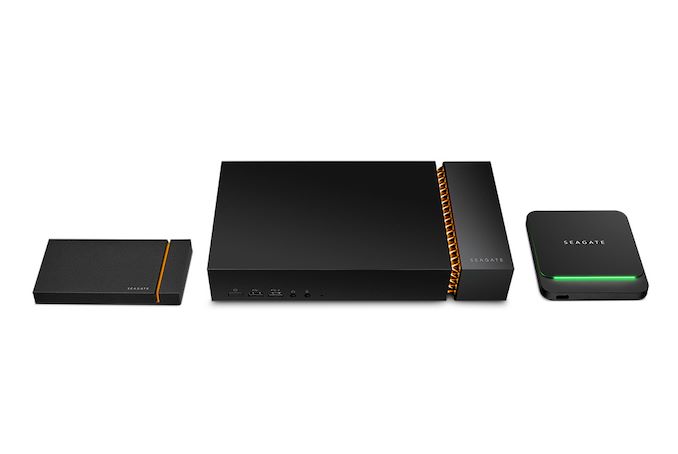
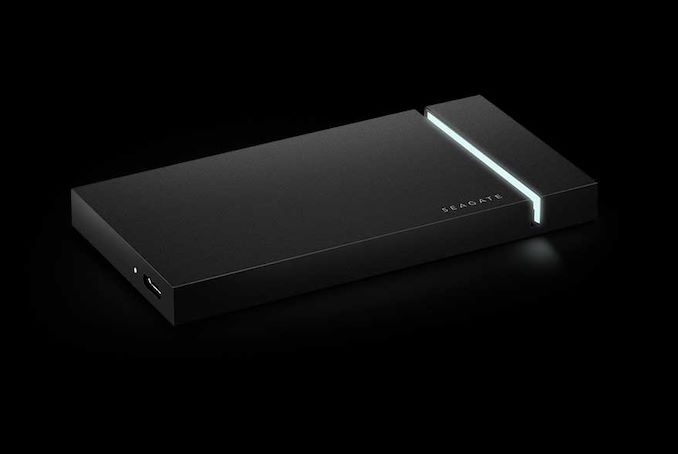
Late last year, Seagate had launched the FireCuda Gaming Dock, a 4TB external hard drive / Thunderbolt 3 dock with a Titan Ridge controller. It stood out in the Thunderbolt 3 peripheral market for two different aspects - a number of USB 3.1 Gen 2 10 Gbps ports, and a PCIe 3.0 x4 M.2 NVMe SSD slot inside the dock. At CES 2020, Seagate is further expanding their external storage solution set for gamers with the FireCuda Gaming SSD. Equipped with a USB 3.1 Gen 2x2 bridge chip and a FireCuda NVMe 510 SSD inside, the external SSD can reach speeds of up to 2000 MBps. The design of the chassis is similar to that of the FireCuda Gaming Dock, as seen above. It also brings in the option of controllable RGB lighting with the Seagate Toolkit.
The FireCuda Gaming SSD will be available in 500GB ($190), 1TB ($260), and 2TB ($500) capacities in March. The product will be going against the WD_BLACK P50 which is already available in retail for $180, $250, and $500 for the same capacity points. It must be noted that USB 3.1 Gen 2x2 host ports are not currently widespread yet, and hence, Seagate is not losing much by delaying its entry into that market segment.
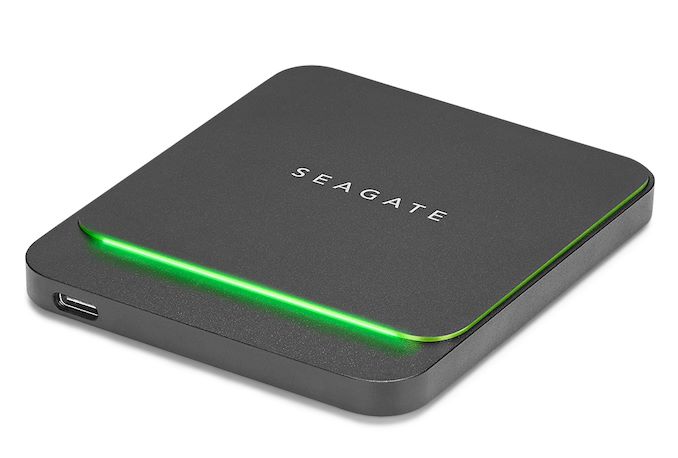
The new Seagate BarraCuda Fast SSD is a follow-up to the Seagate Fast SSD that we reviewed in late 2018. Even though it wasn't explicitly mentioned, we believe that the new BarraCuda Fast SSD uses newer 96L 3D NAND while retaining the same SATA SSD controller and USB 3.1 Gen 2 bridge chip. Rated speeds remain the same at up to 540 MBps, but the pricing is down to $95, $170, and $300 for the 500GB, 1TB, and 2TB capacity points. | ||||||||||||||||||||||||||||||||||||||||||||||||||||||||||||||||||||||||||||||||||||||||||||||||||||||||
| 8:00a | Gone in 240 Hz: Lenovo’ Legion Y25-25 ‘Fast IPS’ Monitor w/ FreeSync at CES 2020
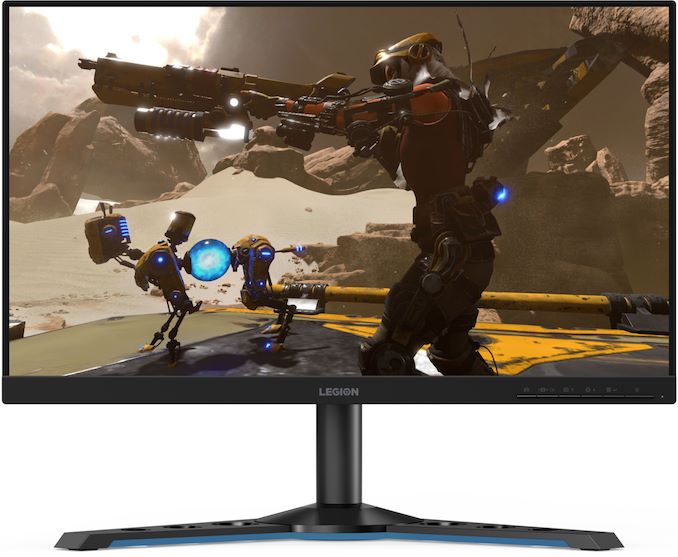
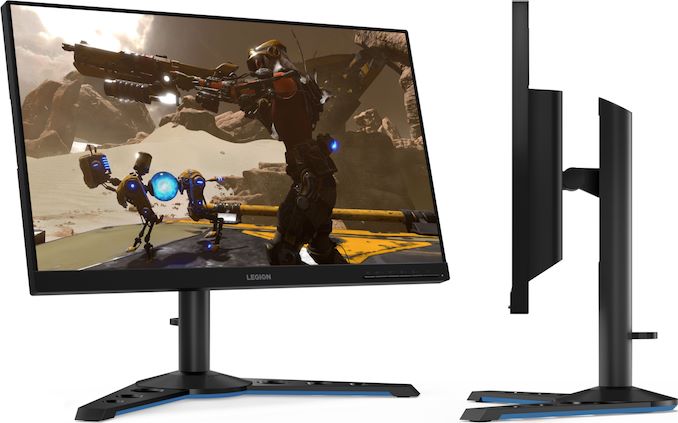
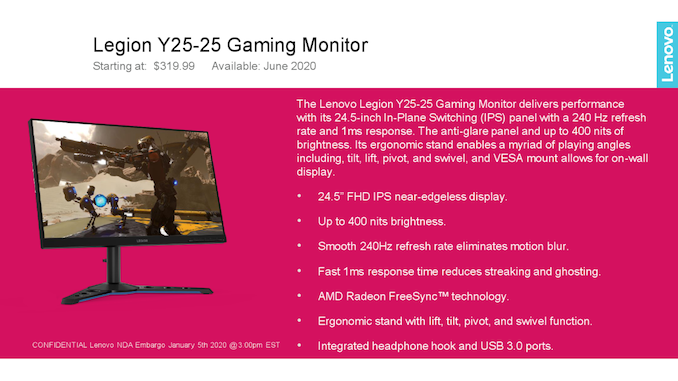
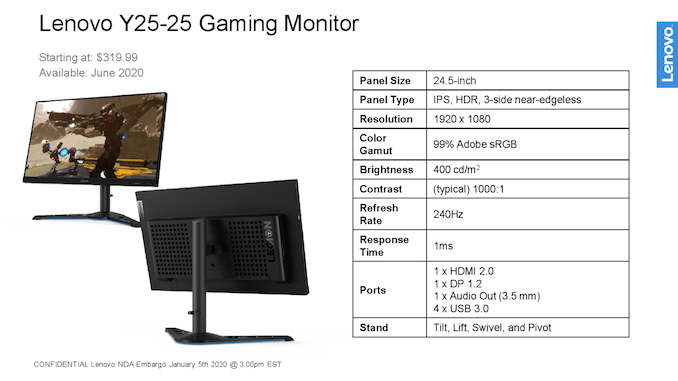
Lenovo seems to be getting more serious about gaming than it has ever been and its CES announcements just prove the theory. In a bid to address gamers demanding no-compromise performance, the company has announced its Legion Y25-25, a 24.5-inch Full-HD gaming display that uses a ‘Fast IPS’ panel featuring fine color reproduction and a 240 Hz maximum refresh rate. Traditionally, 240 Hz displays relied on TN panels that have their downsides when it comes to colors and viewing angles, making them unsuitable for some users. But with the arrival of Full-HD Fast IPS panels from AU Optronics, it is likely that popularity of 240 Hz LCDs will get higher. With its Legion Y25-25, Lenovo is among the first suppliers to introduce a 24.5-inch IPS display featuring a 1920x1080 resolution, 400 nits max brightness, 178°/178° viewing angles, a variable refresh rate of up to 240 Hz (with AMD’s FreeSync compatibility), and a 1 ms GtG response time.
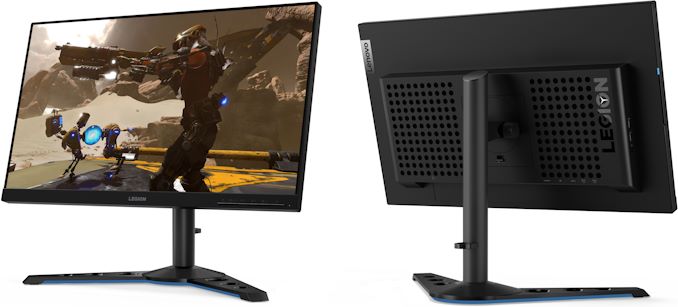
From industrial design point of view, the Legion Y25-25 takes a page from Lenovo’s book and therefore has a minimalist look. The monitor has extremely thin bezels (enabling to build ‘borderless’ multi-monitor configurations), a stand that can adjust height, tilt, swivel, and even supports portrait mode, as well as a headphone hook. As for connectivity, the Legion Y25-25 has a DisplayPort 1.2. an HDMI 2.0, a multi-port USB 3.0 hub, and a headphone jack.
Lenovo plans to start sales of the Legion Y25-25 sometimes in June for $319.99. While the product will not be the first 24.5-inch IPS display with a 240 Hz refresh rate on the market, its price looks rather competitive given its capabilities.
Related Reading: Source: Lenovo | ||||||||||||||||||||||||||||||||||||||||||||||||||||||||||||||||||||||||||||||||||||||||||||||||||||||||
| 9:00a | TP-Link Updates Deco Mesh Networking Family with Wi-Fi 6
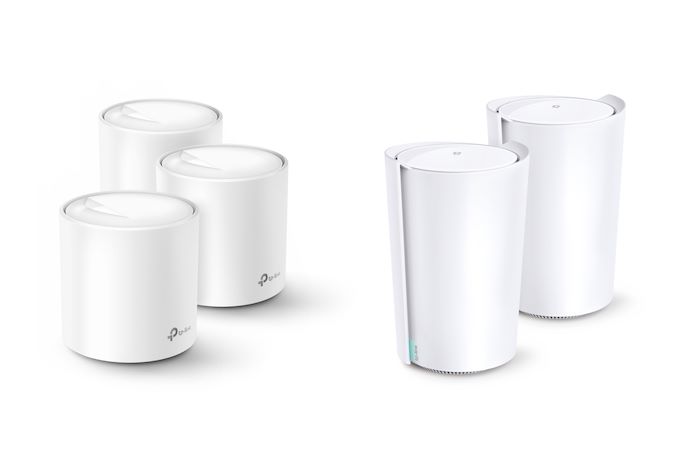
TP-Link is announcing three new products in their Deco mesh networking lineup at CES 2020 - the Deco X20, X60, and X90. All three come with Wi-Fi 6 (802.11ax) capabilities. The highest-end is the Deco X90 with two 5 GHz radios and one 2.4 GHz one. It comes with the AX6600 tag (574 Mbps @ 2.4 GHz, 1201 Mbps @ 5 GHz, and 4804 Mbps @ 5 GHz), and TP-Link claims that it can serve up to 200 devices in a 6000 sq. ft. area. The WAN port is a 2.5 Gbps port, and the unit features dynamic backhaul technology to shift communication between the mesh units to any of the three available bands. Availability of the Deco X90 is slated for April 2020 at a $450 price point for a kit of two units. The Deco X60 is an AX3000 class mesh unit (574 Mbps @ 2.4 GHz, 2402 @ 5 GHz). TP-Link indicates that this can serve up to 150 clients in a 5000 sq. ft. area. The LAN port is a gigabit port. The X60 will make it to the market in March 2020 with a $270 price point for a pack of two units. The Deco X20 is a budget offering ($190 for a pack of 2, and $270 for a pack of 3) in the AX1800 class (574 Mbps @ 2.4 GHz, 1201 Mbps @ 5 GHz). It will also come to the market in March 2020. Compared to the Wi-Fi 5 Deco units, we see that the z-height is considerably more (particularly for the Deco X90 units) to better accommodate the antennae and radios. All the Deco Wi-Fi 6 units include full Wi-Fi 6 capabilities including OFDMA support and MU-MIMO on both uplink and downlink sides. They also include the optional subscription-based HomeCare Pro for cybersecurity (both antivirus and IoT devices). The mesh networking market is highly competitive, and it bodes well for TP-Link to target a wider budget range compared to offerings such as Netgear's Orbi. | ||||||||||||||||||||||||||||||||||||||||||||||||||||||||||||||||||||||||||||||||||||||||||||||||||||||||
| 9:08a | Kingston’s Fast SD Cards at CES 2020: UHS-II at 300 MB/s & UHS-I at 170 MB/s
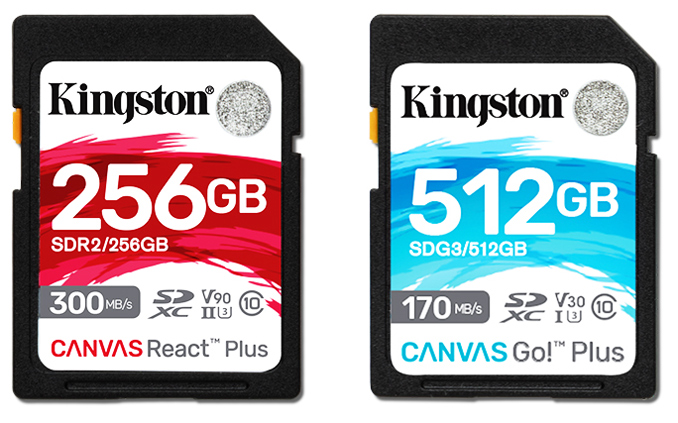
Kingston has introduced several new high-performance Secure Digital memory cards at CES 2020, as well as new card readers. This time around the company decided to focus on SD cards designed for performance demanding users, so the lineup includes UHS-I DDR-200 as well as UHS-II devices. Kingston’s Canvas React Plus memory cards with a UHS-II interface are rated for up to 300 MB/s sequential read speeds and are set to be available in 128 GB, 256 GB, and 512 GB configurations. The Canvas React Plus UHS-II cards are also compliant with Video Speed Class V90 specification, which mandates a minimum write speed of 90 MB/s to allow recording of Ultra-HD and 360° video. Traditionally for UHS-II cards, they can work with UHS-I hosts, but to show their full performance potential they require a UHS-II host that uses extra pins on the cards. The UHS-II interface enables data transfer rates of up to 312 MB/s, and was first introduced as a part of the Secure Digital 4.0 specification back in mid-2011. Partly because UHS-II requires additional pins (and redesigned hosts), as well as for some other reasons, the technology has not really taken off on the mass market just yet. To date, only a handful of companies have introduced their SD cards with a UHS-II interface and now Kingston is one of them. Another interesting introduction of Kingston is its Canvas Go! Plus family of SD cards featuring a UHS-I interface that supports a sequential read speed of up to 170 MB/s courtesy of a DDR-200 transfer rate. Also, the card also carries the V30 badge, indicating support for a minimum write speed of 30 MB/s. One thing to note is that DDR-200 is not covered by the UHS-I specification and officially the UHS-I bus only supports up to 104 MB/s throughput. Meanwhile, SanDisk/Western Digital have offered UHS-I cards along with card readers that support a DDR-200 operation for years. As it turns out, Kingston has decided to join the UHS-I/DDR-200 club to compete head-to-head against its rival. Along with its new cards, Kingston introduced its latest MobileLite Plus readers designed to support the maximum speeds that the new devices have to offer. Kingston did not reveal when it plans to make its new Canvas React Plus and Canvas Go! Plus cards as well as MobileLite Plus readers available, but it is reasonable to expect them to hit the market this year. Related Reading: Source: Kingston | ||||||||||||||||||||||||||||||||||||||||||||||||||||||||||||||||||||||||||||||||||||||||||||||||||||||||
| 9:35a | TP-Link Expands Wi-Fi 6 Lineup, Introduces IoT Security with HomeCare Pro
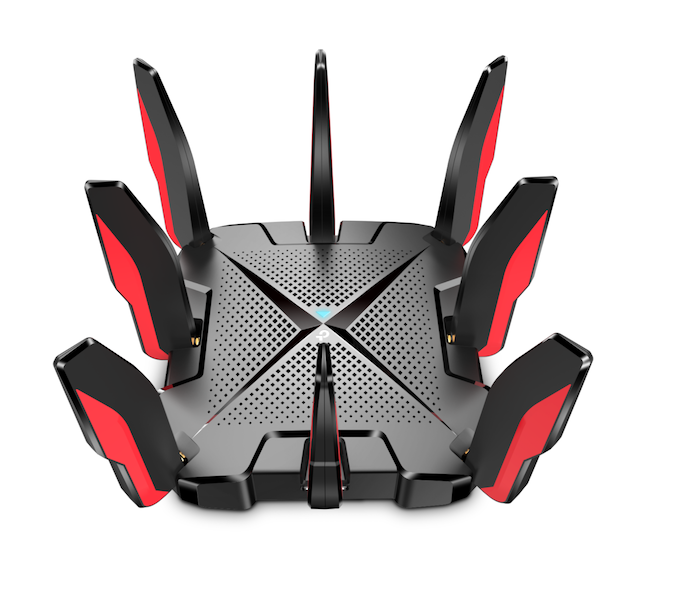
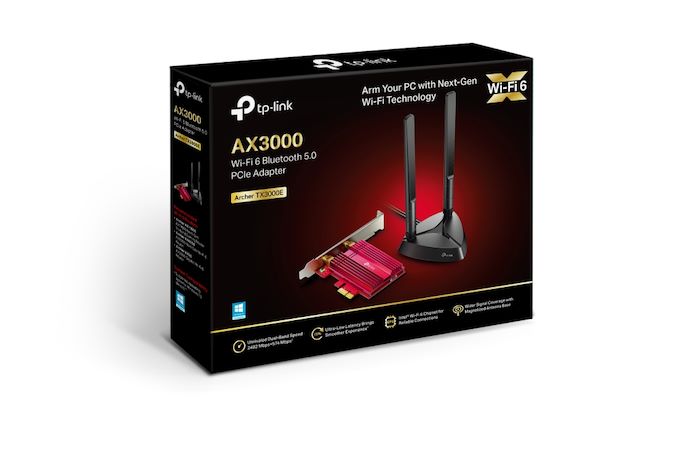
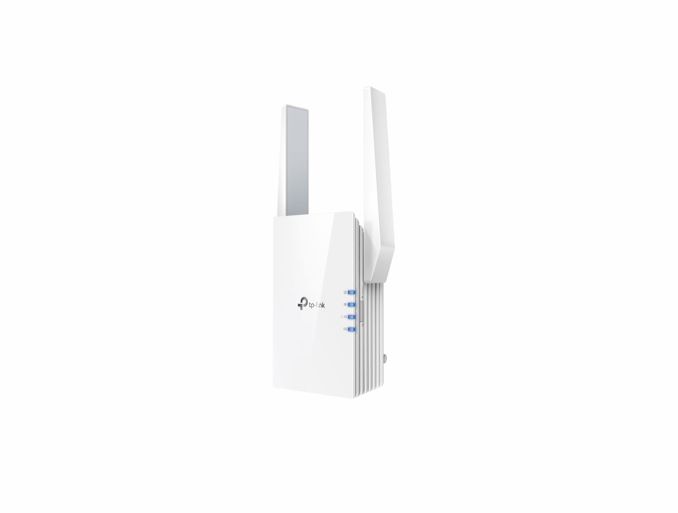
TP-Link is announcing a slew of upgrades to their Wi-Fi 6 product stack at CES 2020. We have already covered the updates to the Deco Mesh Networking family in a separate piece. On the routers side, we have the Archer AX90 and GX90 (both in the AX6000 class). The RE505X AX1500-class is the new product in the range extender line. TP-Link is also introducing an AX3000 PCIe card (Archer TX3000E) The Archer AX90 uses three bands to achieve the AX6000-class rating (1201 Mbps @ 5 GHz + 4804 Mbps @ 5 GHz + 574 Mbps @2.4 GHz). It comes with a networking SoC featuring a 1.5GHz quad-core processor (making it look likely to be based on a Broadcom BCM47622 design). It comes with a 2.5 Gbps WAN/LAN port, a 1 Gbps WAN/LAN port, three Gigabit LAN ports and both a USB 3.0 and a USB 2.0 port. The eight antennae are quipped with beamforming support. The router also supports the newly update premium anti-virus and IoT security feature (TP-Link HomeCare Pro). It is priced at $300 and will be available in April 2020. The Archer GX90 is the gamers' version of the AX90, and features a different external design as well as a modified UI. The 4x4 5 GHz band is dedicated as a gaming band, and there are software features such as 'Game Accelerator' to provide QoS functionality.
The GX90 is priced at $330 and will come to market in late Q2 2020. The Archer TX3000E PCIe adapter is a PCIe 3.0 x1 Wi-Fi 6 card based on the Intel AX200 chipset. It features 1024-QAM and 160 MHz-wide channel support while also including Bluetooth 5.0. It also comes with a flexible external antenna.
The TX3000E is priced at $50 and will be available later this month. The RE505X range extender is compatible with TP-Link's OneMesh family. It is an AX1500 dual-band device that can also act as an access point. The TP-Link Tether app can be used for hassle-free configuration of the extender.
The RE505X is priced at $70 and will be available in March 2020. Overall, TP-Link has augmented their Wi-Fi 6 product stack with compelling budget offerings. As Wi-Fi 6 becomes more widespread, this strategy could help TP-Link gather greater mind and market share, particularly in North America. On the cybersecurity side, TP-Link also announced the Avira-powered HomeCare Pro network security solution. Similar to solutions from other vendors like Netgear's BitDefender-powered Armor and Securifi's IoT Security feature, HomeCare Pro inspects and monitors connected devices for vulnerabilities and protection against unexpected / suspicious network traffic. TP-Link's existing HomeCare solution lacked fine-grained IoT device protection and parental controls, and this is addressed by HomeCare Pro. The capabilities offered by HomeCare Pro include anti-virus (across multiple end-device platforms, with blocking of malicious sites and intrusion detection), IoT security (safety and vulnerability checks), and parental controls (content filtering, time limits etc.). HomeCare Pro is also able to provide comprehensive reports related to the network behavior of each connected device. The feature is set to be offered on a trial basis with all TP-Link Wi-Fi 6 products starting in late Q1 2020. Following this, the feature can be kept active on a subscription basis for $6/mo. or $55/yr. | ||||||||||||||||||||||||||||||||||||||||||||||||||||||||||||||||||||||||||||||||||||||||||||||||||||||||
| 10:00a | Intel’s 10th Gen 45W Core-H CPUs Show Up in the Acer ConceptD 7 Ezel
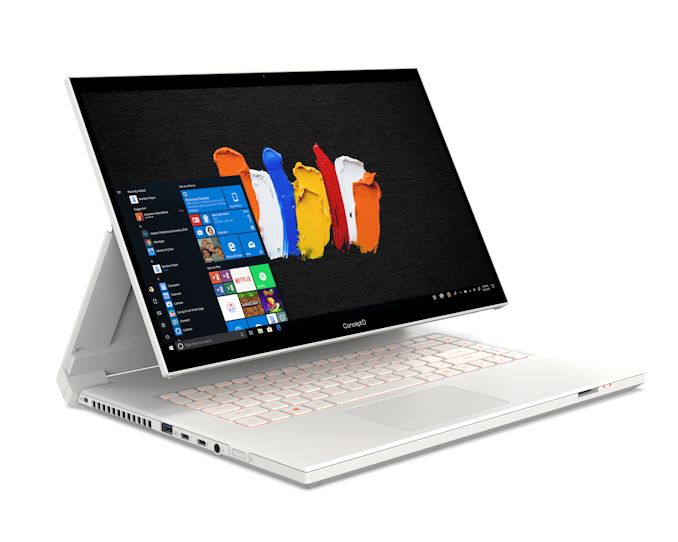
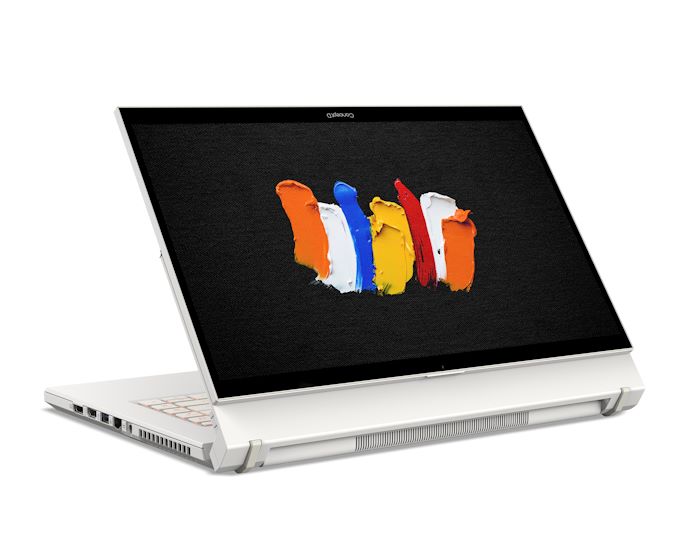
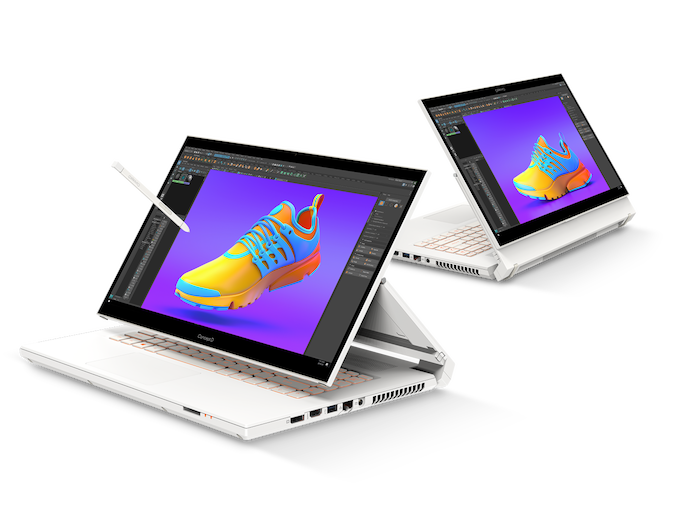
For users that regularly track Intel’s laptop process lines, then you will likely be used to the nomenclature that Y-series is sub 10 W, U-series is usually 15 W but sometimes 28 W, and the H-series sits at 35 W and 45 W levels. We often see the Y-series go into ultra-portables, the U-series in the flagship devices, and the H-series always go into something more substantial that requires a lot of grunt and where performance takes precedence over portability. To date Intel has only released the U-series hardware on its 10th Gen, so the fact that Acer gave us a pre-briefing on one of its new laptops and stated that it has a 10th Gen H-series CPU was quite a shock. The new CPU will go into the company’s new Ezel line of laptops, designed for content creators: the name Ezel is a play on words of ‘Easel’, as in a painters’ easel or tripod. Before we get into the new Ezel, it should be noted that Intel technically has two families of CPUs which it calls ‘10th Gen’, one based on its 14++ manufacturing node called Comet Lake, and one based on its 10+ node called Ice Lake. Even though Acer doesn’t state specifically, we can 99.95% guarantee that we are talking about a Comet Lake processor here, based on the older Skylake microarchitecture. This is primarily because Intel has this week confirmed to us that its 28 W Ice Lake processor is only now ready for its partners – so a 45 W variant would absolutely not be ready at this time. Intel has already released 9th Gen 45 W mobile processors, and Comet Lake is just a tweaked variant of those, so it stands to reason that these are Comet Lake.
As for the Ezel, it will come in two varieties: the Ezel and the Ezel Pro. Both devices will get 45 W processors, however the standard Ezel will use consumer hardware, such as a Core i9 processor, non-ECC memory and GeForce RTX graphics, while the Ezel Pro will use a H-series Xeon E processor, ECC memory, and Quadro RTX graphics. The Ezel builds on Acer’s design of an adjustable display that can rotate about a horizontal axis, allowing a user to bring it closer to them rather than having the display connected at the hinge of the base of the laptop. This allows for closer inspection of the screen in a more comfortable position to a traditional laptop. On a personal level, I’d point out that it is worth seeing in person as to how nice this sort of monitor functionality is really nice to work with. Acer is also bundling the Ezel with a Wacom EMR pen, making the device great for artists and designers.
The display is a 15-inch 4K IPS panel, with a 400-nit brightness and factory color calibration, good for reproducing 100% of the Adobe RGB color gamut with an accuracy of dE < 2. Users can also manipulate the color settings through software in the ConceptD Palette. The display uses Gorilla Glass 6, allowing for even brash artists, and comes with an anti-glare coating. For memory and storage, there will be up to 32 GB of DDR4, and up to 2TB PCIe SSDs (that’s plural). The idea is that this hardware should be able to edit 4K video in real time, either for gig workers on the Ezel, or businesses with the Ezel Pro. Both laptops are part of the RTX Studio platform, which means that the hardware has gone through NVIDIA’s own testing for creator app validation.
Connectivity on both devices includes two TB3 ports, an SD card slot, DP1.4, HDMI 2.0, and a fingerprint sensor. Acer says that the laptop has been designed to run all-out at under 40 dB. Unfortunately no battery capacity or weight was mentioned. Acer did give a suggesting pricing and timeframe for the Ezel and Ezel Pro, however we were emailed after our briefing to state that they’re changing it to ‘TBD’ depending on design finalization in order to align with other releases (Intel’s 10th Gen H-Series might not have a fixed date yet, as at the time of writing they have not even been announced. As it is CES, Intel might be announcing them as part of the show). | ||||||||||||||||||||||||||||||||||||||||||||||||||||||||||||||||||||||||||||||||||||||||||||||||||||||||
| 10:50a | LG at CES 2020: LG's Press Conference Live Blog 8:00AM PT Hello everyone. We're here at CES 2020 in Las Vegas, starting off the press event Monday with LG's conference. We're expected to hear the newest from LG's consumer electronics products from all ranges. Stay tuned for the event to start at 8:00AM PT. | ||||||||||||||||||||||||||||||||||||||||||||||||||||||||||||||||||||||||||||||||||||||||||||||||||||||||
| 11:30a | NVIDIA Releases CES Game Ready Driver: Variable Rate SSAA for VR, Max Frame Rate Control, & More
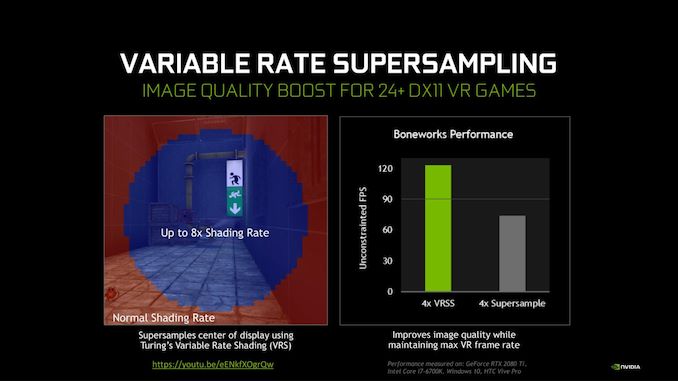
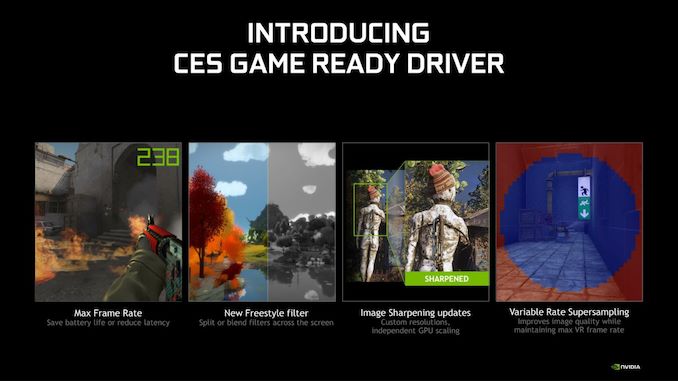
While NVIDIA doesn’t have any new GPU hardware to show off at this year’s CES, the company is not coming entirely empty-handed. Along with a couple of monitor announcements, NVIDIA is also releasing a new video driver today, which they’re calling the CES Game Ready Driver, which will be introducing a few new quality of life improvements for GeForce users. The marquee addition for the latest driver is what NVIDIA is calling Variable Rate Supersampling (VRSS) for Virtual Reality. Based on the Variable Rate Shading technology found in NVIDIA’s Turing GPU architecture, VRSS invokes the same concept, but in reverse. Rather than shading a section of the screen at a fraction of the normal rate (100%/1:1), as is normally done with VRS, VRSS can shade that section at a rate over 100%. This technique, in turn, is being deployed for use in VR headsets as a means to offer a mid-grade option between running without any kind of supersampling, and using relatively expensive full screen supersampling. It’s this sectionality, in turn, that truly drives the utility of VRSS. As it’s based on NVIDIA’s variable rate shading technology, the company can do VRSS in a foveated manner, running it only towards the center of the VR user’s field of view, where they are most likely to see this difference. This way the outer edges of the screen don’t receive any supersampling, conserving resources in an area where the user isn’t likely to notice the benefit. We’ve been seeing NVIDIA talk about foveated rendering for some time now, and VRSS is a very practical application of that idea.
Diving a bit under the hood, the maximum image quality boost from VRSS should be fairly close to full screen supersampling, though based on NVIDIA’s announcement there seems to be a few differences. The outstanding question is whether VRSS can supersample geometry as well as shaders/textures. VRS, for reference, only dials down the sampling rate of the latter, while leaving geometry untouched. So if VRSS similarly doesn’t deal with geometry, then that would mean there would still be some geometry aliasing. Finally, along with allowing foveated supersampling, NVIDIA will also support dynamically adjusting the VRSS sampling ratio. This means that the amount of supersampling can be dialed up or down as needed. Similar to dynamic resolution scaling, this is designed to allow games to hold to a (relatively) fixed framerate, while the complexity of the world changes around the user. Which for VR headsets means that NVIDIA can hold the framerate to 90fps, and do as much (or as little) VRSS as the remaining GPU resources allow. VRSS is launching today, and is initially supported in 24 DirectX 11 VR games. Max Frame Rate Cap, Freestyle Updates, & Image Sharpening UpdatesMoving on, today’s driver is also introducing a couple of more minor changes to NVIDIA’s software stack. First off, NVIDIA has finally added support for a maximum framerate cap. Long available via third party utilities like MSI Afterburner – as well as in competitor AMD’s drivers – a frame rate cap does exactly what’s in the name: it allows a user to cap the maximum framerate of a give to a specific value. The uses for a framerate cap outside of the maximum refresh rate are a bit on the niche side of matters, but some G-Sync users swear by keeping a game capped just below the monitor’s maximum refresh rate. As well, frame rate caps can be used to reduce the overall rendering performance required for a game, thereby saving battery life. That use is conceptually similar to (but less advanced than) AMD’s Radeon Chill technology.
The new driver is also introducing some changes to NVIDIA’s ever-evolving image sharpening option. Image sharpening can now be used with custom resolutions, and the feature is being tweaked to allow for GPU resolution scaling to be enabled/disabled independently when using image sharpening. Finally, the CES driver is delivering a small update to NVIDIA’s Freestyle filters to enable more options to use multiple filters at once. A new filter has been added that allows for multiple filters to be used in a split screen fashion, allowing for filters to be split or blended across the screen. | ||||||||||||||||||||||||||||||||||||||||||||||||||||||||||||||||||||||||||||||||||||||||||||||||||||||||
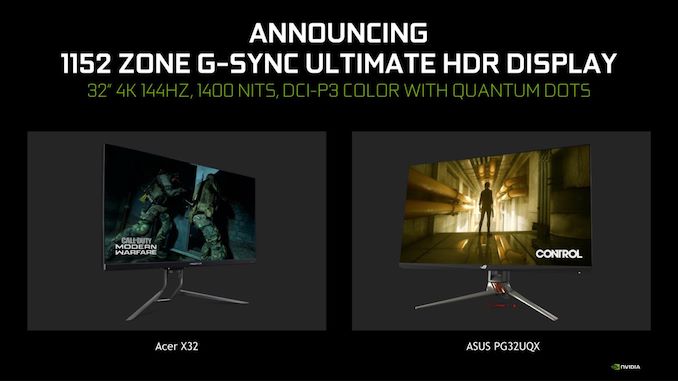
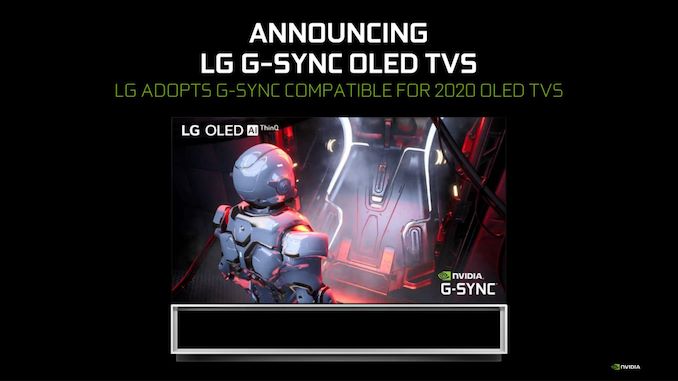
| 11:31a | 32-Inch G-Sync Ultimate Monitors w/1152 Zone Mini-LED Inbound, & LG 2020 OLED G-Sync Compatibile Too
Following yesterday’s announcement of the first 360Hz G-Sync monitor, the ASUS ROG Swift 360, this morning NVIDIA is announcing some updates in the high-end HDR portion of the market as well. Kicking things off, NVIDIA is using CES 2020 to once again drum up interest in G-Sync Ultimate (HDR) monitors, this time by announcing a pair of new 32-inch 4K monitors with Mini-LED backlighting. For those keeping track, this is the second set of Mini-LED-based monitors that the company has announced; NVIDIA first unveiled 27-inch monitors back at Computex 2019 for Acer and ASUS, though those monitors have yet to ship. Besides being the first G-Sync Ultimate monitors available in a 32-inch panel size, the new 32-inch models’ claim to fame is an 1152 zone backlighting system, which is the largest number of zones announced for an LCD monitor to date. According to NVIDIA, the forthcoming Acer X32 and the ASUS PG32UQX will be able to offer a peak brightness of 1400 nits, with the finer-grained Mini-LED FALD backlighting providing better local contrast and reduced backlight blooming. Otherwise these new monitors are fairly similar to the current-generation 27-inch models, offering a 3840x2160 resolution with a maximum refresh rate of 144Hz (with 4:2:2 chroma subsampling). Increasingly typical for CES monitor announcements, NVIIDA isn’t offering any guidance on when these monitors will be available.; for now, they’re works in progress. As mentioned earlier, we’re still waiting on last year’s 576 zone 27-inch monitors, the ASUS PG27UQX and its Acer equivalent, to start shipping. We haven’t heard anything about those monitors since Computex, so we’ll be poking NVIDIA about those as well. Though it is interesting to note that if they do end up shipping, they’ll be quickly outclassed in backlighting technology by the new 32-inch designs. Even with the larger panel size of the 32-inch monitors, the backlighting density is still much greater. The 27-inch monitors will have ~1.85 LEDs per square inch, while the 32-inch monitors will offer 2.63 LEDs per square inch, a 42% increase in LED density. LG's 2020 OLED TVs Are Certified As G-Sync CompatibleMeanwhile in the high-end TV space, NVIDIA is announcing that they have already certified LG’s new 2020 OLED TVs as G-Sync Compatible. This follows last year’s certification of the E9, C9, and B9 series of TVs, all of which received HDMI-VRR variable refresh support, and were later certified by NVIDIA once their G-Sync Compatible certification program launched. As was the case with last year’s monitors, NVIDIA’s certification means that they meet the company’s standards for image stability (e.g. no artifacting or flickering), and that HDR gaming works as well. All told, NVIDIA says that 12 OLED monitors are being certified, though ahead of LG’s own announcement they aren’t specifying model numbers.
LG of course remains the player to beat in the TV space as far as most gamers are concerned. Their WOLED-based TVs have developed a (well earned) reputation for both low input latency and for HDR image quality, the latter a product of individually addressable OLED subpixels. And while LG and NVIDIA are not close partners in the way NVIDA and their PC monitor partners are – today’s announcement is basically just certifying a setup built on top of industry standards – it’s none the less important for NVIDIA, since LG all but has a lock on the high-end market for gaming TVs. | ||||||||||||||||||||||||||||||||||||||||||||||||||||||||||||||||||||||||||||||||||||||||||||||||||||||||
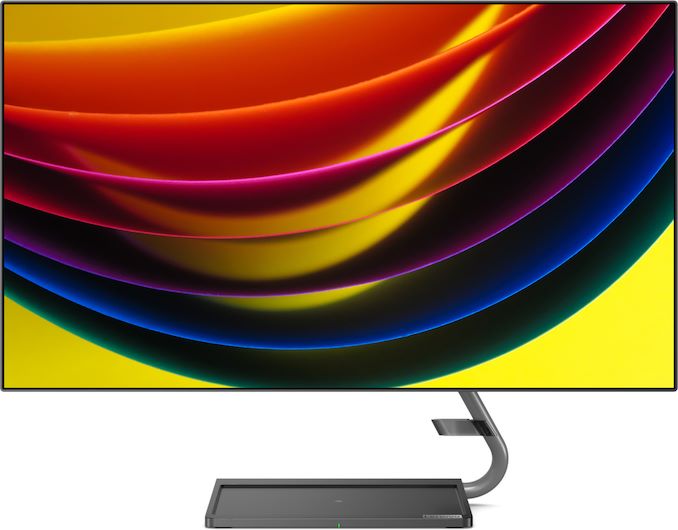
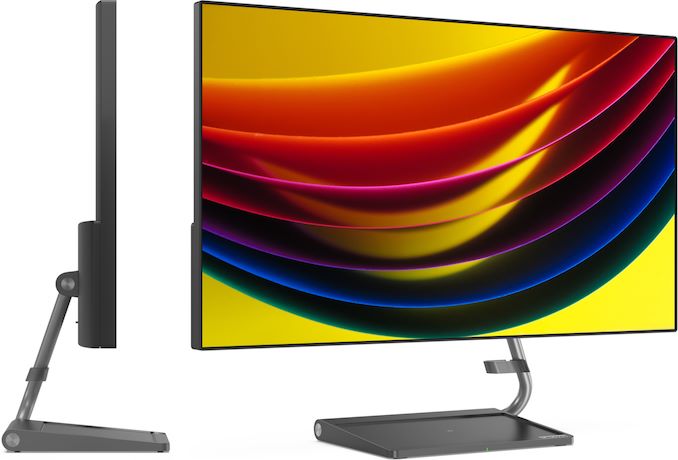
| 1:00p | Lenovo’s Qreator 27: A Sub-$900 10-Bit 4K Professional Monitor w/ Qi Charging
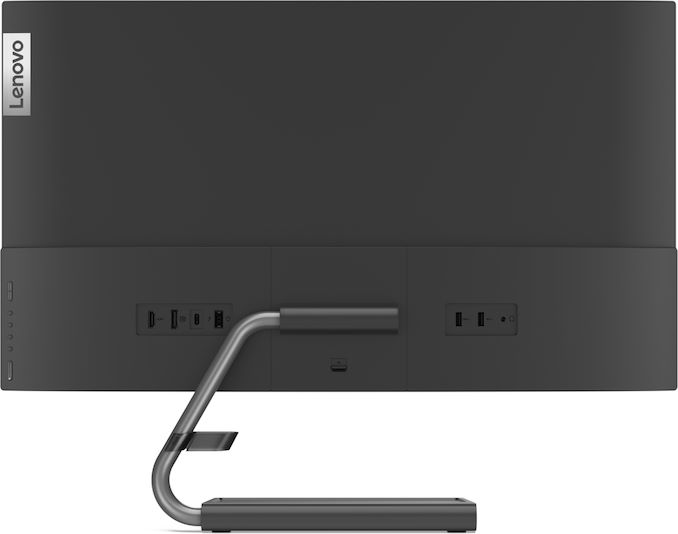
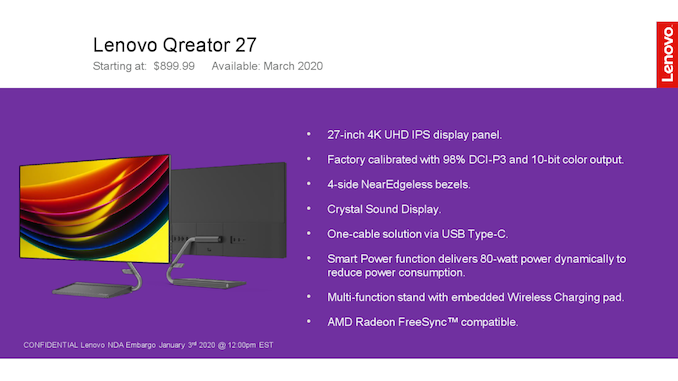
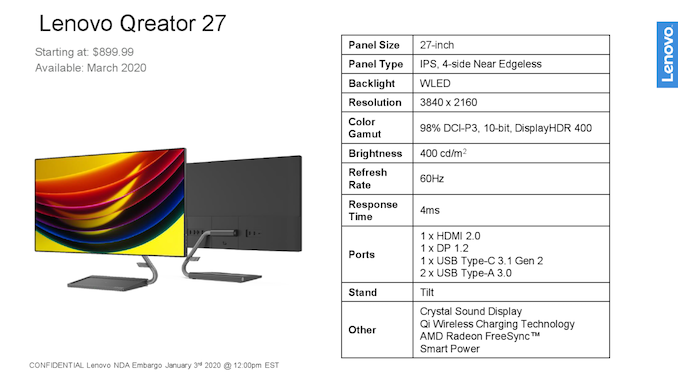
Just in time for CES 2020, Lenovo has introduced a new display for media creators, the Qreator 27. Lenovo's latest monitor offers essential professional-grade qualities along with a number of value-added features like built-in LG's Crystal Sound audio sub-system, a Qi wireless charger for mobile devices, and even some gaming technologies. Equally important, the Qreator 27 shouldn't be too hard on the wallets of its content creator market, with a retail price under $900. The Lenovo Qreator 27 monitor relies on — you guessed it right — a 27-inch 10-bit IPS panel with a 3840x2160 resolution. The display offers a max brightness of 400 nits, a 4 ms response time, and a 60 Hz refresh rate. Under the hood, the LCD uses a WLED backlighting and can generate 98% of the DCI-P3 color gamut, which is in line with professional-grade monitors and which is important for videographers, game designers, and other digital content creators.
As far as connectivity is concerned, the Qreator 27 has a DisplayPort 1.2, an HDMI 2.0, and a USB 3.1 Gen 2 with DP Alt mode connector (presumably with Power Delivery support). In addition, it has a dual-port USB 3.0 hub.
Not many professional displays feature integrated speakers, but this is not the case with the Qreator 27, which uses LG’s Crystal Sound technology that produces sound by vibrating the screen panel. Also, the monitor has a Qi wireless charging pad that will make life for many people significantly easier.
While the LCD is designed primarily for professionals, it features VESA’s DisplayHDR 400 certification as well as AMD’s FreeSync variable refresh rate technology. Not that DisplayHDR 400 guarantees proper HDR experience due to mediocre brightness or FreeSync with a refresh rate of up to 60 Hz is important, but the fact that the Qreator 27 supports these technologies makes it somewhat more attractive to those who are going to use the device not only for work.
Lenovo will start sales of its Qreator 27 monitor in March for $899.99. Related Reading: Source: Lenovo | ||||||||||||||||||||||||||||||||||||||||||||||||||||||||||||||||||||||||||||||||||||||||||||||||||||||||
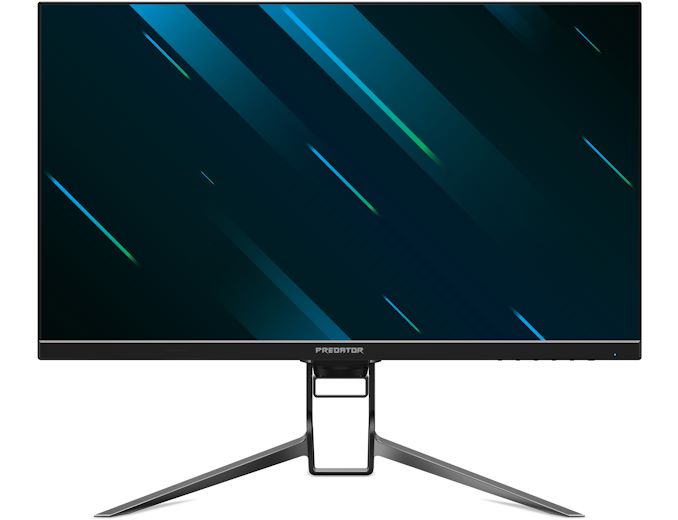
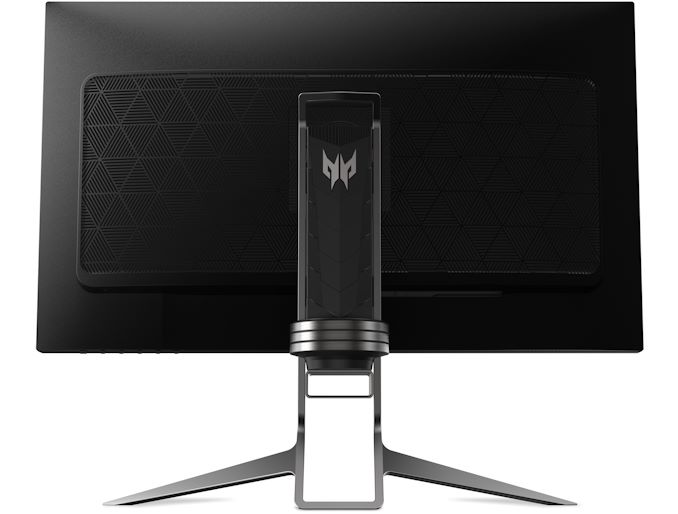
| 1:30p | CES 2020: Acer’s Predator X32 4Kp144 Monitor w/1152-Zone Mini LED FALD & G-Sync Ultimate
Acer and ASUS were the first and only companies to announce 27-inch NVIDIA G-Sync HDR 4Kp144 displays with a 384-Zone Mini LED-based Full Array Local Dimming (FALD) backlighting, and the DCI-P3 color space support three years ago. Time has come to up the ante and at CES 2020 Acer is announcing its Predator X32: a 32-inch G-Sync Ultimate 4Kp144 display that improves its predecessor in every possible way. Acer’s Predator X32 is based on a 10-bit IPS panel with a 3840×2160 resolution that is equipped with a Mini LED-based backlighting. The updated Mini LED system offers 1,152 individually controlled local dimming zones, enabling a peak birghtness of 1400 nits in HDR mode as well as a very high contrast ratio. In fact, the combination of the higher peak brightness and the higher number of dimming zones, promises a solid improvement of HDR image quality when compared to the Predator X27. The monitor can display 1.07 billion of colors and reproduce the sRGB, Adobe RGB, PCI-P3, and Rec. 2020 color spaces. Furthermore, the Predator X32 comes factory calibrated with a DeltaE<1 accuracy.
Apart from a high luminance, a high contrast ratio, and wide color spaces, one of the Predator X32's key selling points is support for a variable refresh rate of up to 144 Hz handled by NVIDIA’s G-Sync Ultimate processor. As with other G-Sync Ultimate monitors, enabling a 144 Hz refresh rate requires 4:2:2 chroma subsampling due to interface bandwidth constraints. Speaking of interfaces, it is necessary to note that the monitor has a DisplayPort 1.4 as well as three HDMI 2.0 connectors. In addition, the monitor has a quad-port USB 3.0 hub for various peripherals.
Acer intends to start selling its Predator X32 gaming monitor in EMEA and North American regions sometimes in the second quarter. Of course, pricing of an almost exclusive product will be high: €3,299 in Europe and $3,599 in the USA.
Related Reading: Source: Acer | ||||||||||||||||||||||||||||||||||||||||||||||||||||||||||||||||||||||||||||||||||||||||||||||||||||||||
| 1:45p | CES 2020: Qualcomm Press Conference Live Blog 11am PT Hello all, we're continuing the day hre at CES 2020 with Qualcomm's press conference event. We're likely to hear more about 5G adoption as well as the new Snapdragon chips, but we heard we might also hear about some other topics such as automotive. Stay tuned as we'll be live blogging the event, starting shortly. | ||||||||||||||||||||||||||||||||||||||||||||||||||||||||||||||||||||||||||||||||||||||||||||||||||||||||
| 2:30p | Lenovo’s ThinkPad X1 Fold: Combining Foldable Displays, 5G and Lakefield into a… Laptop? In 2019 we were exposed to the first foldable display smartphones and wearables, with the Samsung Galaxy Fold, Huawei Mate X, and Xiaomi Mi Mix all demonstrating various themes of a foldable display in a hand-held device. Two of the main concerns with those devices is longevity of a display opened 50+ times a day, and durability if the display is on the outside. Clamshell Notebooks arguably don’t have those restrictions, so it makes sense to bring the technology to something more for business use (especially with the costs). Enter Lenovo’s ThinkPad X1 Fold. | ||||||||||||||||||||||||||||||||||||||||||||||||||||||||||||||||||||||||||||||||||||||||||||||||||||||||
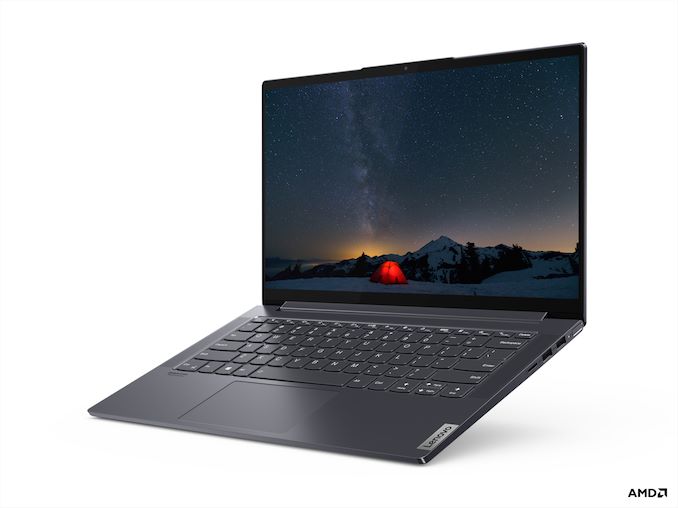
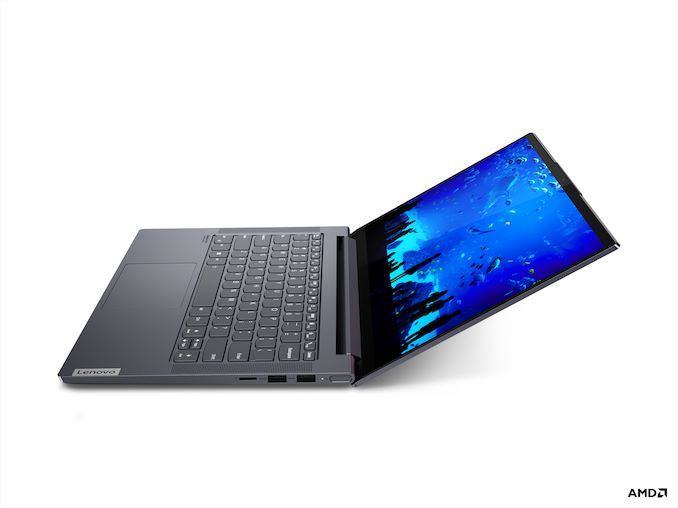
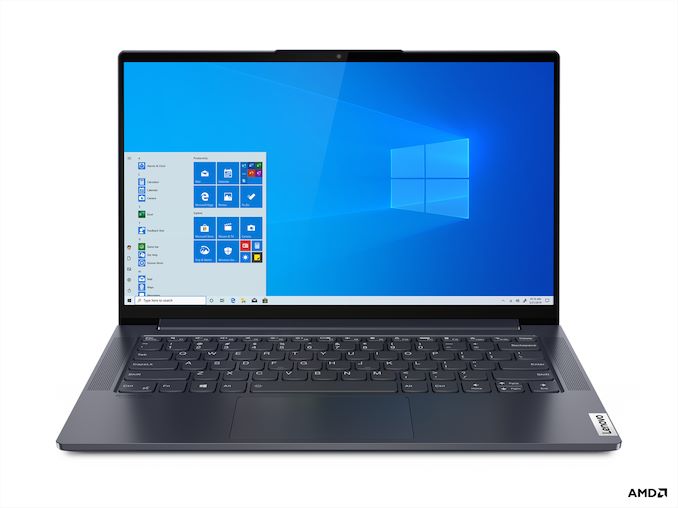
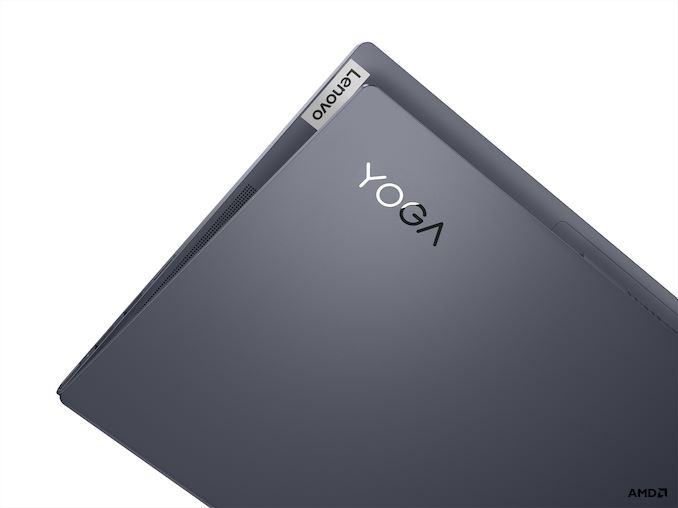
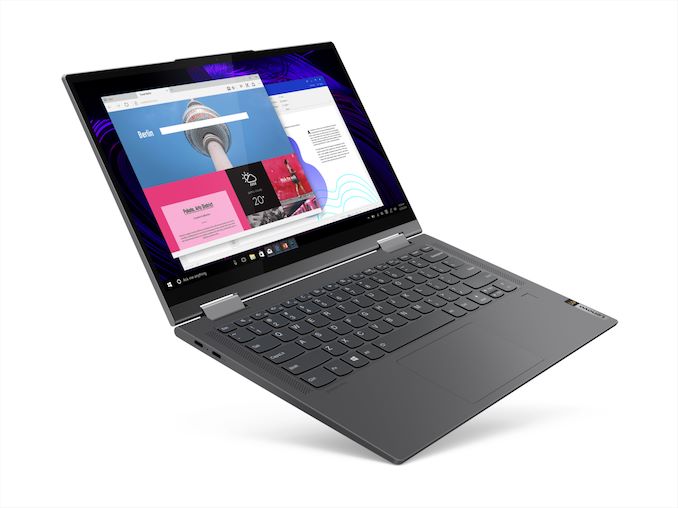
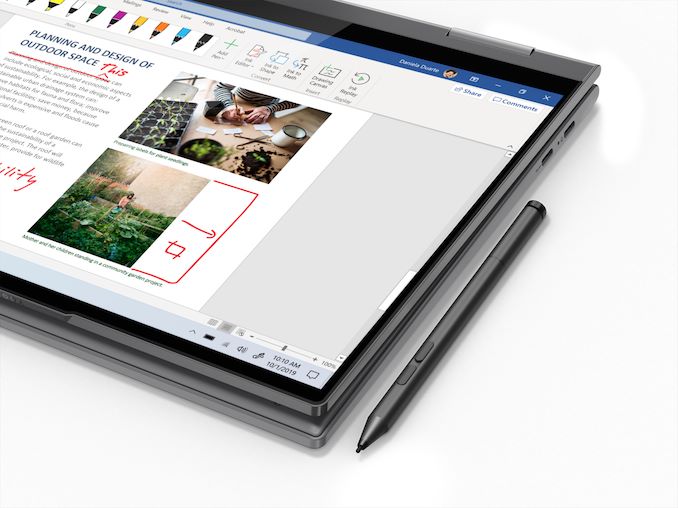
| 2:45p | CES 2020: Lenovo Yoga Slim 7, with AMD 4000 APU inside, Coming March
One of the big questions through late 2019 was whether AMD would be releasing its newest Zen 2-based mobile processors by the end of the year. At the time this embargo lifts is AMD’s press conference at the annual CES trade show, and we should know more. But in advance of that announcement, Lenovo provided us a pre-briefing where it gave us details about its new Yoga Slim 7 laptop, featuring one of the new processors. The release date for this unit is listed as March, which matches the other devices showcased by other OEMs with the same processors.
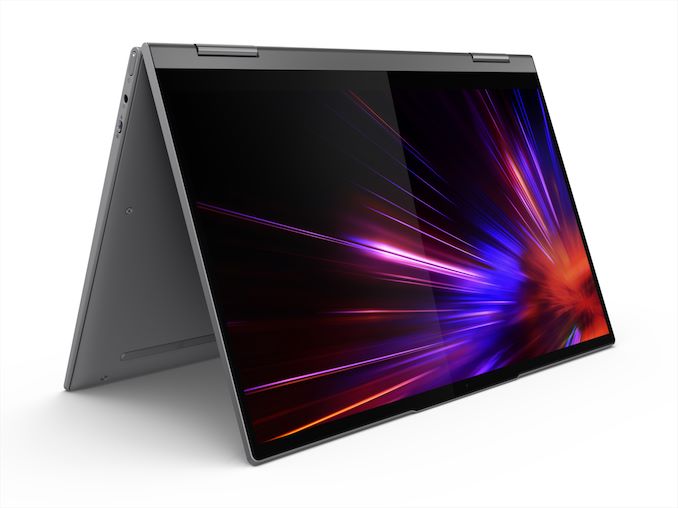
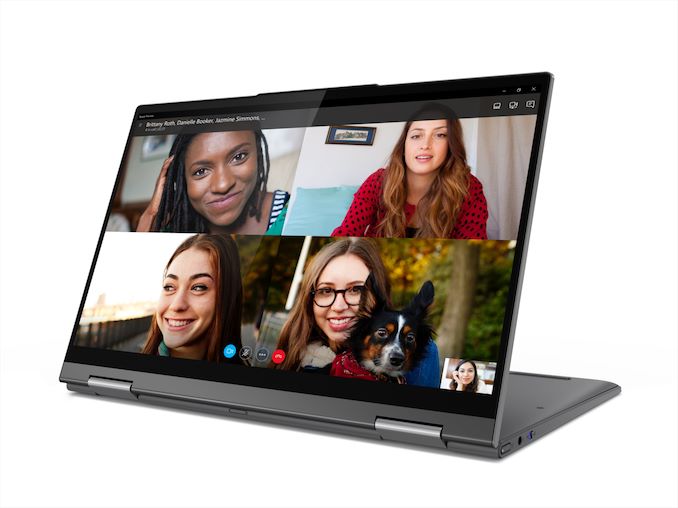
Lenovo’s Yoga Slim range prides itself on offering full-sized mobile devices in a ‘thinner-than-you-expect’ form factor for the price. The Yoga Slim 7 being discussed today at CES with AMD’s Ryzen 4000 inside is a 14-inch display device featuring a 1920x1080 IPS display, offering up to 16 GB of LPDDR4X memory, up to a 1 TB NVMe SSD, two USB 3.2 ports, one multi-mode Type-C port, 802.11ac WiFi, and an IR camera, all for 14.9 mm thickness (0.58 inches).
Prices will start at $699, although that doesn’t state which processor/memory/storage configuration that would be. The battery comes in at 60.7 Wh, which Lenovo is stating should be good for 14 hours, which would be a sizeable uplift in mobile battery efficiency from AMD.
There will also be an Intel version with similar specifications, with only the Ice Lake Core i7-1065G7 CPU as an option, but otherwise similar specifications (an optional NVIDIA MX GPU) and similar battery life estimates. The difference is that one starts at $1210, and will be in the market from April 2020. We will hopefully get some hands on with the devices at CES, so stay tuned for more information. | ||||||||||||||||||||||||||||||||||||||||||||||||||||||||||||||||||||||||||||||||||||||||||||||||||||||||
| 3:00p | CES 2020: The Lenovo Yoga 5G with Qualcomm’s 8cx and Support for mmWave/Sub-6
We’ve been tracking the development of ‘always connected PCs’ since Qualcomm entered the laptop market with promises of enhanced connectivity and all-day battery life. Depending on the market, it’s the latter that resonated most with users: a full 24 hours of real battery is a killer feature. Nonetheless, the desire to enhance the experience with more connectivity options is the primary purpose of this segment, and with the latest 8cx hardware almost ready to go, as one of Qualcomm’s primary partners, Lenovo is almost ready with its newest 5G Yoga device.
So I’ve actually had one of Lenovo’s older Yoga 630 WoS units, equipped with the Snapdragon 855, and the main purpose I use it for is two-fold: as the ultimate backup at events or as the sole device when I’m working and I can’t guarantee a power outlet (say, a 11+ hour flight in economy). The thing it needs is speed, especially as we’re talking about Windows on an Arm-based device. Qualcomm is promising speed with the new 8cx chip, and when paired with a Snapdragon X55 modem, the idea is that for 5G enabled offices and markets, connectivity won’t be an issue.
The new Lenovo Yoga 5G builds on the design of the Yoga 630 WoS, by offering a similar 14-inch 1920x1080 IPS display at 400 nits, a 60 Wh battery, dual USB-C ports, and a fingerprint reader. Aside from the bump from the S855 to the 8cx, the minimum specification also gets a memory/specification lift up to 8 GB of LPDDR4 and 256 GB of UFS 3.0, with a second model offering double the storage.
Inside with the Snapdragon 8cx is the X55 modem, which is stated to have antenna to support both full-band mmWave and Sub 6 GHz networks. Given Lenovo’s business for these devices is likely to be both China and North America, I would assume that this unit should support both (or variants for different markets would be provided). The battery inside, 60 Wh, is almost double the size of the Microsoft Surface that also uses a Qualcomm chip, which would solve the battery life concerns which that device has come under fire for. The unit comes in an iron-grey color, like the Yoga C630, and also has a Touch Pen accessory available. Lenovo says the unit will start at $1499, which is a premium over the C630. The release date is listed as ‘Spring 2020’. | ||||||||||||||||||||||||||||||||||||||||||||||||||||||||||||||||||||||||||||||||||||||||||||||||||||||||
| 3:35p | Wi-Fi Alliance Announces Wi-Fi 6E Moniker for 802.11ax in the 6 GHz Spectrum
Wi-Fi platform vendors have long been citing the lack of enough spectrum in the 2.4 GHz and 5 GHz bands as true gigabit wireless becomes commonplace. In fact, despite support for 160 MHz channels in the Wi-Fi 6 standard, very few consumers are able to actually utilize it because the dynamic frequence selection (DFS) feature is often disabled by default. DFS is necessary to prevent Wi-Fi devices operating in the 5 GHz band from interfering with radars that are licensed users of the channels in that band. Wi-Fi devices essentially use unlicensed spectrum for communication. As more and more gigabit wireless devices get deployed, the available spectrum capacity in the 5 GHz band may soon get exhausted. Unlicensed Operation in the 6 GHz BandThe FCC has been considering the opening up of the 6 GHz band (essentially, the 1.2 GHz unlicensed spectrum span just above the currently used 5 GHz band) for unlicensed operation. Wideband unlicensed channels of 160 MHz and more may become essential to achieve expected performance from 802.11ax, 802.11be, 4G LTE, and 5G NR in unlicensed spectrum. Opening up a continuous 1200 MHz chunk will enable substantial amount of new bandwidth over multiple wide bandwidth channels. Unfortunately, even though there are no currently unlicensed users of the 6 GHz band, certain fixed wireless point-to-point long-range deployments are licensed to utilize it. Wi-Fi platform vendors such as Qualcomm and Broadcom have been confident of working with those users to prevent any interference. Their key message to the licensed incumbents is that any Wi-Fi deployment in the 6 GHz band would use LPI (low-power indoor) operation and can also implement AFC (automated frequency coordination). LPI operation, for example, may impose restrictions on the total EIRP (effective isotropically radiated power) and PSD (power spectral density) for Wi-Fi devices. This will prevent interference due to low power levels and substantial building losses. In addition, most licensed users of the spectrum have their point-to-point endpoints well above the ground (mounted atop towers and buildings), and devices rated for LPI operation are not likely to affect them. AFC involves the maintenance of a database where licensed users are tracked based on their deployment location, and any unlicensed Wi-Fi usage in that spectrum capable of interfering with the licensed users could automatically shift to a different channel. Wi-Fi 6EThe Wi-Fi Alliance is introducing a new terminology to distinguish upcoming Wi-Fi 6 devices that are capable of 6 GHz operation - Wi-Fi 6E. This is essentially the benefits of Wi-Fi 6 / 802.11ax (higher performance in terms of faster data rates as well as lower latency) in the 6 GHz band. Wi-Fi 6E devices are expected to make it to the market relatively quickly after regulatory approval, as it only requires changing the antenna tuning / RF front end on existing devices.
As explained earlier, 6 GHz addresses Wi-Fi spectrum shortage by providing contiguous spectrum blocks to accommodate up to 14 additional 80 MHz channels and 7 additional 160 MHz channels. Wi-Fi 6E devices can make use of the wider channels and additional capacity to provide better performance and support denser deployments. At CES 2020, the Wi-Fi Alliance is also announcing the development of interoperability testing for Wi-Fi 6E devices. | ||||||||||||||||||||||||||||||||||||||||||||||||||||||||||||||||||||||||||||||||||||||||||||||||||||||||
| 4:30p | AMD Keynote Presentation Press Event at CES 2020: The AnandTech Live Blog We're here ready to Live Blog the annual CES keynote from AMD. We expect to see Lisa Su, Frank Azor, and others take to the stage to discuss what's happening for AMD in the first half of 2020. | ||||||||||||||||||||||||||||||||||||||||||||||||||||||||||||||||||||||||||||||||||||||||||||||||||||||||
| 4:45p | D-Link Announces New EasyMesh-Compatible Wi-Fi 6 Gateways and Extenders
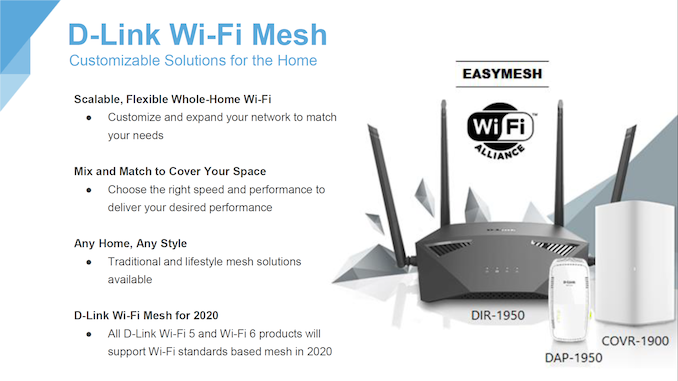
The Wi-Fi system / mesh market has turned out to be very attractive for gateway vendors, enabling them to have higher ASPs and more revenue per user. On the technical side, each platform vendor has their own proprietary mesh solution, and these solutions have been rendered non-interoperable further by tweaks from the vendors themselves. In 2018, the Wi-Fi Alliance weighed in with the EasyMesh standard that could allow equipment from different vendors to co-operate for a standards-based mesh networking functionality.
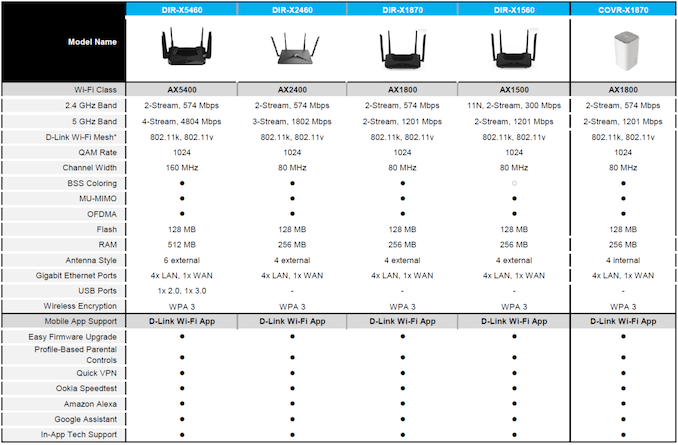
At CES 2020, D-Link is announcing a set of routers and access points with D-Link Wi-Fi Mesh. Even though the Wi-Fi Alliance has not officially released the EasyMesh standard yet, D-Link promises that the new products with D-Link Wi-Fi Mesh will work seamlessly with other products that adopt the EasyMesh standard. The new products also include some cost-effective Wi-Fi 5 (802.11ac) solutions, though the major ones are all based on the Wi-Fi 6 standard. A comparison of the features of the new products is provided below.
The gallery below presents details of the new products in the stack: Pricing ranges from $100 for the DIR-1750-US AC1750 mesh router and the DAP-1755-US AC1750 mesh Wi-Fi range extender to $280 for the DIR-X5460-US Smart AX5400 mesh Wi-Fi 6 router. | ||||||||||||||||||||||||||||||||||||||||||||||||||||||||||||||||||||||||||||||||||||||||||||||||||||||||
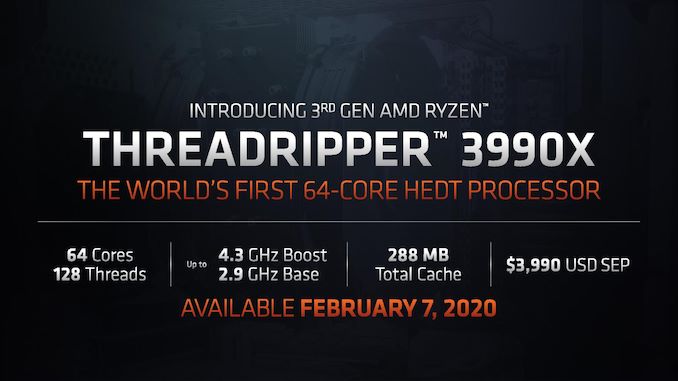
| 5:45p | AMD’s 64-Core Threadripper 3990X, only $3990! Coming February 7th At the tail end of last year, one of the key launches in the creator/workstation processor market was AMD’s latest 3rd Generation Threadripper portfolio, which started with 24-core and 32-core hardware, with a strong teaser that a 64-core version was coming in 2020. Naturally, there was a lot of speculation, particularly regarding sustained frequencies, pricing, availability, and launch date. This week at CES, we can answer a couple of those questions.
The new 64-core AMD Threadripper 3990X is essentially a consumer variant of the 64-core EPYC 7702P currently for sale in the server market, albeit with fewer memory channels, fewer enterprise features, but a higher frequency and higher TDP. That processor has a suggested e-tail price (SEP) of $4450, compared to the new 3990X, which will have a $3990 SEP.
Frequencies for the new CPU will come in at 2.9 GHz base and 4.3 GHz turbo, which is actually a bit more than I was expecting to see. No word on what the all-core turbo will be, however AMD's EPYC 7H12, a 64-core 280W CPU for the HFT market, is meant to offer an all-core turbo from 3.0-3.3 GHz, so we might see something similar here, especially with aggressive cooling. Naturally, AMD is recommending water cooling setups, as with its other 280W Threadripper CPUs. Motherboard support is listed as the current generation of TRX40 motherboards. Although we don't put much stock in vendor supplied benchmark numbers, AMD did state that they expect to see Cinebench R20 MT numbers around 25000. That's up from ~17000 on the 3970X. This means not perfect scaling, but for the prosumer market where this chip matters, offering +47% performance for double the cost is often worth it and can be amortized over time.
The other element to the news is the launch date. February 7th is probably earlier than a lot of us in the press expected, however it will be interesting to see how many AMD is able to make, given our recent discussions with CTO Mark Papermaster regarding wafer orders at TSMC. As this chip more closely resembles the price of AMD’s EPYC lineup, we might actually see more of these on the market, as they will attract a good premium. However, the number of users likely do put close to $4k onto a high-end desktop CPU and not go for an enterprise system is a hard one to judge. AMD recommends that in order to maintain performance scaling with the 3990X that owners should have at least 1 GB of DDR4 per core, if not 2 GB. To be honest anyone looking at this chip should also have enough money in the bank to also get a 128 GB kit of good memory, if not 256 GB. As with other Threadripper chips, AMD lists the support as DDR4-3200, but the memory controller can be overclocked. We should be talking with AMD soon about sampling, ready for our February 7th review. Please put in some benchmark requests below. | ||||||||||||||||||||||||||||||||||||||||||||||||||||||||||||||||||||||||||||||||||||||||||||||||||||||||
| 5:46p | AMD Announces Radeon RX 5600 Series: A Lighter Navi To Rule 1080p Gaming With the launch of the Radeon RX 5700 series and Radeon RX 5500 XT under their collective belt, AMD is now getting ready to fill in the divide between the card families. With the RX 5500 XT carrying a $199 price tag and the next step up being the $349 RX 5700, there’s a significant gap in price and performance between the two cards. All of which has left AMD at a disadvantage in the popular $200-$300 mainstream segment, where NVIDIA’s GeForce GTX 1660 cards dominate. To that end, today AMD is announcing the third sub-series of the Radeon RX 5000 family, the Radeon RX 5600 series. These latest cards will be coming to retail, OEM, and mobile, with the retail Radeon RX 5600 XT leading the charge. Designed to fill that gap between the RX 5700 series and the RX 5500 series, the $279 RX 5600 XT is employing a further cut-down version of AMD’s class-leading Navi 10 GPU. For their latest card, AMD is dialing back on the amount of enabled hardware in order to offer a card with performance between the existing Radeon RX 5000 series cards, and with a price to match. The net result is a card that, in AMD's words, is intended to be the ultimate 1080p gaming card, and just as importantly, go head-to-head with NVIIDA’s GeForce GTX 1660 cards. | ||||||||||||||||||||||||||||||||||||||||||||||||||||||||||||||||||||||||||||||||||||||||||||||||||||||||
| 5:47p | AMD Ryzen 4000 Mobile APUs: 7nm, 8-core on both 15W and 45W, Coming Q1 At last year’s CES, AMD showcased its then Ryzen 3000 mobile processors as part of the announcements. In what is becoming a trend, at this year’s CES, the company is doing the same in announcing its next generation Ryzen 4000 mobile processors. This year is a little different, with AMD showing off its manufacturing strategy at TSMC 7nm for the first time in the mobile space. There’s a ton of options on the table, both at 15W and 45W, offering some really impressive core counts, frequencies, and most importantly, design wins. Here are all the details. | ||||||||||||||||||||||||||||||||||||||||||||||||||||||||||||||||||||||||||||||||||||||||||||||||||||||||
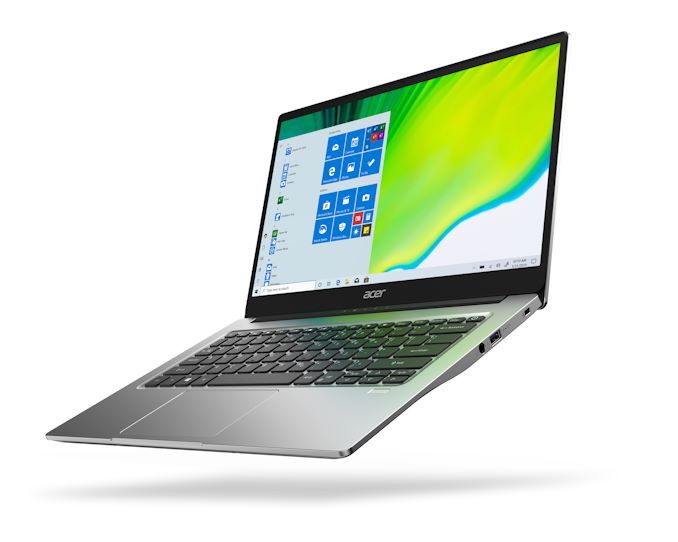
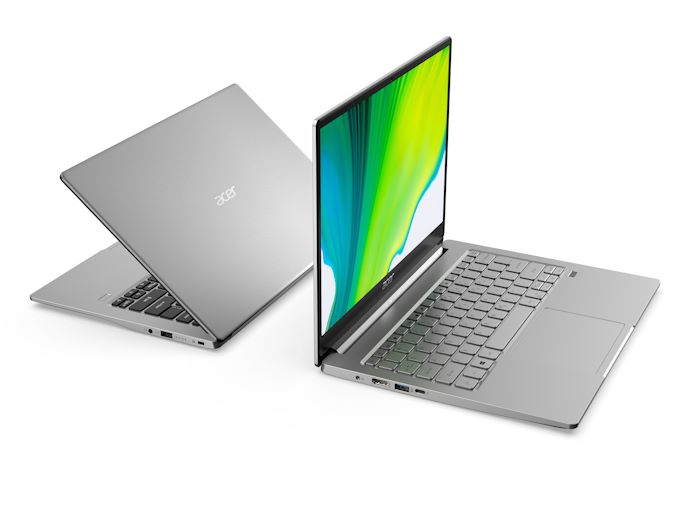
| 6:30p | Acer Swift 3, either with Core i7-1065G7 or Ryzen 7 4700U: The Laptop Market Just Blew Wide Open Everyone wants a notebook that fulfills their needs, is super light, lasts forever, and only costs a dime. We’re not in fantasy land just quite yet, but Acer is trying with its new Swift 3 for 2020. There’s one kicker in these units though – there will be AMD and Intel variants, using the latest and greated from both – Intel’s 10nm Ice lake vs. AMD’s new 7nm APUs. The new Acer Swift 3 ultraportable is a 14-inch unit weighing 1.2 kg (2.6 lbs) that has either up to an octo-core AMD Ryzen 7 4700U inside or up to an Intel Core i7-1065G7, 16 GB of LPDDR4X memory, and up to 512 GB of NVMe storage. Acer is going for a premium design feel here, with the lightweight chassis, narrow bezels (4.37mm), and support for features like Windows Hello and Wake on Voice supported. The full unit is 16.55mm / 0.65-inches thick.
AMD Prices will start from $599 for the base configuration, and exact specifications will come closer to the launch in May. Intel will start from $699 and be available from March.
If one thing is going to be clear at this year’s CES, it’s going to be that AMD and Intel are going to be hitting each other with design wins. Normally for design wins we talk about flagships, but I suspect we’ll see AMD in a lot of mid-price notebooks with good all-round specifications, which is going to be where Intel will feel the heat. Not to be outdone, Intel is expected to have a number of Ice Lake designs at CES as well – the Intel Acer Swift 3 has Athena certification for example, which might be where the extra base cost comes from, as it will likely have Thunderbolt 3, Wi-Fi 6, and an ultra-low power display. It would be interesting to square off Intel vs AMD here in a review later this year. | ||||||||||||||||||||||||||||||||||||||||||||||||||||||||||||||||||||||||||||||||||||||||||||||||||||||||
| 6:50p | Intel CES 2020 Keynote Live Blog: Ice, Comets, and Tigers To Come We're here at the Mandalay Bay Convention Center for Intel's CES 2020 keynote. Intel always makes their CES presentations exciting affairs, and we're expecting much the same this year. However there is no escaping the big question that Intel must face: how do you keep products fresh and competitive when the company's 10nm fab plans have gone well off course? | ||||||||||||||||||||||||||||||||||||||||||||||||||||||||||||||||||||||||||||||||||||||||||||||||||||||||
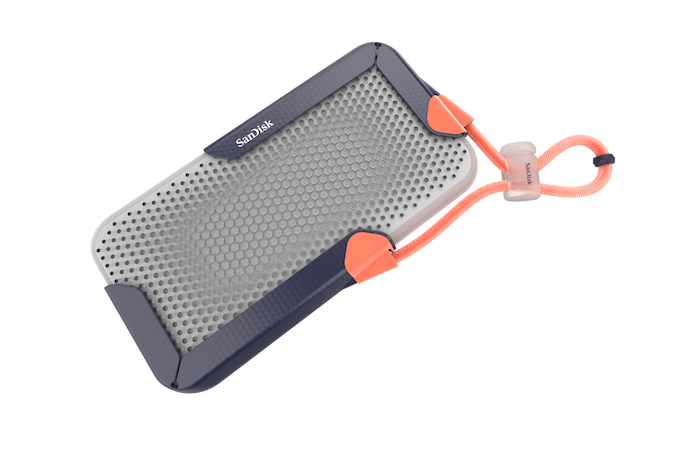
| 9:00p | Western Digital Demonstrates 8TB Portable 20 Gbps SSD, Announces Dual-Connector 1TB Thumb Drive
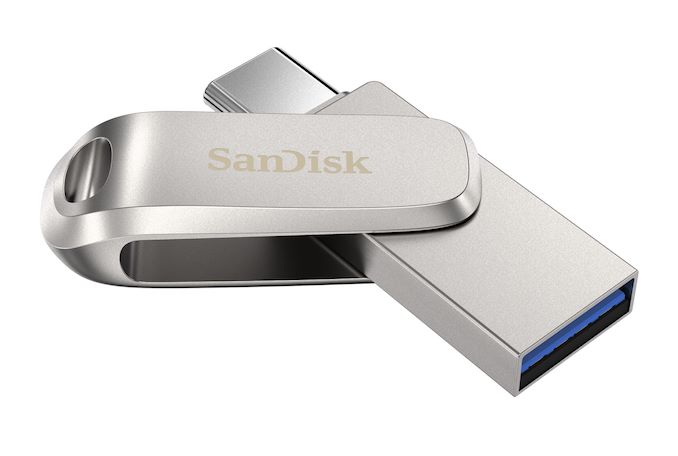
Western Digital has a history of showcasing cutting-edge technological advancements in the consumer electronics space at CES every year. In 2019, a 4TB thumb drive was demonstrated, and this year, we have a 8TB portable SSD with a USB 3.2 Gen 2x2 interface. As QLC flash becomes more common-place, and the number of layers in 3D NAND keeps increasing, it becomes economically feasible to produce high-capacity compact flash storage devices. In fact, WD presented details of 128L BiCS 5 production wafers at ISSC 2019, though it is not clear if the 8TB prototype being demonstrated at CES 2020 utilizes BiCS 5 flash. In any case, given the size of the prototype (similar to the SanDisk Extreme Pro Portable SSDs already in the market), even BiCS 4 TLC (96L 3D NAND) flash is enough. The choice of TLC or QLC would boil down to economics, and given that this is a techonology demonstration prototype, there is no pricing aspect to consider. WD also announced some products with retail availability at the show. The SanDisk Ultra Dual Drive Luxe USB Type-C is a 1TB thumb drive that comes with a Type-C male port and a Type-A female port. It is compact enough to fit in a keychain and will be available in late Q1 2020. Pricing has not been announced.
The WD_BLACK line of external storage solutions targeting gamers is also being showcased. The lineup includes the WD_BLACK P50 (one of the first external SSDs to feature a USB 3.2 Gen 2x2 20 Gbps interface), the WD_BLACK P10 (external bus-powered 2.5" hard drive in 1TB, 3TB, and 5TB capacities), and the WD_BLACK D10 (external 8TB 3.5" 7200 RPM hard drive with a USB 2.0 hub). The P10 and D10 also come in Xbox-branded variants. The SanDisk ibi photo management device (a cloud-based service with local storage) is also being demonstrated in WD's CES suite. | ||||||||||||||||||||||||||||||||||||||||||||||||||||||||||||||||||||||||||||||||||||||||||||||||||||||||
| 9:15p | Netgear Launches EasyMesh-Compatible Nighthawk Mesh Wi-Fi 6 System
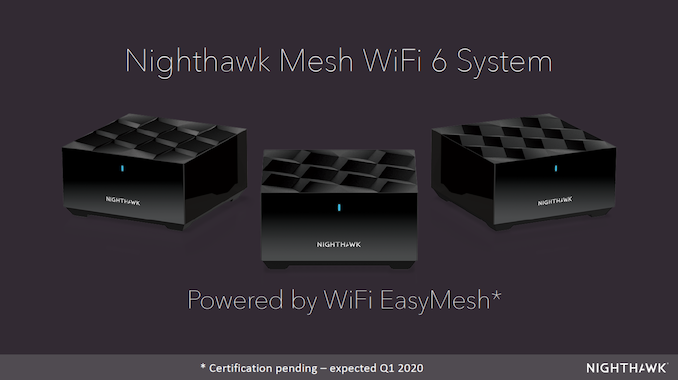
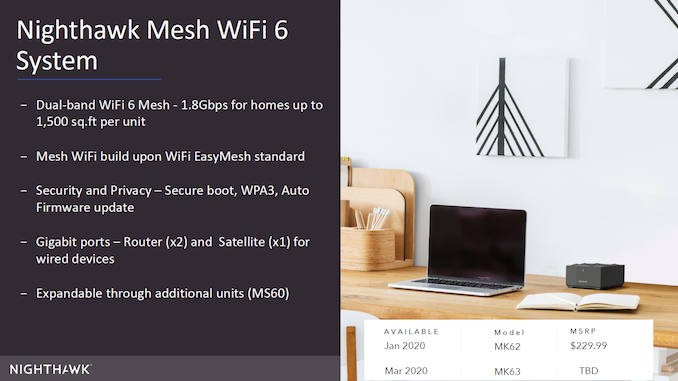
Netgear's Orbi has enjoyed tremendous success in the Wi-Fi system / mesh networking market. Technically speaking, the Orbi kits can't interoperate with mesh nodes from other vendors or even with netgear's own range extenders in a seamless manner. The proprietary nature of each vendor's mesh networking stack is the key contributor to this problem. In 2018, the Wi-Fi Alliance weighed in with the EasyMesh standard that could allow equipment from different vendors to co-operate for a standards-based mesh networking functionality. At CES 2020, Netgear is announcing the Nighthawk Mesh Wi-Fi 6 System that implements a standards-based Wi-Fi mesh network capable of interoperating with other Wi-Fi EasyMesh-certified products. Typical of mesh networks, the Nighthawk Mesh also creates a single Wi-Fi network with device steering and intelligent roaming for mobile devices. The members of the kit come pre-paired for easy installation.
Netgear claims that each unit can cover up to 1500 sq. ft., while providing data rates up to 1.8 Gbps (pointing to a 2x2 configuration).
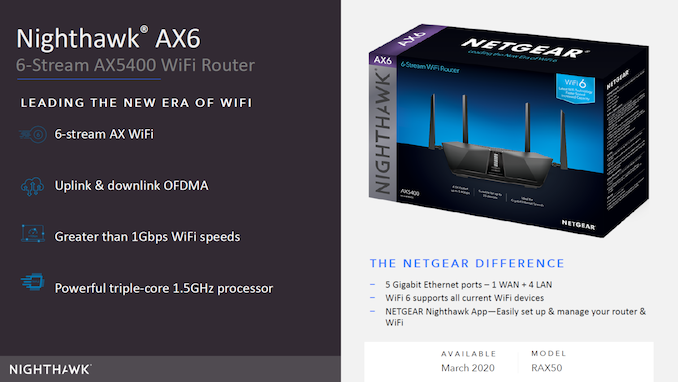
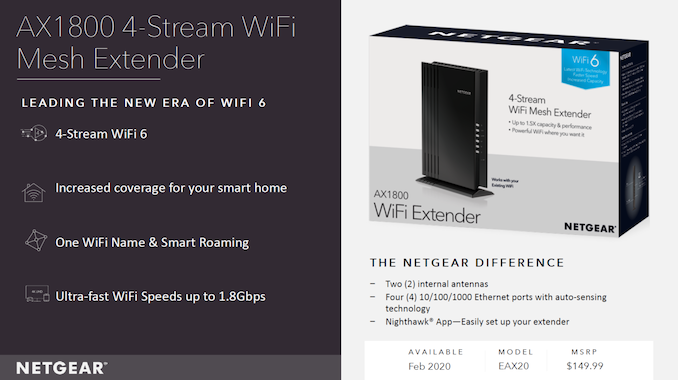
The RAX50 6-stream AX5400 router is also being introduced at CES. It is based on the Broadcom BCM6752 WLAN SoC. The in-built 2x2 WLAN radio in the SoC is used for operation in the 2.4 GHz band, while an external 4x4 radio is used for the 5 GHz operation. The new EAX20 nesg extender is a 4-stream AX1800-class product that comes with four gigabit LAN ports. The product will be available in retail for $150 next month.
Overall, Netgear is expanding their Wi-Fi 6 offerings to target a wide budget range. While Orbi continues to remain the premium mesh networking product from Netgear, we are glad to see the company put in efforts to also release a standards-compliant EasyMesh-enabled mesh networking kit. | ||||||||||||||||||||||||||||||||||||||||||||||||||||||||||||||||||||||||||||||||||||||||||||||||||||||||
| 9:30p | Netgear Expands DOCSIS 3.1 Product Stack with Nighthawk CAX80 Wi-Fi 6 Cable Modem Gateway
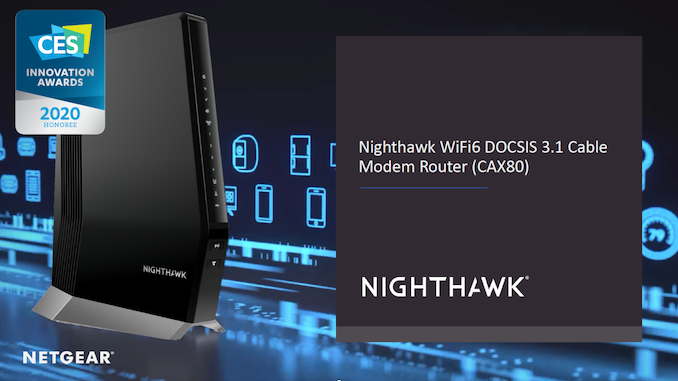
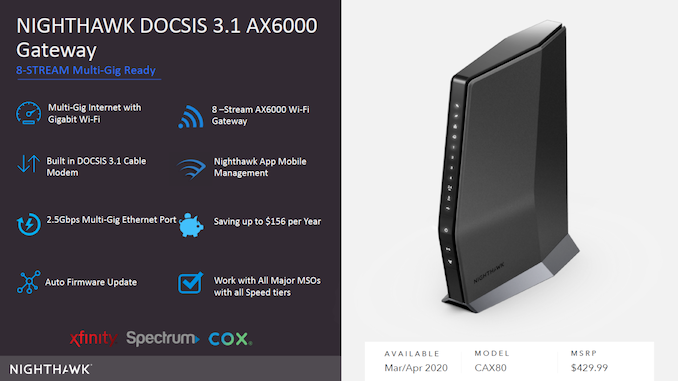
Cable service providers in the US market have been aggressively deploying DOCSIS 3.1 over the last couple of years. Netgear has been selling DOCSIS 3.1-compatible modems and gateways into the service-provider as well as the retail market. At CES 2020, Netgear is launching a new product to augment their product stack in this segment. The Nighthawk Wi-Fi 6 DOCSIS 3.1 Cable Modem Router (CAX80) is an integrated device fulfilling modem, router, switch, and wireless access point functions. Priced at $430 and slated for availability in early Q2 20202, this device has a 8-stream Wi-Fi 6 configuration (AX6000-class). It also comes with a 2.5 Gbps LAN port.
The CAX80 has four additional gigabit ports, and two of those are capable of getting link-aggregated too. As Comcast starts to test 2.5 Gbps-capable services, the CAX80 has the ideal specifications to take advantage of it. The Nighthawk app for the gateway is also designed to simplify the onboarding process in a self-install scenario. Users wanting to avoid a combo-device can currently go in for the CM1100 or CM1200 DOCSIS 3.1 cable modems. They are both multi-gig-ready, but need link aggregation for this purpose. We are looking forward to Netgear updating these models with a 2.5 Gbps port for a simplified installation. | ||||||||||||||||||||||||||||||||||||||||||||||||||||||||||||||||||||||||||||||||||||||||||||||||||||||||
| 9:45p | Netgear Augments Wireless Broadband Gateway Options with Nighthawk M5 5G Wi-Fi 6 Mobile Router
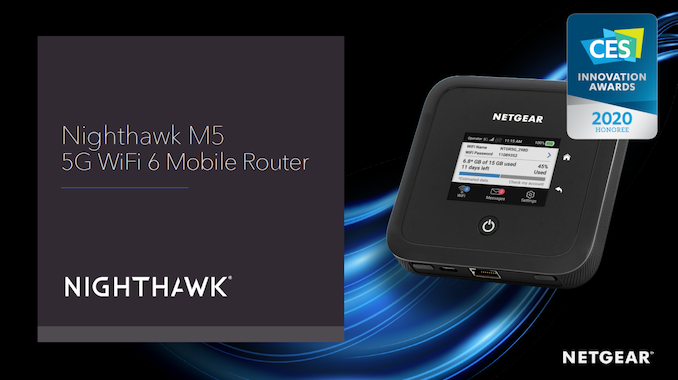
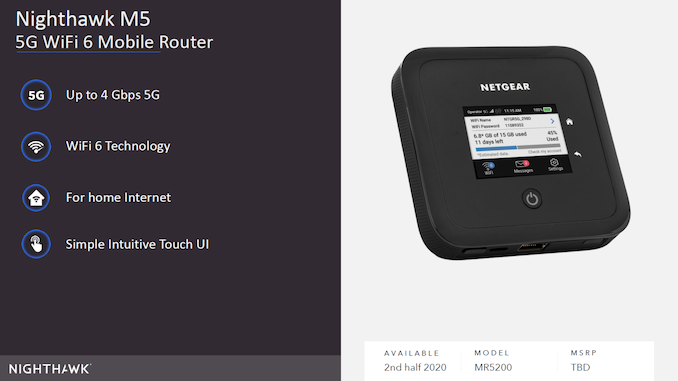
Netgear's mobile broadband product stack has a variety of different product offerings mostly targeting the personal hotspot market. However, with 5G, wireless home broadband has become a credible proposition. In gearing up for the widespread adoption of 5G across different markets, Netgear is introducing the Nighthawk M5 5G Wi-Fi 6 Mobile Router at CES 2020.
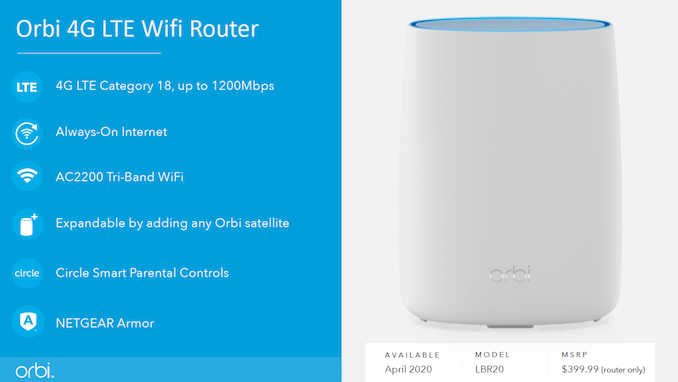
The M5 is designed to make high-speed broadband available in multiple scenarios - such as in-vehicle, or camping, or even just at home. The device is equipped with Wi-Fi 6 technology, and features a touch UI. It supports up to 4 Gbps on the 5G side. Availability is slated for the second half of 2020, and pricing is yet to be decided. The battery is designed to be removable - this helps in cases where the unit is wall-powered (as is the situation when the M5 is used for in-home broadband). The unit also features a single gigabit LAN port. Netgear is also introducing the 4G LTE Wi-Fi Orbi Router at the show. The device is mainly aimed at places where fixed broadband penetration is not high such as in rural areas or sites of vacation homes. The Orbi 4G LTE Wi-Fi router is a AC2200 tri-band Wi-Fi device with a 4G LTE Category 18 connection (up to 1.2 Gbps).
Netgear plans to sell the LBR20 router-only package for $400, starting in Q2 2020. Users can expand Wi-Fi coverage by adding any Orbi satellite to the installation. The LBR20 can also be used as a dual-WAN gateway with failover capabilities, allowing for seamless switchover to 4G LTE when the primary Internet service experiences a failure. The LBR20 carries over all the consumer-friendly Orbi features such as painless app-based setup and management, Disney Circle, and Netgear Armor. | ||||||||||||||||||||||||||||||||||||||||||||||||||||||||||||||||||||||||||||||||||||||||||||||||||||||||



1.0-cmyk_carousel_thumb.jpg)
















| << Previous Day |
2020/01/06 [Calendar] |
Next Day >> |