[Most Recent Entries] [Calendar View]
Tuesday, January 21st, 2020
- Samsung’s Odyssey Continues: Ultra-Curved QLED 49-Inch 240 Hz HDR1000 Monitor w/ Adaptive Sync
- CES 2020: Acer’s Predator X38 Is A 38-Inch Curved Monitor w/ UWQHD+, 175 Hz & G-Sync
- Acer Predator Z35P Available for Order: Curved 35" with 3440×1440@120 Hz and G-Sync
- Acer Launches Curved XR382CQK Display: 37.5-inch, 3840×1600, FreeSync, & USB-C
- Dell’s UltraSharp U3818DW Now Available: Curved 37.5”, 3840×1600, USB-C, $1499
- LG to Demo UltraWide 38-Inch 144Hz Gaming & 49-Inch Workstation Displays at CES
- LG’s 34UC89G 21:9 Curved Display with G-Sync, 144 to 166 Hz, Available for $999
- ASUS Announces Designo Curve MX38VQ: 37.5 Inch Curved Display with Qi Charging
- ZOTAC Preps SFF Workstation with NVIDIA’s Quadro, Intel’s 10 GbE NICs
- Zotac at CES 2018: ZBOX MAGNUS Upgraded with Coffee
- Zotac ZBOX MAGNUS EN1080K Compact Gaming PC Review
| Time | Event | |||||||||||||||||||||||||||||||||||||||||||||||||||||||||||||||||||
| 9:00a | SteelSeries Launches Low-Cost Gaming Peripherals With The Rival 3 Gaming Mouse, Apex 3, and Apex 5 Gaming Keyboards
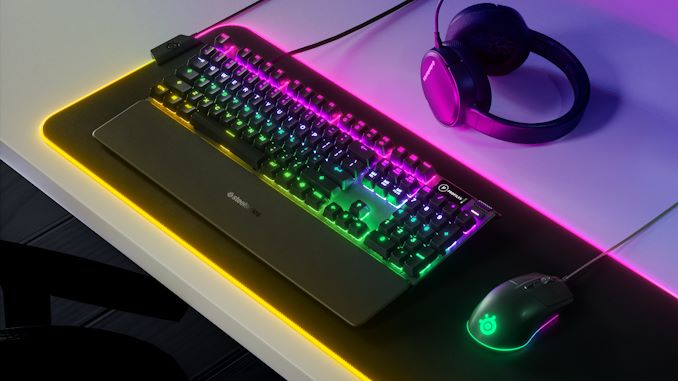
Often we see a lot of fanfare when companies launch their latest flagship products, but those products often come at the high-end of the price spectrum, so it is refreshing to get a new launch of some lower-cost alternatives. SteelSeries is launching a trio of new peripherals today all aimed at the budget-conscious gamer with the new Rival 3 Gaming Mouse, as well as the Apex 3 and Apex 5 gaming keyboards. Rival 3 Gaming Mouse
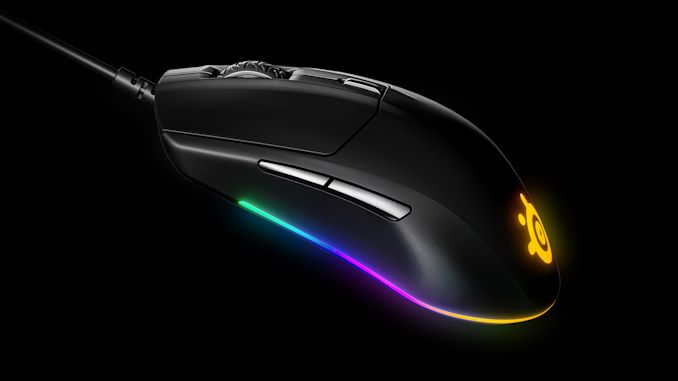
What constitutes a gaming mouse? It is certainly not just the RGB lighting, although most, including this product, offer customizable lighting. The mouse sensor is one of the key aspects, and SteelSeries worked with PixArt to develop a new sensor which they’ve dubbed the TrueMove Core optical sensor. The new sensor offers 8500 CPI, one-to-one tracking, and over 300 IPS and 35G of acceleration capability. For a mouse in this price bracket, it is very capable.
The Rival 3 is a right handed mouse (if you need an ambidextrous they offer the Sensei series) which weighs in at just 77 grams. It offers three zones of RGB backlighting which achieves 750 lux, making this the brightest LEDs in any SteelSeries mouse. There are six buttons and the main buttons feature a SteelSeries switch rated at up to 60 million clicks, whereas a comparable Omron would only be rated at 10-20 million. The casing is finished in matte black, so it should stand up well to the test of time. The mouse features customization through the SteelSeries Engine software, and offers onboard storage for five profiles, so even if it’s not used with the software, you can still choose your CPI profile on the go. Gallery: SteelSeries Rival 3 Gaming Mouse
      The new Rival 3 Gaming Mouse is available globally today for a MSRP of $29.99. Apex Gaming Keyboards
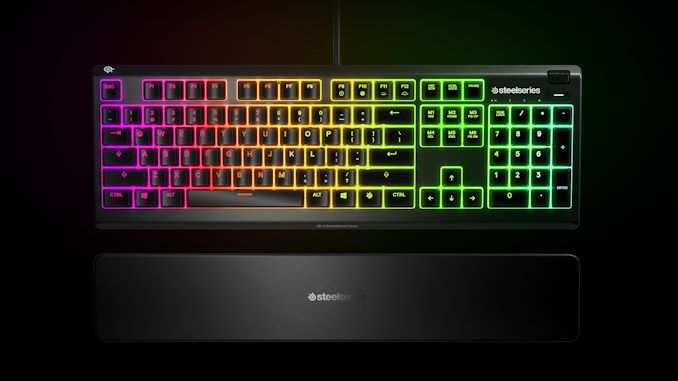
SteelSeries is also launching two new gaming keyboards which feature anti-ghosting and RGB lighting, without breaking the bank. The Apex 3 is launching today with an MSRP of $49.99, and the Apex 5 is available globally for $99.99.
The Apex 3 features an upgraded and reinforced membrane switch, which SteelSeries says offers an improved key feel. The keyboard offers ten zones of RGB backlighting as well, and a magnetically attached wrist rest. There’s dedicated media keys, and a volume wheel as well, and the keyboard offers three routes for cable management so you can route the USB cable out the left, right, or middle of the keyboard. Finally, the Apex 3 is rated for IP32 water resistance, so it should survive an accidental spill. Gallery: SteelSeries Apex 3 Gaming Keyboard
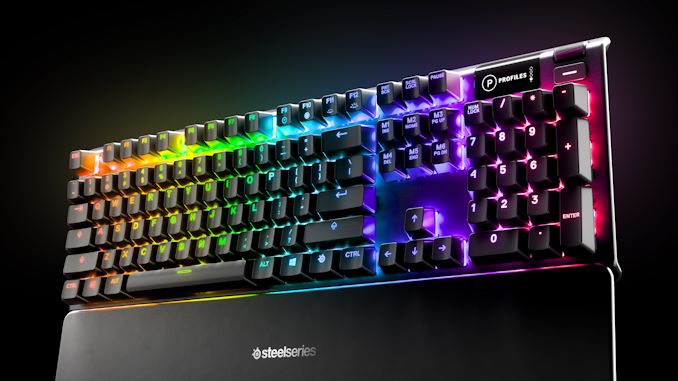
      The Apex 5 ramps up the features, as expected since it is literally double the price of the Apex 3, but for $99.99 this gaming keyboard offers hybrid mechanical switches, which are true mechanical switches, but which feature the smoothness of a membrane switch coupled with the click of a blue switch. The keys are also individual backlit with per-key RGB lighting.
The Apex 5 features the same OLED display as the Apex 7 and Pro lineup, which can be used to view in-game info, song information, and more. The OLED is coupled with media keys, and offers five onboard profiles meaning the keyboard can remember your settings as you move it from device to device.
The Apex 5 also features a full aluminum frame, and offers a premium magnetically attached wrist rest. Gallery: SteelSeries Apex 5 Gaming Keyboard
      All of these products are available globally today. Check out SteelSeries.com for more details. | |||||||||||||||||||||||||||||||||||||||||||||||||||||||||||||||||||
| 9:01a | The AMD Radeon RX 5600 XT Review, Feat. Sapphire Pulse: A New Challenger For Mainstream Gaming While at this point we’ve pretty much reached the “mid-generation” point in the GPU space, that doesn’t mean activity in the GPU market is slowing down. Indeed, just three weeks into 2020 and AMD is already up to bat with a new video card, the Radeon RX 5600 XT. Announced a couple of weeks back at CES 2020, the Radeon RX 5600 XT is AMD’s answer to the $200-$300 mainstream video card segment, and is designed to be their ultimate 1080p gaming card. And of all of the AMD RX 5000 series video card launches in the last six months, it’s quickly shaping up to be the biggest fight yet between AMD and NVIDIA. | |||||||||||||||||||||||||||||||||||||||||||||||||||||||||||||||||||
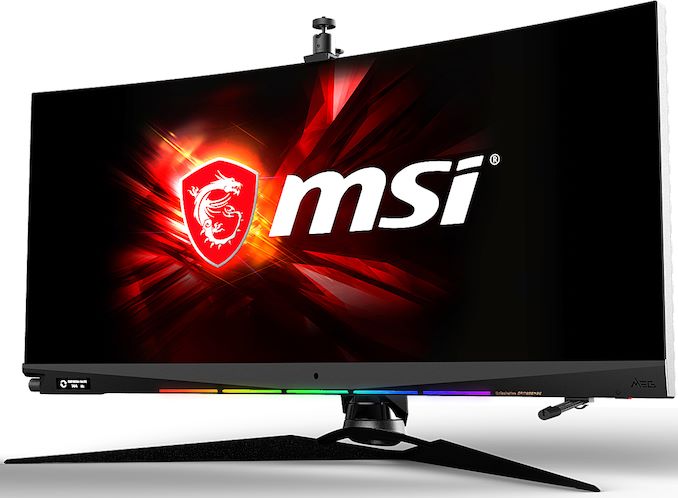
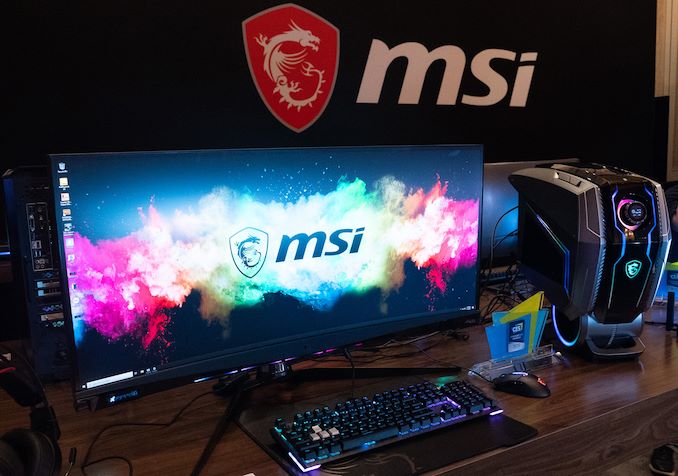
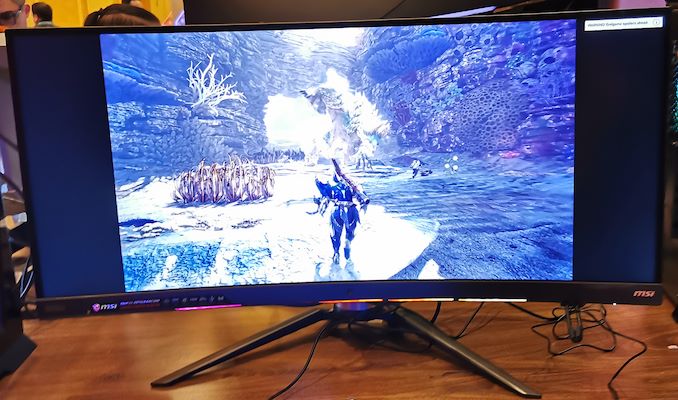
| 11:00a | MSI Reveals Optix MEG381CQR 37.5-Inch HDR600 144 Hz Curved Monitor
MSI has announced its new curved gaming display that combines a near-4K resolution with an up to 144 Hz variable refresh rate supported by VESA’s Adaptive-Sync technology, and 600 nits brightness in HDR mode. In addition to its main capabilities, the MEG381CQR monitor has two interesting 'smart' features, such as an auxiliary OLED screen that displays various information as well as a special webcam that can recognize user’s face and load an appropriate profile tailored for them based on the game being played. The MSI Optix MEG381CQR uses a 37.5-inch IPS panel featuring a 2300R curvature, a 3840x1600 resolution, a 1 ms GtG response time, and a variable refresh rate of up to 144 Hz handled by VESA’s Adaptive-Sync technology. The LCD is VESA DisplayHDR 600 certified, so it supports a peak brightness of at least 600 nits in HDR mode, but also some kind of a local dimming technology (edge lit?) to ensure a higher contrast ratio and deeper blacks. It is logical to expect the monitor to support a wide color gamut (think >90% DCI-P3), but MSI currently does not confirm this.
As we noted in our previous coverage of 37.5-inch ultrawide displays featuring a 3840x1600 resolution, they are very well suited both for gaming and for watching Ultra-HD videos filmed in an aspect ratio of 2.35:1 or 2.40:1, which is a popular aspect ratio for movies. Traditionally for gaming displays, the Optix MEG381CQR is equipped with a stand that can adjust height, tilt, and swivel. In fact, to maximize precision of height adjustment, the display seems to have a special knob on top. Other notable features of the monitor are the aforementioned OLED screen that can display various information that might be crucial for a particular game, and a special camera to recognize the owner and adjust settings in accordance with their preferences.
MSI currently does not have a firm launch date for its Optix MEG381CQR monitor and only says that it plans to launch it sometimes in the third or the fourth quarter. Pricing of the display is also not set, so we can only make guesses based on MSRPs of other curved 37.5-inch displays which appear to be pretty expensive. Related Reading: Source: MSI | |||||||||||||||||||||||||||||||||||||||||||||||||||||||||||||||||||
| 12:00p | AMD New Hires: Dan McNamara from Intel, Joshua Friedrich and Brad McCredie from IBM
There is always a fairly fluid movement of engineers in the companies we cover, but recently AMD has made a number of substantial hires into several of its biggest departments. | |||||||||||||||||||||||||||||||||||||||||||||||||||||||||||||||||||
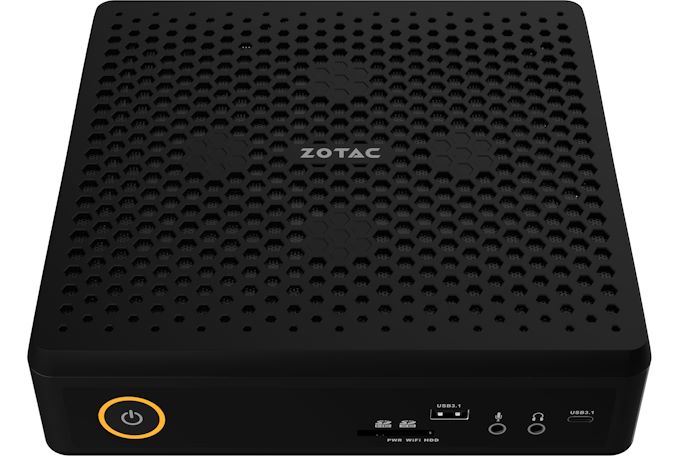
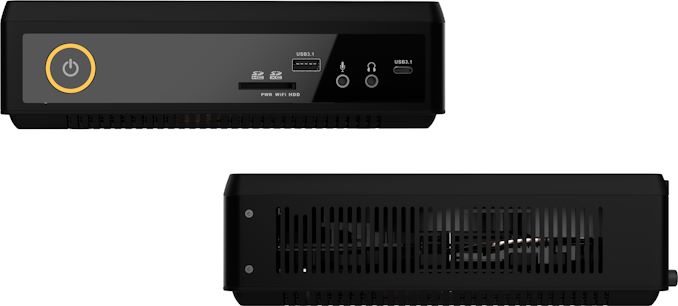
| 1:00p | ZOTAC’s UCFF Zbox Magnus EN92080V: Up to 8-Core i9 and RTX 2080
ZOTAC introduced its upcoming high performance ultra-compact form-factor (UCFF) gaming machine that promises to offer performance of a high-end gaming laptop. The Zbox Magnus EN92080V packs an Intel eight-core processor as well as NVIDIA’s GeForce RTX 2080. The ZOTAC Zbox Magnus EN92080V comes in a slim chassis that measures only 62.2 mm (2.45 inches) in height and features a volume of just 2.65 liters. The PC it is powered by Intel’s eight-core Core i9 processor (with a 45 W TDP) as well as NVIDIA’s GeForce RTX 2080 graphics processor in its version for laptops. It is unclear whether the GPU is soldered down to the motherboard of the model EN9280V, or is located on an MXM card and thus can be upgraded eventually. It's worth noting that the Zbox Magnus EN92080V does not seem to have a Thunderbolt 3 port, but the UCFF gaming PC can house up to 32 GB of DDR4-2666 memory using two SO-DIMM slots, one 2.5-inch storage device, and an SSD in an M.2 form-factor, so at least memory and storage can be expanded.
Moving on to connectivity of the Zbox Magnus EN92080V, everything looks pretty standard for today’s gaming laptops. The machine features the Rivet Killer AX1650 Wi-Fi 6 + Bluetooth 5 adapter, two Ethernet ports (one GbE, one 2.5 GbE, also from Rivet), two USB 3.1 Type-C connectors, four USB 3.0 Type-A connectors, four display outputs (one DisplayPort 1.4, two HDMI 2.0b, one USB-C), and SD card reader, and two 3.5-mm audio jacks for headphones and a microphone. Historically, ZOTAC used GeForce MXM modules for its small form-factor Zbox Magnus systems, but improved energy efficiency of NVIDIA’s desktop GPUs and ZOTAC’s own cooling systems allowed the company to switch to regular graphics cards and enable its customers to upgrade them. With the Zbox Magnus EN92080V, ZOTAC uses a mobile CPU and a mobile GPU again, but this time to make a UCFF gaming PC that offers performance of a premium desktop computer. ZOTAC will start sales of its Zbox Magnus EN92080V in the coming months. Pricing will be revealed when the product is launched. Related Reading: Sources: ZOTAC | |||||||||||||||||||||||||||||||||||||||||||||||||||||||||||||||||||


| << Previous Day |
2020/01/21 [Calendar] |
Next Day >> |