[Most Recent Entries] [Calendar View]
Friday, February 7th, 2020
- Silicon Power’s Bolt B75 Pro: An External SSD up to 2 TB, USB 3.1 Gen 2 Type-C
- Silicon Power Launches Bolt B80 External SSD: 500 MB/s, IP68, USB-C Interface
- ADATA Demonstrates HD830 Ultra-Rugged HDDs
- Seagate Backup Plus Portable 5TB & Backup Plus Slim 2TB Review: SMR for the Consumer Market
- CES 2019: The Quintessential ADATA HC770 External HDD, with RGB
- CES 2020: ASUS Unveils Dual-Screen ZenBook Duo UX481 Notebook
- CES 2020: ASUS’ Latest VivoBook S Packs 10th Gen, Lots of Colors
- CES 2020: ASUS Launches Ultralight 14-Inch Project Athena ExpertBook B9450 - Just 865 Grams
- ASUS Unveils The ProArt StudioBook Pro 17: A Cheaper Mobile Workstation
- ASUS Releases ProArt StudioBook Pro X: 17-Inch Workstation With Xeon & Quadro
- Palit Announces KalmX: A Passively-Cooled GeForce GTX 1050 Ti Graphics Card
- Akasa's Turing: A Passively-Cooled Chassis for Intel’s Bean Canyon NUC
- Compulab Passively-Cooled Airtop2 Inferno with GeForce GTX 1080
- Calyos NSG Cube: Passively Cooled SFF PC with Intel Core and GeForce GTX 1060
- GALAX Launches Low Profile GeForce GTX 1050 OC and 1050 Ti OC
- GIGABYTE Quietly Launches Low Profile GeForce GTX 1050, 1050 Ti Graphics Cards
- MSI Adds Low-Profile GeForce GTX 1050 Ti to Lineup
| Time | Event | |||||||||||||||||||||||||||||||||||||||||||||||||||||||||||||||||||||
| 8:00a | Silicon Power Unveils Stream S07 External Hard Drives: Up to 8 TB
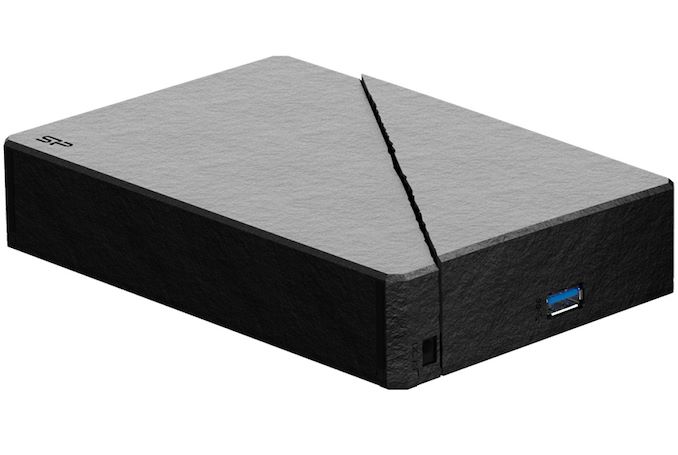
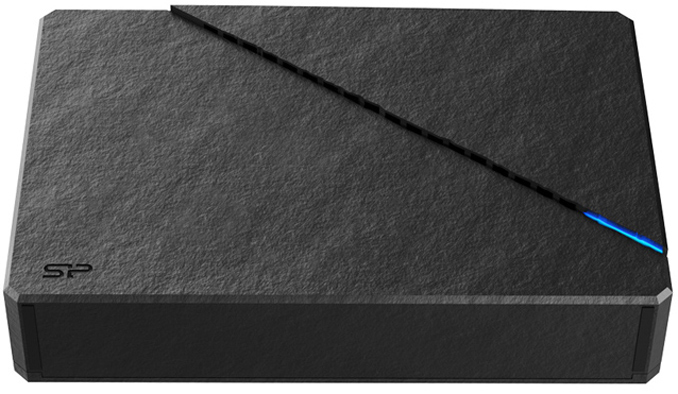
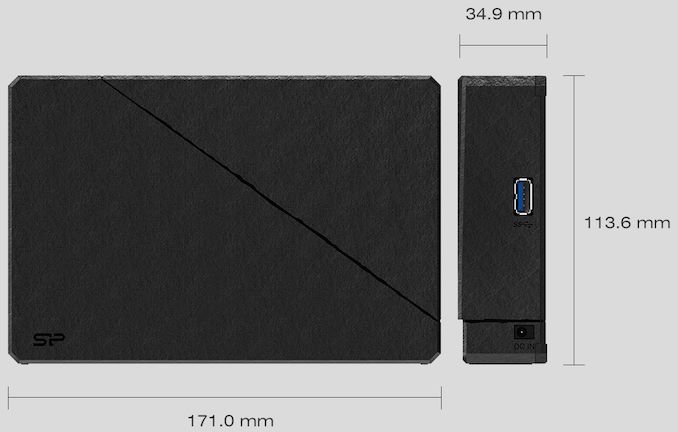
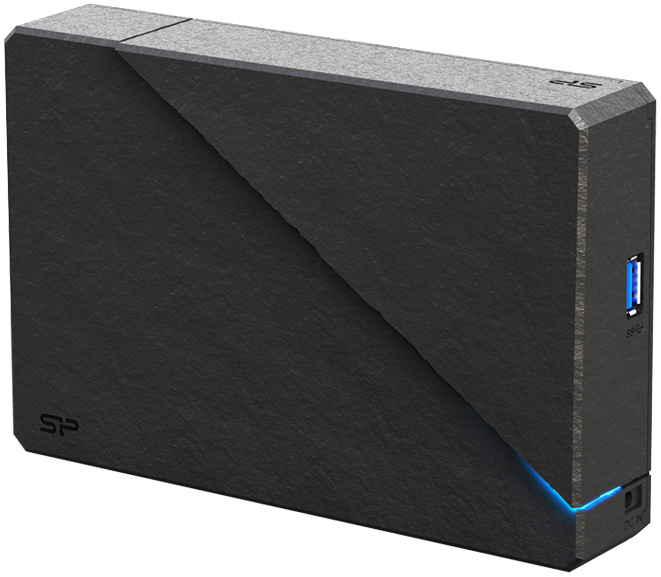
Silicon Power has revealed a new series of consumer-oriented 3.5-inch external USB hard drives. The Stream S07 HDDs can be used with PCs, Smart TVs, and other devices. The Silicon Power Stream S07 family consists of four models featuring 3 TB, 4 TB, 6 TB, and 8 TB capacity. All the drives come in a black plastic enclosure with a texture that resembles a stone. To make resemblance with a stone even more realistic, the chassis has an opening that looks like a crack. The opening is used for cooling and it also has a stylish integrated LED that is used as a transfer status indicator.
The manufacturer is not disclosing which hard drives are used for its Stream S07 DAS devices, though given the performance and power needs for the device, they certianly won't be high-end. If nothing else, since we are not dealing with high-capacity drives, this means they are based on CMR (conventional magnetic recording) technology and won't incur the greater complexities of using a shingled drive.
Silicon Power’s Stream 07 external hard drives will be available shortly. Prices will vary depending on the capacity.
Related Reading: Source: Silicon Power | |||||||||||||||||||||||||||||||||||||||||||||||||||||||||||||||||||||
| 9:00a | The 64 Core Threadripper 3990X CPU Review: In The Midst Of Chaos, AMD Seeks Opportunity The recent renaissance of AMD as the performance choice in the high-end x86 market has been great for consumers by enabling a second offering at the top-end of the market. Where Intel offers 28 cores, AMD offers 24 and 32 core parts for the high-end desktop, and to rub salt into the wound, there is now a 64 core offering. This CPU isn’t cheap: the Ryzen Threadripper 3990X costs $3990 at retail, more than any other high-end desktop processor in history, but with it AMD aims to provide the best single socket consumer processor money can buy. We put it through its paces, and while it does obliterate the competition, there are a few issues with having this many cores in a single system. | |||||||||||||||||||||||||||||||||||||||||||||||||||||||||||||||||||||
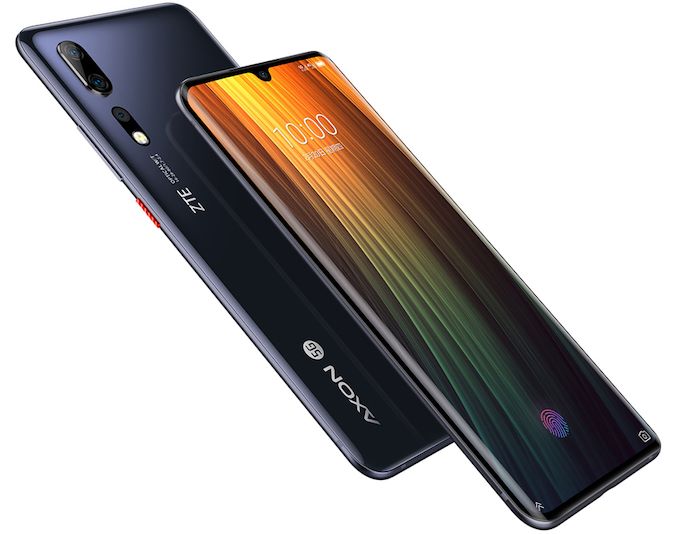
| 3:00p | First with Snadragon 865: ZTE Unveils Axon 10s Pro w/ 5G, 6.47-Inch AMOLED, 12 GB LPDDR5
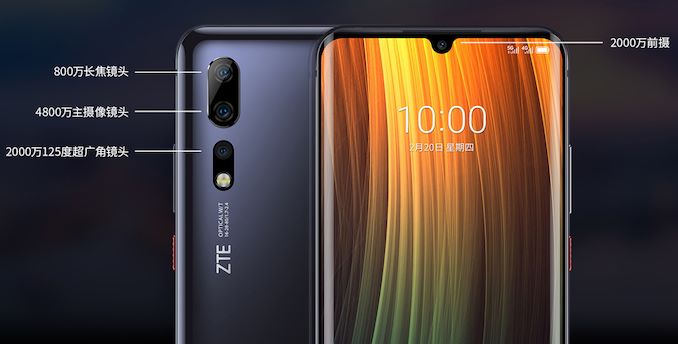
ZTE has announced the industry’s first handset powered by Qualcomm’s new Snapdragon 865 processor, which will be powering the majority of high-end Android smartphones this year. As expected, the Axon 10s Pro is a 5G phone with an advanced camera and a beefy configuration. The ZTE Axon 10s Pro 5G looks just like its predecessor — the Axon 10 Pro 5G — and comes with the same large 6.47-inch AMOLED display featuring a 2340x1080 resolution, a 19.5:9 aspect ratio, and curved edges. Speaking of similarities between ZTE’s flagship 2019 and 2020 smartphones, it should be noted that the key differences between them are the SoC, the memory and storage subsystems, as well as launch software; everything else is the same.
The Axon 10s Pro 5G smartphone is powered by Qualcomm’s Snapdragon 865 SoC (4x Arm Cortex-A77, 4x Arm Cortex-A55, Adreno 650 GPU, Hexagon 698 DSP/NPU) that is paired with 6 GB or 12 GB of LPDDR5 as well as 128 GB or 256 GB of UFS 3.0 NAND flash storage. And in a bid to to improve the performance of the already powerful system memory and storage subsystems, the handset also supports RAM-Booster and FS-Booster firmware/software capabilities.
The imaging capabilities of the ZTE Axon 10s Pro are the same as those of its predecessor, so the handset sports a triple-module rear camera system containing a 48 MP main module with OIS, an 8 MP telephoto camera, and an ultrawide 20 MP lens. In addition, the phone has a teardrop 20 MP selfie camera.
Other notable hardware features of the handset include 5G, Wi-Fi 6, Bluetooth 5.0, navigation, a USB 2.0 Type-C port, an under-display fingerprint reader, and a 4,000 mAh battery that can be charged using a wired or wireless charger supporting Quick Charge 4+. The smartphone does not have a 3.5-mm audio jack, but its speakers do support DTX: X Ultra technology. On the software side of matters, ZTE’s Axon 10s Pro will come with Google’s Android 10 with the MiFavor 10 UI.
The ZTE Axon 10s Pro will be available in the near future at prices starting at CNY 3,200 in China (~460 USD). It unclear when the handset is set to hit other markets and how much it is set to cost. Related Reading: | |||||||||||||||||||||||||||||||||||||||||||||||||||||||||||||||||||||
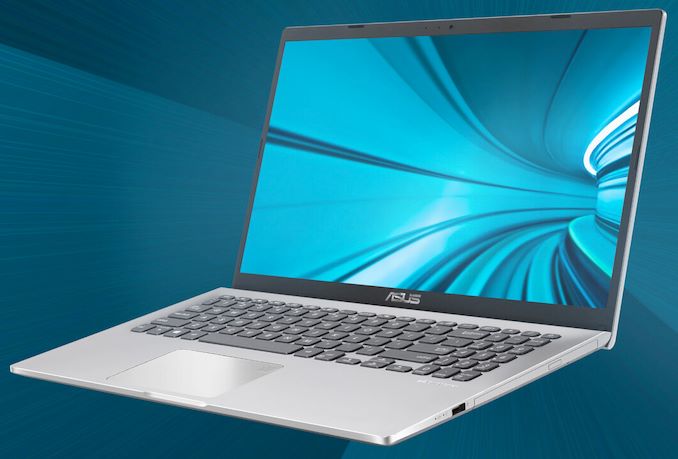
| 4:00p | Intel’s Comet Lake Meets Optical Drive in ASUS X545FA Laptop
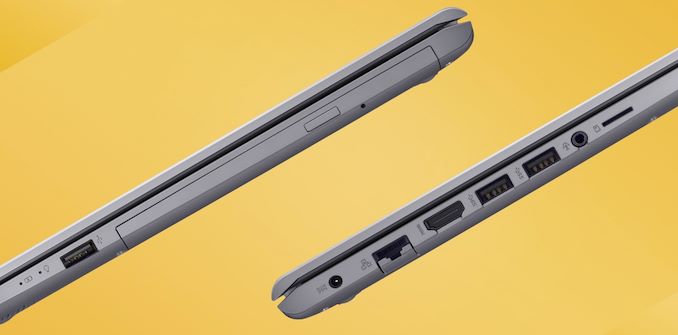
The rise of software distribution over the Internet and content streaming services have greatly reduced the value of optical disc drives for the average consumer. At the same time, the trend towards thinner laptops persuaded PC makers to remove ODDs from notebooks. As a result, it is now rather uncommon to find a new mobile PC with a BD or DVD drive, a pity for those with large collections of discs. But optical drives aren't entirely dead quite yet, and to address the market for customers who still need a drive, ASUS Japan this week introduced its X545FA laptop, an Intel Comet Lake-based machine that includes a DVD drive. The ASUS X545FA notebook is equipped with a 15.6-inch Full-HD display and comes in a "Slate Gray" or "Transparent Silver" body that is 23 mm thick. In line with other machines in this class, the laptop weighs 1.9 kilograms. At the heart of the mobile PC are Intel's 10th gen quad-core Core i3-10110U and Core i7-10510U processors with built-in Intel UHD graphics, accompanied by up to 8 GB of DDR4 SDRAM, and a 512 GB M.2 PCIe 3.0 x2 SSD. The system comes with a Super Multi DVD drive that can read and burn various types of CD and DVD media. Meanwhile, DVD playback software is not included. Yes, you read that right, it's just a DVD drive in 2020, lacking support for more modern Blu-ray discs. We're not too sure what ASUS' rationale here is - it's possible DVDs are still very popular in Japan?
On the connectivity side of matters, the X545FA notebook supports Wi-Fi 5, Bluetooth, GbE, USB, HDMI, microSD, and an audio jack. As for multimedia, the laptop features a webcam, stereo speakers, and a microphone array. In addition, the machine has a fingerprint reader.
ASUS says that its X545FA notebook can work for 6.7 ~ 6.8 hours on one charge. This is below what you expect from a modern 15.6-inch class machine, but which may indicate that the manufacturer largely positions the notebook as a cheap desktop replacement machine rather than a PC for work on the go.
Depending on exact SKU, the ASUS X545FA costs from ¥77,556 to ¥99,818 ($705 – $908) without tax.
Related Reading: | |||||||||||||||||||||||||||||||||||||||||||||||||||||||||||||||||||||
| 5:00p | A Passively-Cooled GeForce GTX 1650: KalmX by Palit
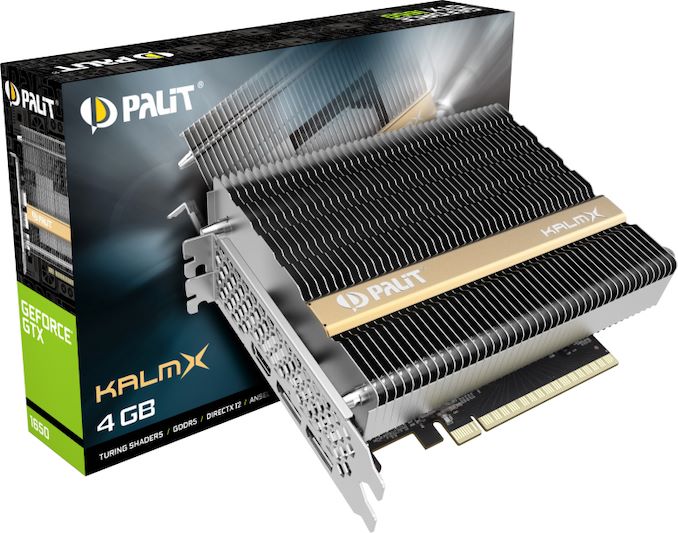
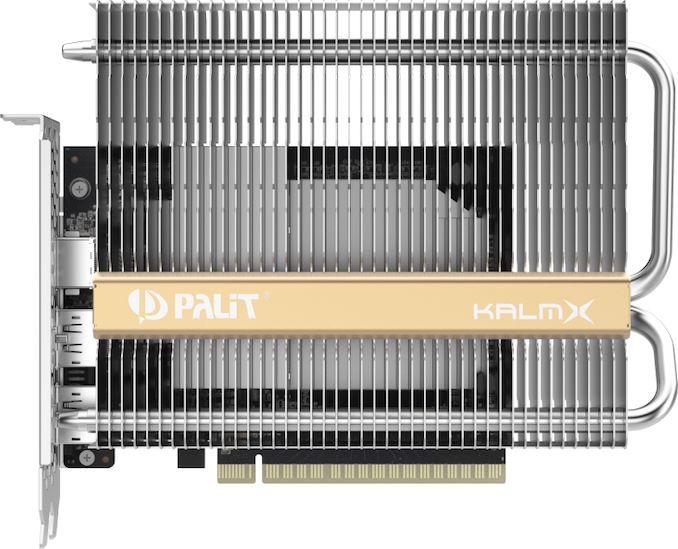
Passively-cooled video cards are rather rare these days, as the bulk of the market has made peace with today's dual fan actively cooled cards. Luckily, there are a still a few companies releasing passive designs, such as Palit Microsystems, who has introduced its fanless GeForce GTX 1650 KalmX. The Palit GeForce GTX 1650 KalmX (NE5165001BG1-1170H) uses a custom PCB and comes with a sizable passive cooling solution. The double-wide heatsink incorporates a pair of heatpipes, and is considerably taller than the card as well. All told, with the heatsink factored in, the card measures 178 mm long and is 138 mm high. And unsurprisingly, given the strict thermal limitations in play, Palit is playing things conservatively here, and the card runs at NVIDIA official GTX 1650 reference clockspeeds of 1485 MHz/1665 MHz (base/boost). Typical for GTX 1650 cards, Palit is using 4 GB of 8 Gbps GDDR5 memory here. The card has two DisplayPort 1.4a outputs and one HDMI 2.0b port.
Officially, Palit rates the card for a TDP of 75W; and judging from what we've seen with other GTX 1650 cards, that's probably a bit conservative as well. Which is all the better for Palit, since it makes their job of passively cooling the video card all the easier. The other upside of being a sub-75W card is that an auxiliary PCIe power plug isn't required, so the card can be dropped into a system and immediately used with no further internal wiring.
Palit has not revealed an MSRP for the GeForce GTX 1650 KalmX. NVIDIA’s regular MSRP for the GTX 1650 ($149), though I wouldn't be too surprised to see Palit charge a premium for a unique, passively-cooled card.
Related Reading: Source: Palit | |||||||||||||||||||||||||||||||||||||||||||||||||||||||||||||||||||||






| << Previous Day |
2020/02/07 [Calendar] |
Next Day >> |