[Most Recent Entries] [Calendar View]
Friday, February 21st, 2020
- Intel Confirms Comet Lake-Based NUC 10 ‘Frost Canyon’ UCFF PCs
- Intel’s Islay Canyon Mini NUCs Available: Whiskey Lake, Radeon 540X, 8GB LPDDR3
- GIGABYTE Updates BRIX SFF PCs with Intel’s Kaby Lake CPUs
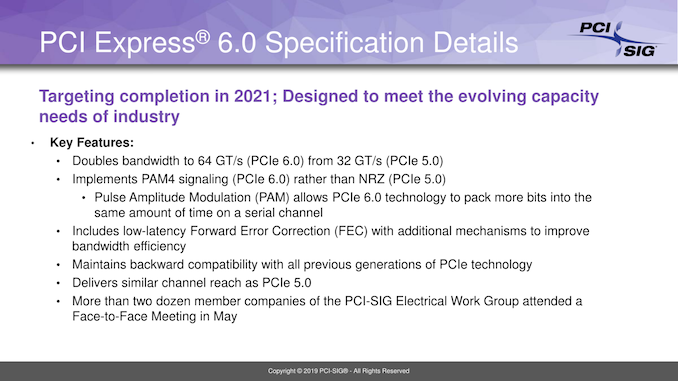
- Version 0.3 is beheld as a Concept and outlines the key features and architecture of the technology. In case of PCIe 6.0, we are talking about 64 GT/s per lane speed, pulse amplitude modulation with 4 levels (PAM-4) encoding, and forward error correction (FEC).
- Version 0.5 is considered as the First Draft specification and so it covers all the key aspects of the architecture and includes feedback from interested parties (within PCI-SIG) to version 0.3. Members of the group will be able to add new functionality to the technology at this point.
- Version 0.7 is deemed to be the Complete Draft, everything has to be defined at all levels and electrical specifications must have been validated via test chips. No new features may be added after release of this iteration of the specification.
- Version 0.9 is the Final Draft that is meant to allow PCI-SIG members to review the technology for their intellectual property.
- Version 1.0 is the Final Release.
- PCIe 6.0 Dev Reaches v0.3; On-Track for a Full Specification In 2021
- PCI Express Bandwidth to Be Doubled Again: PCIe 6.0 Announced, Spec to Land in 2021
- Gen-Z PHY Specification 1.1 Published: Adds PCIe 5.0, Gen-Z 50G Fabric
- PCI-SIG Finalizes PCIe 5.0 Specification: x16 Slots to Reach 64GB/sec
- Synopsys Demonstrates CXL and CCIX 1.1 over PCIe 5.0: Next-Gen In Action
- Greenliant Launches EnduroSLC SSDs with Up to 250K P/E Cycles
- Enmotus MiDrive: Rethinking SLC Caching For QLC SSDs
- Toshiba Launches XL-FLASH 3D SLC NAND
- Memblaze’s PBlaze5 X26: Toshiba’s XL-Flash-Based Ultra-Low Latency SSD
- ADATA Launches microSD Cards Based on SLC NAND Memory
- Western Digital Develops Low-Latency Flash to Compete with Intel Optane
- MSI’s New Prestige 14 & 15 Laptops Get Intel's Comet Lake-U CPUs & Calibrated 4K Display
- Lenovo’s Yoga Creator 7: A Budget 15.6-Inch NVIDIA Studio Laptop for Creators
- CES 2019: MSI PS63 Modern Notebook, a 15.6-inch with 16 Hours Battery Life
- MSI’s Alpha 15: AMD Ryzen 3750H and Radeon RX 5500M
- AOC Agon 35-Inch 200 Hz Curved 3440x1440 HDR Gaming Monitor with FreeSync 2 or GSync
- CES 2020: Acer’s Predator X38 Is A 38-Inch Curved Monitor w/ UWQHD+, 175 Hz & G-Sync
- Samsung’s Odyssey Continues: Ultra-Curved QLED 49-Inch 240 Hz HDR1000 Monitor w/ Adaptive Sync
- AOC Reveals Two 34-Inch Curved Gaming Monitors: Up to 144 Hz & FreeSync
- JapanNext Launches 35-Inch "UWHD" Curved LCD: AMVA & 200Hz Refresh w/FreeSync
| Time | Event | ||||||||||||||||||||||||||||||||||||||||||||||||||||||||||||||||||||||||||||||||||||||||||||||||||||||||||||||||
| 8:00a | GIGABYTE Unveils Comet Lake-Based BRIX UCFF PC: 6 Cores, USB-C 3.2 Gen 2, & RS232
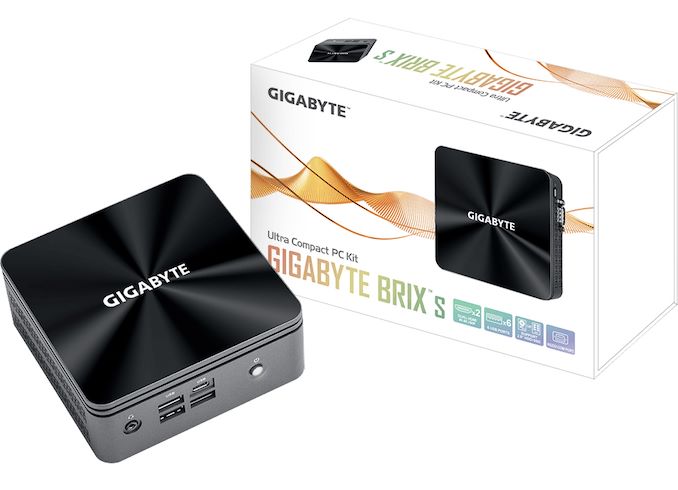
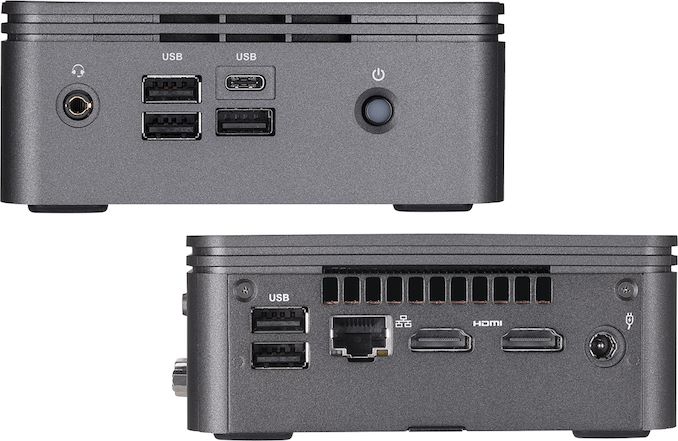
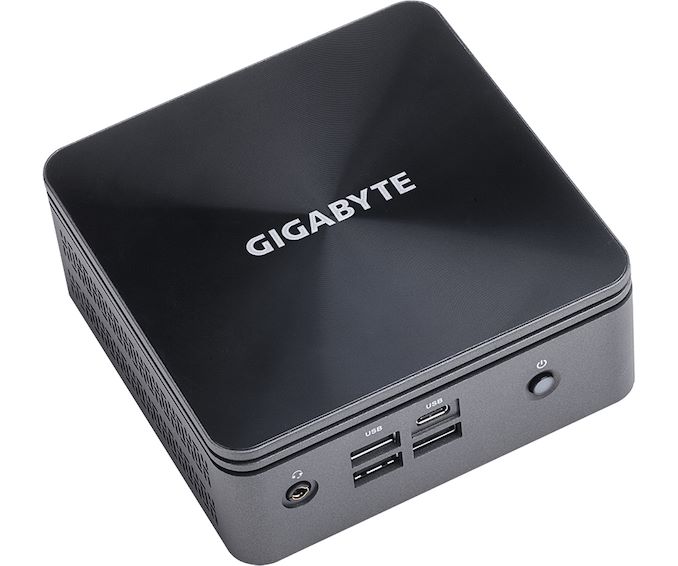
GIGABYTE has quietly added its first Comet Lake-U-powered ultra-compact form-factor (UCFF) BRIX PCs to its lineup. The new systems were designed for home, office, and commercial applications, they offer up to six cores as well as advanced connectivity. GIGABYTE’s lineup of BRIX UCFF barebones PCs based on Intel’s 10th Generation Core (Comet Lake-U) processors currently includes four base models featuring the Core i7-10710U with six cores, the Core i7-10510U as well as the Core i5-10210U with four cores, and the Core i3-10110U with two cores. All systems can be equipped with up to 64 GB of DDR4-2666 memory using two SO-DIMMs, an M.2-2280 SSD with a PCIe 3.0 x4 interface, and a 2.5-inch SSD or HDD with a SATA 6 Gbps interface.
Connectivity capabilities of all Comet Lake-U-powered GIGABYTE BRIX systems are similar and include Intel’s Wireless-AC 3168 Wi-Fi 5 + Bluetooth 4.2 M.2-2230 adapter, a GbE port (controlled by the Intel i219V), a USB 3.2 Gen 2 Type-C connector, five USB 3.2 Gen 2 Type-A ports, two HDMI 2.0 display outputs, and a 3.5-mm combo jack for headsets, and an RS232 COM port. In addition, the new barebones can accommodate an add-on-card that adds another GbE and another RS232 COM port. Measuring 119.5×119.5×46.8 mm, the GIGABYTE BRIX barebones with Intel’s Comet Lake-U will easily fit into any environment. GIGABYTE has developed a pretty broad market for the BRIX systems over the years, so the company is aiming for everything from home and office out to commercial applications like digital signage, and even for applications that require RS232 COM connectivity. Overall, GIGABYTE is among the first computer makers to introduce UCFF barebones PC with Intel’s Comet Lake-U processors. Interestingly, despite mobile nature of the CPU, the manufacturer equips the systems with fairly beefy 90 W and 135 W external PSUs.
Now that GIGABYTE lists its Comet Lake-enabled BRIX barebones on its website, expect them to hit the market shortly.
Related Reading: Source: GIGABYTE (via CNX Software) | ||||||||||||||||||||||||||||||||||||||||||||||||||||||||||||||||||||||||||||||||||||||||||||||||||||||||||||||||
| 10:00a | PCIe 6.0 Specification Hits Version 0.5: On Track for 2021
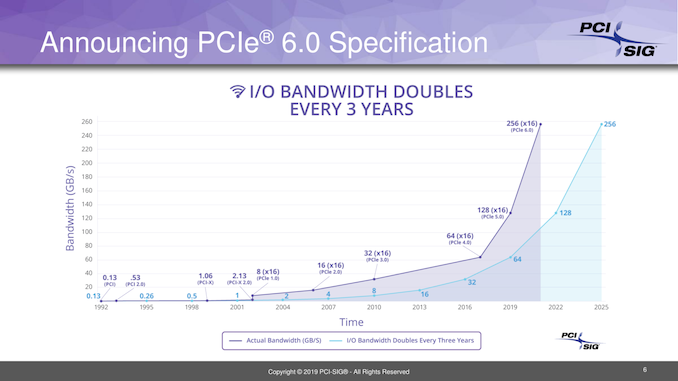
PCI-SIG has released version 0.5 of the PCIe 6.0 specification to its members this week. The new, "first draft" version of the spec includes the feedback the group got from its members after publication of version 0.3 back in October. With their latest update, PCI-SIG remains confident that it is on track to finalize the PCIe 6.0 standard in 2021. It took PCI-SIG long seven years to complete the PCIe 4.0 specification, a long slog that the group has committed to avoiding going forward for PCIe 5.0 and beyond. With PCIe 6.0, PCI-SIG is keeping up that rapid pace of development, releasing the first draft version of the spec less than a year after formal announcement of the spec.
Overall, PCI-SIG has five key steps in creating a PCIe specification: The publication of version 0.5 of the PCIe 6.0 specification is essentially the final call for submissions of the new features by PCI-SIG member companies. Furthermore, with the first draft available, companies can start designing test silicon to ensure that everything works and even begin preliminary work on commercial chips.
The next milestone for the PCIe 6.0 specification will be the upcoming PCI-SIG Developers Conference 2020 in early June, where the group plans to present deep dives into the features of the technology. Related Reading: Source: PCI-SIG | ||||||||||||||||||||||||||||||||||||||||||||||||||||||||||||||||||||||||||||||||||||||||||||||||||||||||||||||||
| 12:00p | What's TLC is SLC Again: MEMXPRO Introduces PC32 Full-Drive Pseudo-SLC SSDs
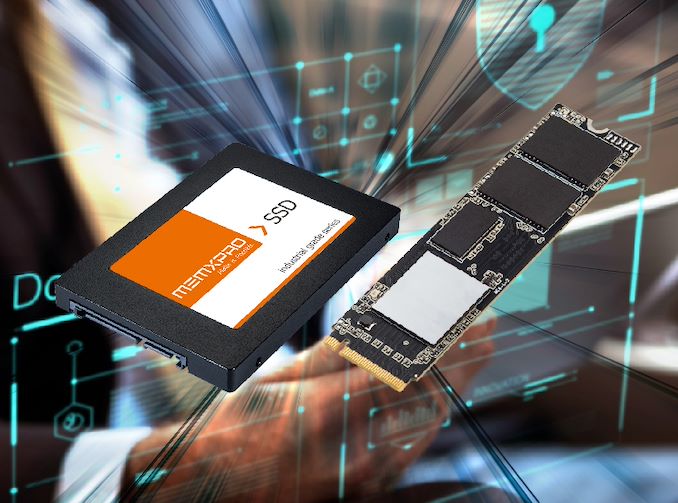
Pseudo-SLC caches for TLC-based SSDs are almost as old as TLC NAND itself, serving as a simple and practical solution to TLC's lower sustained throughput. But like all caches, pseudo-SLC caches have a finite size; and once you run over it, you're back to directly hitting the TLC. So what is a user or system builder to do if they need a drive with SLC-like performance all the time? For a while, the answer to that has been MLC drives, but with MLC slowly but surely on its way out as well, other solutions are needed. And to that end, MEMXPRO is introducing a series of new drives that go the opposite direction, embracing pseudo-SLC mode to its very core by making the entire drive pseudo-SLC. Based on 64-layer 3D TLC memory, MEMXPRO's PC32 drives use drive-wide pseudo-SLC mode to give the drives MLC-like performance and reliability. This setup is overkill for most applications, but for use cases that require SSDs with long lifespans, and high durrability – MEMXPRO's specialty – the PC32 fills an important niche. The MEMXPRO PC32 drives in are based on the Silicon Motion SM2262EN controller as well as Micron’s B17A 64-layer 3D TLC NAND memory, which is rated for 10,000 P/E cycles. By putting the drives in pseudo-SLC mode, the manufacturer is able to increase their durability to 40,000 P/E cycles, albeit at the cost of capacity. Since TLC NAND that offers 3-bits of storage per cell is otherwise reduced to 1-bit per cell, the drives are available in capacities from just 80 GB to 320 GB. As for throughput, with the high-end controller used for the drive, MEMXPRO has rated the drives' sustained sequential read and write performance 3,250 and 2,980 MB/s respectively, which is in line with other modern SSDs featuring a PCIe 3.0 x4 interface. Under the hood, MEMXPRO’s PC32 drives are built on PCBs with side fill and under fill protective conformal coating to enhance their reliability. Also, they are designed to ensure reliable performance within industrial temperature ranges (-40°C to +85°C), so the number of applications they can address is wide. Meanwhile, the SM2262EN controller fully supports AES 256-bit encryption with TCG OPAL 2.0 compliance, so the manufacturer can enable this functionality at request with an appropriate firmware. PC32 also supports MEMXPRO’s proprietary mSMART intelligent storage management tool to monitor drive health and lifespan status that warns owner of the drive about increased risks. MEMXPRO will demonstrate its PC32 and other SSDs at the upcoming Embedded World 2020 trade show later this month, and will start taking orders on the drives shortly. The company has also noted their interest in developing more all-SLC drives, noting that that if the market requires higher-capacity products in a different form-factor, those SSDs could be developed as well. Related Reading: Source: MEMXPRO | ||||||||||||||||||||||||||||||||||||||||||||||||||||||||||||||||||||||||||||||||||||||||||||||||||||||||||||||||
| 2:00p | MSI Intros Modern 15 Laptop: An Inexpensive Laptop for Content Creators
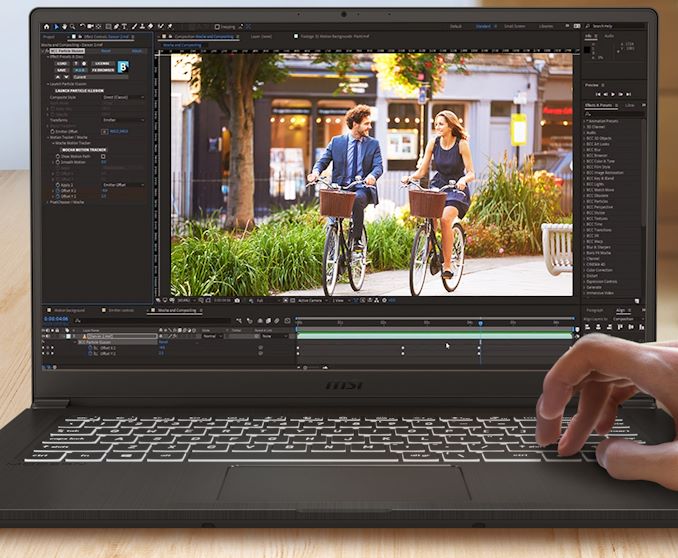
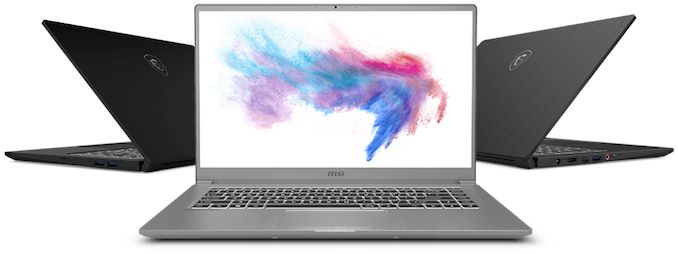
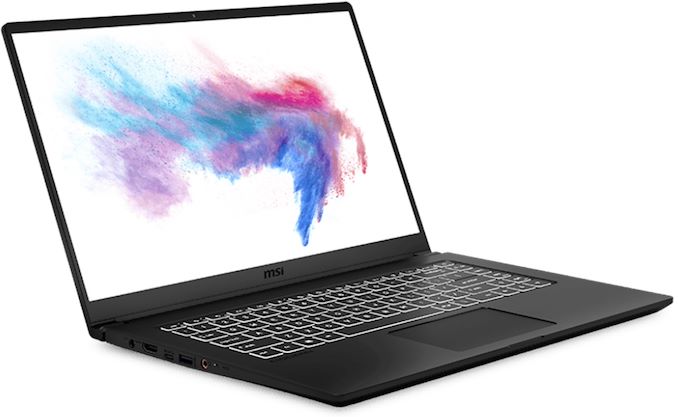
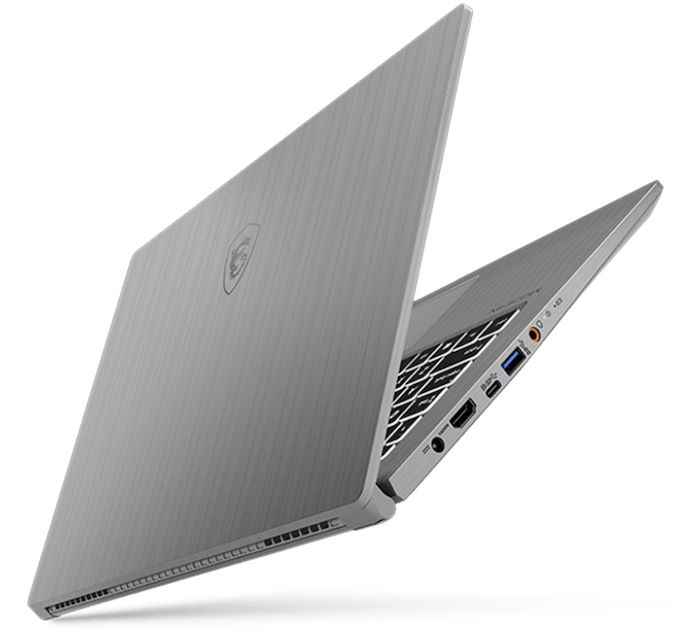
MSI has been actively targeting content creators with its laptops as of recently, so it's only fitting that this week the company introduced its Modern 15 notebook, aimed at the entry-level content creation market. Powered by Intel’s 10th Generation Core (Comet Lake) processor and NVIDIA’s GeForce MX330 discrete graphics chip, the Modern 15 mobile PC promises to offer decent performance as well as a relatively low weight in a reasonably priced package. The MSI Modern 15 laptop currently exists in only one configuration (A10RAS-061JP) which is powered by Intel’s quad-core Core i7-10510U ‘Comet Lake-U’ processor. This is accompanied by 16 GB of dual-channel DDR4 memory, a 512 GB M.2 NVMe SSD, and NVIDIA’s GeForce MX330 graphics chip with 2 GB of GDDR5 VRAM. According to MSI, the CPU and the GPU are cooled via MSI’s Cooler Boost 3 cooling system, which uses two fans and three thick heat pipes. Within MSI's laptop lineup, this places the Modern 15 at essentially a tier below their Prestige series notebooks, giving up features such as hex-core CPUs and GeForce GTX graphics in exchange for a lower price.
As far as connectivity is concerned, MSI’s Modern 15 is equipped with a Wi-Fi 5 + Bluetooth 6 adapter, one USB 3.2 Gen 1 Type-C port (with DP Alt mode support), three USB Type-A connectors (one USB 3.2 Gen 1, two USB 3.2 Gen 2), an HDMI output, a 3.5-mm audio connector for headsets, and a microSD card reader. When it comes to multimedia capabilities, MSI’s Modern 15 laptops are equipped with a webcam with IR sensors, stereo speakers, and a microphone array.
The Modern 15 system comes in a black or silver chassis with brushed aluminum elements that is 15.9 mm thick. The enclosure accommodates a 15.6-inch Full-HD panel, but because of thin bezels, the dimensions of the chassis are close to those of traditional 14-inch notebooks. As for weight, the Modern 15 weighs 1.6 kilograms. MSI says that the laptop will last for nine hours on one charge (according to JEITA 2.0), which is good enough for a laptop that is more likely to be used as a semi-fixed (and frequently plugged in) device to begin with.
MSI intends to start selling the Modern 15 laptop in Japan on February 27, with a price of ¥165,000. It is unclear at this time whether the company intends to bring the product to Europe or the US.
Related Reading: Source: MSI Japan (via Hermitage Akihabara) | ||||||||||||||||||||||||||||||||||||||||||||||||||||||||||||||||||||||||||||||||||||||||||||||||||||||||||||||||
| 4:00p | AOC Launches Their Flagship G-Sync Ultimate Gaming Monitor: The Ultrawide 35-Inch Agon AG353UCG
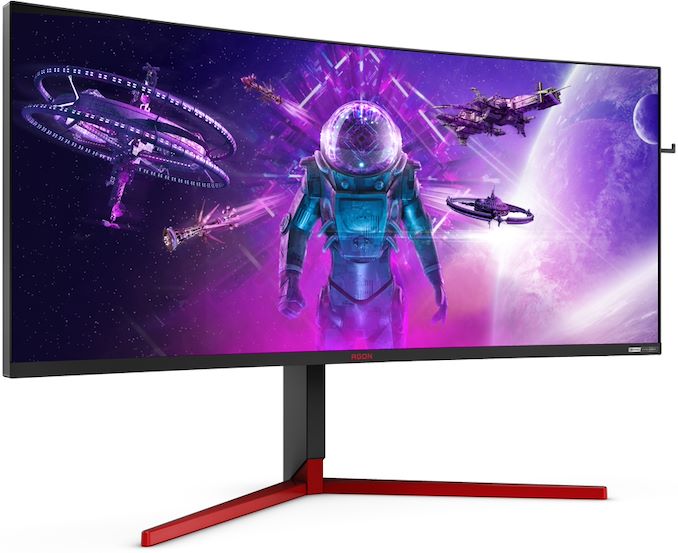
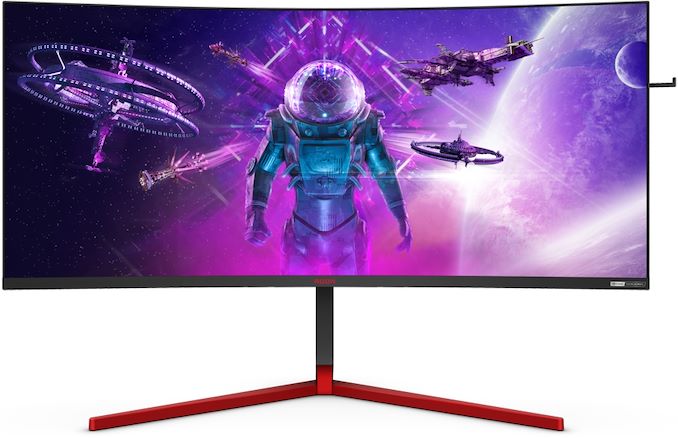
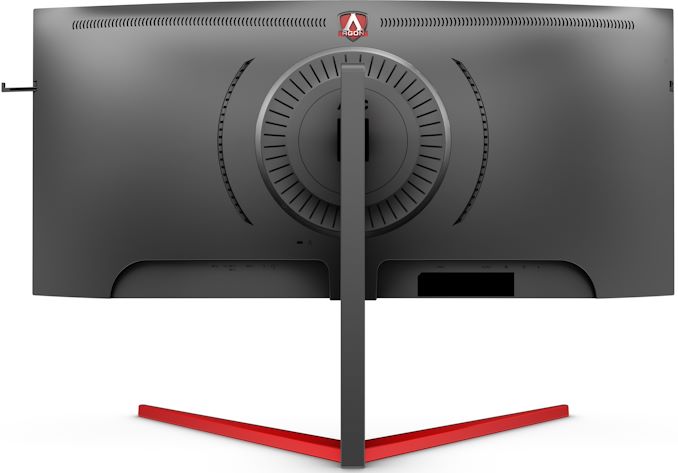
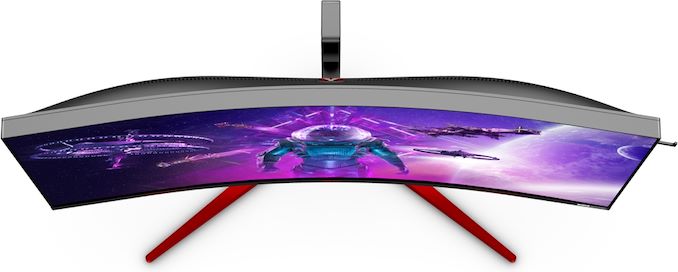
AOC has formally unveiled its long-awaited Agon AG353UCG curved gaming display. The high-end display offers a 200 Hz maximum refresh rate with VESA Adaptive-Sync VRR technology, a 1000 nits peak brightness, as well as a Quantum Dot-enhanced full areal local dimming (FALD) backlighting. The display will be the company’s new flagship curved offering, offering a plethora of features with a hefty price tag to match. AOC says that when it designed its Agon AG353UCG monitor (and other forthcoming members of the 3rd Generation Agon family), it wanted to build a product that would offer the most immersion possible today with an LCD. To do so, the company took a 35-inch 10-bit VA panel featuring a 1800R curvature, a 3440x1440 resolution, a 2 ms GtG response time, a 200 Hz maximum refresh rate, and equipped it with an advanced FALD backlighting. All told, the AG353UCG's backlighting system contains 512 local dimming zones, which have been further enhanced with Quantum Dots for a wider color gamut, offering a very bright and high-contrast HDR experience. As a result, AG353UCG can claim DisplayHDR 1000 compliance – indicating, among other things, a peak brightness of 1000 nits in HDR mode – while being able to display 1.07 billion colors across 90% of the DCI-P3 color gamut.
Like many other flagship HDR gaming displays, the Agon AG353UCG is a G-Sync Ultimate monitor. This means it meets NVIDIA's specifications for response times, color spaces, and backlighting. And it also means that the monitor is almost certainly using NVIDIA's G-Sync HDR scaler as well.
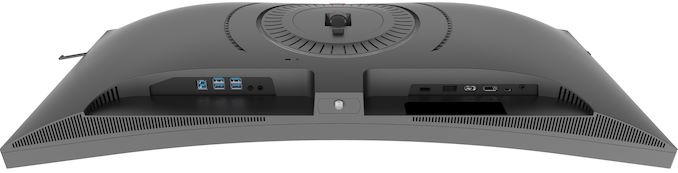
On the connectivity side of matters, the monitor has a DisplayPort 1.4 input, an HDMI 2.0b port, and a Mini DisplayPort input. In addition, the unit has audio connectors (line out, microphone upstream, microphone downstream), and a quad-port USB 3.0 hub with a Type-B upstream port.
For gamers who find ergonomics and looks to be as important as performance, the monitor comes with an aggressive-looking stand that can adjust height and tilt, as well as sporting an RGB LED ring on the back. Meanwhile the sizable display offers a carrying handle and supports cable management, making it a bit easier to move and setup the monitor.
The AOC Agon AG353UCG will be available in Europe this month. In the UK, its RRP will be £2,159, while in mainland Europe it will cost €2,509. So expect it to carry an MSRP of around $2,300 in the USA. At present, the only rival for the Agon AG353UCG is the Acer Predator X35, so the rather high price tag is nothing to be surprised about.
Related Reading: Source: AOC | ||||||||||||||||||||||||||||||||||||||||||||||||||||||||||||||||||||||||||||||||||||||||||||||||||||||||||||||||

| << Previous Day |
2020/02/21 [Calendar] |
Next Day >> |