[Most Recent Entries] [Calendar View]
Monday, June 8th, 2020
- CES 2020: be quiet! Unveils New Pure Rock 2 CPU Cooler For Entry Level
- ID Cooling Unveils IS-30 Low-Profile 30-mm Cooler for 100 Watt CPUs
- My Face on a CPU Cooler: Two Minutes with ASUS’ Ryujin CLC
- Arctic Unveils Alpine AM4 Passive CPU Cooler
- Cooler Master at CES 2018: New MasterAir G100M and MA410M, MasterLiquid ML240 SMART CPU Coolers
| Time | Event |
| 8:00a | ASRock Rack Offers Rome mATX Motherboard with only 6 Memory Channels
One of the items that makes a motherboard immediately standout is the amount of memory slots it has. For mainstream platforms, having two or four memory slots, for dual channel memory at one DIMM per channel (1 DPC) or two modules per channel (2 DPC) respectively is normal. If we saw a motherboard with three, it would be a little odd. We’ve seen high-end desktop platforms have three (Nehalem) or four (almost everything else) memory channels, so we see either 3/4 or 6/8 memory slots respectively for 1 DPC and 2 DPC. When moving into server hardware, Intel’s Xeons have six channels, while AMD’s EPYC has eight channels, so 6/8 and 12/16 for 1 DPC and 2 DPC are obvious. So what happens when a motherboard displays a different number of memory slots than expected? This is what happens with the new ASRock Rack ROME6U-2L2T motherboard. It supports AMD EPYC processors, both Naples and Rome, which have eight channel memory. Even at 1 module per channel, we expect a minimum of eight memory slots. But for this motherboard, there is only six. |
| 9:00a | Lion Semi: How High-Efficiency ICs Enable Fast-Charging
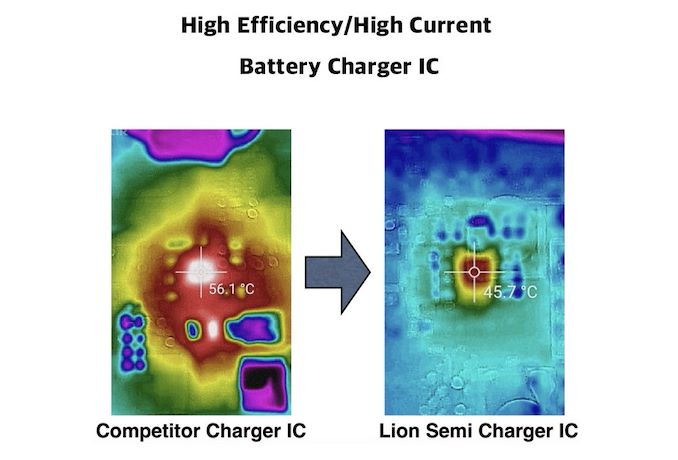
The last few years have seen quite a large shift in the mobile market as smartphone vendors have engaged in a literal arms-race aiming for the fastest charging phones possible. In only a few years we’ve seen phones go from what used to be considered “fast charging” at rate of up to 18W to new advertised 65W rates. What a lot of consumers however often misunderstand, is that these new fast-charging systems aren’t primarily enabled by new battery technologies, but rather by new advances in charging systems that have become more and more efficient. There are many different solutions to increasing charging efficiency, but today’s topic surrounds a younger start-up called Lion Semiconductor that specialises in a very different voltage conversion technology for power ICs, called switched-capacitor voltage converters. The San Francisco based start-up is seeing some increasing success in today’s mobile market where it enables vendors to achieve some of today’s fast charging phones. |
| 12:00p | Intel Kaby Lake-G GPU Driver Updates Left In Limbo, Currently Unsupported
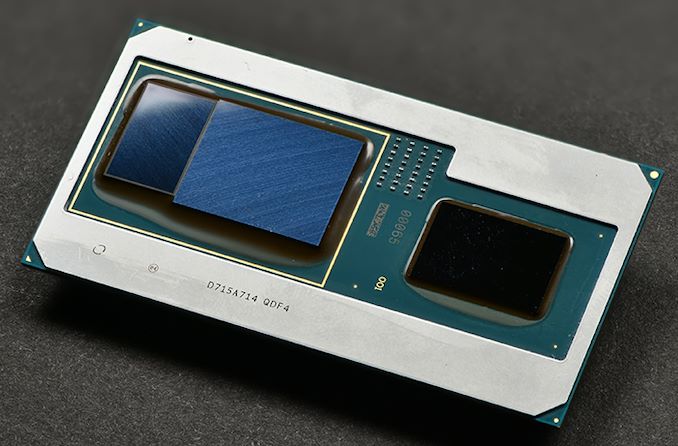
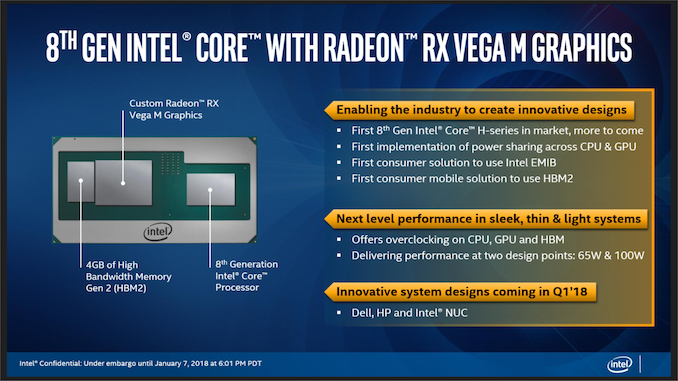
While the retail shelf life of Intel’s unusual Kaby Lake-G processor has pretty much passed at this point, it looks like it has become the gift that keeps on giving when it comes to confusion about how support for the combined Intel/AMD chip will work. First spotted by Tom’s Hardware, AMD’s latest driver Radeon driver installer doesn’t include support for the chip’s AMD “Vega M” GPU, and as a result there are currently no up-to-date drivers available for the platform. And while Tom’s Hardware did get a cryptic-but-promising response from AMD about future driver support, for the moment it’s not clear what’s going to happen or how long-term driver support for the processor will work. A one-off collaboration between Intel and AMD, Intel’s Kaby Lake-G processor combined a quad-core Intel Kaby Lake CPU with a discrete AMD Polaris-based GPU, all on a single package. With the AMD dGPU covering for Intel’s traditionally weak integrated graphics, Kaby Lake-G gave Intel and interesting chip that could deliver great compute performance and much stronger graphics performance as well. However since the GPU portion of Kaby Lake-G came from outside Intel, the chip has always existed in an odd place where it’s never been fully embraced by either manufacturer. Even as an Intel-sold and Intel-branded product, Kaby Lake-G’s Radeon roots were never really hidden, and indeed the chip’s GPU drivers have clearly been a derivative of AMD’s standard driver set since the very beginning. But this has also meant that Intel has been reliant on AMD to provide those drivers, and for reasons that are not entirely public or transparent, this hasn’t been handled well. After a very long break between GPU driver updates, Intel essentially gave up on putting any kind of façade on the source of their GPU drivers, and began directing users to install AMD’s Radeon drivers, which at the same time gained official support for the chip.
And that was the end of that. Or so we thought. Instead, as spotted by the Tom’s Hardware crew, Kaby Lake-G support has once again gone missing from AMD’s drivers. As a result, it’s not possible to install current drivers for the hardware – and even finding drivers that can be installed is a bit of an easter egg hunt. When they reached out to Intel about the matter – and specifically, about updated drivers for Hades Canyon, Intel’s Kaby Lake-G based NUC – Tom’s Hardware did get a promising, but nonetheless cryptic response from the chipmaker: We are working to bring back Radeon graphics driver support to Intel NUC 8 Extreme Mini PCs (previously codenamed “Hades Canyon”).
And for the moment, this is where things stand, with no official explanation as to what’s going on. Driver support for Kaby Lake-G hangs in limbo, as Intel and AMD seem to be unable to sort out responsibility for the chip. Joint projects like these are some of the most difficult in the industry, as having multiple vendors involved in a single product means that there’s some degree of cooperation required. Which is easier said than done when it involves historic rivals like Intel and AMD. Still, I would have expected that driver support is something that would have been hammered out in a contract early on – such that AMD was committed to deliver and paid for the necessary 5 years of drivers – rather than the current situation of Intel and AMD seemingly dancing around the issue. In the meantime, here’s to hoping that Kaby Lake-G’s driver situation gets a happier ending in due time. |
| 2:00p | ID-Cooling Aims Low: 47mm Low-Profile CPU Cooler with 130W TDP
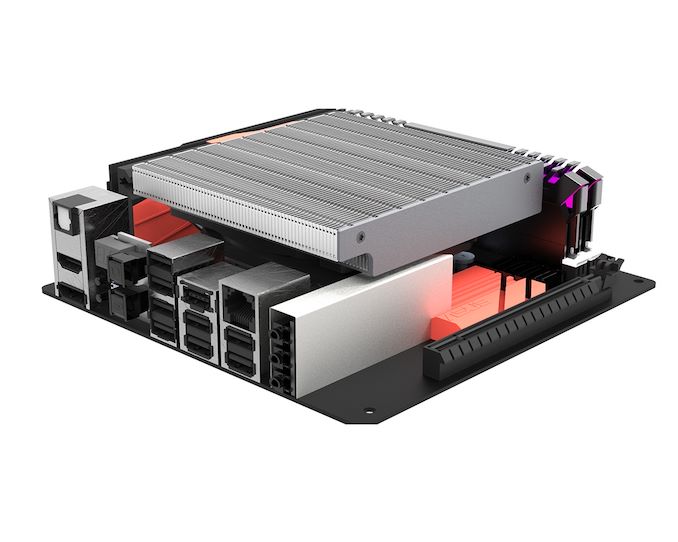
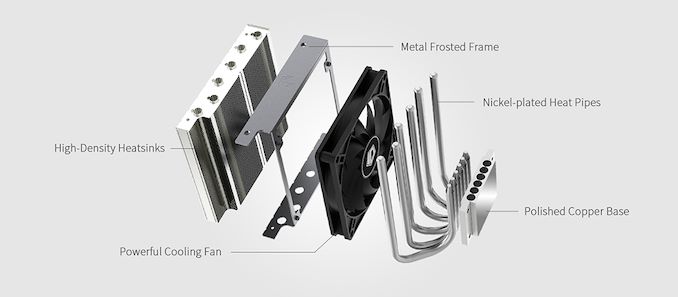
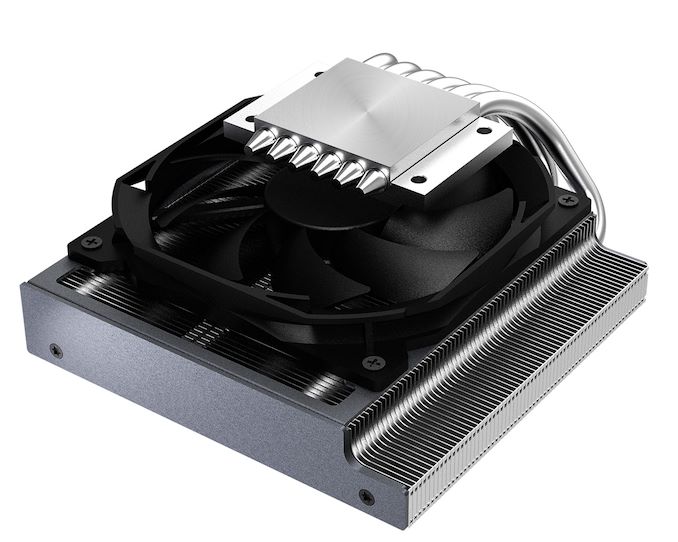
One part of the industry that requires millimeter precision is building systems for small form factor designs – being able to take advantage of every small bit of volume inside a chassis but also maximize performance yet minimize noise is a critical element to the success of these systems. ID-Cooling has thrown another hat into the ring when it comes to cooling the processor, something that can be a tough job in such an enclosed space. The new IS-47K is designed with a maximum height of 47mm, and is apparently rated for CPUs up to 130 W.
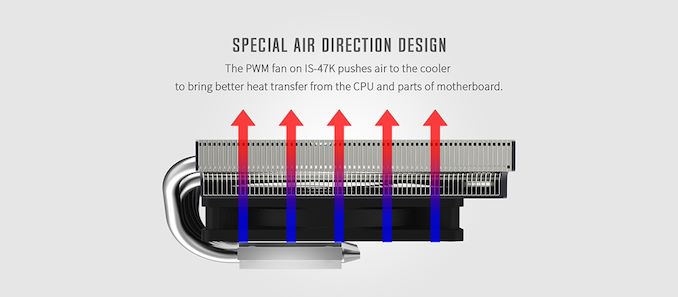
Featuring six copper heatpipes and a 92mm PWM fan measuring 15mm thick, the IS-47K situates the fan in between the copper contact plate of the cooler and the heatsink, pushing air up through the aluminium fins, from CPU to outside. The whole element is nickel plated, along with a ‘metal frosted’ frame to keep the dimensions nice and snug. Judging by the renders, this cooler is designed to sit just on top of the rear IO, with a stepped type of cooling to facilitate rear connectors that come back a fair way into the socket area.
It should be noted that while this CPU is rated to support a TDP of 130 W, some processors during turbo modes will surpass that 130 W limit. Users will have to adjust their BIOSes accordingly.
The IS-47K offers brackets for all Intel LGA115x/1200 sockets, as well as AMD AM4. It comes bundled with ID-Cooling’s own TG25 thermal grease, rated at 10.5 W/mK. ID-Cooling claims full memory compatibility with all mini-ITX motherboards, as it doesn’t go over the top of any memory modules. This means that the double-height G.Skill modules, enabling double-density on certain motherboards, should be suitable. The IS-47K will be sold for $45 at the end of June. Source: ID-Cooling Related Reading
|
_575px.jpg)


| << Previous Day |
2020/06/08 [Calendar] |
Next Day >> |