[Most Recent Entries] [Calendar View]
Wednesday, January 13th, 2021
- Cadence DDR5 UpdateL Launching at 4800 MT/s, Over 12 DDR5 SoCs in Development
- SK Hynix: We're Planning for DDR5-8400 at 1.1 Volts
- DDR5 Memory Specification Released: Setting the Stage for DDR5-6400 And Beyond
- Insights into DDR5 Sub-timings and Latencies
| Time | Event |
| 8:00a | CES 2021: ADATA Announces XPG Xenia Xe Gaming Ultrabook
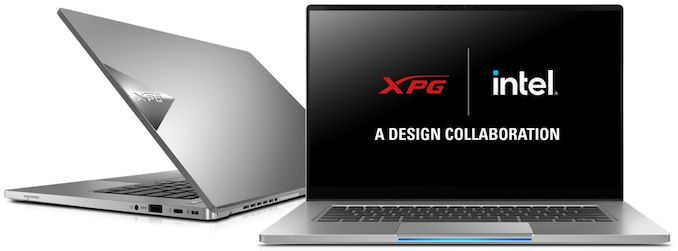
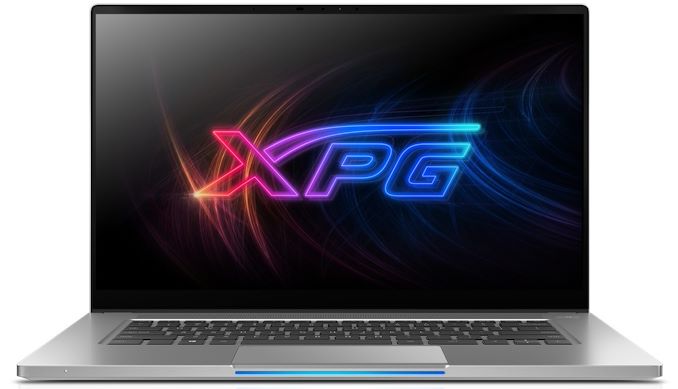
At CES 2021, which switched to a virtual online-only format due to the current Coronavirus pandemic, ADATA has unveiled its latest gaming ultrabook, the XPG Xenia Xe. Based on Intel's Tiger Lake CPU with Xe graphics, the XPG Xenia Xe looks to offer users a portable lifestyle and gaming solution. The new XPG Xenia Xe gaming ultrabook includes a 15.6" 1080p screen, with an IPS touchscreen panel with an 87% screen to body ratio. Available with two different processors, Intel's Tiger Lake Core i7-1165G7, or the i5-1135G7, it also benefits from Intel's latest Xe integrated graphics.
Designed for ultra-portability, it measures in at just 11 mm thick, with a total weight of 3.6 lb, making it one of the more lightweight options and has an elegant CNC anodized aluminum chassis. For storage, XPG states that it includes its own 1 TB PCIe Gen 4 M.2 SSD, but XPG doesn't include any information about memory configuration. XPG hasn't revealed details on pricing or when the Xenia Xe gaming ultrabooks will hit retail shelves. Interested in more of the latest industry news? Check out our CES 2021 trade show landing page! |
| 8:30a | Qualcomm to Acquire NUVIA: A CPU Magnitude Shift Today Qualcomm has announced they will be acquiring NUVIA for $1.4bn – acquiring the start-up company consisting of industry veterans which originally were behind the creation of Apple’s high-performance CPU cores. The transaction has important ramifications for Qualcomm’s future in high-performance computing both in mobile, as well as laptop segment, with a possible re-entry into the server market. |
| 9:41a | Intel Appoints Pat Gelsinger as New CEO, From Feb 15th News is breaking that Intel has announced that Pat Gelsinger, CEO of VMWare, is to take the role of CEO at Intel from February 15th. Intel today has released a press statement saying that current CEO Bob Swan (who we interviewed only a few days ago!) is to step down in his role, and be succeeded by Pat Gelsinger. Gelsinger, a veteran of the industry, has spent over 40 years at companies such as VMWare, EMC, and spent 30 years previously at Intel, reaching the potisition of Chief Technology Officer. In that role he drove creation of standards such as USB, Wi-Fi, he was the architect of the 80486, and played key roles in 14 generations of Intel Core and Xeon processors. As CEO of VMWare since 2012, Pat has overseen a tripling of annualized revenue to make VMWare a recognized global leader in global infrastructure and cyber security. Rumors of Intel getting a new CEO have never died down, even since Bob Swan officially took the role from Brian Krzanich in January 2019. Through those two years, Swan has seen successive YoY growth in the companies revenue streams, as well as a turnover of high-profile technical personnel, such as Dr. Murthy Renduchintala. The goal has seemingly been to push Intel into more areas for TAM growth, while at the same time push through the fundamental issues surrounding the delays to manufacturing on the 10nm node, which has been delayed for a couple of years at this point, and the 7nm node, to which delays were announced more recently. The missing piece of the puzzle has been having an engineer at the top of Intel's food chain, particularly one well versed in Intel's product portfolio, and for those that wanted this to happen, it appears to be so, from February 15th. Bob Swan will still head the Intel financial call on January 21st, where the company is set to announce how it will approach its future process node strategy, namely 7nm, in light of recent delays. This call should indicate how much Intel is set to invest in its own manufacturing facilities, and how much it may offload to third party foundries during that timeframe. During our interview with Bob Swan, he mentioned that Intel would only work with third party foundries if it could get preferential treatment for the volumes it needed, as well as integration with all related design tools. Swan also stated that licensing a process node technology from someone else for use in Intel's fabs was also an option the company could be considering. No word has been given as to Bob's future, if this is retirement from Intel, or what future role he may play. On the new CEO news, the chairman of the board at Intel, Omar Ishrak, has said,
On the announcement, Pat Gelsigner has said,
Gelsinger is set to oversee the next generation of Intel products and manufacturing. This includes 10nm, 7nm, Alder Lake, future Lakes, Sapphire Rapids, discrete graphics, Ponte Vecchio, networking, packaging, IoT, infrastructure, artificial intelligence, and 5G compute. It is unclear at this time if Gelsinger will be a voice on the financial call on January 21st. $INTC is already up +9% on the news of the new CEO today (as of 9:54am ET). Source: Intel
Update: Gelsinger has released a note to Intel employees. It reads as follows.
|
| 11:00a | CES 2021: ASUS ROG Unveils Updated Zephyrus G14 for 2021
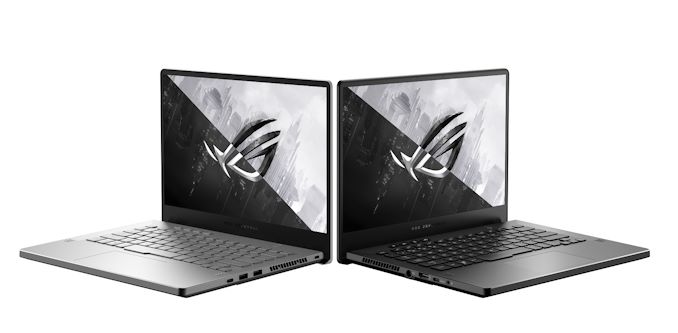
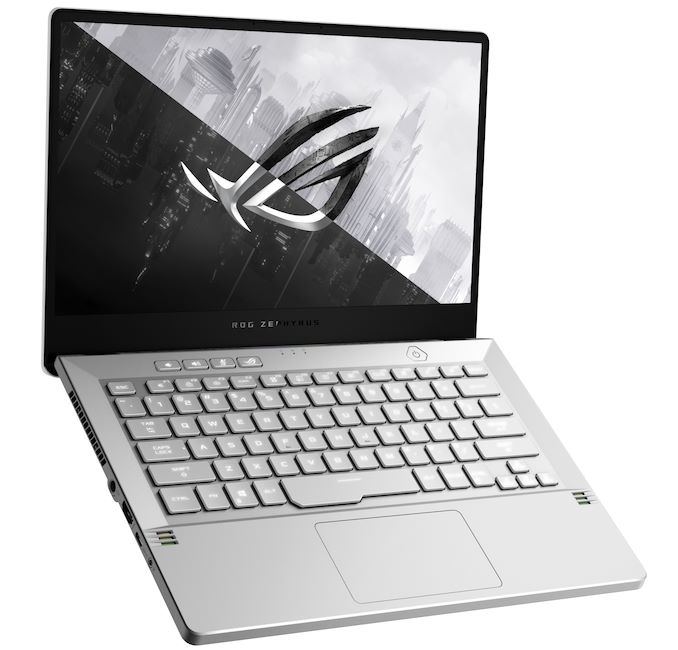
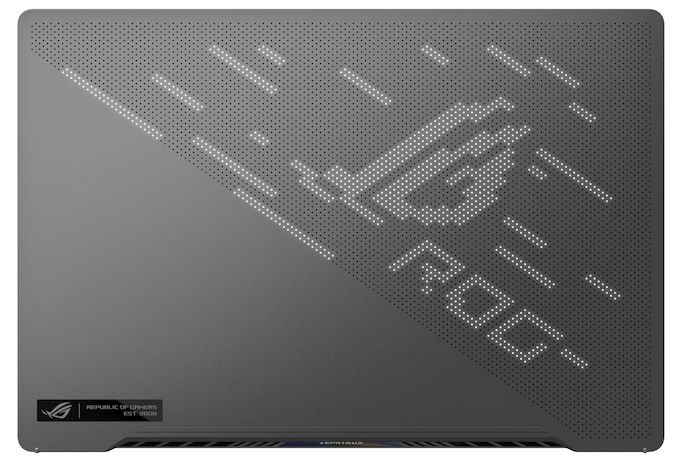
During CES 2021's all-digital trade show, ASUS has unveiled its updated ROG Zephyrus G14 model for 2021. The new Zephyrus G14 uses AMD's latest 5000 series mobile processor, with its ANiME Matrix LED display built into the lid. The ASUS ROG Zephyrus G14 (GA401), according to ASUS, is the world's most powerful 14-inch laptop, with AMD's next-generation Ryzen 5000 mobile processor and NVIDIA's GeForce RTX mobile graphics. It is available with a choice of two 14-inch displays, including a 2K 120 Hz DCIP-3 or 1080p 144 Hz adaptive sync panel. Designed for gamers on the go, it has a thickness of 17.9 mm, with a total weight of 1.6 KG.
Available in either Eclipse Gray or Moonlight White, the ROG Zephyrus G14 also includes an ANiME virtual panel integrated into the lid. This includes a new virtual pet that users can interact with. Some of the more technical specifications include up to 32 GB of DDR4-3200 memory, up to 1 TB of fast NVMe storage, and ASUS's 90 Wh battery with Type-C charging capabilities at 100 W.
Connectivity options include one USB 3.2 G2 Type-C port with DisplayPort 1.4 and power delivery function, with a further USB 3.2 G2 Type-C, two USB 3.2 G1 Type-A ports, and one HDMI 2.0b video output. ASUS also includes a Wi-Fi 6 interface for wireless and Bluetooth connectivity. At this time, ASUS hasn't provided us with any pricing information. Interested in more of the latest industry news? Check out our CES 2021 trade show landing page! |
| 12:00p | Akasa at CES 2021: Turing A50 Chassis for Fanless Ryzen and SOHO Series RGB Lighting Accessories
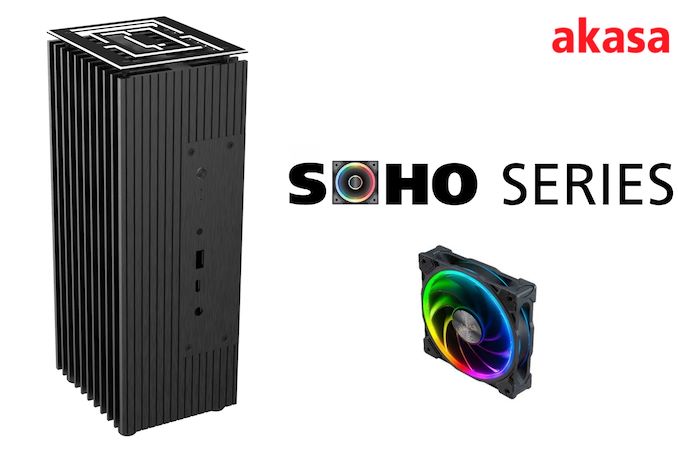
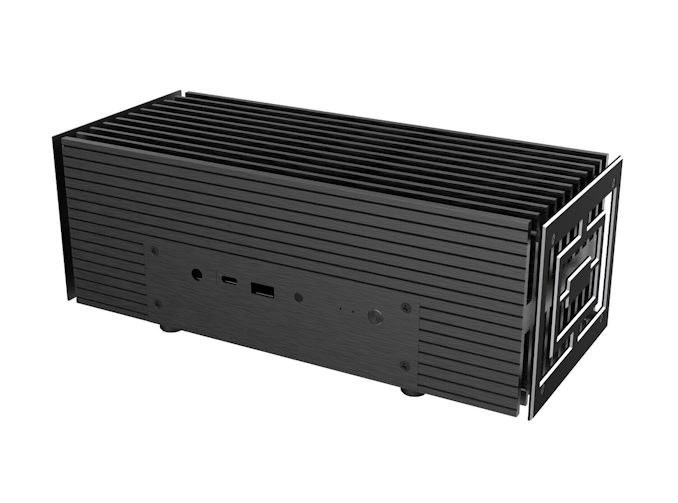
As part of the lead up to CES 2021, Akasa made a couple of interesting announcements related to its lineup of DIY fanless cases and a second family of RGB lighting accessories. We have covered Akasa's Turing fanless cases in detail earlier - starting off as a complete reimagination of a fanless Bean Canyon NUC (delivering excellent results in our review), Akasa also created the Turing FX based on the same design for the Frost Canyon NUC. Now, they have set their sights on one of the popular consumer-focused Ryzen-based mini-PCs in the market - the Asus PN50.
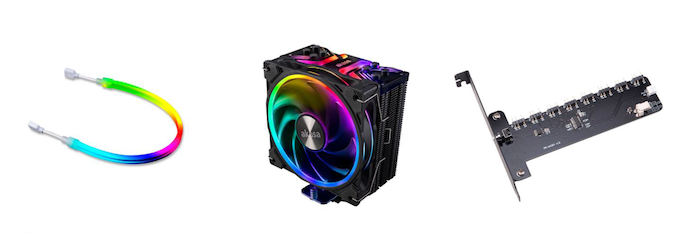
The Asus PN50, based on the Ryzen 4000-series mobile APUs (Renoirs with a TDP of 15W), has a physical footprint similar to that of the NUCs (with a ~4in. x ~4in. motherboard). The I/Os are a bit different compared to the NUCs, but Akasa could easily rework that aspect of the Turing design to quickly turn around a chassis capable of operating the PN50 without fans. Given the success that the Akasa Turing had with the Bean Canyon NUCs sporting a processor with a sustained package power consumption of 30W, it is likely that cooling the PN50 board (sporting a processor with a configurable TDP between 10W and 25W) should be a walk in the park. That said, we will reserve our final judgement for a hands-on review. In other news, Akasa is also following up on their VEGAS series of RGB lighting accessories (CPU fans, case fans, and a RGB controller card) with a new SOHO series. This is a new set of addressable RGB (aRGB) products including case fans, LED lighting strips, a CPU cooler, and a controller card.
Akasa claims that the SOHO series case fan (SOHO AR) includes a redesigned sickle blade design and rotor technology to improve airflow and cooling efficiency compared to its previous case fans. The controller card ties all these accessories together in order to create a unified RGB solution for gamers looking to jazz up their system appearance. The key to any set of RGB lighting accessories is compatibility with applications from different vendors - Akasa indicates that the SOHO series aRGB controller and accessories are compatible with applications from GIGABYTE, ASUS, Razer, ASRock, and MSI. Interested in more of the latest industry news? Check out our CES 2021 trade show landing page! |
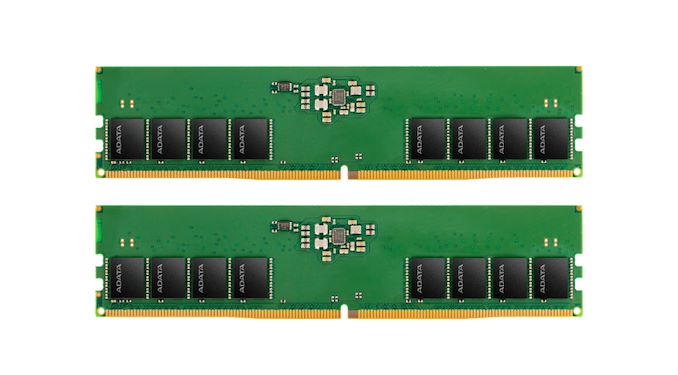
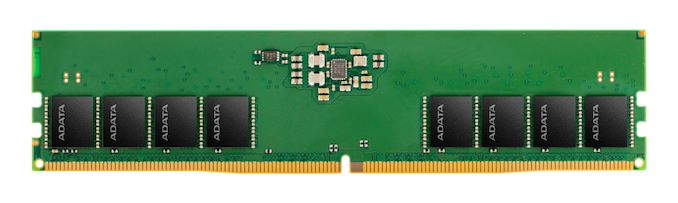
| 1:00p | CES 2021: ADATA Claims to have DDR5 Module, But Sends Us Renders
Planning for the next-generation of processors, ADATA has sent us a render of its first DDR5 module at CES 2021, with supported speeds of up to DDR4-8400. Memory partners and manufacturers during 2020 started to outline their plans for DDR5, including specifications and architecture. This includes announcements from the big three memory giants, including SK Hynix, Samsung, and Micron. ADATA has gone one step further and unveiled a render of what its DDR5 module could potentially look like, with a generic green PCB, with eight memory chips in two banks of four. This is despite the fact that we have already seen DDR5 engineering samples in the wild.
ADATA states that it has has teamed up with both MSI and GIGABYTE to test its new DDR5 memory. This is to ensure that it has compatibility for DDR5 ready processors that will be announced. ADATA states its DDR5 memory can support speeds of up to 8400 MT/s, although this is likely to be at the launch and is in the upper range of what is expected on DDR5. Similarly with its 64 GB per module claim - this is DDR5 specification, and ADATA hasn't shown us anything to suggest that initial modules will start at 64 GB capacities. For more information about DDR5, check out the following: ADATA hasn't revealed which memory chips it intends to use for its modules, but all we know for now is that it will release DDR5 memory, and it will follow official specifications. Interested in more of the latest industry news? Check out our CES 2021 trade show landing page! |
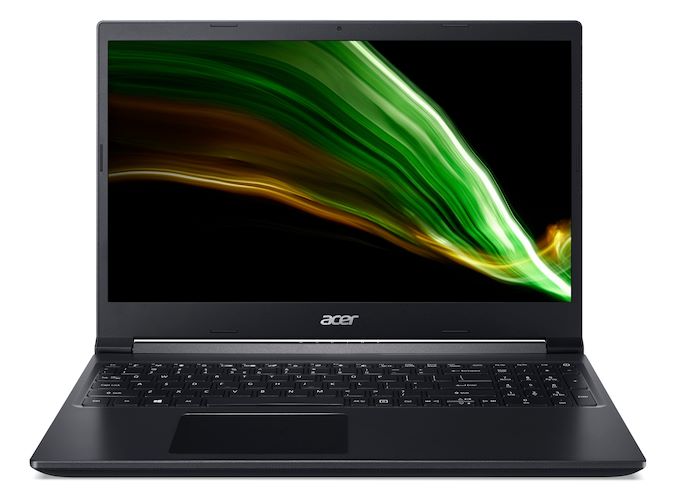
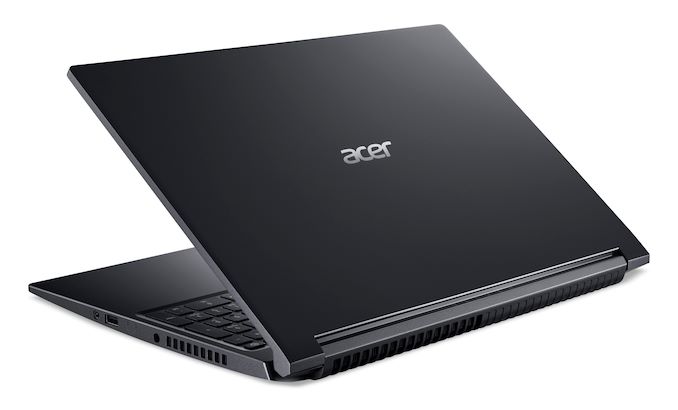
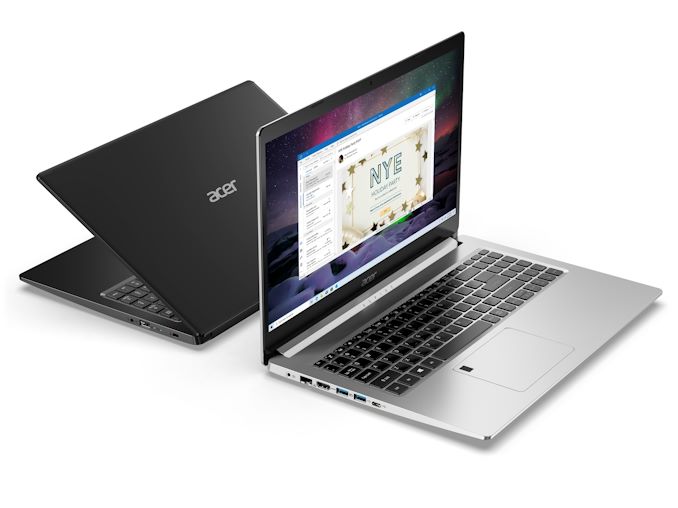
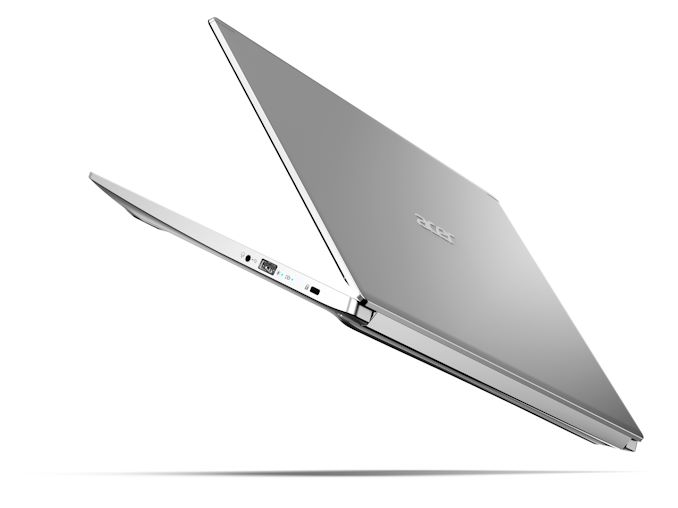
| 2:00p | Acer at CES 2021: Acer Aspires To Ryzen 5000
As part of Acer’s CES launch, the company is announcing updates to both the Acer Aspire 5 and Acer Aspire 7, bumping both models to the latest AMD Ryzen 5000 series of processors. The new models are aimed at creativity, without breaking the bank. Acer Aspire 7
The 15.6-inch Acer Aspire 7 targets creators who need the extra performance of a dedicated graphics card, and Acer has paired Ryzen 5000 APUs with NVIDIA’s GeForce GTX 1650. The Aspire 7 can be specified with up to 32 GB of DDR4, and a 1 TB PCIe SSD. There will be an extra 2.5-inch drive slot as well, for additional storage. Although not as cutting edge as some other models in Acer’s lineup, the Aspire 7 still features an 81.6% screen to body ratio on the 15.6-inch display, and Acer is calling for accurate color representation thanks to Acer Color Intelligence and Acer ExaColor to adjust gamma and saturation on the fly to avoid clipping and over-saturation.
The starting configuration will offer the Ryzen 5 along with 8 GB of RAM and a 512 GB SSD and the GeForce GTX 1650 for just $749. Availability is March 2021. Acer Aspire 5
Also featuring a 15.6-inch FHD display, the Acer Aspire 5 hits an even lower price bracket, pairing the Ryzen 5000 with an optional AMD Radeon RX 640 GPU, up to 24 GB of memory, and up to a 1 TB M.2 SSD. The base configuration is especially price-conscious, with a Ryzen 5 5500U, 1920x1080 60Hz IPS display, 8 GB of RAM, and a 256 GB SSD for just $549.
The Acer Aspire 5 is also targeting a March release date. Source: Acer |
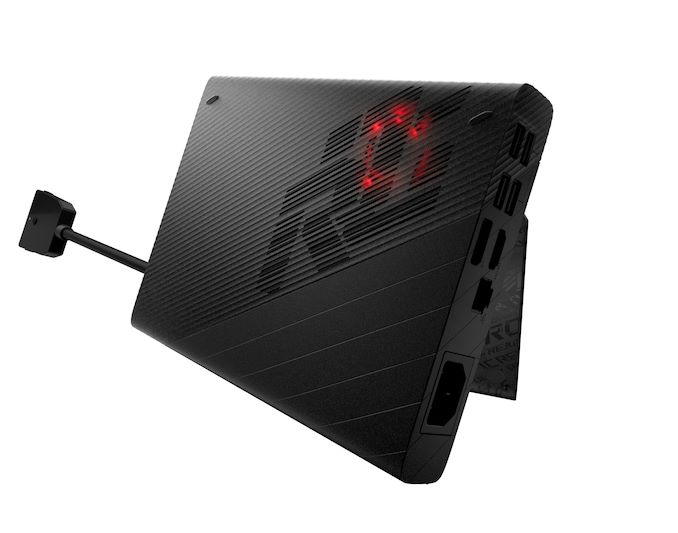
| 3:00p | CES 2021: ASUS ROG XG Mobile, An External Graphics Dock For ROG Flow X13
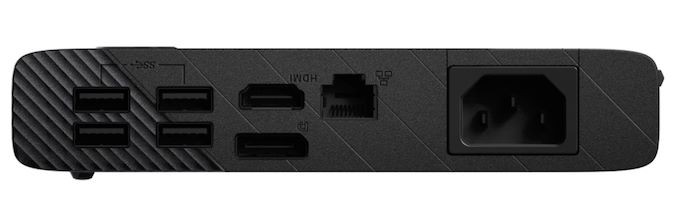
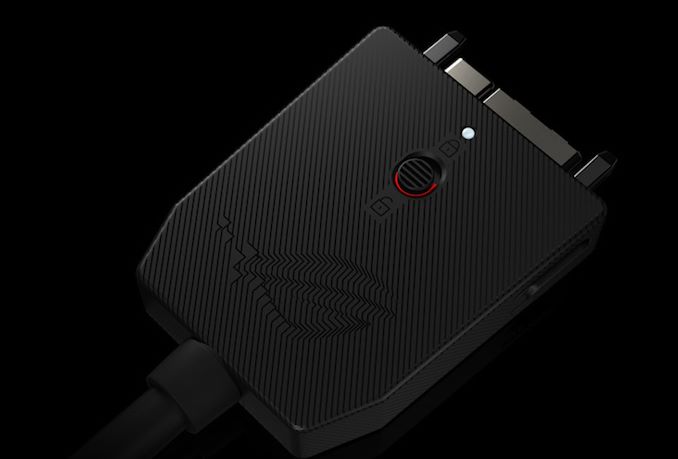
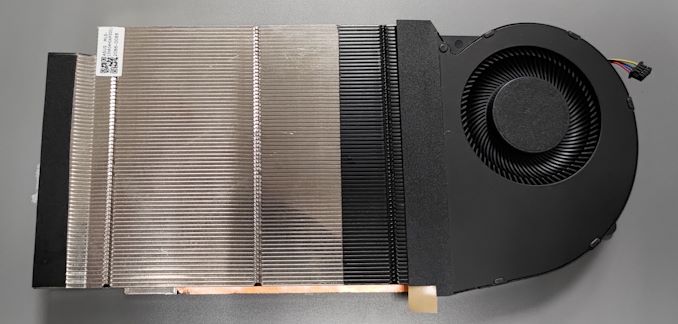
Alongside ASUS's announcement of its latest ROG Flow X13 13-inch gaming notebook, it has also unveiled an interesting new external graphics dock to go with that notebook. Dubbed the ROG XG Mobile GV301, the external graphics dock is designed to augment the ROG Flow X13's capabilities, turning it into a powerful and lightweight portable gaming rig. And though graphics docks themselves are nothing new, this one stands out due to its portability, with the dock being similar in size to a second laptop. From a high-level perspective, the graphics dock lives up to its name. At its heart, of course, is a high-performance GPU, with ASUS tapping NVIDIA’s new laptop-grade RTX 3070 and 3080 adapters, both of which will be a significant step up from the Flow X13’s built-in GeForce GTX 1650 graphics adapter. Along with this, the dock can power the Flow X13 – thanks to its integrated 280W power supply – and offers several ports including HDMI and DisplayPort, a Gig Ethernet jack, 4 USB-A 3.2 Gen 1 ports, and an integrated SD card reader.
Notably, like some past efforts to provide graphics docks for thin & light laptops, ASUS is going with a proprietary connection here rather than relying on Thunderbolt. The unnamed connector is split intwo two segments, with one carrying PCIe 3.0 x8 data while the other segment is a USB-C connector for carrying power and USB data. This significantly limits the compatibility of the dock, but it does provide twice as much PCIe bandwidth as Thunderbolt 3 or 4 otherwise would.
As previously mentioned, one of ASUS’s design goals for the ROG XG Mobile is portability, so that it can be carried around with the Flow X13 rather than serving as a relatively static dock at home. To that end the dock is 29.6mm thick, with a 208mm x 155mm footprint, making it comparable in size to a second laptop. It also weighs similar (if a bit denser) at a flat 1kg (2.2lbs). Fittingly, ASUS is supplying a sleeve with the Flow X13 to carry both the laptop and XG Mobile, simplifying this process some.
The ROG XG Mobile is due this quarter, with pricing to be announced. Interested in more of the latest industry news? Check out our CES 2021 trade show landing page! |
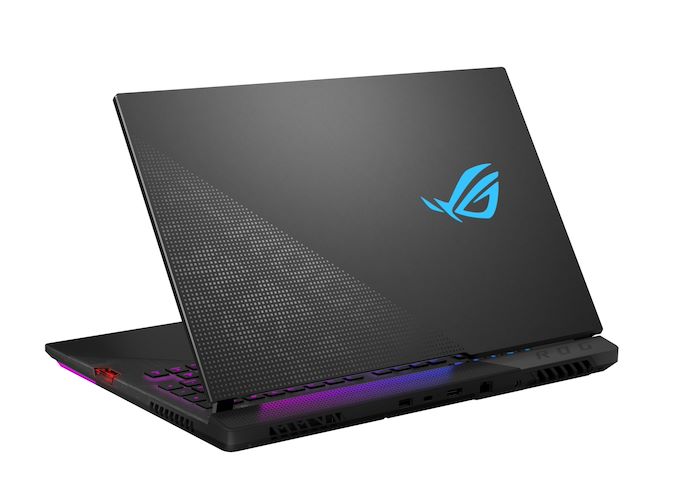
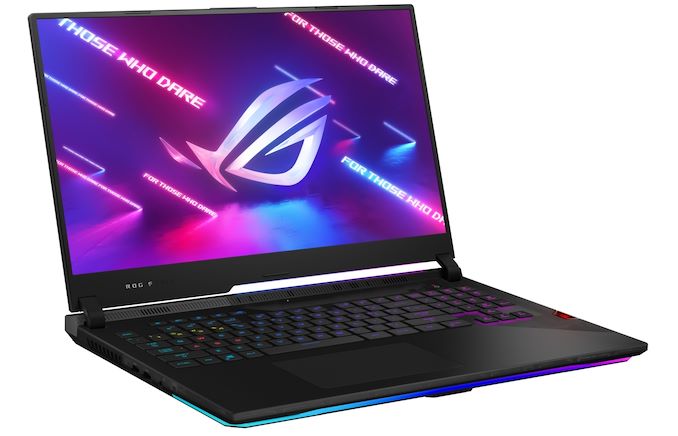
| 4:00p | CES 2021: ASUS Unveils ROG Strix Scar 15 Gaming Laptop, Ryzen 5000 Mobile
Following AMD's announcement of its new next-generation Ryzen 5000 mobile processors at CES 2021, vendors have been quick to unveil its laptops. ASUS has seen a busy CES 2021 so far, including its announcement of new Strix laptops, designed for gaming on the move. One of these is the ASUS ROG Strix Scar 15, which is powered by the latest AMD Ryzen 5000 H processor and is paired up with NVIDIA's latest GeForce RTX mobile graphics. The ASUS ROG Strix Scar 15 (G533) includes a 15.6-inch 1440p DCIP-3 display with a 165 Hz refresh rate and has support for VESA Adaptive Sync. It has a thin bezel design with an 85% screen to body ratio, which ASUS claims is an improvement over its 2020 model. The basis of the design is around Cyberpunk, with ASUS looking to capitalize on the launch of game developer and publisher CD Projekt Red's Cyberpunk 2077.
Designed with Esports in mind, the ASUS ROG Strix Scar 15 uses AMD's latest Ryzen 5000 H mobile processor alongside NVIDIA's GeForce RTX 3070 and 3080 mobile graphics, and it will be available with up to 64 GB of DDR4-3200 memory. It includes Dolby Atmos support with four integrated speakers with an internal microphone with noise cancellation assistance. There's a 90 Wh Type-C charger, with Wi-Fi 6, one USB 3.2 G2 Type-C with support for DisplayPort, three USB 3.2 G1 Type-A, and an RJ45 port powered by an unspecified Ethernet controller. ASUS hasn't currently provided pricing on the ASUS ROG Strix Scar 15, but we expect to hear more soon. Interested in more of the latest industry news? Check out our CES 2021 trade show landing page! |
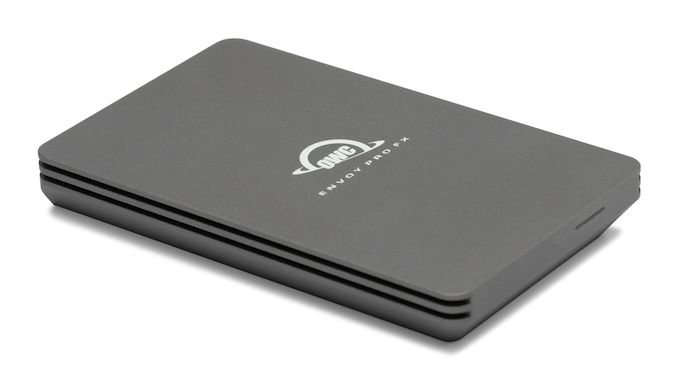
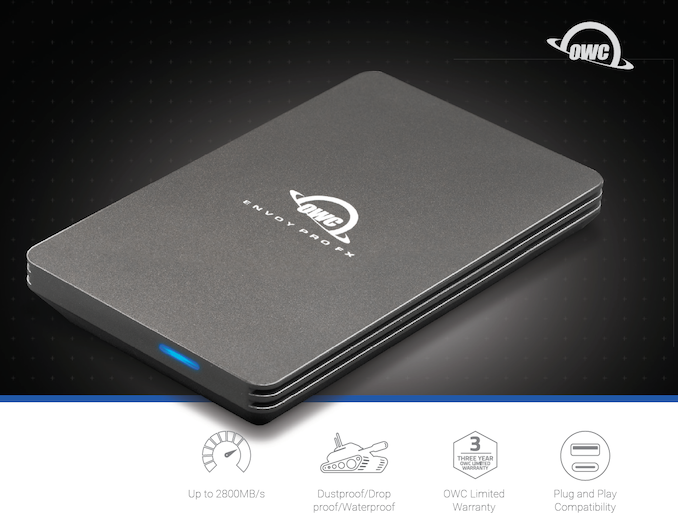
| 5:00p | CES 2021: OWC Envoy Pro FX - A Dual Mode (Thunderbolt / USB) IP67 External SSD
As part of its CES 2021 announcements, OWC provided details of the Envoy Pro FX - an IP67-rated dual-mode SSD capable of operating optimally with both Thunderbolt 3 / 4 and USB hosts. We have generally been impressed with the industrial design of OWC's external SSD offerings - in fact, the OWC Envoy Pro EX USB-C was one of the top performers when we compared the latest USB 3.2 Gen 2 SSDs last year. The Envoy Pro EX Thunderbolt 3 was based on a standard Phison reference design (also shared with the Plugable TBT3-NVME drives) with a rugged industrial design. The new Envoy Pro FX combines the best of both SSDs - enabling 2GBps+ performance with Thunderbolt 3 hosts and 1GBps-class performance with USB 3.2 Gen 2 hosts. OWC carries forward its sleek premium aluminum housing from the Envoy Pro EX line. The FX is IP67-rated for usage in dirty and wet environments - even allowing for submersion in water at depths of 1m for up to 30 minutes, and also carries MIL-STD810G certification for ruggedness. The SSD is bus-powered, and also has non-skid rubber feet.
The OWC Envoy Pro FX is available in four capacities - 240GB ($169), 480GB ($199), 1TB ($299), and 2TB ($479). Given the capacity points, these drives are unlikely to be using QLC NAND. The IP67 rating and likely usage of 3D TLC are potential justification points for the ~$130 premium over other dual-mode SSDs like the Sabrent Rocket XTRM-Q we reviewed recently. Interested in more of the latest industry news? Check out our CES 2021 trade show landing page! |










_thumb.jpg)
_thumb.jpg)
_thumb.jpg)




| << Previous Day |
2021/01/13 [Calendar] |
Next Day >> |