[Most Recent Entries] [Calendar View]
Thursday, January 14th, 2021
| Time | Event | ||||||||||||||||||||||||||||||||||||||||||||||||||||||||||||||||||||||||||||||||||||||||||||||||||||||||||||||||||||||||||||||||||||||||||||||||||||||||||||||||||||||||||||||||||||||||||||||||||||||||||||||||||||||||||
| 8:00a | CES 2021: HP EliteBook 805 G8, With Ryzen Pro 5000
Not to be left out of the party for new laptops, HP has unveiled its latest series of AMD Ryzen 5000 powered notebooks. The HP EliteBook 805 G8 features AMD's Ryzen Pro 5000 mobile processors, with multiple screen size options available. The HP EliteBook 805 G8 will be available in three different screen sizes, with 15.6, 14, and 13.3-inch variants. Designed for productivity on the go, HP includes Wi-Fi 6, with a model that includes an optional 4G LTE modem and SIM card slot. According to HP, the EliteBook 805 G8 also includes HP Sure View Reflect, which lets users work discreetly, with a copper sheen viewable when looking at the laptop from a side angle.
HP informs us that the outer box packaging is 100% sustainably sourced, for those that care about recyclable packaging. There's a clear focus on SME's, with access to HP QuickDrop for quick and easy file sharing, as well as HP's Tamper Lock system, which locks the system down if it has been physically opened or compromised. HP hasn't provided any more on the technical specifications to us at this moment, nor has it said when the EliteBook 805 G8 with Ryzen Pro 5000 will be available. Interested in more of the latest industry news? Check out our CES 2021 trade show landing page! | ||||||||||||||||||||||||||||||||||||||||||||||||||||||||||||||||||||||||||||||||||||||||||||||||||||||||||||||||||||||||||||||||||||||||||||||||||||||||||||||||||||||||||||||||||||||||||||||||||||||||||||||||||||||||||
| 9:00a | Phison at CES 2021: New USB SSD Controllers, Adds E21T For Low-End NVMe
At CES 2021, Phison gave us the usual updates on their SSD controller roadmap. The most significant new products coming this year are a pair of USB flash drive controllers for high-end portable SSDs, designed to compete against current solutions that combine a USB to NVMe bridge chip with a standard NVMe SSD controller. Phison is also planning to introduce a new entry-level DRAMless NVMe SSD controller later this year.
Phison U17 and U18 USB 3.2 SSD ControllersFor portable SSDs, Phison is introducing the U17 and U18 controllers. The U17 uses a USB 3.2 Gen 2x1 (10Gb/s) host interface and a two-channel NAND interface running at up to 1200 MT/s. The U18 doubles these: USB 3.2 Gen2x2 (20Gb/s) and a four-channel NAND interface. The performance specs may look lackluster compared to Phison's NVMe SSD controllers, but they are pretty close to saturating what their respective USB host interfaces can handle, and performance will be competitive with NVMe+USB bridge based portable SSDs. However, the U17 and U18 will have a significant power efficiency advantage, lower cost and smaller PCB footprint than existing portable SSDs. Phison will also be providing TCG Opal encryption support on the U18, enabling a level of security they say is impossible to achieve with NVMe+USB bridge solutions.
Phison expects to finish qualification of the U17 and U18 controllers later this month. We're hoping to get a performance preview shortly thereafter by testing their reference designs, and retail products should be showing up within the next several months.
Phison E21T: Low-End NVMe Moves to 12nmFor NVMe SSDs, the only new controller Phison is talking about this year is the E21T, their latest DRAMless NVMe controller. This is a follow-up to the E19T controller, which has seen very little use in retail consumer SSDs but has actually been outselling their high-end E16 PCIe 4.0 controller due to strong demand from OEMs (especially from an unnamed customer with a very popular gaming product). With the E21T, Phison is finally moving this product segment from 28nm to 12nm fabrication, which allows for performance and power improvements of about 25% compared to the E19T. The basic architecture hasn't changed much for the E21T: it's still a 4-channel controller managed by a single ARM core plus Phison's proprietary coprocessors. Performance has increased significantly, with peak throughput now rivaling the high-end E16 controller (though real-world performance on heavy workloads may still be slower due to the downsides of a DRAMless controller design). Phison is planning to start sampling the E21T to customers around June of this year with mass production ramping up in Q4—around when we should start seeing PCIe 4.0 SSDs catching on with notebook OEMs. Most of the drives using the E21T will probably pair it with QLC NAND, and Phison has performance projections for what we can expect when using Micron's 176L QLC.
It's likely that many of the product lines currently using the E16 controller with QLC NAND will switch over to using the E21T in future generations, since the DRAMless E21T will be a cheaper overall solution. However, the 4TB limitation will be an issue for the handful of companies that have already started shipping 8TB QLC SSDs. Those 8TB M.2 SSDs currently use the E12 controller and its PCIe 4.0 successors are not available in a reduced-size package like the E12S variant. So 8TB PCIe 4.0 SSDs will probably have to push the limits of NAND packaging by stacking 16 dies per package in order to leave enough PCB space for an E16 or E18 controller plus DRAM.
For high-end NVMe SSDs, Phison's E18 finally started shipping in late 2020. Phison is pretty proud of this controller, and makes much of the fact that they're the only ones so far hitting at least 7GB/s for both reads and writes. Phison plans for the E18 to be their last flagship PCIe 4.0 controller; they're already looking forward to PCIe 5.0, and the E18 will remain their top of the line controller for probably another two years. This doesn't mean Phison is entirely done with the E18. They're still working on firmware tuning, especially around thermal management and trying to squeeze out a little bit more performance at low queue depths. There will also be continuing firmware updates to support newer generations of 3D NAND flash memory. Current E18 drives are using Micron 96L TLC, but Micron has started production of their 176L NAND. Phison expects to finish qualification with that NAND in March, so a second round of E18 drives should start arriving in April with 10-15% performance improvements. Phison's older E13T controller is also still around as a low-cost and low-power solution for entry-level NVMe applications. It's particularly popular as a controller integrated into BGA SSDs, where it helps displace eMMC storage is devices like Chromebooks, tablets, and maybe even some smartphones.
Interested in more of the latest industry news? Check out our CES 2021 trade show landing page! | ||||||||||||||||||||||||||||||||||||||||||||||||||||||||||||||||||||||||||||||||||||||||||||||||||||||||||||||||||||||||||||||||||||||||||||||||||||||||||||||||||||||||||||||||||||||||||||||||||||||||||||||||||||||||||
| 10:00a | Samsung Announces Galaxy S21, S21+ & S21 Ultra: Cheaper Baseline, Higher High-End Today, Samsung is taking the virtual stage to release the new Galaxy S21 series of devices, including the Galaxy S21, S21+ and S21 Ultra. In a time where smartphones become more and more expensive, Samsung is attempting a different approach this year, and instead of increasing device prices, actually reduces them – at least for the baseline S21 and S21+ models. | ||||||||||||||||||||||||||||||||||||||||||||||||||||||||||||||||||||||||||||||||||||||||||||||||||||||||||||||||||||||||||||||||||||||||||||||||||||||||||||||||||||||||||||||||||||||||||||||||||||||||||||||||||||||||||
| 12:00p | CES 2021: MSI Announces GE76 Raider 17-inch Gaming Laptops, Dragon Tiamat Design
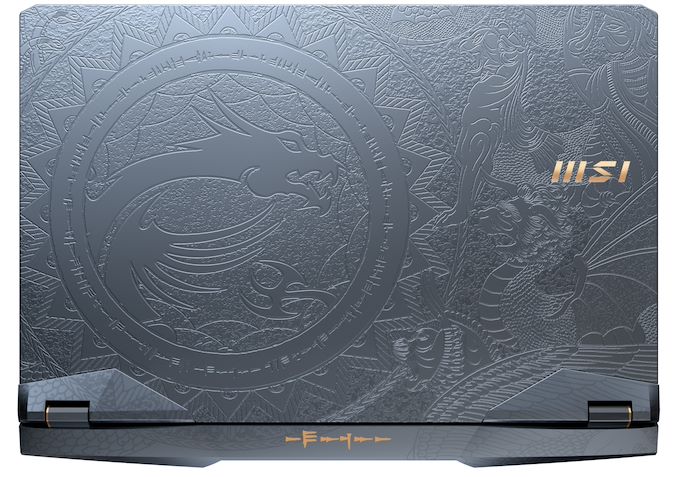
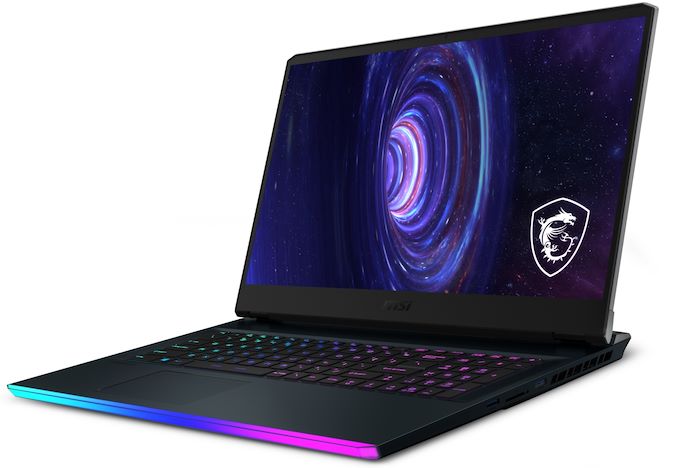
Not to be left out of the crowd, MSI was among several laptop vendors to unveil its next generation of laptops at the show. Leading the charge for MSI is the company's 17-inch gaming laptop, the GE76 Raider. Replacing 2020's GE75 Raider, the GE76 has been refreshed with NVIDIA's latest GeForce RTX 30 series graphics adapters, which are paired with Intel's Comet Lake (10th Gen) Core processors. MSI also announced the GE76 Raider Dragon Edition Tiamat, a version of the laptop with a unique Babylonian-inspired chassis. The new MSI GE76 Raider (and Dragon Edition Tiamat) allow users to select among NVIDIA's latest GeForce RTX 3080, 3070, or 3060 laptop graphics adapters, which NVIDIA also unveiled at CES 2021. Across the family there are three different 17.3-inch displays to select from: a 60 Hz 2160p display, 300 Hz 1080p display, or a 240Hz 1080p display, all of which are "IPS-Level" panels and offer thin, 5mm bezels, according to MSI.
Under the hood of the GE76 Raider is an Intel Comet Lake processor, with the highest-end configurations using the unlocked octo-core Core i9-10980HK. The laptops with support for up to 64 GB of DDR4-3200 memory and include space for two NVMe M.2 SSDs. It uses a per-key RGB LED keyboard designed by SteelSeries, with a four-speaker system including 2 x 1 W and 2 x 2 W woofers and an integrated 1080p 30 fps webcam.
For connectivity, the GE76 Raiders include one USB 3.2 G2x2 Type-C port, one USB 3.2 G2 Type-C with support for DisplayPort alt mode, one USB 3.2 G2 Type-A port, and two USB 3.2 G1 Type-A ports. Networking capabilities include the Intel's latest AX210 Wi-Fi 6E controller, as well as a Killer E3100 2.5 GbE controller. It weighs just under 3 kg, with a dimension of 397 x 284 x 26 mm (WxDxH), with a 4-cell Li-Polymer 99.9 Wh battery (the largest battery that can fly). The GE76 Raider will begin shipping on February 5th, according to the pre-order infromation that has already been posted. The pre-orders are not an exhaustive list of SKUs, but of the two models showing up over at Newegg, the cheapest model will be $2300. Interested in more of the latest industry news? Check out our CES 2021 trade show landing page! | ||||||||||||||||||||||||||||||||||||||||||||||||||||||||||||||||||||||||||||||||||||||||||||||||||||||||||||||||||||||||||||||||||||||||||||||||||||||||||||||||||||||||||||||||||||||||||||||||||||||||||||||||||||||||||
| 1:00p | CES 2021: Zotac MAGNUS ONE Gaming mini-PC Flagship Charges Up Coffee Lake with Ampere
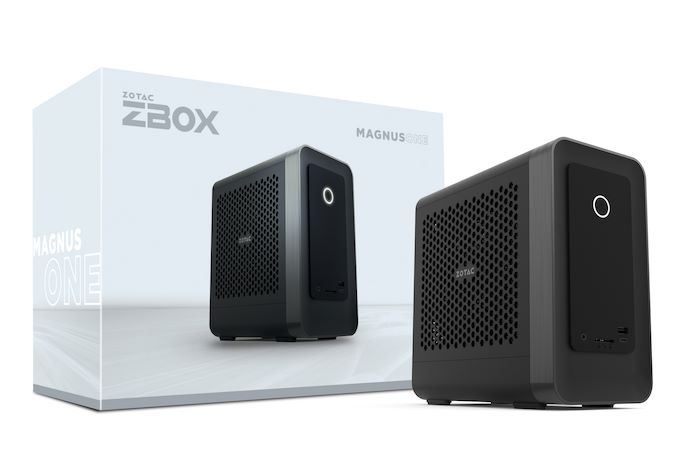
Zotac's mini-PC lineup received a new flagship as part of its CES 2021 announcements - the MAGNUS ONE. It features a Coffee Lake CPU (Core i7-10700) along with NVIDIA's RTX 3070 GPU. The new model is a natural evolution of features from the previous MAGNUS PCs like the EK71080 and the EN1080K before it, with a heavy dose of inspiration from Intel's Ghost Canyon NUC. The EK71080 moved to a discrete GPU from a MXM-type one in the EN1080K. The new MAGNUS ONE continues that trend with the inclusion of a user-replaceable Zotac RTX 3070 Twin Edge in the system. Gone, however, is the humongous external power brick - Instead, we have a 500W 80+ Platinum internal PSU. The new 8.3L model is also meant to be oriented vertically. The last two aspects provide a distinct 'Ghost Canyon NUC' feel to the new MAGNUS ONE.
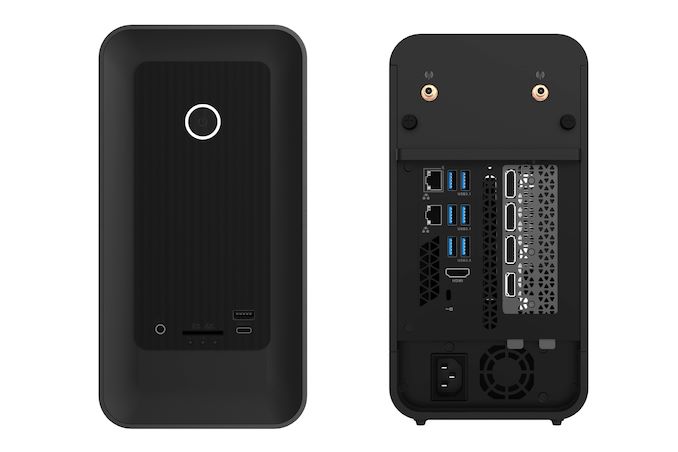
The motherboard in the MAGNUS ONE uses a H470 PCH. The CPU's integrated GPU display output (HDMI 1.4a) is also available in the rear panel. The RTX 3070 Twin Edge features four display outputs, and either set can be active for up to four simultaneous display streams. The PC also includes Killer AX1650 Wi-Fi and dual LAN ports (1x 1Gbps + 1x2.5Gbps)
A key difference between the new MAGNUS ONE and the previous flagships from an upgradability viewpoint is the user-replaceable discrete GPU. As long as the GPU to be installed consumes 220W at the maximum and is not longer than 230mm (9.06 in.) and takes up only two slots at the maximum, it is for end users to upgrade the pre-installed RTX 3070 a year or two into the system's service lifetime. At 8.3L, the system is not as compact as the 5L Ghost Canyon NUC. However, the larger size and the honeycomb chassis should allow for more airflow and easier access to components. The MAGNUS ONE can also accommodate larger GPUs (the Ghost Canyon NUC tops out at 8in.) The pricing for the MAGNUS ONE ECM73070C with Windows 10 (the 'PLUS' model in Zotac's earlier terminology) is on par with the flagship MAGNUS pricing of previous years. Given the use of the H470 PCH, it appears that Zotac has made optimal use of all the available I/O to deliver a compelling platform for consumers looking at a compact alternative to pre-built PCs from boutique vendors. Interested in more of the latest industry news? Check out our CES 2021 trade show landing page! | ||||||||||||||||||||||||||||||||||||||||||||||||||||||||||||||||||||||||||||||||||||||||||||||||||||||||||||||||||||||||||||||||||||||||||||||||||||||||||||||||||||||||||||||||||||||||||||||||||||||||||||||||||||||||||
| 2:00p | CES 2021: OWC Introduces 3.5" U.2 SSD Carrier
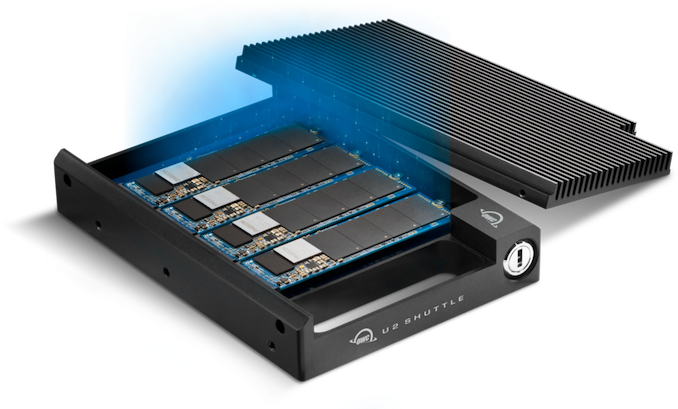
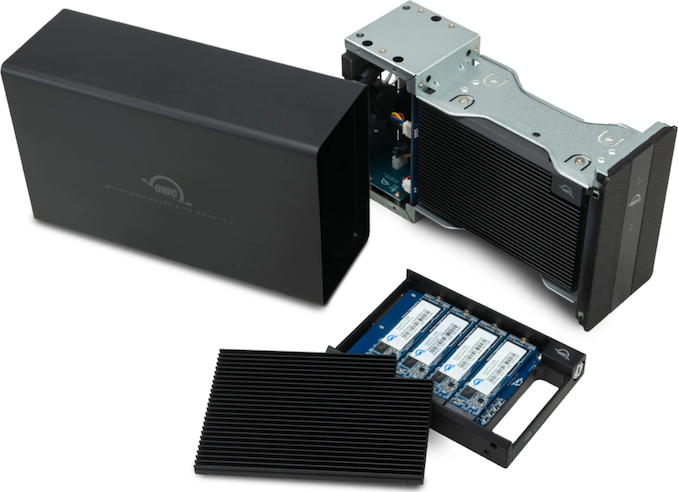
OWC is introducing the U2 Shuttle, a novel carrier module that packs four M.2 NVMe SSDs into a 3.5" U.2 form factor. The U2 Shuttle includes a PCIe switch to allow the four M.2 drives to share the bandwidth of the U2 Shuttle's PCIe 3.0 x4 interface. OWC will be selling the U2 Shuttle as either an empty carrier to be populated by the user, or with their own Aura Pro NVMe SSDs pre-installed for up to 32TB of storage. There's hardly any ecosystem around 3.5" U.2 drives as opposed to the vastly more common 2.5" U.2 size, but OWC provides support with several of their Thunderbolt-attached storage products. Their new Mercury Pro U.2 Dual enclosure can accommodate two U.2 drives (2.5" or 3.5") and consequently with a pair of U2 Shuttles installed can hold up to 8 M.2 SSDs. OWC's Thunderbay Flex 8 can accommodate U.2 SSDs in four of its eight drive bays. OWC is also introducing a 3.5" U.2 retrofit kit for their Mercury Helios 3S PCIe expansion chassis. The U2 Shuttle can also be installed in ordinary 3.5" internal hard drive bays and connected with a U.2 cable, provided there's adequate cooling—four NVMe SSDs plus a PCIe switch can potentially add up to quite a bit more power than a typical 7200RPM hard drive. The U2 Shuttle is marketed primarily as fast portable storage for professional media workflows, where a sneakernet solution may be the most straightforward way to transport many TBs of media from the set to the editing room. The U2 Shuttle doesn't have any RAID functionality of its own, but it can be used along with OWC's SoftRAID software RAID system. When used in the Thunderbay Flex 8 or an appropriate workstation or server setup, RAID functionality can also be provided through a tri-mode SAS/SATA/NVMe controller card.
U2 Shuttle with Mercury Pro U.2 Dual enclosure The U2 Shuttle's PCIe switch is ASMedia's 12-lane ASM2812X, so each of the four M.2 SSDs in the U2 Shuttle only gets a PCIe 3.0 x2 connection to the switch. This makes a RAID configuration highly recommended, because no single M.2 SSD inside the U2 Shuttle will be able to use the full 4-lane throughput. The OWC U2 Shuttle is available for purchase direct from OWC. Pricing starts at $149.99 for the empty U2 Shuttle with no SSDs, and goes up to $5299 for the 32TB configuration. For the smaller capacities, buying the U2 Shuttle with OWC's SSDs pre-installed isn't necessarily any cheaper than just purchasing a typical 2.5" U.2 enterprise SSD. However, 32TB U.2 drives aren't exactly a commodity product yet, and going the DIY route with the empty U2 Shuttle and cheaper consumer-grade TLC SSDs can be a more affordable way to pack several TB of NVMe storage into one device. Interested in more of the latest industry news? Check out our CES 2021 trade show landing page! | ||||||||||||||||||||||||||||||||||||||||||||||||||||||||||||||||||||||||||||||||||||||||||||||||||||||||||||||||||||||||||||||||||||||||||||||||||||||||||||||||||||||||||||||||||||||||||||||||||||||||||||||||||||||||||
| 3:00p | CES 2021: Dynabook Intros Satellite Pro L50 Laptop
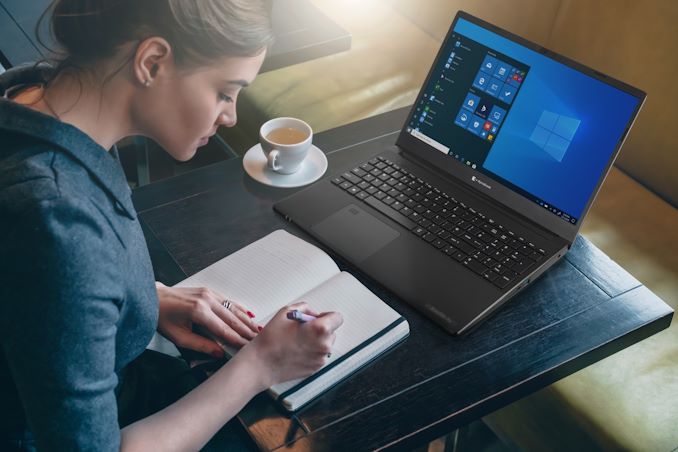
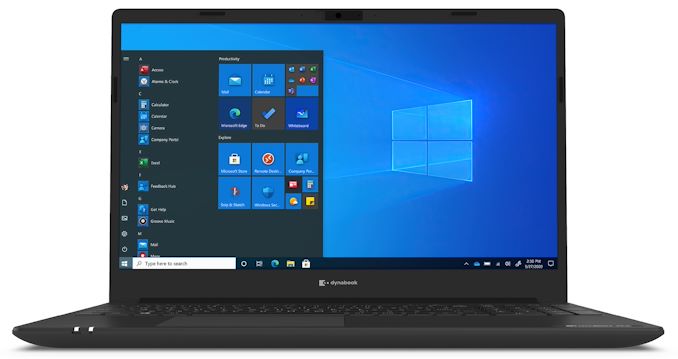
Dynabook has announced a new laptop based on the fabled Satellite series, a mainstay for Toshiba for many years, at CES 2021. The Satellite Pro L50 includes Intel's 10th generation mobile processor, with NVIDIA's GeForce MX250 discrete graphics, and is designed for productivity on the go. The Dynabook Satellite Pro L50 is based on Intel's 10th generation mobile processor and includes NVIDIA's GeForce MX250 graphics for handling more demanding tasks. It features a 15.6-inch 1080p screen with anti-glare technology and includes an integrated HD webcam at the top. The webcam itself has a privacy shutter for added security in today's online world, where privacy is a key factor for many users, including SMEs. There's a dual array microphone setup built-in, with background reduction technology.
For connectivity, the Satellite Pro L50 includes one USB Type-C, with three USB Type-A ports, an HDMI video output, Gigabit LAN Ethernet, and Wi-Fi 6 for networking. It weighs 1.85 KG, with a full-sized keyboard with a numeric keypad, and comes with a one-year manufacturer's warranty. Dynabook says pricing for the Satellite Pro L50 with the NVIDIA GeForce MX250 graphics will start at $900. Interested in more of the latest industry news? Check out our CES 2021 trade show landing page! | ||||||||||||||||||||||||||||||||||||||||||||||||||||||||||||||||||||||||||||||||||||||||||||||||||||||||||||||||||||||||||||||||||||||||||||||||||||||||||||||||||||||||||||||||||||||||||||||||||||||||||||||||||||||||||
| 4:00p | Kingston at CES 2021: New NVMe SSDs and a USB 3.2 Portable SSD
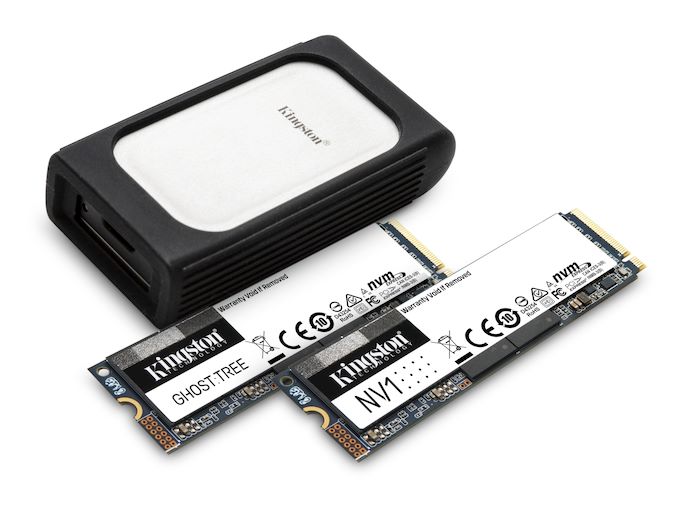
Kingston introduced a variety of new storage products at CES 2021, announcing new NVMe SSDs ranging from entry-level to high-end consumer and enterprise drives, plus new portable storage products. NV1 SSD: Entry-Level Consumer NVMeKingston's new entry-level consumer NVMe drive will be the NV1, possibly ushering in a new naming scheme for their consumer NVMe lineup. The product strategy for the NV1 was likened to their A400 SATA SSD: the NV1 will probably be competing to be one of the cheapest NVMe drives from a recognizable brand. The hardware used in the NV1 will fluctuate based on market conditions. Initially, we should see a mix of DRAMless controllers (Phison E13T, SM2263XT) paired with TLC NAND for lower capacities and QLC NAND for at least the highest 2TB capacity. This means the NV1 will be more low-end than their current A2000, which straddles the line between low-end and mainstream NVMe SSDs by using TLC NAND and a SM2263 controller with DRAM, albeit only four NAND channels. Kingston is planning for the NV1 to be ready to hit the market around the end of Q1 or early in Q2. High-End Consumer NVMe, Codenamed Ghost TreeAt the high end, Kingston is working on a PCIe 4.0 SSD based on the Phison E18 controller. This is currently codenamed "Ghost Tree", and a more conventional product name will be chosen before release. This drive will take over the flagship position from their current KC2500, their second product based on the Silicon Motion SM2262EN controller. The Ghost Tree product will offer capacities up to 4TB. Kingston didn't disclose what NAND will be used, but given the timing we would expect to see Micron's 176L TLC rather than the 96L TLC used by the Phison E18 drives that are already on the market. XS2000 USB 3.2 Portable SSDIn the second half of the year, Kingston will introduce the XS2000 high-end portable SSD. This will support USB 3.2 Gen2x2 to provide speeds of up to about 2GB/s, and capacities will range from 500 GB to 2 TB. Kingston hasn't officially decided which controller the XS2000 will be based on, but they want to use a native USB controller rather than a NVMe controller behind a bridge chip. That means the newly-announced Phison U18 controller should be one of the leading candidates. Enterprise SSD UpdatesLast year, Kingston released the DC1000M, their first U.2 SSD. This year, they're replacing it with the DC1500M, a fairly straightforward update to 96L 3D TLC from Kioxia that should bring some performance and power improvements. The DC1500M will still be using the Silicon Motion SM2270 16-channel enterprise NVMe controller, and this time they've added multiple namespaces support to the firmware. The DC1500M is currently in qualification and will be available around the end of Q1. Kingston's other enterprise NVMe product line is the DC1000B server boot drive, based on the Phison E12DC controller. Currently, the DC1000B is offered in 240G B and 480 GB capacities, but Kingston will soon be adding a 960 GB model. Kingston is also starting to plan for a PCIe 4.0 U.2 drive, but this is in very early stages; they haven't decided on a controller yet, so we won't be seeing this launch any time soon. Kingston didn't share any plans for their enterprise SATA products, but they're still selling more of those drives than their enterprise NVMe products. (Kingston's enterprise/datacenter customer base tends to be less aggressive about migrating to newer platforms than the top hyperscalers that have been the primary drivers of NVMe adoption in datacenters.) Kingston's DC450/DC500 family will probably be getting the occasional NAND updates for another few years.
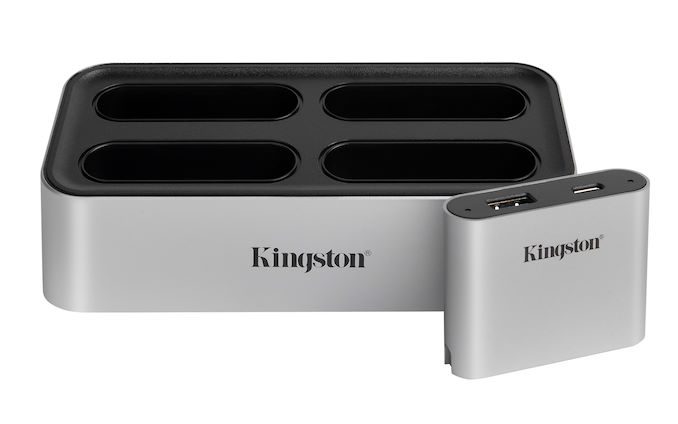
Workflow Station and Card ReadersFor content creators that juggle a lot of memory cards and USB storage devices, Kingston is introducing a new series of card readers and a 4-bay dock for those readers. The dock uses a USB 3.2 Gen 2 (10Gbps) host interface and acts as a USB hub providing USB 3.2 Gen 1 (5Gbps) connectivity to four modules. One module is bundled with the dock, providing one each of USB-C and USB-A ports. Two other modules are sold separately: a two-port SD reader and a two-port microSD reader, both supporting UHS-II. All three types of modules are capable of operating separately from the Workflow Station using a USB-C cable.
Kingston's Workflow Station is a similar concept to the Workflow HR1 and HR2 hubs formerly offered by Lexar. Kingston's system is more modern (USB-C support) and cheaper, but doesn't support as many different memory card formats. This is mainly because Kingston isn't interested in making a reader module for a format they're not currently selling cards for, ruling out CFast and all the newer PCIe-based standards that are trying to gain a foothold in the market. Interested in more of the latest industry news? Check out our CES 2021 trade show landing page! | ||||||||||||||||||||||||||||||||||||||||||||||||||||||||||||||||||||||||||||||||||||||||||||||||||||||||||||||||||||||||||||||||||||||||||||||||||||||||||||||||||||||||||||||||||||||||||||||||||||||||||||||||||||||||||
| 5:00p | CES 2021: ASUS Updates TUF Gaming A15 & A17, Adds Ryzen 5000 & GeForce RTX 30 Series Hardware
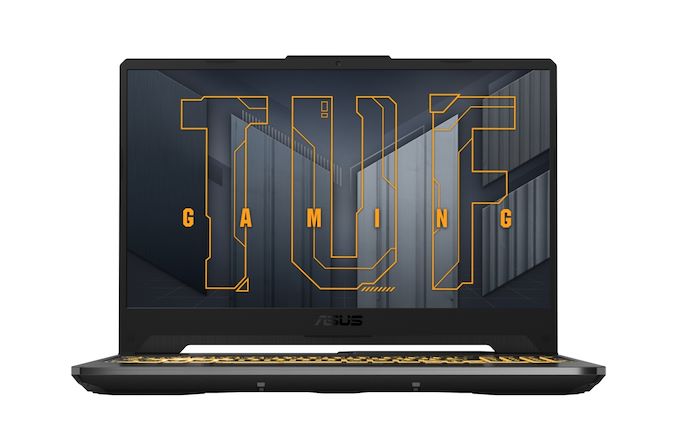
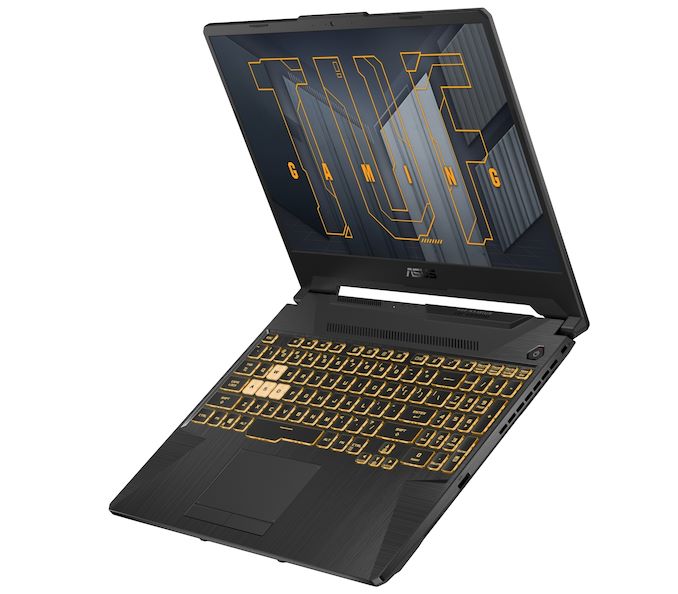
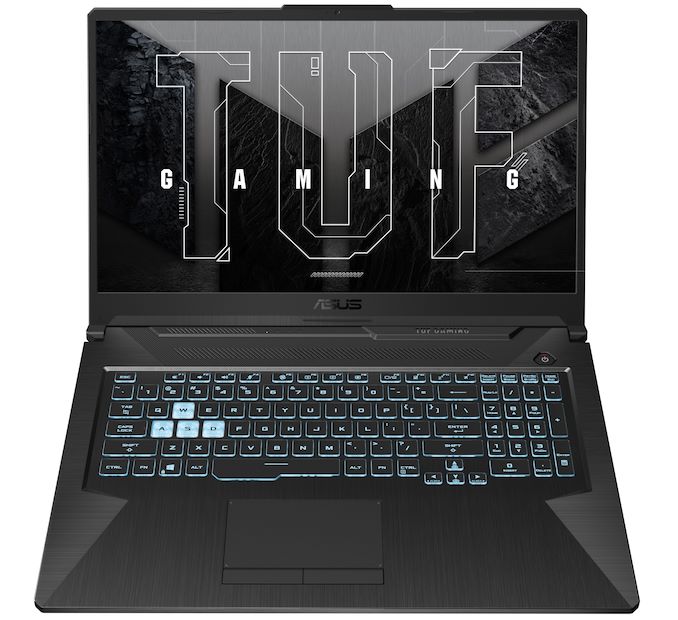
Among several of their laptop lines receiving updates at this year's CES are ASUS's TUF Gaming A15 and A17 family of laptops. Intended as a midrange portable gaming option – a step below ASUS's ROG parts, but still plenty capable – the 2021 edition of the laptop is getting upgraded to the latest and greatest processors from AMD and NVIDIA. The ASUS TUF Gaming A15 and A17 have been updated for 2021 with AMD's latest Ryzen 7 5800H mobile processor and include options for either NVIDIA's new GeForce RTX 3070 or RTX 3060 mobile graphics. Both models also allow for up to 32 GB of DDR4-3200 and up to 1 TB of NVMe M.2 storage. Being that these are gaming laptops, a big focus is on the displays, and fittingly ASUS is only using fast panels here. The top A15 SKUs come with a quick 240 Hz 1080p 15-inch display, while the other models use a 144 Hz panel. Meanwhile, the A17 comes with a 144 Hz 1080p 17-inch display, and all variants support VESA Adaptive-Sync in order to eliminate frame tearing.
Other notable features of the TUF A15/A17 include orange backlighting on the keyboard, with ASUS opting for a similar to a desktop keyboard with highlighted WASD keys. ASUS also includes an integrated 720p webcam on the top bezel, with a built in mic-array which offers noise cancellation properties. Some of the connectivity on offer includes one USB 3.2 G2 Type-C with support for DisplayPort alt mode, an HDMI 2.1 video output, and two USB 3.2 G1 Type-A ports. Wi-Fi 6 connectivity is included with a Kensington lock for extra security. The A15 weighs in at 2.3 kg, with a medium-sized frame measuring in at 359.8 x 256 x 24.9 mm, and is available in metal or plastic.
The A17 is essentially a 17-inch variant and shares the same core hardware specifications. It is larger than the A15 with dimensions of 399.2 x 268.9 x 22.1/24.8mm: the depth of the A17 is dependant on the plastic or metal version. It is also slightly heavier than the A15, with a weight of 2.6 kg. Both the ASUS TUF Gaming A15 and A17 come with a 90 Wh battery, preinstalled with ASUS's Armory Crate software with drivers, with both including support for Dolby DTS: X Ultra audio. Both models also use Wi-Fi 6 interfaces for connecting to a network, with additional support for BT 5.2 devices. ASUS hasn't provided any information about availability or pricing. Interested in more of the latest industry news? Check out our CES 2021 trade show landing page! | ||||||||||||||||||||||||||||||||||||||||||||||||||||||||||||||||||||||||||||||||||||||||||||||||||||||||||||||||||||||||||||||||||||||||||||||||||||||||||||||||||||||||||||||||||||||||||||||||||||||||||||||||||||||||||
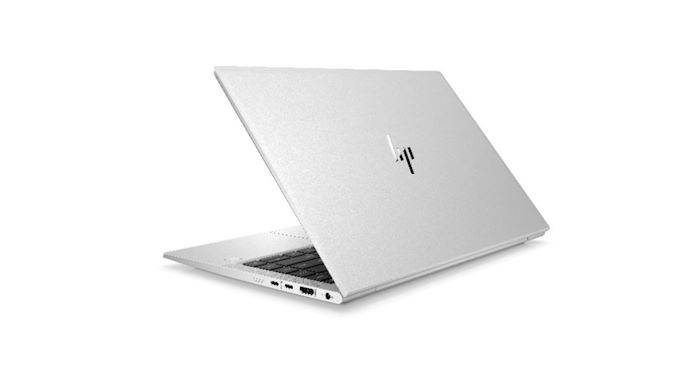
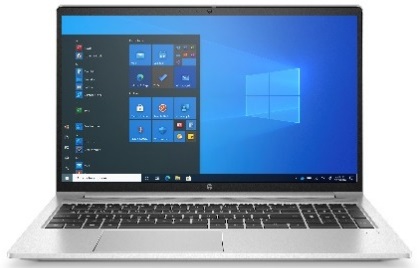

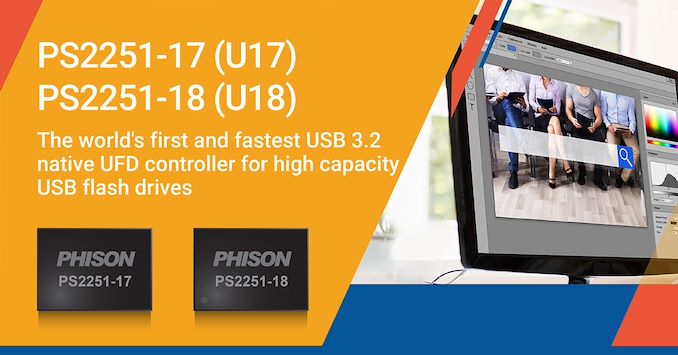
_photo02_575px.jpg)






| << Previous Day |
2021/01/14 [Calendar] |
Next Day >> |