[Most Recent Entries] [Calendar View]
Monday, February 1st, 2021
| Time | Event |
| 7:00a | OnLogic’s New Fanless Systems Contain Intel's Elkhart Lake (10nm Atom)
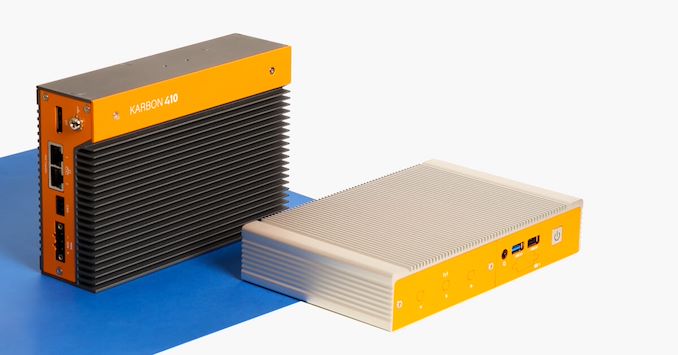
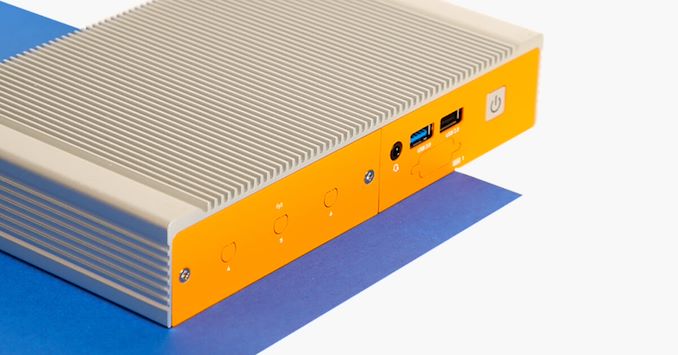
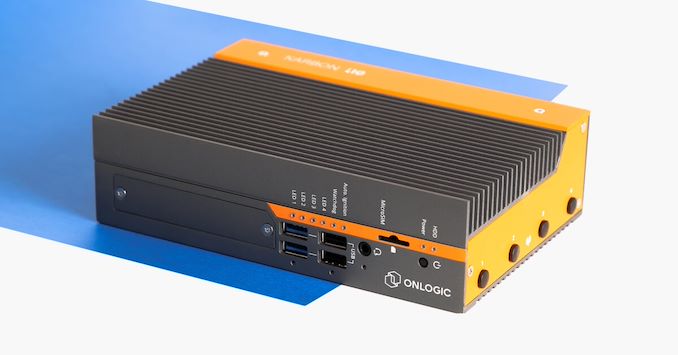
Earlier this year Intel indicated that it was launching its new Jasper Lake platform very soon, built on a foundation of 10nm manufacturing with the latest Tremont Atom cores. While Jasper Lake is geared towards consumers and commercial use cases, Intel also has a similar line of processors built for the industrial and IoT markets, also using Tremont on 10nm, called Elkhart Lake. Onlogic, a business built around supplying the industrial and IoT markets, is introducing new fanless designs built around Elkhart Lake. The four new fanless industrial designs from OnLogic are the Helix 310, Helix 330, Karbon 410, and Karbon 430 – all customizable passively cooled systems for ‘Industry 4.0’. The processors at the heart are all the variants of Elkhart Lake, with the Helix models focusing on dual core Celeron N6211 or quad-core Pentium J6425, while the Karbon models go for dual-core Atom x6211E and quad-core Atom x6425E, the main differentiation of these last two models being the wider thermal support from -40ºC to 70ºC. OnLogic’s main selling point here is the coupling of its ModBay expansion technology, allowing customers additional connectivity through the M.2 and PCIe slots (effectively making the M.2 a simple PCIe x4 link), with Intel’s Programmable Services Engine, or PSE. Intel’s PSE is described by OnLogic as a dedicated offload engine for IoT built from an Arm Cortex-M7 microcontroller, enabling real-time compute and data tracking. Combined with the compute power of Atom cores, the aim is to provide a complete real-time monitoring and communication system for a wide array of industrial deployments. OnLogic provides solution services enabling custom OS deployments, branding, imaging, fulfilment, and lifecycle support.
The Helix 310 and Helix 330 are built on the same platform but afford different levels of customization. Both models include support for 32 GB of DDR4, at least one M.2 slot, 3 USB 3.2 ports, 3 USB 2.0 ports, three DisplayPort outputs and two COM ports. Where they differ is that the Helix 310 is the base model, featuring 1-2 gigabit Ethernet ports and two M.2 slots with optional 4G/DIO/COM/CAN support, but the Helix 330 uses one of those M.2 slots for dual additional gigabit Ethernet by default.
The Karbon 410 and 430 are similarly on a singular platform together, build for a wider temperature window as well as MIL-STD-810H shock and vibration standards. The base platform has up to 32 GB of DDR4, support for M.2 and mSATA storage, dual gigabit Ethernet, two USB 3.2 ports, two USB 2.0 ports, 1 Display Port, 1 CAN bus, 1 micro-SIM slot, dual M.2 slots, 1 mPCIe slot, and optional 4G/DIO/COM/PoE/TPM. The Karbon 410 is the base model, and the Karbon 430 adds in another pair of M.2 slots, a second micro-SIM slot, and allows for additional networking or USB. In the last couple of years, when Intel had record demand for its silicon, the main market segments to lose out were the low-end compute market, namely Intel’s Atom portfolio. Now that Intel has sufficient capacity for its demand, along with increased production of its 10nm manufacturing node, it is refocusing its efforts in this embedded compute market with product lines such as Jasper Lake and Elkhart Lake. This also means that OEMs like OnLogic can redesign their portfolio using the latest updates, such as PSE, as well as the latest technologies at low power, enabling a new generation of fanless designs. OnLogic states that the new Elkhart Lake embedded systems will be available for purchase in Q2, with pricing updates available to customers that get in touch. Source: OnLogic Related Reading |
| 11:00a | The MSI Z590 Godlike, Comparing it to the Z490 Godlike
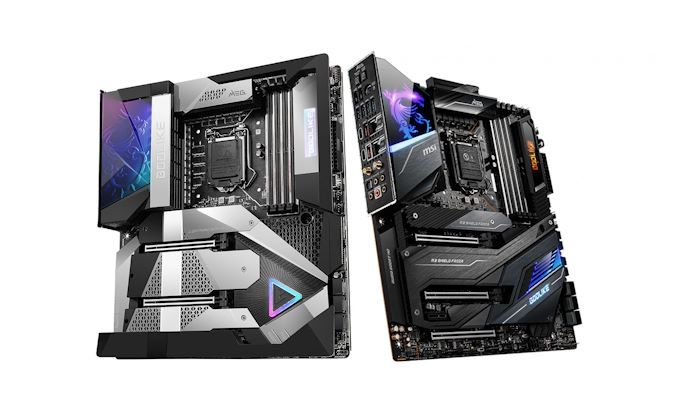
One of MSI's most prominent motherboard ranges is its Godlike series, set as the premium model no matter which platform it is aimed at. As Intel has recently launched its new Z590 desktop chipset, MSI got in contact and shipped us a qualification sample of the new Z590 Godlike model. Designed as the flagship motherboard, in this article we are looking at how the MSI MEG Z590 Godlike has changed from the previous generation for Intel's Rocket Lake processors. |
| 1:15p | How We Test PCIe 4.0 Storage: The AnandTech 2021 SSD Benchmark Suite Our new SSD test suite is ready, updated and expanded for the latest trends in storage including PCIe 4.0 and QLC NAND. |
| 2:00p | ASUS Bundles MemTest86 With its ROG Z590 Firmware
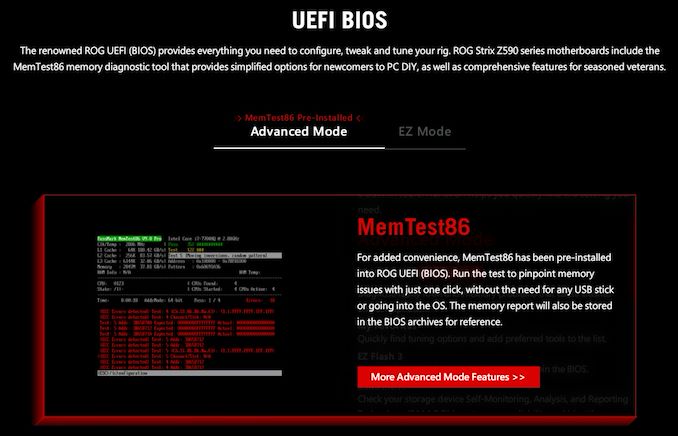
Back at the all-digital CES 2021 trade show, ASUS and the other big motherboard vendors announced its Z590 models designed for Intel's LGA1200 processors. With many of the models now common knowledge, Twitter technology enthusiast @momomo_us points out that ASUS is bundling MemTest86 inside the BIOS of its Republic of Gamers motherboards. MemTest86 is a well known piece of software for diagnosing memory failures, not just in faulty memory, but also provides troubleshooting capabilities for unstable memory overclocks. It is known that Intel's Rocket Lake processors will have a stronger integrated memory controller (IMC) than its current Comet Lake counterparts, as we finally move up to DDR4-3200 native support. This is also prevalent in the available Z590 motherboard memory listings, with many boards including kits as fast as DDR4-5333 in its QVL lists for overclocked memory.
As per @momomo_US's tweet, it looks as though ASUS has penned a deal with PassMark software to allow it to integrate MemTest86 directly into its UEFI firmware. This looks as though it will be only available on select Republic of Gamers models. MemTest86 is also available to all users, although without UEFI integration, users can download it onto a bootable USB flash drive and diagnose memory faults and unstable overclocks this way. With Intel and AMD both making strides in its out of the box Turbo and Boost clock speeds, it seems ASUS is emphasizing memory performance. It uses its own 'secret sauce', which it calls Optimem. It is a primary feature on its motherboards, which ASUS states should allow for tighter memory latencies at equivalent voltages. At present, it is not entirely clear exactly which Z590 models will be distributed with MemTest86 integrated into the UEFI firmware. As more Z590 models hit the retail shelves in the coming months, we should see a clearer picture. Related Reading |
| << Previous Day |
2021/02/01 [Calendar] |
Next Day >> |