[Most Recent Entries] [Calendar View]
Tuesday, June 22nd, 2021
| Time | Event | ||||||||||||||||||||||||||||||||
| 3:00a | GlobalFoundries To Build New 450K Wafer-per-Year Fab in Singapore
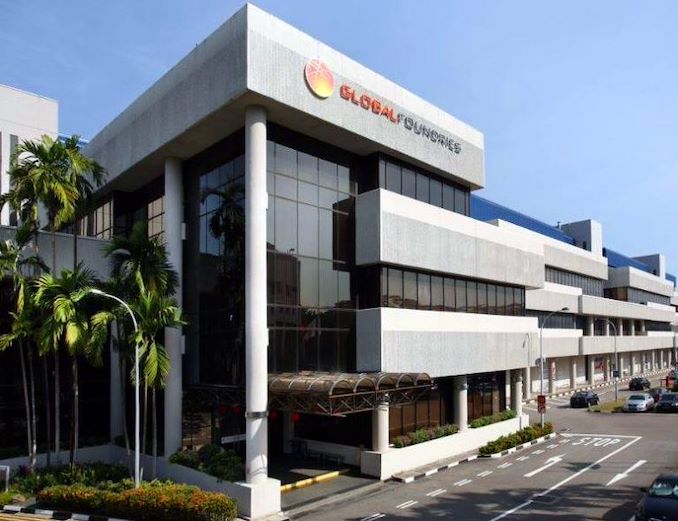
Looking to capitalize on the ongoing chip crunch, GlobalFoundries this morning is announcing that the company is building a new chip fab in Singapore, with the groundbreaking taking place immediately. The unnamed fab will be joining the company’s existing cluster of fabs in Singapore, and once fully ramped up in late 2023, will be capable of processing 450K 300mm wafers per year. The fab is the first of a larger, three phase plan for the foundry, which with investments from customers and the Singapore government, will be spending $4 billion to construct the new fab. Like the rest of the chip lithography industry, GlobalFoundries is currently enjoying a booming market where they can’t make chips fast enough to satisfy customer demand. Even with multiple fabs located in Singapore, Dresden, and the US, the company is running at capacity and could be selling more chips if they could make them. To that end, the company is preparing to make the first of several planned capacity expansions, starting with its fab cluster in Singapore. Keeping in line with GlobalFoundries’ pivot towards more specialized processes for specific classes of chips, the new fab is going to be focused on larger process nodes. GloFo is principally investing in capacity for their automotive, 5G mobility and secure device customers, which means adding capacity for their 55nm BiCMOS process for RF, as well as their 40nm processes for embedded memory and RF. A small part of the fab’s capacity is also being set aside for 90nm. And, since this fab is being built with modern tools, the company is being quick to emphasize that these allocations aren’t static, and that many of their tools are fungible, allowing them to be moved between different lines as dictated by demand. Owing to the unique processes being employed and the overall chip crunch – which even after it diminishes isn’t expected to fully abate any time soon – GloFo is fast-tracking the development of this new fab. With construction already underway (and the formal groundbreaking set for today), the company expects the fab to produce its first commercial wafers in early 2023, only around 18 months from now. And by the time the fab is fully ramped up at the end of 2023, the 250,000 square feet of clean room space will be capable of processing 450K wafers per year (~38K/month). Overall, this marks a nearly 50% increase in GloFo Singapore’s capacity, bringing the total capacity for operations there to 1.5M 300mm wafers per year. Funding for the $4 billion fab, in turn, is coming from a few sources. According to GlobalFoundries, part of the funding for the fab is coming directly from customers, who are pre-paying for the capacity. As well, Singapore’s Economic Development Board is being listed as a partner. And finally, with GlobalFoundries easily turning a profit, the company has much easier access to loans and other forms of borrowing than it has in previous years. Overall, this marks the next step in an important turnaround for the contract fab, which was spun-off from AMD almost 13 years ago. Though GlobalFoundries’ plans to compete as a bleeding-edge fab eventually fell to the wayside thanks to the ever-increasing costs of R&D, the company has found a new role as a large-scale provider of older and more specialized manufacturing processes. As a result, GloFo is finally a financially successful chip fab, and with that success comes the need to expand. Once finished, the new Singapore fab will be the first brand-new (and not acquired) fab to be built by the company in several years. Meanwhile, Singapore is just the first of several planned additions for the contract chip fab. Mindful of the current political climate and every major nation’s desire to secure local chip manufacturing capacity, the company is aiming to expand capacity in all three of its fab sites, ideally splitting capacity equally between Singapore, the US, and Dresden. Singapore, in turn, has become the first major expansion on the basis of need – it’s the oldest fab complex and the first to run out of room – but it won’t be the last. GloFo is already in the middle of its previously-announced $1.4B capacity expansion across all of its sites, and the company wants to invest upwards of 6 billion dollars more over the next couple of years. So, as GlobalFoundries’ fortunes continue to rise, so will the additional fab capacity needed to support the company. | ||||||||||||||||||||||||||||||||
| 5:00a | AMD Moves GCN 1, 2, & 3-based GPUs and APUs To Legacy; Also Drops Win7 Support
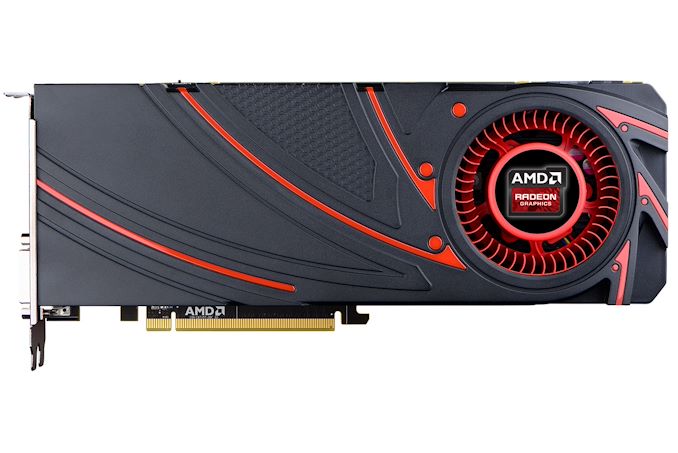
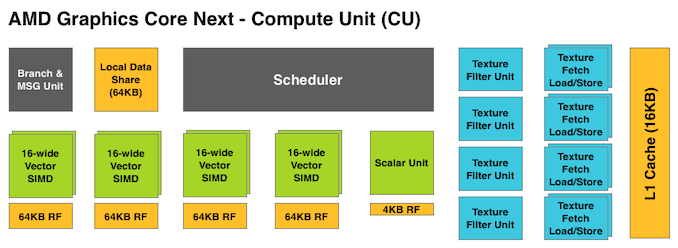
Alongside today’s release of their new Radeon Software Adrenalin 21.6.1 driver – the first to bring support for FidelityFX Super Resolution tech – AMD is also using this opportunity to clean house on supported graphics products. As announced in a new blog post and effective immediately, AMD is moving all of its 1st, 2nd, and 3rd generation Graphics Core Next (GCN) based GPUs and APUs to legacy status. As a result, pre-RX 400 series video cards and pre-Ryzen APUs are no longer supported by AMD’s current drivers, and AMD’s previous 21.5.2 driver set will be the final release for those products. 21.5.2 will also be the final driver that supports Windows 7, as AMD is also using this opportunity to drop support for that already-retired OS. This week’s change in support marks the first time since 2015 that AMD has moved any video hardware to legacy support. At the time, the company retired its pre-GCN hardware, leaving AMD’s GCN-based Radeon HD 7000 series and newer products as their support baseline. And, after nearly 10 years of support for the oldest pieces of GCN hardware – the then-revolutionary Radeon HD 7970 was launched at the very start of 2012 – AMD is finally winding down support for the first couple of waves of GCN hardware. First introduced in 2011, GCN was a major overhaul of AMD’s graphics architecture, moving from an ILP-centric design to a more modern and compute-friendly TLP-centric design. GCN itself has since been supplanted by the RDNA family, but many of the basic design principles of GCN are still alive today in AMD’s enterprise compute-focused CDNA architecture.
As for this week’s product support changes, AMD is essentially retiring all graphics hardware – GPU and APU – that pre-dates 2016’s Polaris (GCN 4) architecture. Consequently, AMD’s lengthy legacy list includes the Radeon 7000 and 8000 series, as well as the 200, 300, and Fury series. Even a few pieces of mobile-focused M400 hardware are on there, since those low-end parts were based on older GCN chips. Overall, this marks a roughly 5-year span of hardware being retired this week, with the youngest parts just turning 5. On the APU front, the legacy list includes several of AMD’s popular pre-Ryzen APUs, including Bristol Ridge, Carrizo, and Kaveri, which were predominantly sold under the AMD A-series moniker (e.g. A10-9700). It’s worth noting that the resulting support window for these products does end up being a bit shorter than the discrete GPUs, since AMD didn’t release their first Ryzen + Vega APUs until 2018.
As things stand, I’m not surprised to see AMD lump together GCN 1/2/3 from a driver support standpoint. Despite some very material architecture tweaks among those successive generations, from a product development standpoint they all represent one extended product family, as AMD introduced and replaced GPUs in a piecemeal fashion. Combined with the fact that AMD continued using early GCN parts in newer cards for years, it wasn’t until Polaris in 2016 that AMD finally executed a complete top-to-bottom refresh of its entire GPU product stack. In other words, GCN 1/2/3 are being retired in the same way they lived: together. Otherwise, as previously mentioned, AMD is also using this opportunity to retire support for their last pre-Windows 10 OS. Like most other hardware vendors, AMD had opted to continue developing drivers for Windows 7 even after the OS itself was retired at the start of 2020, owing to the fact that it was still seeing significant use in some locales. But, after another 18 months of extended support, Windows 7 support is also being dropped. As of today’s 21.6.1 drivers, the only versions of Windows supported are 64-bit editions of Windows 10. For their part, AMD’s blog post on the retirement notes that “This change enables AMD to dedicate valuable engineering resources to developing new features and enhancements for graphics products based on our latest graphics architectures.” It’s also worth noting that this announcement comes less than 2 weeks after NVIDIA’s own legacy announcement, where the company announced that the similarly aged Kepler architecture will be moved to legacy status later this summer. Closing out support for all these legacy products then will be AMD’s 21.5.2 driver. The company has posted a fresh “legacy” version of the driver just for these retired products, though it doesn’t look like there’s anything new versus AMD’s existing drivers. According to the company, there are no further driver released planned, and the announcement makes no mention of a security update support period. Overall, AMD’s early GCN architecture parts marked an important transition for AMD, and the resulting hardware, for all of its merits and weaknesses, kept AMD in the game during a very tough period for the company. So for GCN 1, 2, and 3, this is a retirement that’s well-earned. | ||||||||||||||||||||||||||||||||
| 9:00a | Intel Licenses SiFive’s Portfolio for Intel Foundry Services on 7nm
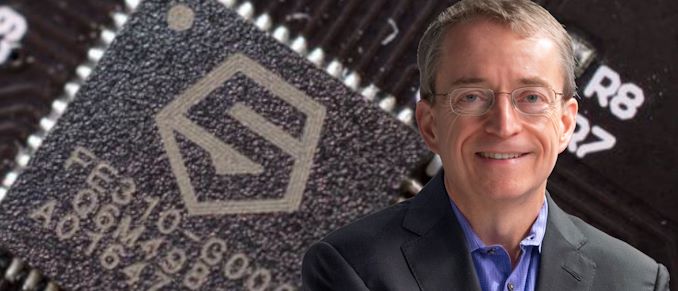
Today’s announcement from SiFive comes in two parts; this part is significant as it recognizes that Intel will be enabling SiFive’s IP portfolio on its 7nm manufacturing process for upcoming foundry customers. We are expecting Intel to offer a wide variety of its own IP, such as some of the x86 cores, memory controllers, PCIe controllers, and accelerators, however the depth of its third party IP support has not been fully established at this point. SiFive’s IP is the first (we believe) official confirmation of specific IP that will be supported. | ||||||||||||||||||||||||||||||||
| 9:01a | Intel to Create RISC-V Development Platform with SiFive P550 Cores on 7nm in 2022
As part of SiFive’s announcements today, along with enabling SiFive IP on Intel’s Foundry Service offerings, Intel will be creating its own RISC-V development platform using its 7nm process technology. This platform, called Horse Creek, will feature several of SiFive’s new Performance P550 cores also being announced today, and will be paired with Intel’s DDR and PCIe IP technology. | ||||||||||||||||||||||||||||||||

| << Previous Day |
2021/06/22 [Calendar] |
Next Day >> |