[Most Recent Entries] [Calendar View]
Thursday, July 29th, 2021
| Time | Event |
| 8:00a | JEDEC Publishes LPDDR5X Standard at up to 8533 Mbps
JEDEC and the JC-42.6 Subcommittee for Low Power Memories has announced the publication of the new JESD209-5B standard which now includes improvements to LPDDR5, as well as an extension for the standard in the form of new LPDDR5X. |
| 9:00a | Intel Beast Canyon NUC Review: Desktop Tiger Lake Debuts in SFF Gaming Powerhouse Intel kick-started a form-factor revolution in the early 2010s with the introduction of the ultra-compact NUCs. The systems were meant to be an alternative to the tower desktops used in many applications where the size, shape, and the system capabilities were mostly unwarranted. The success of the NUCs enabled Intel to start reimagining the build of systems used in a wider range of settings. More recently, the introduction of the Skull Canyon NUC in 2016 was Intel's first effort to make a gaming-focused SFF PC. And desktop-focused Compute Elements (essentially, a motherboard in a PCIe card form-factor) launched in early 2020 meant that full-blown gaming desktops could credibly come under the NUC banner. Also last year, the Ghost Canyon NUC9 – the first NUC Extreme – made a splash in the market with support for a user-replaceable discrete GPU. Ghost Canyon was extremely impressive, but the restrictions on the dGPU size and high-end pricing were dampeners. Thankfully, the introduction of Tiger Lake has enabled Intel to make multiple updates in its Compute Element lineup. Incorporating some tweaks and changes learned from their Ghost Canyon experience, Intel has now put forward its flagship NUC for 2021: Beast Canyon. With a desktop-class CPU and ability to accommodate most discrete GPUs in the market, the Beast Canyon NUC promises a lot. Does it manage to exorcise the ghosts of its predecessor? Read on to find the answer. |
| 11:00a | Intel Launches Xeon W-3300: Ice Lake for Workstations, up to 38 Cores With the launch earlier this year of Intel’s Ice Lake Xeon Scalable platform, the first Intel enterprise platform based on 10nm, we were always wondering to what extent this silicon would penetrate other markets. Today Intel is answering that question by launching the Xeon W-3300 family, using the same Ice Lake Xeon silicon but in a more focused single socket platform. Xeon W-3300 will offer processors from 12 core up to 38 cores, peaking at 270 W TDP, but offering support for up to 4 TB of memory. |
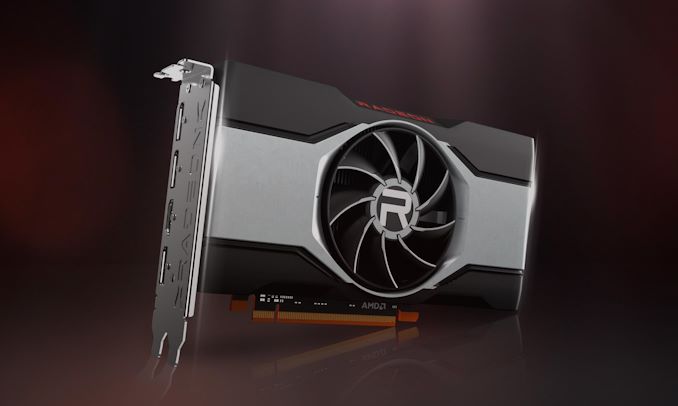
| 11:30p | AMD Announces Radeon RX 6600 XT: Mainstream RDNA2 Lands August 11th For $379
Starting next month, AMD’s Radeon RX 6000 desktop product stack is about to get a little deeper – and a little cheaper – with the addition of the forthcoming Radeon RX 6600 XT. Announced this evening, the Radeon RX 6600 XT is the next step down in the RDNA2-based Radeon lineup, adding a card aimed at mainstream, 1080p gamers. The card will offer 32 CUs’ worth of GPU hardware along with 8GB of GDDR6 memory, and will go on sale on August 11th with prices starting at $379. The addition of the RX 6600 XT to their desktop lineup has been a long-time coming, as even though the company is already 4 cards deep into their product stack – most recently adding the 1440p-focused RX 6700 XT nearly 5 months ago – AMD hasn’t been offering a mainstream-focused RDNA2 desktop video card until now. In fact, AMD’s been pretty absent from the mainstream 1080p gaming market as a whole over the last several months, as the capacity-constrained company has been focusing its GPU manufacturing resources on laptop parts and the high-end RDNA2 chips. But finally, and at last, it’s time for the 1080p market to get a much-needed boost from AMD’s RDNA2 architecture. Underpinning AMD’s new 1080p video card is a GPU we’ve already seen once before: Navi 23. This GPU was first employed back in May as the Radeon RX 6600M, the cornerstone of AMD’s Radeon RX 6000 mobile lineup. Now that the laptop market has had a chance to stock up on Navi 23 hardware, the GPU is making its desktop debut in the aptly named RX 6600 XT. And, unlike the RX 6600M, the RX 6600 XT will feature a fully-enabled version of the chip, giving Navi 23 its first chance to completely show off what it’s capable of. |

| << Previous Day |
2021/07/29 [Calendar] |
Next Day >> |