[Most Recent Entries] [Calendar View]
Friday, October 15th, 2021
| Time | Event | ||||||||||||||||||||
| 9:00a | The EVGA Z590 Dark Motherboard Review: For Extreme Enthusiasts Getting the most out of Intel's Core i9-11900K primarily relies on two main factors: premium cooling for the chip itself, and a solid motherboard acting as the foundation. And while motherboard manufacturers such as EVGA can't do anything about the former, they have quite a bit of experience with the latter. Today we're taking a look at EVGA's Z590 Dark motherboard, which is putting EVGA's experience to the test as one of a small handful of LGA1200 motherboards geared for extreme overclocking. A niche market within a niche market, few people really have the need (or the means) to overclock a processor within an inch of its life. But for those that do, EVGA has developed a well-earned reputation with its Dark series boards for pulling out all of the stops in helping overclockers get the most out of their chips. And even for the rest of us who will never see a Rocket Lake chip pass 6GHz, it's interesting to see just what it takes with regards to motherboard design and construction to get the job done. | ||||||||||||||||||||
| 10:00a | G.Skill Unveils Premium Trident Z5 and Z5 RGB DDR5 Memory, Up To DDR5-6400 CL36
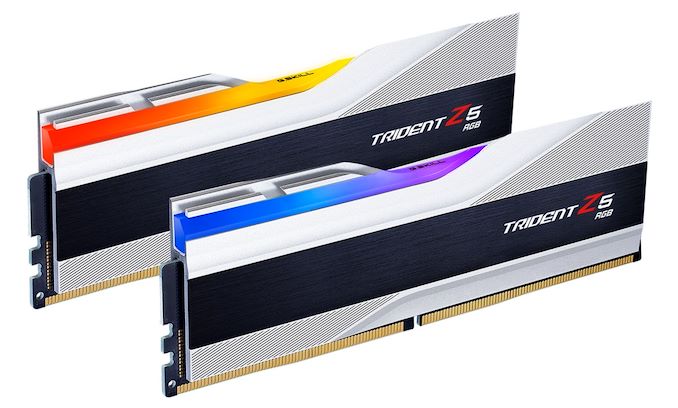
With memory manufacturers clamoring over themselves to push out DDR5 in time for the upcoming launch of Intel's Alder Lake processors, G.Skill has unveiled its latest premium Trident Z5 kits. The latest Trident kits are based on Samsung's new DDR5 memory chips and range in speed from DDR5-5600 to DDR5-6400, with latencies of either CL36 or CL40. Meanwhile, G.Skill has also opted to use this opportunity to undertake a complete design overhaul from its previous DDR4 memory, with a fresh new look and plenty of integrated RGB, and is .
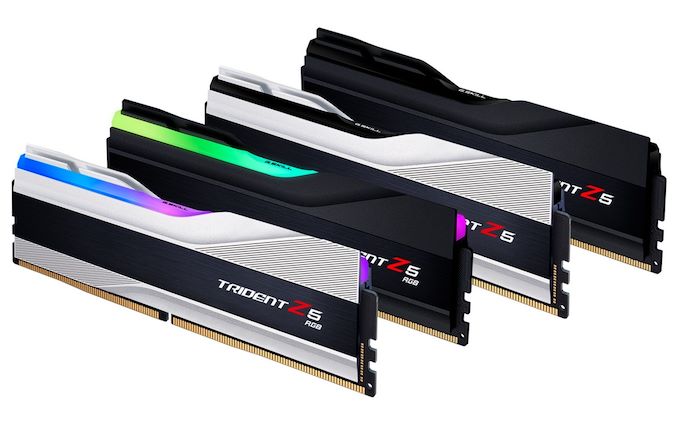
Looking at performance, the top SKU comes with fast speeds of DDR5-6400, with either a latency of CL 36-36-36-76 or CL 40-40-40-76. Both the lower-rated kits of DDR5-6000 and DDR5-5600 are available with the same latencies, while all of the six combinations will be available in 32 GB kits, with 2 x 16 GB memory modules. The new G.Skill Trident Z5 and Z5 RGB memory kits will also feature the latest Samsung memory ICs, with G.Skill hand screening the memory chips themselves to ensure maximum stability and performance. At the time of writing, G.Skill hasn't confirmed the operating voltages of each kit. G.Skill also hasn't unveiled its pricing at this time, but it did say that the Trident Z5 and Trident Z5 RGB kits will be available from November. Meanwhile in terms of aesthetics, the G.Skill Trident Z5 DDR5 memory features a new design compared with previous Trident Z series kits. The Trident Z5 comes with a new dual texture heat spreader design and is available either with a black top bar (Z5) or a new translucent RGB light bar (Z5 RGB). It's also available in black and silver, with a black brushed aluminum insert across both colors, making it stand out.
With the RGB enabled G.Skill Trident Z5 RGB DDR5 memory kits, the lighting can be customized via its Trident Z lighting control software or synced with other third-party software supplied by vendors such as ASRock, ASUS, GIGABYTE, and MSI's own RGB software. Gallery: G.Skill
      Related Reading | ||||||||||||||||||||
| 12:00p | TSMC to Build Japan's Most Advanced Semiconductor Fab
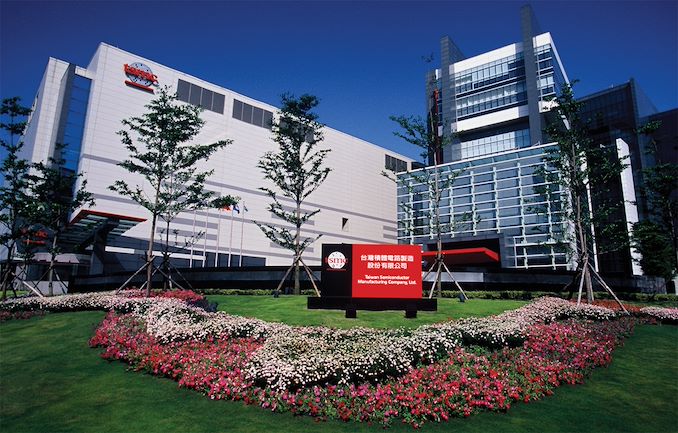
Fabs are well-known for being an expensive business to be in, so any time a new fab is slated for construction, it tends to be a big deal – especially amidst the current chip crunch. To that end, TSMC this week has announced plans to build a new, semi-specialized fab in Japan to meet the needs of its local customers. The semiconductor manufacturing facility will focus on mature and specialty fabrication technologies that are used to make chips with long lifecycles for automakers and consumer electronics. The fab will be Japan's most advanced fab for logic when it becomes operational in late 2024 and if the rumors about planned investments are correct, it could also be Japan's largest fab for logic chips. "After conducting due diligence, we announce our intention to build a specialty technology fab in Japan, subject to our board of directors approval," announced CC Wei, chief executive officer of TSMC, during a conference call with investors and financial analysts. "We have received a strong commitment to support this project from both our customers and the Japanese government." Comes Online in Late 2024TSMC's fab in Japan will process 300-mm wafers using a variety of specialty and mature nodes, including a number of 28 nm technologies as well as 22ULP process for ultra-low-power devices. These nodes are not used to make leading-edge ASICs and SoCs, but they are widely used by automotive and consumer electronics industries and will continue to be used for years to come not only for existing chips, but for upcoming solutions as well. "This fab will utilize 20 nm to 28 nm technology for semiconductor wafer fabrication," Wei added. "Fab construction is scheduled to begin in 2022 and production is targeted to begin in late 2024, further details will be provided subject to the board approval." While TSMC disclosed the specialized nature of the fab, its schedule, and the fact that it gained support from clients and the Japanese government, the company is not revealing anything beyond that. In fact, while it confirmed that the cost of the semiconductor production facility is not included in its $100 billion three-year CapEx plan, it refused to give any estimates about its planned investments in the project. Meanwhile, there are many things that make this fab special for TSMC, Japan, and the industry. The Most Advanced Logic Fab in JapanIt was late 2005, AMD and Intel started to ship their first dual-core processors and the CPU frequency battle was officially over. Intel was getting ready to introduce its first 65nm chips in early 2006 and all of a sudden Panasonic said that it had started volume production of the world's first application processors using a 65 nm technology, which it co-developed with Renesas, putting Panasonic a couple of months ahead of mighty Intel. In mid-2007, Panasonic again beat Intel to punch by several months with its 45 nm fabrication process. But with their 32 nm node, Panasonic was 9 – 10 months behind Intel. And while the company did a half-node shrink of this process, it ultimately pulled the plug on 22nm following other Japanese conglomerates that opted out from the process technology race even earlier. By now, all Japanese automotive and electronics companies outsource their advanced chips to foundries, who in turn, build the majority of them outside of Japan. By bringing a 22ULP/28nm-capable fab to Japan, TSMC's plans will not only brings advanced logic manufacturing back to the country, but it would also amount to the most advanced fab in Japan. TSMC is also constructing an R&D center in Japan and cooperates with the University of Tokyo on various matters, so its presence in the country is growing, which is good news for the local semiconductor industry. Previously TSMC concentrated its fabs and R&D facilities in Taiwan, but it looks like its rapid growth fueled by surging demand for semiconductors as well as geopolitical matters are compelling the foundry to diversify its production and R&D locations. What is particularly interesting is that according to a Nikkei report, the Japanese production facility will be co-funded by TSMC, the Japanese government, and Sony. This marks another major strategy shift for TSMC, which tends to fully own its fabs. In fact, if the Nikkei report is to be believed, the whole project will cost around $7 billion (though it is not said whether this is the cost of first phase of the fab, or a potential multi-year investment). To put the number into context, SMIC recently announced plans to spend around $8.87 billion on a fab with planned capacity of around 100,000 300-mm wafer starts per month (WSPM). TSMC's facility will presumably cost less and will be built in a country with higher operating costs, so it may well not be a GigaFab-level facility (which have capacity of ~100K WSPM). But still, we are talking about a sizable fab that could have a capacity of tens of thousands of wafer starts per month, which would make it Japan's biggest 300-mm logic facility ever. Just for comparison, the former Panasonic fab in Uozo (now controlled by Tower Semiconductor and Nuvoton) has a capacity of around 8,000 WSPM. TSMC has not formally confirmed any numbers about its Japanese fab, but the company tends to build rather large production facilities that can be expanded if needed. Meanwhile, a fab in Japan that will serve the needs of local automotive and electronics conglomerates promises to help them to avoid shortages of chips in the future. This would also leave TSMC free to assign its 28nmTaiwanese and Chinese production lines to other applications, including PCs, which is important for the whole industry. | ||||||||||||||||||||
| << Previous Day |
2021/10/15 [Calendar] |
Next Day >> |