[Most Recent Entries] [Calendar View]
Friday, December 2nd, 2016
| Time | Event |
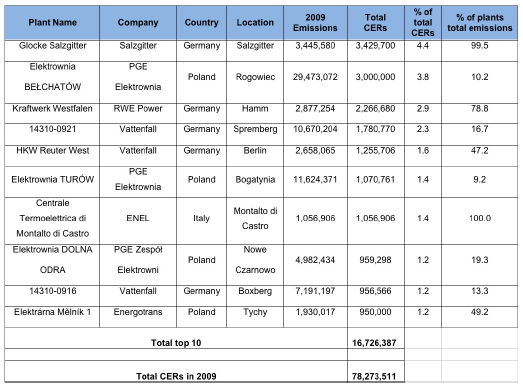
| 1:00p | Amazon AWS’ Presence in Italy May Look Strangely Nuclear The likely sale of two closed, fuel oil- and coal-firing power facilities by Italy’s largest electricity provider, Enel, to Amazon Web Services for repurposing as cloud data center facilities — as discovered by Reuters Wednesday — appears to actually have been in the works for some time. The public utility has been aggressively attacking the urgent need for renewable power sources, not just for the environment’s sake, but also its customers’. By this time last year, Enel had closed some 23 non-renewable plants across Italy, according to the English-language news publication ItalyEurope24. At that time, it posed an open question as to what to do with these facilities, exploring ideas as wild as converting the old smokestacks into support structures for amusement park rides, planting restaurant terraces at the tops of these structures, and converting old generator facilities into shopping malls. Montalto di Castro — a beautiful province facing the Tyrrhenian Sea, just a two-hour drive northwest of Rome — was the site of a multi-fuel burning plant, including fossil fuel. It was built on the orders of the Italian government in 1989, after the country halted all nuclear power operations and ceased construction of new facilities. A new nuclear plant was already being constructed there. Enel had been operating the Alessandro Volta thermoelectric plant there, next to the partly constructed, never-used, Montalto di Castro nuclear plant. The most recent records available show that the Montalto plant generated some 3,600 MW of total power, mostly by way of fuel oil, but for a few hundred MW from gas turbine generators. In 2010, a report was issued citing the Volta plant for having produced some 1.06 million tons of CO2 emissions in 2009. According to the Italian whistleblower publication Il Fatto Quotidiano, those incredible emissions were permitted by way of certified emission reduction (CER) credits granted to Enel, for sponsoring a China-based project to reduce CO2 emissions by the same amount. The “optics” of that deal, to borrow a phrase from presidential campaigns, was not good. Last May, Enel opted to shut down the plant. Under Italian law, it then published a call for tenders — a public contest for ideas about how it could repurpose the facility. Last July, the Italian news publication Corriere Della Sera reported that it had discovered Amazon AWS representatives had been visiting Montalto. Its sources said the company had also expressed interest in the Galileo Ferraris thermoelectric facility in Trino province, as well as one other facility. The imminence of a deal was underscored Tuesday, when Fabio Veronese, Enel’s head of infrastructure and technological services, was given a plum speaking slot during the keynote session at Amazon’s re:Invent 2016 conference in Las Vegas. There, he took credit for his entire industry having invented the cloud service model long before Amazon came onto the scene.
Veronese called its previous customer servicing model “bimodal” in a “neurotic” sense, outsourcing for the Western hemisphere while operating on-premises services for the Eastern. It was able to discontinue its outsourcing operations, but was faced with the repurposing of some 10,000+ servers and 30,000 virtual CPUs, across 30 countries. Enel achieved this repurposing goal by June of this year, he said. But in an ironic turn of events that perhaps can’t be repeated for most other classes of companies, Amazon may be bringing Enel’s information assets back on-premises. Or, to be accurate, ex-premises. |
| 5:18p | DCK Exclusive: Infomart President John Sheputis Talks Strategy Infomart Data Centers primarily leases premium wholesale and colocation services to IT service providers, cloud hosting providers, content and social media companies. A major tenant in Dallas is connectivity giant Equinix, the largest publicly traded data center REIT. These type of customers typically require concurrently maintainable data center services, and most notably, the standard Infomart service level agreement promises 100 percent uptime. President John Sheputis confirmed to Data Center Knowledge that the company has never had an SLA event. Becoming a National ProviderBack in 2014, Fortune Data Centers and Dallas Infomart pooled their assets under the Infomart Data Centers flag, headed by Sheputis. Since both entities were owned by real estate funds controlled by ASB Capital Management, it eased the process of combining resources and talent. Sheputis told Data Center Knowledge that around that same time that RFPs (customer requests for proposals), were increasingly focused on questions such as: Where else do you have facilities? Are you able to grow with us? Read more: Merger Creates National Data Center Provider The ability for Infomart to present four Tier 1 market options to tenants: Dallas, Silicon Valley, Portland, and Ashburn in 2017, has continued to grow in importance. Infomart currently operates 2.3 million square feet in its data center portfolio, with about 35MW in various stages of active development. Infomart takes a pure wholesale approach to the data center business, and does not compete with its tenants. Infomart does not mark-up power, or share in savings negotiated with electric utilities. Notably, Infomart does not charge a monthly recurring fee for cross-connects, including the connectivity-focused iconic Dallas facility. This approach differentiates Infomart from other landlords, including most publicly traded peers. Here is a closer look at Infomart on a market by market basis. Infomart Portland – LinkedInLinkedIn recently consolidated US data center operations by leasing 8MW of custom built data hall space from Infomart. This is the first LinkedIn data center designed to operate at a scale of 100,000-plus servers. Read more: LinkedIn Adopting the Hyperscale Data Center Way The availability of low-carbon hydroelectric power from Bonneville Power Administration certainly factored into the decision for LinkedIn to select the “Silicon Forest” of Hillsboro, near Portland, Oregon as a location for its new, high-density data center design.
Source: LinkedIn However, a highly collaborative design-build approach between landlord and tenant played a major role in LinkedIn selecting Infomart Portland to be the home for its state-of-the-art LOR1 data center. Sheputis and his Infomart team were able to roll up their sleeves to work with LinkedIn engineers to provide facility features such as the 415 volt electrical distribution system, a 400A Starline bus above the racks, and an efficient chiller plant delivering supply water at 67 degrees. These design elements support LinkedIn’s hot/cold containment at the rack level utilizing rear door heat exchangers, allowing for flexible cabinet designs up to 24kW. Read more: LinkedIn’s Award-Winning Hillsboro Data Center Goes Live The Oregon climate allows LinkedIn to leverage “free cooling” from water side economization 60 percent of the year, which along with an overall energy efficient design, contributes to a PUE as low as 1.06. The Uptime Institute recently has recognized LinkedIn and Infomart Portland with their Efficient IT award. Notably, this was the first time the award was given in a multi-tenant data center where the user and landlord were different entities. Infomart currently has 4 MW of move-in ready space and 8MW of shell available at the 24 MW Hillsboro property. Infomart AshburnThe former 180,000 square foot AOL data center in Sterling, VA was purchased by Infomart in 2014 with just 6MW of critical power. In most other ways the existing facility was state-of-the-art. Infomart is currently completing an upgrade of the entire mechanical and electrical infrastructure to bring this facility up to Tier III design standards with a PUE of 1.25 or better. Sheputis told Data Center Knowledge that Infomart intends to leverage best practices learned from the LinkedIn collaboration in future facilities, including the former AOL site. During the process of evaluation and design, Infomart decided it would be market savvy to increase the power density to support 300kW-400kW per square foot, or 15MW-20MW for the entire facility. This process has pushed out the opening of the Infomart Ashburn data center. However, the initial 6MW Phase 1 will commissioned, and a 2MW data hall will be completed and available by Q2 2017. Silicon Valley – A Power AdvantageMastering utility rate structures and creating power options has become a competitive advantage for Infomart in San Jose, California. Sheputis explained that PG&E as a regulated California utility does not make a profit on producing and supplying energy. While at first blush it might appear counter-intuitive, PG&E actually makes money “from moving electricity through its transmission and distribution systems.” Sheputis took advantage of a brief window in time to apply and be accepted into PG&E’s Direct Access program. Direct Access allows Infomart to purchase electricity at an agreed upon rate from third-party Energy Service Providers. The electrons are the same, but are delivered and consumed at a lower total cost for power. Sheputis gleaned insights into free markets and deregulation during his stint in the mid-to-late 1990s with Enron Energy Services and Enron Wholesale. Choice of electrical suppliers also allows customers more flexibility when it comes to reducing facility carbon footprints through purchasing renewable energy, even if the tariff is a bit higher. Infomart can offer data center customers a slightly lower rate structure in San Jose, than the current tariff being charged by Santa Clara Power. SCP is generally viewed to be the low-cost provider for Silicon Valley data center operators. Infomart has 3 MW move-in ready space available at the existing 9.3 MW Silicon Valley property with a PUE of 1.3. Additionally, the redevelopment of a 55,000 square foot building will provide another 6MW of data center capacity and 10,000 of private office at this site. Infomart Dallas – Leveraging ConnectivityThe iconic Dallas Infomart contains 1.6 million square feet of data halls and support space, and over 100MW of critical power. Sheputis explained that Infomart only operates 30MW of that capacity, with the balance leased to major tenants such as Equinix who are responsible for their own footprint, including operating their own generators. Read more: First Wholesale Data Center Suite Opens at Dallas Infomart Infomart has a multi-phase expansion underway in Dallas. The first phase is building out unoccupied suites within the existing envelope. Infomart has initially developed the first 3MW, with 500kW underway (to be delivered in Feb 2017). There are another 7MW of requirements that Infomart has identified to be the next projects. Phase 2 of the expansion would be 30MW, and require constructing a separate 300,000 square foot building on the property. Ownership Matters – Patient CapitalInfomart Data Centers is owned by ASB Allegiance Real Estate Fund, a $6.6 billion real estate investment trust (REIT), which manages institutional capital.
Source: asbrealestate.com Sheputis explained, that developers and private equity funds are looking for much higher returns than pension funds and life insurance companies, who he joked were “financial apex predators.” They are often the natural long-term home for capital intensive assets such as data centers. ASB is fairly patient capital. According to the Infomart website: “Ownership with the capital to support a long-term investment strategy means we can focus on providing our customers with the best products and services possible without the pressure to cut costs and boost ROI. It also means we have long-term financial stability and the agility to keep up with technological advances.” During 2017, the Infomart team has plenty of development projects and leasing opportunities in all four existing markets. However, Sheputis acknowledged that looking to 2018 and beyond, Infomart could be coming up on a strategic crossroads. Decisions will be made regarding expansions into other markets, growth by acquisition, or other strategic alternatives for Infomart. Essentially, ASB and the Infomart management team will have to decide whether to expand and stay the course, merge privately, or look toward Wall Street for other alternatives. |
| 5:26p | Juniper Networks to Acquire Cloud Monitoring Firm AppFormix In a surprise deal announced Thursday afternoon, a company that had been positioning itself as an innovator in the data center operations and monitoring space, and a major partner of Intel, has agreed to be acquired for an undisclosed sum by network switch and SDN leader Juniper Networks. The deal involving AppFormix, which has been building tools and techniques for monitoring Intel Xeon CPUs at a very low level, is expected to be completed before the end of the month. “Although there are a few operations management products in the market, most of them are built for generic IT workloads and environments,” noted Ankur Singla, CEO of Juniper’s Contrail Systems subsidiary, in a company blog post Thursday. “AppFormix is unique in that it combines the power of machine learning and streaming analytics with application awareness of orchestration systems like OpenStack and Kubernetes. This gives cloud operators, as well as application developers, a dashboard and APIs to understand both the workloads and the infrastructure stack, improving both applications and operations management.” AppFormix has been working with Intel to better comprehend the dynamics of distributed workloads at the level of the processor. Intel’s Resource Director Technology (RDT) is a component of recent-model Xeon CPUs that shares low-level performance data with outside applications, by means of API functions invoked in code. By leveraging RDT, AppFormix’ service analysis tool ContainerFlow can visualize the problems introduced by application containers, such as Docker, when they are invoked as microservices, replicated, and distributed among server clusters. When multiple copies of an identical service are run by the same server, AppFormix’ tests confirmed earlier this year, they can disrupt their joint use of the CPU’s cache memory, slowing it down and causing entire workloads to lag in turn. Intel engineers call this phenomenon “noisy neighbor syndrome.” So AppFormix’ tools have become among the first that are capable of implementing immediate, low-level remediation of non-deterministic performance issues. It’s that class of issue that impacts hyperscale, high-bandwidth operations most distinctly. Telcos and high-volume services are looking to network functions virtualization (NFV) to better automate the provisioning and delivery of functions to customers. “At the heart of the NFV fabrics that power these networks are the VNFs [virtual network functions] that define the network services that customers deploy and operate,” wrote AppFormix CEO Sumeet Singh, in a blog post Thursday. “Those NFVs have to be monitored and managed, and AppFormix is the absolute best platform on the market to make this work in a scale-out, business-is-on-the-line environment. Together, AppFormix and Juniper can give customers the best possible NFV experience.” ContainerFlow is capable of being integrated with Kubernetes, the open source containerized workload orchestrator, as well as Mesosphere DC/OS, the cluster-oriented data center operating system. What this means (other than the obvious business benefits for all the manufacturers and contributors involved) is that it becomes possible for data center operators to deploy workloads, and migrate them as necessary — including on an automated basis — based on the performance characteristics of their supporting hardware, right down to the processors’ memory caches. Imagine an online retailer hit with a spike in traffic, spinning up a hundred more Web server instances, and distributing them to the physical servers whose health status shows them to be the best suited for the job at that particular microsecond, and you get the idea. Importantly for Juniper, AppFormix’ efforts have recently been integrated with those of OpenContrail, the open source project based on Juniper’s Contrail service orchestration model for SD-WAN and NFV. The move to pair AppFormix’ machine learning and predictive analytics algorithms with OpenContrail was already under way. If Juniper and AppFormix work as well as one unit as they did as a pair of partnered firms, the modernization of data center architectures may have just gotten a much-needed shot in the arm. |
| 5:40p | Chipmakers Tumble Most Since June on Report Apple Cut Orders BLOOMBERG – Chipmakers dropped the most in five months after a report that Apple Inc. is reducing orders for iPhone 7 parts reignited a post U.S.-election selloff in technology stocks. The Philadelphia Semiconductor Index slumped 4.9 percent as all 30 members fell. The gauge is on pace for its worst week in almost 11 months, having declined 5.9 percent. The S&P 500 Information Technology Sector Index fell 2.3 percent, the most since early September. Apple slipped 1 percent to $109.47 after Digitimes said the company is cutting orders amid fading sales momentum. Large-cap technology shares have been falling since the election amid concerns about President-elect Donald Trump’s trade policy, regulatory risks and Silicon Valley’s relationship with the White House. The tech sector could see additional declines of 3 percent to 5 percent by year-end, Evercore ISI technical strategist Richard Ross said on Nov. 16. Semiconductors had been an area of relative strength within the tech industry. Through Nov. 30, these stocks had outperformed the broader tech group by 6.7 percentage points since the election. “Investors were nervous about the SOX group, but they held on because it’s continued to act so well and on the first sign of weakness, they bailed,” said Matt Maley, an equity strategist at Miller Tabak & Co. LLC in New York. “Not to mention, the news is coming from the biggest player in the field.” Apple suppliers including Cirrus Logic Inc., Qualcomm Inc., Broadcom Ltd. and Texas Instruments Inc. all fell at least 4.5 percent. Facebook Inc., Amazon.com Inc. and Google parent Alphabet Inc. each declined 0.9 percent or more, while the remaining stock in the FANG block, Netflix Inc., rose 0.2 percent. The semiconductor group, which is trading at a 44 percent premium to the broader tech index, touched a 16-year high last week. Margins and valuations for chipmakers are high relative to historical averages and revenue growth is “lackadaisical,” Bloomberg Intelligence analyst Anand Srinivasan said by phone. Consolidation “is the only game left” for the sector, he said. With many investors reluctantly favoring semiconductors to other tech stocks, Thursday’s selloff could spark a further rotation out of this group, according to Maley. “In the last six months, whenever we’ve seen a big one-day move in a group, it usually lasts more than one day — once it turns, it goes,” he said. |
 “We had a total outsourcing model servicing Spain and South America,” Veronese told attendees, “while Italy and eastern Europe were served by on-premises data centers. So our decision was clear and straightforward: Go to the cloud as fast as you can.”

| << Previous Day |
2016/12/02 [Calendar] |
Next Day >> |