Add this feed to your friends list for news aggregation, or view this feed's syndication information.
LJ.Rossia.org makes no claim to the content supplied through this journal account. Articles are retrieved via a public feed supplied by the site for this purpose.
| Thursday, April 9th, 2026 | |
| LJ.Rossia.org makes no claim to the content supplied through this journal account. Articles are retrieved via a public feed supplied by the site for this purpose. | |
| 4:00 pm | Linux Kernel Developers Adopt New Fuzzing Tools  The Linux kernel development community is stepping up its security game once again. Developers, led by key maintainers like Greg Kroah-Hartman, are actively adopting new fuzzing tools to uncover bugs earlier and improve overall kernel reliability. This move reflects a broader shift toward automated testing and AI-assisted development, as the kernel continues to grow in complexity and scale. What Is Fuzzing and Why It MattersFuzzing is a software testing technique that feeds random or unexpected inputs into a program to trigger crashes or uncover vulnerabilities. In the Linux kernel, fuzzing has become one of the most effective ways to detect:
Modern fuzzers like Syzkaller have already discovered thousands of kernel bugs over the years, making them a cornerstone of Linux security testing. New Tools Enter the SceneRecently, kernel maintainers have begun experimenting with new fuzzing frameworks and tooling, including a project internally referred to as “clanker”, which has already been used to identify multiple issues across different kernel subsystems. Early testing has uncovered bugs in areas such as:
The speed at which these issues were discovered suggests that these new tools are significantly improving bug detection efficiency. AI and Smarter Fuzzing TechniquesOne of the most interesting developments is the growing role of AI and machine learning in fuzzing. New research projects like KernelGPT use large language models to:
These techniques can enhance traditional fuzzers by making them smarter about how they explore the kernel’s behavior. Other advancements include:
Together, these innovations help developers focus on the most meaningful bugs rather than sifting through duplicate reports. Why This Shift Is Happening NowThe Linux kernel is one of the most complex software projects in existence. With millions of lines of code and contributions from thousands of developers, manually catching every bug is nearly impossible. |
| Tuesday, April 7th, 2026 | |
| LJ.Rossia.org makes no claim to the content supplied through this journal account. Articles are retrieved via a public feed supplied by the site for this purpose. | |
| 4:00 pm | GNOME 50 Reaches Arch Linux: A Leaner, Wayland-Only Future Arrives  Arch Linux users are among the first to experience the latest GNOME desktop, as GNOME 50 has begun rolling out through Arch’s repositories. Thanks to Arch’s rolling-release model, new upstream software like GNOME arrives quickly, giving users early access to the newest features and architectural changes. With GNOME 50, that includes one of the most significant shifts in the desktop’s history. A Major GNOME MilestoneGNOME 50, officially released in March 2026 under the codename “Tokyo,” represents six months of development and refinement from the GNOME community. Unlike some previous versions, this release focuses less on dramatic redesigns and more on strengthening the foundation of the desktop, improving performance, modernizing graphics handling, and simplifying long-standing complexities. For Arch Linux users, that translates into a more streamlined and future-ready desktop environment. Goodbye X11, Hello Wayland-Only DesktopThe headline change in GNOME 50 is the complete removal of X11 support from GNOME Shell and its window manager, Mutter. After years of gradual transition:
This means GNOME now runs exclusively on Wayland, with legacy X11 applications handled through XWayland compatibility layers. The result is a simpler, more modern graphics stack that reduces maintenance overhead and improves long-term performance and security. Improved Graphics and Display HandlingGNOME 50 brings several key improvements to display and graphics performance:
These changes aim to deliver smoother animations, more responsive desktops, and better support for modern displays. For gamers and users with high-refresh monitors, these upgrades are especially noticeable. Performance and Responsiveness GainsBeyond graphics, GNOME 50 includes multiple performance optimizations:
These refinements make the desktop feel more responsive, particularly on systems with demanding workloads or multiple monitors. New Parental Controls and Accessibility FeaturesGNOME 50 also expands its focus on usability and accessibility. |
| Thursday, April 2nd, 2026 | |
| LJ.Rossia.org makes no claim to the content supplied through this journal account. Articles are retrieved via a public feed supplied by the site for this purpose. | |
| 4:00 pm | MX Linux Pushes Back Against Age Verification: A Stand for Privacy and Open Source Principles  The MX Linux project has taken a firm stance in a growing controversy across the Linux ecosystem: mandatory age-verification requirements at the operating system level. In a recent update, the team made it clear, they have no intention of implementing such measures, citing concerns over privacy, practicality, and the core philosophy of open-source software. As governments begin introducing laws that could require operating systems to collect user age data, MX Linux is joining a group of projects resisting the shift. What Sparked the Debate?The discussion around age verification stems from new legislation, particularly in regions like the United States and Brazil, that aims to protect minors online. These laws may require operating systems to:
At the same time, underlying Linux components such as systemd have already begun exploring technical changes, including storing birthdate fields in user records to support such requirements. MX Linux Says “No” to Age VerificationIn response, the MX Linux team has clearly rejected the idea of integrating age verification into their distribution. Their reasoning is rooted in several key concerns:
The developers emphasized that they do not want to burden users with intrusive requirements and instead encouraged concerned individuals to direct their efforts toward policymakers rather than Linux projects. A Broader Resistance in the Linux CommunityMX Linux is not alone. The Linux world is divided on how, or whether, to respond to these regulations. Some projects are exploring compliance, while others are pushing back entirely. In fact, age verification laws have sparked:
In some extreme cases, distributions have even restricted access in certain regions to avoid legal complications. Why This MattersAt its core, this issue goes beyond a single feature, it raises fundamental questions about what an operating system should be. Linux has long stood for: |
| Tuesday, March 31st, 2026 | |
| LJ.Rossia.org makes no claim to the content supplied through this journal account. Articles are retrieved via a public feed supplied by the site for this purpose. | |
| 4:00 pm | LibreOffice Drives Europe’s Open Source Shift: A Growing Push for Digital Sovereignty  LibreOffice is increasingly at the center of Europe’s push toward open-source adoption and digital independence. Backed by The Document Foundation, the widely used office suite is playing a key role in helping governments, institutions, and organizations reduce reliance on proprietary software while strengthening control over their digital infrastructure. Across the European Union, this shift is no longer experimental, it’s becoming policy. A Broader Movement Toward Open SourceEurope has been steadily moving toward open-source technologies for years, but recent developments show clear acceleration. Governments and public institutions are actively transitioning away from proprietary platforms, often citing concerns about vendor lock-in, cost, and data control. According to recent industry data, European organizations are adopting open source faster than their U.S. counterparts, with vendor lock-in concerns cited as a major driver. LibreOffice sits at the center of this trend as a mature, fully open-source alternative to traditional office suites. LibreOffice as a Strategic ToolLibreOffice isn’t just another productivity application, it has become a strategic component in Europe’s digital policy framework. The software:
These characteristics align closely with the European Union’s broader strategy to promote interoperability and transparency through open standards. Government Adoption Across EuropeLibreOffice adoption is already happening at scale across multiple countries and sectors. Examples include:
In some cases, migrations involve hundreds of thousands of systems, demonstrating that open-source office software is viable at national scale. |
| Thursday, March 26th, 2026 | |
| LJ.Rossia.org makes no claim to the content supplied through this journal account. Articles are retrieved via a public feed supplied by the site for this purpose. | |
| 4:00 pm | From Linux to Blockchain: The Infrastructure Behind Modern Financial Systems  The modern internet is built on open systems. From the Linux kernel powering servers worldwide to the protocols that govern data exchange, much of today’s digital infrastructure is rooted in transparency, collaboration, and decentralization. These same principles are now influencing a new frontier: financial systems built on blockchain technology. For developers and system architects familiar with Linux and open-source ecosystems, the rise of cryptocurrency is not just a financial trend, it is an extension of ideas that have been evolving for decades. Open-Source Foundations and Financial InnovationLinux has long demonstrated the power of decentralized development. Instead of relying on a single authority, it thrives through distributed contributions, peer review, and community-driven improvement. Blockchain technology follows a similar model. Networks like Bitcoin operate on open protocols, where consensus is achieved through distributed nodes rather than centralized control. Every transaction is verified, recorded, and made transparent through cryptographic mechanisms. For those who have spent years working within Linux environments, this architecture feels familiar. It reflects a shift away from trust-based systems toward verification-based systems. Understanding the Stack: Nodes, Protocols, and InterfacesAt a technical level, cryptocurrency systems are composed of multiple layers. Full nodes maintain the blockchain, validating transactions and ensuring network integrity. Lightweight clients provide access to users without requiring full data replication. On top of this, exchanges and platforms act as interfaces that connect users to the underlying network. For developers, interacting with these systems often involves APIs, command-line tools, and automation scripts, tools that are already integral to Linux workflows. Managing wallets, verifying transactions, and monitoring network activity can all be integrated into existing development environments. |
| Tuesday, March 24th, 2026 | |
| LJ.Rossia.org makes no claim to the content supplied through this journal account. Articles are retrieved via a public feed supplied by the site for this purpose. | |
| 4:00 pm | Firefox 149 Arrives with Built-In VPN, Split View, and Smarter Browsing Tools  Mozilla has officially released Firefox 149.0, bringing a mix of new productivity features, privacy enhancements, and interface improvements. Released on March 24, 2026, this update continues Firefox’s steady push toward a more modern and user-focused browsing experience. Rather than focusing on a single headline feature, Firefox 149 introduces several practical tools designed to improve how users multitask, stay secure, and interact with the web. Built-In VPN Comes to FirefoxOne of the most notable additions in Firefox 149 is the introduction of a built-in VPN feature. This optional tool provides users with an added layer of privacy while browsing, helping mask IP addresses and secure connections on public networks. In some configurations, Mozilla is offering a free usage tier with limited monthly data, giving users a simple way to enhance privacy without installing separate software. This move aligns with Mozilla’s long-standing emphasis on user privacy and security. Split View for Better MultitaskingFirefox 149 introduces a Split View mode, allowing users to display two web pages side by side within a single browser window. This feature is especially useful for:
Instead of juggling multiple tabs and windows, users can now work more efficiently in a single, organized view. Tab Notes: A New Productivity ToolAnother standout feature is Tab Notes, available through Firefox Labs. This tool allows users to attach notes directly to individual tabs, making it easier to:
This feature reflects a growing trend toward integrating lightweight productivity tools directly into the browser experience. Smarter Browsing with Optional AI FeaturesFirefox 149 also expands its experimental AI-powered features, including tools that can assist with summarizing content, providing quick explanations, or helping users interact with web pages more efficiently. Importantly, Mozilla is keeping these features optional and user-controlled, maintaining its focus on transparency and privacy. Developer and Platform UpdatesFor developers, Firefox 149 includes updates to web standards and APIs. One example is improved support for HTML features like enhanced popover behavior, which helps developers build more interactive web interfaces. As always, these under-the-hood changes help ensure Firefox remains competitive and standards-compliant. |
| Thursday, March 19th, 2026 | |
| LJ.Rossia.org makes no claim to the content supplied through this journal account. Articles are retrieved via a public feed supplied by the site for this purpose. | |
| 4:00 pm | Blender 5.1 Released: Faster Workflows, Smarter Tools, and Major Performance Gains  The Blender Foundation has officially released Blender 5.1, the latest update to its powerful open-source 3D creation suite. This version focuses heavily on performance improvements, workflow refinements, and stability, while also introducing a handful of new features that expand what artists and developers can achieve. Rather than reinventing the platform, Blender 5.1 is all about making existing tools faster, smoother, and more reliable — a release that benefits both professionals and hobbyists alike. A Release Focused on RefinementBlender 5.1 emphasizes polish over disruption, with developers addressing hundreds of issues and improving the overall production pipeline. The update includes widespread optimizations across rendering, animation, modeling, and the viewport, resulting in a more responsive and efficient experience. Many of Blender’s internal libraries have also been updated to align with modern standards like VFX Platform 2026, ensuring better long-term compatibility and performance. Performance Gains Across the BoardOne of the standout aspects of Blender 5.1 is its performance boost:
In some scenarios, animation and editing performance improvements can be dramatic, especially with complex scenes. New Raycast Node for Advanced ShadingA major feature addition in Blender 5.1 is the Raycast shader node, which opens the door to advanced rendering techniques. This node allows artists to trace rays within a scene and extract data from surfaces, enabling:
It’s a flexible tool that expands Blender’s shading capabilities, especially for stylized workflows. Grease Pencil Gets a Big UpgradeBlender’s 2D animation tool, Grease Pencil, sees meaningful improvements:
These updates make Grease Pencil far more practical for hybrid 2D/3D workflows and animation pipelines. Geometry Nodes and Modeling ImprovementsGeometry Nodes continue to evolve with expanded functionality: |
| Tuesday, March 17th, 2026 | |
| LJ.Rossia.org makes no claim to the content supplied through this journal account. Articles are retrieved via a public feed supplied by the site for this purpose. | |
| 4:00 pm | The Need for Cloud Security in a Modern Business Environment  Cloud systems are an emergent standard in business, but migration efforts and other directional shifts have introduced vulnerabilities. Where some attack patterns are mitigated, cloud platforms leave businesses open to new threats and vectors. The dynamic nature of these environments cannot be addressed by traditional security systems, necessitating robust cloud security for contemporary organizations. Just as businesses have come to acknowledge the value of cloud operations, so too have cyber attackers. Protecting sensitive assets and maintaining regulatory compliance, while simultaneously ensuring business continuity against cloud attacks, requires a modern strategy. When any window could be an opportunity for infiltration, a comprehensive approach serves to limit exploitation. Unlike traditional on-premise infrastructure, cloud environments dramatically expand an organization’s threat surface. Resources are distributed across regions, heavily dependent on APIs, and frequently created or decommissioned in minutes. This constant change makes it difficult to maintain a fixed security perimeter and increases the likelihood that misconfigurations or exposed services go unnoticed, creating opportunities for exploitation. The Vulnerabilities of Cloud Security ServicesAny misconfiguration, insecure application programming interface (API), or identity management solution may become an invitation for cyberattacks. Amid the rise of artificial intelligence (AI) technology, it is possible for even inexperienced individuals to exploit such weaknesses in cloud systems. Cloud environments are designed for accessibility, a benefit that can be taken advantage of. “Unlike traditional software, AI systems can be manipulated through language and indirect instructions,” Lee Chong Ming wrote for Business Insider. “[AI expert Sander] Schulhoff said people with experience in both AI security and cybersecurity would know what to do if an AI model is tricked into generating malicious code.” At the same time that many businesses are migrating to cloud platforms and implementing cloud security features, they are adopting AI technology in order to accelerate workflows and other processes. These systems may have their advantages for certain industries, but their presence can create its own vulnerabilities. Addressing the shortcomings of cloud systems and AI at the same time compounds the security challenges of today. |
| Tuesday, March 10th, 2026 | |
| LJ.Rossia.org makes no claim to the content supplied through this journal account. Articles are retrieved via a public feed supplied by the site for this purpose. | |
| 4:00 pm | CrackArmor Exposed: Critical Flaws in AppArmor Put Millions of Linux Systems at Risk  A newly disclosed set of vulnerabilities has sent shockwaves through the Linux security community. Dubbed “CrackArmor,” these flaws affect AppArmor, one of the most widely used security modules in Linux, potentially exposing millions of systems to serious compromise. Discovered by the Qualys Threat Research Unit, the vulnerabilities highlight a concerning reality: even core security mechanisms can harbor weaknesses that go unnoticed for years. What Is CrackArmor?“CrackArmor” refers to a group of nine critical vulnerabilities found in the Linux kernel’s AppArmor module. AppArmor is a mandatory access control (MAC) system designed to restrict what applications can do, helping contain attacks and enforce system policies. These flaws stem from a class of issues known as “confused deputy” vulnerabilities, where a lower-privileged user can trick trusted processes into performing actions on their behalf. Why These Vulnerabilities Are SeriousThe impact of CrackArmor is significant because it undermines one of Linux’s core security layers. Researchers found that attackers could:
In some demonstrations, attackers were able to gain full root access in seconds under controlled conditions. How Widespread Is the Risk?The scope of the issue is massive. AppArmor is enabled by default in major distributions such as:
Because of this, researchers estimate that over 12.6 million Linux systems could be affected. These systems span:
This widespread deployment significantly amplifies the potential impact. A Long-Standing ProblemOne of the most concerning aspects of CrackArmor is how long the vulnerabilities have existed. According to researchers, the flaws date back to around 2017 (Linux kernel 4.11) and remained undiscovered in production environments for years. This long exposure window increases the risk that similar weaknesses may exist elsewhere in critical system components. |
| Thursday, March 12th, 2026 | |
| LJ.Rossia.org makes no claim to the content supplied through this journal account. Articles are retrieved via a public feed supplied by the site for this purpose. | |
| 4:00 pm | Google Brings Chrome to ARM Linux: A Long-Awaited Step for Modern Linux Devices  Google has officially announced that Chrome is coming to ARM64 Linux systems, marking a major milestone for both the Linux and ARM ecosystems. The native browser is expected to launch in Q2 2026, finally closing a long-standing gap for users running Linux on ARM-based hardware. For years, ARM Linux users have relied on Chromium builds or workarounds to access a Chrome-like experience. That’s about to change. Why This Announcement MattersUntil now, Google Chrome on Linux was limited to x86_64 systems, leaving ARM-based devices without an official build. That meant users had to:
With this new release, ARM Linux users will finally get the full Chrome experience, including seamless integration with Google’s ecosystem. What Users Can ExpectThe upcoming ARM64 version of Chrome will bring the same features users expect on other platforms:
This brings ARM Linux closer to feature parity with macOS (ARM support since 2020) and Windows on ARM (since 2024). The Rise of ARM on LinuxThe timing of this move reflects a broader shift in computing. ARM-based hardware is rapidly gaining traction across:
Google itself highlighted growing demand for Chrome on these systems, especially as ARM expands beyond mobile devices into mainstream computing. Partnerships and DeploymentGoogle is also working with hardware vendors to streamline adoption. Notably, Chrome will be integrated into NVIDIA’s Linux-on-ARM DGX Spark systems, making installation easier for high-performance AI workstations. For general users, Chrome will be available for download directly from Google once released. Why This Took So LongInterestingly, this move comes years after Chrome was already available on ARM-based platforms like Apple Silicon Macs and Windows devices. |
| Thursday, March 5th, 2026 | |
| LJ.Rossia.org makes no claim to the content supplied through this journal account. Articles are retrieved via a public feed supplied by the site for this purpose. | |
| 5:00 pm | Intel Expands Linux Graphics Team to Boost Drivers and Gaming Support  Intel is once again investing in Linux development. The company has recently posted several job openings aimed at strengthening its Linux graphics driver and GPU software teams, signaling continued interest in improving Intel hardware support on the open-source platform. For Linux users, especially gamers and developers, this could mean faster improvements to Intel’s graphics stack and stronger support for modern workloads. New Roles Focused on Linux GraphicsIntel has listed multiple GPU Software Development Engineer positions, many of which specifically focus on Linux graphics technologies. These roles involve working on the full graphics stack, including firmware, kernel drivers, and user-space components used by applications and games. The responsibilities for these positions include:
The job listings also emphasize experience with C/C++ development and the Linux kernel graphics ecosystem, highlighting the technical depth required for these roles. Linux Gaming Is Part of the PlanOne of the more notable details from the job postings is the mention of Linux gaming technologies such as Wine and Proton. These compatibility layers allow Windows games to run on Linux, making them central to platforms like SteamOS and the Steam Deck. Intel’s focus on these tools suggests the company wants its GPUs to perform well not just in enterprise workloads but also in gaming environments. That aligns with the growing popularity of Linux gaming driven by:
Beyond Gaming: HPC and Data Center WorkWhile gaming support is part of the focus, the hiring effort isn’t limited to consumer graphics. Intel is also recruiting engineers for areas such as:
These roles indicate Intel’s broader strategy to strengthen Linux across multiple sectors, from desktops and laptops to supercomputers and cloud infrastructure. |
| Thursday, February 26th, 2026 | |
| LJ.Rossia.org makes no claim to the content supplied through this journal account. Articles are retrieved via a public feed supplied by the site for this purpose. | |
| 5:00 pm | Armbian 26.02 Arrives with Linux 6.18 LTS and Expanded Board Support  The Armbian project has released Armbian 26.02, the latest update to the lightweight Linux distribution designed specifically for ARM and RISC-V single-board computers (SBCs). Known for its stability and hardware optimization, Armbian continues to evolve with improved hardware support, new desktop options, and updated core components in this release. A Linux Distribution Tailored for SBCsArmbian is built on top of Debian or Ubuntu, providing optimized system images for single-board computers such as Orange Pi, Banana Pi, and ODROID devices. The project focuses on stability, performance, and long-term maintenance for embedded and development boards. With the 26.02 release, the developers continue that mission by refining support for modern hardware platforms and improving the overall software stack. Powered by Linux 6.18 LTSOne of the biggest upgrades in Armbian 26.02 is the transition to Linux kernel 6.18 LTS, which brings improved driver support, performance enhancements, and better compatibility for newer SBC hardware. The newer kernel helps ensure that Armbian remains compatible with evolving chipsets while maintaining stability across its supported devices. New Board SupportThis release expands Armbian’s hardware ecosystem with support for several new boards, including:
These additions reflect Armbian’s ongoing focus on supporting emerging ARM and RISC-V development boards used by hobbyists, developers, and embedded system builders. Desktop ImprovementsArmbian 26.02 also introduces expanded desktop options:
These changes give users more flexibility when choosing between lightweight environments or more full-featured desktop setups. Enhancements to Armbian ToolsThe Armbian ecosystem itself has also received improvements. The Armbian Imager utility, used to flash OS images to SBC storage devices, now features:
|
| Tuesday, March 3rd, 2026 | |
| LJ.Rossia.org makes no claim to the content supplied through this journal account. Articles are retrieved via a public feed supplied by the site for this purpose. | |
| 5:00 pm | AerynOS 2026.02 Alpha Released: Advancing a Modern Atomic Linux Vision  The developers behind AerynOS have released AerynOS 2026.02 Alpha, the latest development snapshot of the independent Linux distribution previously known as Serpent OS. This new release continues the project’s rapid evolution, bringing updated packages, improved build tools, and new installation options while the system remains in an early testing stage. Although still labeled as an alpha-quality release, the new ISO gives enthusiasts and developers a chance to explore the direction AerynOS is taking as it builds a modern Linux platform from scratch. A Modern Atomic ApproachAerynOS aims to rethink how Linux distributions handle updates and package management. The project focuses on atomic-style updates, meaning system changes are applied as a complete transaction rather than individual package installs. This approach helps reduce the risk of partially completed updates leaving a system in a broken state. Unlike some atomic distributions, however, AerynOS does not rely on an immutable filesystem, allowing users to retain flexibility and customization while still benefiting from safer update behavior. Updated Desktop EnvironmentsThe 2026.02 alpha release ships with several modern desktop environment options:
These updates provide users with multiple modern desktop choices while ensuring compatibility with the latest frameworks and desktop technologies. New Core Software and ComponentsAerynOS 2026.02 also brings a large batch of software updates across the system stack. Some of the notable versions included in the release are:
Together, these updates ensure that the development snapshot reflects a modern Linux software ecosystem while improving compatibility with newer hardware. Improved Development ToolingA significant portion of the February development cycle focused on improving the distribution’s internal tooling:
|
| Tuesday, February 24th, 2026 | |
| LJ.Rossia.org makes no claim to the content supplied through this journal account. Articles are retrieved via a public feed supplied by the site for this purpose. | |
| 5:00 pm | Linux 7.0 Is Coming: What to Expect from the Next Major Kernel Release 
Excitement in the open-source world is rising as the Linux kernel project moves toward the next major release: Linux kernel 7.0. While a major version number might sound like a dramatic overhaul, the reality is a lot more steady progress, and that’s part of what makes the Linux kernel so reliable and trusted. The first release candidate (RC1) for Linux 7.0 has already been published, and developers are entering the final stretch toward a stable release expected around mid-April 2026. An Evolution, Not a RevolutionLinus Torvalds, the creator and lead maintainer of the Linux kernel, officially confirmed that the next version after Linux 6.19 will be dubbed Linux 7.0. In the announcement, he made clear that the jump to “7.0” isn’t tied to any monumental architectural upheaval, it’s a practical naming decision made partly to keep version numbers manageable. That tradition continues a long-standing pattern: kernel series are often numbered until they reach higher minor versions (like 6.19), and then the major number increments, even if the changes are incremental and largely additive rather than breaking. Inside the 7.0 Development CycleThe Linux 7.0 cycle opened with the merge window, during which new code from contributors around the world is accepted. With the release candidate phase now underway, the focus has turned toward stabilization and testing. The 7.0-rc1 announcement notes that this cycle saw a “smooth” merge window with relatively few major boot failures reported on the lead developer’s own test machines, a good sign for the kernel’s broad hardware support. Expected ImprovementsWhile the final changelog for the stable 7.0 kernel will only be known when it ships, several themes stand out from early previews and reporting: 1. Broad Hardware EnablementDriver updates make up a significant portion of the changes so far, helping Linux support the latest CPUs and SoCs from vendors like Intel, AMD, and Qualcomm. Early testing indicates enablement for new families such as Intel Nova Lake and AMD Zen 6, which will be important for next-generation laptops, desktops, and servers. 2. Performance and ResponsivenessKernel maintainers and community reports suggest that performance improvements are part of the 7.0 trend. Although specifics are still emerging, the kernel’s scheduler and memory management subsystems tend to see ongoing optimization as workloads diversify. |
| Thursday, February 19th, 2026 | |
| LJ.Rossia.org makes no claim to the content supplied through this journal account. Articles are retrieved via a public feed supplied by the site for this purpose. | |
| 5:00 pm | Gentoo Charts a New Path: Moving Away from GitHub Toward Codeberg 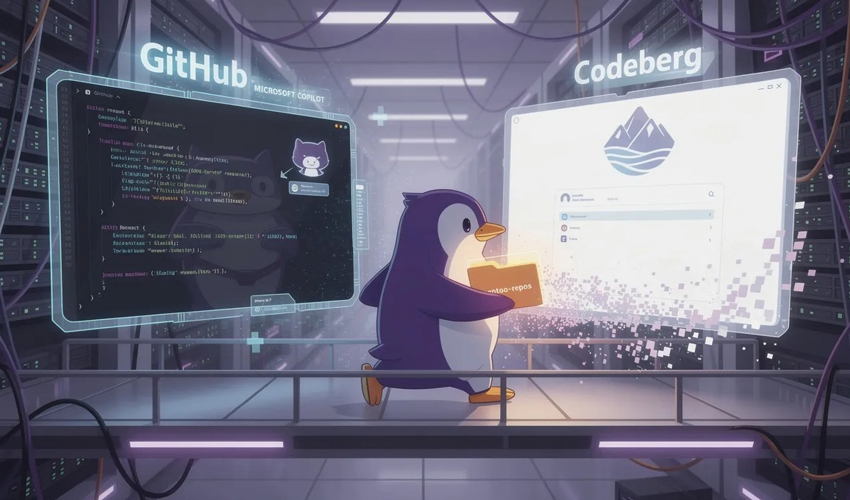
IntroductionThe Gentoo Linux project has begun transitioning parts of its infrastructure away from GitHub and toward Codeberg, a Git hosting platform built on open-source principles. The move reflects growing concerns within parts of the open-source community about centralized hosting, proprietary AI integrations, and long-term platform independence. While Gentoo has used GitHub for collaboration and code hosting in recent years, maintainers are now signaling a preference for a platform that aligns more closely with their philosophical roots. Why the Shift?One of the underlying motivations behind the move involves concerns around Microsoft’s expanding integration of AI tools like Copilot into GitHub’s ecosystem. While Copilot is optional and not mandatory for users, its presence has sparked debate within open-source communities about:
Gentoo, a distribution known for its strong emphasis on freedom, customization, and user control, appears to be taking a cautious approach by diversifying its infrastructure. Why Codeberg?Codeberg is a community-driven Git hosting service powered by Forgejo, a fully open-source Git platform. Unlike GitHub, Codeberg operates as a non-profit organization and positions itself as an ethical alternative focused on transparency and sustainability. Key characteristics include:
For a project like Gentoo, deeply rooted in open-source philosophy, these factors carry weight. What This Means for Gentoo UsersFor end users, the transition may not immediately change how Gentoo is installed or maintained. However, it could affect:
Over time, the move could also reduce dependency on large corporate platforms, ensuring Gentoo retains autonomy over its infrastructure. A Broader Trend in Open SourceGentoo is not alone in reassessing its hosting platforms. Across the open-source world, projects have increasingly explored alternatives such as:
|
| Tuesday, February 17th, 2026 | |
| LJ.Rossia.org makes no claim to the content supplied through this journal account. Articles are retrieved via a public feed supplied by the site for this purpose. | |
| 5:00 pm | AsteroidOS 2.0 Launches: A Community-Driven Linux Revival for Smartwatches  The open-source wearable ecosystem just received a major upgrade. AsteroidOS 2.0 has officially been released, bringing new life to Linux-based smartwatches and giving aging hardware a fresh purpose. Built by a passionate community of developers, AsteroidOS continues to push the idea that wearable technology can remain open, customizable, and free from vendor lock-in. For users who prefer control over their devices, and for those with older smartwatches gathering dust, AsteroidOS 2.0 represents a compelling alternative to proprietary smartwatch platforms. What Is AsteroidOS?AsteroidOS is an open-source operating system designed specifically for smartwatches. Originally developed as a replacement for discontinued or unsupported Android Wear devices, the project has grown into a full Linux-based wearable platform. Unlike closed smartwatch systems, AsteroidOS emphasizes:
It runs on supported legacy devices and allows users to repurpose smartwatches that manufacturers have long abandoned. What’s New in AsteroidOS 2.0Version 2.0 is one of the most significant updates in the project’s history. While the philosophy remains the same, this release introduces meaningful improvements across usability, performance, and compatibility. Modernized InterfaceAsteroidOS 2.0 brings a refreshed UI that feels smoother and more intuitive. Navigation between apps and watch faces is more fluid, and animations have been optimized for improved responsiveness on older hardware. Improved Power ManagementBattery life is critical on wearables. The new release refines power-saving behaviors and background process handling, helping extend usage time between charges, especially important for devices with aging batteries. Enhanced Bluetooth ConnectivityConnectivity improvements allow more reliable pairing with companion apps, notifications, and syncing features. Stability and compatibility with modern smartphones have been strengthened. Updated Core StackUnder the hood, AsteroidOS 2.0 ships with updated components from the Linux ecosystem, ensuring better hardware compatibility and security fixes. |
| Thursday, February 12th, 2026 | |
| LJ.Rossia.org makes no claim to the content supplied through this journal account. Articles are retrieved via a public feed supplied by the site for this purpose. | |
| 5:00 pm | LibreOffice 26.2 Arrives: Faster Performance, Sharper UI, and Better Compatibility 
The Document Foundation has officially released LibreOffice 26.2, the latest major update to the widely used open-source office suite. With improvements spanning performance, user interface refinements, document compatibility, and accessibility, this version continues LibreOffice’s mission to provide a powerful, community-driven alternative to proprietary office software. LibreOffice 26.2 is available for Linux, Windows, and macOS, offering consistent functionality across platforms while keeping full control in the hands of users. What’s New in LibreOffice 26.2While LibreOffice updates often focus on incremental refinement rather than radical redesign, version 26.2 introduces several meaningful enhancements that improve daily workflows. Improved Performance and StabilityPerformance remains a priority. LibreOffice 26.2 includes:
These optimizations make the suite feel more responsive across both modern systems and older hardware. Enhanced Microsoft Office CompatibilityCompatibility continues to improve with each release. LibreOffice 26.2 delivers:
For users collaborating with Microsoft Office users, these refinements reduce formatting surprises and make document exchange smoother. Refined User InterfaceLibreOffice 26.2 builds upon its modern UI framework with:
The result is a cleaner, more cohesive experience without disrupting long-time users. Writer ImprovementsLibreOffice Writer gains several practical enhancements:
These updates benefit users creating academic papers, reports, and long-form documents. Calc EnhancementsSpreadsheet users will notice: |
| Tuesday, February 10th, 2026 | |
| LJ.Rossia.org makes no claim to the content supplied through this journal account. Articles are retrieved via a public feed supplied by the site for this purpose. | |
| 5:00 pm | GOG Moves Toward Native Linux Support: A Major Shift for DRM-Free Gaming 
In a development that has energized the Linux gaming community, GOG (Good Old Games) has officially confirmed that it is working on native Linux support. While GOG has long provided Linux installers for select titles, this announcement signals something more substantial: deeper platform integration and a renewed commitment to Linux as a first-class gaming environment. For Linux users who value DRM-free software and ownership rights, this could be a significant turning point. Why This MattersGOG has built its reputation on offering DRM-free games that users truly own, free from online activation requirements and restrictive launchers. However, Linux users have historically faced a mixed experience:
While community tools like Heroic Games Launcher and Lutris filled the gap, the absence of official Linux support for the Galaxy ecosystem left many users dependent on workarounds. Now, with GOG confirming active development of native Linux support, that gap may finally begin to close. What Native Support Could IncludeAlthough full details have yet to be finalized, “native support” could realistically mean several improvements:
If implemented properly, this would allow Linux gamers to enjoy the same ecosystem experience as Windows users without third-party bridges. The Timing Makes SenseThe announcement comes at a moment when Linux gaming is stronger than ever:
With more gamers exploring Linux in 2026, GOG’s move may be both strategic and overdue. What It Means for the Linux Gaming EcosystemIf GOG delivers robust native support, several ripple effects could follow:
|
| Thursday, February 5th, 2026 | |
| LJ.Rossia.org makes no claim to the content supplied through this journal account. Articles are retrieved via a public feed supplied by the site for this purpose. | |
| 5:00 pm | Linux Kernel Runtime Guard Reaches 1.0: A Major Milestone for Runtime Kernel Security  The Linux security landscape just reached an important milestone. Linux Kernel Runtime Guard (LKRG) has officially hit version 1.0, marking its transition from a long-running experimental project into a mature, production-ready security tool. For administrators and security-conscious users, this release reinforces LKRG’s role as a powerful additional layer of defense for Linux systems. After years of development, testing, and real-world use, the 1.0 release signals confidence in LKRG’s stability, compatibility, and long-term direction. What Is LKRG?LKRG is a loadable kernel module designed to protect the Linux kernel at runtime. Instead of relying solely on compile-time hardening or static security features, LKRG actively monitors the kernel while the system is running. Its goal is to detect unauthorized changes, suspicious behavior, and exploit attempts that target kernel internals. Because it operates at runtime, LKRG complements existing protections like SELinux, AppArmor, and kernel hardening options rather than replacing them. Why the 1.0 Release MattersReaching version 1.0 is more than a symbolic version bump. It reflects years of refinement and signals that the project has reached a level of maturity suitable for broader adoption. With this release, LKRG offers:
For security tooling, especially something operating inside the kernel, stability and predictability are critical, and the 1.0 milestone acknowledges that standard. How LKRG Protects the KernelAt a high level, LKRG continuously checks the integrity of critical kernel structures and execution paths. It looks for signs that something has altered kernel memory, process credentials, or execution flow in unexpected ways. When suspicious activity is detected, LKRG can:
This makes it particularly useful for detecting privilege-escalation exploits and post-exploitation activity that might otherwise go unnoticed. Who Should Consider Using LKRG?LKRG is especially relevant for:
|
| Tuesday, February 3rd, 2026 | |
| LJ.Rossia.org makes no claim to the content supplied through this journal account. Articles are retrieved via a public feed supplied by the site for this purpose. | |
| 5:00 pm | A Pillar of the Linux Kernel: Greg Kroah-Hartman Honored with European Open Source Award  The open-source community is celebrating a well-deserved recognition. Greg Kroah-Hartman, one of the most influential figures in the Linux ecosystem, has been awarded the European Open Source Award, honoring decades of sustained contributions that have shaped Linux into the stable, trusted platform it is today. For anyone who relies on Linux, whether on servers, desktops, embedded devices, or cloud infrastructure, this award highlights the quiet but essential work that keeps the ecosystem reliable. A Steward of StabilityGreg Kroah-Hartman is best known for his role as the maintainer of the Linux kernel’s stable branches. While new kernel features often grab headlines, the stable kernels are where real-world systems live. They receive carefully vetted fixes for security issues, regressions, and bugs, without introducing disruptive changes. That responsibility requires deep technical knowledge, discipline, and trust from the community. Kroah-Hartman has carried it for years, ensuring that Linux remains dependable across millions of systems worldwide. Beyond the Stable KernelHis impact extends far beyond stable releases. Over the years, Kroah-Hartman has contributed heavily to:
These efforts help keep Linux open not just in license, but in practice, accessible to new developers and maintainable at scale. Why This Award MattersThe European Open Source Award recognizes individuals whose work benefits society through openness, collaboration, and technical excellence. Kroah-Hartman’s work exemplifies that mission. Linux doesn’t succeed because of flashy features alone. It succeeds because:
Those outcomes don’t happen by accident. They’re the result of sustained, meticulous stewardship, exactly the kind of work this award celebrates. |
LJ.Rossia.org makes no claim to the content supplied through this journal account. Articles are retrieved via a public feed supplied by the site for this purpose.