Add this feed to your friends list for news aggregation, or view this feed's syndication information.
LJ.Rossia.org makes no claim to the content supplied through this journal account. Articles are retrieved via a public feed supplied by the site for this purpose.
| Saturday, November 13th, 2021 | |||
| LJ.Rossia.org makes no claim to the content supplied through this journal account. Articles are retrieved via a public feed supplied by the site for this purpose. | |||
| 5:18 pm | Extended article on Aguéli's Sufism and Humanism The Israeli scholar Meir Hatina contributed a chapter on "Ivan Aguéli's humanist vision: Islam, Sufism and universalism" to the edited collection Anarchist, Artist, Sufi: The Politics, Painting, and Esotericism of Ivan Aguéli. He has now published an extended version of that chapter as "Turning to the East, Rescuing the West: Sufism and Humanism in Ivan Aguéli’s Thought" in the journal Islam and Christian–Muslim Relations. See https://doi.org/10.1080/09596410.2021.19 From the abstract: Aguéli’s universal humanism, with Sufism as its main lever, is analysed and located within a transnational intellectual landscape through networks of people, ideas and print media. By attracting Western pilgrims, Sufism served as a nexus of cultural transfer from the Middle East to Europe, thus casting doubts on the prevailing paradigm of Western enlightenment as the backbone of global intellectual history. Sufism was presented by Aguéli as a spiritual philosophy that dealt with the liberation of man from materialism and selfishness. The article deals with a number of issues: How did Aguéli transform Islam and Sufism into a cosmopolitan vision? To what extent was his humanism nurtured by anarchist philosophy, which promoted a just society? Did Aguéli reconcile the anarchist perception of human beings as free creatures with the Sufi perception of total submission to a Sufi master? | ||
| Monday, October 18th, 2021 | |||
| LJ.Rossia.org makes no claim to the content supplied through this journal account. Articles are retrieved via a public feed supplied by the site for this purpose. | |||
| 1:21 pm | Tavener and the Musica perennis Several chapters in a new collection discuss the Traditionalism of Sir John Tavener (1944-2013), the acclaimed British musician who was a follower of Frithjof Schuon. It is Heart's Ease: Spirituality in the Music of John Tavener, edited by June Boyce-Tillman and Anne-Marie Forbes (Oxford: Peter Lang, 2020). The collection consists of nine chapters and eight “interludes,” preludes or postludes, distinguished from the formal chapters by being more reflective and less academic, and often very short. The opening “prelude,” by Boyce-Tillman, sets the scene with a short biographical introduction to Tavener and his best-known work. This is followed by a chapter in which Stephen Roberts traces “Tavener’s Musical Theology of Religions,” working through Orthodoxy to arrive at Traditionalism. Then comes one of two chapters that deal at length with Tavener’s Traditionalism, “In Search of Truth: John Tavener’s Transition from Western Culture to Eastern Tradition” by Andrzej Kęsiak, a Polish theologian and musician who is currently working in the UK on a PhD thesis about Tavener. Kęsiak starts with Tavener’s rejection of modernism, follows through the “Search for Tradition” that led him to Orthodox Christianity, and ends with Traditionalism and the “Musica perennis,” Tavener’s application to music of Schuon’s understanding of the transcendent unity of religions. Several further chapters deal with particular compositions: Tavener’s “Prayer to the Holy Trinity,” his “To a Child Dancing in the Wind,” his Requiem, and his “Three Hymns of George Herbert.” Then come three chapters dealing with particular issues: his “Search for an English Orthodox Musical Language”, “Sacred Silence,” and finally the use of his music in therapy. Of these chapters, the most important for those who are interested primarily in Traditionalism is the chapter on Tavener’s Requiem, written by Bart Seaton-Said, a practicing musician and former Anglican Franciscan. This is mostly a musical analysis, and shows how the Requiem is a “broadening of the parameters of sacred Christian art” and “manifests outwardly Schuon’s theme of the ‘transcendent unity of relations.’” The book provides a useful study of Tavener’s music, and of the impact of Traditionalism on that music. Tavener’s project of discovering the Musica perennis is one of the most interesting recent developments of traditionalism, and – arguably – one of the most successful. | ||
| Monday, September 13th, 2021 | |||
| LJ.Rossia.org makes no claim to the content supplied through this journal account. Articles are retrieved via a public feed supplied by the site for this purpose. | |||
| 2:15 pm | The later politics of Ivan Aguéli We know more about the later politics of Ivan Aguéli than I thought. The Swedish journalist Eddie Råbock points to two passages, some notes from 1904 and some comments in a letter from 1917. In both cases, Aguéli had moved far from his early anarchism. In 1904, Aguéli was calling for democracy under the control of the ulama, i.e. much same system that was meant to be introduced in Iran after the Islamic Revolution (the reality, perhaps predictably, did not quite correspond to the theory). In 1904, Aguéli was still something of a revolutionary, ending his note with "Fight capital through the agrarians, as the King of Italy does. Fight snobbery." The reference to the King of Italy is explained by Aguéli's engagement in Il Convito, which was pro-Italian as well as pro-Islamic. Later, letters written in Spain during the general strike of 1917 show that his sympathies were by then definitely not with the revolutionaries, but rather with the king and central government. These positions fit with the positions that René Guénon later took. Having the ulama in charge, especially, fits with the idea of the primacy of spiritual authority over temporal power. | ||
| Sunday, August 15th, 2021 | |||
| LJ.Rossia.org makes no claim to the content supplied through this journal account. Articles are retrieved via a public feed supplied by the site for this purpose. | |||
| 1:41 pm | New English collection of work by Aguéli A new book gives English translations of a selection of the writings on Islam of Ivan Aguéli. It is Ivan Aguéli: Sensation of Eternity: Selected Writings, edited by Oliver Fotros. ISBN 978-9151985091, $13.99 on Amazon. The writings translated are
The writings from La Gnose were reprinted in French in the collection published by Archè in 1988, and Universality in Islam has now been translated twice into English, and Pure Art once, but all the other articles have never been reprinted, let alone translated. A major achievement for the study and understanding of Aguéli. | ||
| Sunday, August 8th, 2021 | |||
| LJ.Rossia.org makes no claim to the content supplied through this journal account. Articles are retrieved via a public feed supplied by the site for this purpose. | |||
| 12:28 pm | The National Bolsheviks as counter-cultural art The Russian Traditionalist Alexander Dugin first came to prominence in the 1990s as one of the leaders of the National Bolshevik Party (NBP; Национал-большевистская партия). A new book covers these years remarkably well. It is Fabrizio Fenghi's It Will Be Fun and Terrifying: Nationalism and Protest in Post-Soviet Russia (Madison: University of Wisconsin Press: 2020). The title cites an early NBP slogan sometimes cited by an artist who is now a member of Dugin's Eurasian Movement. The book makes clear that the NBP should not be taken entirely seriously as a political party. Dugin was its ideologue, and its leading figure was the novelist Eduard Limonov (1943-2020). Fenghi's point of departure is Limonov's earlier fiction, especially his most famous novel, It's Me, Eddie (Это я — Эдичка), written in 1976 and published in 1979. This extremely counter-cultural novel was itself influenced by the New York punk scene, as Fenghi argues, and the NBP was in some ways the continuation of the novel. He uses interviews as well as textual sources to show that there was politics, but there was also music, art--especially performance art--and a lot of counter-culture. The NBP owed much of its success to its newspaper Limonka (Лимонка), which can be read as an alternative art and music magazine almost as easily as it can be read as a political newspaper. There was a specific NBP style of dress, and many NBP actions were close to performance art (which is one reason they were so effective). They were, suggests Fenghi, one of the inspirations of the actions of the later (and ideologically very different) group Pussy Riot. Dugin, as is known, left the NBP in 1998. Fenghi suggests that this was because his and Limonov's political styles were so different. At one point he says that "Dugin and his followers were mostly interested in pursuing cultural and quasi-academic activities" while "Limonov wanted the party to become a ‘real political force,’ with activists who were directly involved in various forms of propaganda and mass mobilization” (p. 116). Later, however, he says that “Eurasianism aims at producing actual political change through mass manipulation” (p. 168), which I think is closer to the truth. Certainly there were different styles, and it might be argued that in the end Dugin was too serious about the content of his politics to keep company forever with Limonov. The Eurasian Movement was very different from the NBP. Fenghi does analyse the aesthetics of the Eurasian Movement and there doubtless is an aesthetic, and some artists are indeed inspired by Eurasianism, but no-one could argue that the Eurasian Movement is primarily aesthetic or artistic, though it is still in some ways counter-cultural. Fenghi understands its importance in terms of the impact of Dugin's Foundations of Geopolitics (Основы Геополитики) and of the Eurasian Movement's massive internet presence. The counter-cultural aesthetics of the NBP continued after Dugin left it, and to some extent still continue in the NBP's successor, Drugaya Rossiya (Другая Россия). It still includes artists and poets as well as fighters, despite its close engagement in the conflict in the Eastern Ukraine. Fenghi explains why he decides to avoid the discussions of what Fascism is and whether the NBP was fascist, and in this connection notes that in answering such questions it is important to pay attention to a group's relationship with power and with institutions, not just its published ideology. This is a good point. | ||
| Tuesday, July 6th, 2021 | |||
| LJ.Rossia.org makes no claim to the content supplied through this journal account. Articles are retrieved via a public feed supplied by the site for this purpose. | |||
| 11:47 am | Wendell Berry, Soft Traditionalist
In 2008, the Maryami-affiliated publisher World Wisdom Books published a collection of Lord Northbourne’s writings, and Berry wrote a foreword to it. In this he noted that Northbourne had aligned himself with René Guénon, Frithjof Schuon, Marco Pallis, Ananda Coomaraswamy, Titus Burckhardt, and Martin Lings, and added “I have read the four last-named at length and have been strongly affected and influenced by them.” That Berry did not describe himself as affected and influenced by Guénon and Schuon makes sense: he generally keeps away from religion in his writings, as “religion is a far more difficult subject than agriculture,” as he wrote. Yet “those who take agriculture seriously enough and study it long enough will come to issues that will have to be recognized as religious.” What, then, was the influence of the Traditionalists on Berry? It is hard to say, as he does not often name them in his writings. He is certainly a “soft” Traditionalist, drawing on the body of Traditionalist thought without dedicating himself to it. He values quality and form over quantity, and is as critical of modernity as any Traditionalist, following Coomaraswamy (and before him Ruskin) in associating it with industrial civilization. In opposition to modern industrial civilization he places not tradition but the rural, but with reservations. In one essay he quotes at length a late-eighteenth-century Methodist minister describing the behavior of a group of men from Kentucky (where Berry was born and lives) who passed the time after dinner by fighting each other. “The significance of this bit of history is in its utter violence,” notes Berry. And not just the violence of the men fighting each other, but of the way they also fought the “Indians,” and also the way that they treated the land they were occupying—far more brutally than the Indians, or “the peasants of certain old agricultural societies, particularly in the Orient.” The difference was that the Indian and the peasant “belonged deeply and intricately to their places,” while Americans of European origin, did not belong in any place, and on the whole still do not. And from this results the environmental crisis, the loss of topsoil that Berry often laments, and the loss of the life properly lived. My thanks to Travis Kitchens for drawing my attention to Berry. | ||
| Thursday, May 20th, 2021 | |||
| LJ.Rossia.org makes no claim to the content supplied through this journal account. Articles are retrieved via a public feed supplied by the site for this purpose. | |||
| 5:25 pm | New article on Traditionalism in South American Literature and Academia Just published (online first): Mark Sedgwick, “Guénonian Traditionalism in South American Literature and Academia,” International Journal of Latin American Religions. Online first https://doi.org/10.1007/s41603-021-00134-6. Free view (not download) available on https://rdcu.be/ckZ0Z. According to the abstract,
| ||
| Wednesday, April 14th, 2021 | |||
| LJ.Rossia.org makes no claim to the content supplied through this journal account. Articles are retrieved via a public feed supplied by the site for this purpose. | |||
| 6:49 pm | New collection on Ivan Aguéli 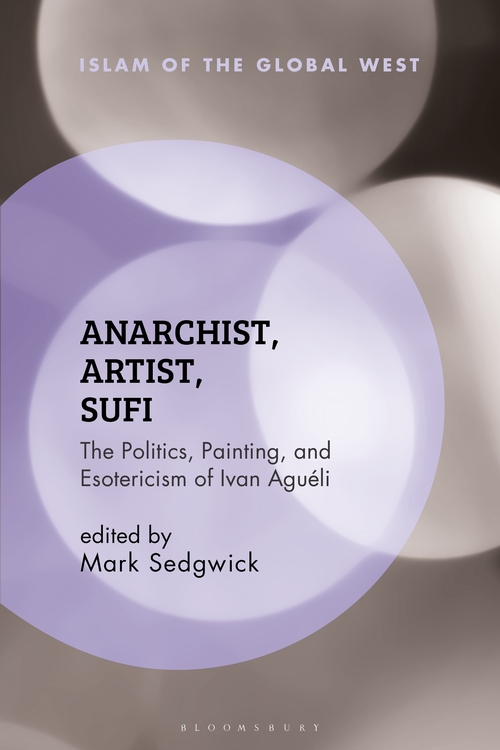 14 chapters by 13 scholars, plus English translations of some of Aguéli's own writings. Sections on art (and anarchism) in Paris, Sufism in Cairo, and Traditionalism--influence on René Guénon. and Traditionalist theories of art. Chapter 13, "The significance of Ivan Aguéli for the Traditionalist movement," looks directly at Aguéli, Guénon, and later Traditionalists, but the chapters on Aguéli the Sufi will also be of interest to those who are interested in Traditionalism. And the chapters on Aguéli the Anarchist Artist place everything in a wider context. And as the blurb says, the book shows that "Islam occupied a more central place in modern European intellectual history than is generally realized. [Aguéli's] life reflects several major modern intellectual, political, and cultural trends. This book is an important contribution to understanding how he came to Islam, the values and influences that informed his life, and-ultimately-the role he played in the modern Western reception of Islam." The table of contents is:
The book is currently available only in hardback at £85 or $137.60 and on Kindle at £51.11 or $82.80, so get your library to order or it or wait for the paperback. And in the meantime you can read the introduction and bits of some other chapters on Google Books here. | ||
| Thursday, April 8th, 2021 | |||
| LJ.Rossia.org makes no claim to the content supplied through this journal account. Articles are retrieved via a public feed supplied by the site for this purpose. | |||
| 4:45 pm | A new book from Louis Charbonneau-Lassay 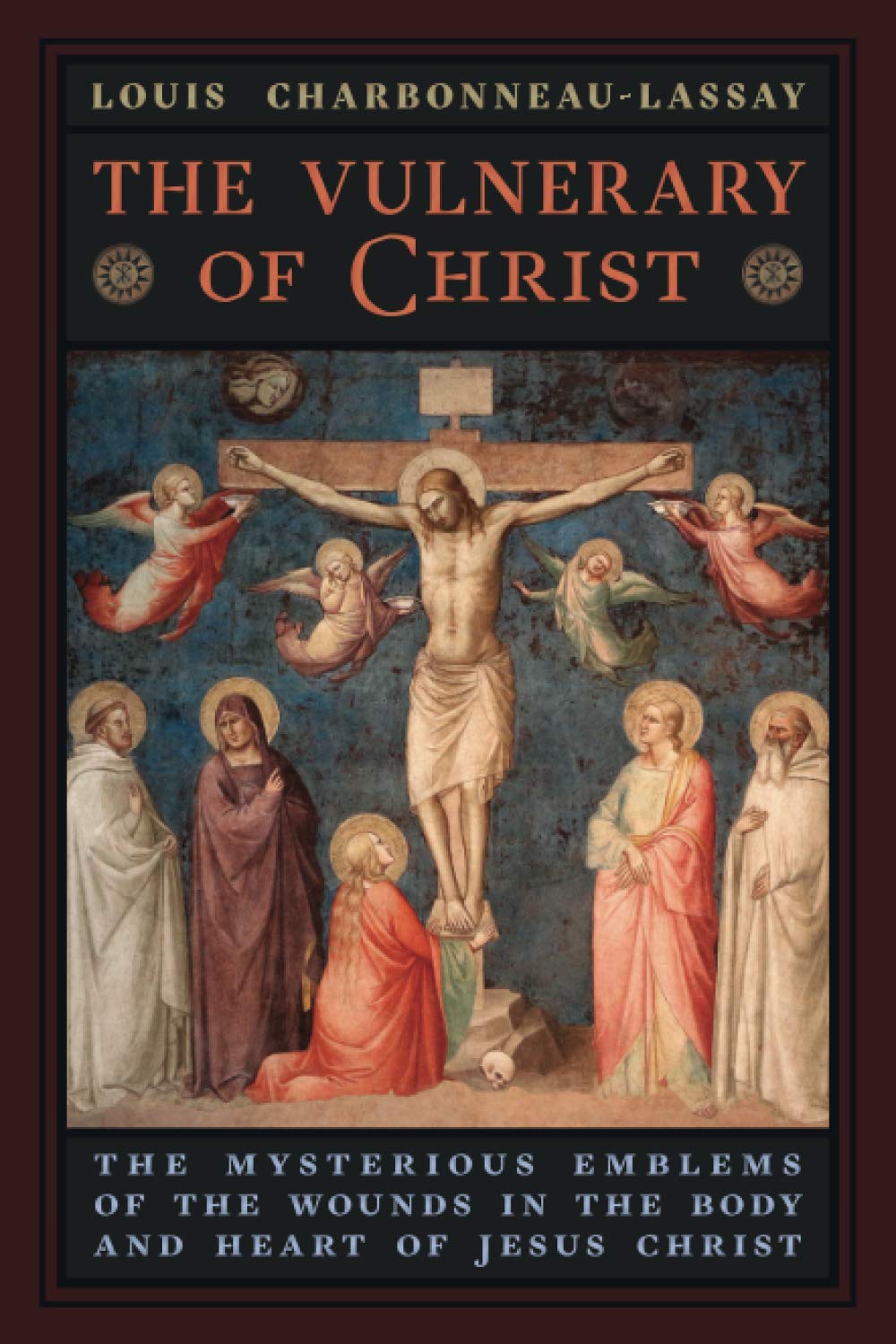 In addition to the Charbonneau-Lassay archives (see earlier post here) we now have a reconstruction of his final great work, Le Vulnéraire du Christ: La mystérieuse emblématique des plaies du corps et du coeur de Jésus-Chris (Gutemberg, 2018), and in English translation, The Vulnerary of Christ: The Mysterious Emblems of the Wounds in the Body and Heart of Jesus Christ (New York: Angelico Press, 2020). A vulnerary is, of course, something used in the cure of wounds. The Vulnerary has been reconstituted by Gauthier Pierozak, the manager of the invaluable René Guénon archive at www.index-rene-guenon.org. | ||
| Wednesday, March 31st, 2021 | |||
| LJ.Rossia.org makes no claim to the content supplied through this journal account. Articles are retrieved via a public feed supplied by the site for this purpose. | |||
| 8:52 am | Traditionalist sympathizer resigns as Brazilian Foreign Minister Ernesto Araújo, probable Traditionalist sympathizer (see earlier post here), resigned as Brazilian foreign minister on March 29, 2021. The resignation came as part of a major cabinet reshuffle and in response to growing criticism of Araújo's record, notably in connection with relations with China (and former President Trump) and thus with obtaining supplies of Covid vaccine. | ||
| Saturday, March 27th, 2021 | |||
| LJ.Rossia.org makes no claim to the content supplied through this journal account. Articles are retrieved via a public feed supplied by the site for this purpose. | |||
| 11:08 am | New book on Ivan Aguéli's impact on René Guénon A new book, Ivan Aguéli: The Pearl upon the Crown by Oliver Fotros (which seems to be a pseudonym) argues that Ivan Aguéli's influence on René Guénon was far greater than is commonly realized, giving detailed comparisons from both men's writings, and asking why this influence has not been noticed before. The book, which is 110 pages long and self-published, is available from Amazon. I think Fotros is probably more or less right, and I actually make a similar argument in my chapter on "The significance of Ivan Aguéli for the Traditionalist movement" in the forthcoming (in April) collective work on Aguéli, Anarchist, Artist, Sufi: The Politics, Painting, and Esotericism of Ivan Aguéli (Bloomsbury). | ||
| Monday, March 22nd, 2021 | |||
| LJ.Rossia.org makes no claim to the content supplied through this journal account. Articles are retrieved via a public feed supplied by the site for this purpose. | |||
| 5:17 pm | New book on Schuon's thought, including his views on Islam  The book's first section has four chapters, starting with a chapter on "Ātman, Māyā and the Relatively Absolute," which explains Schuon's basic metaphysical framework. Then comes "The Avatāric Mystery," Schuon's understanding of "descent" in various contexts. "Upāya: Religion as Relatively Absolute" covers Schuon's understanding of religion as such, and "The Nature of Things and the Human Margin" covers esotericism. The following section consists of two chapters, "Trinitarian Metaphysics" and "Necessary Sufism and the Archetype of Islam." These deal with Schuon's understandings of Christianity and Islam. Then come three chapters on three special topics: "The Divine Feminine." "The Yin-Yang Perspective and Visual Metaphysics," and "The 'Tantric' Spiritualization of Sexuality." Finally, a chapter on "Esoteric Ecumenism" indicates the place of Schuon within current academic approaches to religious pluralism. One of the most interesting chapters is that dealing with the difficult topic of Schuon's relationship with Islam. Laude's argument is that it is wrong to understand Schuon's thought in Sufi or Islamic terms, even if this is how Seyyed Hossein Nasr tends to see it. "The fact that Schuon himself led most of his adult life within the ritual forms of a particular tradition [Islam] does not in the least invalidate” the fact that on an esoteric and metaphysical level he was supra-confessional (p. 191). He emphasised that esotericism is independent of the various traditional forms (religions), and often critiqued "the intrinsic limitations of the perspectival and theological forms of Abrahamic religions" (193), including Islam. | ||
| LJ.Rossia.org makes no claim to the content supplied through this journal account. Articles are retrieved via a public feed supplied by the site for this purpose. | |||
| 2:45 pm | New article on Traditionalism and the Far Right in Argentina Just published (online first): Mark Sedgwick, "Traditionalism and the Far Right in Argentina," in Politics, Religion & Ideology, DOI 0.1080/21567689.2021.1904909. According to the abstract,
Print version due in volume 22, no. 2. | ||
| Wednesday, January 6th, 2021 | |||
| LJ.Rossia.org makes no claim to the content supplied through this journal account. Articles are retrieved via a public feed supplied by the site for this purpose. | |||
| 5:58 pm | New articles on the World of Islam Festival of 1976 A number of articles have been published recently dealing with the World of Islam Festival of 1976, held in London, financed mostly by the UAE, and presenting a very Traditionalist perspective of Islamic art, given the major roles played by Titus Burckhardt, Martin Lings, and Seyyed Hossein Nasr. The most comprehensive article is Klas Grinell, "Framing Islam at the World of Islam Festival, London, 1976," Journal of Muslims in Europe 7, no. 1 (2018): 73–93. https://doi.org/10.1163/22117954-1234136 Grinell argues that the Festival has a continuing impact today. Even if academic scholars of art were never very impressed by the way the Festival was organized, this has had a lasting impact on museum curators. Grinell does not say which museums he is thinking of, but the Museum of Islamic Art in Doha, Qatar immediately comes to mind. For the adverse reaction of academic scholars of art, Grinell cites an earlier article by Oleg Grabar, "Geometry and Ideology: The Festival of Islam and the Study of Islamic Art," in A Way Prepared, Essays on Islamic Culture in Honor of Richard Bayly Winder, ed. Farhad Kazemi and R. D. McChesney (New York: New York University Press, 1988), pp. 145-52. This has been republished and is also available online, at https://archnet.org/publications/5019. A similar but less comprehensive article in French is Monia Abdallah, "World of Islam Festival (Londres 1976) : Naissance d’un nouveau paradigme pour les arts de l’Islam," Revue d'art canadienne / Canadian Art Review 39, no. 1, 2014, pp. 1-100. https://doi.org/10.7202/1026192ar. Abdallah broadly agrees with Grinell (or rather, Grinell follows Abdallah), and makes similar arguments. Another article is Anneka Lenssen, "'Muslims to Take Over Institute for Contemporary Art:' The 1976 World of Islam Festival," Middle East Studies Association Bulletin 42, no. 1/2 (Summer/Winter 2008): 40-47. https://www.jstor.org/stable/23063541. Tis has a good discussion of the exhibition at the the Hayward Gallery. One further article on the Festival does not engage in these discussions, but tells a good story: Rachel Ainsworth and Sarah Worden, “Jean Jenkins: Music and the 1976 World of Islam Festival,” Journal of Museum Ethnography 28 (2015): 184–197. www.jstor.org/stable/43915897. | ||
| Sunday, December 27th, 2020 | |||
| LJ.Rossia.org makes no claim to the content supplied through this journal account. Articles are retrieved via a public feed supplied by the site for this purpose. | |||
| 5:43 pm | New book on French Traditionalist networks The doyen of French Guénonian studies, Jean-Pierre Laurant, has just published a new book, Guénon au combat: Des réseaux en mal d'institutions (Guénon at war: Networks without Institutions; Paris: L’Harmattan, 2019). The networks in question are mostly French, notably those built around the correspondence and relations between three long-term followers of René Guénon, the bookseller and publisher Pierre Pulby (1910-1993), the physician Pierre Winter (1891-1950), and the Germanist and translator of Heidegger André Préau (1893-1976). Winter established two Traditionalist groups that are not discussed in my Against the Modern World, a Groupe d’études métaphysiques (Metaphysical Studies Group) that was active between 1936 and 1940 and then, after the Second World war, a group of Hindu and Orthodox orientation that Laurant calls the Winter Group, which survived for some years after Winter’s death, until 1957. The book also discusses the Union intellectuelle pour l'entente entre les peoples (Intellectual union for understanding between peoples), led according to Laurent by Guénon and a Dutch friend, Frans Vreede (1887-1975). In fact, it is not clear that Guénon was really that influential, as the objectives of the Union were defined by others, and most members of its board had no connection with Guénon. It is notable, howeer, that one member of the “advisory committee” was Louis Massignon (1883-1962), now the best-known French scholar of Islam from the period. Laurant also discusses two networks outside France, that in Italy around Arturo Reghini (1878-1946), recently the subject of a PhD thesis by Christian Giudice (see post here) and that in Germany around Leopold Ziegler (1881-1958) (see post here), whose main contact in France was Préau. The book closes with a series of short but useful biographical notes on each of the major figures discussed in the book. Guénon au combat is an important addition to our knowledge of the early Traditionalist milieu, especially in France. | ||
| LJ.Rossia.org makes no claim to the content supplied through this journal account. Articles are retrieved via a public feed supplied by the site for this purpose. | |||
| 5:44 pm | Gap plugged in the history of German Traditionalism  Ziegler was an academic philosopher who spent most of his life as an independent scholar, but whose status was recognized by the German academy on his seventieth birthday, when he received an honorary doctorate in theology from the University of Marburg and an honorary professorship from the University of Freiburg, the institution at which he had once hoped to make a career. Ziegler was already a believer in the philsophia perennis when he discovered the work of Guénon in the 1930s, to which he was introduced by André Préau (1893-1976), the translator of Heidegger into French and a key member of the French Traditionalist network. In 1932 Ziegler started a correspondence with René Guénon, on whom he published an article in the respected journal Deutsche Rundschau in 1934. Ziegler hoped to arrange for Guénon to be translated and published in Germany, but these plans were interrupted by the advent of the Nazi regime, and Guénon’s work did not begin to appear in German until after the Second World War. La Crise du monde moderne was published in 1950 as Die Krisis der Neuzeit (Cologne: Hegner) and Le roi du monde as König der Welt (Munich: Otto Wilhelm Barth) in 1956. These dates are significant, because the 1950s were generally a low period everywhere for the reception of Guénon. Traditionalism’s relative lack of impact in Germany is, then, to some extent a matter of timing. Ziegler was already an established thinker before he read Guénon (he had won the Goethe Prize in 1929), had already published on Buddhism, and (as has been said) was already convinced of the philsophia perennis. What he took from Guénon was, especially, the concept of tradition, which he translated as Überlieferung. One of his major books was entitled simply Überlieferung (1936), and cites seven of Guénon's books (and was reviewed sympathetically by Herman Hesse--see here). It is unclear to what extent Guénon was responsible for Ziegler's anti-modernism. There are also differences, however, as Matthias Korger points out: Ziegler was determinedly European (and in a certain sense Christian) in a way that Guénon was not, and admired and drew on European philosophers whom Guénon ignored or dismissed. Further reading:
| ||
| Tuesday, December 15th, 2020 | |||
| LJ.Rossia.org makes no claim to the content supplied through this journal account. Articles are retrieved via a public feed supplied by the site for this purpose. | |||
| 9:13 am | New article on Traditionalism in Bosnia A comprehensive study of Traditionalism in Bosnia has just been published: Samir Beglerović and Mark Sedgwick, "Islam in Bosnia Between East and West: The Reception and Development of Traditionalism," Journal of Religion in Europe 13, no. 1-2 (December 2020): 145–172, https://doi.org/10.1163/18748929-2020149 According to the abstract,
Samir Beglerović (1973–2020) was an associate professor of aqida (dogmatics), Sufism and Comparative Religion at the Faculty of Islamic Sciences, Sarajevo. He died of COVID-19 on 9 November 2020 as the final touches were being put to this article. An obituary in English can be read at https://www.unsa.ba/en/novosti/prof-dr-s | ||
| Saturday, November 14th, 2020 | |||
| LJ.Rossia.org makes no claim to the content supplied through this journal account. Articles are retrieved via a public feed supplied by the site for this purpose. | |||
| 12:26 pm | Dragoš Kalajić and Traditionalism in Yugoslavia  Kalajić was a painter who trained in Rome, where he met Evola, though details of this are unclear. Evola was not visible in Kalajić’s 1968 book Krševina (Wreckage), but is very visible in his Uporište: rehabilitacija structure integralnog čoveka (The Stronghold: A Rehabilitation of Integral Man’s Structure) and in all his subsequent work, including his articles in the major newspaper Politika, his columns in the magazine Duga, and his editorial work for the publishing house Prosveta. Two notable later books by Kalajić are Mapa (Anti)utopija (A Map of (Anti) Utopias, 1978) and Smak sveta (Doomsday,1979), which is a collection of his magazine articles. Although Evola was Kalajić's main source, René Guénon was also introduced to the Yugoslav public. Jakovljević suggests that Kalajić got away with publishing ideas that were not exactly compatible with Yugoslavia’s ruling communism because the Yugoslav authorities were at that time more worried about the New Left than the New Right. As Serbian nationalism began to replace communism, his ideas became ever more popular in certain circles. Since Jakovljević understands Kalajić as a neo-fascist, his article also covers the critique of Nazism and totalitarianism made by Radomir Konstantinović (1928-2011) in Filosofija palanke (The Philosophy of Parochialism, 1969). Jakovljević clearly shows the importance of Traditionalism for Kalajić. It is less clear what Kalajić’s distinctive contribution to Traditionalist thought was. This may be covered in a later article. The article stops in 1989, and we can only hope for a subsequent article covering the remainder of Kalajić’s career and activities. (This post has been updated at the suggestion of Branislav Jakovljević to clarify the nature of the critique made by Konstantinović). | ||
| Tuesday, October 13th, 2020 | |||
| LJ.Rossia.org makes no claim to the content supplied through this journal account. Articles are retrieved via a public feed supplied by the site for this purpose. | |||
| 1:18 pm | Traditionalism in Brazil Now available online (if your library has access): Mark Sedgwick, "Traditionalism in Brazil: Sufism, Ta’i Chi, and Olavo de Carvalho," in Aries: Journal for the Study of Western Esotericism. The abstract is: The Traditionalist movement that derives from the French esoteric philosopher René Guénon is known to have been influential in Europe and North America, especially through the activities of religious groups, usually of Sufi origin, and also through the growing impact of the political version of Traditionalism first developed by the Italian esoteric philosopher Julius Evola. This article looks at Traditionalism beyond Europe and North America, taking the important case of Brazil during the 1980s and 1990s, where one of the main Traditionalist Sufi groups, the US-based Maryamiyya, became established, and where two local groups developed, one of which focused exclusively on doctrine, and one of which turned not to Sufism but to T’ai chi and Brazilian indigenous religion. The article also considers a new and important political philosopher, Olavo de Carvalho, who emerged from the Brazilian Traditionalist milieu. Carvalho applied Guénon to political issues rather as Evola had, but unlike Evola combined Traditionalism with Roman Catholicism, a development also found in Argentina during the early twentieth century. During the 2010s, Carvalho’s radical rightist philosophy became widely known in Brazil, where his admirers included the president, Jair Bolsonaro. This is under Advance Articles; the article will be in the print version of Aries in 2021. It will also be published in Portuguese as an epilogue to the forthcoming Portuguese translation of Against the Modern World. | ||
| Monday, October 12th, 2020 | |||
| LJ.Rossia.org makes no claim to the content supplied through this journal account. Articles are retrieved via a public feed supplied by the site for this purpose. | |||
| 6:41 pm | New website and new videos about Schuon A new website, https://accuratenews.net, deals with "News Accounts of the Frithjof Schuon 1991 Legal Ordeal." The events of 1991 are discussed in outline in my Against the Modern World, so I will not go over them again here. The website contains press cuttings and a short video of an old interview with Schuon himself (7 minutes), also available on YouTube, in which Schuon makes some counter-changes against Mark Koslow, his principal accuser in 1991. The website, as is presumably its purpose, makes the case on the Schuon side. It contains no new information, but the video of Schuon is worth watching, for the overall effect, and also for the quotation from Dante and Schuon's claim (towards the end) that all he does is write books and answer questions. There is no explanation of why this website has been launched now, but it may have something to do with the blog on the other side, Frithjof Schuon: A last minute lesson in discernment, run by Maude Murray, a former wife of Schuon and now (at 81) a vocal critic. The blog's current entry comments negatively on accuratenews.net. The blog also contains a rather longer video (31 minutes), also available on YouTube, in which Murray talks not only of what led to the 1991 charges, but also of Schuon's own view of himself as an Aryan quasi-prophet, referring in this connection to Gregory A. Lipton's Rethinking Ibn ‘Arabi (see earlier blog post). The website and video announce Murray's forthcoming book, Third Wife of the Muslim Shaykh Frithjof Schuon: My Lifelong Search for Truth, which can be pre-ordered here. Most of what Murray says is confirmed by other sources, and nothing that she says is contradicted by any source known to me. It is interesting that while she charges Martin Lings and Seyyed Hossein Nasr with doctrinal errors taken from Schuon, she broadly excuses them--and especially Lings--from any guilt relating to the events leading up to 1991. Thanks tho those who have recently drawn accuratenews.net and the Schuon video to my attention. | ||

LJ.Rossia.org makes no claim to the content supplied through this journal account. Articles are retrieved via a public feed supplied by the site for this purpose.