[Most Recent Entries] [Calendar View]
Friday, March 8th, 2019
- State of the Union: Seagate's HAMR Hard Drives, Dual-Actuator Mach2, and 24 TB HDDs on Track
- 16 TB MAMR Hard Drives in 2019: Western Digital
- Seagate’s Multi Actuator Technology to Address HDD IOPS Woes
- Western Digital Stuns Storage Industry with MAMR Breakthrough for Next-Gen HDDs
- Coffee Lake-Refresh Desktop CPU List Surfaces: 35W Core i9-9900T & 8-Core Xeon E-2200 Confirmed
- Intel Xeon E Six-Core Review: E-2186G, E-2176G, E-2146G, and E-2136 Tested
- iBASE Launches MI995 Mini-ITX Intel CM246-Based Board for Xeon E
- ASUS Launches WS C246 PRO: 4 PCIe 3.0 x16, Two M.2, Optional SAS RAID
- AOC Unveils Cheap G1-Series Curved Displays with 144 Hz & FreeSync: Starting at $280
- AOC Launches Inexpensive IPS WQHD 31.5-Inch Q3279VWFD8 Gaming LCD with FreeSync
- Cheap 75-144Hz FreeSync: AOC Unveils G90 Gaming Monitors from €179
| Time | Event | ||||||||||||||||||||||||||||||||||||||||||||||||||||||||
| 11:00a | Ulefone Demonstrates the Power 6: A Mid-Range Smartphone with a 6,350 mAh Battery
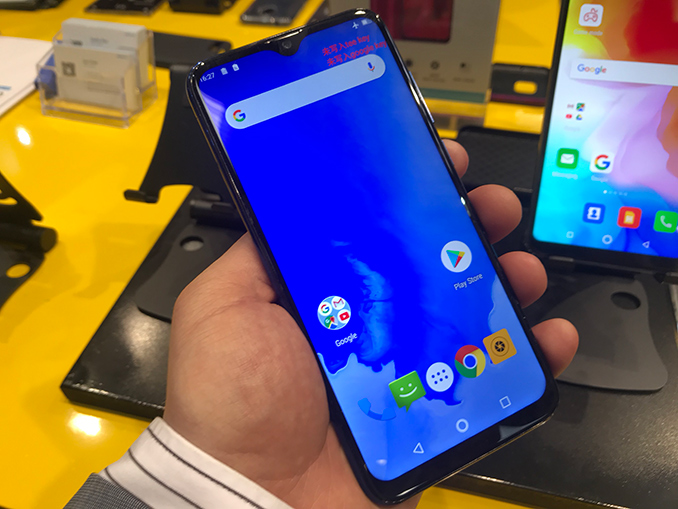
While the power efficiency of phones has significantly improved over the years, overall phone battery life has none the less been squeezed by design choices such as large screens and the desire for thin phone bodies. This has resulted in manufacturers continuing to experiment with phones with larger batteries; and while some vendors take this to the extreme with 18,000 mAh monsters, others have been working on more modest-sized phones. Ulefone for their part was one of the companies that started to use high-capacity batteries with its handsets several years ago, so it was not particularly surprising to see its new mid-range smartphone, the 6,350-mAh capacity Power 6, at this year's Mobile World Congress. | ||||||||||||||||||||||||||||||||||||||||||||||||||||||||
| 12:00p | Western Digital to Demo Dual-Actuator HDDs Next Week: Double the Actuators for Double the Perf
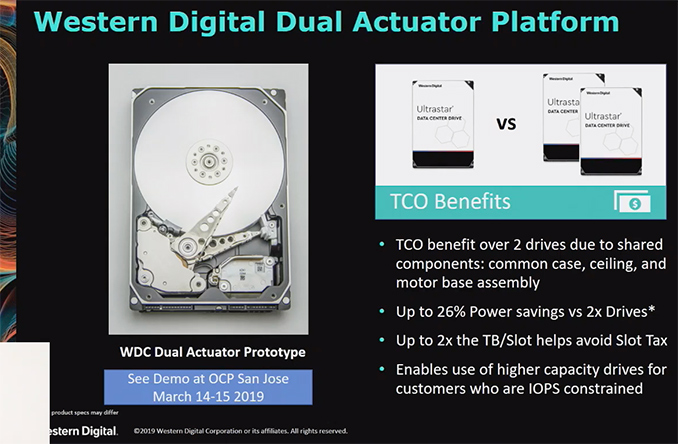
Western Digital has revealed this week that it will demonstrate its first dual-actuator hard drives at next week's OCP summit. Marking the company's first foray into multi-actuator drives, WD expects their dual-actuator HDDs to offer roughly twice the performance of conventional, single-actuator drives, although they'll be trading off some power efficiency in the process. While the capacities of enterprise and nearline 7200-RPM hard drives has been increasing consistently, due to the laws of physics the I/O performance of these drives has remained at around 80 IOPS per drive. This means that because capacity has gone up, the drives' IOPS per TB performance ratio is decreasing, something that is especially problematic when it comes to read IOPS. As a result, it is getting harder for datacenter operators to meet their service level agreements and quality-of-service requirements. To combat this, one of the most straightforward ways to increase drive performance and throughput is to increase the number of individual actuators, allowing drives to essentially service twice as many I/O operations at once. Both Seagate and Western Digital have been developing their multi-actuator HDDs for quite a while. The former demonstrated a working dual-actuator drive last March, whereas the latter will show off its dual-actuator prototype next week. Western Digital has rather high expectations for its dual-actuator HDDs. The company expects the new drives to offer double the sustained transfer rates as well as double the IOPS when compared to existing HDDs. Which if we use existing drives as a baseline, would mean that we're talking about data rates on the order of 500 MB/s as well as 160 ~ 200 IOPS. Meanwhile, although no official numbers were provided ahead of next week's formal reveal, the company did publish a photo of its dual-actuator prototype.
The trade-off for dual-actuator technology is that since these hard drives are essentially two HDDs in a single chassis, they will consume more power than traditional drives. But it's still 26% less than two independent HDDs, owing to the fact that it's still a single set of spinning platters. For example, Western Digital’s Ultrastar 14 TB SATA hard drive consumes 7.6 W in operating mode, and a pair of such HDDs would be 15.2W. Meanwhile, a hypothetical dual-actuator hard drive that consumes 26% less than these two would end up at around 11.25W, which, importantly, is within power limits of a typical 3.5-inch SATA bay (typically up to 12 W). Right now, Western Digital is not disclosing when it intends to commercially release its dual-actuator HDDs. Instead, the company is stressing right now that it is only talking about a technology demo. Nonetheless, we hope the company will make its plans a bit more clear next week. Related Reading: Source: Western Digital at Storage Field Day (via ComputerBase) | ||||||||||||||||||||||||||||||||||||||||||||||||||||||||
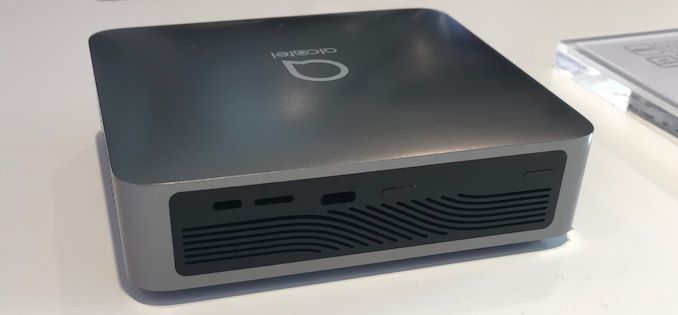
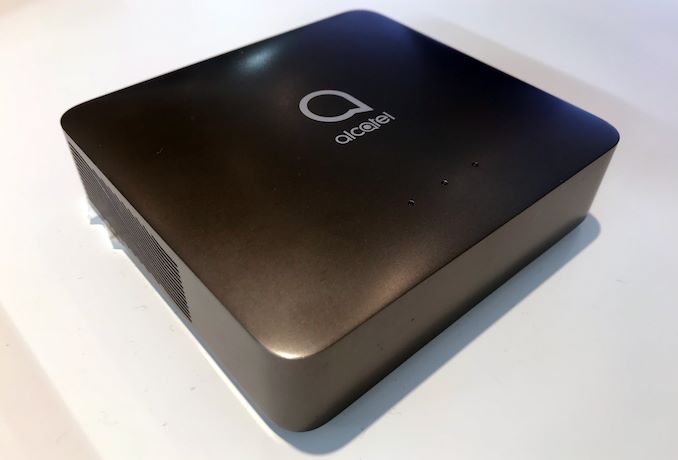
| 1:00p | Alcatel Readies a 5G Mi-Fi Hotspot with USB-C (and no Wi-Fi?)
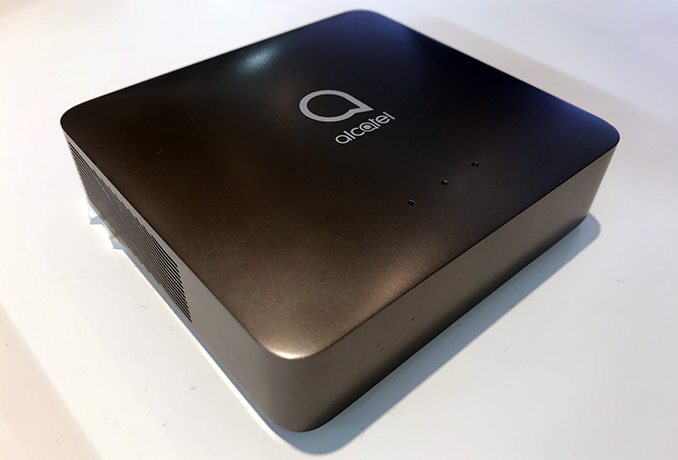
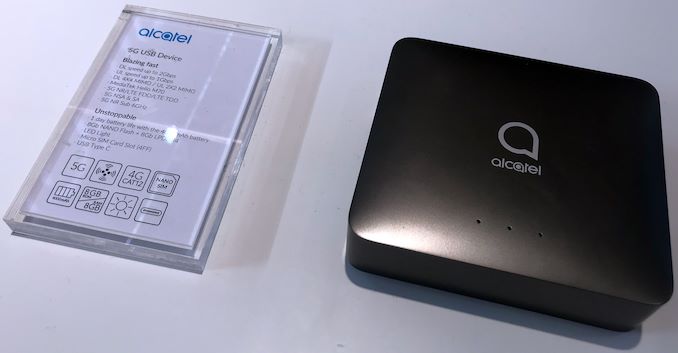
One of the major use cases driving 5G development and deployment is the need for high-speed Internet connectivity in locations where it is impossible (or expensive) to cover the last mile via cables. Both carriers and hardware makers, in turn, are looking to capitalize on this by offering service contracts and high-end 5G mobile hotspots. TCL, the company behind Alcatel and BlackBerry smartphones, is prepping a rather interesting device: a 5G Mi-Fi, a 5G hotspot with a USB Type-C interface. The Alcatel "5G USB Device" (which will likely go by other names when distributed by the carriers) supports download speeds of up to 2 Gbps (using 4x4 MIMO) and upload speeds of up to 1 Gbps (using 2x2 MIMO). The hotspot is based on MediaTek’s Helio M70 modem, which supports 5G NR/LTE and 5G NSA & SA on the sub-6 GHz band. So the hotspot won't have access to mmWave and the even higher bandwidths that provides, but sub-6 is better suited for the kind of last-mile deployments that rural 5G will be aimed at anyhow. The unit has 1 GB of LPDDR4 memory, 1 GB of NAND flash storage, and a 4000-mAh battery that can last for one day, according to the manufacturer.
One of the odd things about Alcatel’s 5G Mi-Fi is the fact that TCL does not explicitly list it as supporting Wi-Fi (at least not on its present form). Instead its only client connectivity is a USB Type-C port, which seems to be used for power as well. There are of course other wired Mi-Fi devices on the market, but it's unusual for these devices to ship with large internal batteries, as is the case for Alcatel's device. So I'm going to be surprised if we actually see the device ship without Wi-Fi support.
At the moment TCL is not saying when it plans to release its device commercially. Like so many other 5G client devices, we expect to see it launch once the 5G networks are deployed.
Related Reading: | ||||||||||||||||||||||||||||||||||||||||||||||||||||||||
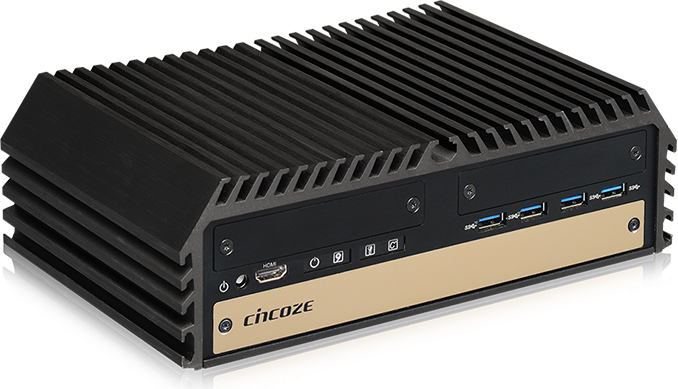
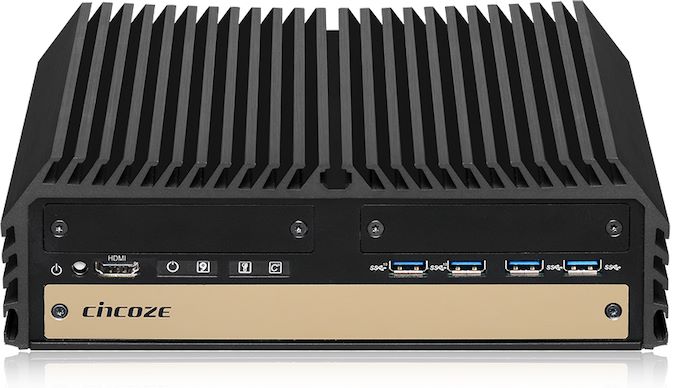
| 2:00p | Cincoze DX-1100 Ultra Compact Rugged System: Xeon-E with Custom I/O Expansion
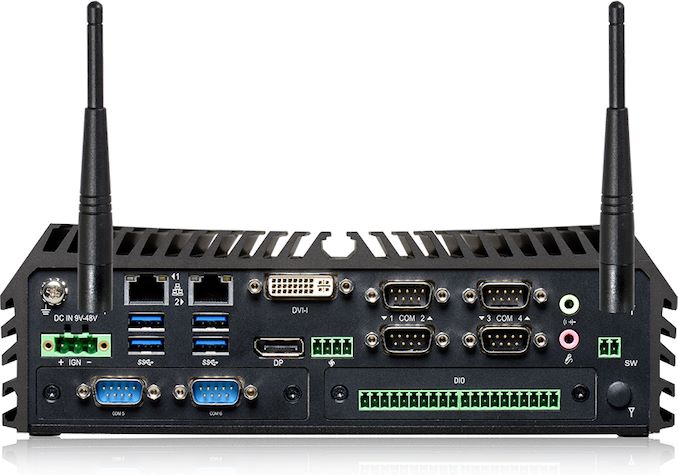
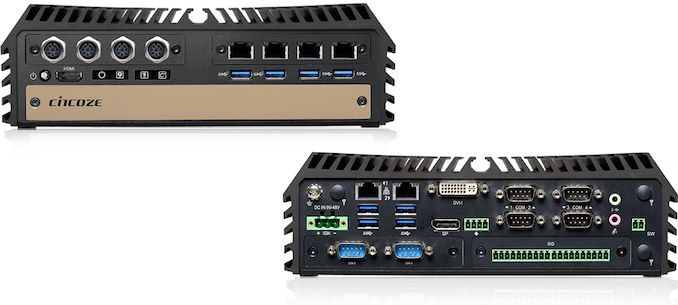
Cincoze has introduced its new ultra-compact rugged embedded workstation for use in space-constrained environments. The Diamond Extreme Series DX-1000 system supports Intel’s 8th Gen Core as well as Xeon E-2000-series CPUs, features extremely robust connectivity options for both office and industrial environments. Of particular note, the One of the key features of the machine is its custom I/O. The Cincoze DX-1000 comes in a 3.2-liter metallic unibody chassis, which serves to both contain and cool the internal components. The system can accommodate Intel’s 8th Gen Core or Xeon E-2100-series processors, though as it's passively cooled it stops just short of supporting Intel's complete lineup of chips, with Cincoze only qualifying chips up to 80W TDP. Meanwhile the miniature machine also sports two DDR4 SO-DIMM slots, two hot-swap front-accessible 2.5-inch SATA bays, three mSATA connectors, an optional M.2-2230 CNVi Wi-Fi adapter, and a SIM card bay. As a rugged PC the DX-1000 is rated for a wide range of operating conditions, including extreme temperatures (from -40°C to 70°C), various DC power input voltages (9~48 VDC), and it can tolerate high vibrations and shocks (5/50 Grms) that are common in industrial, in-vehicle, mobile, and similar environments.
Aside from the rugged chassis, the other key feature of the Diamond Extreme Series DX-1000 is support for Cincoze’s proprietary CMI (Combined Multiple I/O) and CFM (Control Function Module) modules, which allow the manufacturer to tailor the external I/O capabilities of the system to a customer's needs.
By default, the Diamond Extreme Series DX-1000 is configured with eight USB 3.0/3.1 ports (6+2), a DVI-I output (which supports D-Sub with an appropriate adapter), a DisplayPort, an HDMI, two GbE connectors (powered by Intel’s I219-LM, and I210-IT controllers), four COM ports, audio output/input connectors, an external fan connector, and a proprietary power input. But with various optional CMI or CFM modules installed, the Cincoze DX-1000 can get four additional RJ-45/M12 GbE ports, two more COM ports, a 16DIO (8-pin in, 8-pin out) connector, a DIN-RAIL mount kit, and so on.
Cincoze already lists its Diamond Extreme Series DX-1000 on its website, and while the company is taking inquiries, it's not clear whether the system is actually available at this time. Meanwhile with the wide array of configuration options, the pricing of the system will depend on what CPU, memory, storage, and I/O features are selected. Related Reading: Source: Cincoze | ||||||||||||||||||||||||||||||||||||||||||||||||||||||||
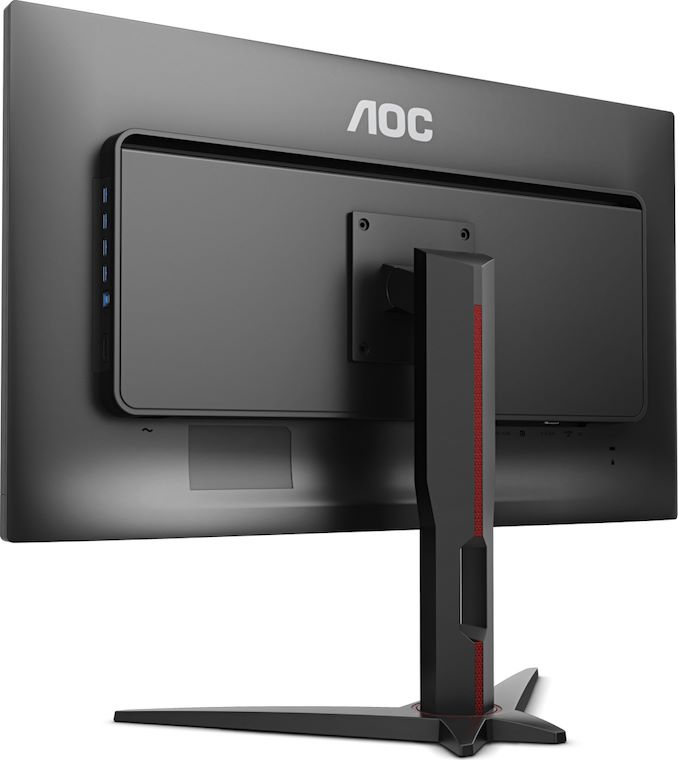
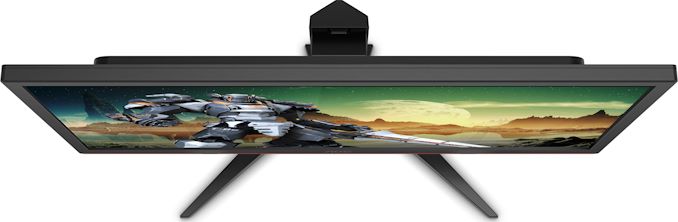
| 3:00p | AOC Introduces Its G2868PQU Monitor: An Inexpensive 4K Gaming Display with FreeSync
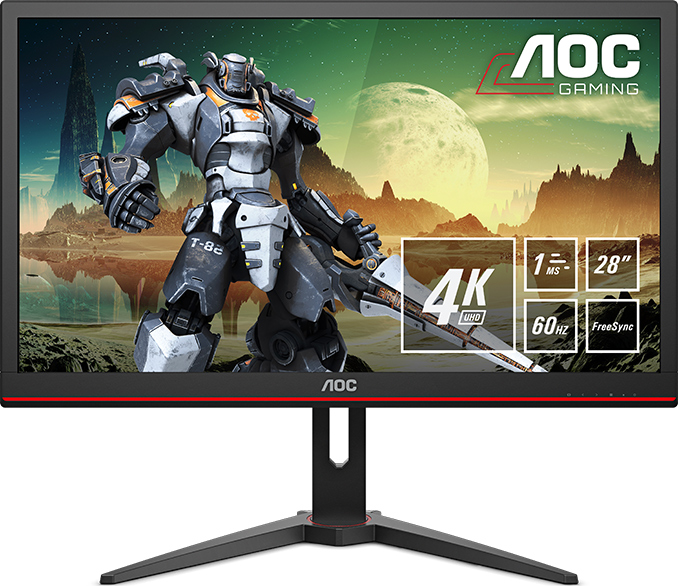
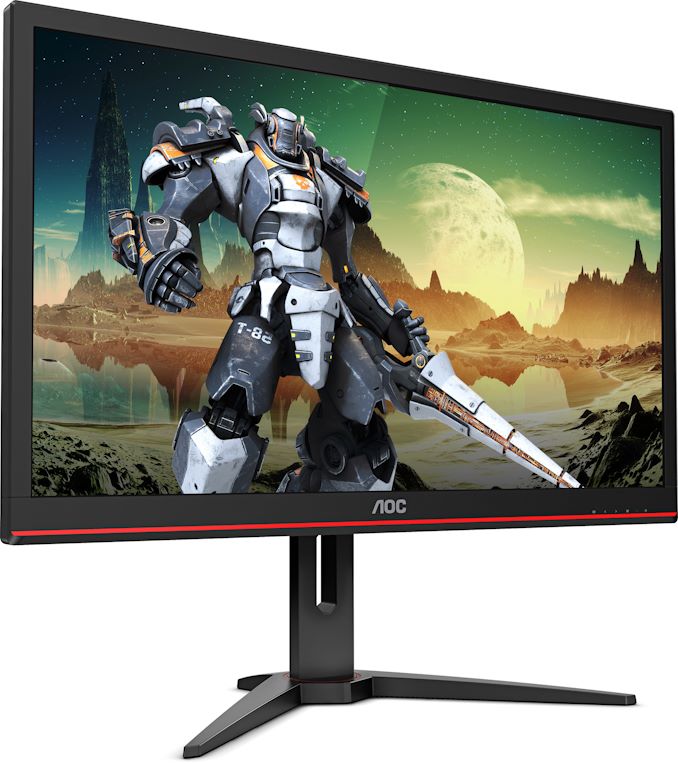
AOC this week introduced its first entry-level 4K gaming display. The G2868PQU monitor boasts with numerous firmware-based features designed for gaming, as well as a 1 ms response time. The monitor also supports AMD’s FreeSync technology, though this isn't being paired with any kind of high refresh rate ranges. The AOC G2868PQU is a 28-inch LCD that uses a ‘next-generation HDR-Ready' TN panel. The monitor features a 3840×2160 resolution, 300 nits maximum brightness, a 1000:1 contrast ratio, a 1 ms response time, and a 60 Hz maximum refresh rate. The display has a scaler than supports AMD’s FreeSync dynamic refresh rate technology, but the manufacturer does not disclose its range or whether it's wide enough to supports Low Framerate Compensation. Although AOC claims that the monitor is ‘HDR-ready’, it never specifies whether the monitor supports HDR10 or other HDR transport formats. In any case, an LCD panel featuring a maximum brightness of 300 nits can hardly offer a good HDR experience. Meanwhile, the display can cover 102% of the sRGB and 82% of the AdobeRGB color spaces.
Meanwhile, since the G2868PQU is aimed at gamers, it supports AOC’s Game Color (user-adjustable saturation), Shadow Control (user-adjustable brightness for dark areas in games), Game Modes (specific presets for FPS, RTS, Racing genres, and three user-defined presets), and Dial Point (crosshair) features.
AOC's monitor comes in a rather angular chassis with red inlays to emphasize its gaming nature, and the stand is height-adjustable. As for connectivity, the G2868PQU offers four inputs (D-Sub, DVI-DL, DisplayPort, HDMI-MHL) to ensure compatibility with both modern and legacy systems, a quad-port USB 3.0 hub, an audio input, and a headphone output. As an added bonus, the LCD has stereo speakers.
AOC will start selling the G2868PQU monitor later this month. The display will cost £319 in the UK, so expect it to be priced at around €370 in Europe and $350 in the USA. Related Reading: Source: AOC | ||||||||||||||||||||||||||||||||||||||||||||||||||||||||
| 5:20p | NVIDIA To Move Mobile Kepler GPUs to Legacy Status in April 2019 (& 3D Vision Too)
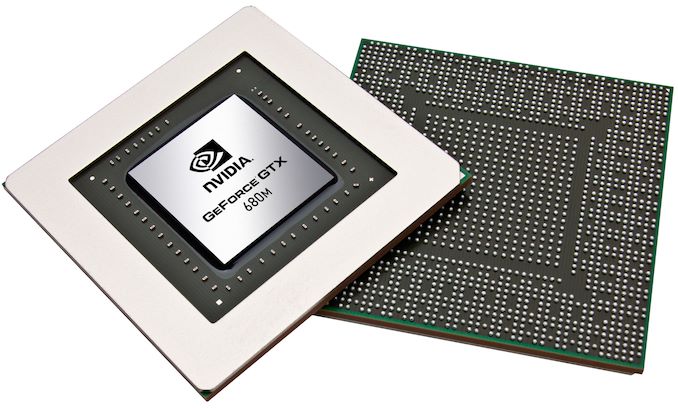
In a note on their support website published earlier this afternoon, NVIDIA has announced that they are preparing to move their mobile (laptop) Kepler GPUs to legacy status, ending mainstream graphics driver support for these products. Starting in April 2019, mobile Kepler products will become legacy products, meaning they will no longer receive Game Ready driver enhancements, performance optimizations, and bugfixes. However, they will continue to receive critical security updates through the end of the legacy support phase, which is set to run through April of 2020. As NVIDIA continues to produce new GPU architectures on a roughly two-year cadence, the shuffle off to legacy status has become a relatively regular event for the company. However this latest retirement is quite a bit different in that NVIDIA is only retiring their mobile Kepler parts, and not their desktop parts. Previously, legacy retirements involved the whole architecture at once, as it would allow NVIDIA to neatly wrap-up all driver development in a single go. Instead, as NVIDIA’s document even takes specific care to note, desktop Kepler parts are not part of this retirement and will continue to receive full support for the time being.
Past that, as NVIDIA tends to be a heavy data-driven company, I can only speculate that they believe Kepler laptop ownership/usage is low enough at this point that even retiring just Kepler laptop support would be beneficial for the company. By dropping ongoing “game ready” support for their mobile products, it means that NVIDIA no longer needs to regression test new drivers against these parts, even if they continue to develop optimizations and bug fixes for the Kepler architecture itself. That said, I am a bit surprised by how quickly this has come. Though introduced before Kepler, it was really only with Kepler that NVIDIA’s Optimus switchable graphics technology took off, and as a result seeing an additional NVIDIA GPU in a higher-end thin & light notebook became a more common occurrence that still continues to this day. For reference, NVIDIA only moved its previous Fermi-generation products to legacy status last April, so this is marks a shorter gap for the much more popular mobile Kepler.
At any rate, NVIDIA’s current release doesn’t state what the final driver branch will be. So it’s not clear if the current R418 branch is it – and the branch after it will drop mobile Kepler – or if it’s going to be the next branch that’s the last. It does become a small but notable distinction, since NVIDIA will need to provide further security updates for that branch for another year. In the meantime, you can find a complete list of mobile Kepler products over at NVIDIA’s site. The list is rather extensive – along with the 600M series, Kepler parts were also used as part of the 700M, 800M, and even some 900M parts. So some of the products that are set to be retired are relatively recent, numerically speaking. Update: Another NVIDIA support article about legacy products has surfaced, this time regarding NVIDIA’s 3D Vision products. Alongside mobile Kepler support, NVIDIA will also be sunsetting 3D Vision starting next month. Like mobile Kepler, these products will be moving to legacy status, and will receive one year of critical driver support through April 2020. Unlike NVIDIA’s mobile Kepler note, their 3D Vision note does specify the final driver branch. It looks like the current R418 driver branch is it for 3D Vision, mobile Kepler, and whatever else NVIDIA decides to retire next month. All of which is a potential sign that the branch following R418 will incorporate significant driver and feature updates, since NVIDIA will get a clean(ish) break and won’t need to roll them out to their oldest products.
As for NVIDIA’s 3D Vision products, NVIDIA hasn't launched a new version of the technology since 3D Vision 2 in 2011. And while NVIDIA has continued to support 3D Vision for over a decade now, the writing was clearly on the wall for these products after the first generation of VR headsets launched. Even ignoring their VR-specific aspects for a moment, the VR headsets also offer a superior 3D stereo experience due to their completely isolated eyes, eliminating ghost images meant for the other eye. Contrast is also better, since there’s no need to block out an eye. Still, it’s the end of an era for sure, as shutter glasses-based 3D stereo products are (once again) on their way out. | ||||||||||||||||||||||||||||||||||||||||||||||||||||||||


| << Previous Day |
2019/03/08 [Calendar] |
Next Day >> |