[Most Recent Entries] [Calendar View]
Tuesday, August 3rd, 2021
| Time | Event |
| 3:00a | New investment in Aotearoa New ZealandNew investment in Aotearoa New ZealandCountry Director, Google New Zealand New Zealand is often described as an ‘island of innovation’, and when it comes to technology, it’s true that we Kiwis regularly punch above our weight. At the same time, there’s always more progress to be made, and greater opportunities ahead As we approach 15 years on the ground in New Zealand, Google is investing to put down stronger roots here — including by establishing an engineering presence in Auckland. This week, our teams move into the first purpose-built Google office in Auckland, a space that has been designed to bring the best of Aotearoa to Google — giving visitors a taste of the diverse landscapes that New Zealand is known for around the world. We have kayaks for a reception desk, the largest digital ceiling in New Zealand and a cafe that takes its likeness from a chilly bin (or a ‘cooler’, as some people call them |
| 4:00p | From widgets to dark mode: 3 updates to Google Maps on iOSFrom widgets to dark mode: 3 updates to Google Maps on iOSProduct Manager, Google Maps Chocolate or vanilla. |
| 4:00p | Transit trends: the road ahead for commutersTransit trends: the road ahead for commutersProduct Manager, Google Pay I’ve lived in major cities around the world, from Johannesburg to Shanghai to the San Francisco Bay Area. That means public transportation has played a big role in my daily life. That changed last spring, when, like many people, I traded in my daily commute on the public bus for a much shorter trip to my dining room table. I wasn’t the only one transforming my kitchen into an office — transit ridership plummeted across the globe. While we are still far from a return to normal, we wanted to understand how people feel about returning to public transit. So we surveyed 2,000 commuters across New York City, San Francisco, Washington, D.C. and Chicago to find out. Here’s what we learned: 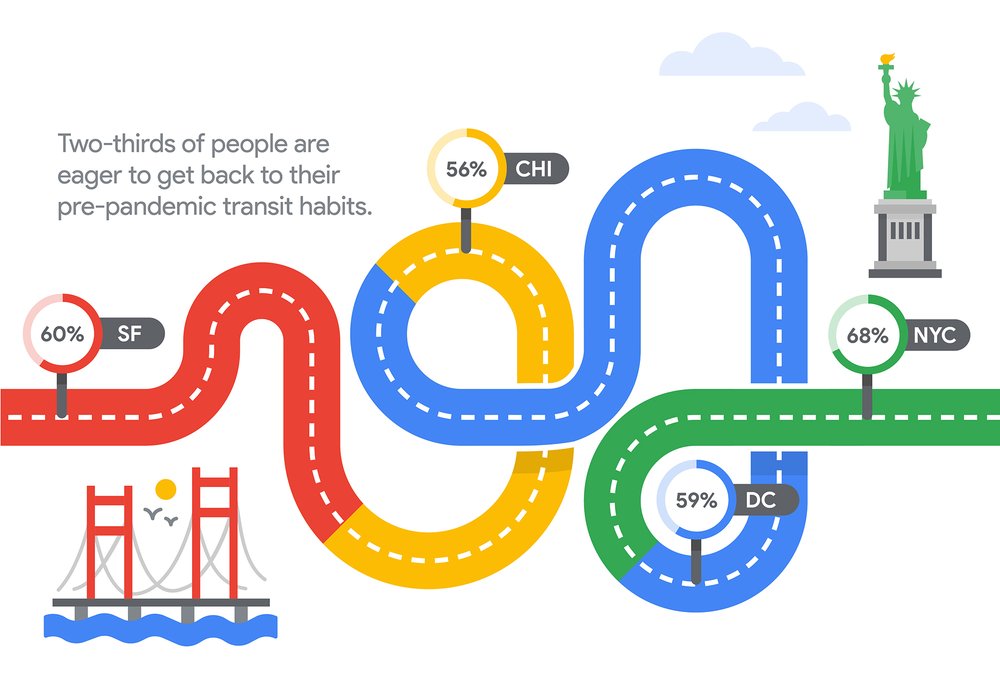 All aboardWe’ve all missed a lot during the last 18 months— from concerts and big weddings to dinner parties with family and friends. But public transportation? Turns out, surprisingly, yes. According to a recent survey we commissioned, roughly 2 in 3 people want to get back to their pre-pandemic transit routine, with New Yorkers being the most keen to return.  Parallel parking not requiredWhile I don’t miss delayed trains or crowded commutes, getting back on public transit means leaving parking behind. More than half of those we surveyed indicated that’s what they miss most about their commute. But people also value the ease public transit brings when it comes to getting around, the time it provides them to reflect on their day, the time they get for themselves for podcasts or reading and even the people-watching, with 1 in 4 people admitting they miss that part, too. 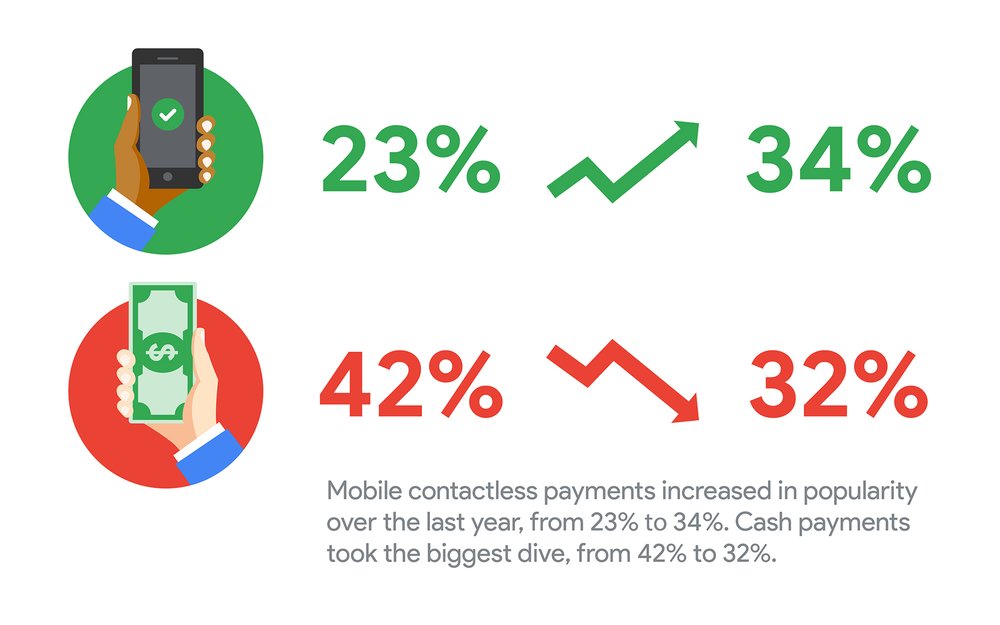 Cashing out for contactlessBut it’s not all about going “back to the good old days.” With the increasing popularity of contactless payments across many facets of daily life, it’s no surprise riders want to modernize their commutes as well. Increasingly, people are turning to contactless payments as a touch-free way to pay their fare. In fact, mobile contactless payments are the only payment type that increased in popularity (up 11 percentage points) when we asked commuters how they plan to pay for transit fare now versus pre-pandemic. Cash took the biggest dive, from 42% to 32%. What’s more, one in two people who didn’t use mobile contactless payments before the COVID-19 pandemic say they would be more comfortable riding if there were touch-free options such as mobile contactless payments or ticketing. Of course contactless payments yield far more than a touch-free way of paying. Three in four people said the convenience factor is what they like most about contactless transit payments. Ever ran to catch a train only to realize you left your wallet at home? |
| << Previous Day |
2021/08/03 [Calendar] |
Next Day >> |