[Most Recent Entries] [Calendar View]
Thursday, August 5th, 2021
- Smarter alerts, right out of the box:Your new Nest Cam and Doorbell can do more right out of the box because we moved object detection on-device, allowing us to include features that are usually behind a subscription (like Activity Zones and smart alerts, including package, animal, vehicle and person detection) for no additional cost, plus three hours of event video history. Thanks to on-device processing, they can also record up to a week’s worth of events if power or Wi-Fi is out.
- Made with Machine Learning:Building a camera that uses ML to recognize objects requires showing the ML model millions of images first. Our new Nest Cameras and Doorbells have been trained on 40 million images to accommodate lots of different environments and lighting conditions. Thanks to a cutting edge TPU chip, our new cameras run an ML model up to 7.5 times per second, so reliability and accuracy are even better.
- Works in any home:Nest Cam and Doorbell’s wire-free designs, built-in rechargeable batteries and optional power connectors allow you to install them where you want — not only where there’s a power outlet or pre-existing wiring.
- Set up your way: Make sure to check out Google Store’s accessories. In addition to weatherproof cables, a tabletop stand with a power cord allows you to place your Nest Cam on an indoor surface, like a mantle. There’s also an anti-theft mount that tethers your Nest Cam to the magnetic mount for extra security. For Nest Doorbell, there’s a horizontal wedge and an AC adapter.
- Works better, together: Nest Cam and Nest Doorbell seamlessly work with your Nest displays. Just say “Hey Google, show me the backyard” to see your Nest Cam feed. And you can set up your speakers and displays to chime when someone rings your Nest Doorbell, while using your display to see who’s at the door and take action from the screen.
- All on the Google Home app: It’s easy to see all of your events quickly, and your 24/7 live feed at any time in the Google Home app. If you have more than one Nest camera, you can view all of them in one place, alongside your other connected home devices. You can even filter by event type — for example, you can pull up every package delivery.
- See clearly in a variety of conditions:Both Nest Cam and Nest Doorbell have night vision, 6x zoom, and HDR so images are crisp in the dark or bright light. And we gave Nest Doorbell a taller field of view so you can see visitors from head to toe and packages as close as eight inches away from your door.
- Extra secure with a Google account: Your devices are only as secure as your account. That’s why the new Nest Cam and Nest Doorbell require a Google account, which comes with added protections like suspicious activity detection, 2-step verification and password checkup. Read more about our commitment to privacy and security in Nest’s dedicated Safety Center.
- Add a Nest Aware subscription:With a Nest Aware subscription ($6 monthly), you’ll get familiar face detection and the ability to call 911 from the Google Home app (U.S. only) as well as 30 days of event video history. With a Nest Aware Plus subscription ($12 monthly), you’ll get all of this with 60 days of event video history and the option for 10 days of continuous video recording when your Nest Cam is plugged into a power outlet.
- Made with care: Nest Cam and Doorbell are made with recycled materials and rigorously tested through drops and extreme weather, like heavy rain and hurricane-strength winds.
- Built for your life: Nest technology is designed to fit into your home, not distract from it. Nest Cam is sleek and white and fits in anywhere — indoors or outdoors. And Nest Doorbell’s design was inspired by clean, minimalist architecture. In the U.S., it comes in four different colors so your front door can make a great first impression.
Qualify everything you say on your CV/resume. Put numbers and percentages, talk about the impact your work had and its significance in context.
In interviews, it is okay — and encouraged — to talk through your thinking, especially when you are not sure.
Enjoy the process.
Quizlet.new makes it easy to learn any subject with study tools like flash cards, practice tests and explanations proven to help with learning.
Kahoot.new allows you to easily create and host educational games on any topic.
Slides.new makes it easy to create a presentation for that big school project.
Fundraiser.new lets you design and sell custom apparel for your next school fundraiser.
| Time | Event |
| 1:00p | 11 things to love about the new Nest Cam and Doorbell11 things to love about the new Nest Cam and DoorbellProduct ManagerProduct Manager Google Nest Cam (battery) and Google Nest Doorbell (battery) are the latest additions to the Nest family — and they’re Nest’s first battery-powered security devices, built for every home. Here are 11 things to know: The new battery-powered Nest Cam and Nest Doorbell are available for pre-order today for $179.99 — you can visit the Google Store to find out more, including whether Nest Cam and Nest Doorbell will be available in your country.  They're packed with helpful features and look great in your home They're packed with helpful features and look great in your home |
| 1:00p | New from Google Nest: The latest Cams and Doorbells are hereNew from Google Nest: The latest Cams and Doorbells are hereDirector or Product Management Google Nest’s mission is to create a home that takes care of the people inside it and the world around it. All of this starts with helping you understand what’s happening within the walls of your home and outside of it. One of Nest’s first goals was to simplify home security, and we did this with our first line of cameras. So when we started dreaming up what our next generation of cameras and doorbells would be like, we wanted to incorporate the way the connected home — and your expectations — were heading. That included smarter alerts, wire-free options for installation flexibility, greater value and beautiful designs, plus enhanced privacy and security. We wanted our new line to give you the most comprehensive set of intelligent alerts right out of the box, and easily work with your other Nest products, like displays. Today we’re introducing our next-generation Nest Cams and Doorbell: Google Nest Cam (battery) is our first outdoor/indoor battery-powered camera ($179.99); Google Nest Doorbell (battery) is our first battery-powered doorbell ($179.99). Then there’s Google Nest Cam with floodlight, our first connected floodlight camera ($279.99) and finally the second-generation Google Nest Cam (wired), a wired indoor camera and our most affordable Nest Cam ever ($99.99). The new battery-powered Nest Cam and Nest Doorbell are available for preorder today and will go on sale on Aug. 24. Nest Cam with floodlight and the new wired indoor Nest Cam are coming soon. Security with smartsBecause we’re all overloaded with notifications every day, our next-generation cameras and doorbell are made to send you the most helpful alerts. They detect important events that happen in and around the home, including alerts for people, animals and vehicles — and in Nest Doorbell’s case, also packages. Our new cameras and doorbell can do this because they process what they see on-device, which means more relevant notifications and added privacy and security. On-device processing means that all of this works right out of the box, no subscription required. 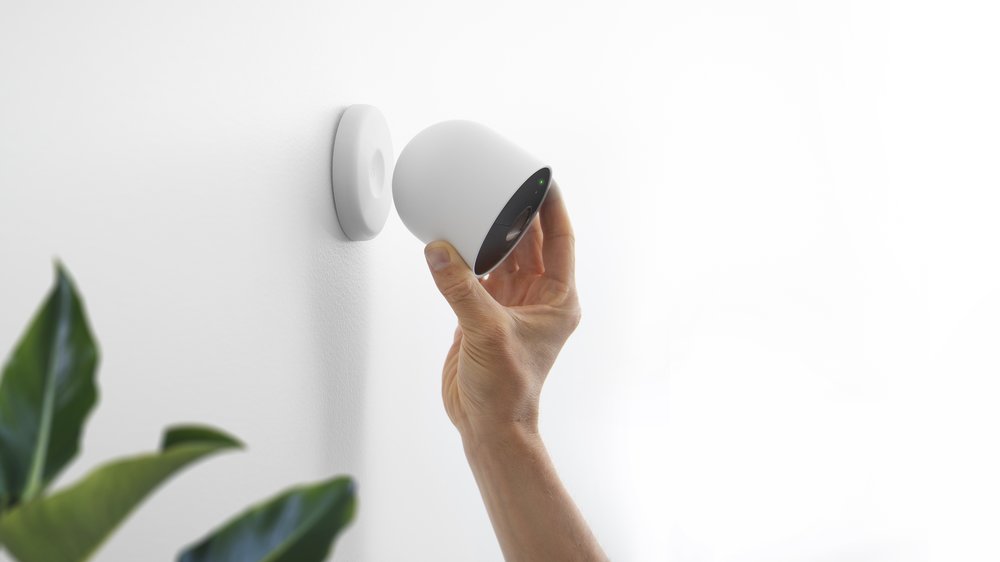 More versatility for your homeNest’s new camera and doorbell line are truly made for every home. Battery technology allows you to install Nest Cam and Nest Doorbell nearly anywhere in your home — not just where there’s a power outlet or existing doorbell wires. The wire-free design makes installation even easier, too. And for those who prefer the option to wire their devices, we’ve added the ability to wire the battery-powered Nest Cam and Nest Doorbell. The Google Store is stocked with accessories for Nest Cam and Nest Doorbell so it’s easy to install them where you want.  Nest devices that work togetherCustomers have told us how much they appreciate that their Nest products all work well together. These new devices are no different. With the new Nest Cams and a display, you can keep an eye on the backyard from your kitchen and get alerts when the doorbell rings. Our new cameras are also fully integrated with the Google Home app, giving you access to all your compatible home devices in one place. With a Nest Aware subscription, you can unlock even more: Extend your event video history from three hours to 30 or 60 days, gain advanced features like familiar face detection (not available in Illinois) and get continuous 24/7 video history on wired Nest Cams with Nest Aware Plus.  Reliability when you need itIn case of a power or Wi-Fi outage, Nest Doorbell, both Nest Cam (battery) and Nest Cam with floodlight have local storage fallback, meaning they’ll record up to one hour of events on-device (about a week’s worth of events). Nest Cam (wired) also records on-device if your Wi-Fi is down. When service returns, the devices will upload your events to the cloud, so you can review what happened. Made with careWe believe that technology for the home should be welcoming, and complement your decor rather than distract from it. When designing our new products, we drew design inspiration from lighting and architecture to create products that look great together and in lots of different settings. In the U.S., the new indoor wired Nest Cam and battery-powered Nest Doorbell come in several colors inspired by nature, and all of the new devices are designed sustainably with recycled materials. Learn more about the new battery-powered Nest Doorbell and Nest Cam, available for preorder today and on sale Aug. 24. Our new cameras and doorbell are smarter and more versatile than ever |
| 3:00p | Persistence paid off for intern James FraterPersistence paid off for intern James FraterKeyword Contributor Welcome to the latest edition of “My Path to Google,” where we talk to Googlers, interns and alumni about how they got to Google, what their roles are like and even some tips on how to prepare for interviews. Today we spoke with James Frater, a business intern working virtually in London. Learn how James’s passion for equitable solutions and love of learning brought him to Google. What do you do at Google? I am a Business Development Representative Intern for Google Cloud working in the Europe, Middle East and Africa (EMEA) region. In the role, I help leaders within organizations to work through their specific pain points and match them up with the arsenal of specific solutions that Google has to meet their needs. I am fortunate to be in one of the most supportive and encouraging teams I have ever had the pleasure of working in. It means that everyday when I wake up, I look forward to coming to work because I know that irrespective of the challenges that lie ahead, I have a team that will support me. What made you decide to apply to Google? My decision to apply to Google was simple. I wanted to be somewhere that allowed me to build sustainable and scalable tech solutions that measurably improved the lives of the people that needed the most help. In particular, a long term goal of mine is to make sure that everyone in the Caribbean has access to good healthcare, education and technology that makes their lives easier. Google is a positive and transformative vehicle that serves the needs of billions of people. I wanted to be a part of that. I had applied to Google before; this was the third year in a row, in fact! I was really determined to get in because I knew what a great opportunity this was and I really believe I had what it took to be a Googler. I was fortunate enough to attend a Google Black talent event in 2020 and I was able to get some really great advice about applications. For example, in the interview it’s less about arriving at the right answer and more about the thought process. Being able to ask clarifying questions, especially when you’re not sure, will impress your interviewer. It was definitely third time lucky for me! How would you describe your path to Google? My path to my current role was… unconventional to say the least. I am a medical student, who has completed a management degree and also dabbles in efforts to reduce inequitable access to opportunities. I have completed internships in insurance, professional services, education and technology.  James Frater What’s something you’re working on outside your internship? I am very passionate about the structural challenges that a lot of underrepresented groups face, so I work to make access to institutions (primarily educational) more equitable. I co-founded The Ladder Project CIC which is a social enterprise that helps to holistically develop young people through a series of online and in-person workshops. Our mission is to ensure that all students leaving school are equipped with the skills required to succeed in the world of work and in higher education. Having projects and interests outside of my internship is something that has been encouraged, so it really gives me the confidence to bring my whole self to work. What’s one thing you wish you could go back and tell yourself before applying? "Relax!" is probably the main thing but some more practical things are: Any tips for aspiring Googlers? Start creating solutions that help people. You don't have to wait until you get into a role to start doing things you are passionate about. I started doing talks and workshops for young people. From that, I co-founded The Ladder Project to help even more young people. It will also make your application stand out if you are able to demonstrate that level of initiative. Meet James Frater, a London intern whose love of learning brought him to Google. |
| 4:00p | News Brief: July updates from the Google News InitiativeNews Brief: July updates from the Google News InitiativeBrand Marketing Manager Last month, we explored mental health resources for journalists in the U.K., inclusive news coverage and innovation in Latin America, leadership training for reporters in Asia Pacific and more. Keep reading for July updates. Promoting mental health in the media industry Many of the challenges that impacted the mental health of journalists in the months and years before the global pandemic have been exacerbated by COVID-19. We’re supporting the Headlines Network to test out a new form of training in the United Kingdom to strengthen and promote mental health in the media industry. Independent industry experts will offer a safe space for early career journalists, new managers, mid-career journalists and senior leadership. Reflecting on diversity in Latin American Journalism We partnered with The Knight Center for Journalism in the Americas to publish the ebook “Diversity in Latin American Journalism,” which was announced at the annual conference of the National Association of Hispanic Journalists. In the book, 16 journalists from seven countries reflect on how to make newsrooms and news coverage more inclusive across gender, sexual orientation, racial and ethnic issues and disability. The ebook is available for free in Spanish. Celebrating Innovation Challenge recipients Building on the Digital News Innovation Fund in Europe, Google News Initiative Innovation Challenges have supported more than 180 projects that bring new ideas to the news industry. Around the world, we’re learning from former Innovation Challenge recipients who are using their funding to drive innovation in news.  Latin America Innovation Challenge recipients from Editora del Mar S.A. in Colombia We recently supported 21 projects from nine countries in Spanish-speaking Latin America and Brazil. This year, we asked for new news projects and business models, with a strong focus on underrepresented publishers and diversity, equity and Inclusion as part of the selection criteria. Recipients included an analytics platform from La Gacetain Argentina, a transparency platform from Associação Fiquem Sabendo in Brazil, an open-source data platform fromEditora del Marin Colombia (pictured) and more. 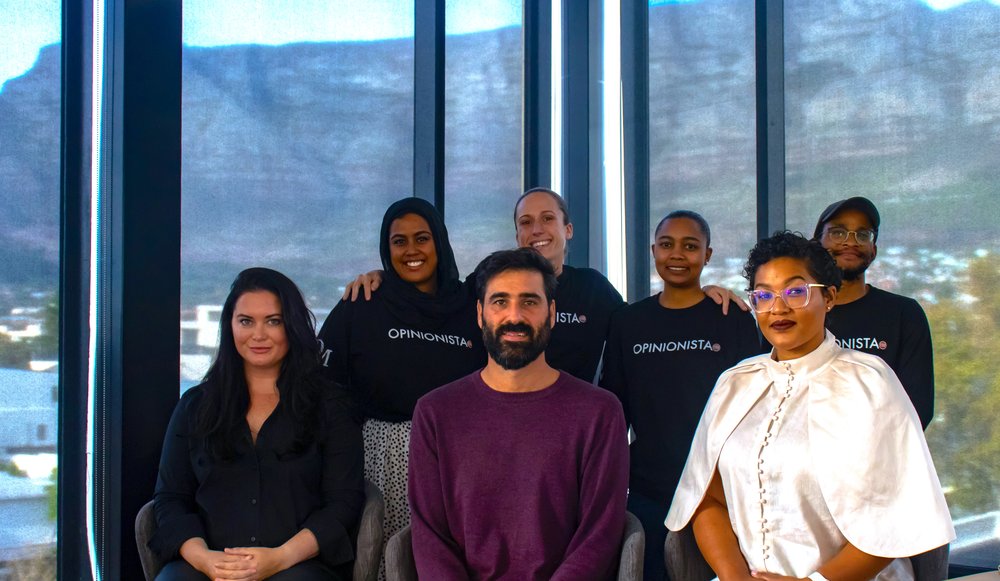 The membership team from the Daily Maverick Innovation Challenge recipients were awarded across six categories in the WAN-IFRA Digital Media Africa awards. South Africa’s Daily Maverick, whose Innovation Challenge project created a relevancy engine for data-driven customer insights, took both the Best Paid Content Strategy award and the newly introduced Best Trust Initiative award. 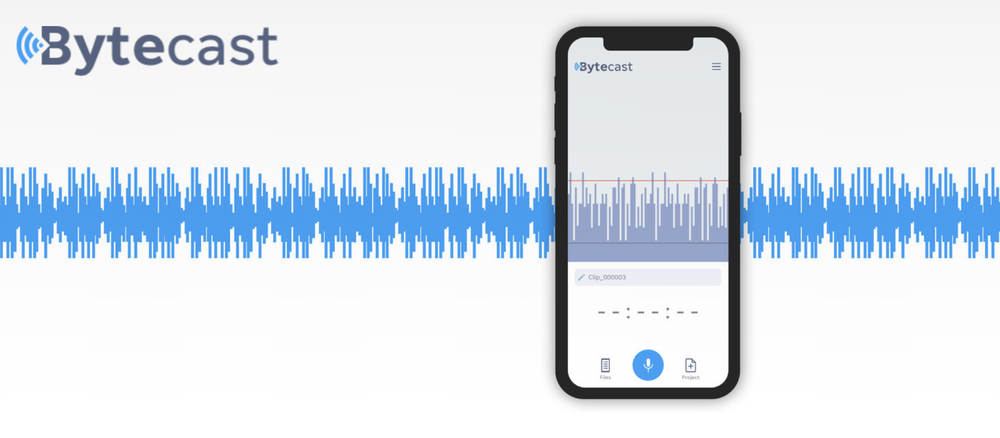 Reporters in the U.K. are using an audio collection tool developed in the U.S. Audio tool Bytecast, created as part of the Innovation Challenge in North America, has crossed the Atlantic and is now rolling out to local news organizations in the United Kingdom. Newsquest, which has more than 120 news brands, is using the app to help reporters record, edit and upload audio clips from the field. The content supported by the tool is encouraging new and existing readers to pay for their local news. Advancing parents and caregivers in Asia Pacific newsrooms We launched the second iteration of our leadership training pilot in Korea in partnership with the Journalists Association of Korea and HeyJoyce — Korea’s largest community for women — to help equip reporters on parental leave for leadership roles when they return to work. Inspired by what we’ve learned in Korea, we’ve also launched a back-to-work program for the APAC region with WAN-IFRA, and a new program in Australia in partnership with Women in Media. That’s all for July. Stay in touch on social and the Keyword blog for more updates. The latest product, program, and partnership updates from the Google News Initiative |
| 4:00p | How companies are using .new shortcutsHow companies are using .new shortcuts It’s been a year since we introduced .new as a domain extension to help businesses build memorable shortcuts to their products. And since then, people from all walks of life have been using these shortcuts to get things done. We recently checked in with three teams that started using .new early on — Adobe, Glitch and Google Workspace — to see if their customers are enjoying the shortcuts they created. AdobeAdobe launched 14 .new shortcuts to help their users create, convert, compress, sign and design elements within their apps. In this video, you’ll see why pdf.new is a convenient way for anyone to find their favorite Acrobat tools on the fly: 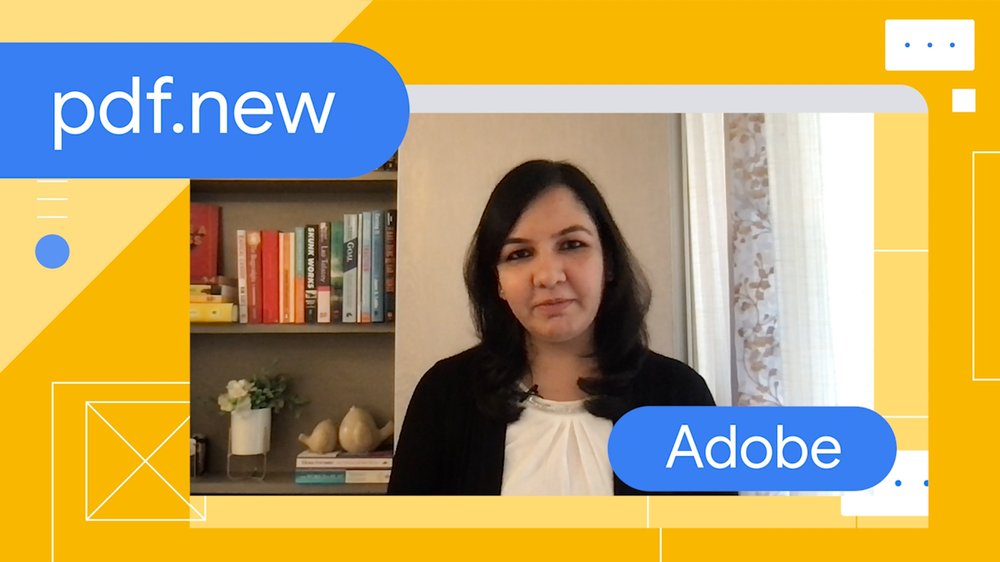 10:25 Why Adobe launched pdf.new and other shortcutsGlitchGlitch makes it possible for anyone to build a web app right in their browser and instantly publish their application. Reception for glitch.new has been enthusiastic, with more than 8,000 apps already created through their shortcut. They also received positive community feedback, which led them to add new features, including the ability to remix any of their starter apps: 10:25 How glitch.new helped Glitch reduce time to deploymentGoogle WorkspaceThe Workspace shortcuts (docs.new, sheets.new, slides.new, and more) were the original inspiration for launching .new. Since October 2018, we’ve seen over 30 million docs created with the docs.new and doc.new shortcuts alone:  10:25 How Google Workspace’s .new shortcuts used social media to gain popularityWhat’s one thing the Adobe, Glitch and Workspace .new shortcuts have in common? They’re helpful in the classroom, for both students and teachers. So as we head into fall, here’s a roundup of some of our favorite shortcuts to help with back-to-school season: Video case studies on how Adobe, Glitch and Google Workspace are using the .new shortcut to engage their customers. |
| 5:00p | When it comes to activism, creativity and focus countWhen it comes to activism, creativity and focus countCo-founder, Project Everyone Editor’s note: This the third in a four-part series of interviews between expert panelists for the Google.org Impact Challenge for Women and Girls.Today’s interviewer, Kate Garvey, is the co-founder of Project Everyone, which aims to make progress in achieving the United Nations’ 17 Sustainable Development Goals. Amika George is a 21-year-old activist who, after learning about the lack of awareness around period poverty, started a movement in the UK that turned into a tidal wave of change. She went on to write a book about the lessons she learned from that experience…all before graduating from university. Her commitment to this issue made her the perfect fit to be an expert panelist for the Google.org Impact Challenge for Women and Girls. Along with 27 other incredible women, Amika and I have the honor of helping select the grantees — nonprofits and social enterprises that are leading the way to a better future for women and girls — who will be announced later this year. Until then, here’s my conversation with Amika George. What drove you to become an activist? At first I didn’t identify as an activist because I didn’t know what it meant and it felt like a loaded term. But the issue of period poverty — when people who menstruate can’t afford period products — made me think more critically about activism. I started Free Periods in 2017 after learning about girls in the UK who miss a week of school every month as a result of period poverty. I was shocked and upset by the reality of it. Free Periods began online as a petition and branched out to organizing protests and events. Our efforts led to a legal case that required schools to provide free menstrual products. Now we can confidently say that every student in England can get the products they need. What is one lesson about activism that you would pass on? For many marginalized people, or even people who aren’t old enough to vote, activism is how you can have an impact in a productive way. For young people, the issues we’re most scared of — structural racism, the climate crisis, widening gender inequality — aren’t always prioritized or reported on. You need your own way to have an impact and shape our future. What’s next for you? My generation is realizing that it’s more productive and effective when you focus on one thing. I often get asked, “What about the climate crisis, is that what you’re going to focus on next? Are you going to address poverty as a whole?” But no one individual can end poverty or the climate crisis. You can choose one small thing, find your niche and focus on that. And frameworks like the UN’s Global Goals are useful — they’re the roadmap to a better world. You can take the one thing you’re working on and see how it links to one of the Goals. There must have been low moments or moments when things went wrong. What advice do you have to deal withthat? I learned too late that you can’t do things on your own. There wasn’t a huge amount of public discussion about period poverty before Free Periods, and it gave me a platform to reach people. But I was still only 17. There’s a whole chapter in my book on mental health and how it wasn’t sustainable for me to carry the movement on my own. It’s difficult not to take things personally, but when you have a community you can find strength when everyone is working hard and committed to the cause. Any final words of wisdom for the grantees of the Impact Challenge, and those fighting for women’s economic empowerment? Be creative, especially right now. In lockdown, our lives changed in a drastic way and we had to think differently. We couldn’t have protests or speak face to face, and we continue that creativity going forward. Creativity is an essential part of activism. Amika George and Kate Garvey discuss the power of activism and what it means for the next generation of leaders. |
| << Previous Day |
2021/08/05 [Calendar] |
Next Day >> |