[Most Recent Entries] [Calendar View]
Saturday, March 24th, 2018
| Time | Event |
| 9:53a | Japan Becomes Latest Country to Consider Pirate Site Blocking
One of the most controversial is site-blocking, but despite its unpopularity with consumers, dozens of countries around the world are now involved in the practice. Quite regularly new countries consider getting involved, Canada for example. The latest new addition is Japan. Speaking at a news conference, Chief Cabinet Secretary Yoshihide Suga said that the Japanese government is considering taking measures to prohibit access to pirate sites, largely to protect the country’s manga and anime industries. “The damage is getting worse. We are considering the possibilities of all measures including site blocking,” he said. “Manga and anime are important types of content that represent the ‘Cool Japan’ initiative. I would like to take countermeasures as soon as possible under the cooperation of the relevant ministries and agencies.” Cool Japan is a campaign to promote Japan, its culture, products and businesses both at home and overseas, in order to generate interest in the country while boosting investment and tourism. 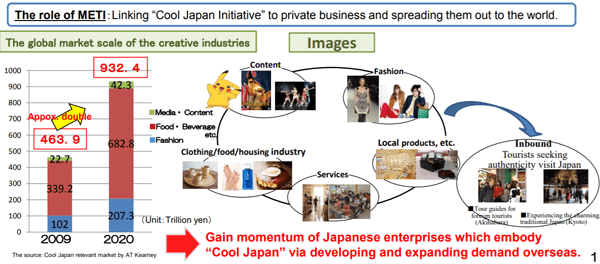 According to a lawyer cited by the Sankei news outlet, piracy in Japan is largely facilitated by roughly two kinds of sites – hosting and linking. While the former can be anywhere but can be dealt with locally, Japan has an estimated 200 sites that link to pirated content. Their legal status doesn’t appear to be as clear as many would like. “In the conventional theory the link itself is not illegal,” the lawyer notes. “There is no legal basis to declare the act of facilitating piracy of other sites as ‘illegal’. Without a [linking] site, many users can not reach pirated versions, [so the government] needs to define malicious [linking] sites properly and regulate them.” It appears that like many nations, Japan doesn’t view piracy as a predominantly domestic issue, at least on the supply front. In common with the UK, Australia and many other ‘blocking’ nations, it sees the problem as being fueled by overseas actors over which it has limited control. Site-blocking locally, therefore, could stop the problem at the borders. Whether any plan will be any more effective than the programs elsewhere will remain to be seen but since the Japanese hold both anime and manga close to their hearts, the debate is bound to get emotional. “As long as the normal business model of content is undermined, the number of people trying to become new professional creators will decrease, and if you are an animator, know-how such as drawing, editing and reviewing may be lost. There is a danger that you will be unable to read interesting cartoons in future, as the biggest victim of piracy is actually the reader himself,” the lawyer concludes. This past week saw perhaps the single wildest display of copyright infringement ever directed at Japanese culture by those in authority. Local governments across South America defied the Japanese government by airing the latest episode of Dragon Ball Super in public places to tens of thousands of people, all without obtaining the necessary licensing. Source: TF, for the latest info on copyright, file-sharing, torrent sites and more. We also have VPN reviews, discounts, offers and coupons. |
| 6:44p | Repeat Infringer Policy Doesn’t Have to Be Spelled Out, Appeals Court Rules
Under the DMCA, companies are required to implement a reasonable policy to deal with frequent offenders. This not only applies to commercial Internet providers, as Cox found out the hard way, but also to websites that host user-uploaded content, such as video and image hosting services. Last week the United States Court of Appeals for the Ninth Circuit issued an order that provides some further clarification on how a repeat infringer policy should be documented. The case in question was filed by adult content producer Ventura Content, which accused the adult-themed site Motherless of copyright infringement. While Motherless relies on user-uploaded content, the adult producer argued that it is liable for pirated content on its site. In a majority ruling, the Court found that Motherless did not know about the alleged infringements before the lawsuit was filed and removed them within a day of being properly alerted. This means that the site is entitled to safe harbor protection if it implemented a reasonable repeat infringer policy, which brings us to the crux of the case. The operator of the site, Joshua Lange, is the sole employee who single-handedly deals with all takedown requests. The site also has a page informing users that there is a repeat infringer policy, without providing specific details. The adult content producer argued that the site had failed to reasonably implement such a policy, but the Court disagreed, noting that the DMCA doesn’t prescribe a written policy. “The details of the termination policy are not written down. However, the statute does not say that the policy details must be written, just that the site must inform subscribers of ‘a policy’ of terminating repeat infringers in appropriate circumstances,” the Court states. In this case, the details of the policy were in the mind of the operator, who made his decisions based on a case-by-case evaluation. “Lange uses his judgment, not a mechanical test, to terminate infringers based on the volume, history, severity, and intentions behind a user’s infringing content uploads.” The fact that the details of the policy were not spelled out doesn’t mean that Motherless has no safe harbor protection, although this may be different for large companies. “A company might need a written policy to tell its employees or independent contractors what to do if there were a significant number of them, but Motherless is not such a firm. “So the lack of a detailed written policy is not by itself fatal to safe harbor eligibility. Neither is the fact that Motherless did not publicize its internal criteria,” the Court adds. Surprisingly, the site’s operator didn’t keep any written logs of repeat infringers either. He simply kept track of them in his head and terminated more than a thousand accounts this way. This didn’t work flawlessly, as a few repeat infringers slipped through, but the Court believes it was good enough. “It is tempting, perhaps, to say that a policy is not ‘reasonably’ implemented if it does not include both a database of users whose uploads have generated DMCA notices and some automated means of catching them if they do it again. But the statute does not require that,” the order reads. Overall, the Court sides with Motherless and its operator and affirmed the summary judgment in its favor. This case is unique in many ways. Among other things, it shows that written details or logs are not always required for a “reasonable” repeat infringer policy. While this could be different for large companies, it is likely to be referenced frequently in related cases. This week, hosting provider Steadfast was quick to use the ruling to argue that it sufficiently adopted and informed users of its repeat infringer policy. —- A copy of the Ninth Circuit Court of Appeals ruling is available here (pdf). Source: TF, for the latest info on copyright, file-sharing, torrent sites and more. We also have VPN reviews, discounts, offers and coupons. |

 The “repeat infringer” issue is a hot topic in US Courts, leading to much uncertainty among various Internet services.
| << Previous Day |
2018/03/24 [Calendar] |
Next Day >> |